Governance

FSI's research on the origins, character and consequences of government institutions spans continents and academic disciplines. The institute’s senior fellows and their colleagues across Stanford examine the principles of public administration and implementation. Their work focuses on how maternal health care is delivered in rural China, how public action can create wealth and eliminate poverty, and why U.S. immigration reform keeps stalling. 

FSI’s work includes comparative studies of how institutions help resolve policy and societal issues. Scholars aim to clearly define and make sense of the rule of law, examining how it is invoked and applied around the world. 

FSI researchers also investigate government services – trying to understand and measure how they work, whom they serve and how good they are. They assess energy services aimed at helping the poorest people around the world and explore public opinion on torture policies. The Children in Crisis project addresses how child health interventions interact with political reform. Specific research on governance, organizations and security capitalizes on FSI's longstanding interests and looks at how governance and organizational issues affect a nation’s ability to address security and international cooperation.

-

Abstract:

Scholars of comparative politics have long examined political parties as organized vehicles of mass mobilization, interest mediation, and policy formation. But with mounting evidence that parties in the twenty-first century serve different purposes, how are we to understand the role of traditional, mainstream parties today? This talk examines factors driving a decline in traditional party organization, which includes an erosion of social and intermediary groups, insufficient state capacity, delegation of party functions to private interests, and ideological convergence between the mainstream parties. It argues for more rigorous conceptualization of the role parties serve in representative democracies, and greater theoretical examination of the link between parties and governance outcomes.


Speaker Bio:

[[{"fid":"224806","view_mode":"crop_epsa_crop","fields":{"format":"crop_epsa_crop","field_file_image_description[und][0][value]":"","field_file_image_alt_text[und][0][value]":false,"field_file_image_title_text[und][0][value]":false,"field_credit[und][0][value]":"","field_caption[und][0][value]":"","thumbnails":"crop_epsa_crop"},"type":"media","field_deltas":{"1":{"format":"crop_870xauto","field_file_image_description[und][0][value]":"","field_file_image_alt_text[und][0][value]":"","field_file_image_title_text[und][0][value]":"","field_credit[und][0][value]":"","field_caption[und][0][value]":"","thumbnails":"crop_870xauto"},"2":{"format":"crop_epsa_crop","field_file_image_description[und][0][value]":"","field_file_image_alt_text[und][0][value]":false,"field_file_image_title_text[und][0][value]":false,"field_credit[und][0][value]":"","field_caption[und][0][value]":"","thumbnails":"crop_epsa_crop"},"3":{"format":"crop_epsa_crop","field_file_image_description[und][0][value]":"","field_file_image_alt_text[und][0][value]":false,"field_file_image_title_text[und][0][value]":false,"field_credit[und][0][value]":"","field_caption[und][0][value]":"","thumbnails":"crop_epsa_crop"},"4":{"format":"crop_epsa_crop","field_file_image_description[und][0][value]":"","field_file_image_alt_text[und][0][value]":false,"field_file_image_title_text[und][0][value]":false,"field_credit[und][0][value]":"","field_caption[und][0][value]":"","thumbnails":"crop_epsa_crop"}},"attributes":{"style":"height: 200px; width: 150px; float: left;margin-right: 15px","class":"media-element file-crop-epsa-crop","data-delta":"4"},"link_text":null}]]Didi Kuo is the Program Manager of the Program on American Democracy in Comparative Perspective at the Center on Democracy, Development, and the Rule of Law at Stanford University. Her research interests include clientelism, democratization, and party politics, and she is completing a book manuscript on business interests and patronage in the nineteenth-century United States. She received her PhD in political science from Harvard University, an MSc from Oxford University, where she studied as a Marshall Scholar, and a BA from Emory University.

Encina Hall, C150
616 Jane Stanford Way
Stanford, CA 94305

0
Center Fellow, Freeman Spogli Institute for International Studies
didi_kuo_2023.jpg

Didi Kuo is a Center Fellow at the Freeman Spogli Institute for International Studies (FSI) at Stanford University. She is a scholar of comparative politics with a focus on democratization, corruption and clientelism, political parties and institutions, and political reform. She is the author of The Great Retreat: How Political Parties Should Behave and Why They Don’t (Oxford University Press) and Clientelism, Capitalism, and Democracy: the rise of programmatic politics in the United States and Britain (Cambridge University Press, 2018).

She has been at Stanford since 2013 as the manager of the Program on American Democracy in Comparative Perspective and is co-director of the Fisher Family Honors Program at CDDRL. She was an Eric and Wendy Schmidt Fellow at New America and is a non-resident fellow with the Carnegie Endowment for International Peace. She received a PhD in political science from Harvard University, an MSc in Economic and Social History from Oxford University, where she studied as a Marshall Scholar, and a BA from Emory University.

Date Label
Academic Research & Program Manager, Program on American Democracy in Comparative Perspective
Seminars
-

Abstract:

How do autocracies collect information on popular discontent? The existing literature has not provided a systematic answer to this question despite its fundamental importance for understanding the logic of authoritarian rule. This talk offers a theory of information gathering in single-party communist autocracies, which are the most durable subtype of authoritarian regime to emerge since World War I. It argues that the unusual longevity of communist regimes allows us to develop and test a theory of the emergence, evolution, and eventual demise of non-electoral institutions for information gathering in autocracies. The talk uses the East European communist regimes that existed prior to 1989 to generate a theory of information and the case of post-1949 China (where institutional evolution is still ongoing) as a provisional test of the theory. The talk is based on archival sources and regime-generated materials collected in China and several East European countries.


Speaker Bio:

Image
martin dimitrov
Martin K. Dimitrov is Associate Professor of Political Science at Tulane University. His books include Piracy and the State: The Politics of Intellectual Property Rights in China (Cambridge University Press, 2009), Why Communism Did Not Collapse: Understanding Authoritarian Regime Resilience in Asia and Europe (Cambridge University Press, 2013), and The Politics of Socialist Consumption (Sofia: Ciela Publishers, 2017). He is currently completing a book manuscript entitled Dictatorship and Information: Autocratic Regime Resilience in Communist Europe and China and two edited volumes: China-Cuba: Trajectories of Post-Revolutionary Governance and Popular Authoritarianism: The Quest for Regime Durability. After receiving his Ph.D. from Stanford in 2004, he taught at Dartmouth and held residential fellowships at Harvard, Princeton, Notre Dame, the University of Helsinki, the American Academy in Berlin, and the Woodrow Wilson International Center for Scholars. He has conducted fieldwork in China, Taiwan, Hong Kong, Russia, Germany, France, the Czech Republic, Bulgaria, and Cuba.

Martin K. Dimitrov Associate Professor of Political Science at Tulane University
Seminars
Authors
News Type
News
Date
Paragraphs

Stanford cybersecurity expert Herb Lin said America may be at a “tipping point” regarding the rewards and risks of the Internet, unless new cybersecurity policies are adopted by the incoming Trump Administration. He speaks Dec. 7 at Stanford on the issue.

The costs of using the Internet and computational devices due to inadequate security may soon outweigh the benefits unless dramatic cybersecurity measures are taken, a Stanford scholar said.

Herbert Lin, a senior research scholar for cyber policy and security at Stanford’s Center for International Security and Cooperation (CISAC), serves on the President’s Commission on Enhancing National Cybersecurity, which on Dec. 2 issued strong recommendations to upgrade the nation’s cybersecurity systems.

Lin will speak Dec. 7 at Stanford about the report – his talk will be featured live on video. The 100-page report aims to inform the incoming Trump Administration about how to approach escalating cybersecurity dangers. The effort follows significant hacking of U.S. government systems in and accusations by the White House that Russia interfered in the U.S. presidential election.

The commission suggested both short- and long-term measures, such as fixing problems from the weakly protected ‘internet-of-things’; creating an assistant to the president for cybersecurity; and re-organizing responsibility for the cybersecurity of federal agencies, among others.

The report also urged getting rid of traditional passwords, which could help reduce identity theft. It also advised that the new administration train 100,000 new cybersecurity workers by 2020.

A research fellow at the Hoover Institution, Lin was recently interviewed by CISAC about the report:

What is the reason to move the burden of cybersecurity away from the user to higher levels of companies, government?

Taking the necessary and appropriate measures for cybersecurity is, for practical purposes, too complex for average end-users. A successful effort to push cybersecurity measures farther from the user will result in better security because security decisions will be made by those who are security experts rather than users that are unfamiliar with security.

Why is the White House the best entity to lead cybersecurity efforts?

Enhancing national cybersecurity requires a whole-of-government effort, indeed a whole-of-society effort.  The task is making a meaningful dent in a problem that is so large. Only with high-level leadership does that effort have any chance of success.

Will the distrust of the U.S. government by the technology community in general hinder this approach to cybersecurity? How can the tech world's trust in the government on cybersecurity issues be improved?

Distrust harms both sides – the U.S. government and the technology community.  The U.S. government loses the ability to enlist the cooperation of the private sector, which has many capabilities that it does not have, capabilities that would be useful in fulfilling its responsibilities to the American people. The tech sector invites harsh legislation and suspicion that work against its interests. At the same time, the distrust is not entirely unfounded, as both sides have indulged in apocalyptic rhetoric that has raised the temperature of the debate without much productive result.  But what I’m saying here represents a personal perspective, and isn’t part of the commission’s report.

What happens if these recommendations are not enacted or adopted? What happens to the typical American computer user? In the long run, if we do little or nothing, how will this affect the Internet – as an economic driver or engine for the economy, place where people connect?

President Obama created the commission because he believed that cybersecurity was a high national priority, a sentiment with which both presidential candidates agreed. If the nation does too little to improve its cybersecurity posture, the gap between the security we have and the security we need will only grow because the cybersecurity threat we face is growing. And if that is the case, the costs of using the Internet and computational devices due to inadequate security will outweigh the benefits – indeed, there is evidence that we are near such a tipping point today. Even now, a large fraction of Americans are unwilling to use the Internet for certain purposes due to security concerns – and I can tell you that I personally refrain from conducting certain transactions online for just such reasons.

Any other issues?

One of the most surprising aspects of the report was the process that produced it.  The chair of the commission is known to be a Democrat. The vice-chair is known to be a Republican.  Other than that, you would be hard-pressed to identify the political affiliations of anyone else on the commission on the basis of what they said. So it was thoroughly a nonpartisan effort that produced the report.

Herb Lin will speak at 4:30 p.m. Wednesday, Dec. 7 in the NEC Auditorium, Gates Computer Science Building Room B3. More information and live video information is available at http://ee380.stanford.edu. The title of the talk is “Charting a Cybersecurity Path for the Next Administration: Report of the President's Commission on Enhancing National Cybersecurity.” In February, President Obama announced a Cybersecurity National Action Plan to take a series of short-term and long-term actions to improve our nation’s cybersecurity posture.  A central feature of that plan is the non-partisan Commission on Enhancing National Cybersecurity.

Follow CISAC on Twitter at @StanfordCISAC and on Facebook at www.facebook.com/StanfordCISAC.

MEDIA CONTACTS

Herbert Lin, Center for International Security and Cooperation: (650) 497-8600, herbert.s.lin@stanford.edu

Clifton B. Parker, Center for International Security and Cooperation: (650) 725-6488, cbparker@stanford.edu


Hero Image
gettyimages 507473994
Stanford cybersecurity expert Herb Lin said America may be at a “tipping point” regarding the rewards and risks of the Internet, unless recommended new cybersecurity policies are adopted in the near future. | scyther5/Getty Images
All News button
1
Authors
News Type
News
Date
Paragraphs

Toomas Hendrik Ilves, the former president of Estonia, will join Stanford University as a visiting fellow in January.

Ilves, whose title will be the Bernard and Susan Liautaud Visiting Fellow, is set to work at the Center for International Security and Cooperation in the Freeman Spogli Institute for International Studies. He served as the fourth president of Estonia from 2006 to 2016. During his career, he has been a diplomat and journalist, and was the leader of Estonia’s Social Democratic Party in the 1990s.

Ilves’ tentative start date at CISAC is Jan. 9, and his appointment will run through June 30. Afterwards, the Hoover Institution will extend his appointment for another full year. During his time on campus, Ilves said he plans to delve deeply into the intersections between information technology and security policy, areas that have long fascinated him during his career.

“Stanford has long been a place I enjoy visiting as one of the few if only universities to have top minds from both realms,” Ilves wrote in an email interview, noting how many Stanford scholars are studying these types of issues. He has some big projects in mind.

“After spending the past quarter of a century on digitizing Estonia, a country also faced with daunting security challenges, I plan to write a book on the foundations of a functioning digital society,” he said.

Ilves added, “Much of what we have seen in the past decade – massive hacks, data theft, privacy violations – come from fundamental weaknesses in the haphazard way our digital world has developed, where security is primarily an afterthought and a patch.”

He said that a secure and functional digital society has to be based on both legally and technically sound foundations. “I have argued and written for years that it’s the analog, legal basis of our digital world that determines if we are technologically secure.”

Parallel to this topic, Ilves said his most recent speeches and articles have examined the “challenges of an increasingly fissiparous and nationalist Europe.”

Michael McFaul, the director of FSI, said that Ilves’ interest in FSI and CISAC is a reflection of their scholarly reputations around the world.

"As president of Estonia, Toomas Ilves emerged as a world leader on issues related to cyber security, e-governance, and liberal ideas more generally. His intellectual and policy agenda fits perfectly with what we do at FSI,” McFaul said.

He noted, “We are very lucky to have him as the first Bernard and Susan Liautaud Visiting Fellow.”

Ilves also served in the Estonian government as the minister of foreign affairs from 1996 to 1998 and again from 1999 to 2002. In that position, he was in charge of European Union enlargement and NATO issues. Later, he was a member of the European Parliament from 2004 to 2006.

Ilves believes the challenge for all small European countries, Estonia included, is to maintain a functioning European Union as well as a strong NATO, the primary treaty basis of trans-Atlantic relations. Many significant political and security issues exist on the Continent, he noted.

“With elections across Europe increasingly demonstrating a turn toward nationalism and populism, the EU and NATO currently face their greatest challenge since their founding. As a small country that has consistently supported the EU and NATO as a matter of national security, for Estonia, this is a question of national survival,” said Ilves.

Follow CISAC on Twitter at @StanfordCISAC and on Facebook at www.facebook.com/StanfordCISAC.

MEDIA CONTACT

Clifton B. Parker, Center for International Security and Cooperation: (650) 725-6488, cbparker@stanford.edu

Hero Image
gettyimages 507976058
Estonia's President Toomas Hendrik Ilves delivers a speech to the European Parliament in France in 2016. Starting in January 2017, Ilves will be the Bernard and Susan Liautaud Visiting Fellow at CISAC. | FREDERICK FLORIN/AFP/Getty Images
All News button
1
-

Abstract:

Fifteen years after the American-led international military intervention, Afghanistan faces mounting security, governance, and economic challenges.  The Afghan Army and police remain highly dependent on U.S. combat power and the provision of significant amounts of technical and financial assistance.  Early during its first term, the Trump Administration will need to decide on its long-term policy toward Afghanistan and Central-South Asia.  Karl Eikenberry, former U.S. Ambassador and Coalition Commander in Afghanistan, and Erik Jensen, the faculty director of the Afghanistan Legal Education Project at the Stanford Law School, will provide their assessments of the situation in Afghanistan and discuss U.S. strategic options. 


Speaker(s) Bio:

Image
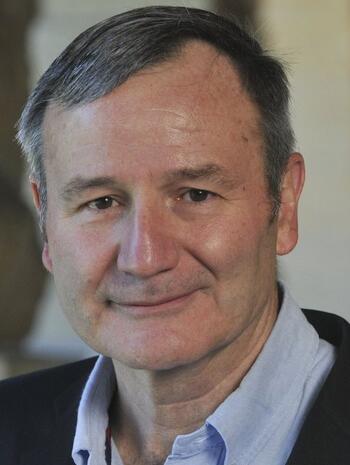
Karl Eikenberry
Karl Eikenberry is the Oksenberg-Rohlen Distinguished Fellow and Director of the U.S.-Asia Security Initiative at Stanford University’s Asia-Pacific Research Center, and a Stanford University Professor of Practice. He served as the U.S. Ambassador to Afghanistan from May 2009 until July 2011 and had a 35-year career in the United States Army, retiring with the rank of lieutenant general. His military assignments included postings with mechanized, light, airborne, and ranger infantry units in the continental United States, Hawaii, Korea, Italy, and Afghanistan as the Commander of the American-led Coalition forces from 2005–2007. He is a graduate of the U.S. Military Academy, earned master’s degrees from Harvard University in East Asian Studies and Stanford University in Political Science, was awarded an Interpreter’s Certificate in Mandarin Chinese from the British Foreign and Commonwealth Office, and has an advanced degree in Chinese History from Nanjing University. He is also the recipient of the George F. Kennan Award for Distinguished Public Service and Harvard University Graduate School of Arts and Sciences Centennial Medal. He was awarded an Honorary Doctorate of Humane Letters Degree from North Carolina State University in December 2015. Ambassador Eikenberry is a fellow of the American Academy of Arts and Sciences, and is a board member of The Asia Foundation and council member of the International Institute for Strategic Studies. His articles and essays on U.S. and international security issues have appeared in Foreign Affairs, Washington Quarterly, American Foreign Policy Interests, American Interest, New York Times, Washington Post, Foreign Policy, and Financial Times.


Image
erik jensen
Erik Jensen holds joint appointments at Stanford Law School and Stanford’s Center on Democracy, Development and the Rule of Law. He is Professor of the Practice, Director of the Rule of Law Program at Stanford Law School, an Affiliated Core Faculty at Stanford’s Center on Democracy, Development and the Rule of Law, and Senior Advisor for Governance and Law at The Asia Foundation. Jensen began his international career as a Fulbright Scholar. He has taught and practiced in the field of law and development for 30 years and has carried out fieldwork in 35 developing countries.  He lived in Asia for 14 years. He has led or advised research teams on governance and the rule of law at the World Bank, the Asian Development Bank and the African Development Bank. 

Oksenberg-Rohlen Distinguished Fellow and Director of the U.S.-Asia Security Initiative at Stanford University’s Asia-Pacific Research Center

CDDRL
Stanford University
Encina Hall, C144
616 Jane Stanford Way
Stanford, CA 94305-6055

(650) 725-4287 (650) 725-0253
0
Lecturer in Law, Stanford Law School
jensen-1.jpg JD

Erik Jensen holds joint appointments at Stanford Law School and Stanford’s Center on Democracy, Development and the Rule of Law. He is Lecturer in Law, Director of the Rule of Law Program at Stanford Law School, an Affiliated Core Faculty at Stanford’s Center on Democracy, Development and the Rule of Law, and Senior Advisor for Governance and Law at The Asia Foundation. Jensen began his international career as a Fulbright Scholar. He has taught and practiced in the field of law and development for 35 years and has carried out fieldwork in approximately 40 developing countries. He lived in Asia for 14 years. He has led or advised research teams on governance and the rule of law at the World Bank, the Asian Development Bank and the African Development Bank. Among his numerous publications, Jensen co-edited with Thomas Heller Beyond Common Knowledge: Empirical Approaches to the Rule of Law (Stanford University Press: 2003).

At Stanford, he teaches courses related to state building, development, global poverty and the rule of law. Jensen’s scholarship and fieldwork focuses on bridging theory and practice, and examines connections between law, economy, politics and society. Much of his teaching focuses on experiential learning. In recent years, he has committed considerable effort as faculty director to three student driven projects: the Afghanistan Legal Education Project (ALEP) which started and has developed a law degree-granting programs at the American University of Afghanistan (AUAF), an institution where he also sits on the Board of Trustees; the Iraq Legal Education Initiative at the American University of Iraq in Sulaimani (AUIS); and the Rwanda Law and Development Project at the University of Rwanda. He has also directed projects in Bhutan, Cambodia and Timor Leste. With Paul Brest, he is co-leading the Rule of Non-Law Project, a research project launched in 2015 and funded by the Global Development and Poverty Fund at the Stanford King Center on Global Development. The project examines the use of various work-arounds to the formal legal system by economic actors in developing countries. Eight law faculty members as well as scholars at the Freeman Spogli Institute are participating in the Rule of Non-Law Project.

Director of the Rule of Law Program, Stanford Law School
CDDRL Affiliated Faculty
CV
Date Label
Stanford Law School and Stanford’s Center on Democracy, Development and the Rule of Law
Seminars
-

Abstract:

Property rights are important for economic exchange, but in much of the world they are not publicly provided. Private market organizations can fill this gap by providing an institutional structure to enforce agreements, but with this power comes the ability to extort from the group’s members. Under what circumstances will private organizations provide a stable environment for economic activity? Using survey data collected from 1,878 randomly sampled traders across 269 markets, 68 market leaders, and 55 government revenue collectors in Lagos, I find that strong markets maintain institutions to support trade not in the absence of government, but rather as a response to active interference. I argue that organizations develop pro-trade institutions when threatened by politicians they perceive as predatory, and when the organization can respond with threats of its own. Under this balance of power, the organization will not extort because it needs trader support to keep threats credible.


Speaker Bio:

Image
shelby embedded
Shelby Grossman is a Postdoctoral Fellow at Stanford University’s Center on Democracy, Development, and the Rule of Law. Her primary research interests are in comparative politics and political economy. Her book manuscript explores the politics of property rights in informal markets in Nigeria. Other research projects include a study on the political economy of diversified business groups, a project on casual inter-group interactions in the informal economy, and a paper on the politics of non-compliance with polio vaccination in northern Nigeria. Shelby received her Ph.D. from the Department of Government at Harvard University in 2016.

Encina Hall, C433 616 Jane Stanford Way Stanford, CA 94305-6055
0
shelby_grossman.jpg PhD

Shelby Grossman was a research scholar at the Cyber Policy Center. Her research focuses on online safety. Shelby's research has been published in Comparative Political Studies, PNAS Nexus, Political Communication, The Journal of Politics, World Development, and World Politics. Her book, "The Politics of Order in Informal Markets," was published by Cambridge University Press. She is co-editor of the Journal of Online Trust and Safety, and teaches classes at Stanford on open source investigation and online trust and safety issues. 

Shelby was an assistant professor of political science at the University of Memphis from 2017-2019, and a postdoctoral fellow at Stanford University’s Center on Democracy, Development, and the Rule of Law from 2016-17. She earned her Ph.D. in Government from Harvard University in 2016.

Research Scholar
CDDRL Postdoctoral Fellow, 2016-17
Date Label
Postdoctoral Fellow at CDDRL.
Seminars
-

Co-sponsored by the Taiwan Democracy Project at the Center on Democracy, Development, and the Rule of Law, and the China Program at the Shorenstein Asia-Pacific Research Center (APARC)


Abstract

As President Trump assumes office, it is timely to consider the state of US-People's Republic of China (PRC)-Taiwan relations and how they might evolve in the coming years. Uncertainty regarding US-PRC-Taiwan relations is running high—it is far greater than eight years ago when Barack Obama assumed office. Trump’s phone call with Taiwan’s President Tsai Ing-wen shortly after winning the election and his subsequent suggestion that Taiwan could be used as a bargaining chip to extract trade concessions from China have alarmed Beijing and created anxiety in Taipei. In Washington, Trump’s actions and statements have fueled policy debates about whether to abandon the “one China” policy which has been a mainstay of US policy for 37 years.  How the Trump administration will adjust relations with Beijing and Taipei is unknown. In the months ahead, a new dynamic may be created in the US-PRC-Taiwan triangular relationship in which the source of instability is neither China nor Taiwan, but rather is the United States. 


Biography

Bonnie S. Glaser is a senior adviser for Asia and the director of the China Power Project at CSIS, where she works on issues related to Chinese foreign and security policy. She is concomitantly a non-resident fellow with the Lowy Institute in Sydney, a senior associate with CSIS Pacific Forum and a consultant for the U.S. government on East Asia. From 2008 – mid-2015 Ms. Glaser was a Senior Adviser with the Freeman Chair in China Studies, and from 2003 to 2008, she was a senior associate in the CSIS International Security Program. Prior to joining CSIS, she served as a consultant for various U.S. government offices, including the Departments of Defense and State.

Ms. Glaser has written extensively on various aspects of Chinese foreign policy, including Sino-U.S. relations, U.S.-China military ties, cross-Strait relations, China’s relations with Japan and Korea, and Chinese perspectives on missile defense and multilateral security in Asia. Her writings have been published in the Washington Quarterly, China Quarterly, Asian Survey, International Security, Problems of Communism, Contemporary Southeast Asia, American Foreign Policy Interests, Far Eastern Economic Review, Korean Journal of Defense Analysis, New York Times, and International Herald Tribune, as well as various edited volumes on Asian security. Ms. Glaser is a regular contributor to the Pacific Forum quarterly Web journal Comparative Connections. She is currently a board member of the U.S. Committee of the Council for Security Cooperation in the Asia Pacific, and a member of both the Council on Foreign Relations and the Institute of International Strategic Studies. She served as a member of the Defense Department’s Defense Policy Board China Panel in 1997. Ms. Glaser received her B.A. in political science from Boston University and her M.A. with concentrations in international economics and Chinese studies from the Johns Hopkins School of Advanced International Studies.


Philippines Conference Room

Encina Hall, 3rd Floor

Bonnie Glaser Director of the China Power Project and Senior Advisor for Asia Center for Strategic and International Studies
Lectures
News Type
News
Date
Paragraphs

As 2017 approaches, the Shorenstein Asia-Pacific Research Center documents highlights from the 2015-16 academic year. The latest edition of the Center Overview, entitled "Challenges to Globalization," includes research, people, events and outreach features, and is now available for download online.

Hero Image
containers port singapore
A container is loaded onto a ship docked at the terminal port in Singapore, June 2016. | ROSLAN RAHMAN/AFP/Getty Images
All News button
1
Subscribe to Governance