Governance

FSI's research on the origins, character and consequences of government institutions spans continents and academic disciplines. The institute’s senior fellows and their colleagues across Stanford examine the principles of public administration and implementation. Their work focuses on how maternal health care is delivered in rural China, how public action can create wealth and eliminate poverty, and why U.S. immigration reform keeps stalling. 

FSI’s work includes comparative studies of how institutions help resolve policy and societal issues. Scholars aim to clearly define and make sense of the rule of law, examining how it is invoked and applied around the world. 

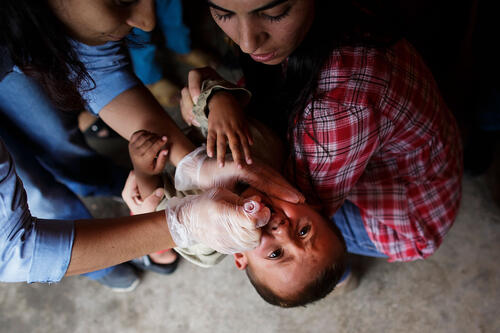
FSI researchers also investigate government services – trying to understand and measure how they work, whom they serve and how good they are. They assess energy services aimed at helping the poorest people around the world and explore public opinion on torture policies. The Children in Crisis project addresses how child health interventions interact with political reform. Specific research on governance, organizations and security capitalizes on FSI's longstanding interests and looks at how governance and organizational issues affect a nation’s ability to address security and international cooperation.

-

Abstract:

Since 2013, my collaborators and I have conducted research on how rumors and misinformation spread through social media during crisis events. Recently, our work has revealed how a subsection of the alternative media ecosystem facilitates the spread of disinformation—in the form of conspiracy theories or “alternative narratives” about man-made crisis events. This disinformation is often employed as part of a political agenda and poses new information security risks. In this talk, I’ll present highlights from our research on alternative narratives, describing some of the specific tactics being used to spread disinformation. I’ll also share some preliminary findings on more recent work examining the structure and dynamics of the media ecosystem that has taken shape around the ongoing crisis in Syria. Finally, I’ll discuss some of the broader implications of online disinformation for emergency and humanitarian responders as well as society at large.


Speaker Bio:

Image
kate starbird
Kate Starbird is an Assistant Professor at the Department of Human Centered Design & Engineering (HCDE) at the University of Washington (UW). Kate's research is situated within human-computer interaction (HCI) and the emerging field of crisis informatics—the study of the how information-communication technologies (ICTs) are used during crisis events. One aspect of her research focuses on how online rumors spread—and how online rumors are corrected—during natural disasters and man-made crisis events. More recently, she has begun exploring the propagation of disinformation and political propaganda through online spaces. Kate earned her PhD from the University of Colorado at Boulder in Technology, Media and Society and holds a BS in Computer Science from Stanford University.

William J. Perry Conference Room,  Encina Hall, 2nd Floor, 616 Serra St, Stanford, CA 94305

Kate Starbird Assistant Professor at the Department of Human Centered Design & Engineering (HCDE) at the University of Washington
Seminars
News Type
News
Date
Paragraphs

CISAC senior research scholar Herb Lin writes in this Washington Post op-ed about the Equifax hacking and how to prevent such future incidents. He urges Congress "to go beyond proposed legislation on free freezing of credit reports to require that individual reports be frozen by default, 'thaw-able' only with the individual’s consent."

Hero Image
gettyimages 532029221 Getty Images/Colin Anderson
All News button
1
News Type
News
Date
Paragraphs

In Superficial Korea, a book recently published in South Korea, Shorenstein APARC director Gi-Wook Shin shares his observations on and provides recommendations for social maladies currently affecting Korean society. Shin sees a problematic level of superficiality in a number of aspects of today's Korea: its interpersonal relations, policies and social systems, and rules and regulations. After explaining his diagnosis in the first part of the book, Shin goes on to offer a prescription in the form of lessons that can be learned from Silicon Valley’s culture. The final section of the book touches on issues in which he specializes as an academic—and which have been of the utmost interest to Koreans in recent days—that is, South Korea’s relations with North Korea and other players on the global stage.

Superficial Korea is in Korean; interviews with Dr. Shin and reviews of the book can be found below:

Stanford Daily (interview, in English)

Korea Herald (Op-Ed, in English)

Korea Daily (interview, in Korean)

Sisa Journal (interview, in Korean)

Munwha Ilbo (interview, in Korean)

Yonhap News (book review, in Korean)

Munwha Ilbo (book review, in Korean)

Kyunghyang Shinmun (book review, in Korean)


All News button
1
-

In Superficial Korea, a book recently published in South Korea, Gi-Wook Shin, professor of sociology and Shorenstein APARC director, shares his observations on and provides recommendations for social maladies currently affecting Korean society. Shin sees a problematic level of superficiality in a number of aspects of today's Korea: its interpersonal relations, policies and social systems, and rules and regulations.

Dafna Zur, assistant professor of East Asian Language and Cultures at Stanford University, will lead discussion of the book.

If you bring a copy of the book, the author will autograph it.


 Philipppines Conference Room
 Encina Hall, 3rd Floor
 616 Serra Street
 Stanford, CA 
 Directions

Department of East Asian Languages and Cultures
521 Memorial Way
Stanford, CA 94305

(650) 725-1893
0
Associate Professor, East Asian Languages and Cultures
dafnazur_1080x1080.png

Dafna Zur teaches courses on Korean literature, cinema, and popular culture. Her book, Figuring Korean Futures: Children’s Literature in Modern Korea (Stanford University Press, October 2017), traces the affective investments and coded aspirations made possible by children’s literature in colonial and postcolonial Korea. She has published articles on North Korean science fiction, the Korean War in North and South Korean children’s literature, childhood in cinema, and Korean popular culture. Her translations have been published in wordwithoutborders.orgThe Columbia Anthology of Modern Korean Short Stories, and the Asia Literary Review.

Dafna Zur received her PhD and MA in Asian Studies from the University of British Columbia, and a BA from the Hebrew University of Jerusalem.

Date Label
Shorenstein APARC
Encina Hall E301
616 Jane Stanford Way
Stanford, CA 94305-6055
(650) 724-8480 (650) 723-6530
0
Senior Fellow at the Freeman Spogli Institute for International Studies
Professor of Sociology
William J. Perry Professor of Contemporary Korea
Professor, by Courtesy, of East Asian Languages & Cultures
Gi-Wook Shin_0.jpg PhD

Gi-Wook Shin is the William J. Perry Professor of Contemporary Korea in the Department of Sociology, senior fellow at the Freeman Spogli Institute for International Studies, and the founding director of the Korea Program at the Walter H. Shorenstein Asia-Pacific Research Center (APARC) since 2001, all at Stanford University. In May 2024, Shin also launched the Taiwan Program at APARC. He served as director of APARC for two decades (2005-2025). As a historical-comparative and political sociologist, his research has concentrated on social movements, nationalism, development, democracy, migration, and international relations.

In Summer 2023, Shin launched the Stanford Next Asia Policy Lab (SNAPL), which is a new research initiative committed to addressing emergent social, cultural, economic, and political challenges in Asia. Across four research themes– “Talent Flows and Development,” “Nationalism and Racism,” “U.S.-Asia Relations,” and “Democratic Crisis and Reform”–the lab brings scholars and students to produce interdisciplinary, problem-oriented, policy-relevant, and comparative studies and publications. Shin’s latest book, The Four Talent Giants, a comparative study of talent strategies of Japan, Australia, China, and India to be published by Stanford University Press in the summer of 2025, is an outcome of SNAPL.

Shin is also the author/editor of twenty-seven books and numerous articles. His books include The Four Talent Giants: National Strategies for Human Resource Development Across Japan, Australia, China, and India (2025)Korean Democracy in Crisis: The Threat of Illiberalism, Populism, and Polarization (2022); The North Korean Conundrum: Balancing Human Rights and Nuclear Security (2021); Superficial Korea (2017); Divergent Memories: Opinion Leaders and the Asia-Pacific War (2016); Global Talent: Skilled Labor as Social Capital in Korea (2015); Criminality, Collaboration, and Reconciliation: Europe and Asia Confronts the Memory of World War II (2014); New Challenges for Maturing Democracies in Korea and Taiwan (2014); History Textbooks and the Wars in Asia: Divided Memories (2011); South Korean Social Movements: From Democracy to Civil Society (2011); One Alliance, Two Lenses: U.S.-Korea Relations in a New Era (2010); Cross Currents: Regionalism and Nationalism in Northeast Asia (2007);  and Ethnic Nationalism in Korea: Genealogy, Politics, and Legacy (2006). Due to the wide popularity of his publications, many have been translated and distributed to Korean audiences. His articles have appeared in academic and policy journals, including American Journal of SociologyWorld DevelopmentComparative Studies in Society and HistoryPolitical Science QuarterlyJournal of Asian StudiesComparative EducationInternational SociologyNations and NationalismPacific AffairsAsian SurveyJournal of Democracy, and Foreign Affairs.

Shin is not only the recipient of numerous grants and fellowships, but also continues to actively raise funds for Korean/Asian studies at Stanford. He gives frequent lectures and seminars on topics ranging from Korean nationalism and politics to Korea's foreign relations, historical reconciliation in Northeast Asia, and talent strategies. He serves on councils and advisory boards in the United States and South Korea and promotes policy dialogue between the two allies. He regularly writes op-eds and gives interviews to the media in both Korean and English.

Before joining Stanford in 2001, Shin taught at the University of Iowa (1991-94) and the University of California, Los Angeles (1994-2001). After receiving his BA from Yonsei University in Korea, he was awarded his MA and PhD from the University of Washington in 1991.

Selected Multimedia

Director of the Korea Program and the Taiwan Program, Shorenstein Asia-Pacific Research Center
Director of Stanford Next Asia Policy Lab, APARC
Date Label
Seminars
Authors
News Type
News
Date
Paragraphs

As the new deputy director for the Center for International Security and Cooperation, Harold Trinkunas will assume more day-to-day management duties of the center in addition to his research scholarship.

Trinkunas, who starts his new role Oct. 1, will provide additional oversight over CISAC’s core operations, from research and fellowships to administration and finance. He was previously CISAC’s associate director for research; he will continue to be a senior research scholar affiliated with the center.

In his new capacity, Trinkunas will work to ensure that CISAC remains on a sustainable footing as its faculty, scholars and fellows generate knowledge to build a safer world and educate the next generation of security experts. This will contribute to maintaining CISAC’s position as a global thought leader on meeting the most pressing challenges for international security and international cooperation.

CISAC’s associate director position for administration and finance will report to Trinkunas, who joined CISAC in September 2016. Previously, that position (under recruitment now) reported to CISAC’s co-directors.  

The new organizational structure brings CISAC into alignment with other centers at the Freeman Spogli Institute for International Studies. It will also allow co-directors Amy Zegart and Rod Ewing  to focus more time on CISAC’s external relationships – with CISAC supporters, policy makers and media. These are key audiences for the Center’s scholarly findings and education programs.

Zegart, CISAC co-director for the social sciences, said, "I couldn't be more delighted that Harold has agreed to become CISAC's deputy director. Creating this deputy director position will enable us to bring together longer-range strategic planning and day-to-day operations -- and Harold is ideally suited to the task, with deep experience in university administration at the Naval Postgraduate School, Brookings, and Stanford as well as an active and exciting scholarly research agenda."

Ewing, CISAC co-director for the sciences, said, “Harold’s expanded role in CISAC will allow for a better coordination of administrative and budgetary decisions on a day-to-day basis.  I certainly look forward to working with Harold as we continue to expand the impact of CISAC scholarship on policy issues.”

Management, research

Trinkunas joined CISAC last year from the Brookings Institution, where he was the Charles W. Robinson Chair and senior fellow as well as director of the Latin America Initiative in the Foreign Policy program.

“This is a great opportunity to work in collaborative ways with exceptional scholars around some very important international security challenges facing today’s world,” Trinkunas said then.

Born and raised in Venezuela, Trinkunas earned his doctorate in political science from Stanford in 1999; he was also a predoctoral fellow and later a visiting professor at CISAC.  His first exposure to CISAC took place when he served as a teaching assistant to Scott Sagan in 1992.

Through the years, CISAC has evolved and adjusted its focus to reflect the global security realities, Trinkunas said. Research at CISAC spans biosecurity and global health, terrorism, cybersecurity, governance, and nuclear risk and cooperation, among others.

Trinkunas said he enjoys the mentoring aspect of working with emerging scholars in the CISAC fellowship program, which he oversees.

Security, governance

Trinkunas’ most recent book, Aspirational Power: Brazil's Long Road to Global Influence, co-authored with David Mares of UC San Digo, was published last year by the Brookings Institution Press.  Aspirational Power was chosen as one of Foreign Affair’s “best books of 2016.”

Trinkunas studies the intersection of security and governance. In his research, he has examined civil-military relations, ungoverned spaces, terrorist financing, emerging power dynamics, and global governance.

MEDIA CONTACTS:

Harold Trinkunas, Center for International Security and Cooperation: (650) 725-8035, antanas@stanford.edu

Clifton B. Parker, Center for International Security and Cooperation: (650) 725-6488, cbparker@stanford.edu


Hero Image
15245421688 ff04a3e3e8 b
As the new deputy director for the Center for International Security and Cooperation, Harold Trinkunas will assume more day-to-day management duties of the center in addition to his research scholarship.
Courtesy of CISAC
All News button
1
News Type
News
Date
Paragraphs

Stanford’s Center on Democracy, Development and the Rule of Law (CDDRL) is pleased to welcome Sviatoslav Vakarchuk as a visiting scholar for the fall quarter. Vakarchuk is a Ukrainian civic activist, musician and the lead vocalist and founder of the band “Okean Elzy.“ He will be in residence at CDDRL this fall to attend courses and study with some of the leading intellectuals and academics at CDDRL. He holds a doctorate degree in theoretical physics from the Ivan Franko National University of Lviv.

Vakarchuk is also the founder of a charity fund called “Lyudi Maybutnyogo” (People of the Future) and co-founder of the Center for Economic Strategy, an independent policy think tank dedicated to supporting reforms and sustainable economic growth in Ukraine. He served as a Yale World Fellow in 2015.

Vakarchuk will be interacting with the Ukrainian Emerging Leaders Program during his residency at CDDRL. Launched in 2016, the Program seeks to provide Ukrainian leaders with opportunities for professional growth and development, as well as the chance to work on a project over the course of a 10-month residency at Stanford.

“We look forward to welcoming Slava Vakarchuk to the CDDRL community this fall,” said Francis Fukuyama the Mosbacher director of CDDRL. “His presence will add a great deal towards our understanding of Ukraine's democratic transition.”

During his stay in the US, Vakarchuk will be offering a set of open lectures on Ukraine and participating in several events at CDDRL. More information on these public events will be forthcoming.

Hero Image
slavav
Left to right: Michael McFaul, Director FSI; Olena Sotnyk, Member of Parliament, Ukraine; Sviatoslav Vakarchuk, Visiting Scholar CDDRL; Victor Liakh, President at East Europe Foundation.
All News button
1
-

Cosponsored by The Abbasi Program in Islamic Studies


Abstract:

Half a decade after Arabs across the Middle East poured into the streets to demand change, hopes for democracy have disappeared in a maelstrom of violence and renewed state repression. Egypt remains an authoritarian state, Syria and Yemen are in the midst of devastating civil wars, Libya has descended into anarchy, and the self-declared Islamic State rules a large swath of territory. Even Turkey, which also experienced large-scale protests, has abandoned its earlier shift toward openness and democracy and now more closely resembles an autocracy. How did things go so wrong so quickly across a wide range of regimes? In False Dawn: Protest, Democracy, and the New Middle East, noted Middle East regional expert Steven A. Cook looks at the trajectory of events across the region from the initial uprising in Tunisia to the failed coup in Turkey to explain why the Middle Eastern uprisings did not succeed.


Speaker Bio:

Image
cookfdheadshot
Steven A. Cook is Eni Enrico Mattei senior fellow for Middle East and Africa studies at the Council on Foreign Relations (CFR). He is an expert on Arab and Turkish politics as well as U.S.-Middle East policy. Cook is also the author of The Struggle for Egypt: From Nasser to Tahrir Square, which won the Washington Institute for Near East Policy's gold medal in 2012; and Ruling But Not Governing: The Military and Political Development in Egypt, Algeria, and Turkey.


[[{"fid":"228192","view_mode":"crop_870xauto","fields":{"format":"crop_870xauto","field_file_image_description[und][0][value]":"Steven Cook flyer","field_file_image_alt_text[und][0][value]":false,"field_file_image_title_text[und][0][value]":false,"field_credit[und][0][value]":"","field_caption[und][0][value]":"","thumbnails":"crop_870xauto","alt":"","title":""},"type":"media","field_deltas":{"2":{"format":"crop_870xauto","field_file_image_description[und][0][value]":"Steven Cook flyer","field_file_image_alt_text[und][0][value]":false,"field_file_image_title_text[und][0][value]":false,"field_credit[und][0][value]":"","field_caption[und][0][value]":"","thumbnails":"crop_870xauto","alt":"","title":""}},"link_text":null,"attributes":{"class":"media-element file-crop-870xauto","data-delta":"2"}}]]

Philippines Conference Room
Encina Hall, 3rd Floor
616 Serra St
Stanford, CA 94305

Steven A. Cook Council on Foreign Relations
Seminars
-

Abstract: The U.S. government continues to struggle with how best to defend the country from cyber attacks. Reacting out in frustration, Senator John McCain wondered aloud if the United States should consider what lessons can be learned from a new cyber defense organization in the United Kingdom called the National Cyber Security Center (NCSC). In this paper, Stuart Russell and Michael Sulmeyer examine the NCSC, its origins, its missions, and its effectiveness. They then consider how certain aspects of the NCSC might map onto the more complicated governance structure around cyber defense in the United States. Despite important differences between the United Kingdom and the United States, they conclude that there is a great deal the United States can adapt from the United Kingdom’s efforts, particularly the NCSC’s ambitious Active Defense agenda. 

Speaker Bio: Dr. Michael Sulmeyer is the Belfer Center's Cyber Security Project Director at the Harvard Kennedy School. He is also a Contributing Editor for the national security blog Lawfare. Before Harvard, he served as the Director for Plans and Operations for Cyber Policy in the Office of the Secretary of Defense. There, he worked closely with the Joint Staff and Cyber Command on a variety of efforts to counter malicious cyber activity against U.S. and DoD interests. For this work, he received the Secretary Medal for Exceptional Public Service.

Previously, he worked on arms control and the maintenance of strategic stability between the United States, Russia, and China. As a Marshall Scholar, Sulmeyer received his PhD (DPhil) in Politics from Oxford University, and his dissertation, "Money for Nothing: Understanding the Termination of U.S. Major Defense Acquisition Programs," won the Sir Walter Bagehot Prize for best dissertation in government and public administration. He received his B.A. and J.D. from Stanford University and his M.A. in War Studies from King's College London. In the mid-1990s, he was the System Operator (SysOp) of The Summit BBS in Santa Barbara, California.

William J. Perry Conference Room

Encina Hall, 2nd floor

616 Serra Street

Stanford, CA 94305

Director, Cyber Security Project Belfer Center for Science and International Affairs
Seminars
-

Abstract:

The factually dubious for-profit articles known as “fake news” were read and shared by millions of people during the 2016 U.S. presidential campaign, but little is known scientifically about who read fake news, the mechanisms by which it was disseminated, and the extent to which fact-checks reached fake news consumers. In this study, we use behavioral data to better understand the prevalence and spread of “fake news.” (Joint work with Andrew Guess and Jason Reifler.)


Speaker Bio:

Image
brendan nyan
Brendan Nyhan is a Professor in the Department of Government at Dartmouth College. His research, which focuses on misperceptions about politics and health care, has been published in journals including the American Journal of Political Science, British Journal of Political Science, Journal of Politics, Medical Care, Pediatrics, Political Analysis, Political Behavior, Political Psychology, Social Networks, and Vaccine. Before coming to Dartmouth, he was a Robert Wood Johnson Scholar in Health Policy Research at the University of Michigan. Nyhan has also been a contributor to the New York Times website, The Upshot, since its launch in 2014. He previously served a media critic for Columbia Journalism Review; co-edited Spinsanity, a non-partisan watchdog of political spin that was syndicated in Salon and the Philadelphia Inquirer; and co-authored All the President's Spin, a New York Times bestseller that Amazon.com named one of the ten best political books of the year in 2004.

William J. Perry Conference Room, Encina Hall, 2nd Floor, 616 Serra St, Stanford, CA 94305

Brendan Nyhan Professor in the Department of Government at Dartmouth College
Seminars
-

Abstract:

Although peace operations are the main policy instrument for directly protecting civilians from severe violence, only a few are designed to reflect threatened civilians’ security needs. In a forthcoming book, Humanitarian Hypocrisy: Civilian Protection and the Design of Peace Operations, I examine how four major democracies – the US, UK, France, and Australia – contribute to this situation by facilitating gaps between a force’s ambitions to protect civilians and its resources for doing so. Although missions affected by these gaps gesture toward protecting civilians, they can actually worsen their suffering. I describe these gaps as a form of organized hypocrisy and argue that their attraction lies in their ability to help leaders balance competing normative and material pressures to protect civilians while also limiting associated costs. The argument has implications both for when these gaps are most likely and for how leaders can benefit from them politically. I support it with diverse evidence based on quantitative analysis of original data and four in-depth case studies.


Speaker Bio:

Image
everett
Andrea Everett is a Visiting Scholar at CDDRL. Her research focuses on humanitarian politics and policy. Her first book, Humanitarian Hypocrisy, is forthcoming with Cornell University Press in December 2017, and her work has also been published in Security Studies and Conflict Management and Peace Science. She received her PhD from the Department of Politics at Princeton University in 2012 and has previously worked as a Visiting Assistant Professor in the Politics Department at UC, Santa Cruz and as an Assistant Professor in the Department of International Affairs at the University of Georgia. She also holds a B.A. from Stanford and studied in Berlin as a Fulbright Scholar.

Visiting Scholar at CDDRL
Seminars
Subscribe to Governance