Governance

FSI's research on the origins, character and consequences of government institutions spans continents and academic disciplines. The institute’s senior fellows and their colleagues across Stanford examine the principles of public administration and implementation. Their work focuses on how maternal health care is delivered in rural China, how public action can create wealth and eliminate poverty, and why U.S. immigration reform keeps stalling. 

FSI’s work includes comparative studies of how institutions help resolve policy and societal issues. Scholars aim to clearly define and make sense of the rule of law, examining how it is invoked and applied around the world. 

FSI researchers also investigate government services – trying to understand and measure how they work, whom they serve and how good they are. They assess energy services aimed at helping the poorest people around the world and explore public opinion on torture policies. The Children in Crisis project addresses how child health interventions interact with political reform. Specific research on governance, organizations and security capitalizes on FSI's longstanding interests and looks at how governance and organizational issues affect a nation’s ability to address security and international cooperation.

-

Transferring knowledge and skills through skilled labor has become a critical topic in contemporary migration studies. Countries that are traditionally non-immigrant destinations often turn to their diaspora communities to increase the chances of return flows and knowledge transfer. It has been almost twenty years since South Korea enacted the ‘Overseas Korean Act’ in 1999, which attracted a large number of overseas Koreans back to its shore. Yet there has been very little discussion over the policy implications and what particular ‘skills’ or contributions the returnees have brought to Korean society.

In this seminar, Jane Yeonjae Lee describes some of the research findings from her forthcoming book Quest for home: Transnational return migration of 1.5 generation Korean New Zealanders (Lexington Press, 2018). This book project, which has been based on a life-history and transnational ethnographic research with 49 Korean return migrants, partly investigates the implications for global knowledge transfer through skilled mobilities. Lee will discuss a number of different pathways of returnees’ particular influences on Korean society, and how their certain knowledge and skills can be transferred, hindered, or mutated.

Image
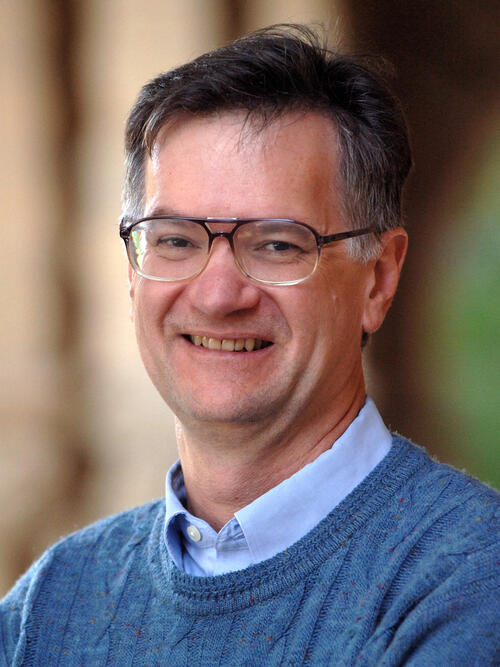
yeonjae lee
Jane Yeonjae Lee is an interdisciplinary qualitative researcher and her research revolves around transnationalism, migrant communities, mobilities, health, and urban environmental politics. In particular, she is interested in understanding the migratory experiences of highly skilled immigrants and how their mobile lives connect and shape the places of migration they move through. Her work has been featured in academic journals such as Health and Place; New Zealand Geographer; and Journal of Ethnic and Migration Studies. She has also contributed to key texts in the field of geography including Elgar Handbook on Medical Tourism and Patient Mobility; Researching the Lifecourse: Critical reflections from the social sciences; and Contemporary Ethnic Geographies in America. Lee holds a PhD in Geography from the University of Auckland. Dr. Lee is currently a visiting scholar at Shorenstein Asia-Pacific Research Center at Stanford University. 

616 Serra StreetEncina Hall E301Stanford, CA94305-6055
(650) 723-6530
0
yeonjae_lee.jpg Ph.D.

Jane Lee joins the Walter H. Shorenstein Asia-Pacific Research Center as a Visiting Scholar during the 2017-18 academic year. Prior to joining Shorenstein APARC, she was a Postdoctoral Research Fellow at Northeastern University working in a global comparative project on exploring sustainable mobilities policies.

Jane is an interdisciplinary qualitative researcher and her research revolves around transnationalism and migration, skilled mobilities, and social policies. In particular, she is interested in understanding the mobile (and marginalized) experiences of migratory groups, and how the particular mobilities of people and ideas may affect the places that are involved. Her work has been featured in academic journals such as Health and Place, and New Zealand Geographer. She has also contributed to key texts in the field of Geography including Elgar Handbook on Medical Tourism and Patient Mobility, Researching the Lifecourse: Critical reflections from the social sciences, and Contemporary Ethnic Geographies in America. During her time at Shorenstein APARC, Jane will participate as a paper author in the Koret Workshop and other center activities.

Jane holds a PhD and BA(Hons) in Geography from the University of Auckland. She also currently serves as an Honorary Research Associate at the University of Auckland. 


Recent Publications:

Lee, J.Y. (2017) ‘Being non-Christian in a Christian community: Experiences of Belonging and Identity among Korean Americans’, Institute of Asian American Studies Publications. 43.

Lee, J.Y., Friesen, W. and Kearns, R. (2015) ‘Return migration of 1.5 generation Korean New Zealanders: Long term and Short term reasons’, NZ Geographer, 71, 34-44.

Lee, J.Y., Kearns, R. and Friesen, W. (2015) ‘Diasporic medical return’, In Lunt, N., Hanefeld, J. and Horsfall, D. (Eds) Elgar Handbook on Medical Tourism and Patient Mobility. London: Elgar, (p.207-216).

Lee, J.Y. (2015) ‘Narratives of the Korean New Zealanders’ return migration: Taking a life history approach’, In Worth, N. and Hardill, I. (Eds) Researching the Lifecourse: Critical reflections from the social sciences. Bristol: Policy Press, (p.183-198). (Invited Contribution)

Lee, J.Y. (2015) ‘Korean Americans: Entrepreneurship and religion’, In Miyares, I. and Airriess, C. (Eds) Contemporary Ethnic Geographies in America (2nd Edition). Rowan & Littlefield Publishing Group, (p.285-302) (Invited Contribution)

Lee, J.Y. (2015) ‘Returning Diasporas: Korean New Zealander returnees’ journeys of searching ‘home’ and identity’ In Christou, A. and Mavroudi, E. (Eds) Dismantling diasporas: rethinking the geographies of diasporic identity, connection and development. London: Ashgate, (p.161-174).

Lee, J.Y. (2011) ‘A trajectory perspective towards return migration and development: The case of young Korean New Zealander returnees’, In Frank, R., Hoare, J., Kollner, P. and Pares, S. (Eds) Korea: Politics, Economy and Society. Danvers: Brill, (p.233-256).

Lee, J.Y., Kearns, R. and Friesen, W. (2010), ‘Seeking affective health care: Korean immigrants’ use of homeland medical services’, Health and Place, 16 (1), 108-115.

Visiting Scholar
<i>Visiting Scholar, APARC, Stanford University</i>
Seminars
-

Symposium on "History of US-Japan Relations"

March 6, 2018

Philippines Conference Room

Shorenstein Asia Pacific Research Center (Stanford University)


Program

9:00am     Registration and Breakfast
 

9:30am     Welcome Remark
                 Takeo Hoshi (Stanford University)
 

9:40am  Session 1: From Perry to the War with China

Presenter:
Kaoru Iokibe (University of Tokyo)

Discussant:
Peter Duus (Stanford University)
 

10:40am  Break
 

11:00am  Session 2: Pacific War and Occupation

Presenter:
Fumiaki Kubo (University of Tokyo)

Discussant:
Kenji Kushida (Stanford University)


12:00pm  Lunch
 

1:00pm   Session 3: Pax Americana and Japan's Postwar Resurgence

Presenter:
Makoto Iokibe (Prefectural University of Kumamoto and Hyogo)

Discussant:
Tsuneo Akaha (Middlebury Institute of International Studies at Monterey)


2:00pm   Session 4: Neoliberalism and Redefinition of the US-Japan Alliance

Presenter:
Masayuki Tadokoro (Keio University)

Discussant:
Michael Armacost (Stanford University)


3:00pm  Break
 

3:20pm   Session 5: US-Japan Leadership Today

Presenter:
Koji Murata (Doshisha University)

Discussant:
Phillip Lipscy (Stanford University)


4:20pm   Closing Remark
              
Makoto Iokibe (Prefectural University of Kumamoto and Hyogo)


Symposiums
-

Abstract:

The world is in turmoil. From India to Turkey and from Poland to the United States, authoritarian populists have seized power. As a result, Yascha Mounk shows, democracy itself may hang in the balance.

Using his own original research and on-the-ground reporting from countries around the world, Mounk makes clear in THE PEOPLE VS. DEMOCRACY what exactly is at risk if the current trends in America and Western Europe continue. Astounding numbers of people in all age, economic, and social groups are more open to military rule, media controls, and other hallmarks of authoritarianism than ever before.
    
“Under these radically changed circumstances, it would be foolhardy to assume that the stability of democracy is sure to persist,” Mounk writes in his introduction. “The first big assumption of the postwar era—the idea that rich countries in which the government had repeatedly changed hands through free and fair elections would forever remain democratic—has all along stood on shaky ground.”

Mounk shows that the two core components of liberal democracy—individual rights and the popular will—are increasingly at war with each other. As the role of money in politics soared and important issues were taken out of public contestation, a system of “rights without democracy” took hold. Populists who rail against this say they want to return power to the people. But in practice they create something just as bad: a system of “democracy without rights.”

The consequence, Mounk writes, is that trust in politics is dwindling. Citizens are falling out of love with their political system. Democracy is wilting away. Drawing on vivid stories and original research, Mounk identifies three key drivers of voters’ discontent: stagnating living standards, fears of multiethnic democracy, and the rise of social media. To reverse the trend, politicians need to enact radical reforms that benefit the many, not the few.


Speaker Bio:

Image
yascha mounk
Yascha Mounk is a Lecturer on Government at Harvard University and a Senior Fellow at New America.

A columnist at Slate and the host of The Good Fight podcast, he is a leading expert on the rise of populism and the crisis of liberal democracy.


Image
people vs democracy jacket


Yascha Mounk Lecturer on Government at Harvard University and a Senior Fellow at New America
Seminars
News Type
Commentary
Date
Paragraphs

“I don't think [young South Koreans] necessarily want reunification,” APARC director Gi-Wook Shin tells an audience during the World Affairs panel, “Responding to North Korea: South Korea’s Olympic Olive Branch and US Cyber Warfare Options." Joined by Ambassador Kathleen Stephens, the two spoke with World Affars CEO Jane Wales about many of the issues facing the Korean peninsula as it prepares for the start of the Pyeongchang Winter Olympics

The conversation is also available as a downloadable podcast

Hero Image
Wrold Affairs CEO Jane Wales, APARC Director Gi-Wook Shin, and Kathleen Stephens
All News button
1
Paragraphs
Book cover of "Peace on a Knife's Edge" showing South Korean president Roh Moo-hyun alongside George W. Bush and Kim Jong-il

Lee Jong-Seok served as vice-secretary of South Korea’s National Security Council and as its unification minister under the Roh Moo-Hyun administration (2003–08). After Roh’s tragic death in 2009, Lee resolved to present a record of the so-called participatory government’s achievements and failures in the realm of unification, foreign affairs, and national security.

Peace on a Knife’s Edge is the translation of Lee’s 2014 account of Roh’s efforts to bring peace to the Korean Peninsula in the face of opposition at home from conservative forces and abroad from the Bush administration’s hard stances of “tailored containment” and its declaration of the North as part of the “axis of evil.” Lee’s narrative will give American readers rare insights into critical moments of Roh’s incumbency, including the tumultuous Six-Party Talks; the delicate process of negotiating the relocation and reduction of United States Forces Korea; Roh’s pursuit of South Korea’s “autonomous defense”; conflicts with Japan over history issues; and the North’s first nuclear weapons test.

Desk, examination, or review copies can be requested through Stanford University Press.

All Publications button
1
Publication Type
Books
Publication Date
Subtitle

The Inside Story of Roh Moo-hyun's North Korea Policy

Book Publisher
Shorenstein APARC
-

Image
cover pic

After the Cold War, Thailand became a poster child of democratizing processes in Southeast Asia. Student protests, farmers’ activism, a thriving civil society, and an expanding middle class suggested a model of successful democratic transition. In the last decades, however, many of the forces that supported that process turned sour on electoral politics. Dr. Sopranzettis book will explore how that happened—new class alliances, discourses of corruption and morality, questions of law.  In this context, he will portray Thailand as an experimental space for a new model of authoritarianism, inspired by Beijing and now spreading throughout the region.  The book, Owners of the Maps: Motorcycle Taxi Drivers, Mobility, and Politics in Bangkok, will be available for sale at the talk.


Claudio Sopranzetti is a Postdoctoral Research Fellow at All Souls College at the University of Oxford. He is the author of Owners of the Maps: Motorcycle Taxi Drivers, Mobility, and Politics in Bangkok and he is currently working on Awakened,  an anthropological graphic novel on Thai politics.

Claudio Sopranzetti Postdoctoral Research Fellow, All Souls College, Oxford University
Seminars
Authors
News Type
News
Date
Paragraphs

This piece originally appeared in Stanford News.

Secretary of State Rex Tillerson visited the Hoover Institution on Wednesday to give a speech on U.S. policies in Syria. He said a continuing presence of U.S. troops in the country is needed to stabilize the area.

In its vision for Syria, the United States wants to see a peaceful, independent country, free of weapons of mass destruction, that could welcome back millions of Syrians displaced by the past years of war, U.S. Secretary of State Rex Tillerson told a Stanford audience on Wednesday.

As part of his prepared policy speech, titled “The Way Forward in Syria,” Tillerson said that in order for that to happen, the conflict between the Syrian people and the regime of Syrian President Bashar al-Assad has to be resolved through diplomatic means, and Assad has to step aside from power. He spoke at the Hoover Institution’s Hauck Auditorium in front of some 265 Stanford students and an additional 100 staff,  faculty members and Hoover fellows, such as former Secretary of State George Shultz.

The event was cosponsored by Hoover and the Freeman Spogli Institute for International Studies (FSI).

Condoleezza Rice and Rex Tillerson“A stable, unified and independent Syria ultimately requires post-Assad leadership in order to be successful,” Tillerson said.

While acknowledging that some Americans are skeptical of the continued military involvement in Syria, Tillerson said it’s vital for the U.S. be engaged in the area in order to continue fighting terrorist groups and the possibility of their resurgence.

“United States will maintain military presence in Syria, focused on ensuring ISIS cannot re-emerge,” Tillerson said. “Ungoverned spaces, especially in conflict zones, are breeding grounds for ISIS and other terrorist organizations. … The fight against ISIS is not over. … Similarly, we must persist in Syria to thwart al-Qaida, which still has substantial presence and base operations in northwest Syria.”

Tillerson said another major goal of the U.S. in Syria is to prevent Iran from growing its influence in the region, calling the country’s influence “malicious.”

In order to achieve these goals, the U.S. will continue to help de-escalate parts of Syria and to invest in stabilization initiatives, such as clearing unexploded landmines, restoring water and electricity and helping to reopen hospitals and schools, Tillerson said.

Tillerson said the U.S. will continue to work on these efforts and on overall peace negotiations with the United Nations and Russia.

“Once Assad is gone from power, the United States will gladly encourage the normalization of economic relations between Syria and other nations,” Tillerson said. “This process will take time. But we’re patient in the departure of Assad and in the establishment of new leadership.”

After his speech, Tillerson sat down with former Secretary of State Condoleezza Rice, the Denning Professor in Global Business and the Economy at Stanford Graduate School of Business, and a senior fellow at Hoover and at FSI.

As part of the conversation, Tillerson reflected on his upcoming anniversary as secretary of state. He said what he likes most about the job is the quality of the people he works with every day.

“Even if we talk about very complicated issues … the level of intelligence and the level of openness for us to have a good conversation about it is what I most look forward to,” he said.

On the flip side, he said, are the days when he has to deal with the loss of life. “Those are the days that are most difficult.”

In response to Rice’s question about the future of international assistance programs such as the President’s Emergency Plan for AIDS Relief (PEPFAR) and the Millenium Challenge Corporation, Tillerson said the United States’ commitment to provide humanitarian aid will remain but that a conversation over how much other countries contribute in aid is also important.

Tillerson also touched on the latest state of U.S. policies toward North Korea, the topic he discussed on Tuesday during a gathering of foreign ministers in Vancouver. He said that there is growing evidence that the latest tough sanctions against North Korea are working.

“We’ve never had a sanctioned regime that is as comprehensive as this one, and we’ve never had Chinese support for sanctions like we’re getting now,” Tillerson said. “We are committed – as is everyone in the international community – to denuclearize North Korea, and we’re gonna stay on that until we achieve it.”


Hero Image
tillerson shultz rice 2
Secretary of State Rex Tillerson meets with former Secretaries of State Condoleezza Rice and George Shultz after speaking with Stanford students about Syria.
Rod Searcey
All News button
1
News Type
Commentary
Date
Paragraphs

"Disaffection in the United States spells serious danger for our ability both to enact serious policy at home and to lead abroad," writes Larry Diamond in the Daily Beast. Diamond proposes the opening of the final fall presidential debates as a potential change that could lead to the revival of American democracy. Read the full article here

Hero Image
elephant 2798628 1920
All News button
1
News Type
Commentary
Date
Paragraphs

China has been working on refining a "vast network of digital espionage as a means of social control." Regarding this practice and its future implications, "China’s experiments with digital surveillance pose a grave new threat to freedom of expression on the internet and other human rights in China," says Larry Diamond in The Atlantic. Read the full article here

Hero Image
gettyimages 170594673
All News button
1
Subscribe to Governance