Governance

FSI's research on the origins, character and consequences of government institutions spans continents and academic disciplines. The institute’s senior fellows and their colleagues across Stanford examine the principles of public administration and implementation. Their work focuses on how maternal health care is delivered in rural China, how public action can create wealth and eliminate poverty, and why U.S. immigration reform keeps stalling. 

FSI’s work includes comparative studies of how institutions help resolve policy and societal issues. Scholars aim to clearly define and make sense of the rule of law, examining how it is invoked and applied around the world. 

FSI researchers also investigate government services – trying to understand and measure how they work, whom they serve and how good they are. They assess energy services aimed at helping the poorest people around the world and explore public opinion on torture policies. The Children in Crisis project addresses how child health interventions interact with political reform. Specific research on governance, organizations and security capitalizes on FSI's longstanding interests and looks at how governance and organizational issues affect a nation’s ability to address security and international cooperation.

-

PLEASE NOTE THIS EVENT WILL NOW RUN FROM 4:45-6:00 PM


What explains variation in access to citizenship rights in China? Why do some governments extend citizenship to migrants while others do not? This talk details the structural barriers to accessing citizenship rights in China through the household registration system, hukou, which treats domestic migrant workers as foreigners in their own country. Over the last twenty years, city governments erected local citizenship regimes, controlling who is allowed to become full citizens locally while keeping unwanted populations out. In this talk, Prof. Vortherms details the sub-national variation in these policies and explains the connection between economic growth and citizenship acquisition. When the local economy is exposed to foreign market forces, local governments are incentivized to open citizenship to high-skilled workers, who have greater marginal benefits for the local economy in the presence of foreign production. Protectionism leads to stricter policies for low-skilled and chain migrants, while lower local fiscal capacity can increase opportunities for buying citizenship through investment. This talk tests these hypotheses on an original database of local naturalization policies in 249 cities in China, and concludes with a discussion of the prospects and implications of recent reforms to the household registration system.


Image
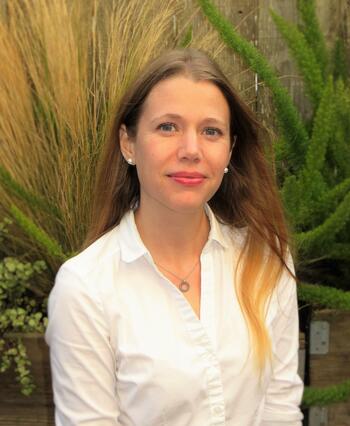
Portrait of Samantha Vortherms
Samantha Vortherms is a postdoctoral fellow at Stanford University's Shorenstein Asia-Pacific Research Center and an Assistant Professor of Political Science at the University of California, Irvine. Her research focuses on comparative political economy, development, social welfare, and survey research. Her current book project, Localized Citizenship in China, examines sub-national variation in access to citizenship rights in China. Prof. Vortherms research has been supported by the National Science Foundation, the Fulbright Program, and the Social Science Research Council. Before her time at Stanford, she received a Ph.D. in Political Science from the University of Wisconsin—Madison and two Master’s degrees in International Relations and Public Policy at the University of Chicago.

Samantha Vortherms <i>Postdoctoral fellow, Stanford Shorenstein APARC, Assistant Professor of Political Science, U.C. Irvine</i>
Lectures
-

With the UK on the brink of exiting the European Union, prominent British voices are calling for the country to reconsider its decision to leave. A crucial parliamentary vote later this year will be the key moment, heralding either a last stand in favour of Britain's place in Europe or the unravelling of the country's forty-year membership of the world's most sophisticated supranational entity. In this lecture the former British deputy Prime Minister explores the origins of the UK’s troubled relationship with the EU, explains the current deep divisions in British politics, and charts an alternative course for the UK within a reformed Europe.

Image
Photo of The Rt Hon Sir Nick Clegg

The Rt Hon Sir Nick Clegg
served as Deputy Prime Minister in Britain’s first post war Coalition Government from 2010 to 2015. He was Leader of the Liberal Democrats from 2007 to 2015 and was a Member of Parliament for Sheffield Hallam for 12 years.

Prior to his entry into British politics, he served as a leading Member of the European Parliament on trade and industry affairs and as an international trade negotiator in the European Commission dealing with the accession of China and Russia into the World Trade Organization.

As Deputy Prime Minister, Sir Nick occupied the second highest office in the country at a time when the United Kingdom was recovering from a deep recession following the banking crisis of 2008, and hugely controversial decisions were needed to restore stability to the public finances. During that time, he oversaw referenda on electoral reform and Scottish independence, and extensive reforms to the education, health and pensions systems. He was particularly associated with landmark changes to the funding of schools, early years’ education and the treatment of mental health within the NHS. His book, ‘Politics: Between the Extremes’, is a reflection on his time in Government and the place of liberalism in the current political landscape.

Sir Nick is one of the most high-profile pro-European voices in British politics, and has played an influential role in the debate leading up to and since the EU referendum in June 2016. His insight into the most senior levels of UK government, combined with an integral understanding and experience of European politics, contacts at the highest levels of government across the EU, and fluency in five European languages, mean that his views and analysis on the current Government’s Brexit negotiations continue to be in high demand. He published his second best-selling book - ‘How to Stop Brexit - and Make Britain Great Again’ - in October 2017.

As well as leading his small think tank, Open Reason, Sir Nick is a Global Commissioner for the Global Commission on Drugs Policy, Chairman of the Social Mobility Foundation and a Visiting Professor in Practice at the LSE’s School of Public Policy. He remains an outspoken advocate of civil liberties and center ground politics, of radical measures to boost social mobility, and of an internationalist approach to world affairs. He received a knighthood in the 2018 New Years Honours list, for his political and public service.

Koret-Taube Conference Center
John A. and Cynthia Fry Gunn Building
366 Galvez Street

Sir Nick Clegg Former Deputy Prime Minister, United Kingdom speaker
Lectures
-

Organized by the Media & Democracy program at the Social Science Research Council, in collaboration with the Stanford Center on Philanthropy and Civil Society and the Center for Advanced Study in the Behavioral Sciences at Stanford University. 

The 2016 American elections intensified popular as well as scholarly interest in the relationship between media and democracy. The role of social media has featured particularly prominently in debates over fake news, information bubbles, and algorithmic propaganda. Increased scholarly interest is manifested in the numerous conferences that have been held over the last year or so, jointly exploring technological changes in the media, social interactions online, and their relationship to the quality of our democracy.  
 
Social Media and Democracy: Assessing the State of the Field and Identifying Unexplored Questions will convene researchers to take stock and look ahead. In a format of brief remarks and panel discussions, we seek to assess the current literature on social media and democracy together, and to set a research agenda for the field moving forward.  
 
Format: Each panelist will be asked to speak for up to ten minutes. In lieu of preparing traditional research presentations, we encourage attendees to reflect on the field as a whole, and ask themselves where they would like to see scholars go next. After hearing prepared remarks from panelists, each panel will have allotted time for a discussion with audience participation.
 
Panel-specific prompts are included below, geared toward key connecting themes: What gaps exist in current research? What studies would we like to see that do not exist right now? What do we not yet know about the impact of social media on democracy? What partnerships are needed to pursue research that can answer these questions?


Thursday, April 19   8:30-9:00am             Registration and Breakfast


9:00-9:30am
             Opening Remarks: Diana Mutz and Nate Persily  Overview of the Literature on Misinformation: Josh Tucker     
 
9:30-11:00am           Inflammatory Speech and Incivility Online
 
Panelists: Susan Benesch Bryan Gervais Diana Mutz Monica Stephens
 
Is social media a medium on which inflammatory speech and uncivil discourse are particularly prevalent? Online incivility may take a range of expressions, from unusually aggressive statements of individual political views to coordinated campaigns of harassment and intimidation. The targets may include out-partisans, professionals such as journalists, politicians, or government employees, and minority or underrepresented groups such as women and ethnic/religious minorities.
 
What, if anything, is different about inflammatory speech in the social media environment? What do we not yet understand about the origins, spread, and consequences of inflammatory speech online? Should we distinguish between different forms of incivility (e.g. direct threats vs. slurs, individual vs. coordinated harassment)? To what extent is online incivility related to real world actions (including, but not limited to, real world violence)?  
 
11:00-11:30am
      Coffee Break   
11:30am-1:00pm  Distribution and Effects of Fake News
 
Panelists: Renee DiResta Kelly Garrett David Rand Josh Tucker
 
The distribution of false information - intentional and unintentional - through social media has  become a significant source of anxiety in the media, politics, and public discourse. Exposure to false information can lead to mistaken impressions about the world, and may also deepen partisan divisions.  
 
What do we need to learn about how misinformation spreads online? We already have some research that quantifies exposure to misinformation online; what do we need to learn next about the effects of such exposure (on the individual level and in the aggregate)? Has the spread of social media raised new, unanswered questions about how people process information and classify it as true or false?  
 
1:00-2:00pm       Lunch   2:00-3:30pm            Correcting Disinformation
 
Panelists: Jonathan Albright Matthew Baum Adam J. Berinsky Matthew Gentzkow Emily Thorson
 
Once a person has been exposed to, and accepted as true, an inaccurate piece of information, how can the information be successfully corrected? What do we need to understand next about the possibilities and pitfalls for correcting misinformation?  
 
Do we have reason to suspect that social media changes the difficulty of correcting misperceptions? What do we not yet know about how corrections of factual information lead to changes in political attitudes or behavior? If we want to correct false beliefs, what do we need to learn about who should go about making corrections, and how?   


Friday, April 20th   8:30-9:00am  Breakfast
 
9:00am-10:30am
Homophily in the Social Media Sphere
 
Panelists: Damon Centola Annie Franco Shanto Iyengar Jaime Settle
 
Concern about online political discourse taking place in self-selected or algorithmically supported “information bubbles” is common, though there are differing views on how serious this problem is.  
 
Do we know whether social media is exceptional in enabling or limiting exposure to politically heterogeneous information? How do algorithms affect how much political content users see and/or the kind of political content to which they are exposed? What do we not yet understand about the frequency and consequences of political homophily on social media, as distinct from other types of media? What study would you like to see next on the prevalence and consequences of homogeneous political information? 

10:30-10:45am         Coffee Break   10:45am-12:15pm Globalization of the Marketplace of Ideas
 
Panelists: Nina Jankowicz Linda Kinstler Jennifer Pan


The use of social media for political ends is not limited to the United States, nor to traditional state actors. Narratives about politics are circulated online to influence domestic audiences, to drive political perceptions abroad, and to organize as well as suppress citizen unrest.
 
What do we need to learn next about the effectiveness of using social media to push the political interests of state- or non-state actors? What do we not yet understand about the dynamics at play when nation-states get involved in one another’s media ecosystems? How is this any different from when they previously did so using other media? What can we learn from studying the intersection of media and democracy in comparative perspective?
 
12:15-1:30pm Concluding Discussion Over Lunch (to-go available per request

Fisher Conference Center Frances C. Arillaga Alumni Center  Stanford University

Nate Persily James B. McClatchy, Professor of Law
Diane Mutz Samuel A. Stouffer Professor of Political Science and Communication, University of Pennsylvania
Conferences
-

Please note the venue change to the Bechtel Conference Center

Encina Hall, 1st floor. We have reached venue capacity. RSVPs are closed.

Peter Baker is the chief White House correspondent for The New York Times covering President Donald J. Trump. He previously covered the presidencies of Barack Obama, George W. Bush and Bill Clinton.

Mr. Baker joined The Times in 2008 after 20 years at The Washington Post. He began writing about Mr. Obama at the inception of his administration, through health care and economic debates, the raid that killed Osama bin Laden, the re-election campaign and decisions over war and peace in Iraq, Afghanistan and Syria. During his first tour at the White House, Mr. Baker was a co-author of the original story breaking the Monica Lewinsky scandal and served as The Post’s lead writer on the impeachment battle. During his next White House assignment, he covered the travails of Mr. Bush’s second term, from the Iraq war and Hurricane Katrina to Supreme Court nomination fights and the economy.

In between stints at the White House, Mr. Baker and his wife, Susan Glasser, spent four years as Moscow bureau chiefs, chronicling the rise of Vladimir V. Putin, the rollback of Russian democracy, the second Chechen war and the terrorist attacks on a theater in Moscow and a school in Beslan. Mr. Baker also covered the wars in Afghanistan and Iraq. He was the first American newspaper journalist to report from rebel-held northern Afghanistan after Sept. 11, 2001, and he spent the next eight months covering the overthrow of the Taliban and the emergence of a new government. He later spent six months in the Middle East, reporting from inside Saddam Hussein's Iraq and around the region before embedding with the United States Marines as they drove toward Baghdad.

Baker is the author of four books, most recently “Obama: The Call of History,” an illustrated history of the 44th president.

A native of the Washington area, Mr. Baker attended Oberlin College.


The Payne Lectureship is named for Frank E. Payne and Arthur W. Payne, brothers who gained an appreciation for global problems through their international business operations. Their descendants endowed the annual lecture series at the Freeman Spogli Institute for International Studies in order to raise public understanding of the complex policy issues facing the global community today and to increase support for informed international cooperation.

The Payne Distinguished Lecturer is chosen for his or her international reputation as a leader, with an emphasis on visionary thinking; a broad, practical grasp of a given field; and the capacity to clearly articulate an important perspective on the global community and its challenges.

Peter Baker Chief White House Correspondent, The New York Times
Seminars
-

This event is closed.


Speaker Bio:

[[{"fid":"230390","view_mode":"crop_870xauto","fields":{"style":"margin: 3px; float: left;","class":"media-element file-crop-epsa-crop-portret","data-delta":"4","format":"crop_870xauto","field_file_image_description[und][0][value]":"","field_file_image_alt_text[und][0][value]":false,"field_file_image_title_text[und][0][value]":false,"field_credit[und][0][value]":"","field_caption[und][0][value]":"","thumbnails":"crop_870xauto","alt":"","title":""},"type":"media","field_deltas":{"4":{"style":"margin: 3px; float: left;","class":"media-element file-crop-epsa-crop-portret","data-delta":"4","format":"crop_870xauto","field_file_image_description[und][0][value]":"","field_file_image_alt_text[und][0][value]":false,"field_file_image_title_text[und][0][value]":false,"field_credit[und][0][value]":"","field_caption[und][0][value]":"","thumbnails":"crop_870xauto","alt":"","title":""}},"link_text":null,"attributes":{"style":"margin-right: 6px; margin-left: 6px; float: left; height: 176px; width: 150px;","class":"media-element file-crop-870xauto","data-delta":"4"}}]]

The 12th and 13th President (2008-2016) of the Republic of China (Taiwan)                          

Ma Ying-jeou was born in 1950 in Hong Kong, and emigrated in 1951 with his family to Taiwan, where he grew up. He graduated from National Taiwan University’s Department of Law in 1972, then served in the Marines and Navy for two years before earning an LL.M from New York University (1976) and an S.J.D. from Harvard University (1981). Dr. Ma began his political career as the deputy director of the Presidential Office’s First Bureau, and doubled as President Chiang Ching-kuo’s personal English interpreter. After President Chiang passed away in 1988, he held a series of other positions in government, including the Chairman of the Research, Evaluation, and Development Commission, Senior Vice Chairman of the Mainland Affairs Council, and Minister of Justice. In 1998, he was elected mayor of Taipei, an office he held until 2006. In 2008, he was elected President of the Republic of China (Taiwan) with 58% of the vote, the highest in history, and he was re-elected in 2012. 

During President Ma’s two terms in office, Taiwan’s per-capita GDP (on a PPP basis) rose from US$34,936 to $48,095, passing the U.K., France, Denmark, Italy, Canada, Japan, and South Korea and advancing 10 places in eight years. Taiwan was able to maintain peaceful relations with the Chinese mainland, friendly relations with Japan, and close relations with the United States; relations with all three countries were the best they had been in many decades. In November 2015, President Ma met with the mainland Chinese leader Xi Jinping in Singapore, the first face-to-face meeting between leaders of the two sides in 70 years. President Ma left office on May 20, 2016.    

Traitel Building, Hauck Auditorium

Ma Ying-jeou Former President of the Republic of China (Taiwan)
Panel Discussions
-

Hate propaganda has been a feature of politics in India, Indonesia, and other Asian democracies long before the recent surge in interest in so-called “fake news” and intolerant populism in the West. This presentation dissects the political strategy of “hate spin,” which includes not only the use of hate speech or incitement, but also the creative manufacture of righteous indignation and popular mobilization framed as responses to victimhood. Examples include the “love jihad” conspiracy theory in India and blasphemy allegations in Indonesia, which have been used to devastating effect by religious nationalists. Existing religious-offense laws have backfired, while incitement laws, though necessary, are systemically incapable of dealing with hate propagandists’ highly sophisticated and distributed disinformation campaigns.  The speaker's book on this topic, Hate Spin, will be available for sale at his talk.

Image
cherian george 2018 4x6
Cherian George is a professor of media studies at Hong Kong Baptist University. He is the author of Hate Spin: The Manufacture of Religious Offense and its Threat to Democracy (2016), which was named on Publishers Weekly’s list of the 100 best books of 2016. Prof. George’s PhD is from Stanford University’s Department of Communication (2003). He was previously a journalist with The Straits Times in his native Singapore. His latest book on Singapore is the self-published Singapore, Incomplete: Reflections on a First World Nation’s Arrested Political Development (2017).

Cherian George Professor of Media Studies, Hong Kong Baptist University
Seminars
-

Abstract:

In 2002 and 2003, Americans pointed to Japan after the Second World War as a model which proved that enemy countries could be remade into stable democratic allies through short military occupation. Planners and politicians drew on their understanding of events in Japan to learn "lessons" for a post-Saddam Iraq. In the years since, it has become common to blame the failures of intervention in Iraq on American ignorance and insufficient planning. But is that popular characterization correct? This talk discusses whether and how the planning phases for Japan and Iraq differed, and with what implications for the occupied countries.


Speaker Bio:

Image
dbarnes1
Dr. Dayna Barnes is a specialist in 20th century international history, American foreign policy, and East Asia. She is a visiting scholar at Stanford University's Center on Democracy, Development and Rule of Law, and assistant professor of history at City, University of London. Her book, Architects of Occupation: American Experts and the Planning for Postwar Japan, was published in Cornell University Press in March 2017.

Visiting Scholar at CDDRL
Seminars
-

Abstract:

The South African democratic process has crossed two significant milestones. One is political legitimacy in the sense that there is no significant threat to the constitution or political systems that the country adopted in 1996. Secondly, the systemic instability threat arising from the counter-revolutionary apartheid forces is now something of the past. There is simply no imminent threat of a retreat to the country’s authoritarian and racist past. The elusive goals remain in the economic arena – namely inclusive growth, widening inequality and slow development. How is the country shaping up to these challenges?


Speaker Bio:

Image
maphai
Professor Vincent Maphai an unusual and distinguished career in academia, private sector and public service. He is currently a visiting Professor at Williams College, Massachusetts, Center for Global Studies. In an academic career spanning two decades, he studied and taught at various universities both locally. He was professor extraordinaire in the Department of Political Science at the University of South Africa (UNISA).. who held fellowships at Harvard (1988), Princeton (1989) and Stanford (1995). From 1991 to 1994 he was associate professor and head of the political science department at the University of the Western Cape. He also served as a Research Executive Director of social dynamics at the HSRC for three years..

Vincent Maphai Visiting Professor at Williams College
Seminars
-


Speaker Bio:

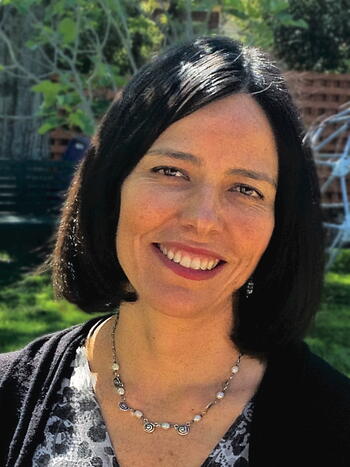
Beatriz Magaloni Beatriz Magaloni
Beatriz Magaloni is an Associate Professor in the Department of Political Science and a Senior Fellow at the Freeman Spogli Institute for International Studies (FSI) at Stanford University. She is also an affiliated faculty member of the Woods Institute of the Environment (2011-2013) and a Faculty Fellow at the Stanford Center for International Development. Her first book, Voting for Autocracy: Hegemonic Party Survival and its Demise in Mexico (Cambridge University Press, 2006), won the Best Book Award from the Comparative Democratization Section of the American Political Science Association and the 2007 Leon Epstein Award for the Best Book published in the previous two years in the area of political parties and organizations. Her second book, Strategies of Vote Buying: Democracy, Clientelism, and Poverty Relief in Mexico (co-authored with Alberto Diaz Cayeros and Federico Estévez), studies the politics of poverty relief. Why clientelism is such a prevalent form of electoral exchange, how it distorts policies aimed at aiding the poor, and when it can be superseded by more democratic and accountable forms of electoral exchange are some of the central questions that the book addresses.

Dept. of Political Science
Encina Hall, Room 436
Stanford University,
Stanford, CA

(650) 724-5949
0
Senior Fellow at the Freeman Spogli Institute for International Studies
Graham H. Stuart Professor of International Relations
Professor of Political Science
beatriz_magaloni_2024.jpg MA, PhD

Beatriz Magaloni Magaloni is the Graham Stuart Professor of International Relations at the Department of Political Science. Magaloni is also a Senior Fellow at the Freeman Spogli Institute, where she holds affiliations with the Center on Democracy, Development and the Rule of Law (CDDRL) and the Center for International Security and Cooperation (CISAC). She is also a Stanford’s King Center for Global Development faculty affiliate. Magaloni has taught at Stanford University for over two decades.

She leads the Poverty, Violence, and Governance Lab (Povgov). Founded by Magaloni in 2010, Povgov is one of Stanford University’s leading impact-driven knowledge production laboratories in the social sciences. Under her leadership, Povgov has innovated and advanced a host of cutting-edge research agendas to reduce violence and poverty and promote peace, security, and human rights.

Magaloni’s work has contributed to the study of authoritarian politics, poverty alleviation, indigenous governance, and, more recently, violence, crime, security institutions, and human rights. Her first book, Voting for Autocracy: Hegemonic Party Survival and its Demise in Mexico (Cambridge University Press, 2006) is widely recognized as a seminal study in the field of comparative politics. It received the 2007 Leon Epstein Award for the Best Book published in the previous two years in the area of political parties and organizations, as well as the Best Book Award from the American Political Science Association’s Comparative Democratization Section. Her second book The Politics of Poverty Relief: Strategies of Vote Buying and Social Policies in Mexico (with Alberto Diaz-Cayeros and Federico Estevez) (Cambridge University Press, 2016) explores how politics shapes poverty alleviation.

Magaloni’s work was published in leading journals, including the American Political Science Review, American Journal of Political Science, Criminology & Public Policy, World Development, Comparative Political Studies, Annual Review of Political Science, Cambridge Journal of Evidence-Based Policing, Latin American Research Review, and others.

Magaloni received wide international acclaim for identifying innovative solutions for salient societal problems through impact-driven research. In 2023, she was named winner of the world-renowned Stockholm Prize in Criminology, considered an equivalent of the Nobel Prize in the field of criminology. The award recognized her extensive research on crime, policing, and human rights in Mexico and Brazil. Magaloni’s research production in this area was also recognized by the American Political Science Association, which named her recipient of the 2021 Heinz I. Eulau Award for the best article published in the American Political Science Review, the leading journal in the discipline.

She received her Ph.D. in political science from Duke University and holds a law degree from the Instituto Tecnológico Autónomo de México.

Director, Poverty, Violence, and Governance Lab
Co-director, Democracy Action Lab
CV
Date Label
Associate Professor in the Department of Political Science and a Senior Fellow at the Freeman Spogli Institute for International Studies (FSI) at Stanford University
Seminars
-

Abstract:

Financial markets expose individuals to the broader economy. Does participation in fi nancial markets also lead individuals to re-evaluate the costs of conflict, their views on politics and even their votes? Prior to the 2015 Israeli elections, we randomly assigned fi nancial assets from Israeli and Palestinian companies to likely voters and gave them incentives to actively trade for up to seven weeks. Opportunities to trade in fi nancial markets systematically shifted vote choices and increased support for peace initiatives. These effects persist a year after the experiment, and appear consistent with fi nancial market exposure leading to increased awareness of the economic risks of conflict.


Speaker Bio:

Image
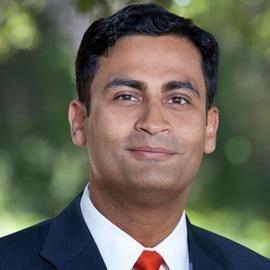
saumitra jha
Along with being a Senior Fellow at FSI, Saumitra Jha is an Associate Professor of Political Economy at the Stanford Graduate School of Business, by courtesy, of Economics and of Political Science, and a Senior Fellow at SIEPR. Saum holds a BA from Williams College, master’s degrees in economics and mathematics from the University of Cambridge, and a PhD in economics from Stanford University. Prior to returning to Stanford, he was an Academy Scholar at Harvard University. Saum has been a Fellow of the Niehaus Center for Globalization and Governance and the Center for the Study of Democratic Politics at Princeton University and received the Michael Wallerstein Award for best published article in Political Economy from the American Political Science Association in 2014 for his research on ethnic tolerance. Saumitra has consulted on economic and political risk issues for the United Nations/ WTO, the World Bank and other organizations. Having grown up in England, Scotland and the Indian Himalaya, Saum's research interests now take him to Israel, Japan, Mexico and elsewhere.

Saumitra Jha Associate Professor of Political Economy at Stanford’s Graduate School of Business
Seminars
Subscribe to Governance