Governance

FSI's research on the origins, character and consequences of government institutions spans continents and academic disciplines. The institute’s senior fellows and their colleagues across Stanford examine the principles of public administration and implementation. Their work focuses on how maternal health care is delivered in rural China, how public action can create wealth and eliminate poverty, and why U.S. immigration reform keeps stalling. 

FSI’s work includes comparative studies of how institutions help resolve policy and societal issues. Scholars aim to clearly define and make sense of the rule of law, examining how it is invoked and applied around the world. 

FSI researchers also investigate government services – trying to understand and measure how they work, whom they serve and how good they are. They assess energy services aimed at helping the poorest people around the world and explore public opinion on torture policies. The Children in Crisis project addresses how child health interventions interact with political reform. Specific research on governance, organizations and security capitalizes on FSI's longstanding interests and looks at how governance and organizational issues affect a nation’s ability to address security and international cooperation.

-

Abstract:

The dynamic game between political and business elites in both democratic and non-democratic countries has received much attention since the rise of the super-rich in global politics. How does the Chinese Communist Party manage its rising super-rich in the private sector in order to prevent state capture and stay in power? Using a mixed-method approach, this research project details how the super-rich have become a particular target of the party-state, which aims to monitor them and channel their involvement in politics in ways that minimize their potentials to capture the state and maximize their willingness to cooperate with the regime. This inquiry proposes a new perspective for understanding how China has maintained regime stability thus far with its rapid economic development, and what processes may lead to destabilization.


Speaker Bio:

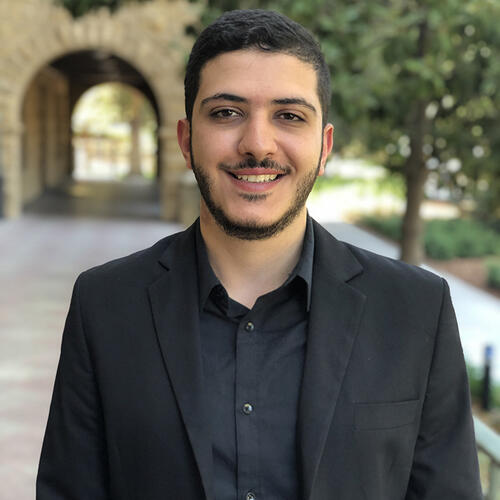
Image
zhu zhang photo
Zhu Zhang is a pre-doctoral fellow at CDDRL and a Ph.D. candidate in Political Science at Tulane University, with a major field in comparative politics. She studies authoritarianism with particular interests in state-business relations and Chinese politics. Her dissertation book project, Wealth without Power: The Rise of Chinese Private Business Elites and Their Relationship to the Communist Party, examines how the party-state embraces its business elites while preventing them from preying on the state in autocracy. Zhu holds an M.A. in International Affairs from the Pennsylvania State University, and a B.A. in History from Shanghai Normal University.

Pre-doctoral fellow at CDDRL
Seminars
-

Abstract:

What explains the political momentum of far right parties? I argue that the far right has broadened its base by mobilizing contingent extremists—supporters who have long held extreme beliefs, but who were inactive in more hostile political opinion climates. To test this theory, I field a priming experiment in Germany, Hungary, and France (n=4,776) to measure respondents’ willingness to identify as far right supporters when assigned to more or less ‘favorable’ information about far right party popularity through experimentally varied polls. I find strong evidence that (1) contingent extremists exist; and (2) that significantly more extremists are ‘contingent’ in voting districts where the far right is electorally weak. This suggests that extremists’ direct social environments moderate the effect of the media on their political mobilization. Moreover, I identify a minimal ‘climate of opinion’ threshold at which extremists begin to support the party openly.


Speaker Bio:

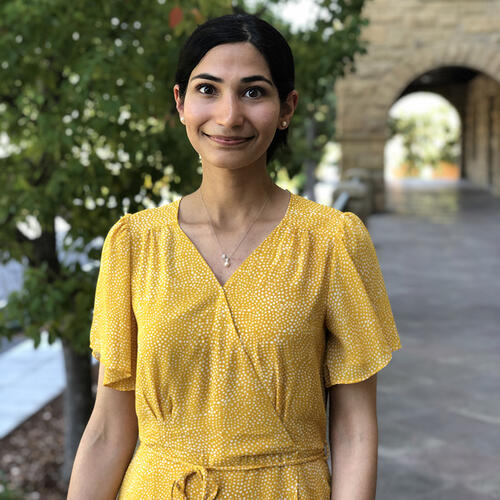
Image
jakli
Laura Jakli is a Predoctoral Fellow at the Center on Democracy, Development and the Rule of Law at Stanford University, and a Ph.D. Candidate in the Department of Political Science at the University of California, Berkeley. Her research examines emerging threats to democracy, focusing on political extremism and authoritarian encroachment. Her related research examines how information networks shape migration patterns and refugee behavior. Her research appears in International Studies Quarterly, the Virginia Journal of International Law, and Democratization (Oxford University Press).

Encina Hall, C147 616 Jane Stanford Way Stanford, CA 94305-6055
0
CDDRL Predoctoral Fellow, 2018-20
Fellow, Program on Democracy and the Internet, 2018-20
jakli.jpg

​I am a Junior Fellow at the Harvard Society of Fellows. Starting in 2023, I will be an Assistant Professor at Harvard Business School's Business, Government and the International Economy (BGIE) unit.

My research examines political extremism, destigmatization, and radicalization, focusing on the role of popularity cues in online media. My related research examines a broad range of threats to democratic governance, including authoritarian encroachment, ethnic prejudice in public goods allocation, and misinformation. 

​My dissertation won APSA's Ernst B. Haas Award for the best dissertation on European Politics. I am currently working on my book project, Engineering Extremism, with generous funding from the William F. Milton Fund at Harvard.

My published work has appeared in the American Political Science Review,  Governance,  International Studies QuarterlyPublic Administration Review, and the Virginia Journal of International Law, along with an edited volume in Democratization (Oxford University Press). My research has been featured in KQED/NPRThe Washington Post, and VICE News.

I received my Ph.D. in Political Science at the University of California, Berkeley in 2020. I was a Predoctoral Research Fellow at the Center on Democracy, Development and the Rule of Law at Stanford University and the Stanford Program on Democracy and the Internet. I hold a B.A. (Magna Cum Laude; Phi Beta Kappa) from Cornell University and an M.A. (with Distinction) from the University of California, Berkeley.

CV
Predoctoral Fellow at the Center on Democracy, Development and the Rule of Law at Stanford University
Seminars
0
rsd19_072_0329a.jpg

Julien is an Assistant Professor in the Division of Public Policy at the Hong Kong University of Science and Technology. His research focuses on how technology interplays with society and international security through various topics such as nuclear technologies, energy transition, and technological risks, specifically in the Asia Pacific region and in the context of the U.S-China rivalry. A nuclear engineer by training, Julien has also worked to promote open-source and transparent scientific tools that can contribute to research in nuclear security and nuclear technologies. He is the project lead for the open-source nuclear reactor physics code ONIX (https://onix-documentation.readthedocs.io/en/latest/).

Julien was a postdoctoral fellow at the Project on Managing the Atom at Harvard’s Belfer Center from 2021 to 2022 and a nuclear security postdoctoral fellow at Stanford's Center for International Security and Cooperation (CISAC) from 2019 to 2021. He was also part of the Science and Global Security research team at Princeton University from 2014 to 2019 and regularly contributes to projects with the International Panel on Fissile Materials (IPFM). Julien holds a Ph.D. in Applied Physics from Princeton University, an M.Sc. in Nuclear Science and Technology from Tsinghua University Beijing, and a Diplôme d'Ingénieur (M.Sc. and B.Sc.Eng.) from Ecole Centrale de Marseille.

Affiliate
0
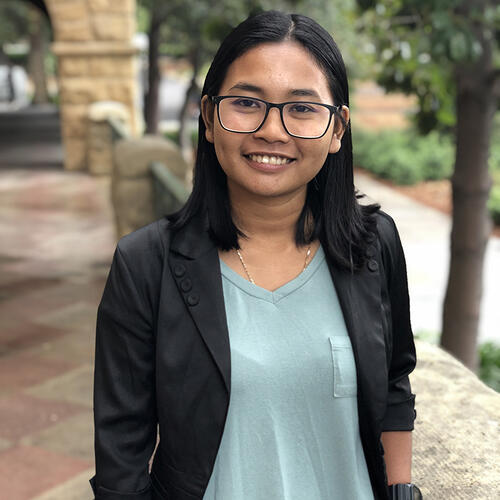
rsd19_072_0235a.jpg

Dr. Melissa Carlson is currently working with the Defense Security Cooperation Agency's Assessment, Monitoring, and Evaluation unit, where she promotes rigorous standards of measuring the effectiveness of the U.S.'s security cooperation and assistance programming. During her tenure at CISAC, she was a postdoctoral research and teaching fellow. She received her PhD in Political Science from the University of California, Berkeley, specializing in international relations, comparative politics, and methodology. Dr. Carlson's primary research examines the factors that influence the variation and intensity of partnerships between governments and foreign militant groups with a focus on the recent conflicts in Iraq and Syria. Her book-style dissertation project finds that, when foreign militant groups and state armed forces share similar organizational characteristics, they are more likely to deploy forces to conduct joint combat operations and provide each other with advanced weapons systems. In other research, Dr. Carlson examines the factors that influence informal and secret security cooperation between states and how misinformation and rumors influence refugees' relationships with host governments, service providers, and smugglers. Her research has been published in the American Political Science Review, the Review of International Organizations, and International Studies Quarterly, among other outlets. Outside of academia, Dr. Carlson has worked as a consultant for the International Organization for Migration's Iraq and Jordan Missions.

Affiliate
-

Abstract:

Anti-corruption efforts by authoritarian regimes are often assumed to be political charades or excuses to purge rivals. The common view is that meaningful corruption control involves strengthening democratic institutions, such as judicial independence and the rule of law, which autocrats are largely unwilling to do. However, I argue that successful anti-corruption reform by nondemocratic governments is more common than is widely acknowledged. Using a novel scoring system for anti-corruption efforts, I show that there have been at least nine successful reforms in autocracies in recent decades. Moreover, my research finds that in these cases autocrats did not reduce corruption through the conventional democratic approach, but instead used decidedly authoritarian methods, and often strengthened their regimes in the process. I illustrate these points by analyzing Xi Jinping’s ongoing anti-corruption campaign in China, alongside cases in authoritarian South Korea, Taiwan, and elsewhere.


Speaker Bio:

Image
carothers headshot
Christopher Carothers is a postdoctoral fellow at the Center on Democracy, Development and the Rule of Law at Stanford University. His research in comparative politics focuses on East Asia, authoritarianism, and the politics of corruption, and has previously been published in the Journal of Democracy and various media outlets. He received his Ph.D. in Government from Harvard University in 2019.

0
CDDRL Postdoctoral Scholar, 2019-20
carothers_headshot.jpeg

I am a scholar of comparative politics and currently a postdoctoral fellow at the University of Pennsylvania’s Center for the Study of Contemporary China. My research is on authoritarianism and corruption control with a regional focus on East Asia—especially China, the Koreas, and Taiwan. My first book, Corruption Control in Authoritarian Regimes: Lessons from East Asia (Cambridge University Press, 2022), is about why some autocrats are motivated to curb corruption, why their efforts succeed or fail, and what the political consequences of such efforts are. I received my Ph.D. in Government from Harvard University in 2019.

My writing has been published or is forthcoming in numerous academic and policy journals, including Perspectives on Politics, Government and Opposition, the Journal of Democracy, Politics and Society, the Journal of Contemporary China, the Journal of East Asian Studies, Foreign Affairs, Foreign Policy, the China Leadership Monitor, and The National Interest.

Before academia, I lived and traveled in East Asia for several years, learning Chinese and Korean along the way. I worked for The Wall Street Journal Asia in Hong Kong, taught English in Xinjiang, and studied Korean in Seoul. I received my B.A. (summa cum laude), also from Harvard, in Social Studies and East Asian Studies.

Postdoctoral fellow at Center on Democracy, Development and the Rule of Law (CDDRL)
Seminars
-

This event is co-sponsored by the Center for Russian, East European and Eurasian Studies


Seminar recording: https://youtu.be/WWP-FueMOJ8


Abstract: Russia’s ability to challenge Europe and the West will depend in no small measure on the performance of its economy. Dr. Anders Åslund will discuss his book, Russia’s Crony Capitalism. The Path from Market Economy to Kleptocracy. The book explores how Vladimir Putin has consolidated his rule over Russia, including by appointing close associates as heads of state enterprises and securing control of the Federal Security Service and judiciary, enriching his business friends from Saint Petersburg in the process with preferential government deals. Thus, Putin has created a super wealthy and loyal plutocracy that owes its existence to his brand of authoritarianism. Dr. Åslund assesses Putin’s personal wealth and discusses what this system means for Russia and Russian power.


Speaker's Biography: 

Image
anders aslund 2016 11 2
Anders Åslund is a senior fellow at the Atlantic Council and an adjunct professor at Georgetown University. He is a leading specialist on East European and post-Soviet economies and the author of 15 books, most recently Russia’s Crony Capitalism: The Path from Market Economy to Kleptocracy.  Dr. Åslund has worked as an economic adviser to several governments, including the Russian and Ukrainian governments.  He has also been a professor at the Stockholm School of Economics and was the founding director of the Stockholm Institute of Transition Economics. He earned his Ph.D. from the University of Oxford.

Anders Åslund Adjunct professor at Georgetown University’s School of Foreign Service Georgetown University
Seminars
-

The world is experiencing an unprecedented period of geopolitical change and technological disruption. How should we rethink U.S. national security and defense in an era of intensifying great power competition? What principles should guide US policy and presidents in the future?


Drell Lecture Recording: https://youtu.be/y8a307Sttjc


Drell Lecture Transcript: Click here to view


Speaker's Biography: Michèle Flournoy is Co-Founder and Managing Partner of WestExec Advisors, and former Co- Founder and Chief Executive Officer of the Center for a New American Security (CNAS), where she currently serves on the board.

Michèle served as the Under Secretary of Defense for Policy from February 2009 to February 2012. She was the principal advisor to the Secretary of Defense in the formulation of national security and defense policy, oversight of military plans and operations, and in National Security Council deliberations.

Michèle is a former member of the President’s Intelligence Advisory Board, the CIA Director’s External Advisory Board, and the Defense Policy Board. She’s currently a member of the Council on Foreign Relations and the Aspen Strategy Group, is a Senior Fellow at Harvard’s Belfer Center for Science and International Affairs, and sits on the Honorary Advisory Committee of The Leadership Council for Women in National Security. Michèle serves on the boards of Booz Allen Hamilton, Amida Technology Solutions, The Mission Continues, Spirit of America, CARE, the U.S. Naval Academy Foundation.


Hauck Auditorium, David and Joan Traitel Building of Hoover Institution435 Lasuen Mall, Stanford, CA, 94305
Michèle Flournoy Co-Founder and Managing Partner WestExec Advisors
Authors
News Type
News
Date
Paragraphs

Every summer, the Draper Hills Summer Fellows Program brings together international leaders who are pioneering new approaches to advance social and political change in some of the most challenging global contexts. The fellows spend three weeks living and taking classes on the Stanford campus, visiting Silicon Valley tech companies and building a network.

Representing business, government and the nonprofit sector, fellows are working on the frontlines of democratic change to combat the global rise of authoritarianism and populism. The Freeman Spogli Institute for International Studies spoke to five of the fellows about the impact of the Draper Hills program on their work and activism. These are their stories.

Shaili Chopra, India

shaili3 Shaili Chopra, founder of SheThePeopleTv. Photo: Alice Wenner
“I run a platform called SheThePeopleTv. It's a platform for women, and it aims to share news, opinions, data and statistics through a gendered lens. Women are a critical part of democracy — from where I come, in India, we have 600 million women. That's half of the country's population. I think they must also have half of the country’s voice, which they don't.

“I think a big plus of a program like Draper Hills is that when we are all working in the general construct of democracy, we have shared problems, and we also look for shared solutions. It's very empowering to be around people who understand these situations, or have found solutions or overcame them in their countries, or are going through similar problems. You can discuss them and get a sense of solidarity and a sense of empathy.”

Wiem Zarrouk, Tunisia

wiem1 Wiem Zarrouk, senior advisor to the Minister of Development, Investment and International Cooperation in Tunisia. Photo: Alice Wenner

“I’ve been working for the Tunisian government for three years as an advisor to the Minister of Development, Investment and International Cooperation. I am leading the government reforms to improve Tunisia's ranking in the World Bank Competitiveness Report - Doing Business.

“In Tunisia, we’ve set up most of our democratic institutions, and now we want to improve the business environment to attract more investment in local businesses. Eight years ago, the people went into the streets demanding more jobs. The challenge in Tunisia right now is economic, that’s why economic reforms are important to our government.

“I think the impact of the Draper Hills program will be immediate. I’ve learned a lot here about the link between development and democracies, so it really covers the scope of my work. And it's been great to learn about the theoretical side — the professors are really speaking about things that impact our daily work.” 


Ujwal Thapa, Nepal

ujwal1 Ujwal Thapa, president of the BibekSheel Nepali youth movement. Photo: Alice Wenner

“Bibeksheel Nepali is basically a political startup. It’s a youth-led movement, and we’re focused on changing the norms and mindsets of the culture in Nepal. We work a lot with citizens to instill the values of transparency, empathy and humility because we think democracy needs to be more emotional instead of just logical. I think liberal democracy needs to be understood more in the context of humanity. So it’s an experiment that we're doing in Nepal.

“When we started with the experiment, we decided not to focus only on the state, but thought about a few more components: one is our citizens, another is the society and the third is the government. Nepal recently came out of a violent civil war, and we just built a new constitution that is much more tolerant. Transparency is another value that we want to instill, because of the long isolationist and autocratic dictatorship that has existed in the past.

“Draper Hills is bringing all of these practitioners together who are experimental and innovative. And the world needs better collaboration from people who really believe in the ideals of the 21st century, which are liberal, democratic and more humanistic. That’s one of the strongest aspects of the Draper Hills program.”


N.S. Nappinai, India

nappinai1 N.S. Nappinai, senior practitioner in the Supreme Court of India and Bombay High Court. Photo: Alice Wenner

“I'm a lawyer — I specialize in cyber laws. My work throughout my career has been focused on ensuring responsible technology and the use of technology to fight crime. Two years ago I was appointed by the Supreme Court of India as Amicus Curiae on a matter related to protecting against the uploading of videos and images of gang rape and child pornography online.

“Some of the social media platforms had very good reporting mechanisms, whereas it was more hidden on other platforms. So we ensured that this issue was brought to the forefront so that people know that these are things that can be reported and some action can be taken. The whole idea was that as long as you identify such content at the earliest possible time, then you help the victim that much more.

“For me, balancing victims' rights with free speech is very important. This was a big dilemma that I faced, in terms of ‘How much of what I am doing is likely to stifle free speech?’ A lot of discussions at Draper Hills have helped formulate and structure my thoughts, and it's very nice to get the perspective from people from 26 other countries.”


Hinda Bouddane, Morocco

hinda1 Hinda Bouddane, the first vice president of the elected provincial council of the city of Fez. Photo: Alice Wenner

“I'm involved in women's empowerment and education for girls in Morocco. And especially for women in rural areas — they are less privileged, and many of them don't know their rights. So my fight through JA Worldwide and my activism is to empower these women and to raise awareness about their rights and the importance of education for girls.

“Education for girls is really important in fighting discrimination against women. Education empowers women to become financially independent, say no to violence, and to get engaged in the public sphere. Through that, women can be a part of the democratic process not only by voting, but also by taking part from within and running for office.

At Draper Hills, we're deepening our knowledge about topics like the rule of law, democracy and human rights, and hearing many different perspectives. And importantly, we are building a great network to connect many intelligent people from around the world, and we will work together to foster democratic values.”


Hero Image
draper hills for web
The 2019 Draper Hills Class of 2019 at the Freeman Spogli Institute for International Studies. Photo: Stanford Center on Democracy, Development and the Rule of Law
All News button
1
News Type
News
Date
Paragraphs

James Green, former Minister Counselor for Trade Affairs at the U.S. Embassy in Beijing, gave a talk titled “U.S.-China Diplomacy: 40 Years of What’s Worked and What has Not” before a Stanford China Program audience on May 6. Green is currently Senior Research Fellow at Georgetown University and is the creator of the new U.S.-China Dialogue Podcast, which features in-depth interviews with approximately two dozen former U.S. ambassadors, cabinet-level secretaries and other senior officials who were at the forefront of U.S.-China negotiations.

He recounts salient takeaways from these conversations regarding pivotal moments in U.S.-China relations, including normalization of relations, anti-Soviet cooperation in the 1980s, Tiananmen Square crackdown in 1989, Taiwan Strait crisis of 1995-1996, WTO accession in 2001, Belgrade bombing and EP-3 incident in 1999 and 2001, respectively; global financial crisis of 2008, the Beijing Olympics and the current U.S.-China trade tensions.  Among his many motivations for beginning this podcast series include his desire to question the notion circulating among U.S. foreign policy experts today that U.S. policy of engagement towards China had somehow failed. To Green, who has been active in U.S.-China relations since the mid-1990’s, U.S. policy had never been about transforming China from a one-Party, authoritarian system into a liberal democracy. In order to more accurately pinpoint what U.S. goals have been, Green stated, he undertook the project and interviewed those who had played key roles during pivotal moments in U.S.-China bilateral relations.

His interviewees have included, among others, such luminaries as Ambassador J. Stapleton Roy, who in 1978 participated in secret negotiations that led to the establishment of U.S.-P.R.C. diplomatic relations; John Negroponte, first director of national intelligence and deputy secretary of state in the late 2000s during China’s rise; and Ambassador Michael Froman, former U.S. Trade Representative under President Obama. His talk at the Stanford China Program includes key lessons he has derived from these interviews even as we enter into one of the most volatile times in U.S.-China bilateral relations.

The recording and transcript are available below.  

Hero Image
green photo
James Green, Senior Research Fellow at Georgetown University, speaks at the Asia-Pacific Research Center's China Program on May 6th, 2019.
All News button
1
News Type
News
Date
Paragraphs

David M. Lampton gave a talk titled “Chinese Power and Rail Connectivity in Southeast Asia” before the Stanford China Program audience on February 6th. He addressed three issues in particular: the scope of his research project, conducted in partnership with two co-authors based in Singapore and Malaysia; the long genesis of this railroad construction idea from Southeast Asia to China; and, third, the overarching question of whether China can effectively implement the gargantuan feat – technologically, financially, and politically. The high-and conventional-speed rail project will span seven Southeast Asian countries, plus China, Lampton highlighted.  This project is not only geographically forbidding, but the political terrain, and its socio-economic variety, is an even greater challenge.  Lampton’s talk comprised part of Stanford China Program’s 2019 Colloquia Series, “A New Cold War?: Sharp Power, Strategic Competition, and the Future of U.S.-China Relations.”

Lampton began by clarifying that the vision of rail connectivity through Southeast Asia into China is not the brainchild of either China’s leadership or Xi Jinping. This idea has a long history, he stated, beginning with the British and the French in the 19th century when they were occupying Burma and Indochina, respectively; and even during World War II when Japan further entertained building railroads from the Korean Peninsula to Singapore to advance their military ambitions. In contemporary times, ASEAN had articulated a plan in 1995 to develop a rail line from Singapore to Kunming city, P.R.C. In 2010, ASEAN again put forth a master connectivity plan for 2025 where railroad development comprised a prominent part. Only in the aftermath of these many plans and proposals did Xi Jinping, in 2013, officially announce China’s Belt and Road Initiative (BRI), an infrastructure initiative with a scope far greater than simply Southeast Asia. The idea of infrastructural connectivity in the region, in other words, has a long history that predates China entering the picture as a major actor. Only recently has China amassed the technological capacity and financial wherewithal to realize this enormous project, with economic, diplomatic, and strategic military implications.

Next he described the key role that Beijing’s industrial policy has played in the rapid development of China’s high-speed rail. From a nonexistent industry in 2001, China has built a sector that is now an international powerhouse in high-speed rail technology. As of 2014, China boasted four trunk lines, North and South; and four trunk lines, East and West, crisscrossing the P.R.C. China’s industrial policy has clearly delivered striking results (as well as some setbacks) not only with respect to high-speed rail but also in other industries.  In light of this, Lampton opined that China is not likely to yield to U.S. demands for major structural reforms in onoing trade talks with China. 

Lampton described the progress in high-speed and conventional-speed rail construction with partners in Southeast Asia (ASEAN) that the Chinese have made, with Laos and Thailand furthest along in implementation. Nonetheless, Beijing also has met with significant resistance due to the complicated political situation in various regions. Lampton described, for example, the drawn-out financial negotiations between Singapore and Malaysia with respect to the rail line connecting Singapore to Kuala Lumpur; and the jockeying among various heads of Malaysia’s federation of local states. The election of Mr. Mahathir in 2018 also put an at least temporary halt to the construction and planning of two rail projects for many reasons, including the corruption of the preceding regime of Najib in Kuala Lumpur. Although Lampton expressed overall confidence that the rail lines will get built to Kuala Lumpur and Bangkok, for example, in the not-too-distant future, the political complexities of the region and China’s ability to successfully navigate them are still open questions.

He also described the competing world views regarding infrastructure construction and economic development. There are powerful constituents in China – now backed by Xi Jinping himself – who believe that infrastructure development drives growth: i.e., “if you want to get rich, build a road.” By contrast, the U.S. and entities such as the World Bank are more cautious, seeing all the negative social and environment extenalities such massive projects create. They also want to see greater assurances of projected returns from these infrastructure projects before devoting resources. Having said this, both multilateral financial and development institutions, and the United States Government, are gradually adopting a more supportive posture on large infrastructure projects, in part not wishing to abandon the commercial and strategic battlegrounds of the future to the PRC.

Lastly, Lampton debunked the notion that the BRI is a unified, top-down “plan.” Rather, he described it as Beijing’s “umbrella policy” that “creates a predisposition [among Chinese entities] to build infrastructure.” It incentivizes “entrepreneurial SOEs, provinces, localities, overseas Chinese . . . to push their pet projects . . . onto . . . the national largesse.” This being the case, Lampton described the BRI as a dynamic, chaotic and, sometimes, even a rapacious process for the transit countries. Yunnan Province, for example, started a rail line even before the central government had approved it; and Guangdong Province began developing its own special economic zone and port construction in Malacca all without central approval. As Lampton stated, the “BRI isn’t just about Xi Jinping and Beijing . . . . [I]t’s about local initative, and how Beijing can or cannot control or . . . under what circumstances, it chooses to control [its local actors].”

The recording and transcript are available below.  

Hero Image
lampton photo 2
David M. Lampton, Oksenberg-Rohlen Fellow and Research Scholar at APARC, speaks at Stanford's China Program on February 6th, 2019.
All News button
1
Subscribe to Governance