Governance

FSI's research on the origins, character and consequences of government institutions spans continents and academic disciplines. The institute’s senior fellows and their colleagues across Stanford examine the principles of public administration and implementation. Their work focuses on how maternal health care is delivered in rural China, how public action can create wealth and eliminate poverty, and why U.S. immigration reform keeps stalling. 

FSI’s work includes comparative studies of how institutions help resolve policy and societal issues. Scholars aim to clearly define and make sense of the rule of law, examining how it is invoked and applied around the world. 

FSI researchers also investigate government services – trying to understand and measure how they work, whom they serve and how good they are. They assess energy services aimed at helping the poorest people around the world and explore public opinion on torture policies. The Children in Crisis project addresses how child health interventions interact with political reform. Specific research on governance, organizations and security capitalizes on FSI's longstanding interests and looks at how governance and organizational issues affect a nation’s ability to address security and international cooperation.

-

Co-author Renée DiResta

Abstract:

When protests against Syrian President Bashar Assad began in 2011, Russia made good on its decades-long alliance with Syria, providing Assad with diplomatic and military support. The Kremlin also doubled down on its propaganda efforts, pushing their anti-Western, anti-rebel, and pro-Assad narratives across Twitter, Facebook, Medium, Quora, and Reddit. In this paper we undertake a comprehensive assessment of the reach of these narratives. With “news” articles in broken English on dubious websites, and low engagement rates on propaganda social media accounts, the reach of these narratives may seem limited. In this paper, we leverage datasets from a variety of social media platforms and Russian-attributed media outlets to more fully assess how far these narratives traveled. We use often-ignored measures of reach and engagement: secondary domains where propaganda is re-posted, and incoming links and engagement data from public and private social media accounts. With case studies of particular narratives and individual sock puppet identities, we describe how traditional narrative laundering, biased media properties and created personas are complemented by social media-enabled peer-to-peer persuasion methods.


Speaker Bio:

Image
shelby grossman headshot
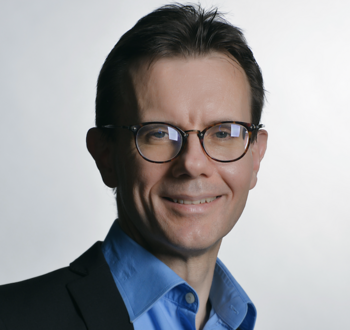
Shelby Grossman is a research scholar at the Stanford Internet Observatory. She was previously an assistant professor of political science at the University of Memphis. Dr. Grossman's primary research interests are in comparative politics and sub-Saharan Africa. Her research has been published in Comparative Political Studies, PS: Political Science and Politics, World Development, and World Politics. 

Dr. Grossman was a Postdoctoral Fellow at Stanford University’s Center on Democracy, Development, and the Rule of Law from 2016-17. She earned her PhD in Government from Harvard University in 2016.
Encina Hall, C433 616 Jane Stanford Way Stanford, CA 94305-6055
0
shelby_grossman.jpg PhD

Shelby Grossman was a research scholar at the Cyber Policy Center. Her research focuses on online safety. Shelby's research has been published in Comparative Political Studies, PNAS Nexus, Political Communication, The Journal of Politics, World Development, and World Politics. Her book, "The Politics of Order in Informal Markets," was published by Cambridge University Press. She is co-editor of the Journal of Online Trust and Safety, and teaches classes at Stanford on open source investigation and online trust and safety issues. 

Shelby was an assistant professor of political science at the University of Memphis from 2017-2019, and a postdoctoral fellow at Stanford University’s Center on Democracy, Development, and the Rule of Law from 2016-17. She earned her Ph.D. in Government from Harvard University in 2016.

Research Scholar
CDDRL Postdoctoral Fellow, 2016-17
Date Label
Research scholar at the Stanford Internet Observatory
Seminars
-

WE HAVE REACHED VENUE CAPACITY AND ARE NO LONGER ACCEPTING RSVPS

NOTE: THIS EVENT IS CLOSED TO THE MEDIA 

UPDATE: We will provide a live video stream of the conference on this link: https://youtu.be/5D5QSZi6u2w  Please check back at 2:25 PM on October 2 for the livestream.

RSVP required for admission.  No walk-ins.  Only one registration permitted per person. 
Stanford or government-issued photo ID must be presented for admission. 
No cameras, audio, video recording or flash photography will be permitted. 
No signs, flyer distribution, banners or posters will be allowed inside the venue.  
Please arrive 30 minutes early to check-in.  There will be no late seating.  

Sponsored by Freeman Spogli Institute for International StudiesShorenstein Asia-Pacific Research Center, Stanford China Program, and Center for East Asian Studies.

Prompted by the government’s introduction of the Fugitive Offenders and Mutual Legal Assistance in Criminal Matters Legislation (Amendment) Bill 2019, Hong Kong has been rocked by intense unrest, its most volatile since the handover in 1997. Millions have taken to the streets and violence has escalated on both sides. Beijing has likened Hong Kong’s demonstrations to the “color revolutions,” and has also condemned the disruptions as “near-terrorist acts.”

In this critical time, our conference will explore questions such as: What are the root causes of Hong Kong’s unremitting protests? Why has this extradition bill generated such intense and widespread reactions? Facing massive governance challenges, what will be the future of Hong Kong? Is there a viable future for “one country, two systems”? How should the U.S. and the international community best respond?


Speakers

Image
anson chan2

The Honorable Anson Chan retired as the Chief Secretary for Administration of the Hong Kong Government in 2001, after nearly forty years of service.  As Chief Secretary, she headed the 190,000-strong civil service.  She was the first woman and the first Chinese to hold the second-highest governmental position in Hong Kong.  During her career in the public service, she was responsible, amongst other things, for development of Hong Kong's economic infrastructure including the planning and construction of Hong Kong's new international airport, which opened in July 1998; port expansion and deregulation of the telecommunications market. Mrs. Chan is Convenor of Hong Kong 2020 - a think tank concerned with transparent and accountable Government, universal suffrage and protection of rights and freedoms enshrined in the "one country, two systems" concept that applies to Hong Kong.

Honors & Awards: 
-  Commander of the Most Excellent Order of the British Empire (1992) 
-  Grand Bauhinia Medal (1999): the Hong Kong Special Administrative Region’s highest honor 
-  Honorary Dame Grand Cross of the Most Distinguished Order of Saint Michael and Saint George (GCMG) conferred by Queen Elizabeth II of Great Britain (2002) 
-  Jean Mayer Global Citizenship Award, Tufts University (2005) 
-  Chevalier of the National Order of the Legion d’Honneur conferred by the President of France (2008) 
-  American Chamber’s Women of Influence Lifetime Achievement Award (2016) 
-  O’Connor Justice Prize Honoree (2018) 
-  Justice of the Peace


Image
harding squaredsc 91341

Harry Harding is University Professor and Professor of Public Policy at the University of Virginia, where he was the founding dean of the Frank Batten School of Leadership and Public Policy.  He is also Distinguished Adjunct Professor at National Chengchi University in Taiwan. Professor Harding has previously held appointments at Swarthmore College, Stanford University, The Brookings Institution, as Dean of the Elliott School of International Affairs at George Washington University, and visiting appointments at the Hong Kong University of Science and Technology and the University of Hong Kong.  A specialist on U.S.-China relations, his major publications on that topic include “Has U.S. China Policy Failed?” and A Fragile Relationship: The United States and China Since 1972. He is now writing a sequel, A Fraught Relationship: The United States and China from Partners to Competitors.


Image
lampton headshot

David M. Lampton is Oksenberg-Rohlen Fellow and Research Scholar at FSI and affiliated with Walter H. Shorenstein Asia-Pacific Research Center (Shorenstein APARC).  He also is the Hyman Professor of China Studies and Director of the China Studies Program at the Johns Hopkins School of Advanced International Studies (SAIS) Emeritus.  Professor Lampton's current book project is focused on the development of high-speed railways from southern China to Singapore.  He is the author of a dozen books and monographs, including Following the Leader: Ruling China, from Deng Xiaoping to Xi Jinping  (University of California Press, 2014, and second edition 2019) and The Three Faces of Chinese Power: Might, Money, and Minds (University of California Press, 2008).  He has testified at multiple congressional and commission sessions and published numerous articles, essays, book reviews, and opinion pieces in many venues, popular and academic, in both the western world and in Chinese-speaking societies, including Foreign Affairs, Foreign Policy, The American Political Science Review, The China Quarterly, The New York Times, and The Washington Post. 


Image
Jean Oi

Jean C. Oi is the William Haas Professor of Chinese Politics in the Department of Political Science and a Senior Fellow of the Freeman Spogli Institute for International Studies (FSI) at Stanford University.  She directs the China Program at the Walter H. Shorenstein Asia-Pacific Research Center in FSI and is the founding Lee Shau Kee Director of the Stanford Center at Peking University.  Professor Oi has published extensively on political economy and the process of reform in China.  Recent books include Zouping Revisited:  Adaptive Governance in a Chinese County, co-edited with Steven Goldstein (2018); and Challenges in the Process of China's Urbanization, co-edited with Karen Eggleston and Yiming Wang (2017).  Professor Oi also has an edited volume with Tom Fingar, Fateful Decisions: Choices that will Shape China's Future, Stanford University Press, forthcoming.  Recent articles include "Unpacking the Patterns of Corporate Restructuring during China's SOE Reform," co-authored with Xiaojun Li, Economic and Political Studies (2018); and “Reflections on Forty Years of Rural Reform,” in Jacques deLisle and Avery Goldstein, eds., To Get Rich is Glorious: Challenges Facing China’s Economic Reform and Opening at Forty, Brookings, 2019.  Current research is on fiscal reform and local government debt, continuing SOE reforms, and China’s Belt and Road Initiative.


Image
mingsingphoto2

Ming Sing is associate professor, Division of Social Science, The Hong Kong University of Science and Technology.  His research interests include the comparative study of democracy and democratization, political culture, civil society, quality of life, and Hong Kong politics. He obtained his D.Phil from Oxford University in sociology and has been the author or editor of four books and over thirty articles. His refereed publications can be found in the Journal of Politics, Journal of Democracy, Democratization, Government and Opposition, and Social Indicators Research, among others. He has been working on a book comparing Hong Kong’s Umbrella Movement and Taiwan’s Sunflower Movement.  He has also been an active commentator on Hong Kong politics, whose comments have been solicited by local and international media including BBC, CNN, Bloomberg, Financial Times, New York Times, and Wall Street Journal. He was awarded the Fulbright Scholarship for visiting the University of California, San Diego in 2007, and the POSCO Visiting Fellowship by the East-West Center, University of Hawaii in 2010.

Attendees should enter the campus via Galvez Street and park at the Galvez Lot or other designated, paid visitor parking. See also Stanford’s parking mapNo parking at the Stanford Oval is allowed.

For a summary, video, audio, photos and transcripts of the event, please see the following webpage:

https://aparc.fsi.stanford.edu/news/hong-kong-turmoil-former-chief-secretary-and-scholars-discuss-causes-implications-and-potential

The Honorable Anson Chan <br><i> GBM, GCMG, CBE, JP; Former Chief Secretary of Hong Kong SAR (1993-2001); member of Legislative Council of Hong Kong (2007-2008) </i><br><br>
Harry Harding <br><i>University Professor and Professor of Public Policy, Frank Batten School of Leadership and Public Policy, University of Virginia</i><br><br>
David M. Lampton <br><i>Oksenberg-Rohlen Fellow, Freeman Spogli Institute for International Studies (FSI), Stanford University</i><br><br>
Jean C. Oi (Moderator) <br><i>Director, Stanford China Program; William Haas Professor of Chinese Politics, Stanford University</i><br><br>
Ming Sing <br><i>Associate Professor, Division of Social Science, The Hong Kong University of Science and Technology</i><br><br>
Panel Discussions
-

Speaker Bio:

Francis Fukuyama is the Olivier Nomellini Senior Fellow at the Freeman Spogli Institute for International Studies (FSI), the Director of the Ford Dorsey Master's in International Policy, and the Mosbacher Director of FSI's Center on Democracy, Development, and the Rule of Law (CDDRL).  He is also a professor by courtesy in the Department of Political Science. He was previously at the Paul H. Nitze School of Advanced International Studies (SAIS) of Johns Hopkins University, where he was the Bernard L. Schwartz Professor of International Political Economy and director of SAIS' International Development program.

Dr. Fukuyama has written widely on issues relating to questions concerning democratization and international political economy. His book, The End of History and the Last Man, was published by Free Press in 1992 and has appeared in over twenty foreign editions. His most recent book is Political Order and Political Decay: From the Industrial Revolution to the Globalization of Democracy.

Francis Fukuyama received his B.A. from Cornell University in classics, and his Ph.D. from Harvard in Political Science. He was a member of the Political Science Department of the RAND Corporation, and a twice a member of the Policy Planning Staff of the US Department of State. From 1996-2000 he was Omer L. and Nancy Hirst Professor of Public Policy at the School of Public Policy at George Mason University. He served as a member of the President's Council on Bioethics from 2001-2004.

Encina Hall, C148
616 Jane Stanford Way
Stanford, CA 94305

0
Olivier Nomellini Senior Fellow at the Freeman Spogli Institute for International Studies
Director of the Ford Dorsey Master's in International Policy
Research Affiliate at The Europe Center
Professor by Courtesy, Department of Political Science
yff-2021-14290_6500x4500_square.jpg

Francis Fukuyama is the Olivier Nomellini Senior Fellow at Stanford University's Freeman Spogli Institute for International Studies (FSI), and a faculty member of FSI's Center on Democracy, Development and the Rule of Law (CDDRL). He is also Director of Stanford's Ford Dorsey Master's in International Policy, and a professor (by courtesy) of Political Science.

Dr. Fukuyama has written widely on issues in development and international politics. His 1992 book, The End of History and the Last Man, has appeared in over twenty foreign editions. His book In the Realm of the Last Man: A Memoir will be published in fall 2026.

Francis Fukuyama received his B.A. from Cornell University in classics, and his Ph.D. from Harvard in Political Science. He was a member of the Political Science Department of the RAND Corporation, and of the Policy Planning Staff of the US Department of State. From 1996-2000 he was Omer L. and Nancy Hirst Professor of Public Policy at the School of Public Policy at George Mason University, and from 2001-2010 he was Bernard L. Schwartz Professor of International Political Economy at the Paul H. Nitze School of Advanced International Studies, Johns Hopkins University. He served as a member of the President’s Council on Bioethics from 2001-2004. He is editor-in-chief of American Purpose, an online journal.

Dr. Fukuyama holds honorary doctorates from Connecticut College, Doane College, Doshisha University (Japan), Kansai University (Japan), Aarhus University (Denmark), the Pardee Rand Graduate School, and Adam Mickiewicz University (Poland). He is a non-resident fellow at the Carnegie Endowment for International Peace. He is a member of the Board of Trustees of the Rand Corporation, the Board of Trustees of Freedom House, and the Board of the Volcker Alliance. He is a fellow of the National Academy for Public Administration, a member of the American Political Science Association, and of the Council on Foreign Relations. He is married to Laura Holmgren and has three children.

(October 2025)

CV
Date Label
The Olivier Nomellini Senior Fellow at the Freeman Spogli Institute for International Studies (FSI), the Director of the Ford Dorsey Master's in International Policy, and the Mosbacher Director of FSI's Center on Democracy, Development
Seminars
-

Seminar recording: https://youtu.be/fYUK-ALGqAE


Abstract:  Russian influence operations during the 2016 US elections, and the investigations that followed, revealed the broad scope of Russian political warfare against Western democracies. Since then, Russian operations have targeted the UK, France, Germany, Ukraine, and others. Other state and non-state actors, motivated by politics or profit, have also learned and adapted the Kremlin’s tool-kit. With the 2020 elections a year away, what have we learned about foreign information operations? How has the transatlantic community responded and what are the threats we are likely to face?  Drawing on extensive research on transatlantic relations, disinformation, and Russian foreign policy, Dr. Polyakova will discuss the state of policy options to address disinformation, analyze Russian intentions, and highlight emerging threats.


Speaker’s Biography:

Image
alina polyakova
Alina Polyakova is the founding director of the Project on Global Democracy and Emerging Technology and a fellow in the Center on the United States and Europe at the Brookings Institution, where she leads the Foreign Policy program’s Democracy Working Group. She is also adjunct professor of European studies at the Paul H. Nitze School of Advanced International Studies (SAIS) at Johns Hopkins University. Her work examines Russian political warfare, European populism, digital authoritarianism, and the implications of emerging technologies to democracies. Polyakova's book, "The Dark Side of European Integration" (Ibidem-Verlag and Columbia University Press, 2015) analyzed the rise of far-right political parties in Europe.  She holds a master’s and doctorate from the University of California, Berkeley, and a bachelor's in economics and sociology with highest honors from Emory University. 

Alina Polyakova Director, Project on Global Democracy and Emerging Technology The Brookings Institution
Seminars
News Type
Commentary
Date
Paragraphs

Liberal democracy is being challenged by populist nationalist leaders and they’re fanning the flames of identity politics. Instead of uniting over a shared sense of humanity, people are identifying in narrower ways based on things like religion, race, ethnicity, and gender. Francis Fukuyama , FSI Senior Fellow and CDDRL Mosbacher Director, believes that in order to support democracy, we must inculcate a greater sense of dignity into society. Fukuyama speaks with Elliot Gerson, executive vice president at the Aspen Institute. Listen here.

Hero Image
screen shot 2019 09 04 at 1 44 04 pm
All News button
1
-

Abstract:

High bureaucratic transaction costs can make it impossible for individuals to claim welfare benefits. Instead, these costs make individuals dependent on intermediaries who facilitate access to welfare. Especially in contexts of weak and corrupt policy implementation, politically motivated intermediaries demand political loyalty in return for their assistance, a practice known as clientelism. Although intermediaries may be efficient and even compensate for deficiencies in state capacity, they can also have long-run consequences for individuals' political autonomy and capacity to hold governments accountable. As a result, instead of promoting autonomous political participation, the pursuit of social welfare benefits through intermediaries can intensify ties of dependency. Worryingly, this research suggests that studying distributive outcomes without understanding mediating institutions may produce misleading conclusions. However, an important implication of this theory is that vicious markets of mediation can be weakened by reducing the costs that citizens face in obtaining welfare benefits directly from the state.


Speaker Bio:

Image
tesalia
Tesalia is a Post Postdoctoral Scholar at the Center on Democracy, Development and the Rule of Law (CDDRL) at Stanford University. Starting fall 2020, she will be joining the Department of Political Science at the University of California, Merced as Assistant Professor. She completed her PhD in Political Science at MIT. Tesalia is also a research affiliate at the MIT Governance Lab.

Her research is in comparative political behavior, with a particular focus on how citizens make demands on the state. Her book-project, titled “Intermediaries of the State: Bureaucratic Transaction Costs of Claiming Welfare in Mexico” explores how bureaucratic transaction costs prevent individuals from directly claiming welfare benefits. Instead, these costs make citizens dependent on clientelist brokers and intermediaries, who demand political favors in return for access.


Encina Hall, E112 616 Jane Stanford Way Stanford, CA 94305-6055  
0
CDDRL Postdoctoral Scholar, 2019-20
tesalia.jpg

Tesalia Rizzo holds a Ph.D. in Political Science at the Massachusetts Institute of Technology (MIT). Her research focuses on the demand and supply side of political mediation. Specifically, on how political (formal, informal or clientelist) intermediaries shape citizens’ attitudes and political engagement. She also works with non-governmental practitioners in Mexico to develop and test policies that disincentivize citizen reliance on clientelist and corrupt avenues of engaging with government and strengthen citizen demand for accountability. Her work with Mexican practitioners was awarded the 2017 Innovation in Transparency Award given by the Mexican National Institute for Access to Information (INAI). She is also a Research Fellow at MIT GOV/LAB and the Political Methodology Lab, at MIT. She is a graduate of the Instituto Tecnológico Autónomo de México (ITAM) in Mexico City. Prior to arriving at Stanford, she was a pre-doctoral fellow at the Center for US-Mexican Studies at University of California, San Diego and will join the Political Science Faculty at the University of California, Merced in 2020.

CV
Post Postdoctoral Scholar at the Center on Democracy, Development and the Rule of Law (CDDRL) at Stanford University
Seminars
-

Abstract:

Political polarization is tearing at the seams of democracies around the world—from Brazil, India, and Kenya, to Poland, Turkey, and the United States. Drawing on his new co-edited volume (with Andrew O’Donohue), Democracies Divided: The Global Challenge of Political Polarization, Carnegie Endowment scholar Thomas Carothers will analyze the global spread of political polarization, drawing on examples from Africa, Asia, Europe, Latin America, the Middle East, and North America. Questions to be addressed include: Why has polarization come to a boil in so many places in recent years? What are its consequences? Once democracies have become deeply divided, what can they do to restore at least some consensus? Is polarization in the United States similar to or different from polarization elsewhere?


Speaker Bio:

Image
Thomas Carothers
Thomas Carothers is senior vice president for studies at the Carnegie Endowment for International Peace where he oversees all of the Endowment’s research programs and directs the Democracy, Conflict, and Governance Program. Widely recognized as a leading authority on democratization and international support for democracy, he has worked on democracy and governance assistance projects around the world for many public and private organizations. He is the author or editor of numerous critically-acclaimed books and reports as well as many articles in prominent journals and newspapers. He has been a visiting faculty member at Oxford University, the Central European University, and Johns Hopkins SAIS. He is a graduate of Harvard Law School, the London School of Economics, and Harvard College.

Thomas Carothers Senior vice president for studies, Carnegie Endowment for International Peace
Seminars
Authors
News Type
Commentary
Date
Paragraphs

This article originally appeared in the Ukrainian journal Novoye Vremya.

President Volodymyr Zelenskyy may meet President Donald Trump this weekend in Warsaw and is expected to travel to the United States later in the fall.  This gives Mr. Zelenskyy the opportunity to reinforce Kyiv’s relationship with the United States.  It also offers the opportunity to try to establish a connection to Mr. Trump, something that has proven elusive for most foreign leaders.  Here are a few suggestions for Mr. Zelenskyy on dealing with the American president.

Mr. Zelenskyy should bear in mind that Mr. Trump lacks a strong grasp of the U.S. interest in and what is at stake with regard to Ukraine and the conflict that Russia wages against it.  His administration has pursued sensible policies in supporting Kyiv, strengthening NATO and sustaining sanctions on Moscow.  By all appearances, however, Mr. Trump does not instinctively agree with the necessity of his administration’s own policies.  Witness his recent suggestion about inviting Vladimir Putin to join with other G7 leaders when he hosts the G7 summit next year.

Mr. Trump is not detail-oriented.  He reportedly reads little, leading White House staff to resort to graphs and pictures to capture his attention.  The smart way to approach Mr. Trump is to avoid detail, sticking instead with a few clear and easily understood themes.

Flattering the American president would not hurt.  North Korean leader Kim Jong-un appears to have mastered that.  North Korea has reduced none of its nuclear or ballistic missile capabilities—in fact, they have increased—but Mr. Trump swoons over Mr. Kim’s letters and professes not to be bothered by Pyongyang’s shorter range ballistic missile tests.

That said, keep expectations for flattery modest.  No European leader invested more heavily in flattering Mr. Trump than former British Prime Minister Theresa May.  She gave him a state visit in June with all the bells and whistles.  Yet Mr. Trump could not resist sending a series of tweets denigrating her handling of the Brexit conundrum and all but welcoming her replacement.

This underscores the point that, in many foreign policy relationships, Mr. Trump is transactional.  He will be asking what can America get, or what can he get.

Mr. Zelenskyy thus should consider whether there is a topic on which he could offer Mr. Trump a win-win.  Progress toward resolving the Russia-Ukraine conflict in Donbas could provide such an issue.  Real movement toward peace would be a major win for Kyiv, but it could offer Mr. Trump a win as well.  He has repeatedly made clear his desire for improved U.S.-Russia relations, and a genuine settlement in Donbas could lift the biggest obstacle to his goal.

The question is how to shape a proposal to accomplish this.  Bringing Mr. Trump into the current Normandy negotiating format in a way that made it appear as if Mr. Trump sparked a breakthrough would appeal to the Nobel Prize-hungry American president.

However, the key to peace in Donbas lies in Moscow.  The Kremlin seems interested in sustaining a simmering conflict as a means to pressure the government in Kyiv.  Still, aligning interests with Mr. Trump on pressing for peace would be a plus for Mr. Zelenskyy.

While in the United States, the Ukrainian president should not neglect the Congressional leadership.  Both Democrats and Republicans on Capitol Hill support Ukraine and display considerable skepticism toward Russia.  Congress could serve as a check on Mr. Trump should he choose to pursue his less well-thought-out ideas on Russia.

Mr. Zelenskyy’s American interlocutors in Congress want Ukraine to succeed, with success measured by its progress in becoming a normal democratic, market-oriented and prosperous European state.  In the past, developments in Ukraine have disappointed both Ukrainians and the country’s friends in the West.  To the extent that Mr. Zelenskyy can make a persuasive case that this time it is different—that he and the new parliament will take the tough steps to achieve success—he will return home having forged a stronger basis for the U.S.-Ukrainian relationship.  He can bolster his case by coming to Washington with one or two signature reforms under his belt, such as an end to the moratorium on sales of private agricultural land.

One last piece of advice.  Mr. Zelenskyy and his team should be wary of former New York mayor Rudy Giuliani’s efforts to drag Ukraine into U.S. domestic politics.  That would risk making Ukraine a partisan political issue in America, which could undermine the bipartisan support that Ukraine has enjoyed since regaining independence in 1991.

* * * * *

Steven Pifer is a William Perry fellow at Stanford University and a former U.S. ambassador to Ukraine.


Hero Image
steven pifer 0
All News button
1
-

Abstract:

A criminal trial is likely the most significant interaction a citizen will ever have with the state; its conduct and adherence to norms of fairness bear directly on the quality of government, extent of democratic consolidation, and human rights. While theories of repression tend to focus on the political incentives to transgress against human rights, we examine a case in which the institutionalization of such violations follows an organizational logic rather than the political logic of regime survival or consolidation. We exploit a survey of the Mexican prison population and the implementation of reforms of the justice system to assess how reforms to criminal procedure reduce torture. We demonstrate that democratization produced a temporary decline in torture which then increased with the onset of the Drug War and militarization of security. Our results show that democracy alone is insufficient to restrain torture unless it is accompanied by institutionalized protections.


Speaker Bio:

Image
rodriguez luis
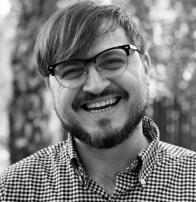
Luis Rodriguez was born in Puerto Rico, where he spent most of his formative years. He studied at the University of Maryland where he studied political science and Latin American literature. Upon completing undergrad in 2014, He began a PhD at Stanford, focusing his research on issues of crime, violence, and state capacity in Latin America and using advanced quantitative methods to find creative ways of measuring these often elusive phenomena.


CDDRL Pre-doctoral Fellow, 2019-20
Seminars
Authors
News Type
News
Date
Paragraphs

Democratic institutions worldwide have reached a unique and precarious turning point, said Larry Diamond on a recent episode of the World Class podcast by the Freeman Spogli Institute for International Studies (FSI).


After the Cold War, the world became dominated by liberal values and a prevailing consensus for freedom, democracy and human rights, Diamond told World Class host and FSI Director Michael McFaul. During this time, the percentage of democratic states rose from making up about a quarter to more than half of all of the independent states in the world — which had never happened before in history. However, explained Diamond, who is senior fellow at the Center on Democracy, Development and the Rule of Law, this trend may come to an end soon.

“It’s under severe challenge from Russia, China, Iran and from many other countries that were until recently democracies or are in danger of no longer being democracies soon,” Diamond said. “We are in a new and urgent situation.”

In 2018, Freedom House — a non-governmental organization that conducts research on democracy and political freedom — reported a decline in global freedom for the 13th consecutive year, reversing the post-Cold War trend between 1991 and 2006.
        
“We could be on the cusp of a democratic depression,” said Diamond. In his view, here are the four main causes of this worldwide shift. 

[Sign up for the FSI monthly newsletter to receive stories like this directly to your inbox.]

Incremental Authoritarianism
The first cause, according to Diamond, is what he calls “incremental authoritarianism,” which usually occurs when elected populist rulers — such as Russia’s Vladimir Putin or Turkey’s Tayyip Erdoğan, for example — begin to spread conservative, anti-immigrant or anti-pluralist values in an attempt to “save” the nation from corruption or threatening international illiberal values.

“Of course, the corrupting influences are human rights, accountability, pluralism, the rule of law and anything that would constrain their power and eliminate all potential rivals,” Diamond explained.

Russian Rage
The second cause has to do with Russia’s status as what Diamond describes as a “fallen superpower.”. Russia has begun to intervene in the politics of European democracies, meddle with the politics of the U.S. electoral democracy, spread confusion and promote division — all actions that stem from “Russian rage.”

“I think Putin has become unleashed,” he said. “He’s much more aggressive and ambitious now that he has found a cost-effective way of inflicting damage on democracy through disinformation and the penetration of the electoral space of democracies that we thought was sacred and secure.”

Chinese Ambition
Since coming to power in 1949, the Chinese Communist Party has tried to cultivate ties with “sympathetic actors” abroad — whether it be by sending Chinese citizens to U.S. graduate programs or to think tanks — but this effort has been ramped up and extended under Xi Jinping to a degree that hasn’t been seen before, according to Diamond.

“Chinese influence is extending into universities, corporations, Chinese-language media overseas, and certainly into aggressive — and I’d say illegal — technology practices that are boldly trying to create a new world of Chinese influence and even domination by the People’s Republic of China,” he explained.

American Complacency
Finally, Americans have become complacent about the security of their democracy, and many think that it doesn’t require their attention or participation in order to be upheld, said Diamond. In addition, some Americans have also become comfortable about the slow deterioration of their democracy through the polarization of U.S. politics. 

“People are becoming so intense in their feelings about parties and politicians that they won’t even talk to people from the other side at the Thanksgiving dinner table,” Diamond said. “Some of the statements of our own president are not consistent with democratic values…in which everyone is recognized as having the right to speak and in which violence can never be encouraged.”

Read more about Diamond’s thoughts on the state of global democracy in his new book, “Ill Winds: Saving Democracy from Russian Rage, Chinese Ambition, and American Complacency.”

Hero Image
putin jinping cropped
Russian President Vladimir Putin shakes hands with Chinese President Xi Jinping during a signing ceremony in Beijing's Great Hall of the People on June 25, 2016. (Photo by Greg Baker-Pool/Getty Images).
All News button
1
Subscribe to Governance