Business
Authors
Callista Wells
News Type
News
Date
Paragraphs

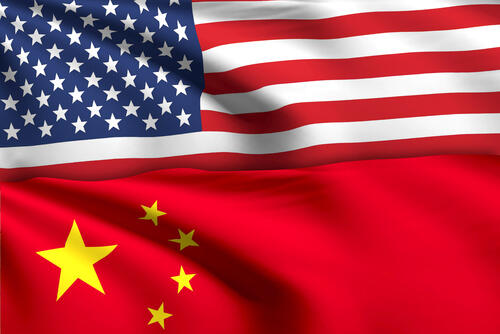
On January 27, 2021, the China Program at Shorenstein APARC hosted Professor Hau L. Lee, The Thoma Professor of Operations, Information & Technology at the Stanford Graduate School of Business for the virtual program “The Pandemic, U.S-China Tensions and Redesigning the Global Supply Chain.” Professor Jean Oi, William Haas Professor of Chinese Politics and director of the APARC China Program, moderated the event.

Professor Lee focused on an important question that has only become more pressing due to the COVID-19 pandemic: How, if at all, should businesses redesign their supply chains? Since the beginning of the pandemic, explains Lee, there has been an increase in calls for “redundancy” in supply chains in order to protect them from the problems they faced early in the pandemic, when China was first hit by shut downs and slowed productivity. Advice has been varied, ranging from the “China Plus One” strategy in which businesses simply add a secondary production location, to completely domesticating supply chains.

Lee warns, however, of the perils of overreaction. There are numerous risks that come along with a fully domestic supply chain, not least the danger of “having all of your eggs in one basket.” Instead, says Lee, businesses should move cautiously and, instead of fully divesting from China, should use the country intelligently. 

Professor Lee’s “In and Out Design” encourages businesses to work from the inside out, securing and strengthening their supply chains by starting at home. Companies must first build “internal supply chain excellence,” after which they can move on to making sure their strategic partners are equally strong and can work to their advantage. Eventually, companies can move on to strengthening the extended value chain and, ultimately, their entire ecosystem. Using strategies like dual response, leveraging “lubricants,” and bolstering capacity-building capabilities, businesses can create a more stable future. 

The session concluded with a fruitful Q&A between Professor Lee and the audience, moderated by Professor Oi.

A video recording of this program is available upon request. Please contact Callista Wells, China Program Coordinator at cvwells@stanford.edu with any inquiries.

Read More

Min Ye speaking
News

Domestic or International? The Belt and Road Initiative Is More Internally Focused Than We Think, Says Expert Min Ye

Domestic or International? The Belt and Road Initiative Is More Internally Focused Than We Think, Says Expert Min Ye
Photograph of the UN building in Geneva, Switzerland
News

Rebuilding International Institutions Will be Tough but Necessary, Say Stanford Experts Thomas Fingar and Stephen Stedman

Fingar and Stedman spoke as part of the APARC program “Rebuilding International Institutions,” which examined the future of international institutions such as the United Nations (UN), World Trade Organization (WTO), and World Health Organization (WHO) in our evolving global political landscape.
Rebuilding International Institutions Will be Tough but Necessary, Say Stanford Experts Thomas Fingar and Stephen Stedman
Hero Image
Banner of Hau L. Lee
All News button
1

John A. and Cynthia Fry Gunn Building, 366 Galvez Street
Stanford, CA 94305-6015

0
Faculty Co-director of the Stanford Center on China's Economy and Institutions
Professor, by courtesy, of Economics
Senior Fellow at the Freeman Spogli Institute for International Studies
Senior Fellow at the Stanford Institute for Economic Policy Research
Faculty Affiliate at the King Center of Global Development
Faculty Affiliate at Stanford Institute for Human-Centered Artificial Intelligence
5268-hongbinli.png PhD

Hongbin Li is the Co-director of Stanford Center on China's Economy and Institutions, and a Senior Fellow of Stanford Institute for Economic Policy Research (SIEPR) and the Freeman Spogli Institute for International Studies (FSI).

Hongbin obtained Ph.D. in economics from Stanford University in 2001 and joined the economics department of the Chinese University of Hong Kong (CUHK), where he became full professor in 2007. He was also one of the two founding directors of the Institute of Economics and Finance at the CUHK. He taught at Tsinghua University in Beijing 2007-2016 and was C.V. Starr Chair Professor of Economics in the School of Economics and Management. He also founded and served as the Executive Associate Director of the China Social and Economic Data Center at Tsinghua University. He founded the Chinese College Student Survey (CCSS) in 2009 and the China Employer-Employee Survey (CEES) in 2014.

Hongbin’s research has been focused on the transition and development of the Chinese economy, and the evidence-based research results have been both widely covered by media outlets and well read by policy makers around the world. He is currently the co-editor of the Journal of Comparative Economics and co-author of the forthcoming book, “The Highest Exam: How the Gaokao Shapes China” published by Harvard University Press.

CV
Date Label
-

This is a virtual event. Please click here to register and generate a link to the talk. 
The link will be unique to you; please save it and do not share with others.

The past decade has witnessed a great digital transformation in China. In 2006, China’s online retail sales were merely 3% of U.S. sales. China now hosts the world’s largest e-commerce retail market with a 40% share of global sales. Mobile pay has taken the country by storm so that even beggars are accepting alms through QR codes. What accounts for the leapfrog development in China’s e-commerce market? What are the larger implications of the rise of this 700-million-user online market? This talk will discuss the institutional foundation of China's giant e-commerce market, as well as its political and economic effects.

This event is part of Shorenstein APARC's winter webinar series "Asian Politics and Policy in a Time of Uncertainty."


Image
Portrait of Lizhi Liu
Lizhi Liu is an Assistant Professor in the McDonough School of Business and a faculty affiliate of the Department of Government. Her research specializes in the politics of trade, technology and innovation, and the political economy of China. Her work has been published by American Economic Review: Insights and Minnesota Law Review, and has been funded by numerous institutions, including the Bill and Melinda Gates Foundation, Weiss Family Program Fund, and the Stanford Institute for Innovation in Developing Economies. She received the 2020 Ronald H. Coase Best Dissertation Award from the Society for Institutional and Organizational Economics (SIOE), and the 2019 Best Dissertation Award in the area of Information Technology and Politics by American Political Science Association (APSA). 

Via Zoom Webinar. Register at: https://bit.ly/38yUFdn

Lizhi Liu Assistant Professor, McDonough School of Business, Georgetown University
Seminars
Paragraphs

This paper empirically estimates the return to education using twins data that the authors collected from urban China. Our ordinary least-squares estimate shows that one year of schooling increases an individual's earnings by 8.4%. If we use a within-twin fixed effects model, the return is reduced to 2.7%, but rises to 3.8% after the correction of measurement error. These results suggest that a large portion of the estimated returns to education is due to omitted ability or the family effect. We further investigate why the true return is low and the omitted ability bias high, and find evidence showing that it may be a consequence of China's education system, which is highly selective and exam oriented. More specifically, we find that high school education may mainly serve as a mechanism to select college students, but as a human capital investment per se it has low returns in terms of earnings. In contrast, both vocational school education and college education have a large return that is comparable to that found in the United States.

All Publications button
1
Publication Type
Journal Articles
Publication Date
Journal Publisher
Journal of Development Economics
Authors
Hongbin Li
Paragraphs

This paper examines the impact of entrepreneurship on economic growth by using a panel data set of 29 provinces in China over 20 years. Two indicators of entrepreneurship are defined and introduced into the traditional growth regression framework that is estimated using the system generalized method of moments. We also use the ratio of staff and workers of state-owned enterprises and per capita sown land area as the instrumental variables to identify the causal effect of entrepreneurship on economic growth. Our results suggest that entrepreneurship has a significant positive effect on economic growth and this finding is robust even after we control for other demographic and institutional variables. Our study provides some evidence that may be used as a basis for evaluating the effect of China’s policy on private business which has been increasingly relaxed since the late 1970s.

All Publications button
1
Publication Type
Journal Articles
Publication Date
Journal Publisher
China Economic Review
Authors
Hongbin Li
Paragraphs

In recent decades, cheap labor has played a central role in the Chinese model, which has relied on expanded participation in world trade as a main driver of growth. At the beginning of China's economic reforms in 1978, the annual wage of a Chinese urban worker was only $1,004 in U.S. dollars. The Chinese wage was only 3 percent of the average U.S. wage at that time, and it was also significantly lower than the wages in neighboring Asian countries such as the Philippines and Thailand. The Chinese wage was also low relative to productivity. However, wages are now rising in China. In 2010, the annual wage of a Chinese urban worker reached $5,487 in U.S. dollars, which is similar to wages earned by workers in the Philippines and Thailand and significantly higher than those earned by workers in India and Indonesia. China's wages also increased faster than productivity since the late 1990s, suggesting that Chinese labor is becoming more expensive in this sense as well. The increase in China's wages is not confined to any sector, as wages have increased for both skilled and unskilled workers, for both coastal and inland areas, and for both exporting and nonexporting firms. We benchmark wage growth to productivity growth using both national- and industry-level data, showing that Chinese labor was kept cheap until the late 1990s but the relative cost of labor has increased since then. Finally, we discuss the main forces that are pushing wages up.

All Publications button
1
Publication Date
Journal Publisher
Journal of Economic Perspectives
Authors
Paragraphs

Analyzing data from a unique survey of managers of Chinese private firms, we investigate how family ties with firm heads affect managerial compensation and job assignment. We find that family managers earn higher salaries and receive more bonuses, hold higher positions, and are given more decision rights and job responsibilities than nonfamily managers in the same firm. However, family managers face weaker incentives than professional managers, as seen in the lower sensitivity of their bonuses to firm performance. Our findings are consistent with the predictions of a principal-agent model that incorporates family trust and endogenous job assignment decisions.

All Publications button
1
Publication Type
Journal Articles
Publication Date
Journal Publisher
Review of Economics and Statistics
Authors
Hongbin Li
Paragraphs

This paper provides first-hand firm-level evidence on Chinese exporters' reaction to RMB exchange rate movements. We find that the RMB price response to exchange rate changes is very small, indicating relatively high exchange rate pass-through into foreign currency denominated prices, while the volume response is moderate and significant. Furthermore, exporters with higher productivity price more to market, though the pass-through is still very high. Other sources of heterogeneity, such as import intensity, distribution costs, income level of the destination countries, and foreign ownership also matter. Moreover, RMB appreciation reduces the probability of entry as well as the probability of continuing in the export market.

All Publications button
1
Publication Type
Journal Articles
Publication Date
Journal Publisher
Journal of International Economics
Authors
Hongbin Li
Paragraphs

In this paper, we consider the sources and prospects for economic growth in China with a focus on human capital. First, we provide an overview of the role that labor has played in China's economic success. We then describe China's hukou policy, which divides China's labor force into two distinct segments, one composed of rural workers and the other of urban workers. For the rural labor force, we focus on the challenges of raising human capital by both increasing basic educational attainment rates as well as the quality of education. For the urban labor force, we focus on the issues of further expanding enrollment in college education as well as improving the quality of college education. We use a regression model to show the typical relationship between human capital and output in economies around the world and demonstrate how that relationship has evolved since 1980. We show that China has made substantial strides both in the education level of its population and in the way that education is being rewarded in its labor markets. However, as we look ahead, our results imply that China may find it impossible to maintain what appears to be its desired growth rate of 7 percent in the next 20 years; a growth rate of 3 percent over the next two decades seems more plausible. Finally, we present policy recommendations, which are rooted in the belief that China continues to have substantial room to improve the human capital of its labor force.

All Publications button
1
Publication Type
Journal Articles
Publication Date
Journal Publisher
Journal of Economic Perspectives
Authors
Hongbin Li
Prashant Loyalka
Paragraphs

China is the world's largest user of industrial robots. In 2016, sales of industrial robots in China reached 87,000 units, accounting for around 30 percent of the global market. To put this number in perspective, robot sales in all of Europe and the Americas in 2016 reached 97,300 units (according to data from the International Federation of Robotics). Between 2005 and 2016, the operational stock of industrial robots in China increased at an annual average rate of 38 percent. In this paper, we describe the adoption of robots by China's manufacturers using both aggregate industry-level and firm-level data, and we provide possible explanations from both the supply and demand sides for why robot use has risen so quickly in China. A key contribution of this paper is that we have collected some of the world's first data on firms' robot adoption behaviors with our China Employer-Employee Survey (CEES), which contains the first firm-level data that is representative of the entire Chinese manufacturing sector.

All Publications button
1
Publication Type
Journal Articles
Publication Date
Journal Publisher
Journal of Economic Perspectives
Authors
Hongbin Li
Subscribe to Business