FSI researchers consider international development from a variety of angles. They analyze ideas such as how public action and good governance are cornerstones of economic prosperity in Mexico and how investments in high school education will improve China’s economy.
They are looking at novel technological interventions to improve rural livelihoods, like the development implications of solar power-generated crop growing in Northern Benin.
FSI academics also assess which political processes yield better access to public services, particularly in developing countries. With a focus on health care, researchers have studied the political incentives to embrace UNICEF’s child survival efforts and how a well-run anti-alcohol policy in Russia affected mortality rates.
FSI’s work on international development also includes training the next generation of leaders through pre- and post-doctoral fellowships as well as the Draper Hills Summer Fellows Program.
As we look toward year 2016, the Walter H. Shorenstein Asia-Pacific Research Center documents highlights from the 2014-15 academic year. The latest edition of the Center Overview, entitled "Asia in Flux," includes special research, people, events and outreach features, and is now available for download online.
Shorenstein APARC's center overviews provide detailed information about Shorenstein APARC's mission, history, faculty, financial support, organizational structure, projects, and programs.
Laurie Burkitt quotes REAP's director Scott Rozelle on the impact of China cancelling the one-child policy . To read the original article, click here.
Chinese leaders implemented the one-child policy in 1980 in an effort to rein in explosive population growth and help raise living standards. It was rooted in a Mao Zedong-era baby boom. China’s population rose by nearly half to about 807 million people in 1969 from when the Communist Party took over the country 20 years before. That led to fears among the leadership that China faced a population boom it couldn’t feed.
Demographers began to present a united front in 2000, arguing that China was dangerously close to falling below a replacement rate of 2.1 children for every woman. Activists stepped up opposition. Chen Guangcheng, the blind activist who famously escaped home confinement and made his way to the U.S. embassy in 2012, became well-known in China in the 2000s for opposing forced abortion.
China effectively hobbled the one-child policy in 2013, when it allowed couples to have two children if one parent came from a household without other siblings. It has also long allowed exceptions in some parts of the country.
Just like on Thursday, the 2013 move led to a frenzy of anticipation from baby-related businesses and a brief bump in shares of Chinese formula makers and other baby-related companies. It resulted in 1.45 million new birth applications as of the end of May, according to the most recent data from the China’s National Health and Family Planning Commission. But the figures have so far disappointed many demographers.
Even rural residents, many of whom have been exempt of the one-child policy, are reluctant to have bigger families, said Scott Rozelle, co-director of Stanford University’s Rural Education Action Program. “Fertility has collapsed in rural and poor areas,” said Mr. Rozelle. “Anyone there can have two or three babies, but no one wants that.”
Mathias Hoffmann is Professor of Economics at the University of Zurich. His research focuses on the macroeconomic aspects of international financial integration and on the link between financial markets and the macro-economy more generally. His recent published articles include papers on the determinants of international capital flows and imbalances, the international transmission of business cycles, on international risk sharing and banking regulation. Prior to arriving in Zurich, he was Professor at the University of Dortmund in Germany and a Lecturer at Southampton University (UK). He holds a PhD in Economics from the European University Institute in Florence and obtained his undergraduate education in economics and mathematics at WHU School of Management, Brandeis University and the University of Bonn.
Mathias Hoffmann is a fellow of CESifo Munich and has held visiting positions, at the University of California at Berkeley, the Deutsche Bundesbank, the Hong Kong Monetary Authority and Keio University.
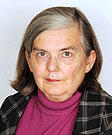
Prof. Booth will assess the socioeconomic consequences of Japanese colonialism in Taiwan, Korea, and Manchuria from 1910 to 1945. She will compare Japan’s policies with those implemented by other colonial powers in South and Southeast Asia. In particular she will address the writings of what has been termed the “Stanford School”—an influential group of scholars who published widely on Japanese colonial policies over the last fifty years. Their work has been used to support the argument that Japanese rule was more developmental than that of other colonial powers, and that it laid the foundations for the stellar economic performance of Taiwan and the Republic of Korea in the decades after 1950. She will challenge these conclusions by comparing economic and social indicators for Korea, Taiwan, and Manchuria with those from other Asian colonies and also from Thailand. While Japan’s colonies, especially Taiwan, do score well on some indicators, they do less well on others. The notion that Japanese rule was exceptionally “developmental” does not merit support.
Image
Anne Booth has been an Asia-focused professor of economics in the School of Oriental and African Studies, University of London, since 1991. She studies the modern economic history of Southeast Asia with emphasis on the 20th century. Her many writings in this field include Colonial Legacies: Economic and Social Development in East and Southeast Asia. Her latest book, Economic Change in Modern Indonesia, is due from Cambridge University Press in April. Before coming to SOAS, she held research and teaching positions in Singapore and Australia. Her degrees are from Victoria University of Wellington (BA) and the Australian National University (PhD). Before 1991 she held research and teaching positions in Singapore and Australia. She grew up in New Zealand.
Anne Booth
2015-16 NUS-Stanford Lee Kong Chian Distinguished Fellow on Southeast Asia, Stanford University
2015-16 NUS-Stanford Lee Kong Chian Distinguished Fellow on Southeast Asia, Stanford University
Stanford students belong to the first generation that could witness the end of extreme global poverty — in what would be one of humankind's greatest achievements — the head of the World Bank said during a recent talk on campus.
But their generation, he said, is also likely to experience the first global pandemic since the 1918 influenza that killed more than 50 million people.
Jim Yong Kim, president of the World Bank, said innovations in health, education and finance are behind the World Bank's twin goals of ending extreme poverty and boosting shared prosperity for the bottom 40 percent of the global population.
Speaking at the inaugural conference of the Stanford Global Development and Poverty Initiative on Oct. 29, Kim lauded faculty and students for their multidisciplinary approach in tackling poverty and improving public health. He is an infectious disease physician who oversaw World Health Organization initiatives on HIV/AIDS.
"Seeking transformative solutions to challenges of development and poverty that are necessarily cross-disciplinary is exactly what a great university should be doing," Kim said in his speech at Stanford.
The World Bank announced last month that the number of people living on less than $1.90 a day is expected to drop to 9.6 percent of the global population by the end of the year. That is down from 36 percent in 1990.
The bank has pledged to cut that rate to 3 percent by 2030.
"We expect the extreme poverty rate to drop below 10 percent for the first time in human history," he said. "This is the best news in the world today. And this is the first generation in human history that has been able to see that potential outcome."
Promoting prosperity
One of the co-founders of Partners in Health, Kim was the keynote speaker at the daylong conference, "Shared Prosperity and Health," which drew together Stanford faculty and researchers, plus government and NGO officials from around the world.
Kim's talk was optimistic about the newly adopted U.N. Sustainable Development Goals, with an ambitious agenda to end poverty and hunger, ensure healthy lives, empower women and girls and attain quality education for all children by 2030.
While those goals seem lofty, Kim pointed to the accomplishment of bringing down extreme poverty to 10 percent, a figure many had once said was impossible.
Ninety-one percent of children in developing countries now attend primary school, up from 83 percent in 2000, he said. And the number of people on antiretroviral drugs for treatment of HIV in sub-Saharan Africa has increased eightfold in the last decade.
"But we're humbled by the challenges ahead," Kim said. "Rising global temperatures will have devastating impacts on poor countries and poor people – and, as we saw with Ebola, major pandemics are likely to disproportionately affect the poor."
Pandemic threats
Kim said that most virologists and infectious disease experts are certain a pandemic will sweep the world in the next 30 years. He said that would lead to more than 30 million deaths and anywhere from 5 to 10 percent of lost GDP.
He blasted the global community for taking eight months to respond to the Ebola crisis in West Africa, noting that Guinea, Sierra Leone and Liberia had among the fastest growing economies in Africa before the outbreak killed more than 11,000 people – most of whom were poor.
In an effort to speed up financial aid the next time such an outbreak occurs, the World Bank is developing the Pandemic Emergency Facility, which would disburse funding immediately to national governments and responding agencies.
Rajiv Shah, the administrator for the U.S. Agency for International Development from 2010-2015, spoke earlier at the conference about his work leading the U.S. efforts to contain Ebola.
"Three small countries with total population of maybe 30 million people had such weak health systems with so little domestic investment – in one country $6 per capita health investment per year – that when Ebola became a crisis there was no first-line of defense," he said.
By October 2014, the U.S. was pouring hundreds of millions of dollars into containment efforts, including the establishment of a 2,500-personnel military deployment to hit Ebola on the ground. Shah said President Obama "stayed extraordinarily true to the science" of containment at the source.
Image
Stunted children
Moving beyond containment of epidemics, Kim said the most important investment developing countries could make in their people starts when a woman becomes pregnant. Using a combination of health, nutrition and education will have lifelong benefits for each child, as well as for the country in which each prospers.
The World Bank estimates that 26 percent of all children under age 5 in developing countries are stunted, which means they are malnourished and under-stimulated, risking a loss of cognitive abilities that lasts a lifetime. The number climbs to 36 percent in sub-Saharan Africa, giving those children limited prospects in life."This is a disgrace, a global scandal and, in my view, akin to a medical emergency," Kim said. "Children who are stunted by age 5 will not have an equal opportunity in life. If your brain won't let you learn and adapt in a fast-changing world, you won't prosper and, neither will society. All of us lose."
From 2001 to 2013, the World Bank invested $3.3 billion in early childhood development programs in poor countries. Kim said innovative policymaking and financial tools allowed the bank to help Peru cut its rate of child stunting in half to 14 percent in just eight years.
"Progress is possible – and it can happen quickly. But we must do even more,"he said.
Kim said the world set a target in 2012 to reduce stunting in children by 40 percent. But that would still leave 100 million children malnourished and undereducated. The bank and world leaders should pledge to end stunting for all children by 2030, he said.
"With partners like the Global Development and Poverty Initiative and the entire Stanford community, I'm full of hope that we can indeed be the first generation in human history to end extreme poverty and create a more just and prosperous world for everyone on the planet."
Encina Hall 616 Serra Street Stanford, CA 94305-6165
0
mmannino@stanford.edu
Visiting Student Researcher at The Europe Center, 2015-2016
massimo_mannino.jpg
Massimo Mannino is a Visiting Student Researcher from the University of St.Gallen, Switzerland, under the supervision of Michael Bechtel (University of St.Gallen) and Jens Hainmueller (Stanford University). His dissertation explores the political economy of natural disasters and is part of a project funded by the Swiss National Science Foundation.
Pilot program was designed to first ground students in the basics of empirical research, then provide an opportunity to apply that knowledge while conducting fieldwork in an international setting.
The Freeman Spogli Institute for International Studies (FSI) and Office of International Affairs (OIA) launched a pilot collaboration last year to provide a rigorous, immersive teaching and training program for students interested in international fieldwork. The result was a program that included a quarter-long course in the spring of 2015 followed by three weeks in Mexico during the summer to design and conduct a field research study. OIA spoke with Frank Wolak, the Holbrook Working Professor of Commodity Price Studies in Economics and Senior Fellow at FSI, to learn more about the project, titled International Field Research Training: Energy Reform in Mexico.
What was the impetus for designing a program for students with a field research component?
While students at Stanford have many opportunities to pursue independent research projects, they rarely have the opportunity to receive first-hand training in conducting interviews, research design and field implementation. With that in mind, we set out to design a program that would carry the students through the basics of empirical research and then give them the opportunity to apply that knowledge under close faculty supervision. Taking students out of the classroom and giving them the opportunity to see textbook methods in action is invaluable.
Our hope is that this training equips the students with the academic and logistical skills they need to execute their own robust research, be that for an honors thesis, a capstone project or an advanced degree.
How did the prerequisite course prepare students for working in the field?
The Stanford course taught the basics of the design, implementation and interpretation of social science field research. Building on a basic knowledge of statistical methods and economics, the course first introduced observational field research and compared it with experimental field research. Significant attention was devoted to explaining what can and cannot be learned through each type of field research.
Topics covered included sample size selection, power and size of statistical hypothesis tests, sample selection bias and methods for accounting for it. Examples of best practice field research studies were presented as well as examples of commonly committed experimental design and implementation errors. Practical aspects of fieldwork were also covered, including efficient and cost-effective data collection, data analysis, teamwork and common ethical considerations.
After completing the quarter-long course on statistical research methods, the students, under the guidance of the Program on Energy and Sustainable Development's research team, adapted an education-based research intervention for the Mexican electricity sector. The purpose was to see if providing individuals with information about how their energy bill was calculated and simple ways to reduce household electricity consumption would cause household energy bills to go down.
What was a typical day for the students gathering research?
Research was carried out in the city of Puebla, a city of 1.5 million people about 150 kilometers (93 miles) southeast of Mexico City. The Stanford students collaborated with students from the Universidad Popular Autónoma del Estado de Puebla (UPAEP). For the first few days, the students all met at an UPAEP classroom space to design and review the survey tool, making revisions and conducting practice interviews.
Once oriented in Puebla, the students set out daily in research teams to interview randomly selected households in middle-income neighborhoods in Puebla. The students branched out from a central meeting place in teams of three, pairing two Stanford students with one UPAEP student.
In the field, the students all wore nametags and UPAEP baseball caps to make themselves identifiable as surveyors to households. They worked in the field for eight to 10 hours a day, taking about an hour break for lunch. In the first few days, they were able to collect 15-20 surveys a day, but as they became more comfortable with their pitch and knocking on doors, they were able to increase their yield to a high of 44 surveys in one day. At the end of two weeks, they completed over 260 surveys in just 10 days of fieldwork.
The students were also active on social media documenting their daily activities. For more on the student perspective, their activities and impressions of the project, check out their blog on the FSI website.
What are the benefits for getting in-country field research experience?
There are a variety of situation-specific problems that are hard for any researcher to know fully without being immersed in the field. For example, one of the students' recommendations to improve energy efficiency was to switch household light bulbs from incandescent to compact fluorescents (CFL). This is a valid recommendation in the United States where most people still use incandescent bulbs in their homes, but – surprisingly to the team – most of the people interviewed had already converted to all CFLs in their home.
I was amazed with the students; the level of intellectual curiosity and engagement was impressive with ongoing discussions into the evening at times. The students were not only getting an in-country immersive experience while conducting research, but they were also developing critical thinking skills along the way.
Research aside, the in-country experience gave the students a keen understanding of how local residents live. The methodology employed for gathering data allowed the students to connect with many types of families, ranging from senior citizens living alone to multi-generational families living under one roof. Through direct contact with the community, the students developed an understanding of the local culture and learned local customs.
Conducting international research at Stanford can be challenging. Where did you turn to for advice on how to structure your activity?
At FSI, we have a great wealth of experiential knowledge on conducting field research all over the world. In addition to consulting with faculty and research managers at FSI, OIA had been enormously helpful in connecting us with resources across campus and facilitating some of the trickier logistics, such as processing stipend payments to our international collaborators and navigating the human subjects approval process. OIA was also able to discern that Puebla was a viable option as a research site.
How would you characterize the success of the pilot program?
The pilot program exceeded our expectations in the best possible ways. Much of its success was due to the work of Elena Cryst ,'10, program manager for FSI's Global Student Fellows Program, who also accompanied us on our trip. She was an invaluable team leader and organizer and worked tirelessly to ensure that both the research and logistical aspects of the trip ran smoothly.
We will definitely be offering the field research course and research project again. We hope to go to another part of Latin America next, such as Chile or Colombia. We are also still active in Mexico, with three of the students that went on the trip working for us as research assistants this academic year, analyzing the data as it comes in and developing a self-administered online version of the survey instrument with which we hope to reach thousands of households in Puebla.
In addition, Elena will be using our experiences from the Mexico pilot to inform other FSI field research programs in China, Guatemala, India and potentially new sites for next year.
This article was originally published in The Stanford Report on October 27, 2015.
South Korea and the United States are “completely aligned” on North Korea strategy, the chief American diplomat in South Korea said to a Stanford audience on Monday.
Mark Lippert, who assumed the role of U.S. ambassador to the Republic of Korea in 2014, delivered remarks at a public seminar, “Perspectives on the U.S.-Korea Alliance,” organized by the Korea Program at the Walter H. Shorenstein Asia-Pacific Research Center.
Arriving from the Washington summit of President Obama and Korean President Park Geun-hye, Lippert spoke of the success of the state visit. The U.S.-Korea relationship is in “as good a shape as it’s ever been,” and that secure foundation is allowing the two countries to forge ahead on shared challenges, including North Korea, trade and global health.
Mark Lippert expressed optimism about the U.S.-ROK alliance at a Stanford talk on Oct. 19, 2015.
“We want to get back to credible and authentic negotiations towards a denuclearized Korea,” Lippert said, explaining that U.S.-Korea strategy toward North Korea aligns in three main areas: diplomacy, economics and deterrence.
He said the United States and South Korea are invested in getting to a place where the North Koreans will “come back to the table” for discussions on ending their nuclear program, noting the continuing viability of the Six Party Talks mechanism which has been stalled for more than five years.
Lippert also cited U.S.-Korea strategic cooperation on sanctions against North Korea, and defense capabilities aimed to deter the threat of a North Korea with nuclear and long-range missile capacity.
Looking ahead, “The United States strongly supports calls for reunification of the Korean Peninsula,” he said. Human rights, a free economy and a democratically elected government in the North would be a priority in that pursuit.
Lippert said the United States is supportive of inter-Korean talks and reunions for families separated by the Korean War, both announced earlier this year. On Tuesday, hundreds of South Koreans crossed the border to meet with North Korean relatives, who have been separated for more than six decades.
Partnering on the economic level was another key aspect of the summit, Lippert said, and the Trans-Pacific Partnership (TPP) was among items discussed. The United States, as one of 12 TPP member nations, would welcome an application from South Korea should they choose to pursue it, he said.
Lippert acknowledged that South Korea already has bilateral trade agreements with 10 out of the 12 TPP member nations, including one with the United States. The U.S.-Korea Free Trade Agreement (KORUS) came into force in 2012 and is moving toward full implementation, he said. The United States’ sixth largest trading partner is South Korea.
Following his formal remarks, Lippert took questions from the audience.
Michael Armacost, a Shorenstein Distinguished Fellow, asked Lippert how Japan and China figured into the summit discussions following recent developments. In September, President Park attended a military parade in Beijing that marked the 70th anniversary of the end of World War II. She was the only leader from a democratic country at the event.
Responding on China, Lippert said the United States is supportive of South Korea engaging with China. “We don’t view this as a zero-sum game,” he said, likening South Korea’s regional relationships to a situation where “all boats rise” together.
Dafna Zur, a professor of Korean culture and literature, asked Lippert to talk about how his education informed his career in public service.
Lippert attended Stanford and studied political science and international policy studies.
His education, he said, was invaluable in preparing him for the diverse situations and people that a diplomatic career brings.
Lippert encouraged students to savor conversation and debate in the classroom. Participating in that kind of forum not only “makes you a more informed person” but also “sharpens your analytic skills,” he said.
Prior to becoming ambassador, Lippert held senior positions in the Department of Defense and the White House and served in the U.S. Navy.
Following the event, Lippert met with faculty members of Shorenstein APARC and the Freeman Spogli Institute for International Studies for a roundtable discussion, chaired by Kathleen Stephens, a distinguished fellow at Shorenstein APARC and former U.S. ambassador to the Republic of Korea (2008-11).
Embedded photo: Mark Lippert speaks at Stanford on Oct. 19, 2015. Photo credit: Heather Ahn.
Hero Image
Korean President Park Geun-hye (left) and U.S. President Barack Obama have an in-depth discussion at a White House summit. This picture is from their first summit in Washington in May 2013. Their second summit took place in October 2015. | Flickr/Korea.net - Cheong Wa Dae (crop applied)

 FSI researchers consider international development from a variety of angles. They analyze ideas such as how public action and good governance are cornerstones of economic prosperity in Mexico and how investments in high school education will improve China’s economy.




 Mark Lippert expressed optimism about the U.S.-ROK alliance at a Stanford talk on Oct. 19, 2015.
