International Development

FSI researchers consider international development from a variety of angles. They analyze ideas such as how public action and good governance are cornerstones of economic prosperity in Mexico and how investments in high school education will improve China’s economy.

They are looking at novel technological interventions to improve rural livelihoods, like the development implications of solar power-generated crop growing in Northern Benin.

FSI academics also assess which political processes yield better access to public services, particularly in developing countries. With a focus on health care, researchers have studied the political incentives to embrace UNICEF’s child survival efforts and how a well-run anti-alcohol policy in Russia affected mortality rates.

FSI’s work on international development also includes training the next generation of leaders through pre- and post-doctoral fellowships as well as the Draper Hills Summer Fellows Program.

Authors
News Type
News
Date
Paragraphs

A conference that honored the life and scholarly contributions of Stanford economist Masahiko Aoki was held at Stanford. Dozens of friends, family and community members paid tribute to Aoki, the Henri and Tomoye Takahashi Professor of Japanese Studies and Professor of Economics, emeritus, who died in July at the age of 77.

Eleven renowned economists and social scientists gave talks on Aoki’s extensive fields of research in economic theory, institutional analysis, corporate governance, and the Japanese and Chinese economies at the Dec. 4 conference, which was followed by a memorial ceremony the next day.

“When we contacted people to speak at this conference, few people turned us down,” said Stanford professor Takeo Hoshi. “The reason for this is Masa. It shows how much Masa was respected and how much his work is valued.”

The events were hosted by the Japan Program at the Walter H. Shorenstein Asia-Pacific Research Center, the Freeman Spogli Institute for International Studies (FSI), Graduate School of Business, Department of Economics and the Stanford Institute for Economic Policy Research (SIEPR).

Image
aoki colleagues

Aoki came to Stanford in 1967 as an assistant professor, held faculty appointments at Kyoto University and Harvard, and returned to Stanford in 1984. He retired to emeritus status at Stanford in 2005.

Throughout the conference, Aoki was described as an astute professor and colleague, valuable mentor and loyal friend by the many speakers and participants who shared works, stories and multimedia featuring their interactions with Aoki.

Aoki pioneered the field of comparative institutional analysis (CIA) with a team of scholars at Stanford: Avner Greif, John Litwack, Paul Milgrom and Yingyi Qian, among others. CIA analyzes and compares different institutions that evolve to regulate different societies.

Masahiko Aoki (far left) is pictured with colleagues on the Stanford campus in the late 1960s.

“Masa had a good background in looking at the economy as a whole, financial institutions as a whole – not just how numbers or actors economically interact – but also the people who interact within a given institutional framework,” said Koichi Hamada, a professor emeritus at Yale University. 

“Masa had a good background in looking at the economy as a whole, financial institutions as a whole – not just how numbers or actors economically interact…”

-Koichi Hamada, Yale University

Aoki applied a systematic lens to everything he studied, a “take society as a total entity” approach, Hamada said.

Aoki grew up in Japan, and developed a deep interest in Japanese politics at an early age. He was actively involved in student movements in the early 1960s, at the heart of which was a campaign against a controversial U.S.-Japan security treaty. China became another great interest of his as the country began to undergo economic transformation and modernization.

Throughout his career, Aoki traveled to Japan and China often, and sought to better inform policy debates by engaging scholars, government leaders and journalists there.

He believed in sharing lessons learned from his own scholarly analyses on what constitute institutions, particularly the “people” aspects – the employees, their cognitive abilities and levels of participation.

[Continues below]


aoki conference spread 700px Caption TBD.

rsd15 090 0063a Caption TBD.

Top left to right: Yingyi Qian of Tsinghau University talks with Avner Greif of Stanford University and Hugh Patrick of Columbia University. / Koichi Hamada of Yale University delivers his remarks titled "Masahiko Aoki: A Social Scientist." Bottom: Reiko Aoki, the wife of Masahiko Aoki, listens in to Kenneth Arrow, a professor emeritus at Stanford University. Credit: Rod Searcey


Aoki was not only a scholar of institutions but also a builder of them.

In 2005, Aoki helped oversee the development of the Center for Industrial Development and Environmental Governance at Tsinghua University in Beijing, which held numerous roundtables in its first decade of existence, and continues to this day.

“Amid a time of diplomatic tensions between China and Japan…Masa was able to bring Japanese, Chinese and American economists together to study and do research,” said Yingyi Qian, dean and professor at the school of economics and management at Tsinghua.

At Stanford, Aoki played a leading role in the creation of the Stanford Japan Center and a multi-day conference that convened annually in Kyoto on issues of mutual concern between Asia-Pacific countries and the United States.

Masa Aoki’s legacy will serve as an integral guidepost for many years to come. May his soul rest in peace.

-Kotaro Suzumura, Hitotsubashi University

Earlier this year, Aoki was hospitalized for lung disease. Even at that stage, he worked tirelessly to revise a paper that examines the institutional development of China and Japan in the late 19th to early 20th centuries.

That paper titled, “Three-person game of institutional resilience versus transition: A model and China-Japan comparative history,” was presented at the conference by Jiahua Che, one of two scholars that Aoki asked to finish and publish the work.

Aoki was also fondly remembered for his mentorship of students at Stanford and other universities he taught at.

“He was an original and unique professor – quite different from others that I’ve met in many respects. He was generous with his time, not hierarchical,” said Miguel Angel Garcia Cestona, who studied for a doctorate at Stanford and now teaches at the Universitat Autonoma de Barcelona.

Garcia Cestona, among other former students, spoke of Aoki as a friend and shared memories of their former professor hosting them at his home.


Image
aoki overlook

Masahiko Aoki in Northern California, 2014.


Related Links:

Conference agenda

Stanford obituary

Hero Image
rsd15 090 0016b
Stanford professor Takeo Hoshi opens a day-long conference at Stanford celebrating the life and scholarly work of Masahiko Aoki, Dec. 4, 2015.
Rod Searcey
All News button
1
Paragraphs

Growing evidence demonstrates that climatic conditions can have a profound impact on the functioning of modern human societies, but effects on economic activity appear inconsistent. Fundamental productive elements of modern economies, such as workers and crops, exhibit highly non-linear responses to local temperature even in wealthy countries. In contrast, aggregate macroeconomic productivity of entire wealthy countries is reported not to respond to temperature= while poor countries respond only linearly. Resolving this conflict between micro and macro observations is critical to understanding the role of wealth in coupled human–natural systems and to anticipating the global impact of climate change. Here we unify these seemingly contradictory results by accounting for non-linearity at the macro scale. We show that overall economic productivity is non-linear in temperature for all countries, with productivity peaking at an annual average temperature of 13 °C and declining strongly at higher temperatures. The relationship is globally generalizable, unchanged since 1960, and apparent for agricultural and non-agricultural activity in both rich and poor countries. These results provide the first evidence that economic activity in all regions is coupled to the global climate and establish a new empirical foundation for modelling economic loss in response to climate change, with important implications. If future adaptation mimics past adaptation, unmitigated warming is expected to reshape the global economy by reducing average global incomes roughly 23% by 2100 and widening global income inequality, relative to scenarios without climate change. In contrast to prior estimates, expected global losses are approximately linear in global mean temperature, with median losses many times larger than leading models indicate.

All Publications button
1
Publication Type
Journal Articles
Publication Date
Journal Publisher
Nature
Authors
Paragraphs

Large-scale monitoring of crop growth and yield has important value for forecasting food production and prices and ensuring regional food security. A newly emerging satellite retrieval, solar-induced fluorescence (SIF) of chlorophyll, provides for the first time a direct measurement related to plant photosynthetic activity (i.e. electron transport rate). Here, we provide a framework to link SIF retrievals and crop yield, accounting for stoichiometry, photosynthetic pathways, and respiration losses. We apply this framework to estimate United States crop productivity for 2007–2012, where we use the spaceborne SIF retrievals from the Global Ozone Monitoring Experiment-2 satellite, benchmarked with county-level crop yield statistics, and compare it with various traditional crop monitoring approaches. We find that a SIF-based approach accounting for photosynthetic pathways (i.e. C3 and C4 crops) provides the best measure of crop productivity among these approaches, despite the fact that SIF sensors are not yet optimized for terrestrial applications. We further show that SIF provides the ability to infer the impacts of environmental stresses on autotrophic respiration and carbon-use-efficiency, with a substantial sensitivity of both to high temperatures. These results indicate new opportunities for improved mechanistic understanding of crop yield responses to climate variability and change.

All Publications button
1
Publication Type
Journal Articles
Publication Date
Journal Publisher
Global Change Biology
Authors
David Lobell
-
Co-sponsored by the Asia Health Policy Program & the Southeast Asia Program
 
This paper analyzes the effects of an early-life shock in Indonesia on children’s human capital formation and parental responses to these shocks. We exploit the geographical variation of Indonesia’s forest fires during the El Nino phenomenon in 1997, as well as cohort variation in exposure. Children affected by these shocks in utero and in early years have worse health outcomes relative to children not exposed to these shocks. We find that the health effects persist, but other factors mitigate the initial effect on cognitive skills.
 
My main research interest lies at the intersection of development and health economics. I am particularly interested in how social policies affect health outcomes for the poor, early health investments, and health-seeking behavior in limited resource settings, focusing on the evaluation of different strategies that seek to promote health investments and the effects of these interventions. Specifically, I have analyzed the effects of Indonesia’s household conditional cash transfer program on health outcomes, local health care price, and quality of care. I have also analyzed the long-term effects of a large-scale midwifery program in Indonesia. Current projects study the effects of early life shocks on children’s human capital outcomes in Indonesia and the Philippines.
 
Image
triyana margaret crop 113015a 4x6
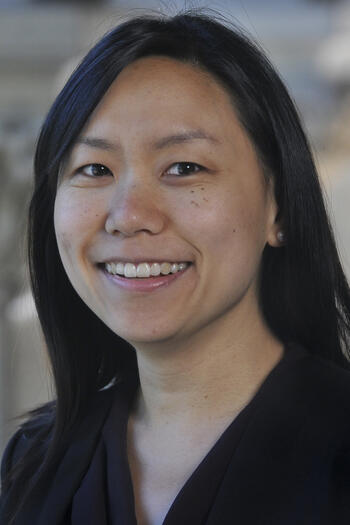
Margaret Triyana is currently Assistant Professor of Economics at Nanyang Technological University, Singapore. Triyana graduated from the Harris School of Public Policy at the University of Chicago. She was previously the Asia Health Policy Postdoctoral Fellow at the Shorenstein Asia Pacific Research Center in 2013-14.
Margaret Triyana Assistant Professor of Economics, Nanyang Technological University, Singapore
Seminars
News Type
News
Date
Paragraphs

As we look toward year 2016, the Walter H. Shorenstein Asia-Pacific Research Center documents highlights from the 2014-15 academic year. The latest edition of the Center Overview, entitled "Asia in Flux," includes special research, people, events and outreach features, and is now available for download online.

Hero Image
annual report cover 14 15
All News button
1
Subscribe to International Development