International Development

FSI researchers consider international development from a variety of angles. They analyze ideas such as how public action and good governance are cornerstones of economic prosperity in Mexico and how investments in high school education will improve China’s economy.

They are looking at novel technological interventions to improve rural livelihoods, like the development implications of solar power-generated crop growing in Northern Benin.

FSI academics also assess which political processes yield better access to public services, particularly in developing countries. With a focus on health care, researchers have studied the political incentives to embrace UNICEF’s child survival efforts and how a well-run anti-alcohol policy in Russia affected mortality rates.

FSI’s work on international development also includes training the next generation of leaders through pre- and post-doctoral fellowships as well as the Draper Hills Summer Fellows Program.

-

This event is part of Shorenstein APARC's winter webinar series "Asian Politics and Policy in a Time of Uncertainty."

In the 2010s, amid signs of rising illiberalism around the world, Indonesia seemed exceptional—an established democracy bucking the trend.  In 2019, however, at a conference in Canberra, experts on Indonesia from Australia, Asia, and the United States argued otherwise. Their variously skeptical views were recently published in a book alarmingly entitled Democracy in Indonesia: From Stagnation to Recession?  In this webinar, a co-editor of the volume will discuss its subtitle with an analyst of Indonesian politics who did not contribute to the book.

Panelists:

Image
Eve Warburton 4X4
Eve Warburton is a Postdoctoral Fellow in the Asia Research Institute at the National University of Singapore. Her research interests include democratic representation, identity, and the political economy of policymaking in young democracies, with a focus on Southeast Asia and especially Indonesia. In addition to Democracy in Indonesia (2020), her work has appeared in the Bulletin of Indonesian Economic Studies, Contemporary Southeast Asia, Democratization, Electoral Studies, Pacific Affairs, the Journal of East Asian Studies, and as chapters in several books. She is currently working on her first book manuscript, Reclaiming What's Ours: The Business and Politics of Resource Nationalism in Indonesia. She received her doctorate in international studies from the Australian National University’s Coral Bell School of Asia and Pacific Affairs in 2018.  Her master’s and undergraduate degrees are respectively from Columbia University and the University of Sydney.

Image
Tom Pepinsky 4X4
Tom Pepinsky is Tisch University Professor in the Department of Government at Cornell University and a Nonresident Senior Fellow at the Brookings Institution. His fields are comparative politics and international political economy, with a focus on emerging markets and a special interest in Southeast Asia. His work on Indonesia includes, as co-editor, Piety and Public Opinion: Understanding Indonesian Islam (2018). He has been published in the American Journal of Political Science, the Journal of Democracy, Perspectives on Politics, and World Politics, among other venues, including an online platform, New Mandala: New Perspectives on Southeast Asia. He is an active co-founder of the Southeast Asia Research Group (seareg.org), which showcases new research by young scholars on Southeast Asian politics, and he serves on the steering committee of the Association for Analytical Learning on Islam and Muslim Societies (aalims.org).  His PhD in political science is from Yale University.

Southeast Asia Program Director Don Emmerson, who has also worked on Indonesia, will moderate the discussion.

Via Zoom Webinar
Register: https://bit.ly/39mafJU

Eve Warburton Postdoctoral Fellow in the Asia Research Institute, the National University of Singapore.
Tom Pepinsky Tisch University Professor in the Department of Government, Cornell University and a Nonresident Senior Fellow, the Brookings Institution.
Seminars
Paragraphs

Volume 5, Issue 2

Authors: Steven Pifer, Min Byung Chae, Natasha Lock, Iris H-Y Chiu, Andreas Kokkinis, Andrea Miglionico, Saraphin Dhanani, and Samuel P. LeRoy.

The Stanford International Policy Review (SIPR) is a biannual student-run international affairs and public policy journal housed in the Ford Dorsey Master's in International Policy. SIPR publishes two issues per year, in the winter and in the spring. Each issue will feature articles, commentary, and book reviews on international policy topics. SIPR's purpose is twofold: to provide timely and compelling analysis on pressing policy issues, and to provide a formative educational experience to student editors.

All Publications button
1
Publication Type
Reports
Publication Date
-

* Please note all CISAC events are scheduled using the Pacific Time Zone.


Seminar Recording:  https://youtu.be/rOmLa_XcaJc


About the Event: The Trump Presidency has changed transatlantic security relations permanently and fundamentally.  Former UK Ambassador to NATO Sir Adam Thomson, currently Director of the European Leadership Network, will look at the implications for relations between NATO and the European Union at the start of President Biden’s term.  Although some progress on NATO-EU cooperation has been made in the past few years, it was in the shadow of the challenges that Trump posed to both organizations.  Washington and America’s European allies and partners will need to repair the damage to the transatlantic relationship and take a new approach to working together. 


About the Speaker: Sir Adam Thomson has been the Director of the European Leadership Network since 2016. The ELN is an independent, non-partisan, network of leaders from all across the continent dedicated to a safer Europe.

Adam had a 38 year diplomatic career in the British Diplomatic Service. His final posting was as the UK Ambassador to NATO 2014 - 2016. From 2010 Adam served as British High Commissioner to Pakistan and between 2002 and 2006 he was British Ambassador and Deputy Permanent Representative to the United Nations in New York.  Other postings included Moscow (1981-3), NATO (1983-6) and Washington DC (1991-5). He headed the Foreign Office’s Security Policy Department 1998 – 2002.

Virtual Seminar

Adam Thomson Director The European Leadership Network
Seminars
Paragraphs

Little attention has been paid to the role that low levels of cognitive development (or IQ) play among both left-behind children (LBCs) and children living with parents (CLPs) in the context of poor educational attainment in rural China. In this paper, we examine how general cognitive abilities contribute to the academic achievement gains of both LBCs and CLPs in poor areas of rural China. We measure the general cognitive ability of the 4,780 sample students using the Raven’s Standard Progressive Matrices (Raven IQ) and assess academic achievement using a curriculum-based mathematics exam. We find that IQ and left-behind status predict achievement gains for the average student. Among low-IQ students, however, left-behind status does not correlate with a change in achievement, suggesting that the migration of parents does not immediately/automatically translate into a loss of academic achievement for students with delays in their general cognitive ability.

All Publications button
1
Publication Type
Journal Articles
Publication Date
Journal Publisher
Compare: A Journal of Comparative and International Education
Authors
Huan Wang
-

* Please note all CISAC events are scheduled using the Pacific Time Zone.


Seminar Recording: https://youtu.be/Ot8lMxDSb34


About the Event: This paper addresses a single question: What explains the lack of civil war recurrence in El Salvador since the 1992 Chapultepec Accords? This lack of recurrence presents a unique puzzle given the fact that the civil war’s underlying causes remain unresolved. A well-established body of scholarship has identified a host of variables critical in explaining civil war recurrence, but much less ink has been spilled to explain non-recurrence. As such, I examine the factors identified in scholarship to be correlated with civil war recurrence to determine what they might tell us about civil war non-recurrence. I argue that the civil war non-recurrence in El Salvador rests not only on the durability of the agreement’s coercive/military and political provisions but also on the rebel group’s organizational design. To test this argument, I process trace along the recurrence variables and find support for my argument.   


About the Speaker: Meg K. Guliford is a Penn Provost Postdoctoral Fellow in residence at Perry World House. Her broad research agenda reflects an interest in political violence, conflict processes, and U.S. foreign policy. Her research has been supported by the U.S. Institute of Peace and the Eisenhower Institute. Guliford’s career in the federal government began as a Presidential Management Fellow for the U.S. Marine Corps Headquarters and has included a civilian deployment to Iraq and work for the Institute for Defense Analyses and the Under Secretary of Defense for Intelligence. Guliford will receive her Ph.D. in International Relations from Tufts University’s Fletcher School of Law and Diplomacy. She received her M.P.P. from the Harvard Kennedy School and a B.A. from the University of Pennsylvania.

Virtual Seminar

Meg K. Guliford Provost Postdoctoral Fellow University of Pennsylvania
Seminars
Authors
Gary Mukai
News Type
Blogs
Date
Paragraphs

The following is Part 2 of a multiple-part series. For Part 1, please visit here.

Since the unprecedented events on January 6, 2021, I have had the chance to communicate with many young students. Like many Americans, they too are concerned about the divisions in U.S. society and what has been projected abroad about what it means to be an American. On December 8, 2020, SPICE posted an article that highlights eight reflections from students. This article features eight more students from diverse backgrounds.

As I mentioned last month, my hope is that the free educational website—“What Does It Mean to Be an American?”—will help students reflect upon their civil liberties during this challenging time. The lessons were authored by SPICE’s Rylan Sekiguchi for use at the high school and college levels, and the website was developed by the Mineta Legacy Project in partnership with SPICE.

One of the students, Junow Iwasaki, is an American who is enrolled in SPICE’s Stanford e-Japan course, which introduces U.S. society and culture and U.S.–Japan relations to high school students in Japan. The other seven students are living in the United States. The reflections below do not necessarily reflect those of the SPICE staff.

Ana Maria Griffin Morimoto, New York:
Being an American means eating turkey and sushi for Thanksgiving dinner.
It means decorating the Christmas tree, and finding presents.
It means wearing a kimono on New Year’s Day, and eating osechi-ryori [traditional Japanese New Year’s foods].
Being an American means I get the chance to fight and reach my dream of becoming a performer.
It means choice—free and independent to be exactly who I want to be.
It means beauty on many levels.
The beauty of loving whoever I want to love.
The beauty of knowing I can make it.
Being an American means being an immigrant.
I can choose to speak Spanish or English with my classmates or co-workers.
Being an American is being a former orphan from Colombia who gets to share what it is to be an American.

Mana Iketani, Hawaii:
December 7, 2020 marked the 75th anniversary of the Imperial Japanese Navy attack on Pearl Harbor in 1941, killing 2,403 people, and led to the United States’ formal entry into World War II. It is a terrifying topic to learn in school in Hawaii as a Japanese immigrant, causing me to inevitably think, “Would my classmates start discriminating against me or disdain me?” Against my prediction, I never faced any discrimination since I moved here at age nine, even after my classmates learned the history. People in my state are respectful to each individual, tolerant of the diversity of backgrounds, cultures, and ideas. Respecting others and yourself is what it means to be an American in one of the most diverse countries of the world.

Junow Iwasaki, Tokyo, Japan:
I was born in New York as a dual citizen but have lived in Japan ever since I was a baby. Though I am an American, I have hesitated to talk openly about my nationality because I want to “fit in” with others. However, having experienced funny looks from kids and adults who ignore me, I have come to realize that I cannot simply be perceived as Japanese either. I am still figuring out my identity, but I think being American is not just speaking English or acting outspoken and bold. Americans living abroad like me contribute to the fabric of what it means to be an American. Despite how I have been perceived, I wish that I could simply be who I am, an American who embraces two cultures.

Sienna Mack, Washington:
Being an American should have nothing to do with your race, your citizenship, or your religion. The only thing that defines an American should be the will to stand up for what is right no matter what. It should mean striving for the American dream of “life, liberty, and the pursuit of happiness” regardless of how big or small your efforts are. True patriotism means understanding that this country was founded on ideals yet to be achieved, and as Americans, humans, and citizens of the world, it is our right and duty to realize that dream. Throughout the history of our country, built on revolution, people have rebelled against injustice. And time and time again, as we do so, we reach a little bit closer to the American Dream.

Carrie Masters, Ohio:
Being an American means that I live in a land of freedom, opportunity, and diversity. I have the ability to shape my future. I determine where I live, my career, my religion, my political views, etc. A core Midwestern value is to work hard so that I am prepared to take advantage of opportunities that arise. These chances create responsibility, and it is imperative that we reciprocate by helping others. That help can be in the pursuit of big goals or something simple. Being an American means living with, learning from, and respecting different cultures. America benefits from our different cultural backgrounds and ideas, which become part of who we are. I am fortunate to live where I can make my own decisions and achieve my goals through hard work.

Erykah Lalah Secody, Arizona:
As Native Americans, Navajo, we are citizens of two sovereign nations, the U.S. and the Navajo Nation. We are the only language-minority group in the U.S. with this unique dual citizenship status. But being an American to me means being a citizen in two of the greatest nations in the world, a nation built on meritocracy, as we are taught in our Native homeland, “...if it’s to be, it’s up to me.” Being an American means we are a nation of diversity, a nation of, for, and by the people, a nation of immigrants in their journey to America in pursuit of life, liberty, and happiness.

Eli Stein, Hawaii:
I live in a country rich with opportunities, guided by the ideology that Americans, like the bald eagle, are born with wings granting flight in return for hard work. I have learned this is not the case. While the United States offers opportunity, it is plagued by inherent inequality. Some are born with clipped wings, while others fly with little effort: an inequality driven by systemic racial injustice. The United States is rooted in a repetitious cycle; the rich become richer while the poor suffer hardship. Growing up in Hawaii, a racially and economically diverse state, I witness the unequal opportunities minorities face, a problem often ignored. Homeless children live on Waikiki’s streets, a block from lavish penthouses. Despite the inequality, I still believe that with unity, we can create change.

Michelle Thurber, California:
My favorite part about being American is that when I think of the word “American,” no particular race or religion comes to mind. I feel connected to my ethnic background (half-Chinese), while still considering myself entirely American. However, I realize that my perspective may come partly from the fact that I live in the San Francisco Bay Area, where there is always someone around who looks like me. Hateful rhetoric in American politics frustrates me because I experience firsthand the richness that comes from diversity and open-mindedness. What brings me hope is being part of a generation of young people willing to take a stand in favor of diversity—on social media now, and on the political stage in the future.

Read More

Banner
Blogs

What Does It Mean to Be an American?: A Web-based Curriculum Toolkit

“What Does It Mean to Be an American?” is a free educational web-based curriculum toolkit for high school and college students that examines what it means to be an American developed by the Mineta Legacy Project and Stanford’s SPICE program.
What Does It Mean to Be an American?: A Web-based Curriculum Toolkit
mlp team with bush manual rotate 360
News

Presidents Bill Clinton and George W. Bush interviewed for the Mineta Legacy Project

Presidents Bill Clinton and George W. Bush interviewed for the Mineta Legacy Project
Hero Image
seven students headshot
Clockwise from top left: Ana Maria Griffin Morimoto, Mana Iketani, Junow Iwasaki, Carrie Masters, Erykah Lalah Secody, Eli Stein, Michelle Thurber; not pictured: Sienna Mack
All News button
1
Subtitle

Reflections of eight students on the website "What Does It Mean to Be an American?"

John A. and Cynthia Fry Gunn Building, 366 Galvez Street
Stanford, CA 94305-6015

0
Faculty Co-director of the Stanford Center on China's Economy and Institutions
Professor, by courtesy, of Economics
Senior Fellow at the Freeman Spogli Institute for International Studies
Senior Fellow at the Stanford Institute for Economic Policy Research
Faculty Affiliate at the King Center of Global Development
Faculty Affiliate at Stanford Institute for Human-Centered Artificial Intelligence
5268-hongbinli.png PhD

Hongbin Li is the Co-director of Stanford Center on China's Economy and Institutions, and a Senior Fellow of Stanford Institute for Economic Policy Research (SIEPR) and the Freeman Spogli Institute for International Studies (FSI).

Hongbin obtained Ph.D. in economics from Stanford University in 2001 and joined the economics department of the Chinese University of Hong Kong (CUHK), where he became full professor in 2007. He was also one of the two founding directors of the Institute of Economics and Finance at the CUHK. He taught at Tsinghua University in Beijing 2007-2016 and was C.V. Starr Chair Professor of Economics in the School of Economics and Management. He also founded and served as the Executive Associate Director of the China Social and Economic Data Center at Tsinghua University. He founded the Chinese College Student Survey (CCSS) in 2009 and the China Employer-Employee Survey (CEES) in 2014.

Hongbin’s research has been focused on the transition and development of the Chinese economy, and the evidence-based research results have been both widely covered by media outlets and well read by policy makers around the world. He is currently the co-editor of the Journal of Comparative Economics and co-author of the forthcoming book, “The Highest Exam: How the Gaokao Shapes China” published by Harvard University Press.

CV
Date Label
-

This is a virtual event. Please click here to register and generate a link to the talk. 
The link will be unique to you; please save it and do not share with others.

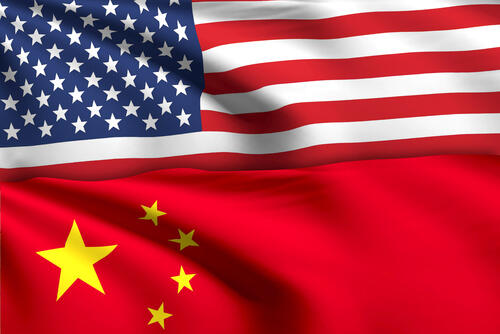
As US-China competition intensifies, experts debate the degree to which the current strategic environment resembles that of the Cold War. Those that argue against the analogy often highlight how China is deeply integrated into the US-led world order. They also point out that, while tense, US-China relations have not turned overtly adversarial. But there is another, less optimistic reason the comparison is unhelpful: deterring and defeating Chinese aggression is harder now than it was against the Soviet Union. In this talk, Dr. Mastro analyzes how technology, geography, relative resources and the alliance system complicate U.S. efforts to enhance the credibility of its deterrence posture and, in a crisis, form any sort of coalition.


Photo of Oriana MastroOriana Skylar Mastro is a Center Fellow at Stanford University’s Freeman Spogli Institute for International Studies (FSI). Within FSI, she works primarily in the Shorenstein Asia-Pacific Research Center (APARC) and the Center for International Security and Cooperation (CISAC) as well. She is also a fellow in Foreign and Defense Policy Studies at the American Enterprise Institute and an inaugural Wilson Center China Fellow.
Mastro is an international security expert with a focus on Chinese military and security policy issues, Asia-Pacific security issues, war termination, and coercive diplomacy. Her research addresses critical questions at the intersection of interstate conflict, great power relations, and the challenge of rising powers. She has published widely, including in Foreign Affairs, International Security, International Studies Review, Journal of Strategic Studies, The Washington Quarterly, The National Interest, Survival, and Asian Security, and is the author of The Costs of Conversation: Obstacles to Peace Talks in Wartime (Cornell University Press, 2019).

She also continues to serve in the United States Air Force Reserve, for which she works as a Strategic Planner at INDOPACOM. Prior to her appointment at Stanford in August 2020, Mastro was an assistant professor of security studies at the Edmund A. Walsh School of Foreign Service at Georgetown University. She holds a B.A. in East Asian Studies from Stanford University and an M.A. and Ph.D. in Politics from Princeton University.


Image
American and Chinese flags
This event is part of the 2021 Winter/Spring Colloquia series, Biden’s America, Xi’s China: What’s Now & What’s Next?, sponsored by APARC's China Program.


Via Zoom Webinar. Register at: bit.ly/2MYJAdw

Oriana Skylar Mastro Center Fellow at the Freeman Spogli Institute for International Studies
Seminars
-

* Please note all CISAC events are scheduled using the Pacific Time Zone.


Seminar Recording: https://youtu.be/JqN4Ga4DVss


About the Event: 

Much of the imagery and remote sensing analysis in the Open Source Community pertains to North Korea’s nuclear weapons pathway and military capability. However, many questions remain regarding economic and agricultural health in a nation known for denial of access to outside observation. But by applying emerging analytical and processing technology of satellite imagery and data, we can address the challenge of examining economic and environmental patterns in the North.

Machine Learning technology has been used to analyze rudimentary objects like roads or buildings on satellite imagery for years, but has yet to be successfully employed to better understand nuanced patterns of life. In our partnership with the analytics company Orbital Insight, we have undertaken a project of counting thousands of objects in satellite images taken over the past five years to uncover North Korea’s trade relationship with China.

This project includes counting number of trucks at each side of the Sino-Korean Friendship Bridge as a measure of trade activity between North Korea and China. By applying artificial intelligence to more than 300 satellite images, we observed fluctuations of truck counts, which peak during the month of November. A significant drop in the truck counts during the year of 2020 is noticed as a result of restricted traffic from the global pandemic, although as much as 30 trucks were observed in the month of June on both sides of the border. The project demonstrates the utilities of machine learning in analyzing emerging datasets. Careful monitoring of trade between the two states can aid in better understanding the China-North Korea economic relationship and how it evolves over time.

CISAC is also partnering with international organizations and geospatial systems specialists to apply data derived from public space mapping systems to better understand macro-environmental, agricultural, and water security trends over the past twenty years in North Korea. For decades, scientists of every discipline have been analyzing remotely-sensed images and data sets to extract otherwise-imperceptible insight pertaining to broad aspects of environmental health including coastal erosion, deforestation, land subsidence, and global thermal changes. But because of a post-war technology vacuum and broadly-applied sanctions against space-derived information, North Korea has never had access to this data or the advanced software and data storage architecture necessary to support it. The potential for direct collaboration with the North on environmental analysis may enhance North Korea’s ability to mitigate its own agricultural risk and potentially facilitate informal international collaboration.


About the Speaker: Allison Puccioni has been an imagery analyst for over 25 years, working within the military, tech, media, and academic communities. After honorably serving in the US Army as an Imagery Analyst from 1991 - 1997, Allison continued the tradecraft as a civilian augmentee to US and NATO operations in the Kosovo airstrike campaign, and as a Senior Analyst and Mission Planner for Naval Special Warfare Group One. After earning her Master’s Degree in International Policy, Allison established the commercial satellite imagery analysis capability for the British publication company Jane's. In 2015, Allison joined Google to assist with the establishment of applications for its commercial small-satellites. Today, Allison is the Principal and Founder of Armillary Services, providing insight on commercial imaging satellites and associated analytics to the governments, nongovernmental organizations, and the commercial sector. Concurrently, Allison manages the multi-sensor imagery analysis team at Stanford University's Center for International Security and Cooperation.

Virtual Seminar

Not in residence

0
Affiliate
AllisonPuccioni_rsd16_073_0340a.jpg

Allison Puccioni has been an imagery analyst for over 25 years, working within the military, tech, defense, media, and academic communities. After honorably serving in the US Army as an Imagery Analyst from 1991 - 1997, Allison continued the tradecraft within the Defense Industry: augmenting US and NATO operations in the Kosovo airstrike campaign, and as a Senior Analyst and Mission Planner for Naval Special Warfare Group One. After earning her Masters Degree in International Policy, Allison established the commercial satellite imagery analysis capability for the British publication Jane's, publishing Open Source imagery analysis for six years. In 2015, Allison joined Google to assist with the establishment of applications for its commercial small-satellites. Today, Allison is the Principal and Founder of Armillary Services, providing insight on commercial imaging satellites and associated analytics to the governments, nongovernmental organizations, and the commercial sector. Concurrently, Allison manages the multi-sensor imagery analysis team at Stanford University's Center for International Security and Cooperation.

CV
Allison Puccioni Principal and Founder Armillary Services
Seminars
-

* Please note all CISAC events are scheduled using the Pacific Time Zone.


Seminar Recording: https://youtu.be/TV8ye_OVdzY


About the Event: Proof that France had become the world’s fourth nuclear power exploded above the Algerian Sahara in February 1960, during the Algerian War for Independence (1954–62). Sixteen more blasts would take place before France abandoned its Saharan test sites in 1966, which had continued to host French explosions underground during the first years of Algerian Independence. Well before the first airborne detonation, and even after French testing went below ground, the likelihood that radioactive debris (known as fallout) would contaminate the desert environment and its human inhabitants animated an international controversy. Saharan fallout loomed at once as a new threat to Algerian and African sovereignty and to Cold War negotiations that promised to limit weapons testing, revealing historical intersections between African decolonization and the nuclear arms race.


About the Speaker: Austin Cooper is a Predoctoral Researcher at Stanford University’s Center for International Security and Cooperation and a PhD Candidate in History and Sociology of Science at the University of Pennsylvania.

Virtual Seminar

0
cooper.jpg

Austin R. Cooper is a Stanton Nuclear Security Fellow in the Security Studies Program at the Massachusetts Institute of Technology. He completed his PhD in History and Sociology of Science at the University of Pennsylvania. He has held fellowships at Stanford University’s Center for International Security and Cooperation and SciencesPo’s Nuclear Knowledges Program.

Affiliate
Austin Cooper Predoctoral Researcher Stanford University
Seminars
Subscribe to International Development