International Development

FSI researchers consider international development from a variety of angles. They analyze ideas such as how public action and good governance are cornerstones of economic prosperity in Mexico and how investments in high school education will improve China’s economy.

They are looking at novel technological interventions to improve rural livelihoods, like the development implications of solar power-generated crop growing in Northern Benin.

FSI academics also assess which political processes yield better access to public services, particularly in developing countries. With a focus on health care, researchers have studied the political incentives to embrace UNICEF’s child survival efforts and how a well-run anti-alcohol policy in Russia affected mortality rates.

FSI’s work on international development also includes training the next generation of leaders through pre- and post-doctoral fellowships as well as the Draper Hills Summer Fellows Program.

-
Claire Adida seminar 9/25/25

Women’s political participation remains persistently lower than men’s worldwide. This study evaluates whether a group-based training intervention can enhance women’s engagement in local governance. In a randomized controlled trial across 300 communities in southwest Nigeria, we recruited 3,900 politically unaffiliated women into newly formed women’s action committees (WACs). Control WACs received basic civic education, while treatment WACs received additional training aimed at strengthening women’s collective efficacy. Leveraging baseline and endline surveys, as well as behavioral data from a community grant competition, we find that the intervention significantly increased both the level and quality of women’s political participation. It also improved women’s perceptions of community leaders’ responsiveness. Such gains appear to be driven by increased perceptions of individual and collective agency. These findings underscore the potential of addressing both psychological and structural barriers to advance women’s political engagement.

ABOUT THE SPEAKER

Claire Adida is a Senior Fellow at FSI (CDDRL), Professor (by courtesy) of Political Science, and faculty co-director at the Immigration Policy Lab at Stanford University. She is also a faculty affiliate with the Center for Effective Global Action (CEGA), the Evidence in Governance and Politics (EGAP) group, the Policy Design and Evaluation Lab (PDEL), and the Future of Democracy Initiative at the UC Institute on Global Conflict and Cooperation (IGCC). She is an invited researcher with J-PAL’s Humanitarian Protection and Displaced Livelihoods Initiatives and an international advisory board member with CFREF’s Bridging Divides research program.

Virtual to Public. Only those with an active Stanford ID with access to the Philippines Conference Room in Encina Hall may attend in person.

Hesham Sallam
Hesham Sallam

Virtual to Public. If prompted for a password, use: 123456
Only those with an active Stanford ID with access to the Philippines Conference Room in Encina Hall may attend in person.

Encina Hall
616 Jane Stanford Way
Stanford, CA 94305-6055

0
Senior Fellow, Freeman Spogli Institute for International Studies
Professor (by courtesy) of Political Science
claire_adida_12_of_22_-_claire_leslie_adida.jpg

Claire Adida is Senior Fellow at FSI (CDDRL), Professor (by courtesy) of Political Science, and faculty co-director at the Immigration Policy Lab at Stanford University. She is also a faculty affiliate with the Center for Effective Global Action (CEGA), the Evidence in Governance and Politics (EGAP) group, the Policy Design and Evaluation Lab (PDEL), and the Future of Democracy Initiative at the UC Institute on Global Conflict and Cooperation (IGCC). She is an invited researcher with J-PAL’s Humanitarian Protection and Displaced Livelihoods Initiatives and an international advisory board member with CFREF’s Bridging Divides research program.

Adida uses quantitative and field methods to investigate how countries manage new and existing forms of diversity, what exacerbates or alleviates outgroup prejudice and discrimination, and how vulnerable groups navigate discriminatory environments. She has published two books on immigrant integration and exclusion: Immigrant exclusion and insecurity in Africa; Coethnic strangers (Cambridge University Press, 2014); and Why Muslim integration fails in Christian-heritage societies (with David Laitin and Marie-Anne Valfort, Harvard University Press, 2016). Her articles are published in the American Political Science Review, Science Advances, the Proceedings of the National Academy of Sciences, the Quarterly Journal of Political Science, Comparative Political Studies, the Journal of Population Economics, the Journal of Experimental Political Science, and Political Science Research & Methods, among others.

Prior to joining Stanford, she was Assistant Professor (2010-2016), Associate Professor (2016-2022), and Professor of Political Science at UC San Diego, where she also served as the co-Director and Director of the Center for Comparative Immigration Studies (2018-2024). In 2021-2022, she served as Research Advisor to the Director of the Office of Refugee Resettlement in the U.S. Government’s Department of Health & Human Services. She received her Ph.D. in political science from Stanford University in 2010, her Master's in International Affairs from Columbia University’s School of International and Public Affairs (2003), and her Bachelor's in political science and communication studies from Northwestern University (2000).

CDDRL Visiting Scholar, Summer 2016
CDDRL Hewlett Fellow, 2008-09
CV
Date Label
Claire Adida Senior Fellow FSI
Seminars
Date Label
Authors
Nora Sulots
News Type
News
Date
Paragraphs

In 2025, the Center on Democracy, Development and the Rule of Law (CDDRL) celebrated the 20th year of its Fisher Family Summer Fellows on Democracy and Development Program. This summer, 27 democracy leaders from across the developing world convened at Stanford for an intensive three-week training focused on democracy, good governance, and rule of law reform. Chosen from a highly competitive applicant pool, the fellows represent a diverse range of professional backgrounds and geographical regions, spanning civil society, public service, social enterprise, media, and technology. Launched in 2005, the program was previously known as the Draper Hills Summer Fellows Program. It was renamed in 2023 in recognition of a gift from the Fisher family — Sakurako (Sako), ‘82, and William (Bill), MBA ‘84 — that endowed the program and secured its future.

Fellows were instructed by a leading Stanford faculty team composed of FSI Director and former U.S. Ambassador to Russia Michael McFaul; CDDRL Mosbacher Director Kathryn Stoner; Olivier Nomellini Senior Fellow Francis Fukuyama; Senior Fellow in Global Democracy Larry Diamond; and Erik Jensen, Lecturer in Law at Stanford Law School on new institutional models and frameworks to enhance their ability to promote good governance, accountable politics, and find new ways to achieve economic development in their home countries.

Esteemed guest lectures were also presented by individuals from the greater FSI and Stanford communities, as well as by Damon Wilson, President of the National Endowment for Democracy; Joshua Achiam, Head of Mission Alignment at OpenAI; Austin Mejia, Product Manager and Head of AI for Wearables at Google and a founding member of the AI for Developing Countries Forum, which advocates for equitable AI development globally; and various speakers from the Bay Area Council Economic Institute, the leading think tank focused on the most critical economic and policy issues facing the nine-county Bay Area region.

During the program, the fellows delivered "TED"-style talks during our Fellow Spotlight Series, sharing personal stories about the struggles in their home countries, stories of their fight for justice, equality, and democracy, and stories of optimism and endurance. You can watch their talks in the playlist below:

Read More

FFSF Class of 2025 with 20th Anniversary logo
News

Announcing the 20th Anniversary Cohort of the Fisher Family Summer Fellows on Democracy and Development Program

In July 2025, the Center on Democracy, Development and the Rule of Law will welcome a diverse cohort of 27 experienced practitioners from 18 countries who are working to advance democratic practices and economic and legal reform in contexts where freedom, human development, and good governance are fragile or at risk.
Announcing the 20th Anniversary Cohort of the Fisher Family Summer Fellows on Democracy and Development Program
Lilian Tintori, Waleed Shawky, and Gulika Reddy
News

Confronting Repression: Strategies for Supporting Political Prisoners

A panel discussion featuring 2025 Fisher Family Summer Fellows Lilian Tintori and Waleed Shawky, along with Gulika Reddy, Director of the International Human Rights and Conflict Resolution Clinic at Stanford Law School, explored the human cost of political imprisonment, the barriers advocates face, and the strategies available to combat them.
Confronting Repression: Strategies for Supporting Political Prisoners
2025 Strengthening Ukrainian Democracy and Development fellows
News

Ukrainian Leaders Advance Postwar Recovery Through Stanford Fellowship

Meet the four fellows participating in CDDRL’s Strengthening Democracy and Development Program and learn how they are forging solutions to help Ukraine rise stronger from the challenges of war.
Ukrainian Leaders Advance Postwar Recovery Through Stanford Fellowship
Hero Image
2025 Fisher Family Summer Fellows
Rod Searcey
All News button
1
Subtitle

The Fellow Spotlight Series is an inspiring and moving series of "TED"-style talks given by each of our 2025 Fisher Family Summer Fellows to share their backstories and discuss their work.

Date Label
-

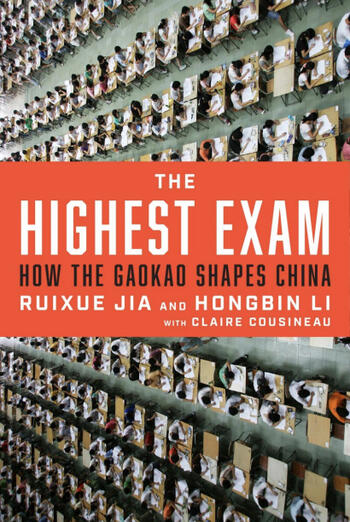
Join us for a fireside chat with co-authors Ruixue Jia and Hongbin Li who will discuss their most recent book, The Highest Exam: How the Gaokao Shapes China. The fireside chat will be held in-person in the Bechtel Conference Center and livestreamed for virtual attendees. After the fireside chat, we invite in-person attendees to join us for a light reception and book signing with Hongbin Li. Order your copy of the book here.

Join the webinar to watch the event live:

Webinar ID: 985 1962 7327
Passcode: 361163


The Highest Exam book cover.

Each year, more than ten million students across China pin their hopes on the gaokao, the nationwide college entrance exam. Unlike in the United States, where standardized tests are just one factor, in China college admission is determined entirely by gaokao performance. It is no wonder the test has become a national obsession.

Drawing on extensive surveys, historical research, and economic analysis, and informed by Ruixue Jia and Hongbin Li’s own experiences of the gaokao gauntlet, The Highest Exam reveals how China’s education system functions as a centralized tournament that serves the needs of the Chinese Communist Party and drives much of the country’s economic growth. The book examines the gaokao’s far-reaching effects on China’s society and beyond. As Chinese-American families bring the expectations of the highest exam with them, their calls for objective, transparent metrics in the education system increasingly clash with the more holistic measures of achievement used by American schools and universities.


About the Authors
 

Hongbin Li

Hongbin Li is the Co-director of Stanford Center on China's Economy and Institutions, and a Senior Fellow of Stanford Institute for Economic Policy Research and the Freeman Spogli Institute for International Studies. Li obtained his Ph.D. in economics from Stanford University in 2001 before joining the economics department at the Chinese University of Hong Kong (CUHK). He was also one of the two founding directors of the Institute of Economics and Finance at the CUHK. He taught at Tsinghua University from 2007 to 2016 in the School of Economics and Management and was the founder and Executive Associate Director of the China Social and Economic Data Center. 

Li’s research has been focused on the transition and development of the Chinese economy, and the evidence-based research results have been both widely covered by media outlets and well read by policy makers around the world. He is currently the co-editor of the Journal of Comparative Economics and co-author of the book, The Highest Exam: How the Gaokao Shapes China, published by Harvard University Press.
 

Ruixue Jia headshot.

Ruixue Jia is a professor of economics at the School of Global Policy and Strategy at UC San Diego. She also serves as Co-director of the China Data Lab, executive secretary of the Association of Comparative Economic Studies (ACES) and co-chair of the China Economic Summer Institute (CESI). 

Jia’s research lies at the intersections of economics, history and politics, with a focus on how power structures evolve and shape economic development. Her recent work examines the political economy of idea formation and diffusion, including the interplay between the state, education, science and technology. She is the co-author of The Highest Exam, a book that explores how China’s education system both mirrors and molds its society.
 

Headshot of Claire Cousineau.

Claire Cousineau  is a writer and former researcher at the Stanford Center on China’s Economy and Institutions, she is currently pursuing her MBA at Duke University.

Since studying and working in Beijing and Kunming, Claire is passionate about fostering a deeper public understanding of China’s role on the global stage and creating cross-cultural relationships. Claire is the co-author of the book, The Highest Exam: How the Gaokao Shapes China, along with Hongbin Li and Ruixue Jia, published by Harvard University Press in 2025. 


Bechtel Conference Center
Encina Hall
616 Jane Stanford Way, Stanford University

or via Livestream

Ruixue Jia

John A. and Cynthia Fry Gunn Building, 366 Galvez Street
Stanford, CA 94305-6015

0
Faculty Co-director of the Stanford Center on China's Economy and Institutions
Professor, by courtesy, of Economics
Senior Fellow at the Freeman Spogli Institute for International Studies
Senior Fellow at the Stanford Institute for Economic Policy Research
Faculty Affiliate at the King Center of Global Development
Faculty Affiliate at Stanford Institute for Human-Centered Artificial Intelligence
5268-hongbinli.png PhD

Hongbin Li is the Co-director of Stanford Center on China's Economy and Institutions, and a Senior Fellow of Stanford Institute for Economic Policy Research (SIEPR) and the Freeman Spogli Institute for International Studies (FSI).

Hongbin obtained Ph.D. in economics from Stanford University in 2001 and joined the economics department of the Chinese University of Hong Kong (CUHK), where he became full professor in 2007. He was also one of the two founding directors of the Institute of Economics and Finance at the CUHK. He taught at Tsinghua University in Beijing 2007-2016 and was C.V. Starr Chair Professor of Economics in the School of Economics and Management. He also founded and served as the Executive Associate Director of the China Social and Economic Data Center at Tsinghua University. He founded the Chinese College Student Survey (CCSS) in 2009 and the China Employer-Employee Survey (CEES) in 2014.

Hongbin’s research has been focused on the transition and development of the Chinese economy, and the evidence-based research results have been both widely covered by media outlets and well read by policy makers around the world. He is currently the co-editor of the Journal of Comparative Economics and co-author of the forthcoming book, “The Highest Exam: How the Gaokao Shapes China” published by Harvard University Press.

CV
Date Label
Hongbin Li
Lectures
News Feed Image
highest_exam_book_talk.png
Date Label
0
CDDRL Visiting Scholar, 2025-26
denis_morozov.jpg

Denis Morozov is a Visiting Scholar at Stanford’s Center on Democracy, Development and the Rule of Law for the 2025-2026 academic year. His research focuses on the role and position of multilateral development banks in the evolving global financial system and their impact on international development.

Before joining Stanford in 2023 as a Fellow at the Distinguished Careers Institute, Denis served as President of Bank of America for Russia and the CIS, overseeing the franchise’s regional work in investment advisory, capital markets, research, and securities trading.

Prior to his role at Bank of America, Denis was the Executive Director of the European Bank for Reconstruction and Development, a leading international financial institution aimed at fostering the transition towards market-oriented economies and multiparty democracy in Central and Eastern Europe, the former USSR, and parts of Northern Africa, the Middle East, and Asia.

Earlier in his career, Denis was the President and Chief Executive Officer of Norilsk Nickel and Uralkali, two global leaders in their respective commodities (base and platinum group metals and fertilizer inputs), both of which were recognized for their superior financial performance and high standards of corporate governance under Denis’ leadership.

Denis obtained a BA in Economics and a JD from Moscow State University. He later received an MA in Public Administration from Columbia University’s School of International and Public Affairs. Additionally, he completed the Advanced Management Program at Harvard Business School, received a diploma in Commercial Banking from the Swiss Banking School, and earned a PhD (Russian equivalent) in Economics from the Moscow State Institute of International Relations.

In 2012, Denis was named a Young Global Leader by the Davos World Economic Forum.

Denis is passionate about travel and exploration and enjoys long-distance running, water sports, and anything to do with mountains.

Date Label
0
Visiting Scholar at APARC, 2025-2026
seok_jin_eom.jpg Ph.D

Seok Jin Eom joins the Walter H. Shorenstein Asia-Pacific Research Center (APARC) at Stanford University as a visiting scholar for the 2025-2026 academic year. He is a professor of the Graduate School of Public Administration at Seoul National University, Republic of Korea, and received his Ph.D in public administration from Seoul National University. He has published numerous papers in academic journals, including Government Information Quarterly, Public Management Review, Administration & Society, Perspectives on Public Management and Governance, and The Korean Public Administration Review. He also published many books on the history of public administration and policy in Korea and Japan, as well as digital government and AI adoption in the public sector, including The Intellectual History of Korean Public Administration (2025, forthcoming), Enabling Data-Driven Innovation and AI Governance (2025), The Changes and Continuity of Japanese State Apparatus (2015), and others. Dr. Eom serves as the editor-in-chief of the Korean Public Administration Review, one of the most prestigious academic journals in Korea. His current research interests include the intellectual evolution of Korean public administration, public governance in the era of economic growth in Korea, and the evolution of governance in the AI era. (sjum21@stanford.edu; sjum21@snu.ac.kr).

Date Label
Authors
Nora Sulots
News Type
News
Date
Paragraphs

In 2022, the Center on Democracy, Development and the Rule of Law (CDDRL) launched its Strengthening Ukrainian Democracy and Development (SU-DD) Program — a 10-week training initiative for mid-career Ukrainian practitioners and policymakers. Designed for participants advancing well-defined projects aimed at strengthening Ukrainian democracy, enhancing human development, and promoting good governance, SU-DD builds on the successes of CDDRL’s earlier Ukrainian Emerging Leaders Program, which brought 12 fellows to Stanford over four cohorts.

The third SU-DD cohort began their work in June, meeting online with CDDRL faculty to refine the scope of their projects, each focused on actionable strategies to support Ukraine’s recovery from Russia’s invasion. In their first session, fellows presented their proposals to a panel of distinguished CDDRL faculty, including Mosbacher Director Kathryn Stoner, FSI Director Michael McFaul, and Olivier Nomellini Senior Fellow and MIP Director Francis Fukuyama, receiving initial feedback and guidance. The second meeting invited deeper exploration of solutions, using the MIP Problem-Solving Framework co-created by Professors Fukuyama and Jeremy Weinstein. In the final session, fellows were challenged to revisit and sharpen their project scope while learning from Professor Fukuyama about the Implementation phase of the framework. Equipped with new tools, fresh perspectives, and targeted feedback, the fellows concluded the virtual portion of the program ready to begin their journey at Stanford.

A hallmark of the SU-DD program is participation in CDDRL’s three-week Fisher Family Summer Fellows Program. Last month, the Ukrainian fellows joined peers from across the globe on campus at Stanford, building connections, exchanging ideas, and exploring shared solutions to complex development challenges. This experience broadened their networks far beyond Ukraine's borders, allowing them to build relationships they will draw on as they advance their projects after the program concludes on August 29.

During the final three weeks of the program, our Ukrainian fellows will visit Silicon Valley tech companies, meet with local business experts, politicians, and government officials, as well as Stanford faculty, and finalize implementation plans to bring their proposals to life.

Learn more about each fellow and their work below.

Meet the Fellows

Polina Aldoshyna

Polina Aldoshyna is a Ukrainian lawyer and civic leader with over nine years of experience in law, public administration, and nonprofit management. She currently leads the BGV Charity Fund, overseeing social projects that support vulnerable communities. In addition, she serves as a Deputy of the Zhytomyr Regional Council, focusing on local governance and social policy. Throughout her career, Polina has managed over 60 humanitarian projects, including the establishment of psychosocial support centers and aid programs for displaced individuals and veterans.

Project: Institutionalizing Resilience Centers for Postwar Recovery 

Polina is currently working on transforming Ukraine’s emerging resilience centers—grassroots hubs that provide psychosocial support, legal aid, and essential services to displaced and vulnerable populations—into a sustainable, institutionalized model of community-based social infrastructure. While these centers have played a critical role in the war’s social response, many still lack unified standards, stable funding, and digital infrastructure, limiting their long-term impact.

Her project explores which governance structures — municipal, civic, or hybrid — are most viable in Ukraine’s decentralized context, how public, private, and donor financing can be blended to support long-term operations, and how digital tools, such as CRM systems and reporting platforms, can professionalize service delivery. Drawing on global models, such as Resilience Hubs in the United States, Polina aims to co-design a scalable framework for resilience centers that can be integrated into Ukraine’s broader post-war recovery strategy.

To support this work, Polina is interested in meeting with NGOs, charitable foundations, and private philanthropists who support Ukraine in the reconstruction of human social capital in the United States. She hopes to learn how democratic institutions adapt and deliver services during crisis and post-conflict transitions, as well as engage with scholars and practitioners working at the intersection of governance, social development, and recovery.


Oleksii Movchan

Oleksii Movchan is a Member of the Ukrainian Parliament and Deputy Chairman of the Verkhovna Rada Committee on Economic Development, representing the “Servant of the People” faction. He chairs the subcommittee on public procurements and state property management, and is active in inter-parliamentary groups with the USA, UK, Japan, and others. Before parliament, he led projects at Prozorro.Sale. Oleksii holds degrees from Kyiv-Mohyla Academy, Ukrainian Catholic University, and Kyiv School of Economics. He has advanced key reforms in procurements, state-owned companies, and privatization to support Ukraine’s European Union integration.

Project: Improving Corporate Governance in Municipally-Owned Enterprises (MoEs) in Ukraine

Oleksii is currently working to improve the governance of Ukraine’s municipally owned enterprises (MoEs), which number nearly 14,000—more than triple the number of state-owned enterprises. While some MoEs serve as critical infrastructure providers in areas such as water, heating, and public transport, most operate without modern governance standards. Over 82% are unprofitable and many are subsidized, making them susceptible to inefficiency, mismanagement, and corruption. These shortcomings erode public trust, distort competition, and weaken essential service delivery.

His project focuses on designing and advocating for national legislation to institutionalize OECD-based governance practices across approximately 60 high-impact MoEs in 19 cities. Proposed measures include strategic property management policies, independent supervisory boards, transparent CEO selection, and robust audit, compliance, and risk management systems. The legislation also calls for standardized financial reporting and regular external audits to enhance transparency and creditworthiness.

To support this work, Oleksii is drawing on Ukraine’s pilot reforms in Mykolaiv and Lviv, as well as prior SOE governance reforms since 2015, and global best practices from EU and OECD countries. He is particularly interested in how institutional reform can advance anti-corruption goals and how reformers in other countries have successfully designed and implemented large-scale changes. He hopes to meet with Stanford faculty, civic technologists, and philanthropic organizations, such as the Stanford Cyber Policy Center, Code for America, and the Skoll Foundation, to explore how policy and technology innovations can support municipal reform and Ukraine’s post-war recovery.


Maria Golub

Maria Golub is a recognized expert on Ukraine’s European and Euro-Atlantic integration, with deep expertise in EU-Ukraine bilateral relations. Based in Brussels, she currently serves as a Senior Political and Policy Advisor to Ukrainian leadership, where she advocates for a just and lasting peace in Ukraine and supports the country’s advancement along the EU integration path through a decisive reform agenda. She is also actively involved in shaping Ukraine’s reconstruction strategy and is a strong proponent of the “build back better” principle, championing an ambitious revival plan for the country.

Project: Building a National Recovery Platform and Transatlantic Innovation Alliance

Maria is currently working to establish a national Coalition for Recovery—an inclusive, cross-sectoral platform designed to unify Ukraine’s defense, reconstruction, and reform agendas. As Ukraine faces the twin imperatives of resisting ongoing military aggression and laying the groundwork for long-term renewal, Maria’s project aims to ensure that recovery planning is not siloed but instead integrates priorities across security, governance, innovation, and transatlantic cooperation.

The Coalition will convene key domestic and international stakeholders to shape Ukraine’s internal reform agenda, embed EU and NATO-aligned governance standards, and streamline policy frameworks across recovery sectors. A core pillar of the project is embedding security priorities and military technological innovation directly into the recovery strategy, positioning defense modernization as a foundation — not a separate track — for rebuilding state capacity and competitiveness. In tandem, Maria is developing the concept for a large-scale technology and defense innovation alliance between Ukraine, the EU, and the United States. By fostering deeper collaboration in emerging technologies and military-industrial partnerships, the initiative seeks to contribute to Ukraine’s economic resurgence in 2025–2026 and anchor its strategic integration into the Euro-Atlantic community.

Maria is particularly interested in successful strategies and action plans that demonstrate how countries emerging from large-scale conflict can simultaneously pursue national recovery and build resilient, future-oriented security and defense architectures. She aims to explore cutting-edge developments in the tech and military tech sectors, as well as innovative tools like digital twin cities, to help design an integrated national revival plan. In addition, she hopes to deepen her understanding of how AI tools and techniques can support planning, coordination, and implementation across Ukraine’s postwar recovery landscape.


Alyona Nevmerzhytska

Alyona Nevmerzhytska is CEO of hromadske.ua, Ukraine’s leading independent online media platform. She began her career in 2012 at the Kyiv Post and has since focused on business development and organizational strategy. At hromadske, she has enhanced audience engagement and strengthened data-driven decision-making. Committed to building sustainable models for independent media, she ensures ethical newsroom operations and promotes democratic values. She is a graduate of the Stockholm School of Economics, an Atlantic Council Millennium Fellow, and a 2024 McCain Institute Global Leader.

Project: Strengthening Independent Media for Postwar Accountability and Recovery

Alyona is currently working to build a more resilient and innovative media ecosystem in Ukraine that can serve as both a watchdog and a unifying force during the country’s postwar recovery. As CEO of Hromadske.ua, she is leading efforts to combine investigative journalism, compelling storytelling, and technological advancement with a focus on financial sustainability and editorial independence.

Her project explores how independent media can most effectively cover Ukraine’s complex reconstruction process — holding public institutions and international aid mechanisms accountable while also building trust across communities fractured by war. Alyona is particularly interested in leveraging technology, including AI tools, to enhance investigative capacity, analyze data, and uncover patterns of corruption or inefficiency in recovery efforts.

Through the SU-DD fellowship, she also seeks to explore global models for sustainable journalism beyond donor-driven funding, learning how to strengthen independent media institutions to ensure their long-term viability and public impact. A key area of inquiry is the ethical integration of AI into journalism, ensuring that innovation does not compromise transparency, integrity, or audience trust. Alyona is eager to connect with Stanford faculty in communication and business, as well as experts, to explore sustainable models for independent journalism and civil society resilience. She is also interested in meeting with philanthropic organizations, alongside tech leaders, and Ukrainian NGOs to strengthen partnerships that support innovative, mission-driven media.

Read More

(Clockwise from left) Oleksandra Matviichuk, Oleksandra Ustinova, Oleksiy Honcharuk, and Serhiy Leshchenko joined FSI Director Michael McFaul to discuss Ukraine's future on the three-year anniversary of Russia's full-scale invasion.
News

Through War and Loss, Ukrainians Hold Onto Hope

FSI scholars and civic and political Ukrainian leaders discussed the impact of the largest conflict in Europe since World War II, three years after Russia's invasion of Ukraine.
Through War and Loss, Ukrainians Hold Onto Hope
Ukraine and Russia flags on map displaying Europe.
Commentary

The future of Russia and Ukraine

How the present conflict plays out has important implications for other former Soviet states and for the future of the E.U., says political scientist Kathryn Stoner.
The future of Russia and Ukraine
Oleksandra Matviichuk speaks to an audience at Stanford University on April 15, 2024.
News

Ukraine Needs Western Assistance, Global Implications if Conflict is Lost

Nobel Peace Prize winner and CDDRL alumna Oleksandra Matviichuk delivered the S.T. Lee Lecture on April 15 and spoke of the broader implications of Russia’s actions in Ukraine and for the world if the West does not continue to support Ukraine in its fight against Russia.
Ukraine Needs Western Assistance, Global Implications if Conflict is Lost
Hero Image
2025 Strengthening Ukrainian Democracy and Development fellows
Alyona Nevmerzhytska, Oleksii Movchan, Maria Golub, and Polina Aldoshyna.
Rod Searcey
All News button
1
Subtitle

Meet the four fellows participating in CDDRL’s Strengthening Democracy and Development Program and learn how they are forging solutions to help Ukraine rise stronger from the challenges of war.

Date Label
0
Visiting Scholar at APARC, 2025-2026
soo_chan_choi.jpg Ph.D.

Soo Chan Choi joins the Walter H. Shorenstein Asia-Pacific Research Center (APARC) as a visiting scholar for the 2025-2026 academic year. He currently serves as Dean and Professor of the School of Social Welfare at Yonsei University. While at APARC, he will be conducting research on the adaptation of Korean workers to overseas environments, focusing on the Bay Area.

Date Label
Authors
Heather Rahimi
News Type
News
Date
Paragraphs
Group photo of students, staff, and faculty in China during the 2025 SCCEI China Study Program.
Students visited the U.S. Embassy in Beijing.

In June 2025, twenty Stanford undergraduate and graduate students traveled across China on a two-week immersive program designed to deepen their understanding of the country’s economy, culture, and international relations. Led by Stanford faculty members, the program took students to eight cities across three regions in China—Hong Kong, Shenzhen, Dongguan, Guangzhou, Yiwu, Hangzhou, Shanghai, and Beijing—combining academic exchanges, site visits to leading companies and institutions, and rich cultural experiences.

The itinerary included more than a dozen in-depth site visits, giving students direct exposure to the technological, manufacturing, and financial sectors that shape China’s economy. Highlights included factory tours of OPPO and XPeng electric vehicle plant; conversations with senior executives at Tencent, Alibaba, ByteDance, and Goldman Sachs; as well as a discussion with Hong Kong’s finance under secretary. Students toured the world-famous electronics markets in Shenzhen and trade markets in Yiwu, where they spoke directly with small business owners, gaining insight into the entrepreneurial networks that fuel global supply chains. One of the program’s most impactful experiences came in Beijing, where participants visited the U.S. Embassy for a conversation with diplomatic officers about U.S.–China relations. 

Garry Piepenbrock, an economics and political science student, said that “seeing the variety of companies in China” was his favorite part of the program. He added, “there are a lot of big tech firms that we've had the privilege to visit, but also some of my favorite visits were the smaller manufacturers that had really interesting human stories behind them. The people working there and also the people running them. It's a difficult business. It's very competitive. And seeing that side of the Chinese economy was really cool.” 

There are a lot of big tech firms that we've had the privilege to visit, but also some of my favorite visits were the smaller manufacturers that had really interesting human stories behind them.
Garry Piepenbrock

Throughout the program AI emerged as a hot topic and focal area for China’s technological and economic advancement goals. Zane Sabbagh, a computer science and symbolic systems student, shared his insights on AI development in China, “given China's lag in the AI race, their model is to let one Chinese company win by open sourcing a lot of their models and then hosting other companies' models on their platform. So for example, Tencent’s chatbot and Alibaba chatbot both host DeepSeek’s models on their own app, which is super weird because ChatGPT would never host Anthropic or xAI on its own native iPhone app. That’s something I found super interesting.” 

Students also had the opportunity to compare their own academic experience through visits to multiple academic institutions in China. At the University of Hong Kong, students participated in a lecture given by Professor Zhiwu Chen on understanding Hong Kong’s history. At Peking University, students engaged with Vice Dean Li-An Zhou who gave a brief introduction on China’s economy. In addition to university exchanges, students also visited a migrant school in Beijing where they learned about the education system and connected with the young migrant students. Nazli Dakad, an earth systems student, reflected on the program and shared that, “one of my favorite parts of the trip was the migrant school. I thought that was super eye opening and contrasting to the tech focus that we've had, because it gave me a little more insight into the education system in China.”

Throughout the program students had the opportunity to engage with locals in various settings, from top executives, to factory workers, to locals out and about conducting their daily routines. Students also met with Stanford alumni based in China and learned about their career trajectories after graduation. Several students shared that building connections with people in China has been a highlight for them. Biology major Eva Shen shared, “being Chinese I feel like I've been very disconnected from China in the US, so being able to talk to all these people here [in Chinese] has been the best part for me…getting to hear their perspective, and actually getting to know them as people, has been my favorite part. When we did our interviews in the market back in Shenzhen, and we got to talk to older ladies, they reminded me of my own grandma.”

Cultural immersion was also woven throughout the journey. Students tried their hand at traditional arts such as paper cutting, brush calligraphy, and tea pan-frying; dressed in historical attire for an opera performance in Yiwu and a palace banquet in Hangzhou; and learned crafts like umbrella-making and handmade paper production. These activities provided a tangible connection to China’s long cultural heritage alongside its modern economic dynamism.

The learnings from this trip will definitely be something that I carry with me in all the ways that I think about what I want to do in my work for the rest of my career.
Adeline Liao

By the end of the program, participants had gained a multifaceted perspective on China—its economic drivers, its cultural traditions, and its evolving role on the world stage. “This program was about more than just observation—it was about engagement,” said SCCEI Co-director Hongbin Li. “Our students came away with firsthand experiences and conversations that will shape how they think about China for years to come.”

Discover more on our program page including student reflection videos, program photos, and more.


Watch the Program Highlights Reel

Read More

2025-25 sccei graduate student research fellowship awardees banner image with headshots of Alicia Chen and Matthew DeButts.
News

Two Stanford Ph.D. Candidates Receive SCCEI Fellowships to Further Impactful Research on China

SCCEI awarded Alicia Chen and Matthew DeButts with competitive research fellowships for the 2025-26 academic year to pursue research on China.
Two Stanford Ph.D. Candidates Receive SCCEI Fellowships to Further Impactful Research on China
2024 SCCEI Summer Study Program group photo at Peking University.
News

SCCEI Launches Inaugural Summer Study Program Aimed at Understanding China’s Economy

Under the guidance of SCCEI’s faculty directors, 16 students traveled across urban and rural China, embarking on field visits including education, healthcare, retail technology, and manufacturing to gain a deeper understanding of China’s economy.
SCCEI Launches Inaugural Summer Study Program Aimed at Understanding China’s Economy
Landscape aerial view of Haikou City, China.
News

Shanjun Li to Lead New Research Program on Sustainability and Energy Transition in China

SCCEI's newest research program addresses the pressing sustainability challenges facing China and examines their broader global implications. Grounded in rigorous empirical analysis and economic modeling, researchers aim to inform the development of effective evidence-based policy solutions as well as uncover valuable lessons for other countries navigating similar economic and energy transitions.
Shanjun Li to Lead New Research Program on Sustainability and Energy Transition in China
All News button
1
Subtitle

Led by Stanford faculty members, 20 Stanford students traveled across China engaging in academic exchanges, site visits to leading companies and institutions, and rich cultural experiences to gain a deeper understanding of the country’s economy, culture, and international relations.

Date Label
0
CDDRL Honors Student, 2025-26
ggp_-_garry_piepenbrock.jpeg

Major: Economics & Political Science
Minor: Mathematics
Hometown: Boston, Massachusetts & Oxford, UK
Thesis Advisor: Larry Diamond & Javier Mejia

Tentative Thesis Title: Toward a Theory of the Evolution of the Global Political Economy: Varieties of Democracy, Development and Law

Future aspirations post-Stanford: I would like to undertake a joint JD/PhD in political economy and to work in the academy, public, and private sectors.

A fun fact about yourself: I was the youngest person in UK history to litigate on behalf of the disabled in the High Court, Court of Appeal and Employment Tribunal, where I cross-examined a dozen senior leaders of a $500 million organization in a 40-day trial for an ongoing four-year, multi-million dollar lawsuit, in which I have been acting on a pro bono basis.

Date Label
Authors
Heather Rahimi
News Type
News
Date
Paragraphs

SCCEI Senior Research Scholar Chenggang Xu’s latest book, Institutional Genes: Origins of China's Institutions and Totalitarianism, offers a reinterpretation of China’s political and institutional development. Drawing from decades of research, Xu introduces the concept of "institutional genes"—the enduring foundational structures that shape and constrain how institutions evolve. Through this lens, he examines the emergence and evolution of China’s current communist totalitarian institution, contending that substantial parts of its "institutional genes" were implanted by Soviet Russia, building upon a longstanding tradition of authoritarian rule dating back to imperial China.

Book cover: Institutional Genes: Origins of China's Institutions and Totalitarianism by Chenggang Xu

With insights spanning political economy, institutional economics, and history, Institutional Genes presents a compelling account of why China’s institutions have taken their particular form—why they have resisted democratization—and why its economic reforms have risen and fallen. Xu’s work will appeal to scholars, policymakers, and general readers seeking a deeper understanding of how China’s past continues to shape its political trajectory today. 

Institutional Genes: Origins of China's Institutions and Totalitarianism, previously published in Chinese, is currently available for pre-order and will be published and available to the public on August 21, 2025. For more from Xu, read his recent essay, The Origins of China’s Institutions and Totalitarianism, based on his forthcoming book.


Headshot of Dr. Chenggang Xu.

Chenggang Xu

Senior Research Scholar, Stanford Center on China's Economy and Institutions
About the Author

Read More

Landscape aerial view of Haikou City, China.
News

Shanjun Li to Lead New Research Program on Sustainability and Energy Transition in China

SCCEI's newest research program addresses the pressing sustainability challenges facing China and examines their broader global implications. Grounded in rigorous empirical analysis and economic modeling, researchers aim to inform the development of effective evidence-based policy solutions as well as uncover valuable lessons for other countries navigating similar economic and energy transitions.
Shanjun Li to Lead New Research Program on Sustainability and Energy Transition in China
Elizabeth Economy speaks during a Fireside Chat.
News

Strategic Shifts: Understanding China’s Global Ambitions and U.S.-China Dynamics with Elizabeth Economy

At the 2025 SCCEI China Conference, Elizabeth Economy, Hargrove Senior Fellow at the Hoover Institution, outlined China’s ambitious bid to reshape the global order—and urged the U.S. to respond with vision, not just rivalry, during a Fireside Chat with Professor Hongbin Li, Senior Fellow and SCCEI Faculty Co-Director.
Strategic Shifts: Understanding China’s Global Ambitions and U.S.-China Dynamics with Elizabeth Economy
Professor Matteo Maggiori speaks in front of a crowd.
News

Stanford Professor Matteo Maggiori Unpacks the New Geopolitics of Global Trade

Professor Maggiori joined SCCEI and Stanford Libraries to discuss how the U.S. and China apply economic pressure to achieve their political and economic goals, and the economic costs and benefits that this competition is imposing on the world.
Stanford Professor Matteo Maggiori Unpacks the New Geopolitics of Global Trade
All News button
1
Subtitle

SCCEI Senior Research Scholar Chenggang Xu’s latest book, "Institutional Genes: Origins of China's Institutions and Totalitarianism", explores the origins and evolution of China's institutions and communist totalitarianism.

Date Label
Subscribe to International Development