Institutions and Organizations
Paragraphs

Abstract: There is a growing interest in the use of offensive cyber capabilities (OCC) among states. Despite the growing interest in these capabilities, little is still known about the nature of OCC as a tool of the state. This research therefore aims to understand if (and how) offensive cyber capabilities have the potential to change the role of military power. Drawing on a wide range of cases, we argue that these capabilities can alter the manner in which states use their military power strategically in at least four ways. OCC are not particularly effective in deterring adversary military action, except when threatened to be used by states with a credible reputation. However, they do have value in compellence. Unlike conventional capabilities, the effects of offensive cyber operations do not necessarily have to be exposed publicly, which means the compelled party can back down post-action without losing face thus deescalating conflict. The potential to control the reversibility of effect of an OCC by the attacker may also encourage compliance. OCC also contribute to the use of force for defensive purposes, as it could provide both a preemptive as well as preventive strike option. Finally, its symbolic value as a ‘prestige weapon’ to enhance ‘swaggering’ remains unclear, due to its largely non-material ontology and transitory nature.

All Publications button
1
Publication Type
Annual Reports
Publication Date
Journal Publisher
NATO CCD COE Publications: Tallinn
Authors

Annual Stanford Primary Source Symposium


For further information, including the speakers and talk titles, please visit https://cmems.stanford.edu/primary-source-symposium


Co-sponsored by the Europe Center, the Department of Religious Studies, the Department of History, the Division of Literatures, Cultures, and Languages, the Department of Art & Art History, the Stanford Humanities Center, and Stanford University Libraries.

Stanford Humanities Center
424 Santa Teresa St.

Symposiums

Annual Stanford Primary Source Symposium


For further information, including the speakers and talk titles, please visit https://cmems.stanford.edu/primary-source-symposium


Co-sponsored by the Europe Center, the Department of Religious Studies, the Department of History, the Division of Literatures, Cultures, and Languages, the Department of Art & Art History, the Stanford Humanities Center, and Stanford University Libraries.

Stanford Humanities Center
424 Santa Teresa St.

Symposiums
616 Serra StreetEncina Hall E301Stanford, CA 94305-6055
0
sebastian_dettman.jpg Ph.D.

Sebastian Dettman joins the Walter H. Shorenstein Asia-Pacific Research Center (APARC) as the 2018-2019 Shorenstein Postdoctoral Fellow in Contemporary Asia.  He researches party building, electoral competition, and political representation in newly democratic and authoritarian regimes, with a focus on Southeast Asia.  His dissertation examines the dilemmas faced by Malaysia’s opposition parties in expanding electoral support and building coalitions, and the implications for regime liberalization. His research has been supported by grants including the NSEP Boren Fellowship, the USINDO Sumitro Fellowship, and Foreign Language and Area Studies (FLAS) Fellowships.

At Shorenstein APARC, Seb will work on developing his dissertation into a book manuscript and make progress on his next project on regime-opposition policy interactions in authoritarian regimes.  He obtained his doctorate in the Department of Government at Cornell University.  Prior to his doctorate, Seb received an MA in Southeast Asian Studies from the University of Michigan. He has also worked as a consultant and researcher for organizations including the Asia Foundation, the International Crisis Group, and the Carter Center.


2018-2019 Shorenstein Postdoctoral Fellow in Contemporary Asia
616 Serra StreetEncina Hall E301Stanford, CA 94305-6055
0
Lee Kong Chian NUS-Stanford Fellow on Contemporary Southeast Asia, 2018-19
sophie_lemiere.jpg Ph.D.

Sophie Lemiere is a Political Anthropologist at the Ash Center for Democracy in the Democracy in Hard Places program. She has been awarded the Stanford-NUS 2018-2019 Lee King Chiang Fellow and will be at Stanford in the fall then Singapore in the spring.

Her research looks at the nexus between religion, politics and criminality in a comparative perspective, focussing upon the deep structure of political systems. She received her PhD from Sciences-Po, France, her thesis was the first study on the political role of gangs through umbrella NGOs in Malaysia. Her Masters research on the apostasy controversies and Islamic civil society was awarded the second prize for International Young Scholar from the ISIM, Leiden in 2007. She has held research positions at RSIS-NTU in 2011 then at ARI in 2012 and has been visiting fellow at the University of Sydney, Cornell, UC Berkeley and Columbia. Sophie believes it is essential for academics to disseminate their research to a wide audience, and primarily in the countries they study. With this idea in mind, she has oriented her efforts towards the publication of original scholarship addressing both a general and academic audience within and outside of Malaysia. With this in mind, Sophie Lemière is the editor of a series “Malaysian Politics and People”. The first volume Misplaced Democracy was released in 2014, the second volume Illusions of democracy was published in 2017 and will be re-published in 2018 by Amsterdam University Press; the third volume is expected for 2019. Her monograph “Gangsters and Masters: Complicit Militancy and Authoritarian Politics” will be published also 2019. Sophie currently works on a political biography of Mahathir campaign “The Last Game: Malaysian Politics in the Eye of Mahathir”.

She has made considerable efforts to give visibility to Malaysian Studies by publishing in both international academic and non-academic outlets, Sophie has a blog on Mediapart and regularly contributes to publications such as New Mandala, The Conversation, Le Monde, Libération.

Sophie has also started to develop several documentary projects with French production companies, including a series on the Arts and Politics. Her first film 9/43 featured the Malaysian cartoonist Zunar and was selected among the 25 best movies of the French short-film festival ‘Infracourt’ in 2016.


0
Postodoctoral Fellow at The Europe Center, 2018-2019
lastra_photo.jpg

Carlos Lastra-Anadon is a postdoctoral research fellow at The Europe Center at the Freeman Spogli Institute at Stanford and an incoming Assistant Professor at IE University in Madrid, Spain. He recently completed his PhD in Government and Social Policy at Harvard University. His research interests lie at the intersection of political economy and policy, particularly education policy.

His work has been concerned with understanding what sustains and enhances robust human capital formation and the role that the political process may play in facilitating or impeding its development in different contexts.

Over the last 20 years or so, the skills that countries have been investing in since World War II such as universal K-12 are becoming insufficient due to automation and delocalization of production and a job market inequality into highly rewarding high-skilled jobs and manual jobs. What drives successful nations, subnational units and companies to use education to tackle that challenge?

He studies the role that politics broadly understood plays in these dynamics. This includes the jurisdictional configurations and institutions (such as decentralization in school districts and funding rules). I have also focused on the effect public and interest groups can have on holding governments to account to ensure the quality of public services through the ballot box and public opinion, and on the types of nongovernmental actors and other reforms that can help in raising standards and developing new types of skills. 

His project at TEC with Prof Kenneth Scheve tries to understand the characteristics and political drivers of the development of higher education in the United States since the 1960s.

 
(650) 723 3591
0
Fairleigh S. Dickinson, Jr. Professor in Public Policy.
Professor of Political Science
paul.sniderman_photo.jpg

Paul M. Sniderman is the Fairleigh S. Dickinson, Jr. Professor in Public Policy.

Sniderman’s current research focuses on the institutional organization of political choice; multiculturalism and inclusion of Muslims in Western Europe; and the politics of race in the United States.

Most recently, he authored The Democratic Faith and co-authored Paradoxes of Liberal Democracy: Islam, Western Europe and the Danish Cartoon Crisis (with Michael Bang Petersen, Rune Slothuus, and Rune Stubager).

He has published many other books, including The Reputational Premium: A Theory of Party Identification and Policy Reasoning, Reasoning and Choice, The Scar of Race, Reaching beyond Race, The Outsider, and Black Pride and Black Prejudice, in addition to a plethora of articles. He initiated the use of computer-assisted interviewing to combine randomized experiments and general population survey research.

A fellow of the American Academy of Arts and Sciences and of the American Association for the Advancement of Science, he has been awarded the Woodrow Wilson Prize, 1992; the Franklin L. Burdette Pi Sigma Alpha Award, 1994; an award for the Outstanding Book on the Subject of Human Rights from the Gustavus Meyers Center, 1994; the Gladys M. Kammerer Award, 1998; the Pi Sigma Alpha Award; and the Ralph J. Bunche Award, 2003.

Sniderman received his B.A. degree (philosophy) from the University of Toronto and his M.A. and Ph.D. degrees from the University of California, Berkeley.


Affiliated faculty of The Europe Center
CV
0
Global Affiliate Visiting Scholar, 2018-19
Japan Air Self Defense Force
masa_shizu.jpg

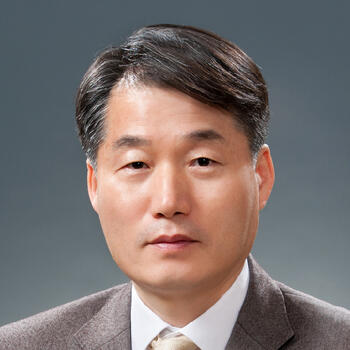
Col. Masahiro Shizu is a global affiliate visiting scholar at the Walter H. Shorenstein Asia-Pacific Research Center (Shorenstein APARC) for 2018-19. Shizu has almost 20 years of experience at the Japanese Ministry of Defense and the Ministry of Foreign Affairs.  In his experience, he has been a member of the Joint Staff Office and the Air Staff Office as well as commanded units of the Japan Air Self Defense Force.  Most recently, Shizu was part of the Defense Planning and Policy Department where he was responsible for acquisition of defense equipment and creating future military strategy, operational plans and capabilities.

Y2E2 Room 350
473 Via Ortega
Stanford, CA 94305

0
tanutama_headshot2.jpg

Vincent Tanutama is a research data analyst at the Center on Food Security and the Environment, where he supports the work of Marshall Burke on climate’s impact on economic outcomes such as workers' labor productivity and subnational economic output. Vincent's interest in the environment sprouts from investigating the distribution of rent among bureaucrats in their management of forest and oil palm resources in Indonesia, his country of origin. He has worked at the Indonesian Ministry for Economic Development Planning (Bappenas), The Abdul Latif Jameel Poverty Action Lab (JPAL Southeast Asia), Oxford Policy Management (OPM), and the United Nations Economic and Social Commission for Asia and the Pacific (UNESCAP).  He holds a B.A. in Ethics, Politics and Economics from Yale University.

Research Data Analyst
Subscribe to Institutions and Organizations