Security

FSI scholars produce research aimed at creating a safer world and examing the consequences of security policies on institutions and society. They look at longstanding issues including nuclear nonproliferation and the conflicts between countries like North and South Korea. But their research also examines new and emerging areas that transcend traditional borders – the drug war in Mexico and expanding terrorism networks. FSI researchers look at the changing methods of warfare with a focus on biosecurity and nuclear risk. They tackle cybersecurity with an eye toward privacy concerns and explore the implications of new actors like hackers.

Along with the changing face of conflict, terrorism and crime, FSI researchers study food security. They tackle the global problems of hunger, poverty and environmental degradation by generating knowledge and policy-relevant solutions. 

Authors
News Type
Q&As
Date
Paragraphs


The Freeman Spogli Institute for International Studies would like to extend the warmest best wishes to Senior Fellow and Raymond A. Spruance Professor of International History, David Holloway. After over 30 years as an expert in political science and history at Stanford University, Holloway will retire on September 1, 2018.


David Holloway was co-director of the Center for International Security and Cooperation (CISAC) from 1991 to 1997, and director of FSI from 1998 to 2003. His research focuses on the international history of nuclear weapons, science and technology in the Soviet Union, and the relationship between international history and international relations theory. He is best known for his book Stalin and the Bomb: The Soviet Union and Atomic Energy, 1939-1956 (Yale University Press, 1994) which was chosen by the New York Times Book Review as one of the best books of 1994. Holloway has also actively contributed to the Bulletin of the Atomic Scientists, Foreign Affairs, and other scholarly journals over the course of his career.


As a member of our institute, Holloway’s quiet warmth and kindness have always been infectious, both inside and outside of the classroom. The depth and insight of his work over the years, not to mention his dedication to FSI and the Stanford Community at large, has been an inspiration. He will be sorely missed. We all wish him the very best with this new chapter in his life and with the completion of his latest book, a complete global history of nuclear weapons, non-proliferation, and international politics, due to be published in 2019.


We caught him to hear his views on recent developments in U.S.-Russia relations one last time and to talk about his time at Stanford.


At the NATO summit, Trump claimed that Germany “is a captive of Russia.” Is there any foundation to this claim?

I don't think so. Trump made the statement in connection with the Nord Stream Oil Pipeline. A lot of people have criticized Germany for building this because it will increase German reliance on Russia. Critics believe that by sending oil through Germany, Russia will potentially have more freedom to interfere in Ukrainian territories. However, the German government has reassured the international community that they would help Ukraine if Russia does use the pipeline to push for recognition of the annexation of Crimea. In Germany’s defense, I think they feel that they have to have economic relations with Russia unless they are in a state of war or close to one – it is the only logical arrangement.


How do you think we can reconcile the disjunction between the U.S. president’s pro-Putin statements and position at the Helsinki press conference with the fact that his administration is implementing sanctions against Russia? 

The policies certainly look contradictory. Trump has not said anything critical about Putin (which is remarkable when he is quite willing to say critical things about everybody else), yet, as you say, his administration has imposed tough sanctions. Why is Trump so reluctant to support his own administration? And why is it that he wanted to meet Putin in the first place? We just don’t know.

On a related note, the Chinese claim that Trump is a very good tactician/strategist and that his behavior at the Helsinki summit was “Kissinger-in-reverse.” That is, it was intended to weaken Russia's ties to China by offering better ties with the U.S. and potentially with Western Europe. Thus, the Chinese see Trump’s performance not as a sign of incompetence and incoherence (as many do in the West), but as further evidence of his coherent strategy.

We often ascribe a malicious masterplan or intentional nefariousness to adversaries. For my part, while possible that the president has a master-plan, I think it is most likely that he does not. Trump has created a backlash against Russia in the U.S. which will make it even more difficult for U.S.-Russian relations to improve in years to come.


There have been a number of articles written about Trump’s push for increased allied investment in NATO; he started by pushing for all members to meet the 2 percent GDP investment quota, but then demanded that they invest 4 percent. Is demanding 4 percent feasible?

The truth is that every American president has pushed the European members of NATO to spend more on defense. Even Obama did it. However, Trump has done it much more openly and offensively. I think the push for 4 percent was more a case of showmanship; the stance he was taking was, “You're not even at 2 percent but you should really be at 4 percent!”

What is the impact of all of this?  I have certainly seen many Europeans turn around say that the E.U. cannot rely on the U.S. anymore. If we have a Trump administration for another six years and/or a U.S. administration in 2020 that takes a similar line, I think we could well see the end of NATO. 


The President’s remarks referred to the fact that only 9 of NATO’s 29 members have reached the 2 percent quota. Yet many NATO advocates are counter-arguing that many of the remaining 21 nations have significantly increased their defense spending. How would you weigh in?

I would agree with NATO advocates and add that the reason why expenditure got so low in the first place is that, after the end of the Cold War, Europe seemed peaceful. I think the 2014 annexation of Crimea by Russia somewhat changed this perception, and the parts of the continent most under threat are the Baltic States and Georgia. As a side note, we should also remember that NATO troops have fought and died in Iraq and Afghanistan alongside the U.S. It is not that they have been doing nothing.


The President claims he vastly improved U.S.-Russian relations at the Helsinki summit. Others, like FSI Director Michael McFaul, claim that the summit was further evidence that we are in an era of “Hot Peace” with Russia. What do you think?

Before I answer your question, I want to say that I think it is good to have Russian and American leaders talking to each other. These are the two largest nuclear powers; I think that there should be open communication on military issues and nuclear issues most particularly.

The world isn't at stake in the same way it was during the Cold War. Yet, there are still fears of military conflict, and we have a new phenomenon: election hacking. The question of Russian meddling in the last U.S. election is complicated by Trump's relationship with Russia. The press conference at Helsinki was so extraordinary, not least because, if Trump really wanted to open a dialogue with Russia, he greatly damaged his chances by virtue of his own behavior. If, instead, he had insisted that Putin did interfere—openly declared his trust in his own intelligence services—I do not believe that the Russians would have walked away. I believe they have an interest in having a dialogue with the United States.


Some political scientists argue that we are now in a new Cold War in Asia, namely with North Korea and/or a possible North Korean-Chinese alliance. Do you agree?

I think of the Cold War as having three elements. First, after World War II there was a geopolitical element: the USSR wanted to control Eastern Europe both for security reasons and for ideological reasons. Second: the U.S. and its West European allies were motivated to help spread principles of liberal democracy and market capitalism, the Soviet Union’s Communist Party wanted to rule via centralized government control and a centrally-planned economy. Third, we had a military element: the arms race and the build-up of huge military confrontations.

Based on these three elements, I'm inclined to see what's going on now more as a breakdown of the international system created after World War II and that the U.S. had dominated. America is not as powerful as it once was. First, Russia turned out not to be a great fit for the established international system, for a variety of reasons. Second, China has risen to become an economic powerhouse that seeks to extend its influence – not (primarily) by military means but through the “belt and road” initiative investment, by building infrastructure in surrounding states. There was always a difficult relationship between the U.S. and China, but nothing like what the U.S.-Soviet relation was at the height of the Cold War.


With everything that has happened in the last few years, which event is going to prove a truly pivotal point for contemporary history when we look back in 20 or 30 years' time?

I think that the ten-day trip that Trump took to Europe was pivotal. The attacks on NATO, not to mention the way he treated Britain (Theresa May in particular), and what we know about his conduct during his meeting with Putin… I think we may look back on that week as a pivotal moment in the breakup of the transatlantic relationship. I don't know what it portends for U.S.-Russian relations, but I think it has made those relations much worse.


Let’s talk about your career here at Stanford. What brought you to FSI originally?

I had an invitation to come for a visit of three years. I was teaching in Edinburgh at the time, and I got a letter from Condi Rice, who was the assistant director of CISAC back then. After the three years, I decided I wasn’t going back. What was so attractive about FSI was the people. I know it may sound rather cliché, but there was such a great sense of possibility about the place. If you had an idea, instead of hearing people say, “Oh, we've never done it that way,” people would say, “Oh, yeah, let's see if we can help you do that!”


What is your fondest memory from your time at Stanford?

That's very difficult. I think one of my best memories is when Gorbachev came to speak at Stanford back in 1990. He gave a speech in the Stanford Memorial Auditorium, and the place was packed; it was at the height of Gorbo-mania. In the course of the speech he thanked some of us at FSI for helping to bring about the improvement in US-Soviet relations…Bill Perry, Pief Panofsky, Sid Drell, and myself. And that was – that's a pleasant moment to remember.


What advice would you give an undergrad starting at Stanford?  And what advice would you give a graduate student hoping to have a career in political science, history, or policy?

To the undergrad, my advice is rather obvious: at Stanford, you have this chance to look around and to try different things, new subjects and programs. Take full advantage of that!

To graduate students: I think most assume that when you choose to be a graduate student, you're choosing to be a specialist in a discipline. That’s true! Yet, at the same time, it is also very important to look around and see what there is outside your discipline, to learn how to communicate with people, particularly ones with other interests and in other fields.

We talk a lot about interdisciplinary work. But truly interdisciplinary work is very difficult. When I came to Stanford, I thought it fantastic that FSI had specialists in such diverse fields all in one place. At the time we had John Lewis who was a China specialist. Sid Drell was a physicist with a lot of experience working on national security issues. Phil Farley spent a long time in the State Department working on arms control issues. I learned a lot from Sid Drell; I wasn't doing physics, but we wrote something together. That kind of possibility and opportunity was incredible. I continued to love this about Stanford over the past 30 years, and I've been very grateful for all of these opportunities. 

As a last thought, I remember a conversation I had with John Hennessy when he was Dean of Engineering, and I was director of FSI. I remember telling him that, much to my surprise, a lot of our best supporters were (and continue to be) engineers. He said, “That’s obvious! No engineer thinks that his discipline alone can solve a problem. You have to work with other people when you're doing something!”

Then he said, “Engineers are also not averse to trying to raise money!” [laughter]


Hero Image
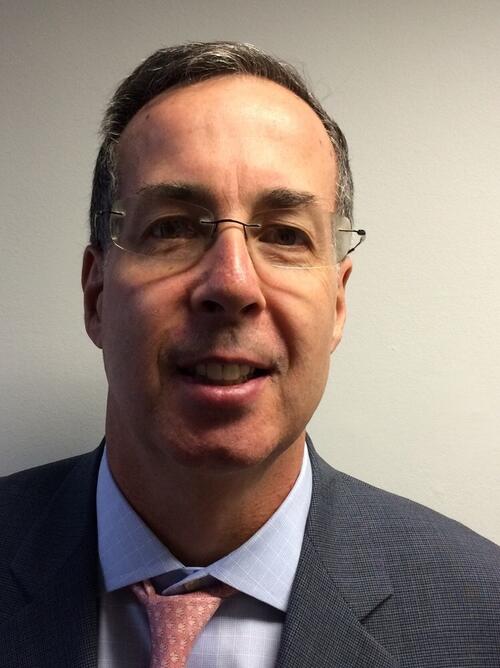
David Holloway, CISAC
All News button
1
News Type
News
Date
Paragraphs

The Trump administration's immigration crackdown may be leading to an unintended consequence: a drop-off in benefits enrollment among legal Hispanic immigrants, according to new research by Stanford Health Policy's Marcella Alsan.

This CBS News story about her work notes that an immigration program called Secure Communities, which was rolled out during the Obama administration, is linked to a lower take-up of benefits such as food stamps and health care enrollment.

In a new paper published by the National Bureau of Economic Research, Alsan and Crystal Yang of Harvard Law School found Hispanic households were particularly hard-hit, even those with legal immigration status.

"We find evidence that our results may be driven by deportation fear rather than lack of benefit information or stigma," the researchers wrote.  "Though not at personal risk of deportation, Hispanic citizens may fear their participation could expose non-citizens in their network to immigration authorities. We find significant declines in SNAP and ACA enrollment, particularly among mixed-citizenship status households and in areas where deportation fear is highest."

Read the CBS News story.

Hero Image
getty images hispanic immigrants
All News button
1
-

Dr. Kenneth Dekleva's talk is one of the first times that a leadership analysis/political psychology profile of North Korea's Kim Jong Un has been presented in an academic setting.  He will discuss how such a profile can be useful to academic scholars, policy makers, and the national security community.

Image
img 1171 kenneth dekleva
Dr. Dekleva is McKenzie Foundation Chair in Psychiatry I, Director of Psychiatry-Medicine Integration, and Associate Professor in the Dept. of Psychiatry, Peter J. O’Donnell Brain Institute, University of Texas Southwestern Medical School, Dallas, TX.  He is board-certified in adult psychiatry, with additional qualification in forensic psychiatry.  Dr. Dekleva received his BA in History at UC Berkeley, and later undertook post-baccalaureate pre-medical studies at Columbia University, NY; he subsequently received his MD at UT Southwestern Medical School, Dallas, TX, and also completed post-graduate/residency training in psychiatry therein.  After working in a variety of academic, clinical and forensic psychiatric settings in the DFW area, he served as a Regional Medical Officer/Psychiatrist and senior US diplomat during 2002-2016, largely overseas (Moscow; Vienna; London; New Delhi; Mexico City), except for a 2-year assignment as Director of Mental Health Services, US Dept. of State, Washington, DC during 2013-2015.  He retired from the US Dept. of State in 2016 with the rank of Minister-Counselor.  Dr. Dekleva has published and/or presented (at local, regional, national, and international conferences) political psychology/leadership profiles of various world leaders since the mid-90s, including Radovan Karadzic, Slobodan Milosevic, Kim Jong Il, Vladimir Putin, Xi Jinping, and Kim Jong Un.  His work has been published in the Journal of the American Academy of Psychiatry and the Law, 38 North, The Diplomat, and the Cipher Brief; he has also given various interviews to media outlets such as NPR, Background Briefing, Smerconish/Sirius XM, and CNN.

Philippines Conference RoomEncina Hall, 3rd Floor616 Serra Mall, Stanford, CA 94305
Kenneth Dekleva, MD Associate Professor, The University of Texas Southwestern Medical School
Seminars

Y2E2 Room 350
473 Via Ortega
Stanford, CA 94305

0
tanutama_headshot2.jpg

Vincent Tanutama is a research data analyst at the Center on Food Security and the Environment, where he supports the work of Marshall Burke on climate’s impact on economic outcomes such as workers' labor productivity and subnational economic output. Vincent's interest in the environment sprouts from investigating the distribution of rent among bureaucrats in their management of forest and oil palm resources in Indonesia, his country of origin. He has worked at the Indonesian Ministry for Economic Development Planning (Bappenas), The Abdul Latif Jameel Poverty Action Lab (JPAL Southeast Asia), Oxford Policy Management (OPM), and the United Nations Economic and Social Commission for Asia and the Pacific (UNESCAP).  He holds a B.A. in Ethics, Politics and Economics from Yale University.

Research Data Analyst
Authors
News Type
News
Date
Paragraphs

In the immediate aftermath of the Helsinki Summit, FSI's Eileen Donahoe joins Sen. Marco Rubio; Sen. Mark Warner; Damian Colllins, the MP for Folkestone & Hythe and Chair of the Digital, Culture, Media and Sport Select Committee; and former Ukrainian Minister for Finance Natalie Jaresko, in a discussion about how to #stopmeddling in democratic elections. 


Today, while the President of the United States challenged the US intelligence agencies’ conclusion on Russia’s interference in 2016 election, the Atlantic Council and the Alliance of Democracies organized a series of conversations on “Kremlin’s Interference in Elections.”

Eileen Donahoe, Executive Director of the Global Digital Policy Incubator at the Freeman Spogli Institute for International Studies at Stanford University was among the speakers. She called the meeting of transatlantic parliamentarians, an "important show of transatlantic support for democracy and recognition that we need to take election integrity seriously!"


To discover their sessions on #electionintegrity and to learn about how we can better #DefendDemocracy, check out the Atlantic Council's webcast of the event here.

Hero Image
Hacker Getty Images
All News button
1
Encina Hall, C147 616 Jane Stanford Way Stanford, CA 94305-6055
0
CDDRL Predoctoral Fellow, 2018-20
Fellow, Program on Democracy and the Internet, 2018-20
jakli.jpg

​I am a Junior Fellow at the Harvard Society of Fellows. Starting in 2023, I will be an Assistant Professor at Harvard Business School's Business, Government and the International Economy (BGIE) unit.

My research examines political extremism, destigmatization, and radicalization, focusing on the role of popularity cues in online media. My related research examines a broad range of threats to democratic governance, including authoritarian encroachment, ethnic prejudice in public goods allocation, and misinformation. 

​My dissertation won APSA's Ernst B. Haas Award for the best dissertation on European Politics. I am currently working on my book project, Engineering Extremism, with generous funding from the William F. Milton Fund at Harvard.

My published work has appeared in the American Political Science Review,  Governance,  International Studies QuarterlyPublic Administration Review, and the Virginia Journal of International Law, along with an edited volume in Democratization (Oxford University Press). My research has been featured in KQED/NPRThe Washington Post, and VICE News.

I received my Ph.D. in Political Science at the University of California, Berkeley in 2020. I was a Predoctoral Research Fellow at the Center on Democracy, Development and the Rule of Law at Stanford University and the Stanford Program on Democracy and the Internet. I hold a B.A. (Magna Cum Laude; Phi Beta Kappa) from Cornell University and an M.A. (with Distinction) from the University of California, Berkeley.

CV
News Type
News
Date
Paragraphs

Andray Abrahamian will be the 2018-19 Koret Fellow in the Korea Program at Stanford’s Walter H. Shorenstein Asia-Pacific Research Center (APARC). Abrahamian has been Executive Director and Director of Research for Choson Exchange, a non-profit that has trained over 2000 North Koreans in entrepreneurship and economic policy since 2010. His work for Choson Exchange and other projects has taken him to North Korea 30 times. He has also lived in Myanmar, allowing him the ability to conduct field research for his new book, North Korea and Myanmar: Divergent Paths (2018, McFarland). Divergent Paths asks how Myanmar came to end its isolation, while North Korea has yet not. 

“When it comes to North Korea, Dr. Abrahamian has been very active both as an academic and on the ground. He has genuine hands-on experience of working with North Koreans from his numerous trips to the country. In this important period of flux for North Korea’s place on the world stage, we welcome Dr. Abrahamian as 2018-19 Koret Fellow, and look forward to his meaningful contributions to our activities.” “His experience and understanding of North Korea will be a great asset to our program,” Gi-Wook Shin, director of APARC said.

Image
andray abrahamian koret fellow pic
As the 2018-19 Koret Fellow, Abrahamian will research the economic relations of North Korea during changing geopolitical conditions as well as entrepreneurship in North Korea as it relates to communities of Koreans abroad. He also plans to write a general readership book that explains contemporary North Korean society. While at Stanford, he will teach a course on contemporary North Korean society and engage in public talks and conferences on Korea issues. During his fellowship, Abrahamian will also help organize the Koret Workshop, an international conference held annually at Stanford University.

Abrahamian is an Honorary Fellow at Macquarie University, Sydney, and an Adjunct Fellow at the Griffith Asia Institute. He is a frequent contributor to 38North.org, a website focused on North Korea analysis, and is a member of the US National Committee on North Korea. Andray holds a PhD from the University of Ulsan and an MA from the University of Sussex in International Relations. He has taught courses at Yangon University and Ulsan University. 

Supported by the Koret Foundation, the fellowship brings leading professionals to Stanford to conduct research on contemporary Korean affairs with the broad aim of strengthening ties between the United States and Korea.

Hero Image
andray abrahamian koret fellow pic
All News button
1
News Type
News
Date
Paragraphs

Conversational software programs might provide patients a less risky environment for discussing mental health, but they come with some risks to privacy or accuracy. Stanford scholars discuss the pros and cons of this trend.


Interacting with a machine may seem like a strange and impersonal way to seek mental health care, but advances in technology and artificial intelligence are making that type of engagement more and more a reality. Online sites such as 7 Cups of Tea and Crisis Text Line are providing counseling services via web and text, but this style of treatment has not been widely utilized by hospitals and mental health facilities.

Stanford scholars Adam MinerArnold Milstein and Jeff Hancockexamined the benefits and risks associated with this trend in a Sept. 21 article in the Journal of the American Medical Association. They discuss how technological advances now offer the capability for patients to have personal health discussions with devices like smartphones and digital assistants.

Stanford News Service interviewed Miner, Milstein and Hancock about this trend.

Read more: https://news.stanford.edu/2017/09/25/scholars-discuss-mental-health-technology/

Hero Image
mental health
Conversational software programs are making it possible for people to seek mental health care online and via text, but the risks and benefits need further study, Stanford experts say. (Image credit: roshinio / Getty Images)
All News button
1
News Type
News
Date
Paragraphs

The rising level of carbon dioxide in the atmosphere means that crops are becoming less nutritious, and that change could lead to higher rates of malnutrition that predispose people to various diseases.

That conclusion comes from an analysis published Tuesday in the journal PLOS Medicine, which also examined how the risk could be alleviated. In the end, cutting emissions, and not public health initiatives, may be the best response, according to the paper's authors, which includes Stanford Health Policy's Eran Bendavid and Sanjay Basu.

Research has already shown that crops like wheat and rice produce lower levels of essential nutrients when exposed to higher levels of carbon dioxide, thanks to experiments that artificially increased CO2 concentrations in agricultural fields. While plants grew bigger, they also had lower concentrations of minerals like iron and zinc.


Read the story at NPR


Hero Image
gettyimages rice Getty Images
All News button
1
Subscribe to Security