Security

FSI scholars produce research aimed at creating a safer world and examing the consequences of security policies on institutions and society. They look at longstanding issues including nuclear nonproliferation and the conflicts between countries like North and South Korea. But their research also examines new and emerging areas that transcend traditional borders – the drug war in Mexico and expanding terrorism networks. FSI researchers look at the changing methods of warfare with a focus on biosecurity and nuclear risk. They tackle cybersecurity with an eye toward privacy concerns and explore the implications of new actors like hackers.

Along with the changing face of conflict, terrorism and crime, FSI researchers study food security. They tackle the global problems of hunger, poverty and environmental degradation by generating knowledge and policy-relevant solutions. 

Authors
Michael Breger
News Type
News
Date
Paragraphs

North Korea remains one of the worst human rights catastrophes in the modern era. Yet in recent years, the momentum to bring human dignity to the citizens of North Korea has ground to a halt. The predominant focus has been on nuclear security issues to the exclusion of the human rights crisis in the country. But human rights ought to play a key role in any comprehensive policy toward the DPRK. This is the premise of APARC’s new volume, The North Korea Conundrum: Balancing Human Rights and International Security.

Edited by APARC Director Gi-Wook Shin and Ambassador Robert R. King, a senior adviser at the Center for Strategic and International Studies (CSIS) Korea Chair and former special envoy for North Korean human rights issues at the U.S. Department of State, the book draws on the work of scholars and practitioners presented and discussed at a conference on North Korean human rights held by APARC’s Korea Program. On October 28, 2021, APARC and CSIS gathered contributors to the volume for a book launch discussion of the intertwining relationship between the North Korean denuclearization and human rights agendas.

[Explore more APARC events on our YouTube channel and subscribe to receive our video updates.


Studies of human rights in North Korea are even more important now, in light of North Korea’s response to COVID-19, said Shin at the opening of the discussion. The DPRK has kept its borders closed for nearly two years, resulting in reduced trade and worsening the economic and social situation of its population.

Ambassador King, who was also a 2019-20 Koret Fellow and Visiting Scholar at APARC, identified the guiding questions of the volume, indicating that “This conundrum that we talk about in the title is an interaction between security and human rights. Is there a tradeoff? If we focus on human rights, does that make it more difficult for us to deal with security issues? If we focus on security issues do we have to ignore human rights?” 

The first principle we must accept is that integrating human rights into our strategy is not a choice, but a necessity. Moreover, mainstreaming human rights in the U.S.–North Korea agenda strengthens U.S. leverage in negotiations and is politically smart.
Victor Cha
Senior Vice President and Korea Chair, CSIS

An Error of Zero-Sum Thinking

While North Korea’s nuclear weapons and the security threat it poses have occupied the center stage and eclipsed other issues in recent years, the book’s contributors posit that human rights promotion remains an integral part of U.S. policy on the Korean peninsula. In his chapter, Victor Cha, Senior Vice President and Korea Chair at CSIS and former Koret Fellow and Visiting Scholar at APARC, analyzes the error in the zero-sum logic of North Korean human rights. "The United States sees a zero-sum relationship between pressing for human rights and denuclearization negotiations, while South Korea sees a zero-sum relationship between pressing for human rights and inter-Korean engagement," explains Cha. But the denuclearization and human rights agendas are inextricably intertwined.

The lost ground on addressing the North Korean human rights crisis is still recoverable, the contributors to The North Korean Conundrum believe. How could North Korea engage on human rights? The chapters in the volume lay out a number of ways. One opportunity to address human rights issues is through health and humanitarian assistance. Another way is to promote the economic and consumer rights of North Korean citizens to improve their quality of life and help foster a nascent civil society. And yet another way is to support information flow to the North. 

Interwoven Challenges

Nat Kretchun, Vice President for Programs at the Open Technology Fund, examines in his chapter the changing information environment in North Korea, observing how the information control system North Korean authorities are constructing is broadly characterized by an effort to move communications and media consumption onto state-controlled networks via state-sanctioned devices. The central aim is to create a “clean” information environment in which North Korean citizens use approved networked devices that technologically prevent the consumption and spread of unsanctioned content. At the same time, North Korean authorities have come to terms with a more marketized economic future. "Mobile phones have the ability to facilitate market-based economic transactions, the primary driver of much of what (limited) internal economic growth the country is seeing," notes Kretchun.

The contributors all agree that the challenge of human rights in North Korea is a complex one. It is intertwined with a host of issues, including life in the North Korean police state, inter-Korean relations, denuclearization, access to information, and international cooperation—all topics the volume addresses. We frequently separate these issues for analytical purposes or because they are dealt with in different ways or by different entities. But in fact, they are inseparable. Recognizing this interrelationship is the first step toward moving forward in a way that addresses the very serious North Korean security concerns while at the same time bringing human rights and humanitarian concerns into the equation.

Read More

"Patterns of Impunity" by Robert King on a backgorund showing the flags of North Korea, South Korea, and the United States.
News

Why North Korean Human Rights Matter: Book Talk with Robert R. King

In his new book, "Patterns of Impunity," Ambassador King, the U.S. special envoy for North Korean human rights from 2009 to 2017, shines a spotlight on the North Korean human rights crisis and argues that improving human rights in the country is an integral part of U.S. policy on the Korean peninsula.
Why North Korean Human Rights Matter: Book Talk with Robert R. King
[Top left] Gi-Wook Shin; [top right] Roberta Cohen; [bottom left] Tomás Ojea Quintana; [bottom right] Joon Oh
News

Using the UN to Create Accountability for Human Rights Crimes in North Korea

Experts on human rights agree that the UN needs to work through multiple channels to support ongoing investigations and build evidence for future litigations in order to create accountability and pressure the DPRK to desist in committing human rights crimes.
Using the UN to Create Accountability for Human Rights Crimes in North Korea
Flags of Asian states and text "Symposium: The Stakes in Asia"
Commentary

Talking Democracy: A Symposium on Asia

On a panel discussion hosted by the political quarterly 'Democracy,' Donald K. Emmerson joins experts to assess how the Biden administration is navigating the U.S. relationships in Asia.
Talking Democracy: A Symposium on Asia
Hero Image
North Korea Conundrum Book cover
All News button
1
Subtitle

APARC's new edited volume, 'The North Korean Conundrum,' shines a spotlight on the North Korean human rights crisis and its connection to nuclear security. In the book launch discussion, contributors to the volume explain why improving human rights in the country ought to play an integral part of any comprehensive U.S. engagement strategy with the DPRK.

Authors
News Type
Commentary
Date
Paragraphs

Look up! The ghosts of space weapons past have once again darkened our cosmic doorway. Recently Britain’s Financial Times reported that China flight-tested a new breed of space weapon when it launched a massive “Long March” rocket tipped with a nuclear-capable, hypersonic glider. The missile briefly entered orbit before descending on its target, which it missed by roughly two dozen miles. The report suggested that the test was evidence that China has “made astounding progress on hypersonic weapons and [is] far more advanced than US officials realised.”

Read the rest at The Washington Post

Hero Image
Chinese flag flying above orbital carrier rocket
7th China International Aviation and Aerospace Exhibition To Kick Off (November 2008)
Stringer/Getty Images
All News button
1
Subtitle

China flight-tested a new breed of space weapon when it launched a massive “Long March” rocket tipped with a nuclear-capable, hypersonic glider. But history tells us why the test isn’t a cause for panic.

Paragraphs

How can societies restrain their coercive institutions and transition to a more humane criminal justice system? We argue that two main factors explain why torture can persist as a generalized practice even in democratic societies: weak procedural protections and the militarization of policing, which introduces strategies, equipment, and mentality that treats criminal suspects as though they were enemies in wartime. Using a large survey of the Mexican prison population and leveraging the date and place of arrest, this paper provides causal evidence about how these two explanatory variables shape police brutality. Our paper offers a grim picture of the survival of authoritarian policing practices in democracies. It also provides novel evidence of the extent to which the abolition of inquisitorial criminal justice institutions—a remnant of colonial legacies and a common trend in the region—has worked to restrain police brutality.

All Publications button
1
Publication Type
Journal Articles
Publication Date
Journal Publisher
American Political Science Review
Authors
Beatriz Magaloni
Number
Issue 4
News Type
Commentary
Date
Paragraphs

Center Fellow Oriana Skylar Mastro discussed America's Taiwan policy with CNN's Fareed Zakaria and Council on Foreign Relations President Richard Haass. 

After President Biden affirmed that the United States would protect Taiwan from a Chinese attack, the White House clarified that the President was not announcing a shift in U.S. policy, which is purposefully left ambiguous.

When asked why Taiwan was such a pressing issue for China, Mastro indicated that "there's political, social, and emotional components...the emotional component has to do with the fact that the Communist Party won the Civil War in 1949, the nationalists fled to Taiwan, and that war is not over until Taiwan becomes part of China." They believe that their "national rejuvenation cannot be complete until the seven decades-long civil war comes to an end."


Sign up for APARC newsletters to receive our experts' commentary and analysis.

"If you had asked me four years ago what is the likelihood that China would attack Taiwan I would have put it at zero percent, and now I put it at 60 percent"
Oriana Skylar Mastro

"If you had asked me four years ago what is the likelihood that China would attack Taiwan I would have put it at zero percent, and now I put it at 60 percent, and that is largely because Deng Xiaoping had to kick the can down the road because he didn't have a lot of options, and then they decided to build their economy so they had the economic power base, and then under Xi Jinping they really accelerated the military modernization," said Mastro.

In the intervew, Mastro, Haass, and Zakaria also discuss the economic and diplomatic risks that China would face should the nation attempt to invade Taiwan. 

Watch the full intervew here.

Read More

An Island that lies inside Taiwan's territory is seen with the Chinese city of Xiamen in the background.
Commentary

The Taiwan Temptation

Why Beijing Might Resort to Force
The Taiwan Temptation
Figures of Kuomintang soldiers are seen in the foreground, with the Chinese city of Xiamen in the background, on February 04, 2021 in Lieyu, an outlying island of Kinmen that is the closest point between Taiwan and China.
Commentary

Strait of Emergency?

Debating Beijing’s Threat to Taiwan
Strait of Emergency?
Hero Image
Taiwan Wall An Rong Xu
All News button
1
Subtitle

On CNN's GPS with Fareed Zakaria, APARC Center Fellow Oriana Skylar Mastro shares insights about China's aspirations to take Taiwan by force and the United States' role, should a forceful reunification come to pass.

Authors
Melissa Morgan
News Type
News
Date
Paragraphs

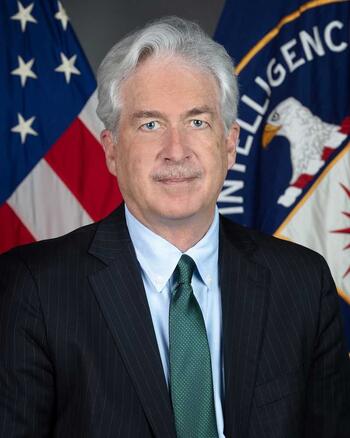
William Burns has been many things in his long career: U.S. ambassador to Jordan and later Russia, deputy secretary of state, career ambassador, and president of the Carnegie Endowment for International Peace, among others. But with his confirmation on March 19, 2021 he added a wholly unique title to his already remarkable list of accomplishments: the first diplomat to ever serve as director of the Central Intelligence Agency.

Burns’ career path was not always clear. As a young college graduate in 1981, he received an offer from the Foriegn Service, but hesitated to take it. His father, a Major General in the U.S. Army, wrote him a note with the advice, “Nothing can make you prouder than to serve your country with honor.”

At his recent visit to the Freeman Spogli Institute for International Studies, Burns offered the students in attendance similar council about pursuing careers in public service. A recording of his remarks is below.

“I’m a believer in the virtues of public service and what it means to our country,” Burns told the audience.

He recognized that this moment in American policy at home and around the world is one of transition and uncertainty and that the current climate of distrust between the American public and government has had a tremendous impact on domestic politics. Abroad, the rise of China cuts across all sectors of U.S. geopolitics, while even larger, non-state challenges such as climate change, global health insecurity, and the rapid advancement of technology pose even greater existential challenges.

Still, Burns has faith in the unique relationship that the United States has to its public service institutions.

“It’s my obligation as a leader, and your opportunity [as potential future public servants] to demonstrate that we can produce institutions in this country that are professional, apolitical, and devoted to the national interest and doing things in accordance with American values,” he emphasized.

It’s my obligation as a leader, and your opportunity to demonstrate that we can produce institutions in this country that are professional, apolitical, and devoted to the national interest and doing things in accordance with American values.
William J. Burns
Director of the C.I.A.

In his jurisdiction over the C.I.A, Burns has already set benchmarks to ensure the agency remains competitive and serves its purpose of providing policymakers with high-quality, timely intelligence which supports their decision-making process. He is committed to streamlining the hiring process at the C.I.A. and making it more attractive to top talent, as well as diversifying the workforce and drawing on expertise from across all types of professional backgrounds and abilities. “We’re not going to be an effective intelligence organization if everyone at the C.I.A. looks like me,” he quipped.

Keeping the bigger picture in mind, Director Burns reiterated one of the underlying principles that has guided his approach to public service. “Both [diplomacy and intelligence] require a sense of humility. There are perspectives in the world that are not identical to ours. You don’t have to accept or indulge those perspectives, but understanding them is the starting point of effective intelligence work and effective diplomacy.”

Read More

William Burns
News

Ambassador William Burns Reflects On a Career in Diplomacy

Ambassador William Burns Reflects On a Career in Diplomacy
encina
News

Call for Applications: Visiting Fellow in Israel Studies at the Freeman Spogli Institute for International Studies, Stanford University

The visiting fellow will teach at least one course during the quarter of the visit on some aspect of Israel’s politics, society, economy, modern history, technological development and/or regional or international relations.
Call for Applications: Visiting Fellow in Israel Studies at the Freeman Spogli Institute for International Studies, Stanford University
Byter, Bombs, and Spies  - new book by Amy Zegart and Herb Lin
News

Scholars examine cyber warfare in new book

Scholars examine cyber warfare in new book
Hero Image
C.I.A. Director William Burns speaks to students at the Freeman Spogli Institute for International Studies at Stanford University. Rod Searcy
All News button
1
Subtitle

Director Burns shared how he is applying the lessons he learned as a diplomat to make the intelligence community an effective organization for the challenges facing policymakers today.

-

Image
jacob helberg the wires of war event flyer showing his photo and book cover

Image
the wires of war book cover showing a dragon and an eagle fighting over a rope
On Wednesday, October 27 at 10 am Pacific Time, please join Andrew Grotto, Director of Stanford’s Program on Geopolitics, Technology and Governance, for a conversation with Jacob Helberg, senior adviser at the Stanford Program on Geopolitics, Technology and Governance and an adjunct fellow at the Center for Strategic and International Studies (CSIS) to discuss his newly released book "The Wires of War:  Technology and the Global Struggle for Power" - an urgent and groundbreaking account of the high-stakes global cyberwar brewing between Western democracies and the autocracies of China and Russia that could potentially crush democracy.

From 2016 to 2020, Jacob Helberg led Google’s global internal product policy efforts to combat disinformation and foreign interference. During this time, he found himself in the midst of what can only be described as a quickly escalating two-front technology cold war between democracy and autocracy.

On the front-end, we’re fighting to control the software—applications, news information, social media platforms, and more—of what we see on the screens of our computers, tablets, and phones, a clash which started out primarily with Russia but now increasingly includes China and Iran. Even more ominously, we’re also engaged in a hidden back-end battle—largely with China—to control the Internet’s hardware, which includes devices like cellular phones, satellites, fiber-optic cables, and 5G networks.

This tech-fueled war will shape the world’s balance of power for the coming century as autocracies exploit twenty-first-century methods to re-divide the world into twentieth century-style spheres of influence. Helberg cautions that the spoils of this fight are power over every meaningful aspect of our lives, including our economy, our infrastructure, our national security, and ultimately, our national sovereignty. Without a firm partnership with the government, Silicon Valley is unable to protect democracy from the autocrats looking to sabotage it from Beijing to Moscow and Tehran. The stakes of the ongoing cyberwar are no less than our nation’s capacity to chart its own future, the freedom of our democratic allies, and even the ability of each of us to control our own fates, Helberg says. And time is quickly running out.


Praise for “The Wires of War: Technology and the Global Struggle for Power”: 

“An analytical tour de force on the rapidly increasing challenge of techno-authoritarian nations to our national security, our economy, and our democracy.” —President Bill Clinton, 42nd President of the United States


REGISTER

-

*For fall quarter 2021, CISAC will be hosting hybrid events. Many events will offer limited-capacity in-person attendance for Stanford faculty, staff, fellows, visiting scholars, and students in accordance with Stanford’s health and safety guidelines, and be open to the public online via Zoom. All CISAC events are scheduled using the Pacific Time Zone.


REGISTRATION


Seminar Recording

About the Event: As relations between the West and Russia plunge to a post-Cold War nadir, how strong a competitor will the Kremlin prove? Will constraints on Putin's autocracy hinder his ability to have Russia play a great power role, or has Russia alrealdy successfully resurrected itself and is now able to exercise significant influence on the global stage? On November 10, Timothy Frye (author of Weak Strongman: The Limits of Power in Putin's Russia) and Kathryn Stoner (author of Russia Resurrected: Its Power and Purpose in a New Global Order) will discuss the nature and depth of the Russian challenge to the West.


About the Speakers: 

Timothy Frye is the Marshall D. Shulman Professor of Post-Soviet Foreign Policy at Columbia University. Professor Frye received a B.A. in Russian language and literature from Middlebury College, an M.A. from Columbia's School of International and Public Affairs, and a Ph.D. in Political Science from Columbia. His research and teaching interests are in comparative politics and political economy with a focus on the former Soviet Union and Eastern Europe. His most recent book is Weak Strongman: The Limits of Power in Putin’s Russia (Princeton University Press, 2021). He co-directs the International Center for the Study of Institutions and Development at the Higher School of Economics in Moscow and edits Post-Soviet Affairs.

Kathryn Stoner is the Deputy Director at the Freeman Spogli Institute for International Studies (FSI) at Stanford University and a Senior Fellow at the Center on Democracy, Development, and the Rule of Law, and at the Center on International Security and Cooperation at FSI. She teaches in the Department of Political Science at Stanford, and in the Program on International Relations, as well as in the Ford Dorsey Master's in International Policy Program. Prior to coming to Stanford in 2004, she was on the faculty at Princeton University for nine years, jointly appointed to the Department of Politics and the Princeton School for International and Public Affairs (formerly the Woodrow Wilson School). At Princeton she received the Ralph O. Glendinning Preceptorship awarded to outstanding junior faculty. She also served as a Visiting Associate Professor of Political Science at Columbia University, and an Assistant Professor of Political Science at McGill University. She has held fellowships at Harvard University as well as the Woodrow Wilson Center in Washington, DC. In addition to many articles and book chapters on contemporary Russia, she is the author or co-editor of six books: "Transitions to Democracy: A Comparative Perspective," written and edited with Michael A. McFaul (Johns Hopkins 2013); "Autocracy and Democracy in the Post-Communist World," co-edited with Valerie Bunce and Michael A. McFaul (Cambridge, 2010); "Resisting the State: Reform and Retrenchment in Post-Soviet Russia" (Cambridge, 2006); "After the Collapse of Communism: Comparative Lessons of Transitions" (Cambridge, 2004), coedited with Michael McFaul; and "Local Heroes: The Political Economy of Russian Regional" Governance (Princeton, 1997). Her most recent book is Russia Resurrected: Its Power and Purpose in a New Global Order" (Oxford University Press, 2021). She received a BA (1988) and MA (1989) in Political Science from the University of Toronto, and a PhD in Government from Harvard University (1995). In 2016 she was awarded an honorary doctorate from Iliad State University, Tbilisi, Republic of Georgia.

Virtual Only. This event will not be held in person.

Timothy Frye

FSI
Stanford University
Encina Hall C140
Stanford, CA 94305-6055

(650) 736-1820 (650) 724-2996
0
Satre Family Senior Fellow, Freeman Spogli Institute for International Studies
kathryn_stoner_1_2022_v2.jpg MA, PhD

Kathryn Stoner is the Mosbacher Director of the Center on Democracy, Development, and the Rule of Law (CDDRL), and a Senior Fellow at CDDRL and the Center on International Security and Cooperation at FSI. From 2017 to 2021, she served as FSI's Deputy Director. She is Professor of Political Science (by courtesy) at Stanford and she teaches in the Department of Political Science, and in the Program on International Relations, as well as in the Ford Dorsey Master's in International Policy Program. She is also a Senior Fellow (by courtesy) at the Hoover Institution.

Prior to coming to Stanford in 2004, she was on the faculty at Princeton University for nine years, jointly appointed to the Department of Politics and the Princeton School for International and Public Affairs (formerly the Woodrow Wilson School). At Princeton she received the Ralph O. Glendinning Preceptorship awarded to outstanding junior faculty. She also served as a Visiting Associate Professor of Political Science at Columbia University, and an Assistant Professor of Political Science at McGill University. She has held fellowships at Harvard University as well as the Woodrow Wilson Center in Washington, DC. 

In addition to many articles and book chapters on contemporary Russia, she is the author or co-editor of six books: "Transitions to Democracy: A Comparative Perspective," written and edited with Michael A. McFaul (Johns Hopkins 2013);  "Autocracy and Democracy in the Post-Communist World," co-edited with Valerie Bunce and Michael A. McFaul (Cambridge, 2010);  "Resisting the State: Reform and Retrenchment in Post-Soviet Russia" (Cambridge, 2006); "After the Collapse of Communism: Comparative Lessons of Transitions" (Cambridge, 2004), coedited with Michael McFaul; and "Local Heroes: The Political Economy of Russian Regional" Governance (Princeton, 1997); and "Russia Resurrected: Its Power and Purpose in a New Global Order" (Oxford University Press, 2021).

She received a BA (1988) and MA (1989) in Political Science from the University of Toronto, and a PhD in Government from Harvard University (1995). In 2016 she was awarded an honorary doctorate from Iliad State University, Tbilisi, Republic of Georgia.

Download full-resolution headshot; photo credit: Rod Searcey.

Mosbacher Director, Center on Democracy, Development and the Rule of Law
Professor of Political Science (by courtesy), Stanford University
Senior Fellow (by courtesy), Hoover Institution
CV
Date Label
Seminars
-

This is a virtual event. Please click here to register and generate a link to the talk. 
The link will be unique to you; please save it and do not share with others.

November 10, 5:00-6:15 p.m. California time / November 11, 9:00-10:15 a.m. China time
 

Based on his recent Oxford University Press book Protecting China's Interests Overseas: Securitization and Foreign Policy, Dr. Andrea Ghiselli will discuss the role of the actors that contributed to the emergence and evolution of China's approach to the protection of its interests overseas. He will show how the securitization of non-traditional security threats overseas played a key role in shaping the behavior and preferences of Chinese policymakers and military elites, especially with regard to the role of the armed forces in foreign policy. 

While Chinese policymakers were able to overcome important organizational challenges, the future of China's approach to the protection of its interests overseas remains uncertain as Chinese policymakers face important questions about the possible political and diplomatic costs associated with different courses of action.

For more information about Protecting China's Interests Overseas or to purchase a copy, please click here.


Image
Portrait of Andrea Ghiselli
Dr. Andrea Ghiselli is an Assistant Professor at the School of International Relations and Public Affairs of Fudan University. He is also the Head of Research of the TOChina Hub's ChinaMed Project. His research focuses on the relationship between China's economic interests overseas and its foreign and defense policy. Besides his first monograph Protecting China's Interests Overseas: Securitization and Foreign Policy published by Oxford University Press, Dr. Ghiselli's research has been published in a number of peer-reviewed journals like the China Quarterly, the Journal of Strategic StudiesArmed Forces & Society, and the Journal of Contemporary China.


Via Zoom Webinar. Register at: https://bit.ly/3AUnPi3

Andrea Ghiselli Assistant Professor, School of International Relations and Public Affairs, Fudan University
Seminars
-

Image
jawboning as a first amendment problem

PART OF THE FALL SEMINAR SERIES

Join us on October 19th for our weekly seminar from 12 PM - 1 PM PT featuring Genevieve Lakier, Professor of Law at University of Chicago's Law School and CPC Co-Director, Nate Persily. This series is organized by the Program on Democracy and the Internet, and the Cyber Initiative at the William and Flora Hewlett Foundation.

For years now, scholars have expressed alarm at the tendency of government officials to pressure—or “jawbone”—social media companies into taking down what the officials consider to be harmful or offensive speech, even when no law requires it. Scholars have worried, for good reason, that the practice of jawboning allows government officials to evade the stringent constraints on their power to regulate speech imposed by the First Amendment. But relatively little attention has been paid to the constitutional question of whether, or rather when, government jawboning itself violates the First Amendment. In fact, answering this question turns out to be quite difficult because of deep inconsistencies in the cases that deal with jawboning, both in the social media context and beyond. In this talk, I will explore what those inconsistencies are, why the case law is so unclear about where the line between permissible government pressure and unconstitutional governmental coercion falls, and what kind of jawboning rule might be necessary to protect free speech values in a public sphere in which both private companies and government officials possess considerable power to determine who can and cannot speak.


REGISTER


Speaker Profile:

Genevieve Lakier teaches and writes about freedom of speech and American constitutional law. Her work examines the changing meaning of freedom of speech in the United States, the role that legislatures play in safeguarding free speech values, and the fight over freedom of speech on the social media platforms.
 
Genevieve has an AB from Princeton University, a JD from New York University School of Law, and an MA and PhD in anthropology from the University of Chicago. Between 2006 and 2008, she was an Academy Scholar at the Weatherhead Center for International and Area Studies at Harvard University. After law school, she clerked for Judge Leonard B. Sand of the Southern District of New York and Judge Martha C. Daughtrey of the Sixth Circuit Court of Appeals. Before joining the faculty, Genevieve taught at the Law School as a Bigelow Fellow and Lecturer in Law. She will serve as the Senior Visiting Research Scholar at the Knight Institute at Columbia University for the 2021-2022 school year, where she will be supervising a project exploring the relationship between the First Amendment and the regulation of lies, disinformation and misinformation.


Genevieve Lakier,
Seminars
-

This is a joint event with the Center for Strategic and International Studies (CSIS) in Washington, D.C.

Event Time: October 28, 12:00 PM (PDT)/3:00 PM (EDT)
Please register for this event at the CSIS event website, https://bit.ly/3DC4zI3.

Image
Book cover of The North Korean Conundrum
While North Korea’s nuclear weapons and the security threat it poses have occupied the center stage and eclipsed other issues in recent years, human rights remain important to U.S. policy. The edited volume, The North Korean Conundrum, explores how dealing with the issue of human rights is shaped and affected by the political issues with which it is so entwined. In this book launch event, contributors of the book will discuss the relationship between human rights and denuclearization, and how North Koreans’ limited access to information is part of the problem, and how this is changing.

Speakers:
Victor Cha is Senior Vice President and Korea Chair at CSIS; Vice Dean for Faculty and Graduate Affairs & D.S. Song-KF Professor of Government at Georgetown University. He left the White House in 2007 after serving since 2004 as director for Asian affairs at the National Security Council (NSC). At the White House, he was responsible primarily for Japan, the Korean Peninsula, Australia/New Zealand, and Pacific Island nation affairs. He was also the deputy head of delegation for the United States at the Six-Party Talks in Beijing and received two outstanding service commendations during his tenure at the NSC. He was the 2019-20 Koret Fellow for the winter quarter at Stanford.

Robert King served as the special envoy for North Korean human rights issues, an ambassadorial-ranked position, at the Department of State, from 2009 to 2017. He is a senior advisor to the Korea Chair at the Center for Strategic and International Studies, a senior fellow at the Korea Economic Institute, and a board member of the Committee for Human Rights in North Korea in Washington, D.C. Ambassador King was the 2019-20 Koret Fellow for the fall quarter at Stanford.

Nat Kretchun is Vice President for Programs at the Open Technology Fund (OTF), a congressionally funded non-profit organization that supports the development and deployment of anti-censorship, privacy, and security technologies for populations living under repressive information censorship regimes.

Moderator:
Gi-Wook Shin, Director of Shorenstein Asia-Pacific Research Center and the Korea Program; the William J. Perry Professor of Contemporary Korea, Stanford University

Online event. Register at https://bit.ly/3DC4zI3

Victor Cha
Robert King
Nat Kretchun
Shorenstein APARC
Encina Hall E301
616 Jane Stanford Way
Stanford, CA 94305-6055
(650) 724-8480 (650) 723-6530
0
Senior Fellow at the Freeman Spogli Institute for International Studies
Professor of Sociology
William J. Perry Professor of Contemporary Korea
Professor, by Courtesy, of East Asian Languages & Cultures
Gi-Wook Shin_0.jpg PhD

Gi-Wook Shin is the William J. Perry Professor of Contemporary Korea in the Department of Sociology, senior fellow at the Freeman Spogli Institute for International Studies, and the founding director of the Korea Program at the Walter H. Shorenstein Asia-Pacific Research Center (APARC) since 2001, all at Stanford University. In May 2024, Shin also launched the Taiwan Program at APARC. He served as director of APARC for two decades (2005-2025). As a historical-comparative and political sociologist, his research has concentrated on social movements, nationalism, development, democracy, migration, and international relations.

In Summer 2023, Shin launched the Stanford Next Asia Policy Lab (SNAPL), which is a new research initiative committed to addressing emergent social, cultural, economic, and political challenges in Asia. Across four research themes– “Talent Flows and Development,” “Nationalism and Racism,” “U.S.-Asia Relations,” and “Democratic Crisis and Reform”–the lab brings scholars and students to produce interdisciplinary, problem-oriented, policy-relevant, and comparative studies and publications. Shin’s latest book, The Four Talent Giants, a comparative study of talent strategies of Japan, Australia, China, and India to be published by Stanford University Press in the summer of 2025, is an outcome of SNAPL.

Shin is also the author/editor of twenty-six books and numerous articles. His books include Korean Democracy in Crisis: The Threat of Illiberalism, Populism, and Polarization (2022); The North Korean Conundrum: Balancing Human Rights and Nuclear Security (2021); Superficial Korea (2017); Divergent Memories: Opinion Leaders and the Asia-Pacific War (2016); Global Talent: Skilled Labor as Social Capital in Korea (2015); Criminality, Collaboration, and Reconciliation: Europe and Asia Confronts the Memory of World War II (2014); New Challenges for Maturing Democracies in Korea and Taiwan (2014); History Textbooks and the Wars in Asia: Divided Memories (2011); South Korean Social Movements: From Democracy to Civil Society (2011); One Alliance, Two Lenses: U.S.-Korea Relations in a New Era (2010); Cross Currents: Regionalism and Nationalism in Northeast Asia (2007);  and Ethnic Nationalism in Korea: Genealogy, Politics, and Legacy (2006). Due to the wide popularity of his publications, many have been translated and distributed to Korean audiences. His articles have appeared in academic and policy journals, including American Journal of SociologyWorld DevelopmentComparative Studies in Society and HistoryPolitical Science QuarterlyJournal of Asian StudiesComparative EducationInternational SociologyNations and NationalismPacific AffairsAsian SurveyJournal of Democracy, and Foreign Affairs.

Shin is not only the recipient of numerous grants and fellowships, but also continues to actively raise funds for Korean/Asian studies at Stanford. He gives frequent lectures and seminars on topics ranging from Korean nationalism and politics to Korea's foreign relations, historical reconciliation in Northeast Asia, and talent strategies. He serves on councils and advisory boards in the United States and South Korea and promotes policy dialogue between the two allies. He regularly writes op-eds and gives interviews to the media in both Korean and English.

Before joining Stanford in 2001, Shin taught at the University of Iowa (1991-94) and the University of California, Los Angeles (1994-2001). After receiving his BA from Yonsei University in Korea, he was awarded his MA and PhD from the University of Washington in 1991.

Selected Multimedia

Director of the Korea Program and the Taiwan Program, Shorenstein Asia-Pacific Research Center
Date Label
Panel Discussions
Subscribe to Security