Security

FSI scholars produce research aimed at creating a safer world and examing the consequences of security policies on institutions and society. They look at longstanding issues including nuclear nonproliferation and the conflicts between countries like North and South Korea. But their research also examines new and emerging areas that transcend traditional borders – the drug war in Mexico and expanding terrorism networks. FSI researchers look at the changing methods of warfare with a focus on biosecurity and nuclear risk. They tackle cybersecurity with an eye toward privacy concerns and explore the implications of new actors like hackers.

Along with the changing face of conflict, terrorism and crime, FSI researchers study food security. They tackle the global problems of hunger, poverty and environmental degradation by generating knowledge and policy-relevant solutions. 

Encina Hall
616 Serra Street
Stanford, CA 94305-6055

0
Research Affiliate
Distelhorst_HS.jpg

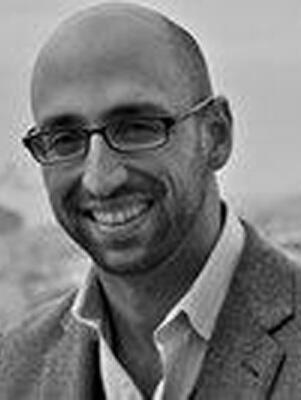
Greg Distelhorst is a Ph.D. candidate in the MIT Department of Political Science and a predoctoral fellow at Stanford University's Center on Democracy, Development, and the Rule of Law. His dissertation addresses public accountability under authoritarian rule, focusing on official responsiveness and citizen activism in contemporary China. This work shows how citizens can marshal negative media coverage to discipline unelected officials, or "publicity-driven accountability." These findings result from two years of fieldwork in mainland China, including a survey experiment on tax and regulatory officials. A forthcoming second study measures the effects of citizen ethnic identity on government responsiveness in a national field experiment. His dissertation research has been funded by the U.S. Fulbright Program, the Boren Fellowship, and the National Science Foundation. A second area of research is labor governance under globalization, where he has examined private initiatives to improve working conditions in the global garment, toy, and electronics supply chains.

For more on Greg's research, please visit:
Governance Project Pre-doctoral Fellow 2012-2013
-

Thomas Hegghammer is the Zukerman fellow at CISAC for 2012-2013 and senior research fellow at the Norwegian Defence Research Establishment (FFI) in Oslo. He has previously held fellowships at the Institute for Advanced Study in Princeton and at Harvard, Princeton and New York Universities. Thomas studies militant Islamism with a particular focus on transnational jihadi groups. His book Jihad in Saudi Arabia (Cambridge 2010) won the silver medal of the Arthur Ross Book Award from the Council of Foreign Relations. He also co-authored Al-Qaida in its own Words (Harvard 2008) and The Meccan Rebellion (Amal Press 2011). His other publications include academic articles for International Security and theJournal of Peace Research, op-eds for the New York Times and the Guardian, and reports for the International Crisis Group and the Combating Terrorism Center at West Point. He has commented widely in international media and has testified in parliamentary hearings on terrorism legislation in Canada and Denmark.  

Thomas currently works on two main research projects, one on the Islamist foreign fighter phenomenon and the other on socio-cultural practices (rituals, music, etc) in terrorist groups. He is in the process of completing two books: a monograph about the jihadi ideologue Abdallah Azzam and an edited volume about “jihad culture”, both for Cambridge University Press. While at CISAC, he will begin work on a new comparative study of socio-cultural practices in terrorist groups of different ideological persuasions.

Reuben W. Hills Conference Room

Thomas Hegghammer Visiting Faculty and Zukerman Fellow Speaker CISAC

Department of Political Science
Stanford University
Encina Hall, W423
Stanford, CA 94305-6044

(650) 725-9556 (650) 723-1808
0
James T. Watkins IV and Elise V. Watkins Professor of Political Science
laitin.jpg PhD

David Laitin is the James T. Watkins IV and Elise V. Watkins Professor of Political Science and a co-director of the Immigration Policy Lab at Stanford. He has conducted field research in Somalia, Nigeria, Spain, Estonia and France. His principal research interest is on how culture – specifically, language and religion – guides political behavior. He is the author of “Why Muslim Integration Fails in Christian-heritage Societies” and a series of articles on immigrant integration, civil war and terrorism. Laitin received his BA from Swarthmore College and his PhD from the University of California, Berkeley.

Affiliated faculty at the Center for International Security and Cooperation
Affiliated faculty at The Europe Center
David Laitin Professor of Political Science Commentator Stanford University
Seminars
Authors
News Type
Q&As
Date
Paragraphs

When Kofi Annan announced his plans to step aside as special envoy for the conflict in Syria by the end of the month, he put much of the blame on the United Nations Security Council for the failure to make peace in the war-ravaged country.

"When the Syrian people desperately need action, there continues to be finger pointing and name calling in the Security Council," Annan said. "It is impossible for me or anyone to compel the Syrian government and also the opposition to take the steps to bring about the political process. As an envoy, I can't want peace more than the protagonists, more than Security Council or the international community, for that matter."

The uprising against Syrian President Bashar Assad began in March 2011 and rights activists say it has left more than 19,000 dead. Annan became the U.N.-Arab League envoy to Syria in February, with the goal of getting both sides to put down their weapons. He designed a six-point plan for peace, which was never fully implemented.

Stephen J. Stedman, FSI's Freeman Spogli Senior Fellow, and Larry Diamond — a senior fellow at FSI and the Hoover Institution as well as director of FSI's Center on Democracy, Development and the Rule of Law — offer their analysis of the impact of Annan's resignation.

Does the resignation of Annan, who is well respected among diplomats, signal that there is no hope for peace in Syria?

Diamond: I think it's been apparent for several weeks, at least, that the peace mission was doomed, that the Assad regime was not prepared to negotiate, and that the refusal of Russia and China to agree to any kind of meaningful pressure on the Assad regime has left violent resistance by the opposition and the society as the only option.

Syria is sinking deeper and deeper into all-out civil war, and only an escalation of military pressure and economic sanctions on the Assad regime and its principal leaders and supporters offers any hope of resolution. Sometimes, when one or both parties refuse to negotiate, the only way to end a civil war is for one side to win. Libya provides the most recent example of that. If Assad and his allies are going to negotiate a peaceful exit, it will only be because they are staring at the prospect of fairly imminent military defeat.

Could Annan have done something differently?

Diamond: It is very difficult to negotiate with a regime that is bent on repression and total domination, especially when you can't credibly threaten to impose formidable costs on the regime if it refuses to compromise. I don't think there was anything more that Annan could have done, because he had no leverage, no tools to work with, as a result of the inability of the Security Council to agree on tough sanctions.

Will the failure to make peace in Syria tarnish Annan's legacy?

Stedman: The failure to make peace in Syria should not and will not tarnish Annan's legacy. First, he is already a Nobel Peace Prize winner, and one failure in an extraordinarily difficult case does not diminish the rest of his diplomatic successes. With regards to Syria, no one expected him to succeed, but he needed to try and he needed to be seen to try. His position was special envoy of the Security Council, and if anyone is looking for a scapegoat they should start looking at the council.

Diamond: No, I don't think this will tarnish Annan's legacy. He had a nearly impossible mission; everyone knew that. The failure was a collective failure of the international system, not the failure of an individual mediator. Annan is a great man who has made major contributions to world peace and security. It's not his fault that a brutal regime, backed by the world's two most powerful authoritarian states, refused to negotiate.

Brooke Donald is a writer for the Stanford News Service.

All News button
1
-

During the academic year of 2012-2013, the Program on Human Rights’ Sanela Diana Jenkins International Human Rights Series will examine the International Criminal Court (ICC) featuring debates with local, national and international experts, academics and activists. The focus will be on current challenges and possibilities for the ICC, such as how to determine reparations for victims, US and ICC relations, nation state cooperation and the still-to-be included crime of aggression.

The International Criminal Court in The Hague opened its doors 10 years ago amid buoyant optimism and sharp criticism. Supporters of the ICC hope that a permanent criminal court ensures the worst human rights offenders -- those who have committed genocide, war crimes, and crimes against humanity -- are brought to justice, and that nation states will progressively structure their own criminal systems so that genocidaires will face a fair trial before their own people and their own courts. Some critics of the ICC argue that the Court is biased against countries like the U.S., and that it jeopardizes national sovereignty through falsely claiming to be apolitical.  Other critics say that the ICC is biased against the entire region of Africa, noting that so far the ICC has indicted only Africans. Still others say that the ICC process is slow and expensive, noting that after ten years the Court has only completed one prosecution.

One decade later, how should the international community assess the ICC?  How fair are allegations against the ICC of bias and politicization? Have nation states really given over their national sovereignty to the ICC?  Have the ICC, the ad hoc tribunals (the ICTY and the ICTY) and hybrid tribunals (those in Sierre Leone, Cambodia and East Timor) had a deterrent effect on would-be genocidaires? More broadly, what are the pros and the cons of the international criminal justice system, and its less formal cousins such as truth and reconciliation commissions and gacacca?  Does the ICC present a fairer and cheaper alternative to war?

The International Speakers Series will be part of a three quarter sequence comprising a fall workshop, a winter one-unit credit course open to all Stanford students and a spring conference. The results of these conferences will be compiled in a PHR Working Paper Series on the ICC and international criminal justice.

CISAC Conference Room

Honorable Luis Moreno-Ocampo First Prosecutor of the International Criminal Court Speaker
Richard Steinberg Visiting Professor of International Relations at Stanford, Professor of Law at UCLA, Director of the Sanela Diana Jenkins Human Rights Project Host
Helen Stacy Director of the Program on Human Rights Host CDDRL
Conferences
-

Health is a product of biological and behavioral factors, and humanitarian law and human rights approaches have a long record of assisting the medical community to identify vulnerable people and groups at risk. But the human rights approach also takes into
consideration that health is the product of social relations and distributive justice. It recognizes the critical role of governments in ensuring access to health and a fair distribution of the social determinants of health. A human rights approach also addresses
issues of human dignity, human agency, and the ethics of collaborative decision-making between professional service providers and the people they serve.

This multi-disciplinary workshop will explore and expand the understanding of the right to health, one that includes the provision of reproductive, maternal and child health as well as
prevention, treatment and control of epidemic, endemic, occupational and other diseases. Vital aspects of this examine the role of governments, the medical and public health sector, and international agencies.

Lucas Conference Center, the Landau Building - Stanford University

Workshops
-

On May 16, 2012, President Dilma Rousseff inaugurated the Truth Commission (Comissão da Verdade) and announced the Access to Information Law (Lei de Acesso à Informação).  Inspired by other Truth Commissions in other countries such as Argentina, Chile, Peru, Guatemala and El Salvador, the Brazilian Truth Commission has its own distinctive characteristics that respond to specific national political culture and costumes. Understanding these characteristics is fundamental to recognize how these laws may represent and advance the process of accountability for human rights violations in Brazil and the challenges that still persist due to opposing positions between the Legislative and Executive powers that have recognized these violations and a conservative Judiciary supported by the military.

Bolivar House

Nadejda Marques Manager Speaker Program on Human Rights
Seminars
Paragraphs

The Ta’if Accords, which ended Lebanon’s civil war, called explicitly for the dismantling of political confessionalism through the election of a Chamber of Deputies on “a national, non-confessional basis” and the formation of a Senate representing all of Lebanon’s various sects. Lebanese leaders from across the ideological and confessional spectrum have declared their support for this idea, and it is routinely raised whenever questions of institutional reform and “de-confessionalism” are discussed. However, the Ta’if Accords provide no details beyond the basic description of two legislative chambers elected on different bases, a fact which prompts a wide range of questions about the architecture and implementation of such a system. This paper explores these questions and proposes several bicameral models based on a comparative political analysis.

All Publications button
1
Publication Type
Working Papers
Publication Date
Journal Publisher
CDDRL Working Papers
Authors
Elias Muhanna
Paragraphs

Reprinted with full permission from the Proceedings of the National Academy of Sciences.

A detailed retrospective of the Green Revolution, its achievement and limits in terms of agricultural productivity improvement, and its broader impact at social, environmental, and economic levels is provided. Lessons learned and the strategic insights are reviewed as the world is preparing a reduxversion of the Green Revolution with more integrative environmental and social impact combined with agricultural and economic development. Core policy directions for Green Revolution 2.0 that enhance the spread and sustainable adoption of productivity enhancing technologies are specified.

All Publications button
1
Publication Type
Journal Articles
Publication Date
Journal Publisher
Proceedings of the National Academy of Sciences
Authors
Authors
News Type
Q&As
Date
Paragraphs

Security concerns at the Olympics have dominated headlines over the past month after private contractor G4S failed to recruit the number of guards it had promised. The British government responded by deploying military personnel, and now there are more British troops guarding the streets of London than in Afghanistan.

Martha Crenshaw, a senior fellow at the FSI and CISAC, explains what kinds of threats exist at the Games, the challenges of securing such a large event and whether the failure by G4S will make the Olympics an easier or more attractive target.

What motivates terrorists?

Terrorists want to make a political statement. So you have to ask, "What kind of political statement would attacking the Olympics be?" Al-Qaida could regard the Olympics the way they regard the United Nations. They attacked U.N. headquarters in Iraq and a U.N. agency in Algiers. They regard the U.N. as a tool of the oppressor. That said, they don't talk about the Olympics the way they do about the U.S. – the great Satan, etc. And Muslim countries are competing in the Olympics. Of course they oppose many of the regimes of those countries, like Saudi Arabia.

But I'm not aware of any specific threat to the Olympics or chatter about the Olympics.

Is al-Qaida the only terrorist group to be concerned about?

People will be concerned about Hezbollah now because of the series of foiled attacks against Israel and the successful attack in Bulgaria. Hezbollah and al-Qaida have global reach. But when we talk about al-Qaida, we can't forget the groups affiliated with the main organization: al-Qaida in Iraq and al-Qaida in Yemen, for example. There's also the Pakistani Taliban and other al-Qaida linked groups there.

What kinds of terrorist attacks are of most concern?

We've tended to think, and I stress think, that al-Qaida wants spectaculars. In terms of their attacks in general, targets have often been public transportation. Think of Madrid and London. They're also fond of multiple targets at once, and as regards the U.S., it seems they're still focused on airplanes. We could be dead wrong and they could do something that's totally different but this is the pattern. 

It could be that they'd like a big explosion in the middle of Trafalgar Square, but it wouldn't have to be during the Olympics. There are crowds in Trafalgar Square all the time.  However, if Britain were the target, terrorists might think it's particularly embarrassing and spectacular to attack during the Olympics because it would heighten the fear factor.  On the other hand, it's easier to mount an attack when there is not the high level of Olympics security.

Has there always been a great fear of attacks at Olympics?

The hostage taking in Munich in 1972 (of Israeli athletes) and then the bombing in Atlanta in 1996 have made us afraid that something would happen at the Olympics because it's so prominent.

A recent study concludes that security has been effective. But we don't really know that entirely. We don't know what the terrorists are thinking. We don't know whether they looked at all of the security precautions and said, "This is going to take a lot of work and we will probably fail because security is so good. Let's do something else."

Is London exceptional, because of its size or politics?

From the point of view of this year's Olympics, London could be as much of a target as the Olympics themselves.  But Britain was attacked in 2005 because of their involvement in the war in Iraq, now over. I'm not sure if that changes Britain's vulnerability. We're in the realm of speculation because we don't really know how the adversary is thinking about this. So there is a risk in London but if I were in London I'd be more afraid of a traffic jam.

What does the failure by G4S to provide enough guards say about using private contractors to protect public safety?

Outsourcing security is widespread. A lot of people who were with the military in Iraq and are in Afghanistan are contractors. Everybody contracts out security these days.

But, the question deserves to be looked at. Is it a good idea to rely on these private firms? Would it be a good idea even if all of their people showed up? Are their guards reliable, are they trustworthy, or do they pose a security problem? Have they all been properly vetted to ensure they haven't been infiltrated by al-Qaida and don't include people who are mentally unstable? It raises a lot of questions about who provides security against terrorism for very large international events.

Does the use of military personnel at the last minute create vulnerabilities?

It's possible to imagine that some very determined and nefarious groups would look at this situation and say it's not really going to win us much fame and glory to go shooting a bunch of private security guards, but now the military is a target by being deployed on the streets of London. If someone wanted to attack them, they might think here is the opportunity.

But this switch also means that anybody who decided now that they wanted to target the military or the Olympics won’t have much time to plan. Typically, not always but typically, attacks that cause large numbers of casualties and a lot of destruction have been elaborately planned for a long time – even the lone wolf types like Anders Breivik in Norway or the recent attack in Colorado. Individuals or groups plan in advance and work to get the weapons and explosives, which is not easy. So even if somebody got the idea of doing something it wouldn't be so simple in this short time to come up with a plan and acquire the right materials.

How hard is it to guard a place like London, as well as the Olympics?

It's hard to protect lots of people in a big city. There are lots of crowds, lots of movement. It's not as though you can extend a perimeter; it's a moving target all the time. The Olympics might be a target, London has been a target, so the combination of the two could cancel each other out but I'm sure security officials are worried.

Yet, at this point, if I were the British government dealing with the fallout of the security firm's lack of preparedness, I'd much rather rely on soldiers who have been vetted and have experience than security officers who were quickly brought together.

Brooke Donald is a writer for the Stanford News Service.

All News button
1
Subscribe to Security