
FSI scholars produce research aimed at creating a safer world and examing the consequences of security policies on institutions and society. They look at longstanding issues including nuclear nonproliferation and the conflicts between countries like North and South Korea. But their research also examines new and emerging areas that transcend traditional borders – the drug war in Mexico and expanding terrorism networks. FSI researchers look at the changing methods of warfare with a focus on biosecurity and nuclear risk. They tackle cybersecurity with an eye toward privacy concerns and explore the implications of new actors like hackers.
Along with the changing face of conflict, terrorism and crime, FSI researchers study food security. They tackle the global problems of hunger, poverty and environmental degradation by generating knowledge and policy-relevant solutions.


Lynn Eden Leaves CISAC with a Legacy of Mentoring Young Scholars
News Type
News
Date
Paragraphs
Lynn Eden has announced her retirement after 25 years as a senior research scholar at Stanford’s Center for International Security and Cooperation.
She has also been associate director for research since 2002, except for 2008-2009 when she was acting co-director—with co-director Sig Hecker on the science side.
“All the people who have been associated with CISAC for the last 25 years have benefited from her wise counsel,” said CISAC colleague Sig Hecker, research professor of Management Science and Engineering.
“She really has been the heart and soul of this place.”
 Colleagues and former fellows said it would be hard to imagine CISAC without Eden.
“Most of us, even long-timers, have never known CISAC without her,” said CISAC co-director Amy Zegart.
“Lynn has been pivotal to both fostering and embodying the intellectual culture we know and love at CISAC: discussion that is rigorous and kind; candid and constructive; penetrating and interdisciplinary.”
Many said Eden’s most enduring legacy at CISAC would be her mentorship of young scholars during their formative years as CISAC fellows.
“She’s a wonderful mentor and a central figure in creating the intellectual community here at CISAC,” said David Holloway, Raymond A. Spruance Professor of International History.
Michael McFaul, director of the Freeman Spogli Institute for International Studies, said Eden had a tremendous impact on his development as a young academic.
"As a visiting fellow at CISAC very early in my academic career, I benefited tremendously from Lynn Eden's mentorship, intellect, and friendship," McFaul said.
"I am simply amazed at how many people enjoyed the same kind of mentorship with Lynn as I did as a young scholar. I thought I was special! It turned out that I was just one of dozens, if not hundreds, of Lynn's pupils."
Mariano-Florentino Cuéllar, former FSI and CISAC director and current California Supreme Court Associate Justice, said he had also benefited from Lynn's guidance over the years.
"Many dozens of scholars are who they are -- and have achieved as much has they have -- because of Lynn," said Cuellar.
"I am among them. I benefited from Lynn's contributions when I was a graduate student, a junior faculty member, a tenured professor, honors program director, CISAC co-director, and FSI's Director."
FSI/CISAC senior fellow Martha Crenshaw said no matter where she traveled in the world to speak at conferences on international security, she invariably encountered former fellows who recalled the positive influence Eden had on their experiences at CISAC.
“She’ll always be pretty much the first person they mention,” Crenshaw said.
“Her role as a mentor has been so important to the many people who come through this place.”
Crenshaw’s observation was echoed by Rod Ewing, Stanford professor in the School of Earth Sciences and the inaugural Stanton Professor in Nuclear Security Studies at CISAC.
“Before I arrived at Stanford, I already had heard of Lynn from past fellows,” Ewing said.
“All were deeply in debt to Lynn for her efforts to shape their thinking and their projects. I have never seen any single person have such an impact on so many fellows.”
[[{"fid":"221270","view_mode":"crop_870xauto","fields":{"format":"crop_870xauto","field_file_image_description[und][0][value]":"","field_file_image_alt_text[und][0][value]":"","field_file_image_title_text[und][0][value]":"Lynn Eden talks about nuclear war and fire effects to students at Castilleja School in Palo Alto","field_credit[und][0][value]":"","field_caption[und][0][value]":"","field_related_image_aspect[und][0][value]":"","thumbnails":"crop_870xauto"},"type":"media","attributes":{"title":"Lynn Eden talks about nuclear war and fire effects to students at Castilleja School in Palo Alto","width":"870","style":"width: 450px; height: 299px; float: left; margin-right: 15px;","class":"media-element file-crop-870xauto"}}]]You only need to do a quick survey of the dissertations and books produced by CISAC fellows to understand the scope of Eden’s impact, according to Scott Sagan, Caroline S.G. Munro professor of political science.
“Lynn has been a mentor par excellence for dozens of CISAC fellows over the years,” Sagan said.
“Indeed, if there was an “Social Science Acknowledgement Citation Index” (like the well-known Social Science Citation Index), my guess is that Lynn Eden's count would be the highest in all of international security studies.”
And her mentorship wasn’t limited to the social sciences.
“Lynn has mentored a stunning breadth of scholars, including political scientists, sociologists, anthropologists, physicists, computer scientists, and biologists,” said former CISAC fellow Rebecca Slayton, who is now on the faculty at Cornell University.
Other former fellows said they deeply valued Eden’s thoughtful feedback on their academic work.
“Lynn read my work with great care, and offered commentary that was on point, useful, and kind,” said Kimberly Marten, professor of political science at Barnard College and a faculty member at Columbia University.
“She was also a real friend, who cared about me not only as a budding scholar but as a person. She remains a role-model for me of what mentorship is all about.”
Colleagues said they also admired Eden’s contributions to the field of nuclear scholarship.
Image

History professor Norman Naimark said he valued Eden’s “uncompromising intellectual honesty.”
“She wants to know; she wants to understand; she does not put up with artifice or entangled arguments; she tries as best she can to barrel in on the “truth,” whatever that might be,” Naimark said.
James E. Goodby first met Eden when they both served on the faculty at Carnegie Mellon University, before he moved to Stanford as an Annenberg distinguished visiting fellow at the Hoover Institution.
“She came as close to pure, unbiased intellect as anyone I have ever worked with,” Goodby said.“
CISAC co-director David Relman said Lynn had helped shape and guide the intellectual discourse at CISAC.
“I’ve deeply valued Lynn for the rigor of her thinking, her love of teaching and mentoring of trainees and students, and the smile she brings to everyone’s face during any conversation,” said David Relman, CISAC co-director.
Elizabeth Gardner, FSI associate director for partnerships and special projects, worked alongside Eden at CISAC for more than a decade.
She said Eden helped make CISAC a place people wanted to come back to.
“CISAC is legendary for its “boomerangs” – people who return to the Center after their initial stint because they liked it so much the first time around,” Gardner said.
“The reason many of those people return is Lynn. It's her warmth, willingness to help with the hardest problems and her laser-like intellect that kept people coming back.”
Eden said she would continue her academic writing after retiring from CISAC, on “how organizational processes have enabled U.S. policymakers and nuclear war planners to make real plans that if enacted would result in the very thing no one possibly wants—the end of the world.”
Eden will also attend a variety of CISAC seminars when she can, and particularly the social science seminar series David Holloway and she founded 20 years ago.
Hero Image

Lynn Eden talks with alumni attendees of the International Studies Association conference at an event in San Francisco.
All News button
1
Henry Rowen, FSI fellow and Shorenstein APARC director emeritus, dies at 90
News Type
News
Date
Paragraphs
Henry S. Rowen, a Stanford economist and professor emeritus of public policy and management, died in Palo Alto on Nov. 12. He was 90.
Rowen, known affectionately as “Harry” to colleagues and friends, led a long, notable career in academia and public service. Having served in three U.S. administrations, he shaped the construction of American policy on a range of issues from entrepreneurship to intelligence.
“Harry was one of the great policy analysts, defense experts, public intellectuals and government servants of his generation,” said Michael H. Armacost, a colleague and Stanford distinguished fellow. “He is one of the reasons they are referred to as ‘the greatest generation.’”
Rowen was the Edward B. Rust Professor of Public Policy and Management, emeritus, at Stanford’s Graduate School of Business, a senior fellow at the Hoover Institution, and a senior fellow, emeritus, at the Freeman Spogli Institute for International Studies, and a director emeritus of the Walter H. Shorenstein Asia-Pacific Research Center (APARC).
Arriving at Stanford in 1972, Rowen studied economic development and high-tech industries in the United States and Asia, and contributed numerous publications on innovation, as well as international security and energy policy. He assumed emeritus status in 1995.
Public servant, scholar
Born in Boston, he earned a bachelor’s degree from the Massachusetts Institute of Technology, and a master’s degree from Oxford University, in 1949 and 1955, respectively.
Over the course of his career Rowen twice held positions at the RAND Corporation, first as an economist, and later as its president for five years from 1967 to 1972.
In Washington, he held several prominent positions in the Kennedy, Reagan and George H. W. Bush administrations. From 1981 to 1983, he was the chairman of the U.S. National Intelligence Council (NIC), and the assistant secretary of defense for international security affairs from 1989 to 1991.
Thomas Fingar, an FSI distinguished fellow, described Rowen as “an institution” and a “very productive scholar as well as an effective and imaginative leader and manager.”
“My own career intersected with Harry’s several times, both at Stanford and Washington. Every time that it did, he was generous with his time and genuinely interested in whatever topic I brought to him,” said Fingar, who was one of Rowen’s successors as chairman of the NIC.
Rowen also served on the policy advisory board for the Secretary of Defense from 2001-04, and in 2004, was appointed to the yearlong U.S. commission charged with assessing the intelligence community’s readiness to respond to a proliferation of weapons of mass destruction.
He returned to the Stanford campus in the 1980s, 1990s and 2000s. Rowen’s versatility supported and expanded the research aims of Shorenstein APARC and FSI, and the greater Stanford community.
“His name pops up in virtually every book written about U.S. national security policy during that period,” remarked Fingar, referring to Rowen’s influence in Washington in the early 1960s.
A collection of Rowen’s government papers was recently made available by the Hoover Institution Archives.
Rowen’s interdisciplinary experiences yielded a deep knowledge of the social and political factors in nations struggling with a sustainable peace, weighing nuclear proliferation issues, and considering new forms of governance.
In a 1996 issue of the National Interest, Rowen predicted that China would become a democracy by 2015. Although the forecast was seemingly incorrect, he suggested earlier this year that the transition was still a question of “when, not if.”
Rowen’s latest book Greater China’s Quest for Innovation was published in 2008. The co-edited book examines the talent, resources and research and development (R&D) environments in Mainland China, Taiwan and Hong Kong, and suggests institutions needed to create a successful innovation-based economy.
A comprehensive set of Rowen’s works can be found on his bio.
Leadership, innovation
Rowen became the director of Shorenstein APARC in 1997. He served in that role until 2001, and as co-director from 2000 to 2001, with Stanford professor Andrew Walder.
“Harry was a core member of our center’s past and present,” said Takeo Hoshi, a Stanford economist and acting director of Shorenstein APARC. “He pioneered research on entrepreneurship and innovations throughout Asia. The importance of such research has only continued to grow over time.”
Rowen also led the Stanford Program on Regions of Innovation and Entrepreneurship (SPRIE). Active for fifteen years, until 2013, its mission was to hold collaborative research and colloquia on the dynamics and sustainability of high-tech areas around the world.
William F. Miller, SPRIE faculty co-director and a Stanford professor emeritus of management and computer science, spoke of him as a man of great principle.
“Harry brought to bear his vast research experience, extensive government experience, and his international experiences on everything we did. He will be greatly missed by his many friends and colleagues,” Miller said.
SPRIE inspired other Stanford initiatives aiming to build bridges between Silicon Valley and Asia, such as China 2.0 and the still-present Centers and Initiatives for Research, Curriculum and Learning Experiences.
Rowen never retired. This year, he was advising a Fulbright visiting scholar and coordinating a conference on technology interaction between Singapore and Silicon Valley. He often attended seminars across campus and was known to pose insightful, straightforward questions.
Rowen is survived by his wife, Beverly, of Palo Alto, six children and nine grandchildren. Information about any memorial activities will be published when available.
Additional coverage:
Los Angeles Times: Henry 'Harry' Rowen, Rand leader at time of Pentagon Papers, dies at 90
San Jose Mercury News: Think tank leader at time of Pentagon Papers dies at 90
Stanford News Service: Henry S. Rowen, Stanford business professor and U.S. policymaker, dies at 90
Hero Image

Henry S. Rowen at Stanford University in 2011.
All News button
1
NATO commander calls for recalibration in Europe
News Type
News
Date
Paragraphs
NATO must bolster its presence in Europe as a way to counter Russian aggression in the region.
That was the message from General PHILIP M. BREEDLOVE, the supreme allied commander of the North Atlantic Treaty Organization (NATO), when he visited Stanford on Monday.
“Europe is clearly at a crossroads,” he said.
Breedlove addressed the need for a strong NATO amid the evolving geopolitical climate in Europe. Of great concern are Moscow’s intrusions into Ukraine, Crimea and Georgia in Eastern Europe in recent years.
“We have to recalibrate what we’re thinking,” he said. NATO is building up its troop rotations to deal with hostile moves in the region, for example.
Breedlove spoke to a couple hundred people at the Koret Taube Conference room in the Gunn Building. Breedlove’s speech was sponsored by The Europe Center in the Freeman Spogli Institute for International Studies (FSI).
“Highly dynamic” is how Breedlove described Europe’s security situation as a resurgent Russia seeks to “rewrite” the rules of international order. “They have been aggressive and coercive in their use of diplomatic, military and economic tools,” he said.
Lies and distortions characterize Russia’s attempt to change borders and bully its neighbors, Breedlove added. Russian President Vladimir Putin’s greater goal is to destabilize NATO and chip away at the alliance. Russia is acting in the east, south and north of Europe, including forays into the Arctic Circle and near Japan.
“This is all about extending Russian control” over its neighbors, Breedlove said.
Massive, seemingly endless migration coming from the Middle East into Europe poses a monumental crisis, he added. “The situation is creating serious political problems for political leaders” in European countries, he said. On top of this, possible terrorists and foreign fighters within the sheer numbers of migrants are extremely difficult to track, he added.
These European and NATO challenges intersect in the case of Syria and Russia’s involvement there, Breedlove said. “Russia’s striving to project [itself] as a world power.”
Syria is an opportunity for Putin to shift the world’s attention from his country’s aggressions in the Ukraine to the Middle East, he said. Breedlove disputed Putin’s rationale – fighting ISIS and terrorism – for intervening in Syria. “There’s a clear gap between his words and actions.”
Time will tell if Russia overextends itself in its adventurism, Breedlove said. For NATO, it must “rebuild its capacity” to address such threats. “Defend territory, people and values” is how he defined NATO’s mission.
A free, peaceful and prosperous Europe is much more attractive to the world than a menacing Russia that lacks similar values and attributes, he noted.
The security of Europe is Breedlove’s “daily business,” said MICHAEL MCFAUL, director of FSI. “You could not have a more well informed person speak about European security.”
McFaul noted that a new initiative series on European security, sponsored by the Europe Center, will bring other speakers and events to campus.
Breedlove, a distinguished graduate of Georgia Tech’s ROTC program, has flown combat missions, mostly in the F-16 jet, and has served as vice chief of staff for the U.S. Air Force and commander of the U.S. Air Force in Europe and Africa.
“I feel right at home, because this is the type of weather we have in Belgium,” he quipped on a rainy day at Stanford.
This article was originally published in The Stanford Report on November 9, 2015.
Hero Image

All News button
1
18th Annual Dallin Lecture: Russia as a Global Challenge
-
The Russian System of personalized power has been demonstrating an amazing capacity for survival even in the midst of decay. It has defied many predictions and ruined many analytical narratives. Today the Russian authoritarian rule is trying to prolong its life by turning to repressions at home and by containing the West. Russia, kicking over the global chess board with the war in Ukraine, returns to the international scene as a revisionist and revanchist power. The Russian Matrix demise will be painful, and it already has brought about Russia’s confrontation with the West. The challenge posed by Russia’s decaying petro –nuclear state is huge, and it is sure to be one of the dominant problems of the twenty-first century.
Lilia Shevtsova is a Non-Resident Fellow at the Brookings Institution (Washington), and an Associate Fellow at the Russia-Eurasia Program, Chatham House - The Royal Institute of International Affairs (London). She is the member of the boards of the Institute for Humanities (Vienna), the Finnish Centre for Excellence in Russian Studies (Helsinki), the Liberal Mission Foundation, and the New Eurasia Foundation (Moscow); a member of the International Forum for Democratic Studies’ Research Council(Washington); a member of the Editorial Boards of the journals: “American Interest,”“Journal of Democracy,” and “New Eastern Europe.“ Shevtsova was Senior Associate at the Carnegie Endowment for International Peace (Washington) and the Moscow Carnegie Center, founding chair of the Davos World Economic Forum Council on Russia’s Future, and a member of the Council on Terrorism. “Foreign Policy” magazine included Shevtsova in the list of 100 Global Public Intellectuals. She was a participant at the Bilderberg Club meetings; served as Chair of the Program on Eurasia and Eastern Europe, SSRC (Washington) and member of the Social Council for Central and Eastern European Studies. She contributes to global leading media, including: Foreign Policy, FT, Washington Post, Le Monde, Monde Diplomatique, Die Zeit, Fokus, El Pais, American Interest, Survival, Journal of Democracy, Diplomaatia.
Shevtsova is author of twenty books, including Yeltsin’s Russia: Myths and Reality; Putin’s Russia; Russia –Lost in Transition: The Yeltsin and Putin Legacies; Lonely Power (Why Russia Has Failed to Become the West and Why the West Is Weary of Russia), Russia: Change or Decay (in co-authorship with Andrew Wood), Crisis: Russia and the West in the Time of Trouble.
Lectures
Is Bangkok Pivoting toward Beijing? What the 2014 Coup Means for Thai Foreign Policy
-
How has the May 2014 coup in Thailand affected the country’s foreign policy? Has the junta realigned Thailand toward China and away from the US? Some Western governments reacted to the coup by criticizing the military government of prime minister cum army general General Prayuth Chan-o-cha and subjecting it to downgrades and penalties. Washington bluntly called on the junta to return power to the Thai people. In reply, hoping to lessen the effects of Western pressure, Prayuth tried to diversify Thailand’s links and options in foreign affairs, including strengthening relations with nearby China, and with Myanmar, Cambodia, and Japan.
A January 2015 visit to Bangkok by US assistant secretary for East Asian and Pacific affairs Daniel R. Russel did not improve US-Thai relations. When Russel called on the junta to lift marshal law, the junta told him to mind his own business. Yet president Obama has not revoked Thailand’s status as Washington’s “major non-NATO treaty ally” nor has Prayuth aligned his country fully with Beijing. Pavin will sketch the changing contours of these among other relationships and relate their tenor and prospects to the political crisis that continues to unfold in Thailand.
Image
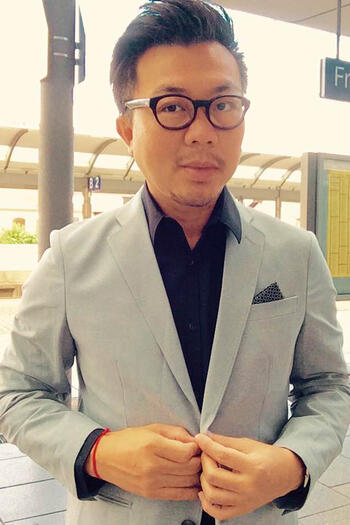
Pavin Chachavalpongpun
2015-16 Lee Kong Chian National University of Singapore-Stanford University Distinguished Fellow on Southeast Asia
Seminars
Conflict and Crisis: Implications of Ongoing Human Rights Violations in Syria
-
**To RSVP, please email Jessie Brunner at jbrunner@stanford.edu.**
[[{"fid":"221010","view_mode":"crop_870xauto","fields":{"format":"crop_870xauto","field_file_image_description[und][0][value]":"","field_file_image_alt_text[und][0][value]":"","field_file_image_title_text[und][0][value]":"","field_credit[und][0][value]":"","field_caption[und][0][value]":"","field_related_image_aspect[und][0][value]":"","thumbnails":"crop_870xauto"},"type":"media","attributes":{"width":"870","class":"media-element file-crop-870xauto"}}]]
Abstract
As the protracted and chaotic conflict in Syria continues into its fifth year, Syrians of all backgrounds are being subjected to gross human rights violations. A growing number of parties to the conflict, including the Government and the Islamic State, display disregard for international legal conventions and employ tactics such as sexual violence, murder, and torture that have resulted in mass civilian casualties, large-scale displacement, and the destruction of Syria’s cultural heritage.
Peter Bouckaert
Peter Bouckaert is Human Rights Watch’s emergencies director, coordinating the organization’s response to major wars and other human rights crises. A Belgian-born Stanford Law School graduate, Bouckaert has conducted fact-finding missions around the world, including currently documenting Syrian refugees in Europe.
Sareta Ashraph
Sareta Ashraph specializes in international criminal, humanitarian, and human rights law and has served since 2012 as the Senior Analyst on the UN Commission of Inquiry on the Syrian Arab Republic, investigating and reporting on violations of international law in the context of ongoing events in Syria.
To RSVP, please email Jessie Brunner at jbrunner@stanford.edu.
Peter Bouckaert
Director, Emergencies, Human Rights Watch
Sareta Ashraph
Senior Analyst, UN Commission of Inquiry on the Syrian Arab Republic
Seminars
Criss-crossing Red Lines in the South China Sea: The Destroyer, the Court, and the Future
-
Last Tuesday in the hotly contested South China Sea (SCS), ignoring fierce objections coming from China, the American guided-missile destroyer USS Lassen cruised within 12 nautical miles of Subi and Mischief Reefs. One day later, in The Hague, the Permanent Court of Arbitration ruled unanimously that it does have jurisdiction over a “suit” brought by the Philippines against China regarding China’s claims in the SCS. The court must now approve or reject Manila’s position that Beijing’s (in)famous “nine-dash line” (actually now a ten-dash line) is incompatible with the UN Convention on the Law of the Sea—that the line is, in effect, illegal under international law. The court must also adjudicate Manila’s additional request for rulings on the status of certain land features in the SCS that are controlled by Beijing. Beijing’s efforts to prevent the maritime penetration and the judicial judgment have failed.
Will these events be remembered as having marked the start of a Sino-American Cold War II? What do they imply for China’s relations with the five other parties that claim land features and/or sea space there, i.e. Brunei, Malaysia, Philippines, Taiwan, and Vietnam? Was the US wrong to have breached China’s red lines and the court also wrong to have accepted jurisdiction? Why? Why not? And how will these events impact the imminent Association of Southeast Asian Nations Summit and Related Summits, as well as the Asia Pacific Economic Cooperation Leaders Meeting—gatherings to be held, respectively, in Kuala Lumpur and Manila between 18 and 22 November?
Image

Donald K. Emmerson
0
emmerson@stanford.edu
Senior Fellow Emeritus at the Freeman Spogli Institute for International Studies
Affiliated Faculty, CDDRL
Affiliated Scholar, Abbasi Program in Islamic Studies
At Stanford, in addition to his work for the Southeast Asia Program and his affiliations with CDDRL and the Abbasi Program in Islamic Studies, Donald Emmerson has taught courses on Southeast Asia in East Asian Studies, International Policy Studies, and Political Science. He is active as an analyst of current policy issues involving Asia. In 2010 the National Bureau of Asian Research and the Woodrow Wilson International Center for Scholars awarded him a two-year Research Associateship given to “top scholars from across the United States” who “have successfully bridged the gap between the academy and policy.”
Emmerson’s research interests include Southeast Asia-China-US relations, the South China Sea, and the future of ASEAN. His publications, authored or edited, span more than a dozen books and monographs and some 200 articles, chapters, and shorter pieces. Recent writings include The Deer and the Dragon: Southeast Asia and China in the 21st Century (ed., 2020); “‘No Sole Control’ in the South China Sea,” in Asia Policy (2019); ASEAN @ 50, Southeast Asia @ Risk: What Should Be Done? (ed., 2018); “Singapore and Goliath?,” in Journal of Democracy (2018); “Mapping ASEAN’s Futures,” in Contemporary Southeast Asia (2017); and “ASEAN Between China and America: Is It Time to Try Horsing the Cow?,” in Trans-Regional and –National Studies of Southeast Asia (2017).
Earlier work includes “Sunnylands or Rancho Mirage? ASEAN and the South China Sea,” in YaleGlobal (2016); “The Spectrum of Comparisons: A Discussion,” in Pacific Affairs (2014); “Facts, Minds, and Formats: Scholarship and Political Change in Indonesia” in Indonesian Studies: The State of the Field (2013); “Is Indonesia Rising? It Depends” in Indonesia Rising (2012); “Southeast Asia: Minding the Gap between Democracy and Governance,” in Journal of Democracy (April 2012); “The Problem and Promise of Focality in World Affairs,” in Strategic Review (August 2011); An American Place at an Asian Table? Regionalism and Its Reasons (2011); Asian Regionalism and US Policy: The Case for Creative Adaptation (2010); “The Useful Diversity of ‘Islamism’” and “Islamism: Pros, Cons, and Contexts” in Islamism: Conflicting Perspectives on Political Islam (2009); “Crisis and Consensus: America and ASEAN in a New Global Context” in Refreshing U.S.-Thai Relations (2009); and Hard Choices: Security, Democracy, and Regionalism in Southeast Asia (edited, 2008).
Prior to moving to Stanford in 1999, Emmerson was a professor of political science at the University of Wisconsin-Madison, where he won a campus-wide teaching award. That same year he helped monitor voting in Indonesia and East Timor for the National Democratic Institute and the Carter Center. In the course of his career, he has taken part in numerous policy-related working groups focused on topics related to Southeast Asia; has testified before House and Senate committees on Asian affairs; and been a regular at gatherings such as the Asia Pacific Roundtable (Kuala Lumpur), the Bali Democracy Forum (Nusa Dua), and the Shangri-La Dialogue (Singapore). Places where he has held various visiting fellowships, including the Institute for Advanced Study and the Woodrow Wilson International Center for Scholars.
Emmerson has a Ph.D. in political science from Yale and a BA in international affairs from Princeton. He is fluent in Indonesian, was fluent in French, and has lectured and written in both languages. He has lesser competence in Dutch, Javanese, and Russian. A former slam poet in English, he enjoys the spoken word and reads occasionally under a nom de plume with the Not Yet Dead Poets Society in Redwood City, CA. He and his wife Carolyn met in high school in Lebanon. They have two children. He was born in Tokyo, the son of U.S. Foreign Service Officer John K. Emmerson, who wrote the Japanese Thread among other books.
China and the World
Learn morePolicy Perspectives on the South China Sea
Learn moreHide publication sections
Off
Seminars
Stanford's new European Security Initiative focuses on changing geopolitical landscape
News Type
News
Date
Paragraphs
The new European Security Initiative at Stanford will examine the long-term policy issues and trends in Europe's changing geopolitical landscape, especially given Russia's growing aggression in the region.
First, it was the 2014 annexation of Crimea. Then, it was the intervention in eastern Ukraine. Most recently, airstrikes and naval cruise missiles are hitting targets in Syria.
What, many are wondering, is Russian President Vladimir Putin up to?
Russia's spate of aggressive tactics has thrust Europe into a new era of uncertainty and has raised pertinent policy questions that Stanford scholars have set out to explore more deeply with the launch this fall of a new European Security Initiative (ESI).
The working group of a dozen senior faculty members – whose breadth of expertise in Russian and Eurasian affairs spans multiple administrations – portrays Russia's actions as constituting the greatest challenge to European security and stability since the end of the Cold War. At the same time, Russia's own unstable economy and political landscape complicate the matter; policy changes moving forward will be high-stakes decisions, as Russia and the West step into a period of sustained competition.
Stanford, with its heavyweight lineup, is poised to play a role. The European Security Initiative – formed by the Freeman Spogli Institute for International Studies (FSI), the Europe Center, the Hoover Institution and other university partners – will serve as the collaborative framework for the policy research.
"Policymakers in Washington have to react immediately to events in the world, making it difficult to develop longer-term strategies for dealing with ongoing challenges," said FSI's director, Michael McFaul. "At Stanford, we have the luxury of being able to think about longer trends and then recommend more enduring strategies to our colleagues in government.
"We also have deep expertise on Russia and Europe, which assigns us a special responsibility to tackle these new challenges to European security."
The initial group of Stanford faculty involved in the initiative includes: McFaul, former U.S. ambassador to Russia and a professor of political science; Condoleezza Rice, former U.S. secretary of state and a professor of political science; international studies Professor Coit Blacker, former special assistant to President Bill Clinton and director for Russian, Ukrainian and Eurasian Affairs on the National Security Council; David Holloway, professor of history and of political science, and one of the world's leading authorities on Russia's nuclear weapons program and defense policies; and Kathryn Stoner, an expert on Russia's governance and political economy and a senior fellow at FSI.
Analyzing Russia's actions
One of the first objectives of the initiative is to understand the nature of the conflicts at hand and develop theories on Russia's domestic and international intentions.
For example, is Putin trying to re-establish Russian dominance over former Soviet states? Is he trying to distract internal constituencies from an array of domestic problems? Depending on the answers, the initiative's faculty members say the United States would have to pursue different policy options.
Working group discussions and a series of public events featuring key figures in U.S.-Russian and European policy will facilitate the Stanford-based dialogue and help broaden the academic discussion among students.
In September, for instance, ESI launched the new academic year with a talk at the Europe Center by Anders Fogh Rasmussen, who was at the center of European and global politics as the former secretary-general of NATO.
Other fall quarter ESI events, past and upcoming, include an Oct. 14 talk by Sergey Aleksashenko, a former deputy chairman of the Russian Central Bank; a Nov. 2 visit by Vladimir Milov, the former Russian deputy minister of energy; and a Nov. 9 visit by General Philip M. Breedlove, supreme allied commander, Europe.
Students, scholarship
In addition, Stanford students are showing a growing interest in Putin's actions and the unfolding refugee crisis in Europe. Applications for new student fellowships on European issues in Brussels this past summer far outstripped the six spaces available. To capitalize on this renewed interest, the initiative will involve students through events, new fellowships and a new seminar.
The initiative aims to rebuild scholarship in an area of academic interest that waned as the Cold War ended.
"At the end of the Cold War, many thought that we no longer needed to study Russia. I myself even stopped teaching courses on Russia and Eastern Europe," McFaul said. "That was a mistake." He noted that Stanford is ideally positioned to seed a new generation of expertise on Russia and Europe.
FSI provided the startup money to create the initiative, but it will be looking for funds to sustain the program.
This article was originally published in The Stanford Report on October 28, 2015.
Hero Image

All News button
1
Sam Rebo
Encina Hall
616 Serra St., C100
Stanford, CA 94305-6055
0
srebo@stanford.edu
sam_rebo_headshot.jpg
Sam Rebo is a Research and Project Assistant at FSI. He aids FSI Director Michael McFaul with background research for his upcoming book and facilitates FSI's new European Security Initiative.
Sam received his B.A. in International Relations with Honors in International Security from Stanford University. In the past, he has worked at the Moscow Carnegie Center, the French Institute of International Relations in Paris, and Global Integrity in Washington, D.C. His interests include Soccer and the Violin. He claims to make the best grilled cheese sandwich known to man.
Research Assistant and Project Coordinator