FSI scholars produce research aimed at creating a safer world and examing the consequences of security policies on institutions and society. They look at longstanding issues including nuclear nonproliferation and the conflicts between countries like North and South Korea. But their research also examines new and emerging areas that transcend traditional borders – the drug war in Mexico and expanding terrorism networks. FSI researchers look at the changing methods of warfare with a focus on biosecurity and nuclear risk. They tackle cybersecurity with an eye toward privacy concerns and explore the implications of new actors like hackers.
Along with the changing face of conflict, terrorism and crime, FSI researchers study food security. They tackle the global problems of hunger, poverty and environmental degradation by generating knowledge and policy-relevant solutions.
Scholars at Stanford's Shorenstein Asia-Pacific Research Center in the Freeman Spogli Institute for International Studies assess the strategic situation in East Asia to be unsettled, unstable, and drifting in ways unfavorable for American interests. These developments are worrisome to countries in the region, most of which want the United States to reduce uncertainty about American intentions by taking early and effective steps to clarify and solidify U.S. engagement. In the absence of such steps, they will seek to reduce uncertainty and protect their own interests in ways that reduce U.S. influence and ability to shape regional institutions. This 23-page report entitled “President Trump’s Asia Inbox” suggests specific steps to achieve American economic and security interests.
In March 2014 Russian Armed Forces managed to deploy thousands troops on Ukrainian bordere in less than 48hs. This fact was crucial in capturing Crimea. In 2015 Russia showed rapid and surprise deployment of its forces in Syria. Such success was the result of very painful military reform of former Defense Minister Anatoly Serdyukov. As the result of the reform President Putin received in his disposal up to 40 units of permanent readiness. Russia got total military superiority in post-Soviet space. All this puts important questions to answer. What are the results of progressive “sectoral” reform in authoritarian society? Does it weaken the regime or strengthen it? What are the consequences for European and world security? Can Kremlin preserve the results of the reform in situation of new confrontation with the West?
Image
Alexander Golts received his M.A. in Journalism from the Moscow State Lomonosov University in 1978. From 1980 to 1996, he worked with the "Krasnaya zvezda" ("Red star") editorial board, and the Soviet, then Russian, military daily. From 1996 to 2001, Golts served as military editor of Itogi, a premier Russian news magazine, and from 2001 to 2004 he worked for the magazine "Yezhenedelnyi journal" ("Weekly") as deputy editor-in-chief (Moscow). He spent the 2002/2003 academic year at the Center for International Security and Cooperation (CISAC) of Stanford as a Visiting Fellow. Today, Golts works as deputy editor for the website EJ.RU. and as military analyst for the New Times magazine in Moscow. He is currently a Visiting Fellow at the Kennan institute.
THIS EVENT HAS REACHED FULL CAPACITY, PLEASE CONTACT MAGDALENA FITIPALDI (magdafb@stanford.edu) TO GET ON THE WAITLIST.
Disorder erupted in Ukraine in 2014, involving the overthrow of a sitting government, the Russian annexation of the Crimean peninsula, and a violent insurrection, supported by Moscow, in the east of the country.
This Adelphi book argues that the crisis has yielded a ruinous outcome, in which all the parties are worse off and international security has deteriorated. This negative-sum scenario resulted from years of zero-sum behaviour on the part of Russia and the West in post-Soviet Eurasia, which the authors rigorously analyse. The rivalry was manageable in the early period after the Cold War, only to become entrenched and bitter a decade later. The upshot has been systematic losses for Russia, the West and the countries caught in between. All the governments involved must recognise that long-standing policies aimed at achieving one-sided advantage have reached a dead end, Charap and Colton argue, and commit to finding mutually acceptable alternatives through patient negotiation.
Samuel Charap is Senior Fellow for Russia and Eurasia at the International Institute for Strategic Studies, based in the Institute’s Washington, DC office. Prior to joining the Institute, Samuel served as Senior Advisor to the US Undersecretary of State for Arms Control and International Security and on the Secretary of State’s Policy Planning Staff.
Stanford University has expressed its views on the recent executive order on immigration, and is offering resources for students who could be affected. News accounts indicate that as many as 17,000 students across the country fall into this category. On Jan. 27, President Trump signed an executive order restricting travel to the United States of people from seven largely Muslim countries -- Syria, Iran, Iraq, Libya, Somalia, Sudan and Yemen.
Amy Zegart, co-director of the Center for International Security and Cooperation, said CISAC's "mission is generating knowledge to build a safer world. We bring scholars, ideas from everywhere. And always will."
Looking ahead, Stanford is planning campus events and initiatives on this issue. Some information already to note:
• Stanford launched a new website on immigration issues for students and scholars. This includes centralized campus information about international travel guidance and other information. Stanford will continue to add content to this site.
• A letter to the campus community from Stanford president Marc Tessier-Lavigne, provost John Etchemendy, and incoming provost Persis Drell affirming the university's support for international students. "As events unfold, the university intends to continue vigorously advocating before Congress, the Executive Branch, and beyond for policies consistent with its commitment to members of our community who are international, undocumented and those who are impacted by the recent executive order."
• A letter to the White House by Tessier-Lavigne and 47 other higher education leaders describing the impact the travel ban will have on students and scholars from those seven countries. "We write as presidents of leading American colleges and universities to urge you to rectify or rescind the recent executive order closing our country’s borders to immigrants and others from seven majority-Muslim countries and to refugees from throughout the world. If left in place, the order threatens both American higher education and the defining principles of our country."
• The Bechtel International Center remains an ongoing resource for international students and scholars at Stanford who have questions or concerns. Vaden Health Center’s Counseling and Psychological Services (CAPS) is collaborating with the Bechtel International Center and with the Markaz Resource Center. They will offer special drop-in hours for the next six Friday afternoons for students and scholars. Both student and scholar advisors will be present to offer guidance. Here is the schuedule:
Location: Bechtel International Center
Time: 2-4 p.m.
When: Feb. 10, in the Assembly Room; Feb. 17, in the Assembly Room; Feb. 24, in the Conference Room; March 3, in the Conference Room; March 10, in the Assembly Room; and March 17, in the Assembly Room.
• A statement by Stanford regarding its principles of immigration. "As an academic institution and as a community, Stanford welcomes and embraces students and scholars from around the world who contribute immeasurably to our mission of education and discovery."
• A Q&A with Stanford law professors Jayashri Srikantiah and Shirin Sinnar discussing the implications of the travel ban.
The North Korean nuclear crisis is going from bad to worse and South Korea has disagreements over how to deal with it. Options for addressing the crisis range from sanctions to regime change, and from preemptive attacks to nuclear deterrence and defense, including Terminal High Altitude Area Defense (THAAD). Discussion of the dialogue and negotiation option has been lacking. This talk will provide a comprehensive look into the South Korean domestic debates on the North Korean nuclear quagmire, focusing on the preemptive attack, nuclear deterrence, THAAD and engagement options.
Chung-in Moon, speaker for KP, March 3, 2017
Chung-in Moon is Distinguished University Professor and former dean of Graduate School of International Studies at Yonsei University in Korea, and currently Krause Distinguished Fellow at the UCSD School of Global Policy and Strategy. Professor Moon is editor-in-chief of Global Asia, a quarterly journal in English; has authored, co-authored and edited 56 books, and published over 300 articles in academic journals such as World Politics, International Studies Quarterly, and World Development, and in edited volumes.He was a Public Policy Scholar of the Woodrow Wilson International Center, a Lixian Scholar of Beijing University, and a Pacific Leadership Fellow at the Graduate School of International Relations and Pacific Studies, UCSD. He was executive director of the Kim Dae-jung Presidential Library and Museum, and served as chairman of Presidential Committee on Northeast Asian Cooperative Initiative of the Roh Moo-hyun government, a cabinet-level post; and Ambassador for International Security, Ministry of Foreign Affairs and Trade, Korea. He was vice president of International Studies Association of North America and president of Korea Peace Research Association. He is currently co-convener of Asia-Pacific Leadership Network for Nuclear Non-proliferation and Disarmament.
Chung-in Moon
<i>Krause Distinguished Fellow at UC San Diego; Distinguished University Professor at Yonsei University, Korea</i>
Syria's civil war has taken a devastating toll on children.
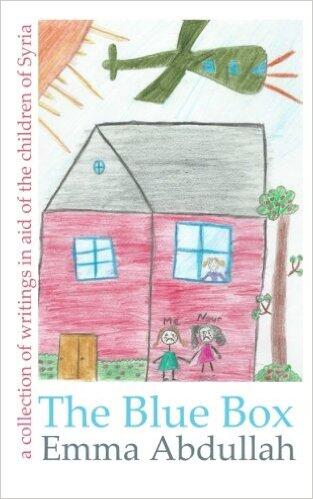
Stanford freshman Emma Abdullah puts a young human face on that tragedy with her book, The Blue Box, which details the plights of Syrian children during the country’s six-year civil war. Published in 2014, the work is a collection of short stories and poems, and all proceeds go to charity. Abdullah estimates she’s raised $80,000 for the cause. Abdullah, who was raised in Kuwait, has relatives and friends from her father’s side of the family in Syria who have died or gone missing.
As many as 470,000 people and 10,000 children have been killed in the war, according to published accounts and the United Nations.
“My goal is to raise awareness about what these children are going through,” said Abdullah, who spoke at a recent staff meeting at Stanford's Center for International Security and Cooperation. “It’s important for me to bring this situation to light.”
She’s found receptive minds among her fellow classmates, though many of them were not aware of the scope of horror in Syria. “Other students have been good, and people are willing to listen once you talk to them about it. It’s been very positive at Stanford, and there is a lot to do on campus.”
Her 86-page book includes a child who writes stories about people in Syria. “She feeds the box with her thoughts; she puts in everything she has. She doesn't know it but her box becomes powerful. It takes up every word, every smile and every heartbeat and slowly, quietly, it grows. It grows into something so much bigger and more profound than she is. She’s just a child. She’s just a child who promised she’d save another but who doesn't know how. But one day, she looks at her box and she understands,” writes Abdullah, who will major in political science.
'It's a sad picture'
The Syrian civil war began in March 2011; the politics involved were not understandable to Abdullah. Would things return to normal? They did not, and have not since. She soon began losing friends – she estimates at least 20 people -- as thousands of children were tortured and killed. She wanted to do something and make a difference, and not just be a bystander staying silent. So Abdullah began expressing her thoughts and feelings in story form.
Regarding the book’s front cover, Abdullah recalled that when she told the child who drew it how beautiful it was, the child replied, “Don’t lie, it’s a sad picture.” Despite the bright colors, one sees children in that drawing crying and a military airplane flying overhead dropping bombs. And, one of the girls pictured, Nour, is lost forever, likely dead, noted Abdullah.
Image
In one story, “Call of the Jasmine,” a little boy named Karim writes an early letter to Santa Claus, worried that he may not be alive come December. “I know where I live is not very pretty and I know there’s not much in it for you, but mama says we’re beautiful where it counts.”
In another account, a child is given an injection of lethal poison. “Everything subsequently goes dark but I close my eyes anyway. The darkness will protect me.”
Some quotes from the book include, “When you write something down, it stays forever. It's like a little part of you that you're giving to the universe.” Abdullah also writes, “We live in a world where some people have already lost the game before having begun.”
As she describes the experience of war on children, “There is no Richter scale to measure pain; it leaves you vulnerable. It's not pain you can get used to, not sorrow that you can tame. It leaves you broken, broken but alive.”
Ultimately, one of her characters said, “Maybe life just wants to be noticed, like a sulking toddler, so it will keep throwing things our way until we finally give it the attention it deserves.”
Disconnected world
Abdullah says literature and art allow us to connect with each other in ways that any other medium would really struggle to match.
“We tend to think of refugees as statistics; death tolls in faraway lands we will never live in. We see children of war and never picture our own for we assume that we will never find ourselves packing up our lives and everything we know only to cross oceans for new homes that do not want us,” she said.
That disconnect is the greatest part of the problem. “We allow ourselves to feel distanced from these events and these people. I wonder how many people stop to think ‘this could be me,’” she said.
Abdullah said that when people read a story or watch a play, they are able to think beyond their own lives and feel what another’s pain is like.
“If stories and theater allow us all to live the harrowing life of a refugee, if only for just an hour, maybe we could all carry a little part of them inside of us and maybe then we’d want to push for change,” she added.
‘Community and unity’
President Trump’s recent travel ban for Muslims from seven different Middle Eastern countries has focused attention on Syrian refugees, Abdullah said. Now, media outlets are interviewing refugees and doing in-depth stories on them. She believes the protests and activism around the country and on campus reflects the desire by many to take a closer look at the victims of the Syrian war.
“We see a greater sense of community and unity, and people who might not have cared about these issues are starting to do so now. People are saying, ‘this is not right’ There is a sense of hope,” she said.
She said that living in constant fear of being hurt by others for what you believe in and in fear of being told you can no longer enter a country like the U.S. is something no one should have to experience.
“Nobody chooses where they are born,” Abdullah said.
“My friends in the Middle East are afraid that all the years they have spent working hard will amount to nothing if their education is interrupted. Those studying in the U.S. wonder whether they will be able to visit their families for the holidays and those in other countries are afraid that maybe the ban will spread to where they are, too.”
Power of writing
Abdullah said she’s always enjoyed writing; she started publishing when she was 13, and has written for student newspapers and magazines in her home country. “I saw that people were being touched, and thought it could have an effect.”
Emma Abdullah
Her family, especially her father, have been highly supportive of her literary talents. In particular, her dad wanted her to reach English-speaking audiences with The Blue Box. “It was important to get it out there to other parts of the world,” she said.
Abdullah went to high school at the New English School in Kuwait. Her book has been adapted as a play by Alison Shan Price. Titled, “The Blue Box: The Memories of Children of War,” it premiered in Kuwait in 2015 and then internationally at the Edinburgh Festival Fringe in Scotland last year.
For those seeking to help, Abdullah suggests making donations to the Syrian American Medical Society, which has helped with evacuations and humanitarian relief for children and others caught up in the crisis.
“The most important thing is not to forget them and not to allow anyone else to either. It is too easy to become indifferent, she said.
The Syrian war has dragged on for six years now, Abdullah said, and children continue to suffer and die every day.
“On a very small scale, the best thing you can do is talk about them and make sure your friends do, too. Learn more about the war and the refugee crisis so that you can spread the word,” she said.
People can donate to charities and NGOs that work with refugees, volunteer at charities, or even start their own fundraisers.
“Advocacy is crucial,” Abdullah said. “Protest, email or call your representatives and urge your government to increase their assistance to Syrian refugees, and encourage your friends to do the same.”
In Japan's increasingly complex security environment, the Japan-U.S. Alliance is indispensable not only to the security of Japan, but also to the peace and stability of the Asia-Pacific region. The Honorable Satoshi Morimoto, former Defense Minister of Japan, will talk about Japan’s security policy and the importance of the Japan-U.S. Alliance under the Trump Administration.
The Honorable Satoshi Morimoto served with the Japan Air Self-Defense Force and is a graduate of the National Defense Academy of Japan. In 1977, he was assigned to the Security Division, American Affairs Bureau of the Ministry of Foreign Affairs of Japan. In 2009 he served as the 1st Senior Adviser to the Minister of Defense. Since October 2015, he has served as the Special Adviser to the Minister of Defense of Japan. In March 2016, he was appointed President of Takushoku University.
The U.S.-Japan relationship has grown from strength to strength, benefitting both countries in terms of diplomacy, security and trade. Now, at a time when China is moving forward with its policy of expansionism in the East and South China Seas, and North Korea continues to threaten both the U and Japanese mainland, how can the two countries best work together to ensure regional stability? At this seminar, up-and-coming scholars from Japan and the United States will explore the potential opportunities and challenges for the U.S.-Japan relationship under the new Trump administration.
Panelists:
Phillip Lipscy The Thomas Rohlen Center Fellow at the Freeman Spogli Institute for International Studies and Assistant Professor of Political Science at Stanford University. His fields of research include international and comparative political economy, international security, and the politics of East Asia, particularly Japan.
Satoru Mori Professor, Hosei University. Former official at the Ministry of Foreign Affairs of Japan, Dr. Mori holds a PhD in Law from the University of Tokyo. His research interests include contemporary American diplomacy, especially with Asian countries. Previously he was a visiting researcher at Princeton University and George Washington University. He has delivered remarks at the U.S. Department of State, CSIS, the Carnegie Endowment for International Peace and other symposiums in the U.S.
Shino Watanabe Associate Professor, Sophia University. Dr. Watanabe obtained her PhD in International Relations from the University of Virginia, followed by a Master’s degree from Tufts University. She also studied at School of International Studies, Peking University in China. Her main research interests are Chinese foreign policy and international relations of East Asia. She published a number of articles on China’s foreign economic policy and foreign relations.
Moderated by Daniel Sneider, Associate Director, Shorenstein Asia-Pacific Research Center, Stanford University
Russia’s desire to be a great power, nuclear deterrence and naval strategies are the reasons behind its rapid Arctic military build-up, a Stanford expert says.
The issue is complicated. “There are three basic drivers: military-strategic calculations, economic development, and domestic objectives,” said Katarzyna Zysk, a visiting scholar at Stanford’s Center for International Security and Cooperation.
Zysk has a forthcoming paper on this topic to be published by the Strategic Studies Institute of the U.S. Army War College. Last year, she presented her findings at the conference, "The Russian Military in Contemporary Perspective," held by the American Foreign Policy Council. She also discussed her research at the Hoover Institution's Arctic Security Initiative meeting in November 2016.
Putin’s foreign policy
Despite claims it would not do so, Russia since 2012 in particular has embarked on a large-scale military modernization in the Arctic across basically all defense branches, with a special focus on the air and maritime domain, Zysk said.
“The military ambitions have expanded with the more nationalist and isolationist turn in Russian policies after (Vladimir) Putin’s return as president in May 2012,” said Zysk, an associate professor at the Norwegian Defence University College who specializes in Russia’s security and defense policies.
In 2014, Russia decided to deploy military forces along the entire Russian Arctic coast, from Murmansk to Chukotka, and on permanent basis. A modernization effort is underway, too.
This trend has deepened the asymmetry of power between Russia’s forces and those of other countries in the region, such as the United States, Zysk said.
“The Arctic contributes to maintaining Russia’s great power status, which has been one of the main driving forces behind Putin’s foreign policy in recent years,” she said.
‘Startling’ military build-up
The Arctic appears as one of the most stable Russian border regions, which makes the rapid defense build-up by a Russian government with a slowing economy quite perplexing to many observers, noted Zysk.
Apart from the economy, she explains the military strategies involved:
“Russia has revived the Cold War ‘Bastion’ concept in the Barents Sea: In case of conflict, the Northern Fleet’s task is to form maritime areas closed to penetration for enemy naval forces, where Russia would deploy strategic submarines and maintain control. In the areas further south, Russia would seek to deny control for potential adversaries. It also gives Russia a possibility to attack an enemy’s sea lines of communication,” she said.
On top of this, Russia’s modernization efforts are focused on modernizing its nuclear deterrent, including building fourth-generation strategic submarines of the Borei class: three are completed, and five are under different stages of construction, according to Zysk.
Russia is also building new attack submarines, as well as new frigates and corvettes, though the shipbuilding industry is struggling with delivering these on time, she added.
Also, the Artic provides Russia a strategic gateway to both the Atlantic and Pacific oceans, Zysk said, which is important given that Russia’s naval forces are separated between four theaters of operations – the Pacific, the Arctic-Atlantic, the Baltic and the Black Sea.
As a result of climate change, Russia may be able to more freely move its warships between its main bases along the Northern Sea Route, she added.
“Importantly, the forces in the Arctic are not going to stay only in the Arctic. With the increased mobility, the military units can be transferred rapidly to support Russia military operations in other regions, as we have observed in eastern Ukraine, where Russia has used a brigade deployed in the High North. The trend is likely to continue, also because Russia’s military capabilities remain limited, despite the ongoing modernization,” she said.
Perceived threats
Russia considers that if it engaged in conflict with other great powers, such as the United States, the Arctic would be a major target, Zysk said. Russia has also rehearsed scenarios when the biggest part of the Russian Navy based in the Arctic, the Northern Fleet, would be activated during conflicts escalating in other regions. That’s a reason for the strengthening of its defenses in the region.
“In the Russian assessment, an aerial attack from the Arctic region may pose military threats to the entire Russian territory. In particular, however, Russia is concerned about the sea-based nuclear deterrent deployed in the Arctic. As a result, Russia has devoted a strong focus to increasing air defense and air control across the Arctic,” she said.
Apart from threats from state actors, environmental accidents, trafficking, terrorist attacks on industrial infrastructure or increased foreign intelligence also make the Arctic, in Russia’s view, a vulnerable territory. Finally, the issue of Russia’s vast energy reserves and other rich natural resources in the Arctic are another factor. The development of the Arctic is seen as one of the solutions to what ails the Russian economy.
Zysk said, “Since the early 2000s, the Russian political and military leadership has systematically argued that there will be an acute shortage of energy resources worldwide, which may lead to a conflict, and that the West, led by the United States, may attempt to seize Russia’s oil and gas.”
While this assessment is controversial, Zysk points to statements by the top Russian political and military leadership, including Valery Gerasimov, the chief of the Russian General Staff, that suggests the Russian leadership believes such scenario may occur by 2030.
“It may also explain some of the military investments in the region, such as reactivating 13 military airfields across the Arctic, paratroopers’ exercises and amphibious landing operations along the Northern Sea Route,” she said.
In addition, the Arctic holds a symbolically important place in Russia’s history and national identity, according to Zysk.
“Displays of military strength, accompanied by rhetoric that portrays Russia as the Arctic superpower, resonate well with the Russian public, especially in communities where feelings of nationalism and isolationism run deep,” she said.
As a result of the military modernization, she added, Russia is today better prepared to participate in complex military operations than a decade ago, especially in joint operations, strategic mobility and rapid deployments.
“Russia’s ability to limit or deny access and control various parts of the Arctic has increased accordingly,” Zysk said.
Katarzyna Zysk, Center for International Security and Cooperation: (650) 723-6840, kzysk@ifs.mil.no
Clifton B. Parker, Center for International Security and Cooperation: (650) 725-6488, cbparker@stanford.edu
Hero Image
A Russian submarine stands at Russia's Nothern Fleet base in the town of Severomorsk in 2007. CISAC fellow Katarzyna Zysk says military-strategic calculations, economic development and domestic objectives are driving Russia's military expansion in the Arctic.
Today, the Bulletin of Atomic Scientists’ “doomsday clock” moved 30 seconds forward to 2 and a half minutes to midnight. The closer the minute hand gets to midnight, the closer the bulletin predicts humankind is to destroying itself. The symbolic clock was created in 1947 when Albert Einstein and Robert Oppenheimer (the father of the U.S. nuclear program) founded the publication.
William J. Perry, a former U.S. Secretary of Defense and senior fellow at the Center for International Security and Cooperation (CISAC), said: "Last year the Doomsday clock was set at 3 minutes to midnight, the closest it has been to global 'midnight' since the iciest days of the Cold War. This ominous pronouncement reflected my own fears that we were now in greater danger of nuclear catastrophe than we were during the Cold War, with the growing threat of nuclear terrorism, the continued risk of accidents and miscalculation, and the possibility of regional nuclear war and continued nuclear proliferation around the world."
He added, "Today the Bulletin of Atomic Scientists announced that we have moved closer to global catastrophe, for the first time setting the clock 30 seconds ahead to 2 and a half minutes to midnight, approaching a time not seen since the United States and Soviet Russia first developed the H-bomb. We must heed this dire warning as a call to action. There are concrete steps that we can take to reduce the risk of nuclear annihilation, but we must start today."
Siegfried Hecker, the former director of the Los Alamos National Laboratory and senior fellow at CISAC, said, "The bulletin’s keepers of the clock made the correct call to move the clock 30 seconds closer to midnight. The disregard for fact-based analysis of issues such as global climate change during the recent presidential campaign is truly alarming. However, my immediate concerns focus on the world having become a more dangerous nuclear place."
He said, "Developments in North Korea top the list: 2016 was a very bad year as Pyongyang greatly expanded its nuclear complex to increase the size of its arsenal to perhaps as many as 20 to 25 weapons, conducted two more nuclear tests to enhance the sophistication of its weapons, and launched two dozen missile tests. All of this while Washington cut all communications with a regime about which we know so little, while continuing the failed policies of sanctions and leaning on China to solve the problem."
"Confrontation," Hecker said, "has replaced cooperation between Russia and the United States. For the first time since the end of the Cold War the specter of a nuclear arms race was raised in 2016. President Putin put the finishing touches on suspending or terminating most of the cooperative nuclear threat reduction programs with the United States. Nuclear safety and security concerns appear to have taken a back seat to nuclear saber rattling and cyber attacks."
He noted, "Tensions between China and the United States have increased substantially over Beijing’s more muscular role in international affairs, particularly with its actions in the South China Sea. Moreover, tensions over Taiwan prompted by President Trump’s comments about the One-China policy renew the possibility of conflict."
"South Asia has inched closer to potential nuclear confrontation between India and Pakistan. India’s expanding economy and its concerns about Chinese military expansion has prompted it to strengthening its nuclear arsenal by moving toward a full triad – land, air and sea-based nuclear weapons. Pakistan, its much smaller and weaker neighbor, feels increasingly threatened by India’s expanding military. It has moved to what is called a posture of full-spectrum nuclear deterrence, which includes very dangerous tactical battlefield nuclear weapons that lower the nuclear threshold," Hecker said.
"Preventing and responding to potential acts of nuclear terrorism require close international cooperation. Unfortunately, all signs point in the opposite direction at a time when the atrocities perpetrated by terrorists are increasing. Greatest among these pullbacks was President Putin’s decision not to participate in the 2016 Nuclear Security Summit held in Washington, DC. With President Obama’s tenure having ended, this very effective collaborative international effort is now in limbo," he said.
MEDIA CONTACTS
Clifton B. Parker, Center for International Security and Cooperation: (650) 725-6488, cbparker@stanford.edu
Members of the Bulletin of Atomic Scientists deliver remarks on the 2017 time for the 'Doomsday Clock' Jan. 26, 2017 in Washington, DC. For the first time in the 70-year history of the Doomsday Clock, the Bulletin of Atomic Scientists moved the clock forward 30 seconds to two and a half minutes before midnight, citing 'ill-considered' statements by U.S. President Donald Trump on nuclear weapons and climate change, developments in Russia, North Korea, India and Pakistan.



 Chung-in Moon, speaker for KP, March 3, 2017
 Emma Abdullah


