International Relations

FSI researchers strive to understand how countries relate to one another, and what policies are needed to achieve global stability and prosperity. International relations experts focus on the challenging U.S.-Russian relationship, the alliance between the U.S. and Japan and the limitations of America’s counterinsurgency strategy in Afghanistan.

Foreign aid is also examined by scholars trying to understand whether money earmarked for health improvements reaches those who need it most. And FSI’s Walter H. Shorenstein Asia-Pacific Research Center has published on the need for strong South Korean leadership in dealing with its northern neighbor.

FSI researchers also look at the citizens who drive international relations, studying the effects of migration and how borders shape people’s lives. Meanwhile FSI students are very much involved in this area, working with the United Nations in Ethiopia to rethink refugee communities.

Trade is also a key component of international relations, with FSI approaching the topic from a slew of angles and states. The economy of trade is rife for study, with an APARC event on the implications of more open trade policies in Japan, and FSI researchers making sense of who would benefit from a free trade zone between the European Union and the United States.

-


4:00-5:00pm California, 18-February 2021
7:00-8:00pm Washington DC, 18-February 2021
3:00-4:00am  Kenya, 19-February 2021
11:00am-12:00pm Sydney, Australia 19-February 2021


The Bay of Bengal, while split by national boundaries and even our concepts of distinct South and Southeast Asian regions, is re-emerging as a connected geographic and demographic space. Some of Asia’s most consequential transnational policy challenges will be most starkly presented here, across the borders of India, Bangladesh, and Burma – and traditional policy-making structures are already struggling to cope with environmental disasters, the mass movement of people, and the yawning need for economic connectivity. This webinar will examine these policy challenges, from the fragility of the Sundarbans ecosystem to the transnational implications of the Burma coup, and whether existing state and multilateral institutions are capable of addressing them.

SPEAKERS:

Image
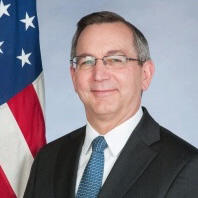
Kelley Eckels Currie
Kelley Eckels Currie served as U.S. Ambassador-at-Large for Global Women’s Issues and the U.S. Representative at the United Nations Commission on the Status of Women.  Prior to her appointment, she led the Department of State’s Office of Global Criminal Justice (2019) and served under Ambassador Nikki Haley as the United States’ Representative to the UN Economic and Social Council and Alternative Representative to the UN General Assembly (2017-2018).  Throughout her career, Ambassador Currie has specialized in human rights, political reform, development and humanitarian issues, with a focus on the Asia-Pacific region. She has held senior policy positions with the Department of State, the U.S. Congress, the Project 2049 Institute, and several international and non-governmental human rights and humanitarian organizations.  Ambassador Currie holds a Juris Doctor from Georgetown University Law Center.

Image
Tanaya D Gupta
Tanaya Dutta Gupta is a PhD Candidate in Sociology at the University of California, Davis. Tanaya’s dissertation research focuses on climate change, (im)mobilities and borders in the Bengal delta region of Bangladesh and India. Her educational background includes MA in Sociology and Geography. As visiting researcher with the International Centre for Climate Change and Development and collaborator with the Observer Research Foundation, Tanaya participates in policy conversations through her research. Her research has been funded by the National Geographic Society and UC Davis Graduate Program Fellowships. 

Image
Constantin Xavier
Constantino Xavier is a Fellow in Foreign Policy and Security Studies at the Centre for Social and Economic Progress, in New Delhi, where he leads the Sambandh Initiative on regional connectivity. He is also a non-resident fellow in the Foreign Policy program at the Brookings Institution. His research and publications focus on India’s changing role as a regional power, and the challenges of security, connectivity and democracy across South Asia and the Indian Ocean. Dr. Xavier regularly lectures at various Indian, European and American universities, as well as at civilian and military training institutions in India. He holds a Ph.D. in South Asian studies from the Johns Hopkins University, School of Advanced International Studies, and an M.A. and M.Phil. from Jawaharlal Nehru University.  

MODERATOR:

Image
Arzan Tarapore
Arzan Tarapore is the South Asia research scholar at the Shorenstein Asia-Pacific Research Center at Stanford University, where he leads the newly-restarted South Asia research initiative. He is also a senior nonresident fellow at the National Bureau of Asian Research. His research focuses on Indian military strategy and contemporary Indo-Pacific security issues. He previously held research positions at the RAND Corporation, the Observer Research Foundation, and the East-West Center in Washington. Prior to his scholarly career, he served as an analyst in the Australian Defence Department, which included operational deployments as well as a diplomatic posting to Washington, DC. Arzan holds a PhD in war studies from King’s College London.


This event is co-sponsored by: Center for South Asia 


This is a virtual event via Zoom.  Please  Register at: https://bit.ly/3txBBVq
Kelley Eckels Currie former Ambassador-at-Large for Global Women's Issues
Tanaya Dutta Gupta University of California, Davis
Constantino Xavier Centre for Social and Economic Progress- New Delhi
Seminars
-

On January 27th, the Cyber Policy Center at Stanford hosted a webinar on the EU’s Digital Services Act and Digital Markets Act. The meeting was such a success that many participants asked for a follow up, allowing for more in depth conversations about the expected trajectory of these legislative proposals. On February 10th at 10 a.m. pacific, Daphne Keller, Joris van Hoboken en Guillermo Beltra will join the Cyber Policy Center for a follow up discussion. 

0
marietje.schaake

Marietje Schaake is a non-resident Fellow at Stanford’s Cyber Policy Center and at the Institute for Human-Centered AI. She is a columnist for the Financial Times and serves on a number of not-for-profit Boards as well as the UN's High Level Advisory Body on AI. Between 2009-2019 she served as a Member of European Parliament where she worked on trade-, foreign- and tech policy. She is the author of The Tech Coup.


Non-Resident Fellow, Cyber Policy Center
Fellow, Institute for Human-Centered Artificial Intelligence
Date Label
0
top_pick_rsd25_070_0254a.jpg

Daphne Keller is the Director of Platform Regulation at the Stanford Program in Law, Science, & Technology. Her academic, policy, and popular press writing focuses on platform regulation and Internet users'; rights in the U.S., EU, and around the world. Her recent work has focused on platform transparency, data collection for artificial intelligence, interoperability models, and “must-carry” obligations. She has testified before legislatures, courts, and regulatory bodies around the world on topics ranging from the practical realities of content moderation to copyright and data protection. She was previously Associate General Counsel for Google, where she had responsibility for the company’s web search products. She is a graduate of Yale Law School, Brown University, and Head Start.

SHORT PIECES


ACADEMIC PUBLICATIONS


POLICY PUBLICATIONS


FILINGS

  • U.S. Supreme Court amicus brief on behalf of Francis Fukuyama, NetChoice v. Moody (2024)
  • U.S. Supreme Court amicus brief with ACLU, Gonzalez v. Google (2023)
  • Comment to European Commission on data access under EU Digital Services Act
  • U.S. Senate testimony on platform transparency


PUBLICATIONS LIST

Director of Platform Regulation, Stanford Program in Law, Science & Technology (LST)
Social Science Research Scholar
Date Label
Guillermo Beltra
Joris van Hoboken
Seminars
-

Few American diplomats can match the years of experience in multiple Southeast Asian countries that Ambassador Scot Marciel has accumulated during his career in the US Foreign Service. The book he is writing at Stanford will interpret the region and its relations with the United States historically and now. Policy questions from the manuscript that the webinar will address include: Can America’s relations with Thailand be reinvigorated, and if so, how? Why have US-Vietnam relations prospered, and with what prospects going forward? Realistically, what can be expected from relations between the US and Indonesia? How should the recent coup in Myanmar be understood and how does it challenge US foreign policy? More broadly, in the near term, what priority ends and means should inform US engagement with Southeast Asia? In exploring answers to these and other questions, Amb. Marciel will interact with a second distinguished speaker, Catharin Dalpino, who is uniquely well qualified to discuss these matters based on her extensive experience in US policymaking positions, academic institutions, and nongovernmental organizations related to Southeast Asia.

Image
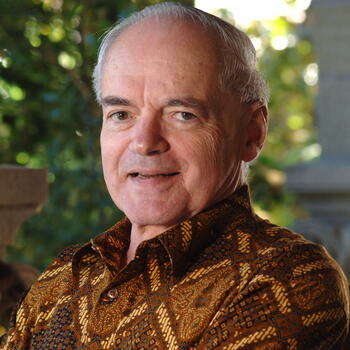
Scott Marciel
Scot Marciel is a career US Foreign Service Officer. He served as America’s Ambassador to Myanmar in 2016-2020 when thousands of ethnic Rohingya were killed, expelled, or emigrated from the country—a challenging time for its democratic transition and for US-Myanmar relations. Earlier assignments included tours as Ambassador to Indonesia, Ambassador for ASEAN Affairs, and Principal Deputy Assistant Secretary and Deputy Assistant Secretary of State for East Asian and Pacific Affairs. Prior to joining the Foreign Service, he worked as an editor of publications at the National Center for Export-Import Studies at Georgetown University. Ambassador Marciel’s more than 35 years of experience as a diplomat in Asia and around the world have also included assignments in Vietnam, the Philippines, and Hong Kong. His degrees are an MA from the Fletcher School of Law and Diplomacy and a BA in International Relations from the University of California, Davis.

Image
catharin dalphino
Catharin Dalpino’s remarkable career has encompassed academe, government, and NGOs. At Georgetown University she taught Southeast Asian Studies and launched and led the university’s Thai Studies Program. Other institutions in which she has lectured, researched, administered, or advised include The Asia Foundation, the Aspen Institute, the Atlantic Council, the Brookings Institution, the Carnegie Endowment for International Peace, George Washington University, and the Johns Hopkins School of Advanced International Studies. She was Deputy Assistant Secretary of State for Democracy in the State Department’s Bureau of Democracy, Human Rights, and Labor and has held positions at the World Bank and the United Nations in Geneva. The author of many articles and three books on US-Asian relations, she has testified on that topic before the Senate and the House of Representatives more than a dozen times. Her degrees are an MA from the University of California, Berkeley, and a BA from Barnard College.

Image
Donald K. Emmerson
Donald K. Emmerson, in addition to heading the Southeast Asia Program, is affiliated with Stanford’s Center on Democracy, Development, and the Rule of Law and its Abbasi Program in Islamic Studies. Recent writings relevant to US-Southeast Asia relations include articles in December 2020 in The Diplomat and East Asia Forum and an edited volume, The Deer and the Dragon: Southeast Asia and China in the 21st Century (2020). Before moving to Stanford in 1999, he taught at the University of Wisconsin-Madison where he headed its Center for Southeast Asian Studies.  He has held visiting positions at the Institute for Advanced Studies and the Australian National University, among other institutions. His degrees are from Yale (PhD) and Princeton (BA).

Via Zoom Webinar
Register: https://bit.ly/2Yz9ZB3

Scot Marciel Visiting Scholar and Practitioner Fellow, Shorenstein Asia-Pacific Research Center, Stanford University
Catherin Dalpino Professor Emeritus, Edmund A. Walsh School of Foreign Service, Georgetown University
0
Senior Fellow Emeritus at the Freeman Spogli Institute for International Studies
Affiliated Faculty, CDDRL
Affiliated Scholar, Abbasi Program in Islamic Studies
aparc_dke.jpg PhD

At Stanford, in addition to his work for the Southeast Asia Program and his affiliations with CDDRL and the Abbasi Program in Islamic Studies, Donald Emmerson has taught courses on Southeast Asia in East Asian Studies, International Policy Studies, and Political Science. He is active as an analyst of current policy issues involving Asia. In 2010 the National Bureau of Asian Research and the Woodrow Wilson International Center for Scholars awarded him a two-year Research Associateship given to “top scholars from across the United States” who “have successfully bridged the gap between the academy and policy.”

Emmerson’s research interests include Southeast Asia-China-US relations, the South China Sea, and the future of ASEAN. His publications, authored or edited, span more than a dozen books and monographs and some 200 articles, chapters, and shorter pieces.  Recent writings include The Deer and the Dragon: Southeast Asia and China in the 21st Century (ed., 2020); “‘No Sole Control’ in the South China Sea,” in Asia Policy  (2019); ASEAN @ 50, Southeast Asia @ Risk: What Should Be Done? (ed., 2018); “Singapore and Goliath?,” in Journal of Democracy (2018); “Mapping ASEAN’s Futures,” in Contemporary Southeast Asia (2017); and “ASEAN Between China and America: Is It Time to Try Horsing the Cow?,” in Trans-Regional and –National Studies of Southeast Asia (2017).

Earlier work includes “Sunnylands or Rancho Mirage? ASEAN and the South China Sea,” in YaleGlobal (2016); “The Spectrum of Comparisons: A Discussion,” in Pacific Affairs (2014); “Facts, Minds, and Formats: Scholarship and Political Change in Indonesia” in Indonesian Studies: The State of the Field (2013); “Is Indonesia Rising? It Depends” in Indonesia Rising (2012); “Southeast Asia: Minding the Gap between Democracy and Governance,” in Journal of Democracy (April 2012); “The Problem and Promise of Focality in World Affairs,” in Strategic Review (August 2011); An American Place at an Asian Table? Regionalism and Its Reasons (2011); Asian Regionalism and US Policy: The Case for Creative Adaptation (2010); “The Useful Diversity of ‘Islamism’” and “Islamism: Pros, Cons, and Contexts” in Islamism: Conflicting Perspectives on Political Islam (2009); “Crisis and Consensus: America and ASEAN in a New Global Context” in Refreshing U.S.-Thai Relations (2009); and Hard Choices: Security, Democracy, and Regionalism in Southeast Asia (edited, 2008).

Prior to moving to Stanford in 1999, Emmerson was a professor of political science at the University of Wisconsin-Madison, where he won a campus-wide teaching award. That same year he helped monitor voting in Indonesia and East Timor for the National Democratic Institute and the Carter Center. In the course of his career, he has taken part in numerous policy-related working groups focused on topics related to Southeast Asia; has testified before House and Senate committees on Asian affairs; and been a regular at gatherings such as the Asia Pacific Roundtable (Kuala Lumpur), the Bali Democracy Forum (Nusa Dua), and the Shangri-La Dialogue (Singapore). Places where he has held various visiting fellowships, including the Institute for Advanced Study and the Woodrow Wilson International Center for Scholars. 


Emmerson has a Ph.D. in political science from Yale and a BA in international affairs from Princeton. He is fluent in Indonesian, was fluent in French, and has lectured and written in both languages. He has lesser competence in Dutch, Javanese, and Russian. A former slam poet in English, he enjoys the spoken word and reads occasionally under a nom de plume with the Not Yet Dead Poets Society in Redwood City, CA. He and his wife Carolyn met in high school in Lebanon. They have two children. He was born in Tokyo, the son of U.S. Foreign Service Officer John K. Emmerson, who wrote the Japanese Thread among other books.

Selected Multimedia

Date Label
Donald K. Emmerson, Director, Southeast Asia Program, Shorenstein Asia-Pacific Research Center, Stanford University
Seminars
-

This is a virtual event. Please click here to register and generate a link to the talk. 
The link will be unique to you; please save it and do not share with others.


U.S. relations with China evolved into outright rivalry during the Trump administration. In this talk, Thomas Wright will look at whether this rivalry will continue and evolve during a Biden administration. To answer this question, he will look at the roots of strategic competition between the two countries and various strands of thinking within the Biden team. The most likely outcome is that the competition will evolve into a clash of governance systems and the emergence of two interdependent blocs where ideological differences become a significant driver of geopolitics. Cooperation is possible but it will be significantly shaped by conditions of rivalry.


Image
Portrait of Thomas Wright
Thomas Wright is the director of the Center on the United States and Europe and a senior fellow in the Project on International Order and Strategy at the Brookings Institution. He is also a contributing writer for The Atlantic and a nonresident fellow at the Lowy Institute for International Policy. He is the author of “All Measures Short of War: The Contest For the 21st Century and the Future of American Power” which was published by Yale University Press in May 2017. His second book "Aftershocks: Pandemic Politics and the End of the Old International Order" will be published by St Martin's Press in 2021. Wright also works on U.S. foreign policy, great power competition, the European Union, Brexit, and economic interdependence.

Wright has a doctorate from Georgetown University, a Master of Philosophy from Cambridge University, and a bachelor's and master's from University College Dublin. He has also held a pre-doctoral fellowship at Harvard University's Belfer Center for Science and International Affairs and a post-doctoral fellowship at Princeton University. He was previously executive director of studies at the Chicago Council on Global Affairs and a lecturer at the University of Chicago's Harris School for Public Policy.


Image
American and Chinese flags
This event is part of the 2021 Winter/Spring Colloquia series, Biden’s America, Xi’s China: What’s Now & What’s Next?, sponsored by APARC's China Program.


Via Zoom Webinar. Register at: https://bit.ly/3r1glp7

Thomas Wright Director, Center on the United States and Europe, Brookings Institution; Senior Fellow, Foreign Policy, Project on International Order and Strategy, Brookings Institution
Seminars
-

This event is part of Shorenstein APARC's winter webinar series "Asian Politics and Policy in a Time of Uncertainty."

In the 2010s, amid signs of rising illiberalism around the world, Indonesia seemed exceptional—an established democracy bucking the trend.  In 2019, however, at a conference in Canberra, experts on Indonesia from Australia, Asia, and the United States argued otherwise. Their variously skeptical views were recently published in a book alarmingly entitled Democracy in Indonesia: From Stagnation to Recession?  In this webinar, a co-editor of the volume will discuss its subtitle with an analyst of Indonesian politics who did not contribute to the book.

Panelists:

Image
Eve Warburton 4X4
Eve Warburton is a Postdoctoral Fellow in the Asia Research Institute at the National University of Singapore. Her research interests include democratic representation, identity, and the political economy of policymaking in young democracies, with a focus on Southeast Asia and especially Indonesia. In addition to Democracy in Indonesia (2020), her work has appeared in the Bulletin of Indonesian Economic Studies, Contemporary Southeast Asia, Democratization, Electoral Studies, Pacific Affairs, the Journal of East Asian Studies, and as chapters in several books. She is currently working on her first book manuscript, Reclaiming What's Ours: The Business and Politics of Resource Nationalism in Indonesia. She received her doctorate in international studies from the Australian National University’s Coral Bell School of Asia and Pacific Affairs in 2018.  Her master’s and undergraduate degrees are respectively from Columbia University and the University of Sydney.

Image
Tom Pepinsky 4X4
Tom Pepinsky is Tisch University Professor in the Department of Government at Cornell University and a Nonresident Senior Fellow at the Brookings Institution. His fields are comparative politics and international political economy, with a focus on emerging markets and a special interest in Southeast Asia. His work on Indonesia includes, as co-editor, Piety and Public Opinion: Understanding Indonesian Islam (2018). He has been published in the American Journal of Political Science, the Journal of Democracy, Perspectives on Politics, and World Politics, among other venues, including an online platform, New Mandala: New Perspectives on Southeast Asia. He is an active co-founder of the Southeast Asia Research Group (seareg.org), which showcases new research by young scholars on Southeast Asian politics, and he serves on the steering committee of the Association for Analytical Learning on Islam and Muslim Societies (aalims.org).  His PhD in political science is from Yale University.

Southeast Asia Program Director Don Emmerson, who has also worked on Indonesia, will moderate the discussion.

Via Zoom Webinar
Register: https://bit.ly/39mafJU

Eve Warburton Postdoctoral Fellow in the Asia Research Institute, the National University of Singapore.
Tom Pepinsky Tisch University Professor in the Department of Government, Cornell University and a Nonresident Senior Fellow, the Brookings Institution.
Seminars
Paragraphs
Portrait of Oriana Skylar Mastro and cover of the Journal of Political Science Education

Students and instructors alike have lamented the nature of methods instruction in political science curricula. Existing research has presented a number of innovative approaches to engage students in this important learning enterprise, from blogging and simulations to data visualization and the use of clickers. This article builds upon this literature by arguing that the policy memo is particularly suited for introducing basic methodological concepts to upper-division undergraduate students.

To facilitate its use for this purpose in addition to its utility as a knowledge assessment tool, Oriana Skylar Mastro offers a policy memo template based on over ten years of experience as a strategist and analyst in the U.S. military. The article also includes a detailed description of the basic methodological concepts that can be developed through each section of the template. Specifically, the policy memo can be used to introduce students to concepts like identifying a critical research question, defining and measuring variables, conducting a literature review, developing hypotheses, using data to assess hypotheses, evaluating the authoritativeness of sources, and devising the theoretical implications of one’s research.

Mastro presents some preliminary results that support the policy memo’s inclusion as a tool of methods instruction, but the pedagogical literature — which argues for integrative, experiential, relevant, and short assignments — provides the strongest rationale for its use.

 
All Publications button
1
Publication Type
Journal Articles
Publication Date
Subtitle
The policy memo is particularly suited for introducing basic methodological concepts to upper-division undergraduate students of political science, argues Oriana Skylar Mastro.
Journal Publisher
Journal of Political Science Education
Authors
Oriana Skylar Mastro
Paragraphs

Volume 5, Issue 2

Authors: Steven Pifer, Min Byung Chae, Natasha Lock, Iris H-Y Chiu, Andreas Kokkinis, Andrea Miglionico, Saraphin Dhanani, and Samuel P. LeRoy.

The Stanford International Policy Review (SIPR) is a biannual student-run international affairs and public policy journal housed in the Ford Dorsey Master's in International Policy. SIPR publishes two issues per year, in the winter and in the spring. Each issue will feature articles, commentary, and book reviews on international policy topics. SIPR's purpose is twofold: to provide timely and compelling analysis on pressing policy issues, and to provide a formative educational experience to student editors.

All Publications button
1
Publication Type
Reports
Publication Date
-

A new administration and Congress provide a key opportunity to improve US cybersecurity and the governance of digital technologies. Yet the challenges appear daunting: viral disinformation, widespread privacy violations, algorithms biased by race, class and gender, ransomware running rampant, and unprecedented tech company scale and market dominance. Additionally, the US faces a persistent deficit in skilled cybersecurity workers, a lack of diversity in the field, and a public with wildly unequal broadband internet access.  Meanwhile, competition among governance regimes, specifically between the United States, Europe and China, has raised the stakes over whether democracies or authoritarian governments will set the rules for the internet. The policy choices made by the new administration will play a pivotal role in shaping our global future. On February 24 at 10am PST, join Kelly Born and Marietje Schaake of Stanford’s Cyber Policy Center, Michael Daniel of the Aspen Institute’s Cyber Group, and Karen Kornbluh for the German Marshall Fund to discuss cyber policy priorities for the new administration.


0
marietje.schaake

Marietje Schaake is a non-resident Fellow at Stanford’s Cyber Policy Center and at the Institute for Human-Centered AI. She is a columnist for the Financial Times and serves on a number of not-for-profit Boards as well as the UN's High Level Advisory Body on AI. Between 2009-2019 she served as a Member of European Parliament where she worked on trade-, foreign- and tech policy. She is the author of The Tech Coup.


Non-Resident Fellow, Cyber Policy Center
Fellow, Institute for Human-Centered Artificial Intelligence
Date Label
Karen Kornbluh
Michael Daniel
Seminars
Authors
Noa Ronkin
News Type
News
Date
Paragraphs

The Walter H. Shorenstein Asia-Pacific Research Center (APARC) has broadened its fellowship and funding opportunities to support Stanford students working in the area of contemporary Asia. The Center introduced these expanded offerings in response to the harsh impacts of the COVID-19 pandemic on student’s academic careers and their access to future jobs and valuable work experience, and in recognition of the critical need to make the field of Asian Studies more diverse and inclusive.

APARC’s diversity grant aims to encourage Stanford students from underrepresented minorities (URM) to engage in the study and research of topics related to contemporary Asia and U.S.-Asia relations, including economic, health, foreign policy, social, political, and security issues. The grant, which was first announced in June 2020, is now an ongoing offering. APARC will award a maximum of $10,000 per grant. Current  Stanford undergraduate and graduate students in the URM category from any major or discipline are eligible and encourage to apply.

APARC also invites Stanford Ph.D. candidates specializing in topics related to contemporary Asia to apply for its 2021-22 predoctoral fellowship. Up to three fellowships are available and the application deadline is May 1, 2021.

In addition, APARC continues to offer an expanded array of research assistant internships. The Center is currently seeking highly motivated Stanford undergraduate- and graduate-level students to join our team as paid research assistant interns for the spring and summer quarters of 2021. Applications for spring 2021 research assistant assignments are due on February 22, for summer 2021 assignments on March 8.

Read More

President Biden walks past a row of Chinese and American flags.
News

APARC Experts on the Outlook for U.S.-Asia Policy Under the Biden Administration

Ahead of President-elect Biden’s inauguration and on the heels of the attack on the U.S. Capitol by a pro-Trump mob that has left America shaken, an APARC-wide expert panel provides a region-by-region analysis of what’s next for U.S. policy towards Asia and recommendations for the new administration.
APARC Experts on the Outlook for U.S.-Asia Policy Under the Biden Administration
View of building roof in the Forbidden City complex and the Beijing skyline in the background
News

New Fellowship on China Policy Seeks to Strengthen U.S.-China Relations

Stanford University’s Shorenstein Asia-Pacific Center invites applications for the inaugural 2021-22 China Policy Fellowship from experts with research experience on issues vital to the U.S. China policy agenda and influence in the policymaking process.
New Fellowship on China Policy Seeks to Strengthen U.S.-China Relations
National Guard at the US Capitol
Commentary

The Soft War That America Is Losing

The US depends far more on its soft power than authoritarian China does. Once it is lost, it is hard to get back.
The Soft War That America Is Losing
Hero Image
Stanford campus, main quad with cloudy sky
All News button
1
Subtitle

The Center has launched a suite of offerings including a predoctoral fellowship, a diversity grant, and research assistant internships to support Stanford students interested in the area of contemporary Asia.

Subscribe to International Relations