International Relations

FSI researchers strive to understand how countries relate to one another, and what policies are needed to achieve global stability and prosperity. International relations experts focus on the challenging U.S.-Russian relationship, the alliance between the U.S. and Japan and the limitations of America’s counterinsurgency strategy in Afghanistan.

Foreign aid is also examined by scholars trying to understand whether money earmarked for health improvements reaches those who need it most. And FSI’s Walter H. Shorenstein Asia-Pacific Research Center has published on the need for strong South Korean leadership in dealing with its northern neighbor.

FSI researchers also look at the citizens who drive international relations, studying the effects of migration and how borders shape people’s lives. Meanwhile FSI students are very much involved in this area, working with the United Nations in Ethiopia to rethink refugee communities.

Trade is also a key component of international relations, with FSI approaching the topic from a slew of angles and states. The economy of trade is rife for study, with an APARC event on the implications of more open trade policies in Japan, and FSI researchers making sense of who would benefit from a free trade zone between the European Union and the United States.

-

Recently, economic sanctions have not been effective in changing the behavior of a sanctioned country. Dr. Yong Lee examines how an autocratic regime domestically counters the impact of economic sanctions, specifically, how the easing and tightening of sanctions impact the urban areas relative to the hinterlands in North Korea. Using the satellite luminosity data, he argues sanctions that fail to change the autocrat's behavior increase inequality at a cost to the already marginalized hinterlands.

Dr. Lee's research intersects the fields of economic development, urban economics and international economics, with a regional focus on Korea and East Asia. His recent work examines the impact of economic sanctions on North Korea's urban elites, and the impact of education policy on migration and intergenerational mobility in South Korea.

Dr. Lee joined the Korea Program as the SK Center Fellow at Stanford's Freeman Spogli Institute for International Studies (FSI) in the fall 2014. Prior to joining Stanford, Lee was an assistant professor of economics at Williams College in Massachusetts. He received his bachelor's and master's degrees in architecture from Seoul National University, a master of public policy from Duke University, and a master's degree and doctorate in economics from Brown University. He also worked as a real estate development consultant and architecture designer as he transitioned from architecture to economics.

Philippines Conference Room
Encina Hall, 3rd floor
616 Serra St. Stanford University
Stanford, CA 94305

0
Former SK Center Fellow at the Freeman Spogli Institute for International Studies
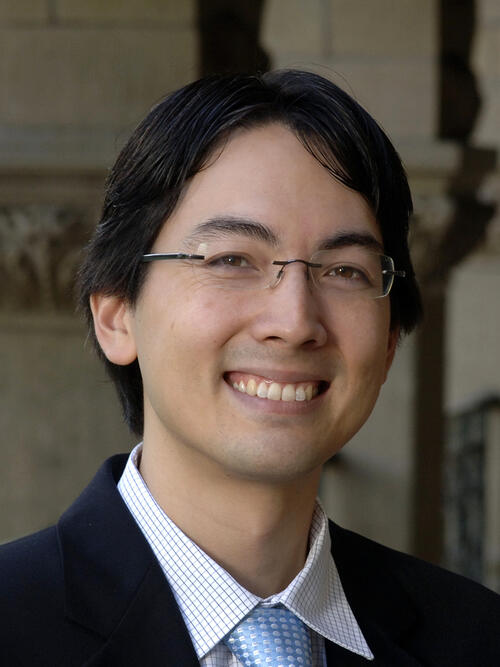
yong_resize2.jpg PhD, MPP

Yong Suk Lee was the SK Center Fellow at the Freeman Spogli Institute for International Studies and Deputy Director of the Korea Program at the Walter H. Shorenstein Asia-Pacific Research Center at Stanford University. He served in these roles until June 2021.

Lee’s main fields of research are labor economics, technology and entrepreneurship, and urban economics. Some of the issues he has studied include technology and labor markets, entrepreneurship and economic growth, entrepreneurship education, and education and inequality. He is also interested in both the North and South Korean economy and has examined how economic sanctions affect economic activity in North Korea, and how management practices and education policy affect inequality in South Korea. His current research focuses on how the new wave of digital technologies, such as robotics and artificial intelligence affect labor, education, entrepreneurship, and productivity.

His research has been published in both economics and management journals including the Journal of Urban Economics, Journal of Economic Geography, Journal of Business Venturing, Journal of Health Economics, and Labour Economics. Lee also regularly contributes to policy reports and opinion pieces on contemporary issues surrounding both North and South Korea.

Prior to joining Stanford, Lee was an assistant professor of economics at Williams College in Massachusetts. He received his Ph.D. in Economics from Brown University, a Master of Public Policy from Duke University, and a Bachelor's degree and master's degree in architecture from Seoul National University. Lee also worked as a real estate development consultant and architecture designer as he transitioned from architecture to economics.

While at APARC, Dr. Lee led and participated in several research projects, including Stanford-Asia Pacific Innovation; Digital Technologies and the Labor Market; Entrepreneurship, Technology, and Economic Development; The Impact of Robotics on Nursing Home Care in Japan; Education and Development in the Digital Economy; and New Media and Political Economy.

Former Deputy Director of the Korea Program at Shorenstein APARC
SK Center Fellow Speaker
Seminars
0
Graduate Student, Political Science
SCPKU Pre-Doctoral Fellow, December 2014-March 2015
lizhi_liu_headshot.jpg

Lizhi Liu is a Ph.D. candidate in Political Science with a primary research interest in Chinese political economy and international relations. She also holds a master degree in statistics. Her dissertation examines the political and social implications of the economic side of the Internet – eCommerce. More specifically, she studies how the rise of eCommerce affects state-business relations and local governance structure.

Conference Agenda for Day 1, October 8, 2014:


9:00 AM

  • Welcome Remarks – Eric T. Wakin, Robert H. Malott Director of Hoover Institution Library & Archives

  • Opening Remarks – Amir Weiner, Stanford University

9:15-10:45 AM – Chair: Amir Weiner

  • Toomas Hiio, Estonian War Museum. Multi-ethnic (or Multi-national) Student Body of the University of Tartu and the WW I: Choices, Political Movements, Volunteers, Mobilizations, and Postwar Consequences

  • Darius Staliunas, Lithuanian Institute of History. Anti-Jewish Violence in Lithuania at the Turn of the 20th Century

11:00 AM – 12:30 PM Chair: Aivars Stranga, The University of Latvia

  • Ēriks Jēkabsons, University of Latvia. The War for Independence of Latvia and the United States

  • Tomas Balkelis, Vilnius University. Paramilitarism in Lithuania: Violence, Civic Activism and Nation-making, 1918–1920

  • Bert Patenaude, Stanford University. “Yankee Doodle: American Attitudes toward Baltic Independence, 1918–1921”


Conference organizers:  Professors Lazar Fleishman (Slavic Department) and Amir Weiner (History Department)

Sponsored by: Hoover Institution Library and Archives, Office of the Provost, Stanford School of Humanities and Sciences, Stanford Global Studies Division, The Europe Center, Stanford University Libraries, Division of Literatures, Cultures, & Languages, Department of Slavic Languages and Literatures, Department of History, Center for Russian, East European and Eurasian Studies, and the Stanford Humanities Center.

Stauffer Auditorium, Hoover Institution

Conferences
-

Abstract: It is often said that economists in general, and CIA analysts in particular, failed to understand until very late in the game just how serious the USSR's economic problems were.  That failure, it was widely claimed, was the root cause of a more general failure on the part of the U.S. policy community to understand what was going on in the Soviet Union during the later Cold War period.  It turns out, however, that the Soviet economic problem was understood from the mid-1960s on;  in intellectual terms, the analysis was quite impressive.  The Soviets themselves, moreover, understood the problem in much the same way as Western economists did.   All this provides us with a key--perhaps the key--to understanding great power politics during the latter part of the Cold War.


About the Speaker: Marc Trachtenberg is Professor of Political Science at the University of California - Los Angeles. He studies national security strategy, diplomatic history, and international relations. He has been Fellow of the Woodrow Wilson Foundation, the John Simon Guggenheim Foundation, the German Marshall Fund, and the SSRC/MacArthur Foundation. His award-winning book, A Constructed Peace: The Making of the European Settlement, 1945-1963 (Princeton University Press, 1999), explores the profound impact of nuclear weapons on the conduct of international relations during the Cold War, making extensive use of newly opened documentary archives in Europe and the United States. History and Strategy (Princeton University Press, 1991) studies seminal events like the onset of World War I and the Cuban Missile Crisis to shed light on the role of force in international affairs. Professor Trachtenberg teaches courses on the history of international relations, international security, and historical research methods. 


The Soviet Economic Decline and Great Power Politics
Download pdf
Assessing Soviet Economic Performance during the Cold War: A Failure of Intelligence?
Download pdf
Marc Trachtenberg Professor of Political Science Speaker University of California - Los Angeles
Seminars
-

Abstract: What happens to the foreign policies of states when they acquire nuclear weapons? Despite its critical importance, this question has been understudied. This paper offers a new typology of the effects of nuclear weapons on foreign policy, and hypothesizes the circumstances in which these effects might be observed. I distinguish between five conceptually distinct foreign policy behaviors—aggression, expansion, independence,bolstering and steadfastness—-and show theoretically how nuclear acquisition may facilitate each of these behaviors. The typology therefore allows scholars to move beyond simple claims of "nuclear emboldenment," and allows for more nuanced predictions and empirical examinations of the ways in which nuclear weapons affect the foreign policies of current and future nuclear states. I demonstrate the utility of this typology using a "hard" case: the United Kingdom. I show that the acquisition of a deliverable nuclear capability in 1955 significantly affected British foreign policy. Britain did not use its nuclear weapons for aggression or expansion, instead seeking to use its nuclear weapons to maintain its forward conventional posture at lower cost and thus postpone retrenchment. However, Britain did use its nuclear weapons to bolster its junior allies in the Middle East, Far East and Europe, and to exhibit greater independence from the United States and greater steadfastness in responding to challenges to its position-—most dramatically during the 1956 Suez crisis.

About the Speaker: Mark Bell is a PhD candidate in Political Science at MIT and a research fellow with the Belfer Center for Science and International Affairs at Harvard University. His research examines issues relating to the causes and consequences of nuclear proliferation, U.S. and British foreign policy, and international relations theory, and has been funded by organizations including the Smith Richardson Foundation and the Tobin Project. He holds a Masters in Public Policy from Harvard Kennedy School, where he was a Frank Knox Memorial Fellow, and a B.A. in Politics, Philosophy, and Economics from St. Anne's College, Oxford University.


Beyond Emboldenment: The Effects of Nuclear Weapons on State Foreign Policy
Download pdf
Beyond Emboldenment: The Effects of Nuclear Weapons on State Foreign Policy
Download pdf

Encina Hall (2nd Floor)

Mark Bell research fellow with the Belfer Center for Science and International Affairs Speaker Harvard University
Seminars
News Type
News
Date
Paragraphs

In the late 19th and early 20th centuries, an "open borders" United States absorbed millions of European immigrants in one of the largest mass migrations ever. New research by Stanford economist Ran Abramitzky challenges the perception that immigrants lagged behind native-born Americans in job pay and career growth.
 

BY CLIFTON B. PARKER

European immigrants to America during the country's largest migration wave in the late 19th and early 20th centuries had earnings comparable to native-born Americans, contrary to the popular perception, according to new Stanford research.

"Our paper challenges conventional wisdom and prior research about immigrant assimilation during this period," said Ran Abramitzky, an associate professor of economics at Stanford, faculty affiliate of The Europe Center and author of the research paper in the Journal of Political Economy.

New research challenges conventional wisdom about immigrant assimilation during the bygone era of open borders and mass migration.
Photo Credit: Lewis Hine/Library of Congress

New research challenges conventional wisdom about immigrant assimilation during the bygone era of open borders and mass migration.

Abramitzky and his colleagues found the average immigrant in that period did not face a substantial "earnings penalty" – lower pay than native-born workers – upon their arrival.

"The initial earnings penalty is overstated," said Abramitzky.

He said the conventional view is that the average European immigrants held substantially lower-paying jobs than native-born Americans upon first arrival and caught up with natives' earnings after spending some time in the United States. But that perception does not hold up to the facts, he said.

Abramitzky's co-authors include Leah Platt Boustan from the University of California, Los Angeles, and Katherine Eriksson from California Polytechnic State University.

The researchers examined records on 21,000 natives and immigrants from 16 European countries in U.S. Census Bureau data from 1900 to 1910 to 1920.

"Even when U.S. borders were open, the average immigrant who ended up settling in the United States over the long term held occupations that commanded pay similar to that of U.S. natives upon first arrival," Abramitzky said.

In that bygone era of "open borders," Abramitzky said, native-born Americans were concerned that immigrants were not assimilating properly into society – yet, on the whole, this concern appears to be unfounded. "Such concerns are echoed in today's debate over immigration policy," he added.

At the same time, Abramitzky said that immigrants from poorer countries started out with lower paid occupations relative to natives and did not manage to close this gap over time.

"This pattern casts doubt on the conventional view that, in the past, immigrants who arrived with few skills were able to invest in themselves and succeed in the U.S. economy within a single generation," Abramitzky and his colleagues wrote.

Age of migration

America took in more than 30 million immigrants during the Age of Mass Migration (1850-1913), a period when the country had open borders. By 1910, 22 percent of the U.S. labor force – and 38 percent of workers in non-southern cities – was foreign-born (compared with 17 percent today).

As the research showed, immigrants then were more likely than natives to settle in states with a high-paying mix of occupations. Location choice was an important strategy they used to achieve occupational parity with native-born Americans.

"This Age of Mass Migration not only is of interest in itself, as one of the largest migration waves in modern history, but also is informative about the process of immigrant assimilation in a world without migration restrictions," Abramitzky said.

Over time, many of the immigrants came from the poorer regions of southern and eastern Europe.

Abramitzky pointed out that native-born Americans in the late 19th and early 20th centuries were concerned about poverty in immigrant neighborhoods and low levels of education among children, many of whom left school early to work in industry.

Consequently, American political progressives championed a series of reforms, including U.S. child labor laws and compulsory schooling requirements.

Still, some natives believed that new arrivals would never fit into American society. And so, in 1924, Congress set a strict quota of 150,000 immigrant arrivals per year, with more slots allocated to immigrants from northern and western European countries than those from southern and eastern Europe.

But those early-20th-century fears of unassimilated immigrants were baseless, according to Abramitzky.

"Our results indicate that these concerns were unfounded: The average long-term immigrants in this era arrived with skills similar to those of natives and experienced identical rates of occupational upgrading over their life cycle," he wrote.

How does this lesson apply to today's immigration policy discussion? Should the numbers of immigrants and their countries of origin be limited and those with higher skills be given more entry slots?

Abramitzky said stereotyping immigrants has affected the political nature of the contemporary debate.

"These successful outcomes suggest that migration restrictions are not always necessary to ensure strong migrants' performance in the labor market," he said.

Hero Image
Image of "First sight of New York Bay -- arrival of a European steamer" by James Wells Champney
First sight of New York Bay--arrival of a European steamer.
James Wells Champney/New York Public Library
All News button
1
Date Label

PROGRAM
Friday May 9, 2014

9:00am Introduction

9:10am Does Naturalization Foster the Political Integration of Immigrants? Evidence from a Regression Discontinuity Design in Switzerland
Jens Hainmueller & Dominik Hangartner
Discussant: Rafaela Dancygier

9:50am Lingua Franca: How Language Shapes the Direction of Public Opinion
Efrén Pérez
Discussant: Rahsaan Maxwell

10:30am BREAK

10:50am Transnational Ties and Support for International Redistribution
Lauren Prather
Discussant: Ali Valenzuela

11:30am Gender-Based Stereotyping and Negotiation Performance: an Experimental Study
Jorge Bravo
Discussant: Rob Ford

12:10pm BREAK

1:00pm The Rhetoric of Closed Borders: Quotas, Lax Enforcement and Illegal Migration
Giovanni Facchini & Cecilia Testa
Discussant: Karen Jusko

1:40pm Varieties of Diaspora Management
Harris Mylonas
Discussant: Yotam Margalit

2:20pm BREAK

2:40pm The Situational Context of Attitudes Towards Immigrant-Origin Minorities
Rahsaan Maxwell
Discussant: Jorge Bravo

3:20pm The Politics of Churchgoing and its Consequences among Whites, Blacks and Latinos in the U.S.
Ali Valenzuela
Discussant: Cara Wong


Saturday May 10, 2014

9:50am How State Support of Religion Shapes Religious Attitudes Toward Muslims
Mark Helbling
Discussant: Sara Goodman

10:30am BREAK

10:50am Opposition to Race Targeted Policies – Ideology or Racism? Particular or Universal? Experimental Evidence from Britain
Rob Ford
Discussant: Jens Hainmueller

11:30am Conflict and Consensus on American Public Opinion on Illegal Immigration
Matthew Wright
Discussant: Efrén Pérez

12:10pm BREAK

1:00pm The Electoral Geography of American Immigration, 1880-1900
Karen Jusko
Discussant: Dan Hopkins

1:40pm Do We Really Know That Employers Want Illegal Immigration?
Maggie Peters
Discussant: Giovanni Facchini

2:20pm BREAK

2:40pm Nurture over Nature: Explaining Muslim Integration Discrepancies in Britain, France and the United States
Justin Gest
Discussant: Claire Adida

3:20pm Immigration and Electoral Appeals over the Past Half Century: A Sketch of the Evidence
Rafaela M. Dancygier & Yotam Margalit
Discussant: Cecilia Testa

4:00pm Looking Ahead

CISAC Conference Room
Encina Hall Central, 2nd floor
616 Serra St.
Stanford University
Stanford, CA 94305
 

Karen Jusko Assistant Professor of Political Science Participant and Workshop Organizer Stanford University
Claire Adida Participant UC San Diego
Jorge Bravo Participant Rutgers University
Rafaela Dancygier Participant Princeton University
Giovanni Facchini Participant University of Nottingham
Robert Ford Participant University of Manchester
Justin Gest Participant Harvard University
Sara Wallace Goodman Participant UC Irvine
Participant Stanford University
Dominik Hangartner Participant London School of Economics and Political Science
Marc Helbling Participant WZB Berlin Social Science Center
Dan Hopkins Participant Georgetown University
Yotam Margalit Participant Columbia University
Rahsaan Maxwell Participant UNC at Chapel Hill
Harris Mylonas Participant George Washington University
Efrén O. Pérez Participant Vanderbilt University
Maggie Peters Participant Yale University
Lauren Prather Participant Stanford University
Judith Spirig Participant University of Zurich
Cecilia Testa Participant Royal Holloway University of London
Ali A. Valenzuela Participant Princeton University
Cara Wong Participant University of Illinois, Urbana-Champaign
Matthew Wright Participant American University (Washington, D.C.)
Workshops
Authors
News Type
News
Date
Paragraphs

On July 30, 2014, three anxious but very poised high school students from the Sejong Korean Scholars Program (SKSP)—an online course on Korea sponsored by the Stanford Program on International and Cross-Cultural Education (SPICE) and the Shorenstein Asia-Pacific Research Center—took the stage to present their final papers to an audience of 25 American and Korean high school teachers and several university professors at a three-day conference on Korea at Stanford University. 

The students—Alex Boylston, a recent graduate of Riverwood International Charter School in Atlanta, GA; Anne Kim, a rising senior at Richard Montgomery High School in Rockville, MD; and Elaine Lee, a rising senior at Los Altos High School in Los Altos, CA—were selected from a class of 26 students, based on the excellence of their academic work and final course papers. 

When asked how he came to choose his topic on Koreans in Japan’s yakuza, Alex Boylston thoughtfully replied that he had thought “outside the box” because he didn’t want his instructor “to have to read 20 essays on the Korean War.” Taking a different tack, Anne Kim turned her personal interest in historical Korean dramas (“sageuk”) into the topic for her final paper, “Let’s Talk Drama: Sageuk as a Reflector and Perpetrator of Societal Change in South Korea.” Closing out the presentations, Elaine Lee stepped up to the podium and discussed the challenges South Korea faces as a global economic power, leaving no doubt she will achieve her goal of participating in the future of U.S.–South Korean relations. All three were honored with an award for excellence, following their presentations.

The SKSP accepts 20-25 exceptional high school students from throughout the United States for each course offering. The course provides students with a broad overview of Korean history and culture as well as U.S.–Korean relations and an opportunity to learn from and interact with top scholars and experts in Korean studies. The SKSP is now accepting applications for its spring 2015 term; www.sejongscholars.org.

Hero Image
2014 Sejong Scholars Honorees
Left to right: Anne Kim, Alex Boylston, Annie Lim (SKSP instructor), and Elaine Lee
All News button
1
-

Since Kim Jong Un came to power, interest in North Korea (DPRK) has increased but it is difficult to judge whether the growing range of media reports and the commentaries based on them are accurate or not. Spending almost 30 months in the DPRK from March 2012, mainly in Pyongyang but also making visits outside, offered an opportunity to collect up-to-date materials, especially photographs, which may offer an insight into the changes taking place. These might offer a new angle to be considered and hopefully stimulate further discussion about what is really happening in the DPRK now.

Mike Cowin, former deputy head of mission at the British Embasy in Pyongyang, joined the Korea Program at Stanford's Shorenstein Asia-Pacific Research  Center as the 2014–15 Pantech Fellow. He is a specialist on Korea and Japan, has been a member of the Research Cadre of the Foreign & Commonwealth Office (FCO) of the United Kingdom since 1988. He has also served in the British embassies in Tokyo from 1992 to 1997, in Seoul from 2003 to 2007, and in Pyongyang as deputy head of mission since March 2012.

He has spent most of his career in London working on policy related research, providing advice to relevant policy desks and acting as the interface between the FCO and academic and research institutions.

Philippines Conference Room,
Encina Hall 3rd floor,
Stanford University

Shorenstein APARCStanford UniversityEncina Hall, Room E301Stanford,  CA  94305-6055
(650) 723-9404 (650) 723-6530
0
mike_cowin.jpg

Mike Cowin, former deputy head of mission at the British Embassy in Pyongyang, North Korea, joins the Korean Studies Program at the Shorenstein Asia-Pacific Research Center as the 2014–15 Pantech Fellow. Having spent twenty years covering Korean issues for the British Government, Cowin brings immense insight not only on North Korea but also on Northeast Asia. During his time at the Center, Cowin will focus his research on economic and social deverlpment that he has seen taking place in North Korea while serving there. Cowin, a specialist on Korea and Japan, has been a member of the Research Cadre of the Foreign & Commonwealth Office (FCO) of the United Kingdom since 1988. He has also served in the British embassies in Tokyo from 1992 to 1997, in Seoul from 2003 to 2007, and presently in Pyongyang, as deputy head of mission, since March 2012. He has spent most of his career in London working on policy related research, providing advice to relevant policy desks and acting as the interface between the FCO and academic and research institutions.

Pantech Fellow, 2014-2015
Speaker 2014-15 Pantech Fellow, Stanford University
Seminars
Subscribe to International Relations