International Relations

FSI researchers strive to understand how countries relate to one another, and what policies are needed to achieve global stability and prosperity. International relations experts focus on the challenging U.S.-Russian relationship, the alliance between the U.S. and Japan and the limitations of America’s counterinsurgency strategy in Afghanistan.

Foreign aid is also examined by scholars trying to understand whether money earmarked for health improvements reaches those who need it most. And FSI’s Walter H. Shorenstein Asia-Pacific Research Center has published on the need for strong South Korean leadership in dealing with its northern neighbor.

FSI researchers also look at the citizens who drive international relations, studying the effects of migration and how borders shape people’s lives. Meanwhile FSI students are very much involved in this area, working with the United Nations in Ethiopia to rethink refugee communities.

Trade is also a key component of international relations, with FSI approaching the topic from a slew of angles and states. The economy of trade is rife for study, with an APARC event on the implications of more open trade policies in Japan, and FSI researchers making sense of who would benefit from a free trade zone between the European Union and the United States.

Authors
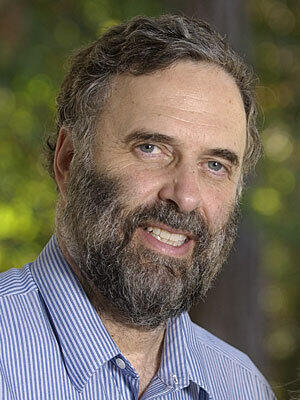
Colin H. Kahl
News Type
Commentary
Date
Paragraphs

The novel coronavirus (COVID-19) is a global public health disaster of almost biblical proportions. It is a once-in-a-century occurrence that threatens to destroy countless lives, ruin economies, and stress national and international institutions to their breaking point. And, even after the virus recedes, the geopolitical wreckage it leaves in its wake could be profound.

Many have understandably drawn comparisons to the influenza pandemic of 1918 and 1919. That pandemic, which began in the final months of World War I, may have infected 500 million people and killed 50 million people around the globe. As the grim toll of COVID-19 mounts, it remains to be seen if that comparison will prove apt in terms of the human cost.

But, if we want to understand the even darker direction in which the world may be headed, leaders and policymakers ought to pay more attention to the two decades after the influenza pandemic swept the globe. This period, often referred to as the interwar years, was characterized by rising nationalism and xenophobia, the grinding halt of globalization in favor of beggar-thy-neighbor policies, and the collapse of the world economy in the Great Depression. Revolution, civil war, and political instability rocked important nations. The world’s reigning liberal hegemon — Great Britain — struggled and other democracies buckled while rising authoritarian states sought to aggressively reshape the international order in accordance with their interests and values. Arms races, imperial competition, and territorial aggression ensued, culminating in World War II — the greatest calamity in modern times.

In the United States, the interwar years also saw the emergence of the “America First” movement. Hundreds of thousands rallied to the cause of the America First Committee, pressing U.S. leaders to seek the false security of isolationism as the world burned around them. President Franklin Delano Roosevelt pushed back, arguing that rising global interdependence meant no nation — not even one as powerful and geographically distant as the United States — could wall itself off from growing dangers overseas. His warning proved prescient. The war eventually came to America’s shores in the form of the attack on Pearl Harbor.

Even before COVID-19, shadows of the interwar years were beginning to re-emerge. The virus, however, has brought these dynamics into sharper relief. And the pandemic seems likely to greatly amplify them as economic and political upheaval follows, great-power rivalry deepens, institutions meant to encourage international cooperation fail, and American leadership falters. In this respect, as Richard Haas notes, the COVID-19 pandemic and the aftershocks it will produce seem poised to “accelerate history,” returning the world to a much more dangerous time.

However, history is not destiny. While COVID-19 worsens or sets in motion events that may increasingly resemble this harrowing past, we are not fated to repeat it. Humans have agency. Our leaders have real choices. The United States remains the world’s most powerful democracy. It has a proud legacy of transformational leaps in human progress, including advances that have eradicated infectious diseases. It is still capable of taking urgent steps to ensure the health, prosperity, and security of millions of Americans while also leading the world to navigate this crisis and build something better in its aftermath. America can fight for a better future. Doing so effectively, however, requires understanding the full scope of the challenges it is likely to face.

Read the rest at War on the Rocks

Hero Image
covid 19 radoslav zilinsky Radoslav Zilinsky - Getty Images
All News button
1
Subtitle

The novel coronavirus (COVID-19) is a global public health disaster of almost biblical proportions. It is a once-in-a-century occurrence that threatens to destroy countless lives, ruin economies, and stress national and international institutions to their breaking point. And, even after the virus recedes, the geopolitical wreckage it leaves in its wake could be profound.

Authors
Naomi Funahashi
News Type
Blogs
Date
Paragraphs

The following is Part 1 of a two-article series on facilitating cross-cultural online learning.


COVID-19 has now extended into most communities around the world, and we are only just beginning to understand the depth and breadth of its impact. Here at SPICE, our hearts and minds are especially focused on the effects that this global pandemic is having upon students. School closures and remote learning are becoming the norm as people are being asked—and in many cases, required—to maintain “social distancing” in order to prevent an even more rapid spread of the disease.

Every day there are more resources becoming available for teaching and learning online in the COVID-19 era. Many educators are struggling with how to adapt their teaching to the digital environment, while also striving to take full advantage of their new online context. We would like to share a few tips that we have learned from our own experiences with leveraging online teaching to forge international student connections, in hopes of encouraging others to develop similar cross-cultural online experiences for students on a global scale.

First, let me describe our own context for teaching online at SPICE. SPICE has been engaging high school students in the United States in online learning since 2004, when our first cohort of the Reischauer Scholars Program (RSP) began its intensive study of Japan and U.S.–Japan relations. When we launched a counterpart to the RSP in 2015—the Stanford e-Japan Program, an online course on U.S. society and culture and U.S.–Japan relations taught to high school students in Japan—we began to explore ways in which these two cohorts of students could come together and learn directly from and with one another. Just as the RSP students are spread across the United States, the Stanford e-Japan students are distributed across the islands of Japan. The diversity of perspectives, backgrounds, and experiences that these students bring to their cohorts is one of the richest and most valued aspects of SPICE’s online teaching initiatives.

We wanted to give our RSP and Stanford e-Japan students an opportunity to come together and discuss their shared experiences, concerns, and anxieties within the contexts of their new realities. How is the COVID-19 pandemic impacting daily life in their respective societies and communities? What are the local and national government responses to this crisis? How are their schools managing the closures, and how is it impacting their future education plans and prospects? These were among the many topics discussed by students across the Pacific at a recent virtual event.

On Friday, March 20 at 7:00pm PDT (which was 11:00am on Saturday, March 21 in Japan), 45 students from across Japan and the United States came together in a Zoom virtual classroom (VC) session to meet, chat, share, learn, and listen. Below are a few best practices that we implemented in this recent session, and that we hope will be helpful for others when considering pedagogical strategies for engaging students in international and cross-cultural online discussions.


1. Prepare students in advance

To make for a rich and productive session, it is crucial that students come to the session well prepared and ready to engage actively. Prior to the session, all students were sent an agenda and asked to prepare at least two questions for small-group discussion. We also asked for student volunteers from each course to serve as small-group discussion leaders; half from RSP, half from Stanford e-Japan. Simple guidelines for moderating the discussion were sent to the discussion leaders in advance, including the following:

  • Begin by identifying yourself as the small-group discussion leader.
  • Facilitate self-introductions.
  • Be mindful of encouraging all students to participate and voice their opinions and perspectives.
  • Remind everyone of the agenda and the time allotted for small-group discussion.


2. Set basic ground rules for discussion

For online discussions in general—and especially for discussions in a cross-cultural setting—it is important for students to know what to expect and understand what is expected of them. In our case, because communication styles and norms—particularly in group settings—tend to be quite different in Japan and the United States, we have found it helpful to address these differences up-front to alleviate potential cross-cultural misunderstandings. Following brief introductions by the RSP and Stanford e-Japan course instructors, we began the session by taking a few minutes to highlight key differences in cross-cultural communication styles. For example, students in the United States tend to be less comfortable and/or familiar with silence or pauses in conversation, while students in Japan are often used to allowing for more time and space to think before speaking up.


3. Divide students into small groups

While student discussions can certainly be facilitated in one large group, we highly recommend dividing students into smaller groups if your software allows. (In Zoom, use the “Breakout Rooms” feature to do this.) In our experience, small groups create an environment that fosters dialogue that is more student-centered, dynamic, and inclusive—and therefore more meaningful to students. We have found that group sizes of five to eight work well. With 45 students in attendance at our recent session, we decided to divide students into six small breakout rooms in Zoom, each with a mix of students from the United States and Japan. All groups held their discussions in English, with the exception of one bilingual group comprised of American students fluent in Japanese and Japanese students fluent in English. With about seven or eight students in each group, each student had ample opportunity to actively engage in discussion and share his or her perspectives and experiences with one another. Each group was preassigned a topic/theme for discussion: COVID-19 (two groups), U.S.–Japan politics and economy, Japanese pop culture, Japanese language, and education.


4. Assign roles

In addition to the discussion leader role, students were also asked to assign a notetaker/reporter in each small group. For groups with an RSP student leader, a Stanford e-Japan student was asked to report back to the main group at the end of the session, and vice versa for groups with a Stanford e-Japan leader.


5. Support student discussion

Once students’ discussions are underway, periodically check in on each group and provide support as needed. We use Zoom for our virtual class platform, which allows for the host to hop between the breakout rooms throughout the duration of the session. While we prefer to allow for the small-group discussions to remain student-centered and student-led, there are times when a teacher might jump into a small group and either notice that a particular student is dominating the discussion, or that there are extended silences. It would be appropriate here for a teacher to send a private message to the discussion leader with some guidance and support as needed.


6. Debrief as a class

Save time at the end of class to reconvene students as a large group and share out to each other. In our case, the notetaker/reporter for each small group presented a short summary of his or her group’s discussion and some time was allowed for comments from the whole group following each presentation. While there were five different topics assigned to the six groups, it was interesting to see that all of the groups ended up discussing the impact of the COVID-19 situation at some point during their time together. Dedicating time to this whole-group debrief enabled students to learn about different perspectives and varied comparative responses to COVID-19, and it created a valuable opportunity for students to forge a cohesive virtual community of their own.


Concerns about the COVID-19 pandemic, of course, hovered above all of us during the session and one of the big “take-aways” for the students was how interdependent and interconnected the world is. The anxieties of suddenly transitioning to online learning, being separated from friends and classmates, and not knowing how this pandemic might impact their prospects for higher education are shared by high school students everywhere. With many students transitioning to some form of remote learning, this could be an ideal time for young people to reach out across cultural and societal boundaries and deepen their international and cross-cultural awareness and understanding, and for schools to consider offering opportunities for these virtual connections to be made.


For more information about the Reischauer Scholars Program or the Stanford e-Japan Program, please visit our programs’ webpages at reischauerscholars.org and stanfordejapan.org. SPICE also offers other online courses to U.S. high school students on China (China Scholars Program) and Korea (Sejong Korea Scholars Program), and an online course to Chinese high school students on the United States (Stanford e-China Program).

To stay informed of SPICE news, join our email list and follow us on Facebook, Twitter, and Instagram.


Related articles:


Hero Image
Illustration of a virtual classroom session
Depiction of a virtual classroom session with students of the Reischauer Scholars Program and Stanford e-Japan. Illustration by Rich Lee Draws!!!
All News button
1
-

This is a virtual event. Please click here to register and generate a link to the talk. 
The link will be unique to you; please save it and do not share with others.

Much recent commentary on US relations with China claims that the policy of “Engagement” was a foolish and failed attempt to transform the People’s Republic into an American style democracy that instead created an authoritarian rival. This narrative mocks the policies of eight US administrations to justify calls for “Decoupling” and “Containment 2.0.” Fingar’s talk will challenge this narrative by examining the origins, logic, and achievements of Engagement and explain why Decoupling is neither wise nor attainable.

Image
Dr. Thomas Fingar
Thomas Fingar is a Shorenstein APARC Fellow in the Freeman Spogli Institute for International Studies at Stanford University. He was the inaugural Oksenberg-Rohlen Distinguished Fellow from 2010 through 2015 and the Payne Distinguished Lecturer at Stanford in 2009. From 2005 through 2008, he served as the first deputy director of national intelligence for analysis and, concurrently, as chairman of the National Intelligence Council. Fingar served previously as assistant secretary of the State Department’s Bureau of Intelligence and Research (2000-01 and 2004-05), principal deputy assistant secretary (2001-03), deputy assistant secretary for analysis (1994-2000), director of the Office of Analysis for East Asia and the Pacific (1989-94), and chief of the China Division (1986-89). Between 1975 and 1986 he held a number of positions at Stanford University, including senior research associate in the Center for International Security and Arms Control.

Fingar is a graduate of Cornell University (A.B. in Government and History, 1968), and Stanford University (M.A., 1969 and Ph.D., 1977 both in political science). His most recent books are The New Great Game: China and South and Central Asia in the Era of Reform, editor (Stanford, 2016), Uneasy Partnerships: China and Japan, the Koreas, and Russia in the Era of Reform (Stanford, 2017), and Fateful Decisions: Choices that will Shape China’s Future, co-edited with Jean Oi (Stanford, 2020).

Via Zoom Webinar. Register at: https://bit.ly/3ecduEe

Thomas Fingar Shorenstein APARC Fellow, Stanford University
Seminars
Authors
Noa Ronkin
News Type
News
Date
Paragraphs

STANFORD, CA, April 8, 2020  — Stanford University’s Walter H. Shorenstein Asia-Pacific Research Center (APARC) is pleased to announce that journalist and author Tom Wright is the recipient of the 2020 Shorenstein Journalism Award for excellence in coverage of the Asia-Pacific region. Wright, who over the past twenty-five years has worked mainly in South and Southeast Asia, is the coauthor of the New York Times bestseller Billion Dollar Whale, which unravels the story of one of the world's greatest financial scandals involving the multibillion-dollar looting of the Malaysian sovereign wealth fund 1Malaysia Development Bhd (1MDB). The book builds on Wright’s multiyear investigative reporting for the Wall Street Journal, where he most recently served as Asia economics editor. In the coming fall quarter, Wright will receive the award at a ceremony and headline a panel discussion at Stanford.

Wright started his career with Reuters in Indonesia in the 1990s at a time when Gen. Suharto’s military dictatorship was crumbling. During the Asian financial crisis of 1997-98, he joined Dow Jones Newswires in Bangkok, later moving to the Wall Street Journal. He has investigated corruption in Indian companies, the failure of the U.S.’s civilian aid program for Pakistan, and was one of the first journalists to arrive at the scene of the raid in which Navy SEALs killed Osama bin Laden. His 2013 award-winning series on the Rana Plaza factory disaster in Bangladesh, which killed over 1,000 people, exposed how international garment manufacturers turned a blind eye to safety violations to reduce costs.

In 2015, he began investigations into the 1MDB scandal, one of the largest financial frauds of all time in which bankers at Goldman Sachs helped a young Malaysian financier steal at least $4 billion from Malaysian state fund 1MDB. The three-year investigation revealed the degree to which Western institutions, from Wall Street banks, law firms, auditors, and even Hollywood film companies, ignore malfeasance in the pursuit of profits. Wright’s work sparked investigations by law enforcement and regulators in multiple countries and outrage in Malaysia, where the ruling coalition, after 61 years in power, suffered a landslide defeat in a shocking 2018 election.

“Throughout his career, Tom Wright’s consummate reporting and persistent investigations have repeatedly shone a light on major Asian affairs and the complicity of Western institutions in the affliction of corruption in Asia,” said Gi-Wook Shin, Shorenstein APARC director. “His work embodies an unwavering commitment to the pursuit of truth and to advancing a critical consideration of both Asian and Western societies. We are delighted to recognize him with the Shorenstein Journalism Award.”

Presented annually by APARC, the Shorenstein award, which carries a $10,000 cash prize, honors the legacy of APARC’s benefactor, Mr. Walter H. Shorenstein, and his twin passions for promoting excellence in journalism and understanding of Asia. “We are grateful to the Shorenstein family for its support of our Center and its mission and to the members of the award selection committee for their expertise and service,” noted Shin.

The selection committee for the Shorenstein Journalism Award, which unanimously chose Wright as the 2020 honoree, includes Wendy Cutler, vice president and managing director, Washington, D.C. Office, Asia Society Policy Institute; James Hamilton, Hearst Professor of Communication, chair of the Department of Communication, and director of the Stanford Journalism Program, Stanford University; Raju Narisetti, global publishing director-elect, McKinsey & Company; Philip Pan, weekend editor, former Asia editor, the New York Times; and Prashanth Parameswaran, senior editor, the Diplomat

Eighteen journalists have previously received the Shorenstein award, including most recently Maria Ressa, CEO and executive editor of Rappler; Anna Fifield, the Washington Post’s Beijing bureau chief and long-time North Korea watcher; Siddharth Varadarajan, founding editor of the Wire; Ian Johnson, a veteran journalist with a focus on Chinese society, religion, and history; and Yoichi Funabashi, former editor-in-chief of the Asahi Shimbun.

Information about the 2020 Shorenstein Journalism Award ceremony and panel discussion featuring Wright will be forthcoming in the fall quarter.

Find out more at aparc.fsi.stanford.edu/events/shorenstein-journalism-award.


Media Contact:

Noa Ronkin
Associate Director for Communications and External Relations
Shorenstein APARC
noa.ronkin@stanford.edu


Hero Image
Portrait of Tom Wright
All News button
1
Authors
News Type
Commentary
Date
Paragraphs

In the midst of the damage to public health and the global economy, the COVID-19 crisis could present an unexpected opportunity both to resolve the only hot war in Europe and to address Russian President Vladimir Putin's assault on international norms of behavior.

As the spreading coronavirus and collapsing oil prices weigh increasingly on the Kremlin, the United States and its allies should offer to lift international sanctions against Russia if Putin will end his military incursions into Ukraine. President Trump and Congress can advance America's interests, and the world's, with a bold step to encourage an end to this war. The Trump administration and Congress should seize this opening.


Read the rest at NPR.org.


Hero Image
gettyimages 1207345844 84cccea5ecfe878d8232389bc526d68286b249d8 s800 c85
All News button
1
-

In keeping with the State of California's shelter-in-place orders, this event is available through livestream only. Please register in advance for the webinar by using the link below.

REGISTRATION LINKhttps://bit.ly/3e1r7FZ

The time of this event has changed to 4:30pm-5:30pm PDT.


As the COVID-19 pandemic continues to spread throughout the world, Japan is experiencing its second wave of coronavirus outbreak, following a first wave early on, just as it had become clear that the virus was spreading rapidly from Wuhan. In late February, travel restrictions were followed by Prime Minister Abe’s call for school closures. But as the pandemic raged through parts of Europe and then the United States, and as a growing number of countries issued shelter-in-place orders and lockdowns, Japan seemed relatively unscathed. Concerns then escalated and calls for voluntarily restricting peoples’ movement started in earnest following the decision to postpone the 2020 Olympics. On April 6, Prime Minister Abe declared a state of emergency for seven prefectures.

This panel brings together expertise on Japan’s political leadership with experience in Japan’s crisis management. Professor Harukata Takenaka has long studied how Japan’s political leadership has evolved, while Mr. Akihisa Shiozaki, an expert on crisis management, was a core member of Japan’s first private-sector investigative report after the Fukushima nuclear crisis.

This is the first in an APARC-wide series of virtual seminars that explore Asian countries’ responses to the COVID-19 pandemic. Held throughout the spring quarter, each event is led by one of APARC’s programs.

PANELISTS

Image
Aki Shiozaki Headshot

Akihisa Shiozaki, Partner, Nagashima Ohno & Tsunematsu

Akihisa Shiozaki is widely recognized for his expertise in corporate crisis management, including regulatory investigations, white collar defense, product recall, labor/employment disputes, import/export control, cyber security, media interaction and various corporate governance issues, especially those with multi-jurisdictional or parallel civil and criminal components. In recent years, he has advised both domestic and foreign clients in resolving a number of the most high profile corporate crises cases relating to Japan, including the LIBOR/TIBOR manipulation investigation, FX manipulation investigation, global product recall by a Japan auto-parts manufacturer, international trade secret theft in the semiconductor industry, government investigations against a global pharmaceutical corporation operating in Japan, and his representation of the former CEO of Olympus Corporation who brought light to the company's recent accounting scandal. He is recognized by Legal 500 as a Leading Individual in the field of Risk Management and Investigations. In 2017, Akihisa was awarded the Compliance / Investigations Lawyer of the Year at the Asian Legal Awards hosted by The American Lawyer, in association with The Asian Lawyer, China Law & Practice and Legal Week.

Akihisa worked in the Prime Minister’s office as senior policy advisor from 2006 to 2007 and is knowledgeable in Japanese regulations /rules and governmental procedures, as well as having rich experience dealing with the media. He also serves as the vice-chairman of the Anti-Yakuza Committee at the Daiichi Tokyo Bar Association and has authored many related publications. He graduated from the University of Tokyo (LL.B.), holds an M.A. in international policy from Stanford University, and completed his MBA at the Wharton School of the University of Pennsylvania where he served as class president.

Image
Harukata Takenaka Headshot

Harukata Takenka, Professor of Political Science, National Graduate Institute for Policy Studies (GRIPS)

Harukata Takenaka is a professor of political science at the National Graduate Institute for Policy Studies in Tokyo.  He specializes in comparative politics and international political economy, with a particular focus on Japanese political economy. His research interests include democracy in Japan, and Japan's political and economic stagnation since the 1990s.  He received a B.A. from the Faculty of Law of the University of Tokyo and an M.A. and Ph.D. in political science from Stanford University.  He is the author of Failed Democratization in Prewar Japan: Breakdown of a Hybrid Regime, (Stanford University Press, 2014), and Sangiin to ha [What is House of Councillors], (Chuokoron Shinsha, 2010).

Image
Portrait of Kenji Kushida

Kenji Kushida, Research Scholar, Shorenstein APARC Japan Program (Moderator)

Kenji E. Kushida is a Japan Program Research Scholar at the Walter H. Shorenstein Asia-Pacific Research Center and an affiliated researcher at the Berkeley Roundtable on the International Economy. Kushida’s research interests are in the fields of comparative politics, political economy, and information technology. He has four streams of academic research and publication: political economy issues surrounding information technology such as Cloud Computing; institutional and governance structures of Japan’s Fukushima nuclear disaster; political strategies of foreign multinational corporations in Japan; and Japan’s political economic transformation since the 1990s. Kushida has written two general audience books in Japanese, entitled Biculturalism and the Japanese: Beyond English Linguistic Capabilities (Chuko Shinsho, 2006) and International Schools, an Introduction (Fusosha, 2008). Kushida holds a PhD in political science from the University of California, Berkeley. He received his MA in East Asian studies and BAs in economics and East Asian studies, all from Stanford University.

Via Zoom Webinar. Register at https://bit.ly/3e1r7FZ

Akihisa Shiozaki, Nagashima Ohno & Tsunematsu
Harukata Takenka, National Graduate Institute for Policy Studies
Kenji Kushida, Shorenstein APARC Japan Program
Panel Discussions
-

Links to Event Materials:


The Stanford Cyber Policy Center continues its online Zoom series: Digital Technology and Democracy, Security & Geopolitics in an Age of Coronavirus. These webinars will take place every other Wednesday at 10am PST. 

The next event, Digital Disinformation and Health: From Vaccines to the Coronavirus, will take place Wednesday, April 8, at 10am PST with Kelly Born, Executive Director of the Cyber Policy Center, in conversation with Professor David Broniatowski, from George Washington University, Professor Kathleen M. Carley, from Carnegie Mellon University, and Professor Jacob N. Shapiro, from Princeton University. 

In particular, Professor Broniatowski will discuss the results of new studies regarding bots and trolls in the vaccine debate, as well as what makes messages go viral from the standpoint of Fuzzy Trace TheoryProfessor Carley will explore how information moves from country to country, with a look at both the differences in who is broadcasting certain types of disinformation and the role bots play in the spread. Professor Shapiro will speak to trends and themes we are seeing in coronavirus disinformation narratives and in news reporting on COVID-related misinformation.


David Broniatowski 
Professor David Broniatowski conducts research in decision-making under risk, group decision-making, system architecture, and behavioral epidemiology. This research program draws upon a wide range of techniques including formal mathematical modeling, experimental design, automated text analysis and natural language processing, social and technical network analysis, and big data. Current projects include a text network analysis of transcripts from the US Food and Drug Administration's Circulatory Systems Advisory Panel meetings, a mathematical formalization of Fuzzy Trace Theory -- a leading theory of decision-making under risk, derivation of metrics for flexibility and controllability for complex engineered socio-technical systems, and using Twitter data to conduct surveillance of influenza infection and the resulting social response. 
Professor Kathleen M. Carley 
Professor Kathleen M. Carley is Director of the Center for Informed Democracy and Social-cybersecurity (IDeaS) and the director of the center for Computational Analysis of Social and Organizational Systems (CASOS). She specializes in network science, agent-based modeling, and text-mining within a complex socio-technical system, organizational and social theory framework. In her work, she examines how cognitive, social and institutional factors come together to impact individual, organizational and societal outcomes. Using this lens she has addressed a number of policy issues including counter-terrorism, human and narcotic trafficking, cyber and nuclear threat, organizational resilience and design, natural disaster preparedness, cyber threat in social media, and leadership.   
Professor Jacob N. Shapiro 
Professor Jacob N. Shapiro is professor of Politics and International Affairs at Princeton University and directs the Empirical Studies of Conflict Project, a multi-university consortium that compiles and analyzes micro-level data on politically motivated violence in countries around the world. His research covers conflict, economic development, and security policy. He is author of The Terrorist’s Dilemma: Managing Violent Covert Organizations and co-author of Small Wars, Big Data: The Information Revolution in Modern Conflict. His research has been published in broad range of academic and policy journals as well as a number of edited volumes. He has conducted field research and large-scale policy evaluations in Afghanistan, Colombia, India, and Pakistan.

Kelly BornKelly Born is the Executive Director of Stanford’s Cyber Policy Center, where she collaborates with the center’s program leaders to pioneer new lines of research, policy-oriented curriculum, policy workshops and executive education. Prior to joining Stanford, she helped to launch and lead The Madison Initiative at the William and Flora Hewlett Foundation, one of the largest philanthropic undertakings working to reduce polarization and improve U.S. democracy.  There, she designed and implemented strategies focused on money in politics, electoral reform, civic engagement and digital disinformation. Kelly earned a master’s degree in international policy from Stanford University.

Online, via Zoom: REGISTER

Professor David Broniatowski George Washington University
Professor Kathleen M. Carley Carnegie Mellon University
Professor Jacob N. Shapiro Princeton University
Seminars
News Type
News
Date
Paragraphs

To support Stanford students working in the area of contemporary Asia, the Shorenstein Asia-Pacific Research Center is offering up to ten research assistant internships for summer 2020 and up to three predoctoral fellowships for the 2020-21 academic year. The Center will review applications starting April 15 and expects to fill the positions by April 30, 2020. 

Amid the fallout of the COVID-19 pandemic, students are facing summer internship cancelations and hiring freezes. They are left wondering about the long-term implications of the current crisis for their academic careers and their access to future jobs and valuable work experience.

At Shorenstein APARC, we want to do all we can to support Stanford students. That’s why we are announcing new internship and fellowship opportunities for current students working in the area of contemporary Asia: research assistant internships for the summer quarter of 2020 and predoctoral fellowships for the 2020-21 academic year.

The summer internships are all remote: research assistants will work as telecommuters. Regarding the predoctoral fellowships, we hope we can all have a normal 2020-21 academic year, in which case we expect the fellows to be in residence, but we will reassess the evolving COVID-19 situation closer to the appointment start dates and shift to flexible, online options as needed.

APARC will review applications for both opportunities on a rolling basis starting April 15, 2020. The Center will select up to ten research assistants and up to three predoctoral fellows by April 30, 2020.

Read on to learn more about these offerings and the application requirements, and follow the guidelines below to submit your candidacy.

Summer 2020 APARC Research Assistant Internships

Shorenstein APARC is seeking highly motivated and dedicated undergraduate and graduate students to join our team as paid research assistant interns for the summer quarter of 2020. Research assistants will work with assigned APARC faculty members on projects focused on contemporary Asia, studying varied issues related to the politics, economies, populations, security, foreign policies, and international relations of the countries of the Asia-Pacific region.

All positions will be for eight weeks starting late June or early July 2020. The hourly pay rate is $17 for undergraduate students, $25 for graduate students.

Research assistant positions are open to current Stanford students only. Undergraduate- and graduate-level students are eligible to apply.

Apply Now

  • Complete the application form and submit it along with these two (2) required attachments:
    • CV;
    • A cover letter (up to 1 page).
  • Arrange for a letter of recommendation from a faculty to be sent directly to APARC. Please note: the faculty members should email their letters directly to Kristen Lee at kllee@stanford.edu.

We will consider only complete applications that include all the abovementioned supporting documents.  

2020-21 Shorenstein APARC Predoctoral Fellowships

APARC is inviting applications from current Stanford students for the 2020-21 Shorenstein APARC Predoctoral Fellowship. The fellowship supports predoctoral students working within a broad range of topics related to contemporary Asia. 

Up to three fellowships are available to Ph.D. candidates who have completed all fieldwork and are nearing the completion of their dissertation. The Center will give priority to candidates who are prepared to finish their degree by the end of the 2020-21 academic year.

Shorenstein APARC offers a stipend of $36,075 for the 2020-21 academic year, plus Stanford's Terminal Graduate Registration (TGR) fee for three quarters. We expect fellows to remain in residence at the Center throughout the year and to participate in Center activities.

Apply Now

  • Complete the application form and submit it along with these three (3) required attachments:
    • CV;
    • A cover letter including a brief description of your dissertation (up to 5 double-spaced pages);
    • A copy of your transcripts. Transcripts should cover all graduate work and include evidence of recently-completed work.
  • Arrange for two (2) letters of recommendation from members of your dissertation committee to be sent directly to Shorenstein APARC. Please note: the faculty/advisors should email their letters directly to Kristen Lee at kllee@stanford.edu.

We will consider only complete applications that include all the abovementioned supporting documents. 

Hero Image
Architectural detail on Stanford colonnade with palm trees in the background L.A. Cicero
All News button
1
Authors
Noa Ronkin
News Type
News
Date
Paragraphs

Despite the coronavirus pandemic, North Korea continues to carry out weapons testing and to declare that not a single COVID-19 patient has emerged in the country. Analysts and medical experts, however, are highly skeptical of Pyongyang’s claims. A coronavirus outbreak would overwhelm the North’s weak healthcare system and would be devastating to its people, who suffer from relatively high levels of malnutrition and have no access to information about the pandemic.   

North Korea is one of the worst human rights violators in modern history. In February 2014, the United Nations Human Rights Council published the landmark Report of the Commission of Inquiry (COI) on Human Rights in the Democratic People’s Republic of Korea, a comprehensive account of human rights abuses committed by the authoritarian country’s leadership against its people. It was seen as a major milestone in the effort to shine a light on the gravity and scope of the problem and to hold the perpetrators accountable by bringing them before the International Criminal Court for crimes against humanity.

Over the past three years, however, the momentum for action on the report’s recommendations has faded and the human rights issue has been largely viewed as less serious a concern than the regional and global security threat posed by the North Korean nuclear program and long-range missiles.

Coinciding with the sixth anniversary of the COI report, it was the goal of the Korea Program’s twelfth annual Koret Workshop to regenerate awareness of the role of human rights in policy toward North Korea by gathering experts at Stanford to discuss the topic and generate concrete recommendations for action. In this post, we share highlights from select presentations prepared for this workshop that was canceled due to the COVID-19 crisis.

[Sign up for our newsletters to receive more stories like this.]

Human Rights and Denuclearization

As the Trump administration shifted from a “war of words” with North Korean leader Kim Jong Un to prioritizing summit diplomacy, the focus on the human rights problem receded and many stakeholders, both within and outside the administration, preferred to play it down so as not to jeopardize the negotiation over a denuclearization agreement.

Yet the irony, argues Asian affairs and security expert Victor Cha, is that the denuclearization and human rights agendas are inextricably intertwined. “Human rights is an integral and unavoidable component of a comprehensive North Korea strategy,” he says. Cha, professor of government and holder of the D.S. Song-KF Chair in Government and International Affairs at Georgetown University, joined APARC as the Koret Fellow in Korean Studies for the winter quarter of 2020.

Cha notes that revenues gained from forced labor exports and other human rights abuses help the Kim regime finance its proliferation activities. Furthermore, improvements in the country’s human rights condition would reflect the leadership’s commitment to reform and make a denuclearization commitment by the DPRK more credible. The United States, claims Cha, must take actionable steps to include the human rights issue in bilateral relations with Pyongyang: establish a rights-first approach in future negotiations, resume humanitarian assistance, and fill the position of a Special Envoy for Human Rights as mandated by the Congress.

Watch Professor Cha discuss these issues in our recent virtual Q&A:

Tae-Ung Baik, professor of Law and director of the Center for Korean Studies at the University of Hawaii at Manoa, calls for a step-by-step approach, advancing small, concrete changes that will have a cumulative effect toward better protection of the rights of the people of North Korea. For example, cooperation and consultation on human rights protection should be exerted to promote reform in specific areas such as the North Korean judicial and criminal justice systems.

Ambassador Robert King, who served as a special envoy for North Korean human rights issues at the U.S. Department of State in the Obama administration, also stresses that addressing the human rights problem is essential to making progress toward denuclearization and security goals. King argues that North Korea must accept international norms and standards for denuclearization, but its acceptance of international human rights standards is necessary if it is to win international legitimacy.

Listen to highlights from King’s talk at the Korea Program’s seminar, which he delivered in the fall quarter of 2019 while being affiliated with APARC as the Koret Fellow in Korean Studies:


Freedom of Information

Although the human rights condition in North Korea has not improved, the information landscape in the country has changed significantly over the past quarter-century. Nat Kretchun, deputy director of the Open Technology Fund, describes the transformation as “trending up from an extremely low base toward greater openness and access before, more recently, retrenching.”

In the years following the famine of the mid-1990s, information flowed into the country like never before, exposing North Korean citizens to a range of new content via an array of non-networked technologies, including information from China, South Korean entertainment media, radio broadcasts from NGOs, and outside broadcasts by Voice of America and Radio Free Asia. As they regained some measure of economic stability, however, the North Korean authorities began to reestablish control over information flows. The recent available data demonstrates that access to information is falling off and the era of more socially normalized consumption of outside information is over, says Kretchun. “The government has begun implementing a far more technologically savvy information control strategy than it previously had the capacity to do […in an] effort to move communications and media consumption onto state-controlled networks via state-controlled devices.”

Indeed, Martyn Williams, a veteran watcher of North Korea’s information technology sector, shows that, while the digitization of media was the catalyst that led to the mass spread of foreign content across the country, so too has the same technology been employed to help the government combat it. For example, every Android tablet and smartphone in North Korea logs every page a person visits with the web browser and randomly takes screenshots during his/her use of the device. Users are allowed to see this database of collected screenshots but cannot delete them. “The system is sinister in its simplicity. It reminds users that everything they do on the device can be recorded and later viewed by officials […] it insidiously forces North Koreans to self-censor in fear of a device check that might never happen.”

Furthermore, the security software pre-loaded onto North Korean phones and computers cannot be replaced and the state’s digital certificate system makes mobile devices little more than consumption tools for state propaganda and personal memories. “While digital technology has created new pathways for foreign content, the increased networking of products could work against information freedom and eventually lead to the creation of an even more Orwellian society,” concludes Williams.

Minjung Kim, director of the South Korean NGO Save North Korea, emphasizes that a key to addressing the human rights problem in the country lies in discrediting the regime’s ideology in the minds of the North Korean people. It is, therefore, necessary to further produce and deliver content that educates citizens on how the regime shapes and manipulates ideology.

The Role of the United Nations

The Kim Jong Un regime responded to the 2014 COI report with outrage and denunciation, and Pyongyang has continued to refuse to cooperate with UN Special Rapporteurs.

For three consecutive years following the publication of the report, the UN Security Council returned to consider the North Korean human rights record. Since 2018, however, the issue has not been placed back on the Security Council agenda, while the U.S.-DPRK summit denuclearization diplomacy has not included a single statement regarding improving the lives of North Korea’s people.

The North Korean human rights problem has long been subject to political debates. Still, claims Joon Oh, former ambassador of South Korea to the UN and former president of the UN Economic and Social Council, future efforts can focus on helping the North Korean people realize economic and social rights, as these do not necessitate political reforms that threaten the regime. The challenge here, though, Oh recognizes, is that such efforts require technical cooperation and humanitarian assistance, which, in turn, have been narrowed down since the UN security council imposed sanctions on North Korea in 2017 for its nuclear and ballistic missile development.

Former Justice of the High Court of Australia Michael Kirby, the chair of the COI report, who has argued that there will never be peace on the Korean peninsula as long as there are grave human rights abuses occurring in North Korea, claims that “When a state is unwilling or unable to halt or avert [mass atrocity crimes], the wider international community has a collective responsibility to take whatever action is necessary. […] It is not acceptable simply to wring our hands and cry ‘never again.’ Action must be taken, however difficult and even dangerous is the path of pursuing such action can sometimes be.”

Granted, the international community must urgently reduce and eliminate the dangers posed by North Korea’s nuclear weapons and intercontinental missiles. However, says Kirby, turning a blind eye to human rights crimes because their mention will upset those who are alleged to have committed them or permitted them to be committed in their name is neither a rational nor a just response.

Kirby urges the international community to engage the large population of North Korean refugees within South Korea and to learn from their experience about the needs of the North Korean people. "Imagination and new strategies are sorely needed," he concludes. "But releasing the pressure of sanctions without assured dividends in the observance of human rights, dismantling of weaponry and achievement of security is not the way to go."


About the Koret Workshop

The Koret Workshop, hosted annually by Shorenstein APARC’s Korea Program at Stanford, gathers each year an international cohort of experts to discuss pressing challenges in contemporary Korean affairs and U.S.-Korean relations, with the broader aim of fostering greater understanding and closer ties between the two countries. The workshop and the Koret Fellowship in Korean Studies are made possible thanks to generous support from the Koret Foundation. The twelfth annual Koret workshop, which was scheduled for March 2020 and canceled due to the coronavirus pandemic, may be rescheduled to a later time.

Hero Image
Women work a silk factory beneath a banner with Korean writing.
Women work in Kim Jong Suk Silk Factory beneath a banner reading 'Lets Advance with Full-Scale Offensive' on August 21, 2018 in Pyongyang, North Korea.
Carl Court/ Getty Images
All News button
1
Subscribe to International Relations