-
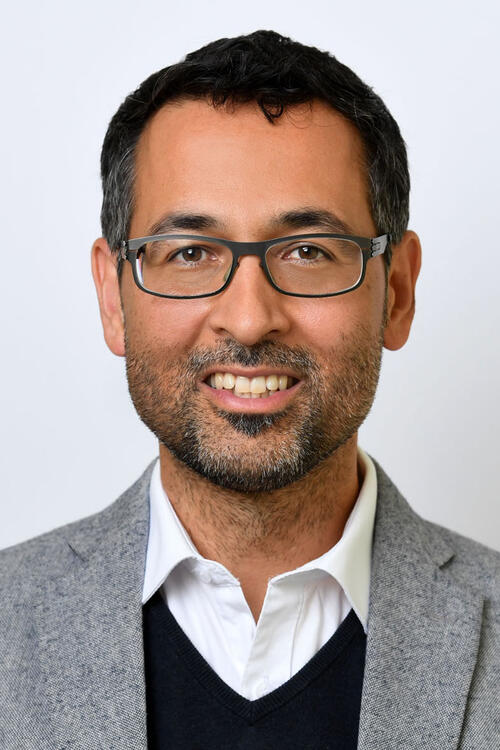
Please join Stanford's Center on Democracy, Development, and the Rule of Law (CDDRL) on Tuesday, February 19, 2019 for a conversation with Larry Summers on US-China relations.  Summers will be joined in coversation with Francis Fukuyama, the Mosbacher Director of CDDRL. 
 

Speaker Bio

Image
summers 2 200x300
Former Treasury Secretary Lawrence H. Summers is one of America’s leading economists. In addition to serving as 71st Secretary of the Treasury in the Clinton Administration, Dr. Summers served as Director of the White House National Economic Council in the Obama Administration, as President of Harvard University, and as the Chief Economist of the World Bank.Currently, Dr. Summers is the President Emeritus and the Charles W. Eliot University Professor at Harvard University, where he became a full professor at age 28, one of the youngest in Harvard’s recent history. He directs the University’s Mossavar-Rahmani Center for Business and Government. Summers was the first social scientist to receive the National Science Foundation’s Alan Waterman Award for scientific achievement and, in 1993, he was awarded the John Bates Clark Medal, given to the most outstanding economist under 40 in the United States. He was elected to the National Academy of Sciences in 2002. He has published more than 150 papers in scholarly journals.


Stanford Institute for Economic Policy Research 366 Galvez Street Stanford, CA 94305
Lawrence H. Summers Charles W. Eliot University Professor and President Emeritus at Harvard University

Encina Hall, C148
616 Jane Stanford Way
Stanford, CA 94305

0
Olivier Nomellini Senior Fellow at the Freeman Spogli Institute for International Studies
Director of the Ford Dorsey Master's in International Policy
Research Affiliate at The Europe Center
Professor by Courtesy, Department of Political Science
yff-2021-14290_6500x4500_square.jpg

Francis Fukuyama is the Olivier Nomellini Senior Fellow at Stanford University's Freeman Spogli Institute for International Studies (FSI), and a faculty member of FSI's Center on Democracy, Development and the Rule of Law (CDDRL). He is also Director of Stanford's Ford Dorsey Master's in International Policy, and a professor (by courtesy) of Political Science.

Dr. Fukuyama has written widely on issues in development and international politics. His 1992 book, The End of History and the Last Man, has appeared in over twenty foreign editions. His book In the Realm of the Last Man: A Memoir will be published in fall 2026.

Francis Fukuyama received his B.A. from Cornell University in classics, and his Ph.D. from Harvard in Political Science. He was a member of the Political Science Department of the RAND Corporation, and of the Policy Planning Staff of the US Department of State. From 1996-2000 he was Omer L. and Nancy Hirst Professor of Public Policy at the School of Public Policy at George Mason University, and from 2001-2010 he was Bernard L. Schwartz Professor of International Political Economy at the Paul H. Nitze School of Advanced International Studies, Johns Hopkins University. He served as a member of the President’s Council on Bioethics from 2001-2004. He is editor-in-chief of American Purpose, an online journal.

Dr. Fukuyama holds honorary doctorates from Connecticut College, Doane College, Doshisha University (Japan), Kansai University (Japan), Aarhus University (Denmark), the Pardee Rand Graduate School, and Adam Mickiewicz University (Poland). He is a non-resident fellow at the Carnegie Endowment for International Peace. He is a member of the Board of Trustees of the Rand Corporation, the Board of Trustees of Freedom House, and the Board of the Volcker Alliance. He is a fellow of the National Academy for Public Administration, a member of the American Political Science Association, and of the Council on Foreign Relations. He is married to Laura Holmgren and has three children.

(October 2025)

CV
Date Label
Olivier Nomellini Senior Fellow at the Freeman Spogli Institute for International Studies (FSI), and Mosbacher Director of FSI's Center on Democracy, Development, and the Rule of Law.
Lectures

To listen to the audio recording of this talk, please visit our multimedia page.

 
Brexit, the migrant crisis, the rise of authoritarian regimes, and the eurozone’s calamities have called into question the EU’s very existence. Thinking about the EU in comparative historical terms, however, shows that such challenges are nothing new when governing power is centralized. Examining the role of war, markets, and culture in the rise of nation-states provides a useful, and surprising, analysis for teasing out the key factors that might determine the EU's future.


Image
Kathleen R. McNamara
Kathleen R. McNamara is Professor of Government and Vice Dean of Faculty & Graduate Affairs in the School of Foreign Service at Georgetown University.  Her work focuses on markets, culture, and politics in the European Union and the United States, and her books include The Politics of Everyday Europe: Constructing Authority in the European Union, and The Currency of Ideas: Monetary Politics in the European Union. McNamara has served as Director of the Mortara Center for International Studies at Georgetown, and taught at Princeton University and Sciences Po (Paris).  She has been a visiting scholar at the Russell Sage Foundation, a German Marshall Fund Fellow, a Fulbright Fellow, and is the International Studies Association’s 2018 Distinguished Scholar in International Political Economy. Her public engagement includes work with the National Intelligence Council, writing for Foreign Affairs, Foreign Policy, the Washington Post, appearances on a variety of media outlets, and on Twitter @ProfKMcNamara. McNamara received her PhD from Columbia University and her BA from McGill University. 

 
Kathleen R. McNamara Georgetown University
Lectures
-

Recent experimental evidence finds that the decision maker in a collective decision making entity with proposal power attracts a disproportionate amount of the blame or reward by those materially affected by these decisions. In the case of coalition governments evidence suggests that voters have heuristics for assigning responsibility for economic outcomes to individual parties and that they tend to disproportionately direct the economic vote toward the Prime Minister party. This essay demonstrates that voters also identify the Finance Minister party as an agenda setter on economic issues depending on whether the coalition context exaggerates or mutes its perceived agenda power. We define cabinet context as the extent to which coalition parties take issue ownership for particular policy areas. We find that when decision making is compartmentalized, voters perceive the finance minister as having agenda power and hence it receives a relatively larger economic vote; in more “diffuse” cabinet contexts it is the PM Party that is attributed responsibility for the economy.

Image
Ray Duch

Raymond Duch is an Official Fellow at Nuffield College, University of Oxford, and the Director of the Nuffield Centre for Experimental Social Sciences (CESS), which currently has centres in Oxford (UK), Santiago (Chile), Tianjin (China) and Pune (India). Prior to assuming these positions, he was the Senator Don Henderson Scholar in Political Science at the University of Houston. He received his BA (Honours) from the University of Manitoba in Canada and his MA and PhD from the University of Rochester. In addition, he has held visiting appointments at the Universitat Pompeu Fabra, Barcelona; the Hoover Institute and the Graduate School of Management, Stanford University; the Institute for Social Research Oslo; the Université de Montréal; and the Wissenschaftszentrum Berlin für Sozialforschung. He is currently the Long Term Visiting Professor at the Institute for Advanced Studies at the Toulouse School of Economics.

He draws on theory, experiments and public opinion analysis to understand how citizens solve decision-making challenges. This includes looking at how citizens use information shortcuts to make decisions. For example in ‘Context and Economic Expectations: When Do Voters get it Right?’ (British Journal of Political Science, 2010), he demonstrates how information shortcuts result in quite accurate expectations regarding price fluctuations in 12 European countries. One of his current areas of interest is the micro-foundations of cheating and unethical behaviour. He has run real effort tax compliance experiments designed to understand who cheats at taxes, the results of which are summarized in ‘Why We Cheat?’ (currently under review). An extension of this project examines tax compliance in different tax regimes.

Ray has served as Associate Editor of the American Journal of Political Science and the Journal of Experimental Political Science. He is one of the founders of the European Political Science Association and the International Meeting on Behavioural Science (IMESBESS), and he is currently Vice President of the Midwest Political Science Association. In 2015, Ray was selected as a member of the UK Cabinet Office Cross-Whitehall Trial Advice Panel to offer Whitehall departments technical support in designing and implementing controlled experiments to assess policy effectiveness. He was recently nominated to the Evidence in Governance and Politics network.

This event is co-sponsored by the Hoover Institution.


Raymond Duch speaker Nuffield College, University of Oxford
Lectures
-


Image
Matteo Renzi, former Prime Minister of Italy


Matteo Renzi was born in Florence in January 1975. In 2004 he was elected president of the province of Florence; five years later, in 2009, he was elected Mayor of Florence. In 2012 he ran in the primary elections for the centre-left, losing in the run-off. In 2013 he stood once again in the primaries, this time for leader of the Italian Democratic Party (Partito Democratico, PD), winning with 67.5% of the vote.

On February 22, 2014, following the resignation of Enrico Letta and after a vote by a large majority within the PD, he became President of the Council of Ministers (Prime Minister of Italy), the youngest in the history of Italy. After the negative result of the constitutional referendum on December 4, 2016, Matteo Renzi resigned as Prime Minister. 
 
In April 2017, almost two million voters took part in the primary elections for Secretary of the PD. Renzi was re-elected with 69% of the votes cast. Following the results of the Italian parliamentary election, in March 2018 he resigned as Leader of the PD.
 
Matteo Renzi is currently Senator for the Electoral College of Florence, Scandicci, Signa, Lastra a Signa and Impruneta. His activity as a politician has been accompanied by his writing, which includes the books Fuori! (2011), Stilnovo (2012), Oltre la rottamazione (2013), and Avanti! Perché l’Italia non si ferma (2017). He has also taught at Stanford's Florence campus in recent years. 
Matteo Renzi, former Prime Minister of Italy speaker
Lectures
-

Delphine Red Shirt is a lecturer at the Special Language Program of Stanford University.  She served as the Chairperson of the United Nations NGO Committee on the International Decade of the World's Indigenous People, and as the United Nations Representative for the Four Directions Council: International Indigenous Organization with access to the UN. She received her Master of Arts in Liberal Studies in Creative Writing from Wesleyan University and her Ph.D. from Arizona University. She is the author of Bead on an Anthill: A Lakota Childhood, Turtle Lung Woman’s Granddaughter, and George Sword's Warrior Narratives: Compositional Processes in Lakota Oral Tradition, which has been translated into Chinese for distribution in November 2018. Delphine is dedicated to the historical narrative and promotion of oral literature.

Registration:

http://web.stanford.edu/~lapli/delphineredshirt.fb


SCPKU, Peking University, 5 Yihueyuan Lu, Beijing, China 


DELPHINE RED SHIRT Lecturer, Special Language Program Speaker Stanford University
Hongbin Li James Liang Director, China Program, Stanford Center on Global Poverty and Development Chair Stanford University
Lectures
-

Sociologists have struggled to come up with systematic ways of thinking about, and defining, the important concept of taken for grantedness. It remains unclear what exactly gets taken for granted and what this means. A recent theoretical work, Concepts and Categories: Foundations for Sociological and Cultural Analysis, proposes a new approach tied closely to research on cognition. Hannan will discuss how the new line of research builds on a probabilistic notion of concepts, and how people use their concepts to form expectations about what kinds of features an instance of a concept is likely to have. He will also examine the use of concepts to make judgements about individual objects, whether an object is or is not an instance of the concept.

REGISTRATION LINK:     

http://web.stanford.edu/~lapli/michaelhannan.fb


SCPKU, Peking University, 5 Yiheyuan Lu, Beijing, China 

Michael T. Hannan Professor of Sociology, Emeritus Stanford University
Lectures
-

Olzak examines how different components of globalization affect the death toll from internal armed conflict. Conventional wisdom once held that the severity of internal conflict would gradually decline with the spread of globalization, but fatalities have remained high. Moreover, leading theories of civil war sharply disagree about how different aspects of globalization might affect the severity of ethnic and non-ethnic armed conflicts. Using arguments from a variety of social science perspectives on globalization, civil war, and ethnic conflict to guide the analysis. Olzak will discuss how economic globalization and cultural globalization significantly increase fatalities from ethnic conflicts, and the sociotechnical aspects of globalization which result in an increase of deaths from ethnic conflict but decrease deaths from non-ethnic conflict, and finally, regime corruption that increases fatalities from non-ethnic conflict, which supports explanations suggesting that the severity of armed conflict is greater in weak and corrupt state. Susan Olzak is Professor of Sociology at Stanford University, where she does research on armed conflict, ethnic violence, collective action, and social movement organizations.

REGISTRATION LINK:

http://web.stanford.edu/~lapli/suzanolzak.fb


SCPKU, Peking University, 5 Yiheyuan Lu, Beijing, China 


SUSAN OLZAK Professor of Sociology, Emerita Stanford University
Lectures
-

The paper that Mark Kayser will be presenting is co-authored by Matthias Orlowski (Humboldt University, Berlin) and Jochen Rehmert (Hertie School of Governance, Berlin).

Synopsis:  Policies are made with one eye cast to the future. As policy is most strongly influenced from within government, coalition inclusion prospects would seem predictive of the behavior of office- or policy-seeking parties. But, oddly, coalition models are poorly designed for empirical prediction. Most theoretical models rely predominantly on seat shares and ideological distance while empirical work tells us that other variables such as coalition history and anti-system parties matter as much; most empirical models predict coalition composition rather than individual parties’ coalition probabilities; neither calculate bargaining leverage between elections and neither test their predictions out of sample. We do. Combining empirical coalition formation models and a large set of political polls, we estimate coalition inclusion probabilities for parties in a sample of 20 parliamentary democracies at a monthly frequency over four decades. The probability of entering or remaining in an alternative government – i.e., bargaining leverage – serves as a strong predictor of party behavior, markedly superior to polls or expected seat shares. We demonstrate our measure’s utility with applications to no-confidence motions and financial policy reform.

Image
Photo of Mark Kayser, Hertie School of Governance, Berlin.

Mark Kayser teaches applied quantitative methods and comparative politics at the Hertie School of Governance in Berlin. His research generally centers on elections and political economy.  Current major projects focus on partisan responses to economic crisis, the electoral effects of media reporting of the economy, and the effect of electoral competitiveness on government responsiveness. Before coming to the Hertie School of Governance, he served as an Assistant Professor of Political Science at the University of Rochester.  He has also held a postdoctoral Prize Research Fellowship at Nuffield College, Oxford and will spend the 2018-19 academic year as a Fellow at the Center for Advanced Studies in the Behavioral Sciences (CASBS) at Stanford. He is the co-author of a book on the effect of electoral systems on regulation and price levels (Cambridge University Press, 2011) and the author or co-author of articles in the American Political Science Review, American Journal of Political Science, Political Analysis and other leading journals. He is a recipient of the 2013 GESIS/Klingemann research award, the 2007 best paper award from the APSA Section on European Politics and Society, the Senior Editor for Political Economy of the Oxford Research Encyclopdia and a member of several editorial boards.
Mark Kayser Professor of Applied Methods and Comparative Politics Speaker Hertie School of Governance, Berlin
Lectures

RSVP required by email to biancast@stanford.edu


This lecture is part of the French and Italian Department's Distiguised Lecture Series and will be conducted in French.

Co-sponsored by the Department of French and Italian and the Division of Literatures, Cultures, and Languages, the History Deprtment, the France-Stanford Center, the Center of Medieval and Modern Studies, and The Europe Center.

Building 260 (Pigott Hall)
Room 252

Patrick Boucheron Professor of History speaker Collège de France
Lectures
-

This event is full. Please email sj1874@stanford.edu to be placed on the Wait List.

To what extent do European citizens have a populist view of politics? Under what conditions are these populist attitudes more prevalent? What are their political consequences in terms of individual behavior? This talk will present an overview of the causes and consequences of populist attitudes in Europe using comparative and longitudinal survey data. The effect of economic conditions (both objective and perceived), emotional reactions of anger and fear, and internal political efficacy are explored. From our evidence populism is more related to sociotropic perceptions than to objective economic hardship, and to anger than to fear. Populist attitudes seem to be also powerful mobilisatory motivations for political engagement, particularly for people with low levels of income and education.

Eva Perea image


Eva Anduiza is professor of political science at the Universitat Autònoma de Barcelona where she is also ICREA Academia research fellow. She directs the research group on Democracy, Elections and Citizenship, and until recently she directed the Master in Political Science. She is currently 2018-19 Fellow at the Center for Advanced Study in the Behavioural Sciences at Stanford University.

Anduiza' s main areas of research deal with different aspects of citizens’ involvement in politics in advanced democracies. This includes an interest in the causes and consequences of electoral turnout, political protest, digital media and political attitudes. She is also interested in attitudes towards corruption and in survey and experimental methodology. Recently her research has focused on the attitudinal consequences of the economic crisis, with a special focus on populist attitudes. Her next project explores how individuals’ attitudes towards gender equality and feminism change over time.

Sponsored by the Global Populisms Project at The Europe Center

Sign up for The Europe Center's mailing list to hear about our upcoming events.


Eva Anduiza Speaker Universitat Autònoma de Barcelona
Lectures
Subscribe to Lectures