-

Image
David Beasley
Please join us for a conversation with United Nations World Food Programme Executive Director David Beasley, who will discuss "Challenges of 21st Century Humanitarian Response." The conversation will be moderated by his predecessor at the agency, Ertharin Cousin, a visiting fellow at the Center on Food Security and the Environment.

R.S.V.P.

As Executive Director of the World Foods Programme (WFP), Mr. Beasley serves at the level of Under-Secretary-General of the United Nations and is a member of the organization's Senior Management Group under the leadership of Secretary-General António Guterres. At WFP, he is putting to use four decades of leadership and communications skills to mobilize more financial support and public awareness for the global fight against hunger. Under his leadership, WFP kept four countries from slipping into famine in 2017 and is moving beyond emergency food assistance, to advance longer term development that brings peace and stability to troubled regions. Before coming to WFP in April 2017, Beasley spent a decade working with high-profile leaders and on-the-ground programme managers in more than 100 countries, directing projects designed to foster peace, reconciliation and economic progress.

David Beasley was elected at the age of 21 to the South Carolina House of Representatives (1979-1992) and as Governor of South Carolina (1995-1999), one of the youngest in the state’s history.  He received a Profile in Courage Award in 2003 from the John F. Kennedy Library Foundation and is a 1999 Fellow of the Institute of Politics at Harvard University’s Kennedy School of Government. Born in 1957, he attended Clemson University and holds a B.A. from the University of South Carolina, as well as a J.D. from the University of South Carolina School of Law.

The Conversation with David Beasley is co-sponsored by Stanford’s Freeman Spogli Institute for International Studies; the Center on Food Security and the Environment and the Annenberg Foundation Trust at Sunnylands.

 The lecture will be held at the David and Joan Traitel Building, 435 Lasuen Mall, Stanford University. For more information about the event, contact Sonal Singh at sonals@stanford.edu.

About the Wesson Lecture

The Wesson Lectureship was established at Stanford by the Freeman Spogli Institute for International Studies in 1988. It provides support for a public address at the university by a prominent scholar or practicing professional in the field of international relations. The series is made possible by a gift from the late Robert G. Wesson, a scholar of international affairs, prolific author, and senior research fellow at the Hoover Institution.

Lectures
-

WE HAVE REACHED VENUE CAPACITY

REGISTRATIONS ARE NO LONGER BEING ACCEPTED

PLEASE CHECK BACK FOR VIDEO/LIVE STREAM OF THIS EVENT

Image

30 years ago, communist rule ended across central Europe in a dramatic series of events ranging from Solidarity's election triumph in Poland on 4 June 1989, through the ceremonial reburial of Imre Nagy in Budapest (with a fiery young student leader called Viktor Orbán demanding the withdrawal of all Soviet troops), to the fall of the Berlin Wall and the Velvet Revolution in Czechoslovakia. Timothy Garton Ash witnessed these events and described them memorably in his book The Magic Lantern: The Revolution of '89 Witnessed in Warsaw, Budapest, Prague and Berlin.

Now he has revisited all these countries, to explore the long term consequences of the revolutions and subsequent transitions. What went right? More pressingly: What went wrong? For today, Orbán is presiding over the systematic dismantling of democracy in Hungary, the Law and Justice party in Poland is trying to follow his example, the prime minister of the Czech Republic is an oligarch and former secret police informer, while a xenophobic populist party, the AfD, is flourishing in the former East Germany. In this lecture, Garton Ash will explore the peculiar character of populism in post-communist Europe, and the considerable forces of resistance to it.


Image
tga1
Timothy Garton Ash is Professor of European Studies, Oxford University, and Senior Fellow, Hoover Institution, Stanford. He is the author of ten books of contemporary history, including The File: A Personal History, History of the Present, In Europe's Name: Germany and the Divided Continent, and, most recently, Free Speech: Ten Principles for a Connected World. His commentaries appear regularly in the Guardian, and are widely syndicated.


Co-Sponsors: Freeman Spogli Institute for International Studies, Center on Democracy, Development and the Rule of Law, The Europe Center, Center for Russian, East European & Eurasian Studies and the Hoover Institution.

Light refreshments will be served after the lecture, and copies of The Magic Lantern: The Revolution of '89 Witnessed in Warsaw, Budapest, Prague and Berlin, will be on sale

This event is free and open to the public.


Timothy Garton Ash <i>Professor of European Studies, Oxford University and Senior Fellow, Hoover Institute, Stanford University</i>
Lectures
-

General Charles Brown, Commander, Pacific Air Forces, will discuss the strategic importance and complexity of the vast Indo-Pacific Region, and the increasing interstate competition for position and influence.  He will also address how U.S. national security priorities shape the development the Pacific Air Forces strategy and operational concepts.  Last, he will explain how his Command attempts to balance the requirements of U.S. joint forces and allied nations to produce combined airpower, and the importance of partner relationships in achieving comprehensive regional security.

Image
General Charles Brown
General Charles Q. Brown Jr. is the Commander, Pacific Air Forces (PACAF); Air Component Commander for U.S. Indo-Pacific Command; and Executive Director, Pacific Air Combat Operations Staff, Joint Base Pearl Harbor-Hickam, Hawaii.  PACAF is responsible for Air Force activities spread over half the globe in a command that supports more than 46,000 Airmen serving principally in Japan, Korea, Hawaii, Alaska and Guam.

Philippines Conference Room
Encina Hall, 3rd Floor, Central (C330)
616 Serra Mall, Stanford, CA 94305

Lectures
-


To listen to the audio recording of this talk, please visit our multimedia page.


The EU and its member states are currently facing a number of extraordinary internal and external challenges. The rise of populist parties that are skeptical of the European integration process and undermine the rule of law in the member states represents one of the main challenges. These parties are set to increase their support at the European Parliament elections on May 23-26. Belgium, the country that hosts the main EU institutions and whose existence is constantly questioned as well, holds federal and regional elections at the same time. We analyze the current state of politics in the EU and Belgium, and discuss the prospects for the upcoming elections and their implications.

Image
Christophe Crombez

Christophe Crombez is Senior Research Scholar at The Europe Center at the Freeman Spogli Institute for International Studies at Stanford University, and Professor of Political Economy at the Faculty of Economics and Business at KU Leuven in Belgium. Christophe Crombez specializes in European Union politics. His research focuses on the functioning of the EU institutions and their impact on policies, EU institutional reform, party politics, and parliamentary government.

Encina Hall
Stanford University
Stanford, CA 94305

(650) 723-0249 (650) 723-0089
0
Senior Research Scholar at The Europe Center
cc3.jpg PhD

Christophe Crombez is a political economist who specializes in European Union (EU) politics and business-government relations in Europe. His research focuses on EU institutions and their impact on policies, EU institutional reform, lobbying, party politics, and parliamentary government.

Crombez is Senior Research Scholar at The Europe Center at the Freeman Spogli Institute for International Studies at Stanford University (since 1999). He teaches Introduction to European Studies and The Future of the EU in Stanford’s International Relations Program, and is responsible for the Minor in European Studies and the Undergraduate Internship Program in Europe.

Furthermore, Crombez is Professor of Political Economy at the Faculty of Economics and Business at KU Leuven in Belgium (since 1994). His teaching responsibilities in Leuven include Political Business Strategy and Applied Game Theory. He is Vice-Chair for Research at the Department for Managerial Economics, Strategy and Innovation.

Crombez has also held visiting positions at the following universities and research institutes: the Istituto Italiano di Scienze Umane, in Florence, Italy, in Spring 2008; the Department of Political Science at the University of Florence, Italy, in Spring 2004; the Department of Political Science at the University of Michigan, in Winter 2003; the Kellogg Graduate School of Management at Northwestern University, Illinois, in Spring 1998; the Department of Political Science at the University of Illinois at Urbana-Champaign in Summer 1998; the European University Institute in Florence, Italy, in Spring 1997; the University of Antwerp, Belgium, in Spring 1996; and Leti University in St. Petersburg, Russia, in Fall 1995.

Crombez obtained a B.A. in Applied Economics, Finance, from KU Leuven in 1989, and a Ph.D. in Business, Political Economics, from Stanford University in 1994.

Lectures
-

Massive changes in the global food sector over the next few decades – driven by climate change and other environmental stresses, growing population and income, advances in technology, and shifts in policies and trade patterns – will have profound implications for the oceans. Roz Naylor, Senior Fellow and Founding Director of Stanford’s Center on Food Security and the Environment,  will discuss the interplay between terrestrial and marine food systems, highlighting the rising role of aquaculture in helping to meet the nutritional demands of 9-10 billion people by 2050. As a platform for her talk, she will introduce a new research initiative at Stanford on “Oceans and the Future of Food”, co-led by the Center for Oceans Solutions (COS) and the Center on Food Security and the Environment (FSE).

Free Admission is by reservation only. Please call 831-655-6200 between 8:30AM – 5:00PM, Mon-Fri, or RSVP at the Friends of Hopkins web page.

Contact:
Amanda Whitmire
831-655-6200
thalassa@stanford.edu

Boat Works Lecture Hall, Hopkins Marine Station

Lectures
-

Militaries around the world are racing to build robotic systems with increasing autonomy. What will happen when a Predator drone has as much autonomy as a Google car? Should machines be given the power to make life and death decisions in war? Paul Scharre, a former Army Ranger and Pentagon official, will talk on his new book, Army of None: Autonomous Weapons and the Future of War. Army of None was named one of Bill Gates’ Top 5 Books of 2018. Scharre will explore the technology behind autonomous weapons and the legal, moral, ethical, and strategic dimensions of this evolving technology. Paul Scharre is a Senior Fellow and Director of the Technology and National Security Program at the Center for a New American Security.   


Drell Lecture Recording: https://youtu.be/ldvDjU1C4Qs


Drell Lecture Transcript: NA


Paul's Biography: Paul Scharre is a Senior Fellow and Director of the Technology and National Security Program at the Center for a New American Security. He is author of Army of None: Autonomous Weapons and the Future of War. Mr. Scharre formerly worked in the Office of the Secretary of Defense (OSD) where he played a leading role in establishing policies on emerging weapons technologies. He led the working group that drafted DOD Directive 3000.09, establishing DOD’s policy on autonomy in weapon systems. He is a former infantryman in the Army’s 75th Ranger Regiment and completed multiple tours to Iraq and Afghanistan.


Radha's Biography: Radha Iyengar is the head of Product Policy Research at Facebook and an adjunct economist at the RAND Corporation. Previously, she served in senior staff positions at the White House National Security Council, Department of Defense, and Department of Energy. Over the course of her government service, she was instrumental in executive actions on sexual assault and suicide prevention, budget and policy related to nuclear and energy infrastructure security and resilience, and security assistance and counterterrorism efforts in the the Middle East and North Africa. Her research has covered empirical evaluations of policies aimed at reducing violence including criminal violence, sexual assault, terrorist behavior, and sexual and intimate partner violence. 


Jeremy's Biography: Jeremy is a Professor of Political Science and Senior Fellow at the Freeman Spogli Institute for International Studies. He is also a non-resident fellow at the Center for Global Development in Washington, D.C. His research focuses on civil wars and political violence; ethnic politics and the political economy of development; and democracy, accountability, and political change. He is the author of Inside Rebellion: The Politics of Insurgent Violence (Cambridge University Press), which received the William Riker Prize for the best book on political economy. He is also the co-author of Coethnicity: Diversity and the Dilemmas of Collective Action (Russell Sage Foundation), which received the Gregory Luebbert Award for the best book in comparative politics. He has published articles in the American Political Science Review, American Journal of Political Science, Annual Review of Political Science, Journal of Conflict Resolution, Foreign Affairs, Foreign Policy, Journal of Democracy, World Policy Journal, and the SAIS Review.


Stanford University CEMEX Auditorium (655 Knight Way, Stanford, CA 94305)

Paul Scharre Senior Fellow and Director, Technology and National Security Program Center for a New American Security
Lectures
-

RSVP required

NOTE: THIS EVENT IS CLOSED TO THE MEDIA 

No recording will be allowed during the program. RSVP required for admission. No walk-ins.

Experts talk about a new Cold War between China and the United States. The world’s two largest economies are in open trade conflict, engaged in technological competition and stoking geopolitical uncertainty. The Oksenberg Conference will explore the causes that underlie today’s intensified conflict between the United States and China. We ask: What has precipitated the confrontational approach that currently unites U.S. policy towards China? What is the future of our strategic competition in the technological, economic and security realms? If U.S.-China rivalry is allowed to escalate, what might its implications be for our international liberal order? If a “new” Cold War is forming, how might it follow or diverge from the “old” Soviet-era Cold War?

Image
2019 Oksenberg Conference
The Oksenberg Conference
, held annually honors the legacy of the late Professor Michel Oksenberg (1938–2001) who was a senior fellow at Shorenstein APARC and the Freeman Spogli Institute for International Studies. Professor Oksenberg also served as a key member of the National Security Council when the United States normalized relations with China, and consistently urged that the United States engage with Asia in a more considered manner. In tribute, the Oksenberg Lecture recognizes distinguished individuals who have helped to advance understanding between the United States and the nations of the Asia-Pacific.
 
Agenda
 
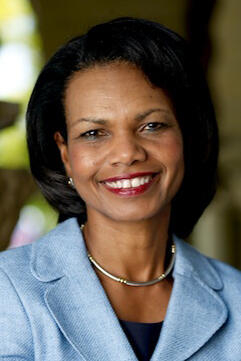
2:35-3:05 PM    Conversation with Dr. Condoleezza Rice, former U.S. Secretary of State and National Security Advisor
3:05-3:30 PM    Audience Q & A
3:30-3:45 PM    Break
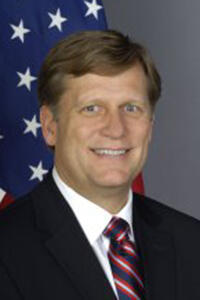
3:45-4:25 PM    Panel discussion with Prof. David M. Lampton and Amb. Michael A. McFaul
4:25-5:00 PM    Audience Q & A


Speakers

Image
David M. Lampton
David M. Lampton is Oksenberg-Rohlen Fellow and Research Scholar at FSI and affiliated with Walter H. Shorenstein Asia-Pacific Research Center (Shorenstein APARC).  He also is the Hyman Professor of China Studies and Director of the China Studies Program at the Johns Hopkins School of Advanced International Studies (SAIS) Emeritus.  Dr. Lampton's current book project is focused on the development of high-speed railways from southern China to Singapore.  He is the author of a dozen books and monographs, including Following the Leader: Ruling China, from Deng Xiaoping to Xi Jinping (University of California Press, 2014, and second edition 2019) and The Three Faces of Chinese Power: Might, Money, and Minds (University of California Press, 2008).  He has testified at multiple congressional and commission sessions and published numerous articles, essays, book reviews, and opinion pieces in many venues popular and academic in both the western world and in Chinese-speaking societies, including Foreign Affairs, Foreign Policy, The American Political Science Review, The China Quarterly, The New York Times, The Washington Post,and many others.

Formerly President of the National Committee on United States-China Relations, Professor Lampton consults with government, business, and social sector organizations, and has served on the boards of several non-governmental and educational organizations, including the Asia Foundation for which he served as chairman.  The recipient of many academic awards, he is an Honorary Senior Fellow of the American Studies Institute of the Chinese Academy of Social Sciences, former Gilman Scholar at Johns Hopkins, and the inaugural winner of the Scalapino Prize in 2010, awarded by the National Bureau of Asian Research and the Woodrow Wilson International Center for Scholars in recognition of his exceptional contributions to America’s understanding of the vast changes underway in Asia.


Image
Amb. Michael McFaul
Michael McFaul is the Ken Olivier and Angela Nomellini Professor of International Studies in Political Science; Director and Senior Fellow at the Freeman Spogli Institute for International Studies (FSI); and the Peter and Helen Bing Senior Fellow at the Hoover Institution, all at Stanford University.  He was also the Distinguished Mingde Faculty Fellow at the Stanford Center at Peking University from June to August of 2015.  He joined the Stanford faculty in 1995.  Professor McFaul is also an analyst for NBC News and a contributing columnist to The Washington Post.  

Dr. McFaul served for five years in the Obama administration, first as Special Assistant to the President and Senior Director for Russian and Eurasian Affairs at the National Security Council at the White House (2009-2012), and then as U.S. Ambassador to the Russian Federation (2012-2014).  He has authored several books, most recently TheNew York Timesbestseller, From Cold War to Hot Peace: An American Ambassador in Putin’s Russia.  Earlier books include Advancing Democracy Abroad: Why We Should, How We Can; Transitions to Democracy: A Comparative Perspective(eds. with Kathryn Stoner); Power and Purpose: American Policy toward Russia after the Cold War (with James Goldgeier); and Russia’s Unfinished Revolution: Political Change from Gorbachev to Putin.  


Image
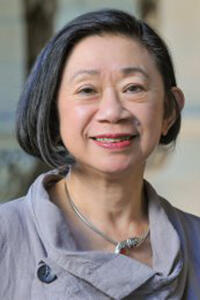
Jean Oi

Jean C. Oi is the William Haas Professor of Chinese Politics in the Department of Political Science and a Senior Fellow of FSI at Stanford University.  She is the founding director of the Stanford China Program at Shorenstein APARC and is the founding Lee Shau Kee Director of the Stanford Center at Peking University.  Professor Oi has published extensively on political economy and the process of reform in China.  Her books include Zouping Revisited:  Adaptive Governance in a Chinese County, co-edited with Steven Goldstein (2018); and Challenges in the Process of China’s Urbanization, co-edited with Karen Eggleston and Wang Yiming (2017); Rural China Takes Off (1999); Property Rights and Economic Reform in China (1999), co-edited with Andrew Walder; and State and Peasant in Contemporary China (1989).  Professor Oi also has an edited volume, China’s Path to the Future: Challenges, Constraints, and Choices, co-edited with Dr. Thomas Fingar (forthcoming, Stanford University Press).  Her recent articles include “Unpacking the Patterns of Corporate Restructuring during China’s SOE Reform,” co-authored with Xiaojun Li in Economic and Political Studies (2018); and “Reflections on 40 Years of Rural Reform,” in Jacques deLisle and Avery Goldstein, eds., Reform and Opening:  40 Years and Counting, forthcoming.  Her current research centers on fiscal reform and local government debt as well as continuing SOE reforms in China.


Image
Secretary Condoleezza Rice

Secretary Condoleezza Rice is currently the Denning Professor in Global Business and the Economy at the Stanford Graduate School of Business; the Thomas and Barbara Stephenson Senior Fellow on Public Policy at the Hoover Institution; and a professor of Political Science at Stanford University. She is also a founding partner of RiceHadleyGates, LLC.

From January 2005 to 2009, Rice served as the 66th Secretary of State of the United States, the second woman and first African American woman to hold the post. Rice also served as President George W. Bush’s Assistant to the President for National Security Affairs (National Security Advisor) from January 2001 to 2005, the first woman to hold the position.

Rice served as Stanford University’s Provost from 1993 to 1999, during which she was the institution's chief budget and academic officer. As Provost, she was responsible for a $1.5 billion annual budget and the academic program involving 1,400 faculty members and 14,000 students. In 1997, she also served on the Federal Advisory Committee on Gender -­- Integrated Training in the Military.

From 1989 through March 1991, Rice served on President George H.W. Bush’s National Security Council staff. She served as Director; Senior Director of Soviet and East European Affairs; and, Special Assistant to the President for National Security Affairs. In 1986, while an international affairs fellow of the Council on Foreign Relations, Rice also served as Special Assistant to the Director of the Joint Chiefs of Staff.

As professor of Political Science, Rice has been on the Stanford faculty since 1981 and has won two of the highest teaching honors – the 1984 Walter J. Gores Award for Excellence in Teaching and the 1993 School of Humanities and Sciences Dean's Award for Distinguished Teaching.

She has authored and coauthored numerous books, including three bestsellers, Democracy: Stories from the Long Road to Freedom (2017); No Higher Honor: A Memoir of My Years in Washington (2011); and Extraordinary, Ordinary People: A Memoir of Family (2010). She also wrote Germany Unified and Europe Transformed: A Study in Statecraft (1995) with Philip Zelikow; The Gorbachev Era (1986) with Alexander Dallin; and Uncertain Allegiance: The Soviet Union and the Czechoslovak Army (1984).

In  1991,  Rice  cofounded  the  Center for  a  New  Generation  (CNG),  an  innovative,  after-­school academic enrichment program for students in East Palo Alto and East Menlo Park, California. In 1996, CNG merged with the Boys and Girls Club of the Peninsula (an affiliate club of the Boys and Girls Clubs of America). CNG has since expanded to local BGCA chapters in Birmingham, Atlanta, and Dallas. She remains an active proponent of an extended learning day through after school programs.

Since 2009, Rice has served as a founding partner at Rice Hadley Gates, LLC, an international strategic consulting firm based in Silicon Valley and Washington, D.C. The firm works with senior executives of major companies to implement strategic plans and expand in emerging markets. Other partners include former National Security Advisor Stephen J. Hadley and former Secretary of Defense Robert M. Gates.

Rice currently serves on the boards of Dropbox, an online-­storage technology company; C3, an energy software company; and Makena Capital, a private endowment firm. In addition, she is vice chair of the board of governors of the Boys and Girls Clubs of America; a member of the board of the Foundation for  Excellence in Education; and a trustee of the Aspen Institute. Previously, Rice served on various additional boards, including those of: the George W. Bush Institute; the Commonwealth Club; KiOR, Inc.; the Chevron Corporation; the Charles Schwab Corporation; the Transamerica Corporation; the Hewlett-­Packard Company; the University of Notre Dame; the John F. Kennedy Center for the Performing Arts; and, the San Francisco Symphony Board of Governors.

In 2013, Rice was appointed to the College Football Playoff Committee, formerly the Bowl Championship Series.

Born in Birmingham, Alabama, Rice earned her bachelor's degree in political science, cum laude and Phi Beta Kappa, from the University of Denver; her master’s from the University of Notre Dame; and her Ph.D. from the Graduate School of International Studies at the University of Denver.

Rice is a Fellow of the American Academy of Arts and Sciences and has been awarded fifteen honorary doctorates. She currently resides in Stanford, California.


Bechtel Conference Center
616 Serra Mall
Encina Hall, Central, 1st Floor
Stanford, CA 94305

David M. Lampton <br><i>Oksenberg-Rohlen Fellow, FSI, Stanford University</i><br><br>
Michael A. McFaul <br><i>Director, Freeman Spogli Institute for International Studies (FSI); Professor, Political Science, Stanford University; Senior Fellow, Hoover Institution </i><br><br>
Jean C. Oi (Moderator) <br><i>Director, Stanford China Program; William Haas Professor of Chinese Studies, Stanford University</i><br><br>
Secretary Condoleezza Rice <br><i>The Denning Professor in Global Business and the Economy, Stanford Graduate School of Business; The Thomas and Barbara Stephenson Senior Fellow on Public Policy, Hoover Institution; Professor of Political Science, Stanford University</i><br><br>
Lectures
-

To listen to the audio recording of this talk, please visit our multimedia page.

 
Daniel Ziblatt will describe current dangers facing democracies around the world, including Europe and the United States and ways of preventing democracy's breakdown. He will draw lessons from the fateful missteps that have wrecked other democracies and from ways citizens have risen to meet the great democratic crises of the past.

Image
Portrait of Daniel Ziblatt, Harvard University

Daniel Ziblatt
is Eaton Professor of the Science of Government at Harvard University and Acting Director of Harvard's Center for European Studies.  Ziblatt's scholarship on democratization, democratic breakdown, and state-building include New York Times bestseller, How Democracies Die (2018), co-authored with Steven Levitsky; Conservative Parties and the Birth of Democracy (2017), winner of the American Political Science Association’s Woodrow Wilson Award for the best book published in the United States on government, politics, or international affairs; and Structuring the State: The Formation of Italy and Germany and the Puzzle of Federalism (2006).

Oksenberg Conference Room
Encina Hall -3rd floor
616 Serra Street, Stanford, California 94305

Daniel Ziblatt Eaton Professor of the Science of Government Speaker Harvard University
Lectures
-

Misconduct by those in high places is always dangerous to reveal. Whistleblowers thus face a paradox: by challenging and exposing transgressions by the powerful, they perform a vital public service; yet they always suffer for it. Comparing whistleblower protection in Europe and the United States brings into fuller relief the vital role truth-telling can play in sustaining civil discourse and democracy.


Image
Prof. Allison Stanger

Allison Stanger
is the Russell Leng ’60 Professor of International Politics and Economics and founding director of the Rohatyn Center for International Affairs at Middlebury College. She is the author of One Nation Under Contract: The Outsourcing of American Power and the Future of Foreign Policy and Whistleblowers: Honesty in America from Washington to Trump, both with Yale University Press. She is working on a new book tentatively titled Consumers vs. Citizens: Justice and Democracy’s Public Square in a Big Data World. Stanger’s writing has appeared in Foreign Affairs, Foreign Policy, Financial Times, International Herald Tribune, New York Times, USA Today, U.S. News and World Report, and the Washington Post, and she has testified before the Commission on Wartime Contracting, the Senate Budget Committee, the Congressional Oversight Panel, the Senate HELP Committee, and the House Committee on Government Oversight and Reform. She is a member of the Council on Foreign Relations and received her Ph.D. in Political Science from Harvard University. Stanger is currently a Scholar in Residence in the Cybersecurity Initiative at New America and an External Professor at the Santa Fe Institute.


Co-sponsored by the McCoy Family Center for Ethics in Society


Allison Stanger Professor of International Politics and Economics, Middlebury College Speaker Middlebury College
Lectures
Subscribe to Lectures