-

Drell Lecture Recording: https://youtu.be/NKN6xLhTjIo


Drell Lecture Transcript: 


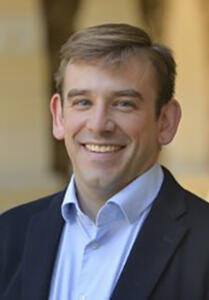
Speaker's Biography: Alex Stamos is a cybersecurity expert, business leader and entrepreneur working to improve the security and safety of the Internet through his teaching and research at Stanford University. Stamos is an Adjunct Professor at Stanford’s Freeman-Spogli Institute, a William J. Perry Fellow at the Center for International Security and Cooperation, and a visiting scholar at the Hoover Institution. As a Chief Security Officer at Facebook and Yahoo and a co-founder of iSEC Partners, Alex has investigated and responded to some of the most seminal events in the short history of cybersecurity, and has been called the “Forrest Gump of Info Sec” by friends. He is working on election security via the Defending Digital Democracy Project and advising NATO’s Cybersecurity Center of Excellence. He has spoken on six continents, testified in Congress, served as an expert witness for the wrongly accused, earned a BSEE from UC Berkeley and holds five patents.

Hauck Auditorium, David & Joan Traitel Building, Hoover Institution

435 Lasuen Mall, Stanford University


Alex Stamos Adjunct Professor, William J. Perry Fellow, Visiting Scholar (Hoover Institution) Stanford University
Lectures
-

On November 24, 2018, Taiwan's electorate will go to the polls to select thousands of ward chiefs, hundreds of council members, and dozens of mayors and county executives. This talk will cover the results of the election and discuss the implications for Taiwan's future, including party politics and cross-Strait relations.

Image
Kharis Templeman
Kharis Templeman is the Project Manager of the Taiwan Democracy and Security Project in the U.S.-Asia Security Initiative, and a social science research scholar at the Shorenstein Asia-Pacific Research Center (APARC) at Stanford University. His current research includes projects on party system institutionalization and partisan realignments, electoral integrity and manipulation in East Asia, the politics of defense spending in Taiwan, and the representation of Taiwan’s indigenous minorities.
 
His most recent publication is “When Do Electoral Quotas Advance Indigenous Representation?: Evidence from the Taiwanese Legislature,” in Ethnopolitics. He is also the editor (with Larry Diamond and Yun-han Chu) of Taiwan’s Democracy Challenged: The Chen Shui-bian Years (2016, Lynne Rienner Publishing). Other work has appeared in the Taiwan Journal of Democracy, Comparative Political Studies and APSA Annals of Comparative Democratization.
 

Philippines Conference Room
Encina Hall, 3rd Floor
616 Serra Mall, Stanford, CA 94305

Kharis Templeman <i>Project Manager, Taiwan Democracy & Security Project, U.S.-Asia Security Initiative, Stanford University</i>
Lectures
-
The Taiwan Relations Act (TRA) was enacted by Congress on April 10, 1979, and has served as the formal basis for U.S.-Taiwan relations ever since. In this talk, Professor Goldstein will provide an assessment of the TRA’s influence on America’s foreign policy in Asia as we approach the 40th anniversary of its adoption.
 
SPEAKER:
Image
Photograph of Steven M. Goldstein
Steven M. Goldstein was the Sophia Smith Professor of Government at Smith College from 1968 to 2016. He is now an Associate of the Fairbank Center and the director of the Taiwan Studies Workshop at Harvard University. He has been a visiting faculty member at the Fletcher School of Law and Diplomacy, Columbia University and United States Naval War College. Goldstein's research interest has been largely related to issues of Chinese domestic and foreign policy. He has published studies of Sino-American relations; Sino-Soviet relations; and the emergence of a Chinese Communist view of world affairs. His current research focus is on the relations between the mainland and Taiwan as well as the evolution of U.S.-Taiwan relations.

Philippines Conference Room
Encina Hall, 3rd Floor
616 Serra Mall, Stanford, CA 94305

Steven M. Goldstein <i>Director of the Taiwan Workshop at the Fairbank Center, Harvard University</i>
Lectures
-

From Within and Without: Taiwan’s New Security Challenges

Since 2016, Beijing’s pressure campaign on Taiwan has threatened the island’s international space and domestic tranquility. Few, if any, areas of politics have gone untouched. Whether through attempts to pick off Taiwan’s diplomatic partners or lure away the island’s talent, the full range of PRC statecraft is on display. Taiwan’s political dynamics — especially the solidification of Taiwanese identity and collapse of the Kuomintang — also appear to have driven an aggressive shift in Beijing’s approach to political influence operations to include pressure on international companies. The shift in intensity and tactics raises important questions about Taiwan’s future and dealing with an increasingly powerful PRC.

Image
Peter Matis
Peter Mattis is a Research Fellow in China Studies at the Victims of Communism Memorial Foundation and a contributing editor at War on the Rocks. He was a Fellow in the China Program at The Jamestown Foundation, where he also served as editor of the foundation’s China Brief, a biweekly electronic journal on greater China, from 2011 to 2013. Mr. Mattis also worked as a counterintelligence analyst at the Central Intelligence Agency. He received his M.A. in Security Studies from Georgetown University's School of Foreign Service and earned B.A.s in Political Science and Asian Studies from the University of Washington in Seattle. Mr. Mattis’s analysis of China and intelligence has appeared in The National Interest, China Brief, Sydney Morning Herald, The Hill, Jane’s Intelligence Review, Taipei Times, the East-West Center’s Asia-Pacific Bulletin, The Diplomat, War on the Rocks, the Asia Society’s ChinaFile, Cipher Brief, the International Journal of Intelligence and Counterintelligence, and Studies in Intelligence.  Mr. Mattis is the author of Analyzing the Chinese Military: A Review Essay and Resource Guide on the People’s Liberation Army (2015) and co-author of a forthcoming handbook on Chinese intelligence.

Peter Mattis <i>Research Fellow, China Studies, at Victims of Communism Memorial Foundation</i>
Lectures
-

There are many urgent problems facing the planet: a degrading environment, a healthcare system in crisis, and educational systems that are failing to produce creative, innovative thinkers to solve tomorrow’s problems. Technology influences behavior, and I believe when we balance it with revolutionary design, we can reduce a family’s energy and water use by 50%, double most people’s daily physical activity, and educate any child anywhere in the world to a level of proficiency on par with the planet’s best students. I will illustrate how we are addressing these grand challenges in our research by building systems that balance innovative user interfaces with intelligent systems. I will close with a description of our recent work in creating a new engineering discipline of hybrid physical+digital spaces, buildings that sense and infer the state of people – their behaviors, emotions, health and learning – and in response dynamically adapt the information technology and the non-structural materials in these spaces to enhance human wellbeing in sustainable ways.

James Landay is a Professor of Computer Science and the Anand Rajaraman and Venky Harinarayan Professor in the School of Engineering at Stanford University. He specializes in human-computer interaction. He is the founder and co-director of the World Lab, a joint research and educational effort with Tsinghua University in Beijing. Previously, Landay was a Professor of Information Science at Cornell Tech in New York City and prior to that he was a Professor of Computer Science & Engineering at the University of Washington. From 2003 through 2006 he was the Laboratory Director of Intel Labs Seattle, a university affiliated research lab that explored the new usage models, applications, and technology for ubiquitous computing. He was also the chief scientist and co-founder of NetRaker, which was acquired by KeyNote Systems in 2004. From 1997 through 2003 he was a professor in EECS at UC Berkeley. Landay received his BS in EECS from UC Berkeley in 1990, and MS and PhD in Computer Science from Carnegie Mellon University in 1993 and 1996, respectively. His PhD dissertation was the first to demonstrate the use of sketching in user interface design tools. He was named to the ACM SIGCHI Academy in 2011 and as an ACM Fellow in 2017. He formerly served on the NSF CISE Advisory Committee.

To register, please fill in the form below: 

http://web.stanford.edu/~lapli/jameslanday.fb


Stanford Center at Peking University
The Lee Jung Sen Building
Langrun Yuan
Peking University
No.5 Yiheyuan Road
Haidian District
Beijing, P.R.China 100871

James Landay Professor of Computer Science Stanford University
Lectures
-

The United States is in the midst of a profound paradigm shift in racial demographics: the latest Census revealed that over 12 million Americans identify as being multiple races and political scientists estimate that a full 20% of the population will identify as multiracial by 2050. Multiracials are the fastest growing demographic in the U.S. along with Latinos and Asian Americans (especially those of Chinese, Korean and Filipino descent) and very soon Whites will no longer be a majority.

This talk addresses some of the most pressing question:Why is this change happening? How are ideas about race and ethnicity changing in the U.S.? What are the political and cultural impacts of these changing demographics, and especially of what some have called the rise of “Generation Ambiguous”?

This event is co-organized with the Peking University School of Foreign Languages.


REGISTRATION:

https://www.eventbank.cn/event/15706

Stanford Center at Peking University
The Lee Jung Sen Building
Langrun Yuan
Peking University
No.5 Yiheyuan Road
Haidian District

Michele Elam William Robertson Coe Professor of American Studies Stanford University
Lectures
-

The Consequences of Technological Developments for Politics and Government

Tuesday, April 24, 2018


Reception at 5:00pm. Talk from 5:30pm - 6:45pm.

RSVP required online.

The consequences of contemporary technological innovations for the lives and values of future generations are enormous. The wide range of expected – and unexpected – applications require rethinking governance arrangements, legal regimes, economic structures, and social relations. Exploration of such topics is the subject of the 2017-18 CASBS symposium series.

The first symposium, held in November 2017, focused on “AI, Automation, and Society.” Read about and view a video of that event here.

The second symposium, held in March 2018, involved “The Effects of Technology on Human Interactions.” View the event video here.

In this final installment of the 2017-18 series, CASBS presents a conversation featuring two 2017-18 CASBS fellows – Stanford professor Nate Persily, an expert on law, democracy, and the internet; and Carrie Cihak, a senior policy expert and practitioner at one of the most innovative county governments in the U.S. They will outline the challenges that recent technology-based advances pose to democracy, public policy, and governance systems. Social media platforms increasingly are viewed as vehicles for exploiting political discourse, rather than as democratizing forces. How should our institutions respond? Though modern technological innovations more easily connect people, what are the implications for issues of “digital equity,” government capacity, and regulatory frameworks? Though the positive impacts are substantial, how do we address the numerous negative impacts of the technology sector’s concentration in certain regional economies – including the San Francisco Bay Area and the greater Seattle area? These are just a few questions that will stimulate a thought-provoking discussion between the panelists and with the audience.


As Chief of Policy for King County Executive Dow Constantine, the highest ranking elected official of King County, WA, the 13th largest county in the United States, Carrie S. Cihak is responsible for identifying the highest priority policy areas and community outcomes for leadership focus and for developing and launching innovative solutions to issues that are complex, controversial and cross-sectoral. She is an architect of some of the county’s key initiatives, such as Best Starts for Kids as well as nationally-recognized work on equity and social justice. Prior to her work in Constantine’s administration, Cihak served for eight years as a senior-level analyst for the King County Council and as lead staff for the King County Board of Health. She also served as a staff economist on international trade and finance for President Clinton's Council of Economic Advisers. As a policy fellow during the 2017-18 academic year, Cihak is leading projects at CASBS and in King County that advance meaningful collaboration between academic researchers and governments. She is spearheading efforts in King County on evidence-informed decision making and is co-director of CASBS’s Impact Evaluation Design Lab, launched in March 2018. She is also using time at CASBS to explore the science and evidence-base of belonging, while working back home to help launch a cross-sector partnership called “You Belong Here,” which seeks to build civic muscle and inclusive growth in the Seattle region.


Nate Persily is the James B. McClatchy Professor of Law at Stanford Law School, with appointments in the departments of political science, communication and the Freeman Spogli Institute for International Studies. Prior to joining Stanford, Persily taught at Columbia University and the University of Pennsylvania Law School, and as a visiting professor at Harvard, NYU, Princeton, the University of Amsterdam, and the University of Melbourne. His scholarship and legal practice focus on American election law or what is sometimes called the “law of democracy,” which addresses issues such as voting rights, political parties, campaign finance, redistricting, and election administration. He has served as a special master or court-appointed expert to craft congressional or legislative districting plans for Georgia, Maryland, Connecticut, New York and, most recently, North Carolina. He also served as the Senior Research Director for the Presidential Commission on Election Administration. In addition to numerous articles (many cited by the Supreme Court) on the legal regulation of political parties, issues surrounding the census and redistricting process, voting rights, and campaign finance reform, Persily is coauthor of an election law casebook, The Law of Democracy. As a fellow at CASBS supported by the Annenberg Foundation, he is examining the impact of changing technology on political communication, campaigns, and election administration. In 2016, he received an Andrew Carnegie Fellowship to pursue this work. Persily also co-directs the Stanford Project on Democracy and the Internet.


*There will be valet parking at the event.

Center for Advanced Study in the Behavioral Sciences at Stanford University
75 Alta Road
Stanford, CA 94305

Nate Persily The James B. McClatchy Professor of Law Stanford Law School
Carrie Cihak Chief of Policy for King County Executive Dow Constantine King County, Washington
Lectures
-

Thursday, April 26, 2018 at 05:00 PM until 06:00 PM

Peking University
Atrium M11
Beijing 100871
China

This event is intended for students and recent alumni of this university. If this doesn't sound like you, find an event that's open to the public or hosted by your school by visiting our events calendar.

Please join us to learn more about the Knight-Hennessy Scholars program at Stanford University. Each Knight-Hennessy Scholar will receive full financial support to pursue a degree in any of the 145+ graduate programs at Stanford - from PhDs in education, engineering, humanities, and sciences to professional degrees like JD, MBA, MD, or MFA.

Our application will open on May 1, 2018 for enrollment in fall 2019. You are eligible to apply if you earned (or will earn) your bachelor's degree in 2014 or later.

The event will include a presentation covering Stanford University, the Knight-Hennessy Scholars program, and the admission process. There will be ample opportunity to ask questions of an Admission Officer. 

REGISTRATION: https://apply.knight-hennessy.stanford.edu/register/Peking2018

Peking University
Beijing 100871
China

Lectures
-

Claiming that Contemporary Cinema is currently in its most interesting creative moment since the 60s, laureate Catalan filmmaker Albert Serra will discuss its evolution throughout the 21st Century in terms of form, methodology and perception, as well as its future possibilities.

Image

Catalan Cultural Festival. Sponsored by the Iberian Studies Program at The Europe Center, Division of Literatures, Cultures, and Languages, Department of Iberian and Latin American Cultures, Modern Thought & Literature, and The Stanford Catalan Association.

Pigott Hall - Room 252

Building 260, 450 Serra Mall

Lectures
-

PLEASE NOTE THIS EVENT WILL NOW RUN FROM 4:45-6:00 PM


What explains variation in access to citizenship rights in China? Why do some governments extend citizenship to migrants while others do not? This talk details the structural barriers to accessing citizenship rights in China through the household registration system, hukou, which treats domestic migrant workers as foreigners in their own country. Over the last twenty years, city governments erected local citizenship regimes, controlling who is allowed to become full citizens locally while keeping unwanted populations out. In this talk, Prof. Vortherms details the sub-national variation in these policies and explains the connection between economic growth and citizenship acquisition. When the local economy is exposed to foreign market forces, local governments are incentivized to open citizenship to high-skilled workers, who have greater marginal benefits for the local economy in the presence of foreign production. Protectionism leads to stricter policies for low-skilled and chain migrants, while lower local fiscal capacity can increase opportunities for buying citizenship through investment. This talk tests these hypotheses on an original database of local naturalization policies in 249 cities in China, and concludes with a discussion of the prospects and implications of recent reforms to the household registration system.


Image
Portrait of Samantha Vortherms
Samantha Vortherms is a postdoctoral fellow at Stanford University's Shorenstein Asia-Pacific Research Center and an Assistant Professor of Political Science at the University of California, Irvine. Her research focuses on comparative political economy, development, social welfare, and survey research. Her current book project, Localized Citizenship in China, examines sub-national variation in access to citizenship rights in China. Prof. Vortherms research has been supported by the National Science Foundation, the Fulbright Program, and the Social Science Research Council. Before her time at Stanford, she received a Ph.D. in Political Science from the University of Wisconsin—Madison and two Master’s degrees in International Relations and Public Policy at the University of Chicago.

Samantha Vortherms <i>Postdoctoral fellow, Stanford Shorenstein APARC, Assistant Professor of Political Science, U.C. Irvine</i>
Lectures
Subscribe to Lectures