-

About the event: “Less autonomy, more humanity.” That is the motto of the Campaign to Stop Killer Robots, a coalition of 250 human-rights organizations working to negotiate an international treaty that would effectively prohibit states from developing and using autonomous weapons systems. The Campaign’s motto captures the primary legal objection to autonomous weapons: namely, that “killer robots” will never be able to comply with international humanitarian law as well as human soldiers because such compliance requires the kind of judgment, situational awareness, and ability to interpret emotions that only humans possess. This lecture challenges that objection. It begins by showing that those uniquely human traits are far less necessary to IHL compliance than commonly assumed. It then explains why the legal critique of autonomous weapons depends on an idea of “the human” – as fundamentally rational, self-determining, and capable of self-control – that is believed by decades of research into how humans actually make decisions, particularly in dangerous and stressful situations such as combat. And finally, it concludes that the real objection of the Campaign to Stop Killer Robots is not that autonomous weapons will make worse soldiers than humans – but that they will make better ones.

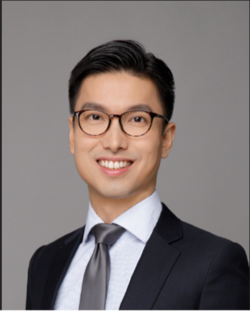
About the speaker: Kevin Jon Heller is Professor of International Law and Security at the University of Copenhagen’s Centre for Military Studies and Distinguished RecurringVisiting Professor of Law at Universidad Torcuato di Tella in Buenos Aires. He is an Academic Member of Doughty Street Chambers in London and currently serves as Special Advisor on War Crimes to the Office of the Prosecutor of the International Criminal Court, where he led the development of the Office's recently issued Policy on Addressing Environmental Damage Through the Rome Statute. He is also Editor-in-Chief of Opinio Juris, the world's oldest blog dedicated to international law.

 All CISAC events are scheduled using the Pacific Time Zone.

No filming or recording without express permission from speaker.

William J. Perry Conference Room

Kevin Heller
Seminars
Date Label
-
HannahChapmanREDS

Russia's shift from informational autocracy toward overt repression has made understanding public sentiment more urgent yet increasingly difficult. One channel remains: appeals systems, through which hundreds of thousands of citizens each year bring grievances directly to the state. What concerns do citizens raise, and how does the regime respond? Drawing on original data from Russia's presidential appeals system, this talk examines what appeals reveal about everyday citizen-state relations, governance challenges, and how autocratic institutions that promise responsiveness actually function under pressure. Appeals offer a unique behavioral measure of citizen concerns, capturing the experiences of those most affected by governance failures—offering insight into a regime that has become increasingly opaque.

Hannah S. Chapman is the Theodore Romanoff Assistant Professor of Russian Studies and an Assistant Professor of International and Area Studies. Previously, she was a George F. Kennan Fellow at the Kennan Institute of the Woodrow Wilson International Center for Scholars.

Her research, teaching, and service are in the fields of comparative political behavior with a substantive focus on public opinion, political participation, and political communication in non-democracies and a regional focus on Russian and post-Soviet politics. She teaches undergraduate and graduate courses in authoritarianism, Russian domestic and international politics, and comparative politics.

Her book project, Dialogue with the Dictator: Information Manipulation and Authoritarian Legitimation in Putin's Russia, examines the role of quasi-democratic participation mechanisms in reinforcing authoritarian regimes. Her work has been published in Comparative Political Studies, Comparative Politics,  Democratization, International Studies Quarterly, and the Washington Post.


REDS: RETHINKING EUROPEAN DEVELOPMENT AND SECURITY


The REDS Seminar Series aims to deepen the research agenda on the new challenges facing Europe, especially on its eastern flank, and to build intellectual and institutional bridges across Stanford University, fostering interdisciplinary approaches to current global challenges.

REDS is organized by The Europe Center and the Center on Democracy, Development and the Rule of Law, and co-sponsored by the Hoover Institution and the Center for Russian, East European and Eurasian Studies.

Learn more about REDS and view past seminars here.


Image
CDDRL, TEC, Hoover, and CREEES logos
Anna Grzymała-Busse
Kathryn Stoner
Anna Grzymała-Busse, Kathryn Stoner

Virtual to Public. If prompted for a password, use: 123456

Only those with an active Stanford ID with access to William J. Perry Conference Room in Encina Hall may attend in person.

Hannah Chapman Theodore Romanoff Assistant Professor of Russian Studies and Assistant Professor, International & Area Studies Presenter Oklahoma University
Seminars
Date Label
-
LucanWay_REDSSeminar

Drawing on a statistical analysis and case studies, Semuhi Sinanoglu, Lucan Way and Steven Levitsky argue that incumbent control over the economy fosters authoritarianism by undermining the popular, financial and organizational bases of opposition activity. The concentration of economic resources in the hands of state leaders – whether it emerges out of statist economic policies, oil wealth, or extreme underdevelopment – makes citizens and economic actors dependent on the whim of state leaders for survival. Indeed, poor, statist and/or oil rich states account for the overwhelming share of closed autocracies today.    To establish the plausibility that economic dependence is a major source of authoritarianism, the paper presents a statistical analysis of authoritarian durability and evidence from four diverse cases – Belarus, Russia, Kuwait, Togo, Burundi -- that such dependence has weakened opposition. 

Lucan Ahmad Way received his BA from Harvard College and his PhD from the University of California, Berkeley. Way’s research focuses on global patterns of democracy and dictatorship.  His most recent book (with Steven Levitsky), Revolution and Dictatorship: The Violent Origins of Durable Authoritarianism (Princeton University Press) provides a comparative historical explanation for the extraordinary durability of autocracies (China, Cuba, USSR) born of violent social revolution. Way’s solo-authored book, Pluralism by Default: Weak Autocrats and the Rise of Competitive Politics (Johns Hopkins, 2015), examines the sources of political competition in the former Soviet Union.  Way argues that pluralism in the developing world often emerges out of authoritarian weakness: governments are too fragmented and states too weak to monopolize political control.  His first book, Competitive Authoritarianism: Hybrid Regimes after the Cold War (with Steven Levitsky), was published in 2010 by Cambridge University Press. Way’s work on competitive authoritarianism has been cited thousands of times and helped stimulate new and wide-ranging research into the dynamics of hybrid democratic-authoritarian rule.

Way also has published articles in the American Journal of Political ScienceComparative Politics, Journal of Democracy, Perspectives on Politics, Politics & Society, Slavic Review, Studies in Comparative and International Development, World Politics, as well as in a number of area studies journals and edited volumes. His 2005 article in World Politics was awarded the Best Article Award in the “Comparative Democratization” section of the American Political Science Association in 2006. He is Co-Director of the Petro Jacyk Program for the Study of Ukraine and is Co-Chair of the Editorial Board of The Journal of Democracy. He has held fellowships at Harvard University (Harvard Academy and Davis Center for Russian and Eurasian Studies), and the University of Notre Dame (Kellogg Fellowship).


REDS: RETHINKING EUROPEAN DEVELOPMENT AND SECURITY


The REDS Seminar Series aims to deepen the research agenda on the new challenges facing Europe, especially on its eastern flank, and to build intellectual and institutional bridges across Stanford University, fostering interdisciplinary approaches to current global challenges.

REDS is organized by The Europe Center and the Center on Democracy, Development and the Rule of Law, and co-sponsored by the Hoover Institution and the Center for Russian, East European and Eurasian Studies.

Learn more about REDS and view past seminars here.


Image
CDDRL, TEC, Hoover, and CREEES logos
Anna Grzymała-Busse
Kathryn Stoner
Anna Grzymała-Busse, Kathryn Stoner

Virtual to Public. If prompted for a password, use: 123456

Only those with an active Stanford ID with access to William J. Perry Conference Room in Encina Hall may attend in person.

Lucan Way Distinguished Professor of Democracy Presenter University of Toronto
Seminars
Date Label
-
LaiaBalcellsSeminar

Societies transitioning from conflict and/or authoritarianism have increasingly built Transitional Justice (TJ) museums to explore their legacies of violence and repression, and to contribute to a culture of democracy, pluralism, and societal reconciliation. However, until recently, the impact of such museums had been assumed and not rigorously evaluated. This talk will be presenting results of three different experimental studies conducted in TJ museums/exhibits around the world: the Museum of Memory and Human Rights in Santiago, Chile (with Valeria Palanza and Elsa Voytas), the "Troubles and Beyond" exhibit in the Ulster Museum in Belfast, Northern Ireland (with Elsa Voytas), and the United States Holocaust Memorial Museum in Washington, DC (with Francesca Parente and Ethan vanderWilden). The talk will offer comparative lessons from these three studies. In addition, it will present evidence from a recently built TJ museum database (with vanderWilden and Voytas) with the goal to examine macro-level patterns of post-conflict memorialistic initiatives around the world.

ABOUT THE SPEAKER

Laia Balcells is the Christopher F. Gallagher Family Professor of Government at Georgetown University, where she is also core faculty of the M.A. in Conflict Resolution, and a faculty affiliate of Gui2de, the BMW Center for German and European Studies, and the Center for Latin American Studies (CLAS).

Balcells's research and teaching are at the intersection of comparative politics and international relations. She received my BA (with highest distinction) in Political Science from Universitat Pompeu Fabra (Barcelona), including a full academic year as an Erasmus student at Sciences Po (Toulouse). Balcells began her graduate studies at the Juan March Institute (Madrid), and earned her Ph.D. from Yale University.

Balcells has been an Assistant Professor of Political Science at Duke University (2012-2017), a Niehaus Visiting Associate Research Scholar at the School of Public and International Affairs at Princeton University (2015-16), and Chair of Excellence at Universidad Carlos III de Madrid (2017).

Her first book, Rivalry and Revenge: the Politics of Violence during Civil War, was published in 2017 by Cambridge University Press (Cambridge Studies in Comparative Politics). The book  was a runner-up for the Conflict Research Society Book of the Year Award (2018).

Hesham Sallam
Hesham Sallam

Virtual to Public. If prompted for a password, use: 123456

Only those with an active Stanford ID with access to William J. Perry Conference Room in Encina Hall may attend in person.

Laia Balcells Christopher F. Gallagher Family Professor of Government Presenter Georgetown University
Seminars
Date Label
-
AdrienneLeBasSeminar

Why have efforts to improve tax compliance in low-income countries, especially in sub-Saharan Africa, failed? Existing policy and research ignore the central importance of non-state institutions in low-income countries, which both mediate interactions between states and citizens and provide governance in their own right. Can Social Intermediaries Build the State? presents a new theory of how non-state institutions shape tax collection and state-building. Drawing on a field experiment, qualitative work, and survey data from Lagos, Nigeria, the book argues that the strength of social intermediaries and their role in clientelistic exchange makes taxation and state-building more difficult. 

ABOUT THE SPEAKER

Adrienne LeBas (PhD, Columbia University) joined American University's Department of Government in the fall of 2009. Prior to joining AU, LeBas was a Prize Research Fellow at Nuffield College, University of Oxford, and Assistant Professor of Political Science and African Studies at Michigan State University. Her research interests include democratic institutions, political violence, and the rule of law. She is the author of the award-winning From Protest to Parties: Party-Building and Democratization in Africa (Oxford University Press, 2011) and articles in the American Political Science Review, the British Journal of Political Science, Comparative Political Studies, the Journal of Democracy, and elsewhere. LeBas also worked as a consultant for Human Rights Watch in Zimbabwe, where she lived from 2002 to 2003.

Dr. LeBas's research has been supported by grants from the EGAP Metaketa program, the Abdul Latif Jameel Poverty Action Lab (J-PAL), the Harry Frank Guggenheim Foundation, and the Department for International Development (UK), among others. During the 2015-2016 academic year, LeBas was a residential fellow at the Woodrow Wilson International Center for Scholars in Washington, DC. She is currently working on her second solo-authored book, which investigates the reasons for persistent election violence in some democratizing countries. With Jessica Gottlieb of the University of Houston, she is also writing a book on taxation and contradictory logics of state-building in Lagos, Nigeria. In spring 2024, she is a visiting professor at Sciences Po's Centre de recherches internationales in Paris.

Hesham Sallam
Hesham Sallam

Virtual to Public. If prompted for a password, use: 123456

Only those with an active Stanford ID with access to William J. Perry Conference Room in Encina Hall may attend in person.

Adrienne LeBas Associate Professor, School of Public Affairs Presenter American University
Seminars
Date Label
-
OliverKaplanSeminar

Economic reintegration is a critical part of peacebuilding, helping former combatants transition into civilian life. Yet stigma from employers may block access to formal jobs, threatening the success of reintegration programs. We implemented a résumé field experiment to test whether ex-combatants in Colombia face labor market discrimination, and whether signals of rehabilitation reduce bias. Partnering with the Colombian government’s Agency for Reincorporation and Normalization, we use real résumés from eight job-seeking ex-combatants. We randomly vary whether they disclose ex-combatant status, highlight education or reconciliation experience, signal work experience, or mention tax incentives. We tracked employer responses to identify which signals increase interest and under what conditions discrimination is most severe. This design provides unique causal evidence on employer behavior in post-conflict societies and will inform policies for how best to structure reintegration support so that those who leave violence behind are not excluded from economic opportunities.

ABOUT THE SPEAKER

Oliver Kaplan is a CDDRL Visiting Scholar and an Associate Professor at the Josef Korbel School of International Studies at the University of Denver. He is the author of the book, Resisting War: How Communities Protect Themselves (Cambridge University Press, 2017), which examines how civilian communities organize to protect themselves from wartime violence. He is a co-editor and contributor to the book, Speaking Science to Power: Responsible Researchers and Policymaking (Oxford University Press, 2024). Kaplan has also published articles on the conflict-related effects of land reforms and ex-combatant reintegration and recidivism. As part of his research, Kaplan has conducted fieldwork in Colombia and the Philippines.

Kaplan was a Jennings Randolph Senior Fellow at the U.S. Institute of Peace and previously a postdoctoral Research Associate at Princeton University and at Stanford University. His research has been funded by the Carnegie Corporation of New York, the International Committee of the Red Cross, the Smith Richardson Foundation, and other grants. His work has been published in The Journal of Conflict Resolution, Journal of Peace Research, Conflict Management and Peace Science, Stability, The New York Times, Foreign Affairs, Foreign Policy, CNN, and National Interest.

At the University of Denver, Kaplan is Director of the Korbel Asylum Project (KAP). He has taught M.A.-level courses on Human Rights and Foreign Policy, Peacebuilding in Civil Wars, Civilian Protection, and Human Rights Research Methods, and PhD-level courses on Social Science Research Methods. Kaplan received his Ph.D. in political science from Stanford University and completed his B.A. at UC San Diego.

Hesham Sallam
Hesham Sallam

Virtual to Public. If prompted for a password, use: 123456

Only those with an active Stanford ID with access to E-008 Conference Room in Encina Hall may attend in person.

Encina Hall, C151
616 Jane Stanford Way
Stanford, CA 94305-6055

0
Associate Professor, Josef Korbel School of International Studies at the University of Denver
CDDRL Visiting Scholar, 2025-26
20250506-kaplano-487_-_oliver_kaplan.jpg

Oliver Kaplan is an Associate Professor at the Josef Korbel School of International Studies at the University of Denver. He is the author of the book, Resisting War: How Communities Protect Themselves (Cambridge University Press, 2017), which examines how civilian communities organize to protect themselves from wartime violence. He is a co-editor and contributor to the book, Speaking Science to Power: Responsible Researchers and Policymaking (Oxford University Press, 2024). Kaplan has also published articles on the conflict-related effects of land reforms and ex-combatant reintegration and recidivism. As part of his research, Kaplan has conducted fieldwork in Colombia and the Philippines.

Kaplan was a Jennings Randolph Senior Fellow at the U.S. Institute of Peace and previously a postdoctoral Research Associate at Princeton University and at Stanford University. His research has been funded by the Carnegie Corporation of New York, the International Committee of the Red Cross, the Smith Richardson Foundation, and other grants. His work has been published in The Journal of Conflict Resolution, Journal of Peace Research, Conflict Management and Peace Science, Stability, The New York Times, Foreign Affairs, Foreign Policy, CNN, and National Interest.

At the University of Denver, Kaplan is Director of the Korbel Asylum Project (KAP). He has taught M.A.-level courses on Human Rights and Foreign Policy, Peacebuilding in Civil Wars, Civilian Protection, and Human Rights Research Methods, and PhD-level courses on Social Science Research Methods. Kaplan received his Ph.D. in political science from Stanford University and completed his B.A. at UC San Diego.

Date Label
Oliver Kaplan CDDRL Visiting Scholar Presenter Freeman Spogli Institute
Seminars
Date Label
-
NatalieLetsaSeminar

Why do citizens in electoral autocracies choose to participate in politics and support political parties? With electoral autocracies becoming the most common type of regime in the modern world, Natalie Letsa's The Autocratic Voter challenges the dominant materialist framework for understanding political behavior and presents an alternative view of partisanship as a social identity. It argues that despite the irrationality and obstacles to participating in autocratic politics, people are socialized into becoming partisans by their partisan friends and family. This socialization process has a cascading effect that can either facilitate support for regime change and democracy or sustain the status quo. By delving into the social identity of partisanship, The Autocratic Voter offers a new perspective on political behavior in electoral autocracies that has the potential to shape the future of these regimes.

ABOUT THE SPEAKER

Natalie Letsa is an Associate Professor in the Department of Political Science at the University of South Carolina. Previously, she was the Wick Cary Assistant Professor of Political Economy in the Department of International and Area Studies  at the University of Oklahoma and the Director of OU's African Studies Institute. Letsa received her Ph.D. in Government from Cornell University in 2017, and in 2018-19 she was a Postdoctoral Scholar at the Center on Democracy, Development, and the Rule of Law at Stanford University.

Letsa studies public opinion and political behavior in autocratic regimes, specifically in sub-Saharan Africa. Her book, The Autocratic Voter: Partisanship and Political Socialization under Dictatorship,  presents an argument about the meaning of partisanship in electoral autocracies. Using the framework of social identity theory, it provides an answer to the question of why some people living in such regimes choose to support the ruling party, while others support the opposition, and others, still, stay out of politics altogether. Her other work has been published at the American Political Science Review, Perspectives on Politics, Comparative Politics, and Public Opinion Quarterly, amongst others. 

Hesham Sallam
Hesham Sallam

Virtual to Public. If prompted for a password, use: 123456

Only those with an active Stanford ID with access to E-008 Conference Room in Encina Hall may attend in person.

Natalie Letsa Associate Professor of Political Science Presenter University of South Carolina
Seminars
Date Label
-
ZehraFKabasakalArat_Seminar

The instability of democracy, which used to be associated with developing countries, is now a global concern. Democratic principles and institutions are “backsliding” or under attack even in older, “established” democracies. In addition to trying to dismantle the institutional structure of democracy, elected authoritarian leaders and right-wing populist movements are employing discriminatory policies and rhetoric, targeting women, LGBT+ individuals, immigrants, and other marginalized groups. This seminar offers a comparative analysis of democratic decline during the Cold War and post-Cold War eras – periods characterized by class and identity politics, respectively. Noting the interconnection between human rights and democracy, it proposes a human rights theory of democracy that explains the decline of democratic systems by the gap between civil-political and social-economic rights. It highlights the pervasive influence of neo-classical and neoliberal economic paradigms as central factors driving this regression.

ABOUT THE SPEAKER

Dr. Zehra F. Kabasakal Arat studies human rights, with an emphasis on women’s rights, as well as processes of democratization, globalization, and development. She combines theoretical writings with empirical research – both qualitative and quantitative. Her publications include numerous journal articles and book chapters, as well as books: Democracy and Human Rights in Developing Countries (1991); Deconstructing Images of ‘The Turkish Woman’ (1998); Non-State Actors in the Human Rights Universe (2006); Human Rights Worldwide (2006); Human Rights in Turkey (2007, received Choice Award of Outstanding Academic Titles); The Uses and Misuses of Human Rights (2014). Her work in progress includes: human rights discourse and practices in Turkey since 1920s; women’s rights and neoliberalism; Intersectionality and Third World feminism; human rights norms; problems with tolerance as a human rights advocacy tool; the relationship between human rights scholars and NGOs; theorizing domestic politics of human rights. At UConn, she also contributes to the Human Rights program and the Women’s, Gender and Sexualities Studies.

She has served professional organizations in various capacities (e.g., Founding President, Human Rights Section of APSA, 2000-2001, and Chair, Human Rights Research Committee of IPSA, 2006-2012). Currently, she serves on the editorial boards of Human Rights Quarterly; International Feminist Journal of Politics, Journal of Human Rights, and Zeitschrift für Menschenrechte. She is also the editor of the book series “Power and Human Rights” by the Lynne Rienner Publishers. She is recognized by several awards, including the APSA Award of Distinguished Scholar in Human Rights (2010), SUNY Chancellor’s Award for Excellence in Scholarship and Creative Activities (2006), and the title of Juanita and Joseph Leff Distinguished Professor (Purchase College, 2006).

She has been engaged in human rights activism, as well, and is a founding member of the Women’s Platform for Equality (EŞİK) in Turkey.

Hesham Sallam
Hesham Sallam

Virtual to Public. If prompted for a password, use: 123456

Only those with an active Stanford ID with access to E-008 Conference Room in Encina Hall may attend in person.

Zehra F. Kabasakal Arat Professor of Political Science Presenter University of Connecticut
Seminars
News Feed Image
1.29.26_ZehraArat.png
Date Label
-
EmilKamalovSeminar1.15.26

Autocratic regimes often view emigration as a safety valve to reduce dissent, yet this strategy creates costly brain drain. Can autocracies draw politically motivated emigrants back with selective incentives, or is regime change the only viable option? We develop a three-dimensional model of return decisions, integrating conditions in host, home, and potential third countries. We argue that return is unlikely unless the home country restores core conditions—especially political freedoms—whose erosion triggered emigration, making selective incentives or return-promotion policies largely ineffective. Even when political change occurs, return remains limited among those who already enjoy political liberties abroad or can re-emigrate elsewhere. We test our theory using a conjoint experiment with 7,500 war-induced Russian emigrants across 100 countries, supplemented by open-ended feedback and longitudinal data. Democratization emerges as the minimum threshold for return, giving autocracies little leverage to reverse brain drain; where return occurs, it may ultimately strengthen opposition rather than incumbents.

ABOUT THE SPEAKER

Emil Kamalov has focused his research at the intersection of autocratic control, political behavior, migration, and repression, utilizing advanced quantitative methods complemented by qualitative data.

In his PhD thesis and papers, Emil develops an integrated account of extraterritorial opposition politics, examining how geopolitical tensions and host-country conditions shape emigrant activism, diaspora resilience, and migrant well-being. His findings demonstrate that under certain conditions, transnational repression by autocratic regimes can strengthen rather than weaken diaspora activism.

In collaboration with Ivetta Sergeeva, Emil co-founded and co-leads the OutRush project, the only ongoing multi-wave panel survey focusing on Russian political emigrants following Russia’s 2022 invasion of Ukraine. The OutRush project includes over 18,000 survey observations across four waves, covering respondents from more than 100 countries. The project has garnered substantial international media coverage and has drawn attention from policymakers and experts. Emil received his PhD in Political and Social Sciences from the European University Institute.

Hesham Sallam
Hesham Sallam

Virtual to Public. If prompted for a password, use: 123456

Only those with an active Stanford ID with access to E-008 Conference Room in Encina Hall may attend in person.

Encina Hall, E110
616 Jane Stanford Way
Stanford, CA 94305-6055

0
SURF Postdoctoral Fellow, 2025-26
emil-kamalov-2022.x1a300390_-_emil_kamalov.jpg

Emil Kamalov's research interests lie at the intersection of autocratic control, political behavior, migration, and repression, utilizing advanced quantitative methods complemented by qualitative data.

In his PhD thesis and papers, Emil develops an integrated account of extraterritorial opposition politics, examining how geopolitical tensions and host-country conditions shape emigrant activism, diaspora resilience, and migrant well-being. His findings demonstrate that under certain conditions, transnational repression by autocratic regimes can strengthen rather than weaken diaspora activism.

In collaboration with Ivetta Sergeeva, Emil co-founded and co-leads the OutRush project, the only ongoing multi-wave panel survey focusing on Russian political emigrants following Russia’s 2022 invasion of Ukraine. The OutRush project includes over 18,000 survey observations across four waves, covering respondents from more than 100 countries. The project has garnered substantial international media coverage and has drawn attention from policymakers and experts.

Emil is expected to receive his PhD in Political and Social Sciences from the European University Institute in September 2025.

Date Label
Emil Kamalov SURF Postdoctoral Fellow, 2025-26 Presenter Center on Democracy, Development and the Rule of Law
Seminars
Date Label
-
NeilMalhotraSeminar1.8.26

The Supreme Court’s composition tends to remain stable over time, yet its docket and rulings change, affecting our understanding of the Court’s broader political ramifications. In Majority Opinions, Stephen Jessee, Neil Malhotra and Maya Sen examine how the Supreme Court’s alignment with public opinion shifts dramatically, shaping its legitimacy, approval, and vulnerability to reform. Introducing an empirical method and framework that systematically compares Americans’ preferences on case outcomes with the Court’s actual rulings, the authors uncover yawning gaps and unexpected alignments across issues and terms. They show how changes in court composition—Amy Coney Barrett replacing Ruth Bader Ginsburg, for example—can shift the Court’s trajectory rightward, while docket choices can move rulings closer to public sentiment after unpopular rulings. Examining how the Supreme Court navigates a polarized political environment, the authors reveal how its choices have profoundly affect influence, legitimacy, and national policy.

ABOUT THE SPEAKER

Neil Malhotra is The Edith M. Cornell Professor of Political Economy at Stanford Graduate School of Business. He also holds a courtesy appointment in the Stanford University Department of Political Science. He serves as the Louise and Claude N. Rosenberg, Jr. Director of the Center for Social Innovation at Stanford GSB.

He has authored over 60 articles on numerous topics including American politics, political behavior, and survey methodology. His research has been published in the American Political Science Review, the American Journal of Political Science, the Journal of Politics, Science, and the Proceedings of the National Academy of Sciences, among other outlets. He currently serves as an associate editor of Public Opinion Quarterly and the Journal of Experimental Political Science.

He received his MA and PhD in political science from Stanford University, where he was the Melvin & Joan Lane Stanford Graduate Fellow. He received a BA in economics from Yale University.

Hesham Sallam
Hesham Sallam

Virtual to Public. If prompted for a password, use: 123456

Only those with an active Stanford ID with access to William J. Perry Conference Room in Encina Hall may attend in person.

Neil Malhotra The Edith M. Cornell Professor of Political Economy Presenter Stanford Graduate School of Business
Seminars
Date Label
Subscribe to Seminars