-
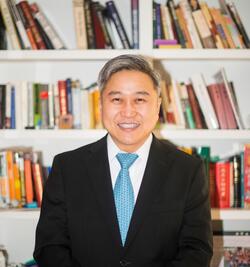
Sanjeev Khagram seminar

This seminar will introduce the prototype of an innovative new AI-powered decision-making intelligence platform that forecasts country trajectories with scenario analysis, predictive analytics, hotspot detection, causal explanations through large language models, etc., for a range of outcomes central to CDDRL and FSI's missions — effective governance, human security, and sustainable development. The initial use case is for political resilience and its inverse, fragility, conflict, and violence.

ABOUT THE SPEAKER

Dr. Sanjeev Khagram is a world-renowned leader, entrepreneur, scholar, and professor across the academic, private, public, and civic sectors. His specialities include global leadership and management across sectors, entrepreneurship and innovation, the data revolution and 4th Industrial Revolution — including AI, sustainable development and human security, good governance and accountability, globalization and transnationalism, public-private partnerships and multi-stakeholder networks. Dr. Khagram holds all of his transdisciplinary bachelor's, master's, and doctoral degrees from Stanford University. He has lived and worked for extended periods in Australia, Brazil, China, Kenya, India, Indonesia, Mexico, Nigeria, the GCC, Germany, South Africa, Thailand, and the United Kingdom.

Dr. Sanjeev Khagram is currently a Visiting Scholar at Stanford University’s Center for Democracy, Development and the Rule of Law and Department of Management Science and Engineering.  He is also a Distinguished Visiting Fellow with the Hoover Institution's Emerging Markets Working Group, where he leads the Global Reslience Intelligence Platform Partnership (GRIPP), and at the Center for Sustainable Development and Global Competitiveness, where he leads the AI and Sustainability Initiative at Stanford.

Khagram was most recently CEO, Director-General, and Dean of the Thunderbird School of Global Management, 2018-2024, which he took to #1 in International Trade with QS World University Rankings. He is on leave from his position as Foundation Professor of Global Leadership and Global Futures at the Thunderbird School of Global Management, Arizona State University.  Previously, he was the inaugural Young Professor of Global Political Economy at Occidental College, Wyss Scholar at the Harvard Business School, Founding Director of the Lindenberg Center for International Development, Professor at the University of Washington, and Associate Professor at Harvard’s Kennedy School of Government.

Dr. Khagram is an award-winning scholar and teacher. Dr. Khagram has published widely including the award winning book Dams and Development with Cornell University Press; Restructuring World Politics with University of Minnesota Press; The Transnational Studies Reader with Routledge Press; Open Budgets: The Political Economy of Transparency, Participation and Accountability with Brookings Press; "Inequality and Corruption" in the American Journal of Sociology; "Future Architectures of Global Governance" in Global Governance, "Environment and Security" in the Annual Review of Environment and Resources, “Towards a Platinum Standard for Evidence-Based Assessment,” in Public Administration Review, “Social Balance Sheets” in Harvard Business Review, “Evidence for Development Effectiveness” in the Journal of Development Effectiveness, and “From Human Security and the Environment to Sustainable Security and Development,” in the Journal of Human Development.

Dr. Khagram has worked extensively in global leadership roles across international organizations, government, business, and civil society from the local to the international levels around the world. Dr. Khagram has established and led a range of global multi-stakeholder initiatives over the last three decades, including the Global Carbon Removal Partnership, Global Partnership for Sustainable Development Data, the Global Initiative for Fiscal Transparency, and the World Commission on Dams, authoring its widely acclaimed final report.  

Dr. Khagram was selected as a Young Global Leader at the World Economic Forum, was a senior advisor to United Nations Secretary General Ban Ki-Moon, Dean of the Desmond Tutu Peace Centre, and Founder/CEO of Innovations for Scaling Impact – a global technology enterprise solutions network. He is currently Chair of the Board of United Platform Solutions (an African AI-IOT Pollution Monitoring Venture) and Vice Chair of Altos Bank (the first new bank in Silicon Valley since 2008).

Dr. Khagram was born in Uganda as a fourth-generation East African Indian.  He and his family were expelled by Idi Amin and spent several years in refugee camps before being provided asylum in the United States in the 1970s.  He has lived and worked across all regions of the world and travelled to over 140 countries.

Kathryn Stoner
Kathryn Stoner

Virtual to Public. If prompted for a password, use: 123456
Only those with an active Stanford ID with access to Philippines Conference Room in Encina Hall may attend in person.

0
CDDRL Visiting Scholar, 2025-26
CISAC Visiting Scholar, 2024-25
dr.sanjeevkhagramphoto.jpg

Dr. Sanjeev Khagram is a world-renowned leader, entrepreneur, scholar, and professor across the academic, private, public, and civic sectors. His specialities include global leadership and management across sectors, entrepreneurship and innovation, the data revolution and 4th Industrial Revolution — including AI, sustainable development and human security, good governance and accountability, globalization and transnationalism, public-private partnerships and multi-stakeholder networks. Dr. Khagram holds all of his transdisciplinary bachelor's, master's, and doctoral degrees from Stanford University. He has lived and worked for extended periods in Australia, Brazil, China, Kenya, India, Indonesia, Mexico, Nigeria, the GCC, Germany, South Africa, Thailand, and the United Kingdom.

Dr. Sanjeev Khagram is currently a Visiting Scholar at Stanford University’s Center for Democracy, Development and the Rule of Law and Department of Management Science and Engineering.  He is also a Distinguished Visiting Fellow with the Hoover Institution's Emerging Markets Working Group, where he leads the Global Reslience Intelligence Platform Partnership (GRIPP), and at the Center for Sustainable Development and Global Competitiveness, where he leads the AI and Sustainability Initiative at Stanford.

Khagram was most recently CEO, Director-General, and Dean of the Thunderbird School of Global Management, 2018-2024, which he took to #1 in International Trade with QS World University Rankings. He is on leave from his position as Foundation Professor of Global Leadership and Global Futures at the Thunderbird School of Global Management, Arizona State University.  Previously, he was the inaugural Young Professor of Global Political Economy at Occidental College, Wyss Scholar at the Harvard Business School, Founding Director of the Lindenberg Center for International Development, Professor at the University of Washington, and Associate Professor at Harvard’s Kennedy School of Government.

Dr. Khagram is an award-winning scholar and teacher. Dr. Khagram has published widely including the award winning book Dams and Development with Cornell University Press; Restructuring World Politics with University of Minnesota Press; The Transnational Studies Reader with Routledge Press; Open Budgets: The Political Economy of Transparency, Participation and Accountability with Brookings Press; "Inequality and Corruption" in the American Journal of Sociology; "Future Architectures of Global Governance" in Global Governance, "Environment and Security" in the Annual Review of Environment and Resources, “Towards a Platinum Standard for Evidence-Based Assessment,” in Public Administration Review, “Social Balance Sheets” in Harvard Business Review, “Evidence for Development Effectiveness” in the Journal of Development Effectiveness, and “From Human Security and the Environment to Sustainable Security and Development,” in the Journal of Human Development.

Dr. Khagram has worked extensively in global leadership roles across international organizations, government, business, and civil society from the local to the international levels around the world. Dr. Khagram has established and led a range of global multi-stakeholder initiatives over the last three decades, including the Global Carbon Removal Partnership, Global Partnership for Sustainable Development Data, the Global Initiative for Fiscal Transparency, and the World Commission on Dams, authoring its widely acclaimed final report.  

Dr. Khagram was selected as a Young Global Leader at the World Economic Forum, was a senior advisor to United Nations Secretary General Ban Ki-Moon, Dean of the Desmond Tutu Peace Centre, and Founder/CEO of Innovations for Scaling Impact – a global technology enterprise solutions network. He is currently Chair of the Board of United Platform Solutions (an African AI-IOT Pollution Monitoring Venture) and Vice Chair of Altos Bank (the first new bank in Silicon Valley since 2008).

Dr. Khagram was born in Uganda as a fourth-generation East African Indian.  He and his family were expelled by Idi Amin and spent several years in refugee camps before being provided asylum in the United States in the 1970s.  He has lived and worked across all regions of the world and travelled to over 140 countries.

Date Label
Sanjeev Khagram CDDRL Visiting Scholar FSI
Seminars
Date Label
-

SCCEI Seminar Series (Winter 2026)


Friday, March 6, 2026 | 12:00 pm -1:20 pm Pacific Time
Goldman Room E409, Encina Hall, 616 Jane Stanford Way


Enlightenment Under Autocracy: The Origins of Liberalism in China


This paper studies how ideas emphasizing individual moral agency diffuse and shape political behavior under autocracy by tracing the spread of Wang Yangming’s School of Mind in late imperial China. Using a new dataset of over 24,000 historical texts from 1000 to 1900, we measure regional exposure with two indicators: the frequency of core concepts and the count of associated authors. We also introduce a semantic-similarity measure that compares local texts to Yangming’s writings. A difference-in-differences design shows a sharp post-1500 rise in exposure, concentrated in places with stronger lecture influence. Prefectures with higher exposure were more likely to produce reformist leaders in the Donglin Movement (1604–1627). Using contemporary survey data from 2010 and a matched-sample approach, we further document long-run persistence. Residents in historically exposed prefectures express stronger support for the right to discuss public affairs and for limiting government involvement in private affairs. Together, the results link the diffusion of Yangming learning to reformist mobilization among elites and to durable attitudes toward political voice and the appropriate scope of government.


About the Speaker 
 

Melanie Meng Xue profile.

Professor Melanie Meng Xue is Assistant Professor of Economic History at the London School of Economics and Political Science and a Research Affiliate at the Centre for Economic Policy Research. Her research lies at the intersection of political economy, gender, culture, and economic history, with a regional focus on early modern and modern China. Her work explores the rise of women, the persistence of authoritarian regimes, and the long-term impact of affirmative action and cultural values on economic and political inequality.

Her articles examine topics such as folklore and proverbs as sources of cultural transmission, and she is currently working on a book project analyzing cultural values across ethnic groups and regions in China. Professor Xue has published widely, and her research has influenced both academic and public discourse on the role of historical narratives and norms in shaping institutional development. She received her Ph.D. in Economics and has mentored research assistants who have gone on to top Ph.D. and pre-doctoral programs. During the 2025–26 academic year, she will be on sabbatical, spending the fall semester at Yale University.


Questions? Contact Xinmin Zhao at xinminzhao@stanford.edu


Goldman Room E409, Encina Hall

Melanie Meng Xue, Assistant Professor of Economic History, London School of Economics
Seminars
Date Label
-

This event has been cancelled.

We hope to see you at another SCCEI event soon!


SCCEI Seminar Series (Winter 2026)


Friday, February 20, 2026 | 12:00 pm -1:20 pm Pacific Time
Goldman Room E409, Encina Hall, 616 Jane Stanford Way


Competitive Human Capital Investment: Evidence from Housing Prices and Educational Expenditures


The hypothesis of competitive human capital investment posits that one important motivation for parents to invest in their children’s education is to help them to develop an advantage in their future dating and marriage market. If ownership of certain housing conveys a right to access to high-quality educational resources, a “good-school” premium is embedded in the prices of such home ownership. The size of the premium may reflect the degree of local marriage market competition. We investigate such an effect using housing prices and the location of top schools in 33 Chinese cities. We find robust evidence that the local sex ratio of the youth cohort is a strong predictor for the size of the local “good school” premium. We also find that the households from cities with a higher sex ratio are more willing to spend on children’s education, especially for sons.

Please register for the event to receive email reminders and add it to your calendar. Lunch will be provided.


About the Speaker 
 

Shang-Jin Wei headshot

Professor Shang-Jin Wei is the N.T. Wang Professor of Chinese Business and Economy at Columbia University, with joint appointments in the Graduate School of Business and the School of International and Public Affairs. A leading expert on international finance, trade, and macroeconomics, his research focuses on globalization and the Chinese economy. His work has been published in top journals, including the American Economic Review, the Journal of Political Economy, and the Journal of Finance.

From 2014 to 2016, Professor Wei served as Chief Economist of the Asian Development Bank, where he led economic research and policy support for regional cooperation initiatives. He previously held positions at the International Monetary Fund, Harvard University, the Brookings Institution, and the World Bank. He is the recipient of several prestigious awards, including the Sun Yefang Prize, the Zhang Peifang Prize, and the Gregory Chow Award. He received his Ph.D. in Economics and M.S. in Finance from the University of California, Berkeley.


Questions? Contact Xinmin Zhao at xinminzhao@stanford.edu


Goldman Room E409, Encina Hall

Shang-Jin Wei, Professor of Chinese Business and Economy, Columbia University
Seminars
Date Label
-

About the event: International relations scholars have long studied how technological shifts impact the course of wars, especially as armies are forced to innovate on the battlefield. From the start of Russia’s full-scale invasion of Ukraine in 2022, SpaceX’s Starlink service (a private company) has played a vital infrastructure role for Ukraine’s military, something it was never envisioned or designed to do. In addition, in contrast with past conflicts, Starlink’s major policy choices are primarily controlled by a single individual – Elon Musk –  who has his own political preferences and agenda, distinct from the U.S. or other countries. We leverage a natural experiment to ascertain the effect of Starlink access for Ukrainian forces on battlefield outcomes. We leverage a geographic discontinuity to determine the overall effect of access to Starlink on Ukraine’s territorial control as well as overall volume of munitions and combat activities. The design relies on an idiosyncratic mismatch between SpaceX’s internal system (which uses fixed hexagon shapes) for allocating access and the actual boundaries of the frontline and Ukraine’s provinces. Second, we use a difference-in-differences approach to examine how Starlink access mattered before and after a late 2022 policy change at SpaceX decided personally by Elon Musk to limit Starlink access to Ukrainian forces in certain areas and for certain activities. Initial findings are that Starlink access significantly improves Ukraine’s ability to hold territory, though it appears not to greatly affect the volume of drones, artillery or other munitions. The results suggest Starlink mostly affects quality of strikes rather than quantity. 

Co-authored with Tatsuya Koyama and Yuri Zhukov.

About the speaker: Renard Sexton is a Visiting Scholar at CISAC and an Associate Professor in the Department of Political Science at Emory University.

Sexton studies conflict and development with a focus on local level violence and interventions intended to curb violence. His research covers insurgency, terrorism, social conflict around natural resources, and police crackdowns; he has regional expertise in Afghanistan, Southeast Asia and Andean Latin America. His research has been published in top scholarly journals, including the American Political Science Review and American Journal of Political Science. His policy pieces and commentary have been published by The Washington Post, The New York Times, The Guardian, International Crisis Group, Foreign Policy and other outlets. Before joining Emory, he was a postdoctoral fellow at Princeton University and Economics of Conflict fellow at the International Crisis Group.

 All CISAC events are scheduled using the Pacific Time Zone.

No filming or recording without express permission from speaker.

William J. Perry Conference Room

Renard Sexton
Seminars
Date Label
-
Portrait of Byong-jin Ahn

South Korea, long seen as a rare success in adopting the American presidential system, recently weathered a martial law crisis and secured a democratic government. President Lee Jae-myung now must reinforce liberal constitutional democracy and navigate growing global uncertainty. Many abroad still misunderstand how his administration will address these challenges. Professor Byong-jin Ahn, a former member of Lee’s National Policy Planning Committee, offers an insider view on the administration’s priorities, Lee’s leadership style, and the role of technology alliances in the geopolitics of South Korea, the United States, and Northeast Asia.

Speaker:

headshot of Byoung-jin Ahn

Byong-jin Ahn is a 2025-26 Visiting Scholar at APARC and he is a professor at Kyung Hee University's Global Academy for Future Civilizations. He has recently served at the State Affairs Planning Committee, Lee's presidential transition team. He has appeared on major Korean media and newspapers on the U.S. presidential election specials and has been often quoted by the New York Times. His recent publications include a chapter, “Why Is Korean Democracy Majoritarian but Not Liberal?“ in the edited volume South Korea's Democracy In Crisis: The Threats of Illiberalism, Populism, and Polarization (Gi-Wook Shin and Ho-Ki Kim, Stanford University Press, 2022). He earned his Ph.D. in American politics from the New School for Social Research.


Directions and Parking > 

Philippines Conference Room (C330)
Encina Hall, 3rd Floor
616 Jane Stanford Way, Stanford, CA 94305

Byong-jin Ahn, Visiting Scholar, Shorenstein Asia-Pacific Research Center, Stanford University; Professor, Kyung Hee University
Seminars
Date Label
-

SCCEI Seminar Series (Winter 2026)


Friday, January 30, 2026 | 12:00 pm -1:20 pm Pacific Time
Goldman Room E409, Encina Hall, 616 Jane Stanford Way


Energy Management and Systems Change in Factories and Supply Chains in China


In China, manufacturing energy use and industrial processes are economically important but are also responsible for approximately 60% of the country's greenhouse gas emissions and cause local environmental harm. This paper develops a framework for studying the multifaceted impacts of production systems and possible interventions to reduce them, then examines the empirical evidence of effectiveness. We apply this framework to iron and steel production, downstream metal components manufacturing, and automotive assembly, relying whenever possible on observations of decision-making in factories. The talk will conclude by discussing how existing incentives interact to influence the pace and direction of progress in addressing sustainability impacts across the supply chain. 

Please register for the event to receive email reminders and add it to your calendar. Lunch will be provided.


About the Speaker 
 

Valerie Karplus headshot

Valerie Karplus is a professor in the Department of Engineering and Public Policy and associate director at the Wilton E. Scott Institute for Energy Innovation at Carnegie Mellon University.

Karplus studies resource and environmental management in organizations operating in diverse national and industry contexts, with a focus on the role of institutions and management practices in explaining performance. Areas of expertise include innovation in global corporate and industrial supply chains, regional approaches to workforce and economic revitalization, and the integrated design and evaluation of public policies. Karplus has taught courses on public policy analysis, global business strategy and organization, entrepreneurship, and the political economy of energy transitions. At CMU, she runs the Laboratory for Energy and OrganizationsOpens in new window. Karplus is also a faculty affiliate of the MIT Energy InitiativeOpens in new window, the MIT Center for Energy and Environmental Policy ResearchOpens in new window, and the MIT Center for Sustainability Science and Strategy.

She has previously worked in the development policy section of the German Federal Foreign Office in Berlin, Germany, as a Robert Bosch Foundation Fellow, and in the biotechnology industry in Beijing, China, as a Luce Scholar. From 2011 to 2016, she co-founded and directed the MIT-Tsinghua China Energy and Climate Project a five-year research effort focused on analyzing the design of energy and climate change policy in China, and its domestic and global impacts. Karplus previously served on the faculty at the MIT Sloan School of Management.

Karplus holds a BS in biochemistry and political science from Yale University and a Ph.D. in engineering systems from MIT.


Questions? Contact Xinmin Zhao at xinminzhao@stanford.edu


Goldman Room E409, Encina Hall

Valerie Karplus, Professor, Carnegie Mellon University
Seminars
Date Label
-

SCCEI Seminar Series (Winter 2026)


Friday, February 13, 2026 | 12:00 pm -1:20 pm Pacific Time
Goldman Room E409, Encina Hall, 616 Jane Stanford Way 

Due to room capacity limitations and high interest in this seminar, registration is now closed. 


From Empire to Nation-State: Aspirational Nation-Building in China


The rise of nation-states was one of the most transformative developments of the 20th century. What drives nation-building? Existing theories emphasize enmity: external threats provoke fear, humiliation, and hostility, hardening national identity through opposition. We propose an aspirational theory of nation-building, highlighting a parallel mechanism—emulation. Under threat, elites not only rally against foreign powers; they also look outward with admiration, comparing their nation to more successful states and seeking to close the gap. This forward-looking ambition can transform crisis into reform.

We test this theory by analyzing China’s transition from empire to nation-state (1872–1911), using two original datasets: a complete collection of newspaper titles and full-text articles from Shen Bao, the most influential publication of the period. We find that emulation—particularly of culturally proximate powers like Japan—consistently outweighed enmity. War sparked temporary surges in antagonism, but emulation quickly returned. This article contributes to scholarship on nation-building and state formation.

Please register for the event to receive email updates and add it to your calendar. Lunch will be provided.


About the Speaker 
 

Peng Peng headshot.

Peng Peng is currently an assistant professor in the Department of Political Science and Global Studies at Washington University in St. Louis. Previously, she was a postdoctoral research associate at the Macmillan Center, Yale University (July 2022 - June 2024). She received her doctoral degree from the Department of Political Science at Duke University in December 2022. Before that, she completed a dual master's program in International Affairs from Paris School of International Affairs of Sciences Po Paris and School of International Relations of Peking University, and she earned her BA from Beijing Foreign Studies University.

Peng Peng studies state-building, nation-building, and political economy of development. Much of her work focuses on the role of political elites in shaping state development and national identity. Her work combines quantitative methods with extensive qualitative archival research. She teaches courses on state building and Chinese politics.


Questions? Contact Xinmin Zhao at xinminzhao@stanford.edu


Goldman Room E409, Encina Hall

Peng Peng, Assistant Professor, Washington University in St. Louis
Seminars
Date Label
-
Nate

Despite great fears that it would be marred by considerable administrative challenges, the 2024 election was well-run and smooth.  However, controversies and conflict that did not receive attention given the comfortable margin of victory have signaled vulnerabilities for the 2026 election related to mail-in ballots, threats to polling places, and late counting of ballots. New executive orders and other novel threats to election administration and the seating of victorious House candidates are creating confusion as to whether the 2026 election will be run under the same rules as its predecessors.  This talk will canvas the problems of 2024, the emerging threats of 2025, and the path for building resilience for the 2026 election.

ABOUT THE SPEAKER

Nate Persily is the James B. McClatchy Professor of Law at Stanford Law School and Senior Fellow in the Freeman Spogli Institute.  He is co-Director of the Stanford Law AI Initiative and founded the Stanford Cyber Policy Center, the Program on Democracy and the Internet and the Stanford-MIT Healthy Elections Project.  He served as the Senior Research Director of the Presidential Commission on Election Administration and has been appointed by courts on numerous occasions to draw congressional and legislative redistricting plans.  His current work, for which he has been honored as a Guggenheim and Carnegie Fellow, examines the impact of social media and artificial intelligence on democracy and elections.   

Virtual to Public. Only those with an active Stanford ID with access to the William J. Perry Conference Room in Encina Hall may attend in person.

Hesham Sallam
Hesham Sallam

Virtual to Public. If prompted for a password, use: 123456

Only those with an active Stanford ID with access to the William J. Perry Conference Room in Encina Hall may attend in person.

Stanford Law School Neukom Building, Room N230 Stanford, CA 94305
650-725-9875
0
James B. McClatchy Professor of Law at Stanford Law School
Senior Fellow, Freeman Spogli Institute
Professor, by courtesy, Political Science
Professor, by courtesy, Communication
headshot_3.jpg

Nathaniel Persily is the James B. McClatchy Professor of Law at Stanford Law School, with appointments in the departments of Political Science, Communication, and FSI.  Prior to joining Stanford, Professor Persily taught at Columbia and the University of Pennsylvania Law School, and as a visiting professor at Harvard, NYU, Princeton, the University of Amsterdam, and the University of Melbourne. Professor Persily’s scholarship and legal practice focus on American election law or what is sometimes called the “law of democracy,” which addresses issues such as voting rights, political parties, campaign finance, redistricting, and election administration. He has served as a special master or court-appointed expert to craft congressional or legislative districting plans for Georgia, Maryland, Connecticut, New York, North Carolina, and Pennsylvania.  He also served as the Senior Research Director for the Presidential Commission on Election Administration. In addition to dozens of articles (many of which have been cited by the Supreme Court) on the legal regulation of political parties, issues surrounding the census and redistricting process, voting rights, and campaign finance reform, Professor Persily is coauthor of the leading election law casebook, The Law of Democracy (Foundation Press, 5th ed., 2016), with Samuel Issacharoff, Pamela Karlan, and Richard Pildes. His current work, for which he has been honored as a Guggenheim Fellow, Andrew Carnegie Fellow, and a Fellow at the Center for Advanced Study in the Behavioral Sciences, examines the impact of changing technology on political communication, campaigns, and election administration.  He is codirector of the Stanford Program on Democracy and the Internet, and Social Science One, a project to make available to the world’s research community privacy-protected Facebook data to study the impact of social media on democracy.  He is also a member of the American Academy of Arts and Sciences, and a commissioner on the Kofi Annan Commission on Elections and Democracy in the Digital Age.  Along with Professor Charles Stewart III, he recently founded HealthyElections.Org (the Stanford-MIT Healthy Elections Project) which aims to support local election officials in taking the necessary steps during the COVID-19 pandemic to provide safe voting options for the 2020 election. He received a B.A. and M.A. in political science from Yale (1992); a J.D. from Stanford (1998) where he was President of the Stanford Law Review, and a Ph.D. in political science from U.C. Berkeley in 2002.   

CV
Date Label
Nate Persily Professor of Law Presenter Stanford Law School
Seminars
Date Label
-
Illustration of global health and viruses


In 2024, a group of esteemed scientists publicly warned that a bacteria created entirely with mirror-image biomolecules ("mirror bacteria")—though still years away—could potentially wipe out all life on earth. Gene editing techniques open possibilities of other risks that might be intentionally generated by bad actors, such as bacteria that are immune to all antibiotics and viruses which are engineered to be highly transmissible and deadly. What policies will protect global health from these serious threats while also preserving the potential therapeutic value of manipulated molecules? Please join two leading Stanford experts for a fascinating discussion of a rapidly emerging set of high-stakes scientific, ethical, and regulatory challenges.

Speakers: 

David Relman, MD, the Thomas C. and Joan M. Merigan Professor in Medicine, Professor of Microbiology & Immunology, and Senior Fellow at the Freeman Spogli Institute for International Studies at Stanford University, and Chief of Infectious Diseases at the Veterans Affairs Palo Alto Health Care System. Relman was an early pioneer in the identification of previously unrecognized microbial pathogens, in the development of molecular methods for microbial diagnosis, and in the modern study of the human microbiome.

Henry T. (Hank) Greely, JD, is the Deane F. and Kate Edelman Johnson Professor of Law; Professor, by courtesy, of Genetics; and Director of the Center for Law and the Biosciences at Stanford University.  He specializes in ethical, legal, and social issues arising from the biosciences, particularly genetics, neuroscience, stem cell research, and assisted reproduction.  He is a founder and a past president of the International Neuroethics Society and chairs the California Advisory Committee on Human Stem Cell Research. 

Clark Center Auditorium (Stanford University Campus)
318 Discovery Walk
Palo Alto, CA 94304

Space is limited. Boxed lunches will be served to registered guests following the event, on a first-come, first-served basis.

REGISTRATION IS REQUIRED

CISAC
Stanford University
Encina Hall, E209
Stanford, CA 94305-6165

0
Senior Fellow at the Freeman Spogli Institute for International Studies
Thomas C. and Joan M. Merigan Professor
Professor of Medicine
Professor of Microbiology and Immunology
1-RSD13_085_0052a-001.jpg MD

David A. Relman, M.D., is the Thomas C. and Joan M. Merigan Professor in the Departments of Medicine, and of Microbiology and Immunology at Stanford University, and Chief of Infectious Diseases at the Veterans Affairs Palo Alto Health Care System in Palo Alto, California. He is also Senior Fellow at the Freeman Spogli Institute for International Studies (FSI) at Stanford, and served as science co-director at the Center for International Security and Cooperation at Stanford from 2013-2017. He is currently director of a new Biosecurity Initiative at FSI.

Relman was an early pioneer in the modern study of the human indigenous microbiota. Most recently, his work has focused on human microbial community assembly, and community stability and resilience in the face of disturbance. Ecological theory and predictions are tested in clinical studies with multiple approaches for characterizing the human microbiome. Previous work included the development of molecular methods for identifying novel microbial pathogens, and the subsequent identification of several historically important microbial disease agents. One of his papers was selected as “one of the 50 most important publications of the past century” by the American Society for Microbiology.

Dr. Relman received an S.B. (Biology) from MIT, M.D. from Harvard Medical School, and joined the faculty at Stanford in 1994. He served as vice-chair of the NAS Committee that reviewed the science performed as part of the FBI investigation of the 2001 Anthrax Letters, as a member of the National Science Advisory Board on Biosecurity, and as President of the Infectious Diseases Society of America. He is currently a member of the Intelligence Community Studies Board and the Committee on Science, Technology and the Law, both at the National Academies of Science. He has received an NIH Pioneer Award, an NIH Transformative Research Award, and was elected a member of the National Academy of Medicine in 2011.

Stanford Health Policy Affiliate
CV
Seminars
Date Label
-
GRIP Info Session

The Europe Center, with support of the Stanford Club of Germany, sponsors summer research visits and internships with German companies and research institutions. Selected graduate students spend 8-12 weeks in Germany pursuing projects such as lab exchanges, artists-in-residence, and collaborative research.

  • Students identify target institutions based on curricular expertise and career goals; GRIP provides support in negotiating hosting arrangements.
  • While not required, priority is given to students who have identified an internship/research host prior to applying.
  • Applicants are encouraged to consider the full range of potential hosts, from startups to established industry players to research institutions.
  • Exact start and end dates are determined by the host and student.
  • Grants of $8000-$9,000 (prorated by length of travel) are awarded with each internship/research visit.
Anna Grzymała-Busse

Online via Zoom

Encina Hall
616 Jane Stanford Way
Stanford, CA  94305


(650) 723-4270
0
Senior Fellow at the Freeman Spogli Institute for International Studies
Michelle and Kevin Douglas Professor of International Studies
Professor of Political Science
Senior Fellow, Hoover Institution
anna_gb_4_2022.jpg

Anna Grzymała-Busse is a professor in the Department of Political Science, the Michelle and Kevin Douglas Professor of International Studies, senior fellow at the Freeman Spogli Institute for International Studies and the director of The Europe Center. Her research interests include political parties, state development and transformation, informal political institutions, religion and politics, and post-communist politics.

In her first book, Redeeming the Communist Past, she examined the paradox of the communist successor parties in East Central Europe: incompetent as authoritarian rulers of the communist party-state, several then succeeded as democratic competitors after the collapse of these communist regimes in 1989.

Rebuilding Leviathan, her second book project, investigated the role of political parties and party competition in the reconstruction of the post-communist state. Unless checked by a robust competition, democratic governing parties simultaneously rebuilt the state and ensured their own survival by building in enormous discretion into new state institutions.

Anna's third book, Nations Under God, examines why some churches have been able to wield enormous policy influence. Others have failed to do so, even in very religious countries. Where religious and national identities have historically fused, churches gained great moral authority, and subsequently covert and direct access to state institutions. It was this institutional access, rather than either partisan coalitions or electoral mobilization, that allowed some churches to become so powerful.

Anna's most recent book, Sacred Foundations: The Religious and Medieval Roots of the European State argues that the medieval church was a fundamental force in European state formation.

Other areas of interest include informal institutions, the impact of European Union membership on politics in newer member countries, and the role of temporality and causal mechanisms in social science explanations.

Director of The Europe Center

616 Jane Stanford Way
Stanford, CA 94305

0
RSD23_078_0771a-fotor-2023120883918_1.jpg M.A. International Comparative Education

Alyssa received her M.A. in International Comparative Education at Stanford University where she explored the educational challenges she encountered while teaching English First Additional Language as a Peace Corps Volunteer in rural South Africa. She also received a B.S. in Global Studies and a B.A. in Spanish and Portuguese from the University of Arizona. Prior to joining the team at The Europe Center, Alyssa worked at Stanford Pre-Collegiate Studies, bringing high quality enrichment opportunities to academically talented pre-college students around the world and at the Utah Valley University Women's Success Center where she assisted woman identifying students towards degree completion. Alyssa speaks Spanish, Portuguese, and (some) Setswana and loves to do the Sunday crossword or get outside for a hike with her dog, Cooper. 

Program Administrator
Anna Grzymała-Busse
Seminars
Date Label
Subscribe to Seminars