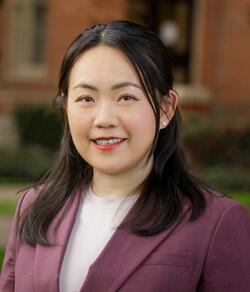
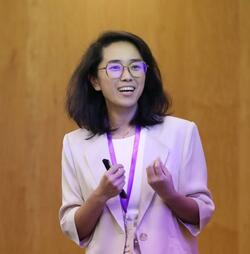
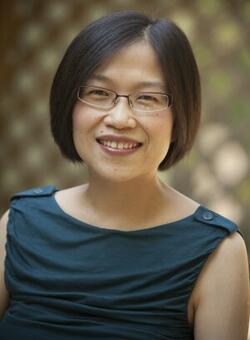
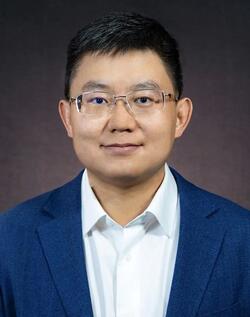
-
title of talk with date and photo of speaker

Join the Tech Impact and Policy Center on January 13th from 12PM–1PM Pacific for AI and Education, a seminar with Peter Norvig.

Stanford affiliates are invited to join us at 11:40 AM for lunch, prior to the seminar.  The Winter Seminar Series continues through March; see our Winter Seminar Series page for speakers and topics. Sign up for our newsletter for announcements. 

About the Seminar:

Traditional lectures serve many students at once but are passive. Individual tutoring does better, but only for one student at a time. This talk explores how Generative AI can democratize the apprenticeship model, transforming education from broadcast to active, inquiry-based learning. With some changes to our approach, we can see AI not as a cheating tool, but as a pedagogical partner that fosters creativity, critical thinking, and personalization.
 

About the Speaker:

Peter Norvig is a Distinguished Education Fellow at the Stanford Institute for Human-Centered AI (HAI) and a researcher at Google. He was previously a director of research at Google and the director of NASA Ames Computational Sciences Division. He is the co-author of Artificial Intelligence: A Modern Approach, the world's leading textbook on AI. His current focus is on developing tools and methods to improve education through technology.

McClatchy Hall, S40 Studio
450 Serra Mall, Stanford, CA 94305

For those attending the in-person seminar, please bring your Stanford ID card/mobile ID to enter the building. 

Peter Norvig Distinguished Education Fellow, Human Centered AI Institute Stanford University
Seminars
Image
Event flyer
Date Label
-
opening slide

Join the Tech Impact and Policy Center on January 13th from 12PM–1PM Pacific for How Tech Has Enabled Survey Research and Undermined It, a seminar with Jon A. Krosnick.

Stanford affiliates are invited to join us at 11:40 AM for lunch, prior to the seminar.  The Winter Seminar Series continues through March; see our Winter Seminar Series page for speakers and topics. Sign up for our newsletter for announcements. 

About the Seminar:

Survey research is a centerpiece of life in America and throughout the world. Billions of dollars are spent by commercial companies, governments, academics, NGOs, and others to track people's life experiences (e.g., the unemployment rate comes from surveys) and opinions (e.g., presidential approval, preferences for government policies, satisfaction with products and services). For decades, scientific survey data collection was strikingly accurate, though expensive. With the arrival of the Internet, the cost of scientific survey data collection declined, but unscrupulous companies took advantage of non-scientific methods to minimize costs, maximize profits, and lie to customers and the public about the accuracy of the resulting data. Fortunately for those companies, researchers purchasing cut-rate data have been complicit in misrepresenting data quality, a prevarication that served the short-term interests of the researchers but caused hugely embarrassing and public failures, such as the prediction that Hillary Clinton would win the U.S. Presidential Election in 2016. Reviewing this history offers an opportunity to see how tech can help researchers and dramatically undermine those same researchers, science generally, and the nation.

About the Speaker:

Winner of the lifetime career achievement award from the American Association for Public Opinion Research and the Nevitt Sanford Lifetime Achievement Award from the International Society of Political Psychology, Jon Krosnick is Frederick O. Glover Professor in Humanities and Social Sciences, and Professor of Communication, Political Science, Environmental Social Science, and Psychology at Stanford University, Director of Stanford’s Political Psychology Research Group, and Research Psychologist at the U.S. Census Bureau. He has expertise in questionnaire design and survey research methodology, voting behavior and elections, and American public opinion. He has taught courses for professionals on survey methods for decades around the world and has served as a methodology consultant to government agencies, commercial firms, and academic scholars. He is a world-recognized expert on the psychology of attitudes, especially in the area of politics and has been co-principal investigator of the American National Election Study, the nation's preeminent academic research project exploring voter decision-making. For 25 years, he has been conducting national surveys of American public opinion on climate change.

McClatchy Hall, S40 Studio
450 Serra Mall, Stanford, CA 94305

For those attending the in-person seminar, please bring your Stanford ID card/mobile ID to enter the building. 

Jon Krosnick Professor of Communication, Political Science, Environmental Social Science, and Psychology Stanford University
Seminars
News Feed Image
wss_january_13_revised_title.jpg
Image
Event flyer
Date Label
-

About the event: In the aftermath of the Soviet Union’s collapse, Kazakhstan inherited the remnants of one of the world’s most contaminated landscapes: the Semipalatinsk Test Site, known locally as the Polygon. Resigned to dispossession, residents have chosen to remain on the abandoned nuclear test site, despite the isolation and the radioactive environment, rather than face marginalization or the rigors of a neoliberal world. Atomic Collective examines this nuclear legacy through a decade-long ethnographic examination of the village of Koian, situated on the border of the test site. Facing residual radiation all around them and isolation, Koianers persist, reshaping their pastoral existence among the ruins and scientific debates surrounding genetic damage.

Drawing on first-hand accounts and archival research, this book explores the resilience and everyday survival strategies of a community left behind to fend for itself in the shadow of nuclear testing. It offers a unique perspective on life in a nuclear zone and poses fundamental questions about human resilience and the impact of historical events on a collective identity. Atomic Collective sheds light on a community overlooked in the larger Cold War histories of atomic testing.

About the speaker: Magdalena Stawkowski is an associate professor in the Department of Anthropology at the University of South Carolina. She earned her PhD from the University of Colorado Boulder in 2014 and has held roles at the Danish Institute for International Studies; the Center for Slavic, Eurasian, and East European Studies at the University of North Carolina-Chapel Hill; and the Center for International Security and Cooperation at Stanford University, as a MacArthur and Stanton Nuclear Security Fellow. Specializing in cultural and medical anthropology, Stawkowski focuses on militarized and nuclear spaces, the political economy of health, and the socio-cultural legacies of Soviet era nuclear testing in Kazakhstan, where she has conducted more than a decade of fieldwork. She has collaborated on international projects examining Cold War radioactive legacies in Kazakhstan, the Marshall Islands, and French Polynesia. Currently, she is engaged in collaborative and comparative research on tritium bioaccumulation and biomagnification in the Semipalatinsk Test Site region and the Savannah River Site in South Carolina.

 All CISAC events are scheduled using the Pacific Time Zone.

No filming or recording without express permission from speaker.

William J. Perry Conference Room

Magdalena Stawkowski
Seminars
Date Label
-

Registration for this event is closed

About the event: Amidst momentous geopolitical shifts, changing leaderships, and evolving domestic priorities, the United States and Iran have maintained an antagonistic relationship for nearly half a century. Standard explanations pin the blame for this enduring hostility on Iran and its leaders’ revolutionary ideology and policies at odds with the United States and the West. While Iran bears significant blame for a deeply adversarial relationship—the country often engages in dangerous and repressive activities—this book demonstrates that “it’s them, not us” accounts cannot alone explain America’s posture toward this complicated but critically important country. Dassa Kaye's book explores how America’s Iran policy is made, the people who make it, and the underlying ideas and perceptions that inform it. Dassa Kaye looks back at U.S. policy toward Iran over the past four decades to help us look ahead, offering wider lessons for understanding American foreign policymaking and providing critical insights at a pivotal time of heightened military tensions in and around the Middle East.

About the speaker: Dr. Dalia Dassa Kaye is a senior fellow at the UCLA Burkle Center for International Relations and director of its Initiative on Regional Security Architectures. A life member of the Council on Foreign Relations, Dalia is an internationally recognized expert on geopolitics and Middle East policy. During her fifteen years at the RAND Corporation, Dalia served as a senior political scientist and the director of the Center of Middle East Public Policy.

She has received numerous awards and held previous positions at an array of research and public policy institutions, including as a Fulbright Schuman visiting scholar at Lund University, a fellow at the Wilson Center, an advisor at the Foreign Ministry of The Netherlands, an assistant professor of political science and international affairs at the George Washington University, a research fellow at the Brookings Institution, and a legislative assistant on Capitol Hill.

She is a frequent public speaker and contributor to leading media outlets, including BBC, CNN, NPR, PBS, and Foreign Affairs. She is the author of dozens of articles and policy reports, as well as three books, including most recently Enduring Hostility: The Making of America’s Iran Policy (Stanford University Press, 2026).

Dalia holds her BA, MA, and PhD in political science from the University of California, Berkeley.

 All CISAC events are scheduled using the Pacific Time Zone.

No filming or recording without express permission from speaker.

William J. Perry Conference Room

Dalia Dassa Kaye
Seminars
Date Label
-
Portrait of Minyoung An on a flyer for her Jan 15, 2026 seminar, "Why Women Leave: Gendered Pathways of Global Talent."

This talk examines how gender and gender inequality shape global talent migration, with a focus on flows to the United States. Conceptualizing gender as both an individual attribute and a structural condition, An shows how macro-level inequalities and micro-level aspirations jointly organize migration pathways. Using South Korea as a case study, the analysis demonstrates that women migrating to the U.S. are more educationally selective than men, suggesting that gender inequality drives women's talents abroad. The talk also introduces comparative work on Korea and Taiwan that investigates gendered return patterns among U.S.-trained PhDs.

Speaker:

Image
Photo of Korea Program postdoctoral fellow Minyoung An

Minyoung An is a Postdoctoral Fellow at Stanford’s Shorenstein Asia-Pacific Research Center and the Stanford Next Asia Policy Lab (SNAPL). Her research investigates how gender shapes global talent flows and the career trajectories of highly skilled workers. Using large-scale datasets and mixed methods, she examines educational selectivity, gendered return migration, and transnational academic linkages. Her work advances understanding of how gender inequality structures pathways of skilled migration and global talent circulation.


Directions and Parking > 

Philippines Conference Room (C330)
Encina Hall, 3rd Floor
616 Jane Stanford Way, Stanford, CA 94305

0
Korea Program Postdoctoral Fellow, 2025-2027
minyoung_an.jpg PhD

Minyoung An joins the Walter H. Shorenstein Asia-Pacific Research Center (APARC) as Korea Program Postdoctoral Fellow beginning July 2025 through 2027. She recently obtained her doctorate in Sociology from the University of Arizona. Her research lies at the intersection of gender, transnational migration, and knowledge production, combining statistical modeling, computational methods, and in-depth interviews.

Her dissertation analyzes gendered migration patterns in South Korea and among international PhD students in the U.S., revealing how gender inequality in countries of origin produces distinct selection effects and return migration dynamics. She also studies academic career trajectories and prestige hierarchies, exploring how gender and national origin affect integration into global academia.

At APARC, she will be involved with the Korea Program and the Stanford Next Asia Policy Lab (SNAPL) as she pursues two projects that extend this research agenda: one using computational analysis of social media data to examine gendered migration intent, and another investigating the academic trajectories and institutional reception of international scholars from East Asia. Through these projects, she aims to advance understanding of how transnational inequalities shape global mobility, opportunity, and inclusion.

Date Label
Minyoung An, Postdoctoral Fellow, APARC, Stanford University
Seminars
Date Label
-
Flyer for "From Invisible Towards Invincibile: Taiwanese Public Opinion on National Security"


As Taiwan’s national security is shaped by escalating military threat and great-power competition, how do Taiwanese citizens view key issues such as the extension of compulsory military service and increased defense spending? More importantly, are they willing to defend their country if a cross-Strait war breaks out, and what role does the United States play in shaping this willingness to fight? In this talk, Dr. Wen-Chin Wu will present findings from a series of surveys conducted among different groups of Taiwanese citizens, including military recruits, to address these interconnected questions and shed light on the public foundations of Taiwan’s defense policy.  

Speaker:

Headshot for Wen-Chin Wu

Wen-Chin Wu is a Research Fellow at the Institute of Political Science at Academia Sinica (IPSAS), Taiwan, and a Lenore Annenberg and Wallis Annenberg Fellow in Communication at the Center for Advanced Study in the Behavioral Sciences (CASBS) at Stanford University in 2025–26. His research focuses on comparative and international political economy, comparative authoritarianism, and cross-Strait relations, with a particular interest in economic statecraft and media dynamics in authoritarian regimes. Over the past five years, he has led a series of projects examining how Taiwanese citizens perceive cross-Strait relations and national security issues. His work has appeared in International Studies Quarterly, Public Opinion Quarterly, and The China Quarterly, among others. His co-authored article in Political Communication received the 2022 Kaid-Sanders Best Political Communication Article of the Year Award from the International Communication Association.

Philippines Conference Room (C330)
Encina Hall, 3rd Floor
616 Jane Stanford Way, Stanford, CA 94305

Wen-Chin Wu, Research Fellow at the Institute of Political Science at Academia Sinica (IPSAS) & 2025-26 Lenore and Wallis Annenberg Fellow in Communication at the Center for Advanced Study in the Behavioral Sciences (CASBS) at Stanford University
Seminars
Date Label
-
Sona Golder

Who Gets into Government and How is Power Shared? Sona Golder revisits two classic government formation questions with new data and new methods.

Who gets into government? Empirical scholars conceptualize government choice as a discrete choice problem in which a government is selected from the set of potential governments. Existing studies define potential governments as any combination of parties that could form a government. However, potential governments with the same partisan composition are not necessarily equivalent. A potential AB government where A is the prime ministerial party is different from a potential BA government where B is the prime ministerial party. Neither political elites nor voters view these potential governments as interchangeable. In this paper, we demonstrate how a reconceptualization of potential governments allows us to jointly model the choices of prime ministerial party and government. Our proposed strategy narrows the gap between theory and empirics, allowing us to test previously 'untestable' hypotheses. It also allows us to integrate the previously separate literatures on the choice of prime minister and the choice of government in a unified framework.

How is power shared within governments? Is there a prime ministerial (PM) party advantage when it comes to ministerial portfolio allocation in coalition governments? Early models of government formation predicted that PM parties would be advantaged when portfolios are allocated. Empirical studies based on postwar Western Europe, though, show that portfolios are allocated fairly proportionally with, if anything, a slight PM party disadvantage. In recent years, scholars have sought to resolve this troubling disconnect between theory and empirics by developing new theoretical models that better match 'empirical reality.' In this paper, we question the purported empirical reality. Using original data on (i) a global sample of postwar non-presidential democracies, (ii) interwar European democracies, and (iii) subnational Indian governments, we find that PM parties are rarely disadvantaged across different regions, time periods, and institutional settings. Indeed, we generally find a significant PM party advantage. Our findings highlight a potential danger of repeatedly testing and revising theories based largely on the same empirical cases.


Sona N. Golder is Professor of Political Science at The Pennsylvania State University. Her research focuses on political institutions, especially in the context of coalition formation. In addition to articles in a variety of general and comparative politics journals, such as the American Journal of Political Science, the Journal of Politics, the British Journal of Political Science, Political Analysis, and Politics & Gender, she has published four books, including The Logic of Pre-Electoral Coalition Formation, Multi-level Electoral Politics, and Principles of Comparative Politics. She's currently working on a fifth book on Interaction Approaches to Intersectionality that's under contract at Cambridge University Press. She's also a co-PI on a multi-year project funded by the Norwegian Research Council examining party instability and party switching in parliaments (INSTAPARTY). 

Professor Golder has served as the lead editor of the British Journal of Political Science as well as on multiple editorial boards. She is currently an Associate Editor for Research & Politics and on the editorial board of Political Science Research and Methods. She also previously edited the Newsletter of the Comparative Politics Organized Section of the American Political Science Association.

Anna Grzymała-Busse
Anna Grzymała-Busse
Sona N. Golder, Pennsylvania State University
Seminars
Date Label
-
Zeynep Somer-Topcu

Whose preferences do political candidates in majoritarian systems represent on social media? Using the candidates' tweets during election campaigns in the UK, we examine whether candidates target copartisans, independents, or general preferences

We investigate how political candidates in the UK use Twitter to emphasize policy issues during election campaigns, and to what extent the issue priorities of
different voter groups affect their social media behavior. Drawing on approximately 750,000 tweets from nearly 5,000 candidates during the one-month campaign period before the 2015, 2017, and 2019 general elections in the UK, we examine the alignment between candidates’ online issue emphasis and the Most Important Issue (MII) responses of average voters, co-partisans, and independents at both the regional and national levels. 

We find that candidates’ Twitter activity most closely aligns with their co-partisans’ issue preferences. Candidates also represent the issues of general voters and independents but put less effort on those compared to the copartisans. Voters’ social media use, on the other hand, does not condition candidates’ online strategies.


Zeynep Somer-Topcu is a professor in the Department of Government at the University of Texas at Austin. She is also one of the chief editors at the British Journal of Political Science, Vice-President of the Midwest Political Science Association (MPSA), and the Chair of the Diversity Committee of the European Political Science Society (EPSS), among her other services. Her research interests are at the intersection of political parties and voter behavior in advanced democracies. Her recent book, Glass Ceilings, Glass Cliffs, and Quicksands: Gendered Party Leadership in Parliamentary Systems (coauthored with Andrea Aldrich), published by Cambridge University Press, examines the life-cycle of women party leaders from candidacy to their election to and termination from party leadership. She is currently working on a series of projects examining party campaign rhetoric and voter perceptions of party issue positions. Her research sheds light on why political parties adopt certain electoral strategies and on the electoral and behavioral consequences of these strategies.

Anna Grzymała-Busse
Anna Grzymała-Busse
Zeynep Somer-Topcu, University of Texas at Austin
Seminars
Date Label
-
Birgit Lodes

Birgit Lodes explores how women inspired and performed, enabled and transformed Beethoven's music and legacy.

Beethoven dedicated printed works to sixty-three individuals––twenty-three of them women–– mostly from the high nobility or the “second society” that shaped Viennese musical life and patronage around 1800. Nearly all knew the composer personally and shared his enthusiasm for a refined ideal of music that functioned as social and symbolic capital in the Bourdieusian sense. Beethoven’s dedications thus can offer a window into the social conditions of composition, early performance practices, and the meanings attached to these works. The pieces Beethoven dedicated to women—chiefly songs and piano compositions—not only reflect the gendered norms of musical education and salon culture central to his professional life, but, as I will argue, were often specifically crafted to suit the individual tastes and abilities of these women. 

Several of these works might never have existed without the inspiration and engagement of these female patrons and performers. Shifting the focus from the composer’s public “heroic” oeuvre to works reflecting his artistic and social engagements within these circles reveals a different Beethoven: one deeply embedded in the musical, cultural, and sociological networks of his time. Reconsidering these contexts challenges long-standing nationalist and bourgeois-masculine narratives and highlights the active, formative role of aristocratic women as patrons, performers, and mediators of Beethoven’s art in Habsburg Vienna.


Birgit Lodes studied in Munich, at UCLA, and at Harvard University. Since 2004, she has been Professor of Historical Musicology at the University of Vienna and currently serves as Distinguished Visiting Austrian Chair at Stanford University. She is a corresponding member of the Austrian Academy of Sciences and editor-in-chief of the series Denkmäler der Tonkunst in Österreich. Her research focuses on musical life in Central Europe around 1500 (https://musical-life.net/en), as well as on Beethoven, Schubert, and their circles.

Anna Grzymała-Busse
Anna Grzymała-Busse
Birgit Lodes, University of Vienna; Distinguished Visiting Austrian Chair at The Europe Center
Seminars
Date Label
-
Rosamund Johnston Event Graphic

Rosamund Johnston charts how, during the Cold War, arms production shaped interactions between different groups in communist Czechoslovakia and underlay the country’s relationship with the rest of the world.

Czechoslovakia, rarely thought of as one of the Cold War's major players, was perhaps the biggest exporter of small arms to Africa throughout the 1960s. And lurking in the background of Cold War crises—from Guatemala and Suez in the 1950s to Angola and Afghanistan in the 1980s—were Czechoslovak weapons.

In this talk, I follow the flow of commodities from the Czechoslovak provinces to the Cold War's flashpoints, excavating the role played by Czechoslovak arms in shaping global conflict in the twentieth century. Conversely, I show how global conflict shaped class configurations and gender relations on the factory floor. Rather than a top-down tale of politics and diplomacy, I focus in turns on the state's leaders, arms dealers, munitions workers, international students, and the general public to demonstrate the complex web of interactions upon which Czechoslovakia's international arms trade relied. To do so reveals both the sovereignty of Soviet "satellite" states during the Cold War and socialist internationalism's shifting forms.


Rosamund Johnston is the Principal Investigator of Linking Arms: Central Europe's Weapons Industries, 1954-1994 at the Research Center for the History of Transformations (RECET), University of Vienna. She is the author of the award-winning Red Tape: Radio and Politics in Czechoslovakia, 1945-1969 which appeared with Stanford University Press in 2024. She has also written for Central European History, The Journal of Cold War Studies, East Central Europe, Harvard Ukrainian Studies, Scottish newspaper The National, and public broadcaster Czech Radio. Johnston is the main editor of The Routledge Handbook of 1989 and the Great Transformation (to be published in January 2026), and has authored one book of public history, Havel in America: Interviews with American Intellectuals, Politicians, and Artists, released by Czech publisher Host in 2019.

Anna Grzymała-Busse
Anna Grzymała-Busse
Rosamund Johnston, University of Vienna
Seminars
Date Label
Subscribe to Seminars