-

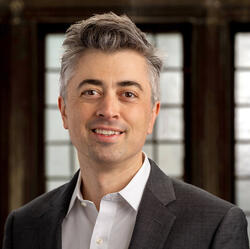
About the event: Nuclear weapons are considered a prominent international status symbol that signal military strength, technological prowess, and a state’s association with the great power club. This idea of “nuclear prestige” has affected our understanding of proliferation, nonproliferation, and nuclear modernization. Debate rages on whether nuclear prestige still exists. I contribute to this debate by arguing that nuclear prestige has never been symbolically dominant in the international community’s understanding of the bomb. I offer a theory of status symbols and demonstrate that global opposition and divided superpower messaging prevented the rise of nuclear prestige. I test my argument with a case study of contestation over the meaning of the bomb and pair it with a discourse analysis of 10,000 hand-coded observations of nuclear mentions in United Nations General Debate speeches (1946 – 2025). I contribute to our understanding of nuclear symbolism, the effectiveness of the NPT, and to our understanding of international status.

About the speaker: Kevin Bustamante is the Macarthur Hennessey Postdoctoral Fellow at Stanford University's Center for International Security and Cooperation. He was previously a postdoctoral fellow at the University of Notre Dame where he earned his PhD in August 2024. His research agenda centers around questions of international security and racism, with a focus on nuclear politics. His work has been published in Security Studies and his book project examines the transformation of dominant racial ideas over the last two centuries.

 All CISAC events are scheduled using the Pacific Time Zone.

No filming or recording without express permission from speaker.

William J. Perry Conference Room

Kevin Bustamante
Seminars
Date Label
-
Caroline Figueroa

Dr. Figueroa focuses her research on developing and testing personalized digital health tools to help individuals lead healthier lives. She focuses on tailoring these tools to the needs of underserved populations, such as people from ethnic and gender minority backgrounds, low-income individuals, and those with severe mental illness. Among other projects, she studies mobile apps that use artificial intelligence to help individuals manage their mental health and increase their physical activity. She developed frameworks to conduct digital health research through a social justice and feminist intersectionality approach. 


Health Policy Seminars are hybrid events open to the Stanford community. For more information, please reach out to healthpolicy-comms@stanford.edu

Encina Commons, Room 119
Department of Health Policy/Center for Health Policy   
615 Crothers Way, Stanford

Lunch will be provided

Seminars
Date Label
-

This event has been cancelled due to the power outage across campus. We apologize for the inconvenience and appreciate your understanding. 

About the event: The 2011 Fukushima Dai’ichi nuclear disaster was the worst industrial nuclear catastrophe to hit Japan. It was a major event, rated at the highest severity, which released radioactive elements into the power plant’s surrounding environment when back-up systems failed and could not sufficiently cool the nuclear reactors. At least 164,000 people were permanently or temporarily displaced. Radioactive Governance offers an ethnographic look at how the disaster was handled by Japan. Unlike prior nuclear-related narratives, such as those surrounding Chernobyl or Hiroshima, which focused on themes of harm, trauma, and victimization, the Japanese government consistently put forward a discourse of minimal or no radiation-related dangers, a gradual bringing home of former evacuees, a restarting of nuclear power plants, and the promotion of a resilient mindset in the face of adversity. This narrative worked to counter other understandings of recovery, such as those of worried citizens unsuccessfully fighting for permanent evacuation because they were afraid to go back to their homes. Providing a rich theorization of how both governments and citizens shape narratives about catastrophic events, Radioactive Governance not only displays how Fukushima became a story of hope and resilience rather than of victimization, but also how radioactive governance shifted from the nuclear secrecy that characterized the Cold War era to relying on international organizations and domestic citizens to co-manage the aftermath of disasters.

About the speaker: Maxime Polleri is an Assistant Professor in the Department of Anthropology at Université Laval and a member of the Graduate School of International Studies. As an anthropologist of technoscience, he studies the governance of disasters, waste and misinformation, with a primary focus on nuclear topics and a regional expertise on Japan.

 All CISAC events are scheduled using the Pacific Time Zone.

No filming or recording without express permission from speaker.

William J. Perry Conference Room

Maxime Polleri
Seminars
Date Label
-

About the event: Why do democratic leaders politicize foreign policy bureaucracies? While existing scholarship recognizes that leaders and bureaucrats often clash, it usually attributes these conflicts to organizational pathologies, principal-agent problems, or policy disagreements. This project develops a theory that explains when leaders attack their foreign policy bureaucracies by installing loyalists, marginalizing or purging careerists, and creating parallel agencies, a strategy I call politicization. It argues that leaders tend to politicize instead of bypassing or coordinating with the bureaucracy when two forces come together: when leaders strongly distrust the bureaucracy, fueled by intense partisan, ideological, and social conflicts, and have enough domestic political power to reshape institutions in their own image.

About the speaker: Emily Tallo is the India-U.S. security studies postdoctoral fellow at CISAC. She received her Ph.D. in political science from the University of Chicago in August 2025. Emily’s research centers on the domestic politics of foreign policy, focusing on how leaders, bureaucracies, and political parties shape international politics with a regional emphasis on South Asia. Before academia, Emily was a researcher at the Henry L. Stimson Center’s South Asia program in Washington, DC, and an editor of the online magazine South Asian Voices. Her commentary has been featured in Foreign Policy, The Washington Post’s Monkey Cage blog, and War on the Rocks.

 All CISAC events are scheduled using the Pacific Time Zone.

No filming or recording without express permission from speaker.

William J. Perry Conference Room

Emily Tallo
Seminars
Date Label
-

About the event: Following the failed 1959 Lhasa Uprising, tens of thousands fled Tibet. Most of these refugees (including the fourteenth Dalai Lama) settled in India, but others ended up in countries such as Australia, Canada, Nepal, Switzerland, and the United States. Drawing on newspapers, multinational archival sources, and assorted secondary works, this talk will explore how and why both governments and civil society assisted the Tibetans as well as the ways in which Cold War considerations shaped their decisions. This talk will also shed light on Chinese reactions to aid for Tibetans and how refugees have been perceived.

About the speaker: Reed Chervin is Associate Professor and Associate Director of the Motwani Jadeja Institute for American Studies at O. P. Jindal University. He was previously a postdoctoral fellow in the Strategy and Policy Department at the U.S. Naval War College. His first book, The Cold War in the Himalayas, was published with Amsterdam University Press/Routledge, and his other work has appeared in The China Quarterly, The Journal of Cold War Studies, and H-Diplo, among other venues. His current book project is on foreign support for Tibetan rebels and refugees from the 1950s through the 1970s.

 All CISAC events are scheduled using the Pacific Time Zone.

No filming or recording without express permission from speaker.

William J. Perry Conference Room

Reed Chervin
Seminars
Date Label
-

About the event: In the wake of conflict and the rise of authoritarian populist movements, national police are becoming more militarized across the globe. This is in spite of the consolidation of international norms for civilian policing. That state police are more militarized is not necessarily surprising since states are fundamentally concerned with domestic order. Like states, international organizations (IOs) are concerned with domestic security and often participate in domestic police reforms as a result. Do IO police reforms operate as a check on global trends toward police militarization? I argue that IOs, though they make determined attempts to institute civilian and democratic policing norms, often reinforce militarized policing. This occurs through institutional and individual mechanisms. First, IOs view order as a necessary condition for democratic or human rights-based policing. Second, individual bureaucrats reinforce this trend because they see insecure spaces as inherently prone to violence and recommend more militarized policing in response. I evaluate the theory using archival evidence from two United Nations (UN) policing missions in Namibia and Bosnia and Herzegovina and interviews with IO policing experts. I find that police militarization is a persistent problem that lacks clear reform solutions, even when implemented by a well-respected IO like the UN.

About the speaker: Before coming to CISAC, Maya was a Neubauer Family Distinguished Doctoral Fellow at the University of Chicago where she received her Ph.D. in Political Science in July, 2025. Maya holds an M.A. in Political Science from the University of Chicago and B.A. in Global and International Studies and Humanities from the University of Kansas. Maya's research combines critical and mainstream approaches to explore the legacies of empire in conflict dynamics and state-building. Specifically, she is interested in how international organizations and private firms collaborate with states for international security sector reforms in and outside of post-conflict contexts.

 All CISAC events are scheduled using the Pacific Time Zone.

No filming or recording without express permission from speaker.

William J. Perry Conference Room

Maya Van Nuys
Seminars
Date Label
-
Talk title slide

Join the Tech Impact and Policy Center on February 24th from 12PM–1PM Pacific for a seminar with Tom Schnaubelt.

Stanford affiliates are invited to join us at 11:40 AM for lunch, prior to the seminar.  The Winter Seminar Series continues through March; see our Winter Seminar Series page for speakers and topics. Sign up for our newsletter for announcements. 

About the Seminar:

What does it mean to become a citizen in an age of polarization, platforms, and declining trust in institutions? This 60-minute seminar explores how civic identity is formed, why American civic education is struggling to keep pace with social and technological change, and what that means for democracy. Drawing on research and hands-on experience in civic education, the session examines how colleges, communities, and digital environments shape civic habits, beliefs, and participation—often in unintended ways. The seminar will describe a variety of innovative approaches to civic learning and asks how technology can move from fragmenting civic life to playing a role in revitalizing democratic knowledge, skills, and behaviors.

About the Speaker:

Prior to assuming the role of Executive Director of the Center for Revitalizing American Institutions at the Hoover Institution in 2023, Tom served as a Lecturer and Senior Advisor on Civic Education at the Deliberative Democracy Lab, within the Center for Democracy, Development, and the Rule of Law at the Freeman Spogli Institute for International Studies. Tom came to Stanford in 2009 and has served as the Associate Vice Provost for Education, the Executive Director of the Haas Center for Public Service, and a Resident Fellow in Branner Hall, where he and his wife oversaw the development and implementation of a living-learning community focused on public service and civic engagement. In 2015, Tom coordinated the launch of Cardinal Service, a university wide effort to elevate and expand public service as a distinctive feature of the Stanford experience, and he has launched and led several national initiatives focused on democratic engagement and social change education.

Prior to coming to Stanford in 2009, Tom served as the Dean for Community Engagement and Civic Learning at the University of Wisconsin-Parkside and was the founding Executive Director of Wisconsin Campus Compact. Tom began his career as the first service-learning coordinator at the University of Southern Mississippi. During his eight years in Mississippi, Tom coordinated statewide academic-community partnerships, including several large AmeriCorps programs focused on educational equity and environmental sustainability, and launched the Mississippi Center for Community and Civic Engagement.

Tom’s personal vision is to connect people with themselves, each other, and the earth in ways that contribute to the common good and build a more perfect union. His work in higher education focuses on democratic engagement, and place-based and experiential learning that fosters civic identity and the capacity to engage constructively across differences. He has extensive experience creating university-community partnerships and his experiences span geographic, disciplinary, and institutional boundaries. Tom received a Ph.D. in Educational Leadership from the University of Mississippi, a Master of Arts in Education from the University of Michigan, and Bachelor of Science in Physics from the University of Wisconsin-Stevens Point.

McClatchy Hall, S40 Studio
450 Serra Mall, Stanford, CA 94305

For those attending the in-person seminar, please bring your Stanford ID card/mobile ID to enter the building. 

Tom Schnaubelt Executive Director, The Center for Revitalizing American Institutions Hoover Institute, Stanford University
Seminars
Date Label
-
Event title slide for Guilherme Lichand talk

Join the Tech Impact and Policy Center on February 10th from 12PM–1PM Pacific for a seminar with Guilherme Lichand.

Stanford affiliates are invited to join us at 11:40 AM for lunch, prior to the seminar.  The Winter Seminar Series continues through March; see our Winter Seminar Series page for speakers and topics. Sign up for our newsletter for announcements. 

About the Seminar:

A rapidly expanding literature documents the detrimental effects of excessive cell phone use, particularly on mental health outcomes and attention. While nearly all studies focus on adult populations, many experts have used them to support phone bans in schools – partially in the hope that these might help reverse declining trends in standardized test scores dating from even before the Covid-19 pandemic. This paper provides first-hand evidence that phone restrictions in schools indeed causally boost K–12 learning outcomes. Leveraging the introduction of a policy that banned non-pedagogical uses of cell phones within schools in Rio de Janeiro, Brazil, we contrast schools that already had strict rules on phone use even before the policy (the control group) to all other schools (the treatment group), before and after the ban. We find that, 1.5 year after roll-out, (1) the prevalence of high-usage schools converged across groups; and (2) standardized test scores significantly increased in treatment schools, relative to control: in the former, students learned 0.06 s.d. more – enough to fully eliminate the baseline gap in test scores across groups.

About the Speaker:

Guilherme is an Assistant Professor of Education at Stanford, co-Director at the Stanford Lemann Center for Entrepreneurship and Educational Innovation in Brazil, and a faculty affiliate at the Stanford King Center for Global Development, the Stanford Center on Early Childhood, the Stanford Institute for Advancing Just Societies, and the UC Berkeley Center for Effective Global Action. He holds a PhD in Political Economy and Government from Harvard University. Previously, he was the UNICEF professor of Economics and Child Wellbeing and Development at the University of Zurich. Guilherme was recognized by the Schwab Foundation and Folha de São Paulo as Brazil's top-10 social entrepreneur (post-pandemic legacy), in 2020, and by MIT Technology Review as Brazil's top social innovator among under-35 entrepreneurs, in 2014. He is also an expert in social innovation at the World Economic Forum Expert Network.

Sunny Xun Liu

McClatchy Hall, S40 Studio
450 Serra Mall, Stanford, CA 94305

For those attending the in-person seminar, please bring your Stanford ID card/mobile ID to enter the building. 

Guilherme Lichand Assistant Professor of Education Stanford University
Seminars

Evidence from Brazil

Date Label
-
Title of talk with date and photo of the speaker

Join the Tech Impact and Policy Center on January 27th from 12PM–1PM Pacific for AI, Automation, and Augmentation, a seminar with Rob Reich.

Stanford affiliates are invited to join us at 11:40 AM for lunch, prior to the seminar.  The Winter Seminar Series continues through March; see our Winter Seminar Series page for speakers and topics. Sign up for our newsletter for announcements. 

About the Seminar:

Will artificial intelligence replace human workers, or will it empower them? Tech leaders and economists have long warned that AI is fundamentally a "labor-replacing tool" destined to automate away millions of jobs. But this outcome is not inevitable—it reflects specific design choices, not technological fate.
This presentation challenges the prevailing automation narrative by recovering a neglected vision from the history of computing. Drawing on labor economics and the history of computing, this paper examines the distinction between automation (machines doing tasks for us) and augmentation (machines doing tasks with us). It argues that both the design choices of AI developers, the policy decisions of governments, and the adoption patterns of users will determine the effects of AI on labor and society.

About the Speaker:

Rob Reich is the McGregor-Girand Professor of Social Ethics of Science and Technology at Stanford University. His main appointment is in Political Science where he works at the intersection of political theory, social science, and computer science. He is senior fellow at the Institute for Human Centered Artificial Intelligence. His current interests are in AI governance. He was on public service leave in 2024-25 as Senior Advisor to the United States AI Safety Institute. His most recent books are System Error: Where Big Tech Went Wrong and How We Can Reboot (with Mehran Sahami and Jeremy M. Weinstein 2021) and Digital Technology and Democratic Theory (edited with Lucy Bernholz and Hélène Landemore). He has testified before Congress and written widely for the public, including for the New York Times, Washington Post, Wired, Time Magazine, The Atlantic, The Guardian, and the Stanford Social Innovation Review. He was a sixth grade teacher at Rusk Elementary School in Houston, Texas before attending graduate school. He is a board member of the magazine Boston Review and at the Spencer Foundation. He helped to create the global movement #GivingTuesday and serves as the founding chair of its board.

McClatchy Hall, S40 Studio
450 Serra Mall, Stanford, CA 94305

For those attending the in-person seminar, please bring your Stanford ID card/mobile ID to enter the building. 

Rob Reich McGregor-Girand Professor of Social Ethics of Science and Technology Stanford University
Seminars
News Feed Image
wss_january_27.png
Image
Event flyer
Date Label
-

About the event: Because no nuclear weapon has been used to attack a target since 1945, a tendency to project existing trends into the future could lead people to expect this pattern of nuclear nonuse to continue. But is it possible to have confidence about whether and how far into the future the record of nonuse will continue? In this talk, Dr. Knopf will argue that confidence about avoiding nuclear use is not possible because the probability of a nuclear attack or nuclear exchange cannot be predicted. This unpredictability reflects the nature of strategy and the available evidence about nuclear deterrence. Strategy involves making a prediction that a chosen course of action will lead to outcomes desired by a state. But attempts to make forecasts about nuclear deterrence are beset by uncertainty and trade-offs and by the interaction of those two problems. Using a thought experiment to illustrate, Dr. Knopf will suggest that the problems of uncertainty and trade-offs make it impossible to reliably estimate the likelihood that any given nuclear strategy will prevent nuclear-weapons use. If this analysis is correct, it should motivate greater efforts to reduce the chance of nuclear-weapons use and to find alternatives to nuclear deterrence. Steps that could help advance those objectives include measures to strengthen inhibitions against nuclear use, as well as renewed efforts to move toward nuclear disarmament.

About the speaker: Jeff Knopf is a professor at the Monterey Institute of International Studies, where he serves as chair of the MA program in Nonproliferation and Terrorism Studies. Dr. Knopf received a Ph.D. in Political Science from Stanford, and in 2018-19 he spent a sabbatical year at CISAC. Dr. Knopf has published extensively on topics related to deterrence, arms control, nonproliferation, and the defense industry. His most recent book is Coercing Syria on Chemical Weapons, published earlier this year by Oxford University Press in its Bridging the Gap Series.

 All CISAC events are scheduled using the Pacific Time Zone.

No filming or recording without express permission from speaker.

William J. Perry Conference Room

Jeffrey Knopf
Seminars
Date Label
Subscribe to Seminars