-
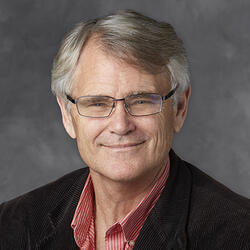
Lee Sanders

Dr. Lee Sanders is a general pediatrician and Professor of Pediatrics at the Stanford University School of Medicine, where he is Chief of the Division of General Pediatrics. He holds joint appointments in the Department of Health Policy, Department of Epidemiology and Population Health and the Freeman Spogli Institute for International Studies. He teaches in the Human Biology Program and at the Hasso Plattner Institute of Design (Stanford d.School). He is a national expert in the science of health literacy, which applies a literacy lens to advancing maternal and child health equity. He directs the Stanford Health Literacy Lab, which aims to address child disparities in health and educational, by redesigning primary-care with youth and families. 


Health Policy Seminars are hybrid events open to the Stanford community. For more information, please reach out to healthpolicy-comms@stanford.edu

Encina Commons, Room 119
Department of Health Policy/Center for Health Policy   
615 Crothers Way, Stanford

Lunch will be provided

Seminars
Date Label
-
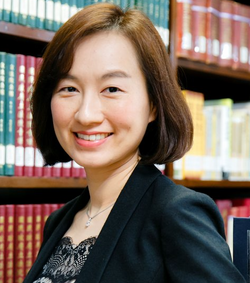
Michelle Williams

Dr. Williams' research focuses primarily on reproductive and perinatal epidemiology. Over three decades, she has integrated epidemiological, biological, and molecular approaches into rigorously designed research that has advanced understanding of placental abruption, gestational diabetes, and preeclampsia. Her research methodology includes: (1) identifying literature gaps; (2) developing robust epidemiological data systems across North America, Sub-Saharan Africa, Asia, and South America; and (3) integrating biochemical and molecular biomarkers into these platforms. In 2019, in partnership with Apple Inc. and the National Institute of Environmental Health Sciences, she co-designed and currently co-leads the Apple Women's Health Study, a large-scale digital national study examining determinants of women's gynecological health. Dr. Williams has been recognized for her excellence in teaching, as the recipient of the 2015 Harvard Chan School’s Outstanding Mentor Award, the UW’s Brotman Award for excellence in teaching (2007), the American Public Health Association’s Abraham Lilienfeld Award for education in epidemiology (2007), and the White House’s Presidential Award for Excellence in Science, Mathematics, and Engineering Mentoring (2012).


Health Policy Seminars are hybrid events open to the Stanford community. For more information, please reach out to healthpolicy-comms@stanford.edu

Encina Commons, Room 119
Department of Health Policy/Center for Health Policy   
615 Crothers Way, Stanford

Lunch will be provided

Seminars
Date Label
-
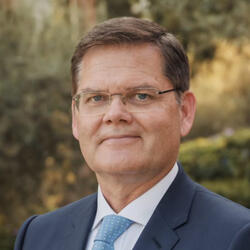
Jeffrey Pfeffer

Jeffrey Pfeffer is The Thomas D. Dee II Professor of Organizational Behavior at the Graduate School of Business, Stanford University where he has taught since 1979. He currently serves on the advisory boards for Collective Health, Medeloop, Quorso, and Veridian, and on the boards of the nonprofits Quantum Leap Healthcare and the San Francisco Playhouse. His current research focuses on the effects of work environments on human health and well-being, power and leadership in organizations, evidence-based management, the knowing-doing gap, and how thinking of time like money affects people’s choices about spending time in ways that promote unhappiness.


Health Policy Seminars are hybrid events open to the Stanford community. For more information, please reach out to healthpolicy-comms@stanford.edu

Encina Commons, Room 119
Department of Health Policy/Center for Health Policy   
615 Crothers Way, Stanford

Lunch will be provided

Seminars
Date Label
-
Omar Galarraga

Omar Galárraga, PhD is a health economist and tenured Professor of Health Services, Policy and Practice at the Brown University School of Public Health. He currently serves as the Director of the Center for Global Public Health (CGPH) at Brown. Dr. Galárraga’s research applies principles from health and behavioral economics to improve public health outcomes, with a specific focus on: (a) HIV Prevention & Treatment: Designing and evaluating economic-based interventions, such as conditional economic incentives to improve adherence to antiretroviral therapy and reduce risk behaviors; (b) Health Systems: Analyzing health systems reform and insurance expansion in low- and middle-income countries; and (c) Applied Econometrics: Utilizing rigorous experimental and non-experimental methods to evaluate health interventions and policies. 


Health Policy Seminars are hybrid events open to the Stanford community. For more information, please reach out to healthpolicy-comms@stanford.edu

Encina Commons, Room 119
Department of Health Policy/Center for Health Policy   
615 Crothers Way, Stanford

Lunch will be provided

Seminars
Date Label
-
Portrait of Sungchul Park

In February 2024, the South Korean government announced an expansion of medical school enrollment by 2,000 students to address physician shortages, prompting widespread opposition from the medical community. On February 19, 2024, over 90% of trainee doctors—representing approximately one-third of physicians at major teaching hospitals—resigned and launched a nationwide walkout that lasted until August 2025. This 18-month walkout constituted a major workforce shock in a universal, single-payer system and created a rare opportunity to evaluate effects on mortality, health care use, and spending. Hear from Prof. Park as he presents the results of a study on the impacts of the walkout.

Using a difference‑in‑differences design, the findings reveal significant increases in 30‑day and 90‑day in‑hospital mortality and in weekly all‑cause mortality. Health care utilization declined across inpatient and outpatient settings, with a greater relative reduction in hospital admissions. Hospitalizations dropped primarily for simple and general conditions, whereas admissions for complex conditions remained stable. Mean spending per hospitalization rose substantially, and spending per outpatient visit increased modestly. There was little evidence of systematic substitution of care from teaching hospitals to non‑teaching facilities or primary care settings. Overall, the nationwide trainee doctor walkout in South Korea was associated with higher mortality and lower health care utilization. These findings underscore the vulnerability of health systems to workforce disruptions and highlight the need for policies that strengthen staffing resilience, contingency planning, and communication mechanisms between the government and the medical workforce.

Speaker:

Image
Prof. Sungchul Park

Sungchul Park is an Associate Professor in the Department of Health Policy and Management at Korea University (Republic of Korea). He previously held tenure-track faculty positions at Drexel University (United States) and Ewha Womans University (Republic of Korea). As a health economist and health services researcher, he studies how to design better health care systems that deliver high-quality care at a reasonable cost while ensuring equitable access. His research evaluates the value of health care by assessing both costs and patient and population health outcomes and investigates payment and care delivery reforms, with an emphasis on value-based care. He also analyzes how emerging technologies, including artificial intelligence and digital health, affect cost, quality, access, and efficiency in health care. In addition, he compares health system performance across high-income countries, particularly OECD members, to identify policies that improve care and well-being.


Zoom

Sungchul Park, Associate Professor, Korea University, South Korea
Seminars
Image
Portrait of Sungchul Park
Date Label
-
Prof. Jessica Chen Weiss

Beneath Xi Jinping’s grand slogans of a “Chinese dream” and a “shared future for humankind,” there are internal tensions, debates, and competing interests that continue to shape China’s approach to the world. Through the lens of domestic politics, nationalism, and regime insecurity in China, Weiss will examine the evolving and contested landscape of what “China” wants. The talk will conclude with policy implications for the United States, prospects for peaceful coexistence, and the future of international order.

Speaker:

Image
Prof. Jessica Chen Weiss 1

Jessica Chen Weiss is the David M. Lampton Professor of China Studies at Johns Hopkins University's School of Advanced International Studies and the inaugural faculty director of the Institute for America, China, and the Future of Global Affairs (ACF) at SAIS. From August 2021 to July 2022, she served as senior advisor to the Secretary's Policy Planning Staff at the U.S. State Department on a Council on Foreign Relations Fellowship for Tenured International Relations Scholars (IAF-TIRS). Weiss is the author of Powerful Patriots: Nationalist Protest in China’s Foreign Relations (Oxford University Press, 2014). Her research appears in International Organization, China Quarterly, International Studies Quarterly, Journal of Conflict Resolution, Security Studies, Journal of Contemporary China, and Review of International Political Economy. With commentary in the New York Times, Washington Post, Foreign Affairs, Los Angeles Times, and the Ezra Klein show, Weiss was profiled by the New Yorker and named one of Prospect Magazine's Top Thinkers for 2024. Weiss is also a nonresident senior fellow at the Asia Society Policy Institute Center for China Analysis and previously the Michael J. Zak Professor for China and Asia-Pacific Studies at Cornell University and an assistant professor at Yale University. She founded FACES, the Forum for American/Chinese Exchange at Stanford University. Born and raised in Seattle, Washington, she received her Ph.D. from the University of California, San Diego.


Directions and Parking > 

Philippines Conference Room (C330)
Encina Hall, 3rd Floor
616 Jane Stanford Way, Stanford, CA 94305

Jessica Chen Weiss, David M. Lampton Professor of China Studies Faculty Director, Institute for America, China, and the Future of Global Affairs Johns Hopkins School of Advanced International Studies
Seminars
Date Label
-
Flyer for Gi-Wook Shin Book Talk


The Asia-Pacific region has witnessed some of the most remarkable economic success stories of the modern era. Japan’s postwar rise, China’s ascent to the world’s second-largest economy, India’s emergence as a top-five economic power, and Australia’s long-standing resilience despite its small population all testify to the region’s dynamism. Central to these achievements has been the ability to cultivate, attract, and utilize talent—though each country has done so in distinct ways shaped by its history, culture, and institutions. This book explores how these four "talent giants" sustained growth amid demographic decline, brain drain, and geopolitical tension, offering timely insights into the link between talent and development. In an era of intensifying global competition for talent and polarized immigration debates, this discussion could not be more timely.

Speaker:

Gi-Wook Shin headshot

Gi-Wook Shin is the William J. Perry Professor of Contemporary Korea in the Department of Sociology, senior fellow at the Freeman Spogli Institute for International Studies, and the founding director of the Korea Program at the Walter H. Shorenstein Asia-Pacific Research Center (APARC) since 2001, all at Stanford University. In May 2024, Shin also launched the Taiwan Program at APARC. He served as director of APARC for two decades (2005-2025). As a historical-comparative and political sociologist, his research has concentrated on social movements, nationalism, development, democracy, migration, and international relations.

Philippines Conference Room (C330)
Encina Hall, 3rd Floor
616 Jane Stanford Way, Stanford, CA 94305

Gi-Wook Shin, William J. Perry Professor of Contemporary Korea & Director of the Korea and Taiwan Programs at the Shorenstein Asia-Pacific Research Center, Stanford University
Seminars
Date Label
-

About the event: The threat of illicit nuclear and other radioactive materials poses a risk to international security. The analysis of post-Soviet disintegration cases of illicit trafficking suggests that those incidents were mostly opportunistic thefts resulting from a weakened security system and/or lack of strict oversight. With the growing threat of global terrorism and the emergence of various terrorist networks across the world, however, the focus has shifted to the probability of a terrorist outfit gaining access to these deadly weapons and materials, especially in South Asia. In that regard, the study identifies the role of a nuclear security regime in mitigating the risks arising from the threat of illicit trafficking incidents. It identifies a distinct nuclear security regime under the regime theory and seeks its application in a regional framework in the South Asian context. It assesses the nuclear security norms and practices of India and Pakistan and proposes a template of a regional cooperative mechanism that can be built upon the principles, norms, rules, and procedures of the nuclear security regime. The template is tailored according to the regional environment in South Asia and it has practical features that range from some ideal approaches to more realistic measures. In that regard, the proposed nuclear security regime seeks to de-securitize the nuclear security debate, which in turn, will facilitate framing nuclear security cooperation as a mutual interest and nuclear security risks as common threats even among the competitive states.

About the speaker: Sitara Noor is a Stanton Nuclear Security Fellow at Stanford University, California. She received her Ph.D. in Political Science in July 2025 from University of Vienna. Her research interests include nuclear security, non-proliferation, and strategic stability, with a particular focus on South Asia. She was formerly a Managing the Atom Fellow at Belfer Center from 2022 to 2024. In 2023, she was a Fellow at the NATO Defense College in Rome. She also held the position of Research Fellow at VCDNP in Vienna, Austria, during 2016-2017. Earlier in her career, she worked as an International Relations Analyst at Pakistan Nuclear Regulatory Authority (2008 to 2015).

 All CISAC events are scheduled using the Pacific Time Zone.

No filming or recording without express permission from speaker.

William J. Perry Conference Room

Sitara Noor
Seminars
Date Label
-

About the speaker: Lisa Langdon Koch is Associate Professor of Government at Claremont McKenna College, specializing in international relations. She is the author of Nuclear Decisions: Changing the Course of Nuclear Weapons Programs (Oxford University Press, 2023), which won the Robert Jervis Best International Security Book Award. She has published numerous articles on topics like nuclear proliferation and foreign policy. Her research has been funded by the Stanton Foundation Nuclear Security Grant Program and the Carnegie Corporation of New York. In 2023, Koch received the Glenn R. Huntoon Award for Superior Teaching. She is a 2000 Harry S. Truman Scholar.

 All CISAC events are scheduled using the Pacific Time Zone.

No filming or recording without express permission from speaker.

William J. Perry Conference Room

Lisa Koch
Seminars
Date Label
-
CISAC Seminar

The Payne Lectureship is named for Frank E. Payne and Arthur W. Payne, brothers who gained an appreciation for global problems through their international business operations. Their descendants endowed the annual lecture series at the Freeman Spogli Institute for International Studies in order to raise public understanding of the complex policy issues facing the global community today and to increase support for informed international cooperation.

The Payne Distinguished Lecturer is chosen for his or her international reputation as a leader, with an emphasis on visionary thinking; a broad, practical grasp of a given field; and the capacity to clearly articulate an important perspective on the global community and its challenges.

About the event: Arms racing and future strategic stability assessments are largely focused on moving from the Cold War paradigm of two nuclear powers – the US and Russia, to the likely new reality of three nuclear peers – the US, Russia, and China.  However, there are technologies being matured that may be more important drivers of the new arms race than the increase in the number of Chinese nuclear weapon systems.  Emerging capabilities include adversary development of long-life and loitering delivery platforms, the US investment in Golden Dome and international improvements in integrated air and missile defense, the rapid advancement of AI and autonomous systems, and the potential resumption of nuclear testing.  These developments are as disruptive as the creation of intercontinental ballistic missiles and nuclear-powered submarines in the 1950s and have the potential to drastically change the nuclear weapons landscape.  This talk will discuss the potential impact of these emerging technologies.

About the speaker: Jill Hruby served as the Under Secretary for Nuclear Security at the Department of Energy from 2021 to 2025. Prior to that, Hruby had a 34-year career at Sandia National Laboratories, retiring as the Director in 2017. Hruby was the inaugural Sam Nunn Distinguished Fellow at NTI. Currently, Hruby is on boards at Lawrence Livermore and the Atomic Weapon Establishment. She is a member of the Anthropic National Security Advisory Committee, the National Academy Committee for International Security and Arms Control, among other advisory roles. This quarter, she is the Payne Distinguished Lecturer at Stanford.

 All CISAC events are scheduled using the Pacific Time Zone.

No filming or recording without express permission from speaker.

William J. Perry Conference Room

Jill Hruby
Seminars
Image
Jill Hruby
Date Label
Subscribe to Seminars