-
The benefits of screening depend on whether information changes individual behaviors. We study the National Health Screening Program in Korea which provides free general health screening to individuals aged over 40. We apply a regression discontinuity design to estimate behavioral responses to information about one’s risk classifications for diabetes, obesity, and high cholesterol. We find evidence of weight loss around the high risk threshold for diabetes, where risk information is combined with prompting for a secondary examination and medical treatment. However, we find no differences around other risk classification thresholds, where risk information is not combined with such prompting.
 
Image
kim portrait
Hyuncheol Bryant Kim
is an applied micro-economist with broad interests in  health economics, development economics, public economics, education economics, and labor economics. The main goal of Prof.Kim's research is to understand the impact and behavioral responses to the public intervention programs in both developed and developing countries. Prof.Kim has been investigating various public intervention programs such as cancer screening, general health screening, long-term care insurance, girls' education support program, HIV/AIDS prevention programs such as male circumcision and HIV testing, mother and child health program as well as job opportunity and internship program on employment.


Hyuncheol Bryant Kim Lois and Mel Tukman Assistant Professor, Department of Policy Analysis and Management (PAM), Cornell University
Seminars
-

Rennie Moon explores a new framework for higher education official development assistance (ODA) with a focus on the transnational bridging benefits of social capital. She first explains why and how a transnational social capital approach can improve the current focus on human resources and local bridges in higher education development. She then illustrates its merits by examining, 1) the transnational bridging potential of social capital formed by foreign students currently studying in Korea; and 2) the actual transnational social capital contributions of foreign professionals who returned home after completing a Korean higher education ODA program. In doing so, she directs particular attention to the value of transnational social capital in promoting development cooperation and public diplomacy. She concludes by discussing how this approach has conceptual importance and practical implications for development cooperation in higher education.

Image
rennie moon 0
Moon is the 2016-17 Koret Fellow in the Korea Program at the Walter H. Shorenstein Asia-Pacific Research Center, and an associate professor at the Underwood International College at Yonsei University in Seoul, South Korea. With a background in international comparative education and sociology, her research has concentrated on globalization and education, brain/talent flows, diversity and social tolerance and official development assistance in higher education. Moon, a graduate of Stanford’s Graduate School of Education, Ph.D. ‘09, has collaborated with Stanford professor Gi-Wook Shin on a multiyear research project that examines diversity in higher education in East Asia. She co-edited the book Internationalizing Higher Education in Korea: Challenges and Opportunities in Comparative Perspective published in 2016. Her articles have appeared in academic journals including Comparative Education Review, Comparative Education, Australian Journal of International Affairs, and Pacific Affairs. As a Korean-American scholar, Moon has written editorials and columns in both English and Korean on higher education in Korea and Asia for the Nikkei Asian Review, The Conversation, East Asia Forum, Australian Outlook, Dong-A Daily, MK News, and other media outlets. Moon holds her a doctorate and a master's degree in international comparative education from Stanford and a bachelor’s degree in French from Wellesley College.

Supported by the Koret Foundation, the Koret Fellowship brings professionals to Stanford to conduct research on contemporary Korean affairs. 

616 Serra StreetEncina Hall E301Stanford, CA94305-6055
(650) 723-9404 (650) 723-6530
0
rennie_moon.jpg Ph.D.

Rennie J. Moon joins the Walter H. Shorenstein Asia-Pacific Research Center as the 2016-17 Koret Fellow in the Korea Program.  Moon is an associate professor at the Underwood International College at Yonsei University in Seoul, South Korea. Her research explores the interrelationships among globalization, migration and citizenship, and internationalization of higher education.

Moon, a graduate of Stanford’s Graduate School of Education, Ph.D. ‘09, has collaborated with Stanford professor Gi-Wook Shin on a multiyear research project that examines diversity in higher education in East Asia. She co-edited the book Internationalizing Higher Education in Korea: Challenges and Opportunities in Comparative Perspective published earlier this year. Her articles have appeared in academic journals including Comparative Education Review, Comparative Education, Australian Journal of International Affairs, and Pacific Affairs.

As a Korean-American scholar, Moon has written editorials and columns in both English and Korean on higher education in Korea and Asia for the Nikkei Asian Review, The Conversation, East Asia Forum, Australian Outlook, Dong-A Daily, MK News, and other media outlets.

Supported by the Koret Foundation, the Koret Fellowship brings professionals to Stanford to conduct research on contemporary Korean affairs. In 2015, the fellowship expanded its focus to include social, cultural and educational issues in North and South Korea, and aims to identify emerging scholars working on those areas.

During her fellowship, Moon will also give public talks and be a lead organizer of the Koret Workshop, an international conference held annually at Stanford.

Moon holds a doctorate and master’s degree in international comparative education from Stanford and a bachelor’s degree in French from Wellesley College.

Visiting Associate Professor
2016-2017 Koret Fellow
Rennie Moon <i>2016-17 Koret Fellow</i>, Shorenstein Asia-Pacific Research Center, Stanford University
Seminars
-

Abstract:

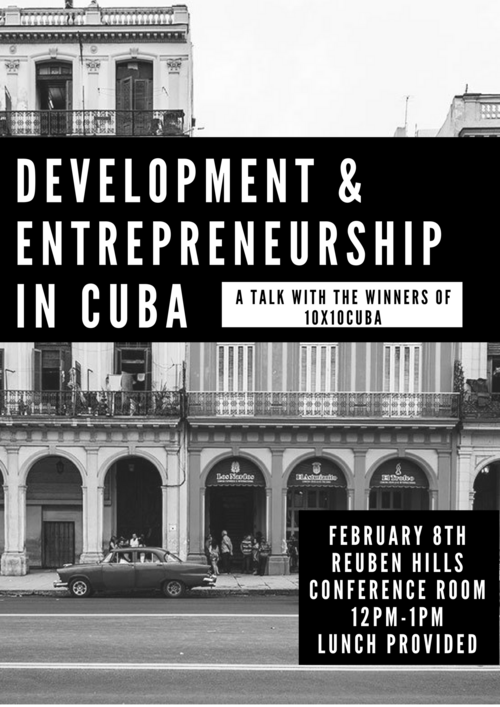
Join Professor Larry Diamond and the winners of the 10x10K Cuba competition for a talk on the emerging entrepreneurial scene in Cuba. The 10x10K Cuba is an international competition seeking to help talented programmers and entrepreneurs in Cuba. This event will feature Janse Lazo Valdes and Victor Manuel Moratón, the entrepreneurs leading the startups MiKMa and NinjaCuba.


Speaker(s) Bio:

Janse Lazo Valdes is a Computer Science engineer from the Havana University of Technologies José Antonio Echeverría. Valdes and his team Sírvete participated in Havana’s first Startup Weekend, coming in 2nd place. At Stanford, he is hoping to learn more about business opportunities, marketing, human resources, and leadership to promote entrepreneurship and development in Cuba. Valdes is representing the startup MiKMa.

MiKMa is a startup that will guarantee the advertising of houses for rent in national currency in Cuba and hopes to revolutionize the way in which the user makes the reservations of these properties.


Victor Manuel Moratón is a Computer Science engineer from the Havana University of Technologies José Antonio Echevarría. He specializes in software development and is the product developer of Ninjas Cuba. At Stanford, he wants to represent the emerging entrepreneurial Cuban community and meet leaders in the sector of entrepreneurship and development. Moratón is representing the startup NinjaCuba.

NinjaCuba is a website oriented to the search of talents of computer science in Cuba thought for the thousands of computer engineers, cybernetics, designers, companies and groups of development. NinjaCuba hopes to connect people in the technology space with employment opportunities.


Image
development and entrepreneurship in cuba

Janse Lazo Valdes Computer Science Engineer, Havana University of Technologies José Antonio Echeverría
Victor Manuel Moratón Computer Science Engineer, Havana University of Technologies José Antonio Echevarría.
Seminars
-

Abstract:

Commentators have vigorously debated whether international criminal justice mechanisms favor conflict or peace. Others have debated whether decapitation (i.e., assassination of leaders) strengthens or weakens militias, insurgencies, and terrorist groups. This study examines how arrests of, and threats to arrest, militia leaders pursuant to international criminal warrants have affected demobilization of Rwandan militias in the eastern Democratic Republic of the Congo.


Speaker Bio:

Image
rsteinberg

Richard Steinberg  writes and teaches in the areas of international law and international relations. He currently teaches International Trade Law, International Business Transactions, and Theories of International Law, and directs Law School clinics that work with the Office of the Prosecutor of the International Criminal Court and conduct research in conflict and post-conflict zones.  He is also Director of the Sanela Diana Jenkins Human Rights Project, and Editor-in-Chief of the award-winning  www.ICCforum.com (link is external). In addition to his UCLA appointment, Professor Steinberg is currently Visiting Professor of Stanford Global Studies at the WSD Handa Center for Human Rights and International Justice, and the Center on Democracy, Development, and the Rule of Law at Stanford.


Co-sponsor:  HANDA Center for Human Rights & International Justice


Richard Steinberg Visiting Professor at Stanford Global Studies and on faculty at UCLA School of Law
Seminars
-

Abstract: A growing body of empirical evidence indicates that changes in climate are associated with increases in human violence.  I review new and recent evidence on this topic, using data ranging from baseball games in the US to civil war in Africa.  Across disparate settings, warmer-than-average temperatures are shown to cause increases in violence, with effect sizes that are both consistent and large.  Economic theories of conflict appear to explain some of the linkage between climate and conflict, but are not consistent with the data in all settings. Constructive engagement with the political science and security communities will be very helpful in understanding and interpreting these findings.

About the Speaker: Marshall Burke is assistant professor in the Department of Earth System Science, and Center Fellow at the Center on Food Security and the Environment at Stanford University. His research focuses on social and economic impacts of environmental change, and on the economics of rural development in Africa. His work has appeared in both economics and scientific journals, including recent publications in Nature, Science, the Proceedings of the National Academy of Sciences, and the Review of Economics and Statistics. He holds a PhD in Agricultural and Resource Economics from UC Berkeley, and a BA in International Relations from Stanford.

Marshall Burke Assistant Professor, Dept. of Earth System Science Stanford University
Seminars
-

About the Topic: Professor Park will discuss how promotion incentives influence the effort of public employees by providing evidence from China's system of promotions for teachers. He tests a tournament model of promotion using retrospective panel data on primary and middle school teachers. Consistent with theory, high wage increases for promotion are associated with better performance. Teachers increase effort in years leading up to promotion eligibility and reduce effort if they are repeatedly passed over for promotion. Evaluation scores are positively associated with teacher time use and with student test scores, diminishing concerns that evaluations are manipulated.


About the Speaker: Albert Park is Chair Professor of Social Science and Professor of Economics at Hong Kong University of Science and Technology. He is a development and labor economist who is an expert on China’s economic development. In recent years he has published articles in leading economics journals on firm performance, poverty and inequality, migration and employment, health and education, and the economics of aging in China. He has co-directed numerous survey research projects in China including the Gansu Survey of Children and Families, a longitudinal study of rural youth. He previously held faculty appointments at the University of Michigan and Oxford University. 

Chair Professor of Social Science and Professor of Economics
Download pdf

Encina Hall: 4th floor

Goldman Conference Room 

Seminars
-

ABSTRACT

Six years post Egypt’s January 25 revolution, the country remains in a state of volatility and political turmoil marked by an ailing economy, a security crisis, and unprecedented levels of repression. In this talk, Jack Shenker will discuss his recent book The Egyptians: A Radical History of Egypt's Unfinished Revolution (The New Press). The book examines the roots of Egypt’s revolution, arguing for a much more nuanced, and far-reaching view of the forces that are reshaping the region.

SPEAKER BIO

Image
js profile
Jack Shenker is an award-winning journalist based in London and Cairo, whose reporting has spanned the globe. Formerly Egypt correspondent for The Guardian, his coverage of the Egyptian revolution received multiple prizes. In 2012, his investigation into the deaths of African migrants in the Mediterranean was named news story of the year at the prestigious One World media awards. The Egyptians, published by Allen Lane / Penguin in the UK and The New Press in the US, is his first book.

CISAC Central Conference Room
Encina Hall, 2nd Floor
616 Serra St
Stanford, CA 94305

Jack Shenker Journalist and Writer
Seminars
-

Since Abenomics launched corporate governance reforms as the third arrow of its policies mix, a series of reform measures were introduced such as the Stewardship Code, Corporate Governance Code, and the organization of JPX 400 by the Tokyo Stock Exchange. In this presentation, I firstly summarize recent changes of governance arrangements in Japanese firms, focusing on the trend of listing and de-listing, ownership changes, rapid deleveraging, the rise and fall of activism, gradual increase of independent directors, and modest use of high-powered incentives. I characterize these changes as a hybridization of corporate governance. Then, I suggest an agenda for how to fine tune hybrid structures: the reestablishment of mega-banks and client firms, the role of block shareholders, a new long-term commitment scheme post cross shareholding, the choice of management or monitoring boards, and the use of pay for performance associated with long-term employment.


Hideaki Mi

Image
yan xie zhen gong dao ying zhao
yajima is Director, Waseda Institute for Advanced Study(WIAS), Professor of Japanese Economy, Ph.D. in Commerce, Graduate School of Commerce, Waseda University. He teaches about the Japanese economy and corporate governance in Japan. He finished his Ph.D coursework at the University of Tokyo in economics, got a position as Research Associate at the University of Tokyo Institute of Social Sciences, and then moved to Waseda University. He stayed at Reischauer Institute of Japanese Studies, Harvard University, as a visiting scholar from 1992-94 and 2004-05. He was asked to consult by several institutions such as the World Bank, Hawaii University, Hebrew University, and Korean Development Institute. He was also appointed at numerous positions: Faculty Fellow, Research Institute of Economy, Trade & Industry, a Special Research Fellow of Policy Research Institute (Ministry of Finance), Research Fellow of EHESS (Paris), and an Adjunct Professor of Chung-Ang University (Seoul). He has written several books and numerous papers including: The Ownership of Japanese Corporations in the 20th Century, Review of Financial Studies, 2014, Benchmarking Business Unit Governance in Turbulent Times: The Case of Japanese Firms, Benchmarking: An International Journal, 2012, The Global Financial Crisis and the Evolution of Corporate Governance in Japan, laviedesidees.fr, 2009, Corporate Governance in Japan, Oxford University Press, 2007 (co-edited), Changes and Continuity in Japan, Routledge Curzon Press, 2002 (co-edited), Policies for Competitiveness, Oxford University Press, 1999 (co-edited).

Corporate Governance Reform in Japan
Download pdf
Hideaki Miyajima Director, Waseda Institute for Advanced Study and Professor, Waseda University
Seminars
-

Abstract:

In Revolution and Rebellion in the Early Modern World, I showed that turning points in global population trends have been driving waves of political stability or crisis for at least the last 500 years. We are currently seeing a new turning point, as rich countries enter a period of workforce decline and emerging markets divide into those with falling fertility vs. stable and still-high fertility. Drawing on experience from previous centuries in Europe and Asia, we can forecast political trends; these include a new wave of revolutions in Africa and the Middle East and a surge in populist and protectionist politics in Europe and the U.S., but also eventual peaceful transitions to democracy in Russia and China.


Speaker Bio:

Image
jack goldstone
Jack A. Goldstone (PhD Harvard) is the Virginia E. and John T. Hazel, Jr. Professor of Public Policy at George Mason University. Previously, Dr. Goldstone was on the faculty of Northwestern University and the University of California, and has been a visiting scholar at Cambridge University and the California Institute of Technology. He is the author of Revolution and Rebellion in the Early Modern World, awarded the 1993 Distinguished Scholarly Research Award of the American Sociological Association; Why Europe? The Rise of the West in World History; and co-editor of Political Demography: How Population Changes are Reshaping International Security and National Politics. He has been a Fellow at the Center for Advanced Study at Stanford University, and won Fellowships from the Guggenheim Foundation, the MacArthur Foundation and the American Council of Learned Societies. He has also won the Arnoldo Momigliano Award of the Historical Society, the Myron Weiner award of the International Studies Association, and been Holbrooke lecturer at the American Academy in Berlin. His current research focuses on conditions for building democracy and stability in developing nations, the impact of population change on the global economy and international security, and the cultural origins of modern economic growth.

Jack A. Goldstone Virginia E. and John T. Hazel, Jr. Professor of Public Policy at George Mason University
Seminars
-

Since assuming the presidency of the Philippines in June 2016 Rodrigo Duterte has been the focus of considerable international attention because of his brusque personality and two dramatically new policies: 1) a take-no-prisoners war on illegal drugs that has resulted in the deaths of over 6,000 alleged drug pushers and users; and 2) an abrupt distancing of relations with the United States coupled with an enthusiastic embrace of China. But considerably less attention is being paid to the Duterte government’s other policies or to the underlying political dynamics that will determine the efficacy of his government and, perhaps, the future of liberal democracy in the Philippines. The speaker will situate the Duterte government in the context of Philippine’s democratic experience, identify the political dynamics that are likely to determine its future, and assess the multiple threats to liberal democracy in the Philippines.

Image
david timberman 4x6
David Timberman is a political analyst and development practitioner with 30 years of experience analyzing and addressing political, governance and conflict-related challenges, principally in Southeast and South Asia.  As a Visiting Scholar at Stanford/APARC he is working on a book on the contemporary Philippine political economy.  During 2015-2016 he was a Visiting Professor of Political Science at De La Salle University in Manila. He has lived and worked in the Philippines, Indonesia and Singapore, including experiencing first-hand the democratic transitions in the Philippines (1986-1988) and Indonesia (1998-2001). He has written extensively on political and governance issues in the Philippines and has edited or co-edited multi-author volumes on the Philippines, Cambodia, and economic policy reform in Southeast Asia.


David G. Timberman 2016-2017 Lee Kong Chian NUS-Stanford Fellow on Contemporary Southeast Asia
Seminars
Subscribe to Seminars