-

Due to venue capacity limits, we are no longer accepting RSVPs for this event.


India prides itself on being the "world's largest democracy". In some respects it is certifiably democratic; as in the regular conduct of free and fair elections. But in other respects there are deficits. One such area is freedom of expression. While Indian writers, artists and film-makers are certainly freer than their counterparts in totalitarian countries such as China, they are less free when compared to their colleagues in democracies such as Sweden or the United States. This lecture identifies eight distinct threats to freedom of expression in India, the most important of which are the presence of archaic colonial laws and the rise of identity politics.


Image
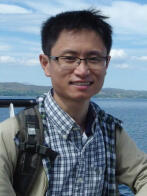
 Guha is a historian and biographer based in Bangalore. He has taught at the universities of Yale and Stanford, held the Arné Naess Chair at the University of Oslo, and been the Indo-American Community Visiting Professor at the University of California at Berkeley. In the academic year 2011-2012 he served as the Philippe Roman Professor of History and International Affairs at the London School of Economics.

Guha’s books include a pioneering environmental history, The Unquiet Woods (University of California Press, 1989), and an award-winning social history of cricket, A Corner of a Foreign Field (Picador, 2002). India after Gandhi (Macmillan/Ecco Press, 2007) was chosen as a book of the year by the Economist, the Washington Post, the Wall Street Journal, the San Francisco Chronicle, Time Out, and Outlook, and as a book of the decade in the Times of India, the Times of London, and The Hindu. His most recent book is Gandhi Before India (Knopf, 2014), which was chosen as a notable book of the year by the New York Times.

Apart from his books, Guha also writes a syndicated column, that appears in six languages in newspapers with a combined readership of some twenty mllion. Guha’s books and essays have been translated into more than twenty languages. The New York Times has referred to him as ‘perhaps the best among India’s non fiction writers’; Time Magazine has called him ‘Indian democracy’s pre-eminent chronicler’.

Ramachandra Guha’s awards include the Leopold-Hidy Prize of the American Society of Environmental History, the Daily Telegraph/Cricket Society prize, the Malcolm Adideshiah Award for excellence in social science research, the Ramnath Goenka Prize for excellence in journalism, the Sahitya Akademi Award, and the R. K. Narayan Prize. In 2009, he was awarded the Padma Bhushan, the Republic of India’s third highest civilian honour. In 2008, and again in 2013, Prospect Magazine nominated Guha as one of the world’s most influential intellectuals. In 2014, he was awarded an honorary doctorate in the humanities by Yale University. In 2015, he was awarded the Fukuoka Prize for contributions to Asian studies.


About the colloquia:

In 2014, Indian voters gave Narendra Modi and the BJP a mandate to accelerate India’s economic reforms and revitalize its foreign relations, in particular with the United States and with partners in East Asia. But the pace and depth of reforms and economic transformation have not met the high expectations, despite strong GDP performance. Economic growth remains uneven, job creation sluggish, and massive infrastructural and administrative problems continue to trouble many sectors of the economy. After twenty-five years of economic reforms, India’s potential as a new global industrial hub has still not been realized and its vast resources of labor and talent remain underdeveloped.

During the 2017 winter and spring quarters Shorenstein APARC and the Center for South Asia will host a series of lectures and discussions that explore what makes India democratic and dynamic, and the obstacles that prevent the country from realizing its enormous potential.

Also, in 2017, the next Global Entrepreneur Summit will be in India, sequel to the 2016 Stanford-hosted Summit. This colloquium will help prepare for that event by reaching out to scholars, students, interested stakeholders, business leaders and others in the Bay Area.

This colloquia is co-sponsored with the Stanford Center for South Asia 
Image
csa logorust cropped

Seminars
-

Since its independence, India’s statesmen, policymakers and social scientists all firmly believed that the entrenched hierarchical caste order and the deep divisions between religious communities would become less salient, and perhaps wither away, as the country developed a modern economy and a new division of labor based on skill and merit rather than a ‘traditional’ inherited status. Today, after seven decades of democracy and steady economic growth, it is clear that both caste and religious community are as important as ever. Rather than disappearing, these cultural identities and social networks have evolved along with the economy. A closer look at how the Indian economy is organized reveals that caste and community fundamentally shape how labor is organized, how markets function, how urban development happens, and how industry is owned and organized. Two case studies, one of skilled labor in South India and another of the structure of industrial growth in a city in central India, will illustrate how India actually works.

Image
Thomas Blom Hansen, Director, Center for South Asia; Reliance-Dhirubhai Ambani Professor in South Asian Studies; Professor in Anthropology, Stanford University

As the Director of Stanford’s Center for South Asian Studies, Hansen is charged with building a substantial new program. He has many and broad interests spanning South Asia and Southern Africa, several cities and multiple theoretical and disciplinary interests from political theory and continental philosophy to psychoanalysis, comparative religion and contemporary urbanism..


Image
Aruna Ranganathan, Assistant Professor of Organizational Behavior, Stanford University

Aruna Ranganathan studies questions of work and employment in the context of economic development. By applying novel methods that combine field-experimental and quantitative research designs with ethnography and interviews, Aruna's research investigates how low-income occupations in developing countries are governed, organized, seek meaning through their work and navigate the market. Through her research, Aruna strives to advance our theoretical understanding of work, while informing the design of labor-market institutions and policy for the developing world. In previous projects based in India, Aruna has studied the boom of IT and business process outsourcing, the professionalization of plumbing, price-setting behavior among handcraft artisans and the transition of women into formal employment in garment factories.


About the colloquia:

In 2014, Indian voters gave Narendra Modi and the BJP a mandate to accelerate India’s economic reforms and revitalize its foreign relations, in particular with the United States and with partners in East Asia. But the pace and depth of reforms and economic transformation have not met the high expectations, despite strong GDP performance. Economic growth remains uneven, job creation sluggish, and massive infrastructural and administrative problems continue to trouble many sectors of the economy. After twenty-five years of economic reforms, India’s potential as a new global industrial hub has still not been realized and its vast resources of labor and talent remain underdeveloped.

During the 2017 winter and spring quarters Shorenstein APARC and the Center for South Asia will host a series of lectures and discussions that explore what makes India democratic and dynamic, and the obstacles that prevent the country from realizing its enormous potential.

Also, in 2017, the next Global Entrepreneur Summit will be in India, sequel to the 2016 Stanford-hosted Summit. This colloquium will help prepare for that event by reaching out to scholars, students, interested stakeholders, business leaders and others in the Bay Area.


This colloquia is co-sponsored with the Stanford Center for South Asia 

Image
csa logorust cropped

Seminars
-

Long a laggard on human rights, the Association of Southeast Asian Nations (ASEAN) is being pressed from within to reconsider its indifference. In 2009 an ASEAN Human Rights Commission (AICHR) was created and tasked with promoting (not protecting) human rights in Southeast Asia. In 2012 its members agreed to issue a first-ever ASEAN Human Rights Declaration. Most observers dismissed these moves as symbolic—an effort mainly to assuage foreign critics and  gain international legitimacy. Prof. Jetschke differs.  She will argue that the AICHR’s formation was prompted in part by the swelling flows of refugees across borders inside Southeast Asia, especially from Myanmar, and the problems thereby created for the region’s states and societies. She will also explore the extent to which these factors have eroded one of ASEAN’s strongest regional norms—the taboo on interfering in members’ domestic affairs. That erosion could strengthen ASEAN as something more than the sum of its sovereign members.

Image
anja jetschke 4x6
Anja Jetschke is Professor of International Relations at the University of Göttingen’s political science department since 2012. Her Comparative Regional Organizations Project has developed the world’s largest database on regional organizations. Previously she headed a research program on international governance at the German Institute of Global and Area Studies (Hamburg) and was an assistant professor at the University of Freiburg. She also held research fellowships at Ohio State University and the University of Berlin. Her publications include many articles and chapters on comparative regionalism, ASEAN, and the AICHR, and a prize-winning book, Human Rights and State Security: Indonesia and the Philippines (2011). Her doctorate is from the European University (Florence).

Anja Jetschke Professor of International Relations, University of Göttingen
Seminars
-

This event is at maximum capacity. We thank you for your interest and regret that we cannot accept more registrations.

- This event is part of the Robert G. Wesson Lectures Series -

About the Event: Michael Morell, Former Deputy Director and twice Acting Director of the Central Intelligence Agency, will be interviewed by Amy Zegart, CISAC Co-director and Davies Family Senior Fellow at the Hoover Institution. Audience members will have an opportunity to ask questions after the interview. 

About the Speaker: Michael Morell, the former Acting Director and Deputy Director of the Central Intelligence Agency, is the Wesson Lecturer at the Freeman-Spogli Institute for International Studies and the Center for International Security and Cooperation for 2017. He is one of our nation’s leading national security professionals, with extensive experience in intelligence and foreign policy.  He has been at the center of our nation’s fight against terrorism, its work to prevent the proliferation of weapons of mass destruction, and its efforts to respond to trends that are altering the international landscape—including the Arab Spring, the rise of China, and the cyber threat.  Politico has called Michael the “Bob Gates of his generation.”

During his 33-year career at CIA, Michael served as Deputy Director for over three years, a job in which he managed the Agency’s day-to-day operations, represented the Agency at the White House and Congress, and maintained the Agency’s relationships with intelligence services and foreign leaders around the world.  Michael also served twice as Acting Director, leading CIA when Leon Panetta was named Secretary of Defense and again after David Petraeus left government.

Michael’s senior assignments at CIA also included serving for two years as the Director of Intelligence, the Agency’s top analyst, and for two years as Executive Director, the CIA’s top administrator—managing human resources, the budget, security, and information technology for an agency the size of a Fortune 200 firm.

Michael has been a witness to history on multiple occasions.  He is the only person who was both with President Bush on September 11th, when al-Qaida burst into the American consciousness, and with President Obama on May 1st, when Bin Laden was brought to justice.  Michael played a major role in the Bin Laden operation.

Michael is known inside CIA for his leadership.  He inspired individuals and work units to perform beyond expectations.  He mentored most of the Agency’s current senior leadership team, including a significant number of women and minorities.  When he departed CIA, thousands of officers wrote Michael notes of thanks.

Michael is the recipient of many awards.  He received the Presidential Rank Award for exceptional performance – the nation’s highest honor for civilian service.  He also received the Distinguished Intelligence Medal, CIA’s highest award, for his role in the Bin Laden operation.  Michael is also the recipient of the Distinguished Career Intelligence Medal, the National Intelligence Distinguished Service Medal, and the Department of Defense Service Medal.    

Today, Michael is involved in a wide range of activities.  He is a member of the Board of Directors of the Goodyear Tire and Rubber Company; Senior Counselor to Washington’s fastest growing consulting firm, Beacon Global Strategies; and a consultant to a number of private sector entities.  He is the Chairman of the Board of one of those entities – Culpeper National Security Solutions, a subsidiary of DynCorp International.

Much of what Michael does today is tied to national security.  Until recently, he was a senior national security contributor for CBS News.  He is a frequent guest on the Charlie Rose Show discussing national security issues.  He is a Senior Fellow at Harvard University’s Kennedy School of Government; a Senior Fellow at West Point’s Center on Combatting Terrorism; a resident fellow this fall at the Institute of Politics at the University of Chicago, a member of the Aspen Institute’s Homeland Security Group, which advises the Secretary of Homeland Security on national security issues; a member of the Board of Director’s of the Atlantic Council, a member of the Advisory Board to the University of Chicago’s Project on Security and Terrorism, and a member of the Atlantic Council’s advisory group to its study on the future of the Middle East.  He served as a Member of President Obama’s Review Group on Intelligence and Communications Technology.

Michael is the author of the New York Times bestseller on CIA’s nearly 20-year fight against al Qa`ida.  The title of the book is “The Great War of Our Time:  An Insider’s Account of the CIA’s Fight Against Terrorism – From al Qaida to ISIS.”  It was published in May 2015.

Michael is a native of Cuyahoga Falls, Ohio, and he maintains close ties to northeast Ohio.  His father and mother—who taught him hard work, the pursuit of excellence, and humility—were an autoworker and a homemaker.  Michael is a first-generation college student, earning a B.A. summa cum laude in economics from the University of Akron.  He also earned an M.A. in economics from Georgetown University.  

Michael is involved with charities associated with supporting the families of fallen soldiers and intelligence officers.


Inside the CIA: A Conversation with Michael Morell
Download pdf

Encina Hall, 2nd floor

Michael Morell Former director Central Intelligence Agency
Seminars
-

WE HAVE REACHED VENUE CAPACITY AND ARE NO LONGER ACCEPTING RSVPS


PLEASE NOTE VENUE CHANGE TO ENCINA HALL,

BECHTEL CONFERENCE CENTER, 1ST FLOOR

The election of Donald Trump has introduced a big question mark into America’s relations with China. Will the new president start a trade war with the world’s second biggest economy? Will Trump attempt to refashion America’s relations with Taiwan and thus infuriate Beijing? Will Trump’s vow to build more U.S. naval vessels place the United States and China on a path to conflict in the South China Sea? How will Trump handle the prospects of a North Korea armed with nuclear weapons and an intercontinental ballistic missile with which to deliver them? As for China, how will it react to this new administration, which espouses a decidedly different view of China than the one that predominated in Washington over the past several decades? Will China adopt the role of “responsible [global] stakeholder” in contrast to Trump’s “America first” ideology? Or will China join the United States in a race to the bottom, precipitating further ideological, economic and geostrategic competition that pulls the world down with it?

A book signing will follow. Copies of Mr. John Pomfret’s book will be available for purchase 


Image
pomfret
John Pomfret is the author of the recently-published The Beautiful Country and the Middle Kingdom: America and China from 1776 to the Present (2016). He is also the author of the best-seller Chinese Lessons: Five Classmates and the Story of the New China (2007) and an award-winning journalist who spent decades as a foreign correspondent with The Washington Post. He has lived in China for 20 years since the early 1980s and has also covered U.S.-China relations from Washington, DC. As The New York Times said of The Beautiful Country, “Donald Trump (or his next secretary of state) would be well advised to read this timely and comprehensively informative book.”


This event is co-sponsored by Shorenstein APARC's China Program and the Center for East Asian Studies

 
John Pomfret former foreign correspondent for <i>The Washington Post</i>; author of <i>The Beautiful Country and the Middle Kingdom: America and China from 1776 to the Present</i>
Seminars
-

South Korea, the most rapidly aging society in the world, introduced a public long-term care insurance (LTCI) program with universal coverage in 2008. This presentation will begin with the socioeconomic and political context of the introduction of the LTCI and explain the finance and provision of LTCI in Korea, compared to the LTCIs of Germany and Japan. It will provide recent evidence on the performance of the LTCI along with its prospects and lessons for other countries.

Image
hongsookim photo
Hongsoo Kim is an associate professor at the Graduate School of Public Health at Seoul National University (SNU), South Korea, and a 2016-2017 Fulbright Visiting Scholar & Takemi Fellow in International Health at Harvard School of Public Health, United States. Her research areas include aging and health policy, long-term care systems, and health system performance assessment. She is currently involved the Comparative Diabetes Net Value Project led by Dr. Karen Eggleston at Stanford University. She was formerly the scientific committee chair of the Korean Academy of Long-term Care, the Korean Gerontological Society, and the Korean Society of Health Policy and Administration. She received her PhD from New York University, where she worked as assistant professor before she joined SNU. 


Hongsoo Kim Fulbright Scholar & Takemi Fellow at Harvard School of Public Health, U.S.; Associate Professor at Seoul National University Graduate School of Public Health, South Korea
Seminars
-

This event is jointly sponsored by the Japan Program and the Korea Program at the Walter H. Shorenstein Asia-Pacific Research Center (APARC).

A constitution is commonly seen as the definitive expression of the sovereign will of ‘We the People.’ But, who are those sovereign people, and how does one identify them? Can we equate the Korean or Japanese ethnic nation with the sovereign people of those countries? Further, when the constitution is drafted under overbearing foreign influence, as was the case in postwar Japan and postcolonial Korea, can we really say that the people are sovereign? And if the new constitution fails to categorically reject the evils of the past, as is often claimed to be the case in Korea and Japan, is the project of constitutional founding somehow compromised? Using the historical experience of these two countries, Prof. Hahm will engage in a reflection on the soundness of the theoretical framework that informs our thinking about the relationship between popular sovereignty and constitution making.

Image
unknown
Chaihark Hahm is Professor of Law at Yonsei University School of Law in Seoul, Korea. He teaches and writes on constitutional theory, comparative constitutional law, Confucian political theory, Korean legal culture and history, citizenship education, and human rights. Dr. Hahm received his legal training from both Korea and the United States: Seoul National University (LL.B. 1986), Yale (LL.M. 1987), Columbia (J.D. 1994), and Harvard (S.J.D. 2000). He also studied theology at Yale Divinity School (M.A.R. 1989).  He is currently based in Stanford during the 2016-2017 academic year as a Berggruen Fellow at the Center for Advanced Study in the Behavioral Sciences. He has held previous fellowships at the Netherlands Institute for Advanced Study and The Hague Institute for the Internationalization of Law (2009-2010) and the National Endowment for Democracy (2001-2002).  Dr. Hahm is co-author (with Sung Ho Kim) of Making We the People: Democratic Constitutional Founding in Postwar Japan and South Korea (Cambridge University Press, 2015), and co-editor (with Daniel A. Bell) of The Politics of Affective Relations: East Asia and Beyond (Lexington Books, 2004). He is an editorial board member of I•CON: International Journal of Constitutional Law, and his works have appeared in American Journal of Comparative Law, Journal of Democracy, and I•CON, among others.

Chaihark Hahm Professor of Law, Yonsei University School of Law and Berggruen Fellow at the Center for Advanced Study in the Behavioral Sciences, Stanford University
Seminars
-

This seminar will discuss the marriage distortion and the associated welfare loss caused by the One-Child Policy (OCP) in China. Using the variation in the ethnicity-specific assigned birth quotas and different fertility penalties across provinces over time, we first show that the OCP induced a significantly higher unmarried rate and more interethnic marriages. Using sufficient statistics approach, we then derive a formula for the social welfare loss caused by the OCPinduced lower fertility and marriage distortion, and it only depends on the estimated reducedform elasticities. Our estimates suggest that the associated welfare loss is around 3.7 percent of annual household income, with marriage distortion contributing 30 percent of this. These findings highlight the unintended behavioral responses to public policies and corresponding social consequences.

Image
yi zhou crop
Yi Zhou is a PhD candidate in Demography at University of California – Berkeley. His research interests include Economic Demography, Formal Demography and Health Economics. He received a M.A. in Economics and a B.B.A. in Accounting from Peking University."

 
Presentation
Download pdf
Yi Zhou Department of Demography, University of California, Berkeley
Seminars
-

Abstract: Globally, infectious diseases are emerging at an increasing rate. Vector-borne diseases in particular present one of the biggest threats to public health globally. Many of these diseases are zoonotic, meaning they cycle in animal populations but can spillover to infect humans. As a result, risk to humans of acquiring a zoonotic or vector-borne disease largely depends on the distribution and abundance of the reservoir hosts—the species of animals that pathogens naturally infect—as well as of the vector species. The ecology of many reservoir hosts and vectors is rapidly changing due to global change, which will fundamentally alter human disease risk in as yet unforeseen ways. In this talk, I will present and discuss three lines of research aimed at identifying drivers of disease emergence and risk at multiple spatial scales including 1) the ecological and environmental drivers of Lyme disease in California, 2) the roles of human behavior and land use in driving human Lyme disease in the northeastern US, and 3) effects of deforestation, land use policy and socio-ecological feedbacks in driving malaria in the Brazilian Amazon.

About the Speaker: Andrew MacDonald is a disease ecologist and a National Science Foundation Postdoctoral Fellow in Biology at Stanford University. He received his PhD from the Department of Ecology, Evolution and Marine Biology at the University of California, Santa Barbara in September 2016. His dissertation focused on the effect of land use and environmental change on tick-borne disease risk in California and the northeastern US. His current work focuses on coupled natural-human system feedbacks and land use change as drivers of mosquito-borne disease, with a focus on malaria in the Amazon basin.

Encina Hall, 2nd floor

CISAC
Seminars
-

Latin American trade with China has grown exponentially since 2000. From insignificant amounts, trade with China now constitutes 13 percent of Latin America’s total global trade. Major loans and investments also add to China’s growing role in the region’s economy. China has become an important alternative for capital, trade and technology for Latin America, but without the policy conditionality that regional governments have traditionally experienced in relations with developed countries. China’s growing economic role has been welcomed by Latin America’s political classes, and China has advocated for a ‘comprehensive and cooperative relationship.’ However, some critics observe that economic relations with China have only benefited Latin America’s commodity exporters while its manufacturers have struggled to compete. Others have raised concerns that China may use its growing role to press Latin American states to roll back gains made on labor, environmental, and human rights to favor Chinese investors. Yet others have suggested that China enables some political leaders in the region to pursue policies that undermine democracy and contribute to political instability. As part of a project on China-Latin American relations at the Brookings Institution, Harold Trinkunas assesses how China’s growing economic relations actually influence politics and policies across the region. Trinkunas will be joined in conversation with Shorenstein APARC Fellow Thomas Fingar.


Image
Harold Trinkunas
Harold Trinkunas joined FSI’s Center for International Security and Cooperation (CISAC) in the concomitant role of Senior Research Scholar and Associate Director for Research. Trinkunas comes to CISAC from the Brookings Institution, where he was the Charles W. Robinson Chair and Senior Fellow as well as Director of the Latin America Initiative. Previously, he served as Chair of the National Security Affairs Department at the Naval Postgraduate School, where he was also an Associate Professor. One of the nation's leading Latin America specialists, Trinkunas' work has examined civil-military relations, ungoverned spaces, terrorist financing, emerging power dynamics, and global governance. His newest book, Aspirational Power: Brazil's Long Road to Global Influence, co-authored with David Mares of UCSD, was published this summer by Brookings Institution Press. Born and raised in Venezuela, Trinkunas earned his doctorate in political science from Stanford University in 1999 and has been a predoctoral fellow and later a visiting professor at CISAC.

Image
Headshot of Thomas Fingar
Thomas Fingar is the Shorenstein APARC Fellow in the Freeman Spogli Institute for International Studies at Stanford University. From 2005 to 2008, he served concurrently as the first deputy director of national intelligence for analysis and as chairman of the National Intelligence Council. He served previously as assistant secretary of the State Department’s Bureau of Intelligence and Research (2004–2005), principal deputy assistant secretary (2001–2003), deputy assistant secretary for analysis (1994–2000), director of the Office of Analysis for East Asia and the Pacific (1989–1994), and chief of the China Division (1986–1989). Fingar’s most recent books are The New Great Game: China and South and Central Asia in the Era of Reform (Stanford University Press, 2016); and Uneasy Partnership: China and Japan, the Koreas, and Russia in the Age of Reform (Stanford University Press, 2017, forthcoming).


This event is part of the winter colloquia series entitled "China: Going Global" sponsored by Shorenstein APARC's China Program.

[[{"fid":"224946","view_mode":"crop_870xauto","fields":{"format":"crop_870xauto","field_file_image_description[und][0][value]":"","field_file_image_alt_text[und][0][value]":false,"field_file_image_title_text[und][0][value]":false,"field_credit[und][0][value]":"Economist.com","field_caption[und][0][value]":"","field_related_image_aspect[und][0][value]":"","thumbnails":"crop_870xauto"},"type":"media","field_deltas":{"1":{"format":"crop_870xauto","field_file_image_description[und][0][value]":"","field_file_image_alt_text[und][0][value]":false,"field_file_image_title_text[und][0][value]":false,"field_credit[und][0][value]":"Economist.com","field_caption[und][0][value]":"","field_related_image_aspect[und][0][value]":"","thumbnails":"crop_870xauto"}},"link_text":null,"attributes":{"width":"870","style":"margin-left: 0px; margin-right: 15px; padding: 5px; float: left; width: 350px; height: 194px;","class":"media-element file-crop-870xauto","data-delta":"1"}}]]China: Going Global

Beijing’s new Silk Road initiative links old trade corridors from Asia to Africa and Europe. Many perceive that President Xi Jinping’s “One Belt, One Road” initiative as well as China’s many other trade, investment and finance projects transcend their economic calculus and reflect Beijing’s geopolitical ambitions to reposition China’s standing on the global stage. The China Program brings leading experts to explore the drivers and motivators of China’s international initiatives, their reach and scope as well as the implications of China’s increasing activism on the world stage.

http://aparc.fsi.stanford.edu/research/china-going-global


Related Links:

Colloquium summary

Harold Trinkunas <i>Associate Director for Research and Senior Research Scholar</i>, CISAC, FSI, Stanford University
Thomas Fingar <i>Shorenstein APARC Fellow</i>, FSI, Stanford University</i>
Seminars
Subscribe to Seminars