-


This event is co-sponsored by the WSD HANDA Center for Human Rights and International Justice and the Center on Democracy, Development, and the Rule of Law. 


Abstract:

Unchecked greed is the primary driver of conflict and mass atrocities in Africa. Most often, it manifests itself in the form of violent kleptocracies, in which governments are hijacked by networks of senior officials, military officers, bankers, mining and oil company representatives, and arms dealers. Conventional foreign policy approaches have failed to address the hell on earth that these networks have created. The principal vulnerability of the networks is their exposure in the international financial system, as most corrupt actors use that system to move their money and hide their wealth. The tools of financial pressure that have been honed in the aftermath of 9/11 hold great promise for countering the kleptocrats that are destroying parts of Africa through war and resource pillaging. Examining how those policies can be used and how a hopeful political constituency is being built is a major focus of this presentation.


Speaker Bio:

Image
john prendergast headshot 1
John Prendergast is a human rights activist and New York Times best-selling author who has focused on peace in Africa for over thirty years. He is the Founding Director of the Enough Project, an initiative to end genocide and crimes against humanity. With George Clooney, he also co-founded The Sentry, a new investigative initiative focused on dismantling the networks financing conflict and atrocities. John has worked for the Clinton White House, the State Department, two members of Congress, the National Intelligence Council, UNICEF, Human Rights Watch, the International Crisis Group, and the U.S. Institute of Peace.  He has been a Big Brother for three decades, as well as a youth counselor and a basketball coach.  John is the author or co-author of ten books. John also co-founded the Satellite Sentinel Project, which used satellite imagery to spotlight mass atrocities.  With NBA stars, John launched the Darfur Dream Team Sister Schools Program to fund schools in Darfuri refugee camps. He also created Enough’s Raise Hope for Congo Campaign, highlighting the issue of conflict minerals, and its student arm the Conflict-Free Campus Initiative. John also runs Not On Our Watch, the organization founded by Matt Damon, Don Cheadle, Brad Pitt and George Clooney.  John has been awarded six honorary doctorates. He has been a visiting professor at Yale Law School, Stanford University, Columbia University, Dartmouth College, Duke University, and others. John has appeared in four episodes of  60 Minutes, for which the team won an Emmy Award, and helped create African stories for two episodes of Law and Order: Special Victims Unit. John has also traveled to Africa with NBC’s Dateline, ABC’s Nightline, PBS’ NewsHour, CNN’s  Inside Africa, and Newsweek and The Daily Beast. He also appears in the motion picture “The Good Lie,” starring Reese Witherspoon and Emmanuel Jal, as well as documentaries including Merci Congo, When Elephants Fight, Blood in the Mobile, Sand and Sorrow, Darfur Now, 3 Points, and  War Child.


[[{"fid":"225275","view_mode":"crop_870xauto","fields":{"format":"crop_870xauto","field_file_image_description[und][0][value]":"","field_file_image_alt_text[und][0][value]":false,"field_file_image_title_text[und][0][value]":false,"field_credit[und][0][value]":"","field_caption[und][0][value]":"","field_related_image_aspect[und][0][value]":"","thumbnails":"crop_870xauto"},"type":"media","field_deltas":{"1":{"format":"crop_870xauto","field_file_image_description[und][0][value]":"","field_file_image_alt_text[und][0][value]":false,"field_file_image_title_text[und][0][value]":false,"field_credit[und][0][value]":"","field_caption[und][0][value]":"","field_related_image_aspect[und][0][value]":"","thumbnails":"crop_870xauto"}},"attributes":{"width":"870","class":"media-element file-crop-870xauto","data-delta":"1"},"link_text":null}]]

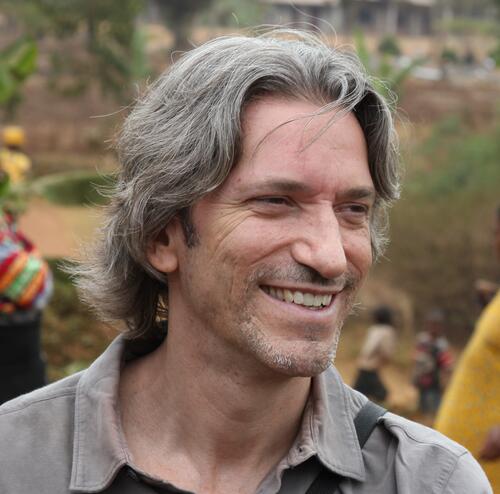
 

John Prendergast Human Rights Activist
Seminars
-

The North Korean nuclear crisis is going from bad to worse and South Korea has disagreements over how to deal with it. Options for addressing the crisis range from sanctions to regime change, and from preemptive attacks to nuclear deterrence and defense, including Terminal High Altitude Area Defense (THAAD). Discussion of the dialogue and negotiation option has been lacking. This talk will provide a comprehensive look into the South Korean domestic debates on the North Korean nuclear quagmire, focusing on the preemptive attack, nuclear deterrence, THAAD and engagement options. 

cimoon photo 160209 Chung-in Moon, speaker for KP, March 3, 2017
Chung-in Moon is Distinguished University Professor and former dean of Graduate School of International Studies at Yonsei University in Korea, and currently Krause Distinguished Fellow at the UCSD School of Global Policy and Strategy. Professor Moon is editor-in-chief of Global Asia, a quarterly journal in English; has authored, co-authored and edited 56 books, and published over 300 articles in academic journals such as World Politics, International Studies Quarterly, and World Development, and in edited volumes. He was a Public Policy Scholar of the Woodrow Wilson International Center, a Lixian Scholar of Beijing University, and a Pacific Leadership Fellow at the Graduate School of International Relations and Pacific Studies, UCSD. He was executive director of the Kim Dae-jung Presidential Library and Museum, and served as chairman of Presidential Committee on Northeast Asian Cooperative Initiative of the Roh Moo-hyun government, a cabinet-level post; and Ambassador for International Security, Ministry of Foreign Affairs and Trade, Korea. He was vice president of International Studies Association of North America and president of Korea Peace Research Association. He is currently co-convener of Asia-Pacific Leadership Network for Nuclear Non-proliferation and Disarmament.

Chung-in Moon <i>Krause Distinguished Fellow at UC San Diego; Distinguished University Professor at Yonsei University, Korea</i>
Seminars
-

Abstract:

There is a growing backlash against the liberal and neoliberal economic, political and social ideologies that have dominated the globe since the 1980s. On economic fronts, critiques of free-market, privatization, and deregulation policies are on the rise, especially since the financial crisis of 2008. Even mainstream economists at the International Monetary Fund now report that the benefits of neoliberalism have been “oversold” and may contribute to increasing inequality. On political fronts, we see a decline in liberal democracy; for instance, Freedom House reports that more countries have experienced losses than gains in freedoms since 2005. We argue that just as there is a groundswell of opposition against dominant global economic and political ideologies, there is rising resistance to the social dimensions of a world culture rooted in Western liberalism. To illustrate our argument, we examine the rise of legal restrictions on foreign funding to non-governmental organizations in more than 50 countries over the period 1994-2015.

Speaker Bio:

Image
bromley patricia gse
Patricia Bromley is an Assistant Professor of Education and (by courtesy) Sociology at Stanford University. Her work has focused on the rise and globalization of a culture emphasizing rational, scientific thinking and expansive forms of rights. It spans a range of fields including comparative education, organization theory, the sociology of education, and public administration and policy. A recent book, Hyper-organization: Worldwide organizational expansion, explains the global proliferation of organization, both in numbers and internal complexity (Oxford University Press 2015, with J.W. Meyer). Other recent publications appear in American Sociological Review, Administration & Society, and Nonprofit and Voluntary Sector Quarterly.

Patricia Bromley Assistant Professor of Education and (by courtesy) Sociology at Stanford University.
Seminars
-

Abstract: Space debris are leftovers from human activities in space. Earth orbit gets increasingly congested by a rising number of active spacecraft and debris, resulting in an increased risk of collision. Collisions with debris can destroy entire spacecraft, resulting in economic loss or worse. The additional debris increases the risk of further collision. There are several dilemmas: If we want to further our venture into space beyond what is possible today, a vastly increased number of rocket launches are necessary. That could negatively impact the debris environment and make further space endeavors more challenging. Proposed active debris removal methods could lessen that problem. However, such methods have dual-use implications, because a capability to remove large pieces of debris from orbit also implies a capability to remove active spacecraft. Hence, building up a debris removal capability could be seen as a threat to other nations' satellites. This talk will give an overview about origins of debris, projections of the future debris environment, and debris mitigation methods and their security implications. A special focus will be on a less invasive debris mitigation method based on ground-based lasers and research to assess its efficiency using long-term debris projections.

About the Speaker: Jan Stupl is an affiliate and a former postdoctoral fellow at CISAC.  He is currently a Research Scientist with SGT, a government contractor, and works in the Mission Design Division at NASA Ames Research Center (Mountain View, CA). In the Mission Design Division, Jan conducts research on novel methods for laser communication and space debris mitigation and supports concept development for space missions.

Before his current position, Jan was a postdoctoral fellow at the Center for International Security and Cooperation (CISAC) at Stanford University until 2011, investigating technical and policy implications of high power lasers for missile defense and as anti-satellite weapons (ASAT), as well as the proliferation of ballistic missiles. The research on laser ASATs focuses on damage mechanisms, the potential sources and countries of origin of laser ASATs and ways to curb their international proliferation. Before coming to CISAC, Jan was a Research Fellow at the Institute of Peace Research and Security Policy (IFSH) at the University of Hamburg, Germany. His PhD dissertation was a physics-based analysis of future of High Energy Lasers and their application for missile defense and focused on the Airborne Laser missile defense system. This work was jointly supervised by the IFSH, the Institute of Laser and System Technologies at Hamburg University of Technology and the physics department of Hamburg University, where he earned his PhD in 2008. His interest in security policy and international politics was fuelled by an internship at the United Nations in New York in 2003.

Encina Hall, 2nd floor

0
Affiliate
janstupl_rsd17_076_0352a.jpg PhD

Jan Stupl is an affiliate and a former postdoctoral fellow at CISAC.  He is currently a Research Scientist with SGT, a government contractor, and works in the Mission Design Division at NASA Ames Research Center (Mountain View, CA). In the Mission Design Division, Jan conducts research on novel methods for laser communication and space debris mitigation and supports concept development for space missions.

Before his current position, Jan was a postdoctoral fellow at the Center for International Security and Cooperation (CISAC) at Stanford University until 2011, investigating technical and policy implications of high power lasers for missile defense and as anti-satellite weapons (ASAT), as well as the proliferation of ballistic missiles. The research on laser ASATs focuses on damage mechanisms, the potential sources and countries of origin of laser ASATs and ways to curb their international proliferation. Before coming to CISAC, Jan was a Research Fellow at the Institute of Peace Research and Security Policy (IFSH) at the University of Hamburg, Germany. His PhD dissertation was a physics-based analysis of future of High Energy Lasers and their application for missile defense and focused on the Airborne Laser missile defense system. This work was jointly supervised by the IFSH, the Institute of Laser and System Technologies at Hamburg University of Technology and the physics department of Hamburg University, where he earned his PhD in 2008. His interest in security policy and international politics was fuelled by an internship at the United Nations in New York in 2003.

CV
SGT, Inc. / Mission Design Division, NASA Ames Research Center
Seminars
-

Abstract: How easily and quickly can states rise in the military domain? Do industrial espionage and in particular cyber-espionage facilitate and accelerate this process? In other words, are there empirical and theoretical reasons to believe that other states can easily imitate U.S. advanced weapon systems and thus erode American military- technological superiority? Drawing from the literature in economic history, economics, management and sociology, we maintain that the dramatic increase in the complexity of military technology that has taken place over the past 150 years has led to a change in the system of production, which in turn has made the imitation and the replication of the performance of military technology more difficult - despite globalization and advances in communications. As a result, developing advanced weapon systems has become significantly more challenging. We test our theory on a set of crucial case studies addressing possible cofounders. The available evidence supports our account. Our findings reassure about the threat of cyber-espionage, the role of globalization in armaments production and rise of China for American military-technological superiority. 

About the Speaker: Dr. Andrea Gilli is a postdoctoral fellow at the Center for International Security and Cooperation at Stanford University. He holds a PhD in Social and Political Science from the European University Institute (EUI) in Fiesole, and in 2015 he was awarded the European Defence Agency and Egmont Institute’s bi-annual prize for the best dissertation on European defense, security and strategy. Andrea’s research focuses on change in military technology and its implications for international security. At CISAC, he is working on the consequences of the robotics revolutions for American military primacy. In the past, Andrea provided consulting services to both private and public organizations, and worked or was associated with the Italian Ministry of Foreign Affairs, the Preparatory Commission for the Nuclear Test-Ban Treaty Organization, the NATO Defense College, the Royal United Services Institute, the Center for Transatlantic Relations at SAIS-Johns Hopkins University, the European Union Institute for Security Studies, the Saltzman Institute for War and Peace Studies at the Columbia University in New York and the Center for Security Studies at Metropolitan University Prague. Andrea has published articles on suicide terrorism, the diffusion of drone warfare and defense policy more in general in Security Studies, The RUSI Journal, and Washington Post’s Monkey Cage, among others.

Encina Hall, 2nd floor

Postdoctoral Fellow CISAC
Seminars
-

In Japan's increasingly complex security environment, the Japan-U.S. Alliance is indispensable not only to the security of Japan, but also to the peace and stability of the Asia-Pacific region.  The Honorable Satoshi Morimoto, former Defense Minister of Japan, will talk about Japan’s security policy and the importance of the Japan-U.S. Alliance under the Trump Administration.

This seminar will be moderated by Ambassador Karl Eikenberry, Director, U.S.-Asia Security Initiative


Image
The Honorable Satoshi Morimoto served with the Japan Air Self-Defense Force and is a graduate of the National Defense Academy of Japan. In 1977, he was assigned to the Security Division, American Affairs Bureau of the Ministry of Foreign Affairs of Japan. In 2009 he served as the 1st Senior Adviser to the Minister of Defense. Since October 2015, he has served as the Special Adviser to the Minister of Defense of Japan. In March 2016, he was appointed President of Takushoku University.


This event is co-sponsored by the Japan Program, U.S.-Asia Security Initiative and the Consulate-General of Japan, San Francisco


The Honorable Satoshi Morimoto <i>Former Minister of Defense,</i> Japan
Seminars
-

Abstract: Russia’s adaptation to the changing character of war has been an object of an ongoing discussion among security experts. Contemporary warfare is being profoundly altered by an increasingly wired world, disruptive technologies, the role of information and social interactions; it aims to impact the state’s entire capacity by exerting political, economic and cultural influence rather than by annihilating the adversary. As put by the Russian General Staff, the 21st century wars are not even declared and nonmilitary tools play an increasing role in achieving objectives of war. Russia’s swift annexation of Crimea, as well as a widespread use of disinformation, cyber attacks, electronic warfare, economic levers, and a spectrum of other means merging military, nonmilitary, asymmetrical and indirect approaches have supposedly manifested a new doctrinal and operational era in the Russian strategy, called ‘hybrid war,’ ‘new generation warfare,’ ‘non-linear war,’ or even ‘ambiguous war,’ among other terms. However, the assessments of Russian strategy lack conceptual clarity and have been accompanied by conflicting narratives, one portraying Russia as a master of strategy that has outmaneuvered the United States in key international security issues, the other claiming that strategic thinking is foreign to the current Russian authorities. This study identifies misconceptions about Russia’s contemporary military strategy, disentangles its theoretical foundations, and examines key patterns in the Russian adaptation to the challenges of modern-day and future conflict.

About the Speaker: Dr. Katarzyna Zysk is an associate professor at the Norwegian Defence University College – the Norwegian Institute for Defence Studies in Oslo, a position she has held since 2007. In the academic year 2016–2017, she is on a sabbatical leave and serves as a visiting scholar at the Center for International Security and Cooperation (CISAC) at Stanford University, and subsequently as a visiting fellow at the University of Oxford. She is also a member of the Hoover Institution’s Arctic Security Initiative and was a research fellow (resident and non-resident) at the US Naval War College – Center for Naval Warfare Studies, where she also cooperated closely with the War Gaming Department. In 2016, she served as an acting dean of the Norwegian Defence University College. Dr. Zysk has an academic background in international relations and international history. Following her PhD thesis on NATO enlargement (2006), her research and publications have focused on various aspects of security and strategic studies, in particular on Russia’s security and defense policies, including military change and modernization of the Russian armed forces, strategic culture, political philosophy, Arctic geopolitics, as well as uses of seapower and maritime security. Currently, she is writing a book about Russia’s military strategy. 

Encina Hall, 2nd floor

Norwegian Defence University College; CISAC
Seminars
-

Abstract: Since their conception in the 1950s, thorium reactors have been promoted as a promising technology for nuclear energy generation, though they have not yet been successfully commercialized. Proponents of thorium reactors argue that they are safer, produce less waste, and are proliferation-resistant, compared with uranium-fueled light water reactors used around the world today. The central question guiding this research concerns the final claim. Is the thorium fuel cycle inherently more resistant to nuclear weapons proliferation than the traditional uranium fuel cycle?

Advocates argue that the thorium fuel cycle is less vulnerable to proliferation of nuclear weapons technology because little or no plutonium is produced. Additionally, fissile U-233 is claimed to be “self-protected” by U-232, which is produced with U-233 and decays through Tl-208, emitting highly energetic gamma radiation. But the amount of U-232 generated depends on reactor operation. Furthermore, the U-232 content can be further decreased by conducting chemical separations at the back-end of the fuel cycle.

This presentation will discuss the proliferation risks of the thorium fuel cycle. The potential for generating large stockpiles of isotopically pure U-233 by conducting protactinium separations at the back end of the fuel cycle is examined as a new proliferation pathway that current IAEA safeguards may not be prepared to address.

About the Speaker: Eva C. Uribe is a Stanton Nuclear Security Postdoctoral Fellow at CISAC for the 2016-2017 academic year. Her research involves identifying proliferation pathways in the thorium fuel cycle and assessing the potential impact and implications of U-233 stockpile generation on the international nonproliferation regime. Eva received a Ph.D. in Chemistry from the University of California, Berkeley in 2016. Her dissertation research focused on structural analysis of organically-modified porous silica surfaces for the extraction of uranium from aqueous solutions using nuclear magnetic resonance spectroscopy. In 2011 Eva received a B.S. from Yale University with a double major in Chemistry and Political Science. She served as a Next Generation Safeguards Initiative intern with the Nonproliferation Division at Los Alamos National Laboratory in 2008 and 2009.

Encina Hall, 2nd floor

Stanton Nuclear Security Postdoctoral Fellow CISAC
Seminars
-

Abstract: While impressive strides have been made in detecting physical evidence of nuclear weapons production, there is no consensus on how international relationships combine to motivate or deter policymakers from seeking nuclear weapons. Rather than address a single variable, this study investigates how networks of interstate conflict, alliances, trade, and nuclear cooperation merge to increase or decrease the proliferation likelihood of individual states. Using multiplex networks to study the structure of international relations factors theorized to deter or incentivize nuclear proliferation and open-source data on military alliances, macroeconomic ties, armed conflicts, and nuclear cooperation agreements, we construct a multilayer network model in which states are nodes linked by proliferation-relevant variables. This work shows the first quantitative heterogenous analysis of external proliferation determinants using a network science formalism and opens a new avenue of study of the external proliferation motivators for each state within an international network. Preliminary findings suggest that specific external relations—particularly the existence of armed conflict and the signing of Nuclear Cooperation Agreements—largely explain the decision of states to proliferate or not.

About the Speaker: Bethany L. Goldblum is a member of the research faculty in the Department of Nuclear Engineering at the University of California, Berkeley. She is the Scientific Director of the Nuclear Science and Security Consortium, a multi-institution initiative established by DOE’s NNSA to support the nation’s nonproliferation mission through cutting-edge research in nuclear security science in collaboration with the national laboratories. Goldblum founded and directs the Nuclear Policy Working Group, an interdisciplinary team of undergraduate and graduate students focused on developing policy solutions to strengthen global nuclear security. She has been involved with the Public Policy and Nuclear Threats Boot Camp nearly since its inception, and acted as director of the program since 2013. Goldblum received a Ph.D. in Nuclear Engineering from the University of California, Berkeley in 2007.


Encina Hall, 2nd floor

Bethany L. Goldblum Department of Nuclear Engineering, UC Berkeley
Seminars
-

ABSTRACT

This talk examines the ways through which successive Egyptian governments have utilized lawmaking to eliminate opponents and silence voices of dissent since the coup of 3 July 2013. Key examples include the adoption of a draconian protest law and anti-terrorism laws. Most recently, the legislature passed a bill that, subject to the president’s approval, is poised to significantly curtail the autonomy of civil society organizations. By restricting freedom of expression and association and clamping down on voices of dissent, these legal initiatives have helped upgrade the repressive bureaucratic tools at the disposal of the government.

SPEAKER BIO

Image
amr hamzawy cropped
Amr Hamzawy is a Senior Fellow at the Middle East Program at the Carnegie Endowment for International Peace and FSI-Stanford Humanities Center International Visitor, 2016-17. He studied political science and developmental studies in Cairo, The Hague, and Berlin. After finishing his doctoral studies and after five years of teaching in Cairo and Berlin, Hamzawy joined the Carnegie Endowment for International Peace (Washington, DC) between 2005 and 2009 as a senior associate for Middle East Politics. Between 2009 and 2010, he served as the research director of the Middle East Center of the Carnegie Endowment in Beirut, Lebanon. In 2011, he joined the Department of Public Policy and Administration at the American University in Cairo, where he continues to serve today. Hamzawy also serves as an associate professor of political science at the Department of Political Science, Cairo University. He is a former Visiting Scholar at CDDRL's Program on Arab Reform and Democracy.

His research and teaching interests as well as his academic publications focus on democratization processes in Egypt, tensions between freedom and repression in the Egyptian public space, political movements and civil society in Egypt, contemporary debates in Arab political thought, and human rights and governance in the Arab world.

Dr. Hamzawy is a former member of the People’s Assembly after being elected in the first Parliamentary elections in Egypt after the 25th of Jan 2011 revolution. He is also a former member of the Egyptian National Council for Human Rights. Hamzawy contributes a daily column and a weekly op-ed to the Egyptian independent newspaper Shorouk.

Amr Hamzawy Senior Fellow Senior Fellow at the Middle East Program at the Carnegie Endowment for International Peace
Seminars
Subscribe to Seminars