-

Abstract:

The Allied occupation of Japan is remembered as the "good occupation." An American-led coalition successfully turned a militaristic enemy into a stable and democratic ally. Of course, the story was more complicated, but the occupation did forge one of the most enduring relationships in the postwar world. Recent events, from the occupations of Iraq and Afghanistan to protests over American bases in Japan to increasingly aggressive territorial disputes between Asian nations over islands in the Pacific, have brought attention back to the subject of the occupation of Japan. But where did occupation policy come from? This talk considers the role of presidents, bureaucrats, think tanks, the media, and Congress as part of an informal policy network created to manage the postwar world during World War II.


Speaker Bio:

Image
dbarnes1
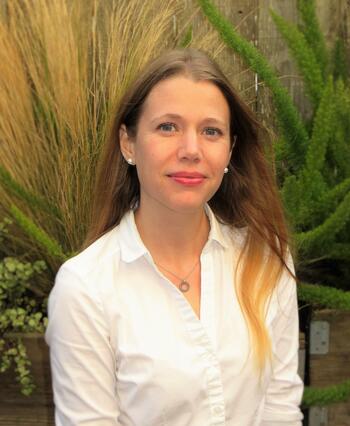
Dr. Dayna Barnes is a specialist in 20th century international history, American foreign policy, and East Asia. She is a visiting scholar at Stanford University's Center on Democracy, Development and Rule of Law, and is an incoming assistant professor of history at City, University of London. Her book, Architects of Occupation: American Experts and the Planning for Postwar Japan, was published in Cornell University Press in March 2017.

Dana Barnes Visiting scholar at CDDRL
Seminars
-

Abstract:

In India, the world’s largest democracy, the symbiotic relationship between crime and politics raises complex questions. For instance, how can free and fair democratic elections exist alongside rampant criminality? Why do political parties actively recruit candidates with reputations for wrongdoing? Why do voters elect (and even reelect) them, to the point that a third of state and national legislators assume office with pending criminal charges? In a new book, When Crime Pays: Money and Muscle in Indian Politics, Milan Vaishnav takes readers deep into the marketplace for criminal politicians by drawing on fieldwork on the campaign trail, large surveys, and an original database on politicians’ backgrounds. The result is the first systematic study of an issue that has profound implications for democracy both with and beyond India’s borders.


Speaker Bio:

Image
milan vaishnav
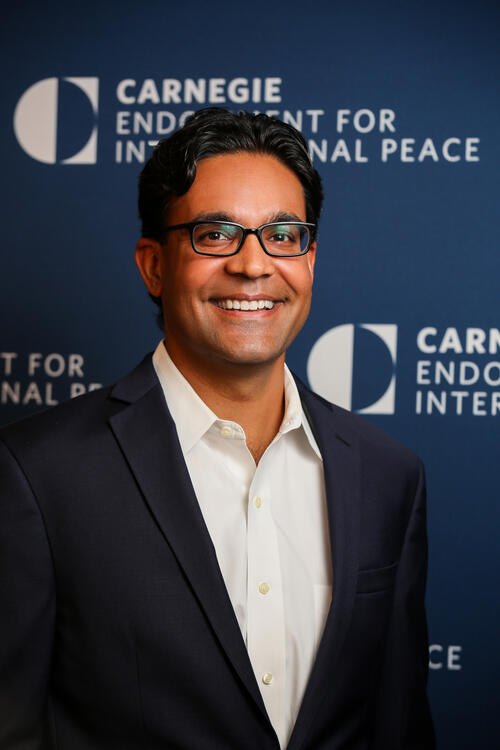
Milan Vaishnav is a senior fellow in the South Asia Program at the Carnegie Endowment for International Peace. His primary research focus is the political economy of India, and he examines issues such as corruption and governance, state capacity, distributive politics, and electoral behavior. He is the author of When Crime Pays: Money and Muscle in Indian Politics (Yale University Press, 2017) and co-editor (with Pratap Bhanu Mehta and Devesh Kapur) of Rethinking Public Institutions in India (Oxford University Press, 2017). He was previously a fellow at the Center for Global Development and has taught at Columbia, Georgetown, and George Washington Universities. He holds a Ph.D. in political science from Columbia University.

Milan Vaishnav Senior Fellow, South Asia Program Carnegie Endowment for International Peace
Seminars
-

About the Event: Despite much current talk about “America First,” the United States has a vital interest in global health that is rooted in both practical necessity and humanitarian traditions.  There is growing recognition of the complex problem of direct and indirect threats to the health and security of U.S. populations and people around the globe related to the state of health in all countries, the risk of disease spread into this country, the reality of emerging or resurging infections, most recently Ebola, Zika or a pandemic flu, and the growing possibility that biological agents might be deliberately used to do harm.  Perhaps less well-recognized are the significant health and safety risks posed by the growing number of products that flow across borders. In our increasingly globalized world, the benefits of a global marketplace can be seen in greater choice for consumers and new opportunities for business and innovation, but it has also created many new challenges for product oversight and protection of complex supply chains. Harmful products result from poor quality manufacturing, production, and distribution, contamination, and even from intentional adulteration, fraud and counterfeiting. Success in protecting the public now depends on reaching beyond our borders, and working effectively with regulatory authorities, industry, and intergovernmental and international organizations to build a global product safety net for consumers and patients around the world.  

About the Speaker: Dr. Hamburg is an internationally recognized leader in public health and medicine. As Foreign Secretary of the National Academy of Medicine, the health arm of the National Academy of Sciences, Engineering and Medicine, Dr. Hamburg serves as senior advisor on international matters and is the liaison with other Academies of Medicine around the world. She is also President-elect of the American Association for the Advancement of Science

Dr. Hamburg earned her A.B. from Harvard College, her M.D. from Harvard Medical School and completed her medical residency at Weill Cornell Medical Center. Following completion of her formal medical training, Dr. Hamburg went to Washington to explore the world of health policy. She soon took on the role of Assistant Director of the National Institute of Allergy and Infectious Diseases (NIAID) of the National Institutes of Health (NIH).

In 1991, Dr. Hamburg was named Commissioner of the New York City Department of health. During her six-year tenure there, she implemented rigorous public health initiatives that tackled the city’s most pressing crises head-on — including improved services for women and children, an internationally recognized tuberculosis control program, a needle-exchange program to combat HIV transmission, and the nation’s first public health bio-terrorism preparedness program.       

In 1997, President Clinton named Dr. Hamburg Assistant Secretary for Planning and Evaluation in the U.S. Department of Health and Human Services, the lead policy position in the Department. She later became founding Vice President for Biological Programs at the Nuclear Threat Initiative, a foundation dedicated to reducing the threat to public safety from nuclear, chemical, and biological weapons.

In 2009, President Obama nominated Dr. Hamburg for the post of FDA Commissioner. In that role, Dr. Hamburg emphasized the critical need for innovation in meeting medical care and public health needs. As Commissioner, she provided leadership on many groundbreaking activities, including: new authority to regulate tobacco products; implementation of the Food Safety Modernization Act designed to transform food safety to a preventive system rather than simply responding when outbreaks occur; and modernization of the system for the evaluation and approval of medical products. Dr. Hamburg also worked hard to reposition FDA as an agency prepared for the challenges of globalization and was very active in efforts to establish new mechanisms for global governance of regulatory systems, including enhanced communication, collaboration and regulatory harmonization.

Dr. Hamburg currently sits on a number of Boards, including for the Commonwealth Fund, the Simons Foundation, the Parker Institute for Cancer Immunotherapy,  the Global Alliance for Vaccines and Immunization, the Urban Institute, and the American Museum of Natural History. She is also a member of the Harvard University Global Advisory Council, the Harvard Medical School Board of Fellows, the World Dementia Council and the Global Health Scientific Advisory Committee for the Bill and Melinda Gates Foundation. Dr Hamburg formerly served on the Boards of the Rockefeller Foundation, the Rockefeller University, the Nathan Cummings Foundation, Conservation International and Henry Schein Inc. Dr. Hamburg is an elected member of the Council on Foreign Relations and the National Academy of Medicine, and a Fellow of the American Association for the Advancement of Science and the American College of Physicians. She is the recipient of multiple honorary degrees and numerous awards.


Encina Hall, 2nd floor

Margaret A. Hamburg Foreign Secretary National Academy of Medicine
Seminars
-

About the Event: NATO is entering today the 4th phase of its history and must adapt to changes in today’s security environment in order to remain relevant. NATO’s ability to adapt will ultimately redefine NATO’s place in the world.  General Mercier will discuss challenges facing NATO faces such as maintaining the unity between members in the Alliance, addressing potential crises in Eastern Europe, reopening dialogue with Russia, and addressing instability on NATO-member borders.

About the Speaker: General Denis Mercier is the North Atlantic Council as Supreme Allied Commander Transformation. Prior to this assignment, he served as the French Air Force Chief of Staff from 2012-2015.

He graduated with a Master’s of Science from the French Air Force Academy in 1981, qualifying as a fighter pilot in 1983. He has more than 3000 flying hours including 182 hours in combat missions. Gen. Mercier commanded the 1/12 "Cambrésis" Fighter Squadron, a founding unit of the NATO Tiger association. He participated in numerous other NATO exercises and operations, including Operation Deny Flight over Bosnia-Herzegovina in 1994, "Strong Resolve” in 1998, and Operation Allied Force in Kosovo.

From 1999 to 2002, Gen. Mercier was deputy head of the combined joint task force deputy branch at Regional Headquarters where he contributed to the development of the Combined Joint Task Force concept. He was a member of the combined analysis team for exercise "Allied Effort '01" and an evaluator of the CJTF HQ for Exercise "Strong Resolve '02". He also acted as liaison officer for the Commander Striking Fleet Atlantic stationed in Norfolk, VA.

He later served as the commander of Reims Air force base, integrating Mirage F1CR squadrons with ISAF in Afghanistan. From 2004 to 2008 he served as the head of the plans division at the French Air Force headquarters and was nominated as a flag officer in 2007. He then commanded the French Air Force Academy in Salon-de-Provence. As senior military advisor for the Minister of Defence from 2010-2012, Gen. Mercier prepared and participated in all NATO ministerial meetings, summits in Lisbon and Chicago, and was special advisor to Operation Unified Protector over Libya.

Among other awards, Gen. Mercier has been awarded the rank of Grand Officier of the French Legion of Honor and, among other distinctions, an officer of the National Order of Merit.

Encina Hall, 2nd floor

General Denis Mercier Supreme Allied Commander Transformation, NATO
Seminars
-

The Italian civil war and the Nazi occupation of Italy occurred at a critical juncture, just before the birth of a new democracy and when, for the first time in a generation, Italians were choosing political affiliations and forming political identities. In this paper we study how these traumatic events shaped the new political system. We exploit geographic heterogeneity in the intensity and duration of the civil war, and the persistence of the battlefront along the “Gothic line” cutting through Northern-Central Italy. We find that the Communist Party gained votes in the post-war elections where the Nazi occupation and the civil war lasted longer, mainly at the expense of the centrist and catholic parties. This effect persists until the early 1990s. Evidence also suggests that this is due to an effect on political attitudes. Thus, the foreign occupation and the civil war left a lasting legacy of political extremism and polarization on the newborn Italian democracy.

Guido Tabellini is the Intesa Sanpaolo Chair in Political Economics at Universita' Bocconi.

This seminar is part of the Comparative Politics Workshop in the Department of Political Science and is co-sponsored by The Europe Center.

Guido Tabellini Bocconi University
Seminars
-

Each year up to 100 high-achieving students with demonstrated intellect, leadership potential and civic commitment will receive full funding to pursue a graduate education at Stanford. Join us to learn more about the Knight-Hennessy Scholars Program. 

                                      Registration报名

https://apply.knight-hennessy.stanford.edu/register/PKU 


Knight-Hennessy Info Session Flyer
Download pdf
John Hennessy Knight-Hennessy Scholars
Seminars
-
What defines the strategic environment today is not individual threats, but the uncertainty presented by a multi-polar world of four revisionist powers (Iran, North Korea, China and Russia) actively challenging the rules-based international order, or what Admiral Harris refers to as the Global Operating System. The Global Operating System represents the norms and standards that enabled 75 years of relative peace and unparalleled prosperity since the end of World War II. Each of these revisionist powers - accumulating military capability at different rates, scales and varying levels of sophistication - are designed to assert behavior that sharply reduces or eliminates America's contributions and thus undermine global security in the Indo-Asia-Pacific region.  Admiral Harris will describe how we can reinforce the Global Operating System and deter revisionist powers to ensure access to the air, sea, space and cyber domains by demonstrating credible combat power and the resolve to use it. 
 

Image
Admiral Harris assumed command of U.S. Pacific Command (USPACOM) on May 27, 2015. He is the 24th Commander since USPACOM was established on Jan. 1, 1947 with headquarters at Hawaii.

Following graduation from the U.S. Naval Academy in 1978 and designation as a naval flight officer (NFO), he was assigned to VP-44. His subsequent operational tours include tactical action officer aboard USS Saratoga; operations officer in VP-4 at Barbers Point, Hawaii; three tours with Patrol and Reconnaissance Wing 1 at Kami Seya, Japan; Director of Operations for U.S. 5th Fleet at Manama, Bahrain; and Director of Operations for U.S. Southern Command.

Harris has served in every geographic combatant command region, and participated in the following major operations: S.S. Achille Lauro terrorist hijacking incident, Attain Document III (Libya, 1986), Earnest Will (Kuwaiti reflagged tanker ops, 1987-88), Desert Shield/Desert Storm, Southern Watch, Enduring Freedom, Iraqi Freedom, Willing Spirit (Colombia hostage rescue, 2006-7), and Odyssey Dawn (Libya, 2011). For Odyssey Dawn, he served as the Joint Force Maritime Component Commander afloat.

Harris’ graduate education focused on East Asia security. He attended Harvard’s Kennedy School of Government, Georgetown’s School of Foreign Service, and Oxford University. He was a MIT Seminar 21 fellow. 


This event is co-sponsored by the U.S.-Asia Security Initiative and the Hoover Institution

Commander Admiral Harry B. Harris, Jr. <i>U.S. Pacific Command, U.S. Navy</i>
Seminars
-

Image
#Republic
As the Internet grows more sophisticated, it is creating new threats to democracy. In #Republic: Divided Democracy in the Age of Social Media, Cass Sunstein examines the ways that the internet fuels political fragmentation and even extremism. He shows how the internet and social media create "cybercascades," assist "polarization entrepreneurs," and exploit confirmation bias. #Republic proposes ways to make the internet friendly to democratic deliberation, and to increase interactions with new ideas and people.

Larry Kramer of the Hewlett Foundation, Nathaniel Persily of Stanford Law School, and Shanto Iyengar of Stanford University will join a conversation with Cass Sunstein about the perils and promise of digital technology on democracy. 


SPEAKER BIO


Cass Sunstein is the Robert Walmsley University Professor at Harvard Law School. From 2009 to 2012, he was Administrator of the White House Office of Information and Regulatory Affairs. He is the founder and director of the Program on Behavioral Economics and Public Policy at Harvard Law School. Mr. Sunstein has testified before congressional committees on many subjects, and he has been involved in constitution-making and law reform activities in a number of nations. His many books include the New York Times bestsellers Nudge: Improving Decisions about Health, Wealth, and Happiness (with Richard H. Thaler) and The World According to Star Wars. He lives in Cambridge, Massachusetts.


Larry Kramer became President of the William and Flora Hewlett Foundation in Menlo Park, California, in September 2012. Before joining the foundation, Larry served from 2004 to 2012 as Richard E. Lang Professor of Law and Dean of Stanford Law School. His teaching and scholarly interests include American legal history, constitutional law, federalism, separation of powers, the federal courts, conflict of laws, and civil procedure. Larry is a fellow of the American Academy of Arts and Sciences and a member of the American Philosophical Society and the American Law Institute.


Nathaniel Persily is the James B. McClatchy Professor of Law at Stanford Law School. He focuses on the law of democracy, addressing issues such as voting rights, political parties, campaign finance and redistricting. A sought-after nonpartisan voice in voting rights, he has served as a court-appointed expert to draw legislative districting plans for Georgia, Maryland and New York and as special master for the redistricting of Connecticut’s congressional districts. Most recently, he also served as the Senior Research Director for the Presidential Commission on Election Administration, a bipartisan commission created by the President to deal with the long lines at the polling place and other administrative problems witnessed in the 2012 election.    


Shanto Iyengar is the Chandler Chair in Communication at Stanford University where he is also Director of the Political Communication Laboratory. Iyengar’s areas of expertise include the role of mass media in democratic societies, public opinion, and political psychology. He is the recipient of the Philip Converse Award of the American Political Science Association for the best book in the field of public opinion, the Murray Edelman Lifetime Achievement Award, and the Goldsmith Book Prize from Harvard University.  Iyengar is author or co-author of several books, including News That Matters (University of Chicago Press, 1987), Going Negative (Free Press, 1995), and Media Politics: A Citizen’s Guide (Norton, 2011).

Cass Sunstein Robert Walmsley University Professor, Harvard University
Larry Kramer President, Hewlett Foundation
Nathaniel Persily James B. McClatchy Professor of Law, Stanford Law School
Shanto Iyengar Chandler Chair in Communication, Stanford University
Seminars
-

Abstract: The formal constitutional character of the presidential office – that is, the method of electing the president, and the powers both granted and denied to the president -- was defined by the men who drafted the Constitution in Philadelphia in the summer of 1787 and has, for all practical purposes, remained largely unchanged ever since.

The presidency’s place in American political culture, however, is another matter, because in the 230 years since the Constitution was framed, that culture has evolved -- in many ways dramatically -- along with the society and the economy it reflects.

The tension between the static constitutional character of the presidency and the dynamic political culture, society, and economy in which it is embedded – and especially the technologies, even more especially the communication technologies that have emerged over the last century -- will be the main focus of this paper.

About the Speaker: David M. Kennedy is the Donald J. McLachlan Professor of History, Emeritus, at Stanford University. 

His teaching has included courses in the history of the twentieth-century United States, American political and social thought, American foreign policy, national security strategies, American literature, and the comparative development of democracy in Europe and America.

Reflecting his interdisciplinary training in American Studies, which combined the fields of history, literature, and economics, Kennedy's scholarship is notable for its integration of economic and cultural analysis with social and political history, and for its attention to the concept of the American national character. His 1970 book, Birth Control in America: The Career of Margaret Sanger, embraced the medical, legal, political, and religious dimensions of the subject and helped to pioneer the emerging field of women's history.  Over Here: The First World War and American Society (1980) used the history of American involvement in World War I to analyze the American political system, economy, and culture in the early twentieth century. Freedom From Fear: The American People in Depression and War, 1929-1945 (1999) recounts the history of the American people in the two great crises of the Great Depression and World War II. With Thomas A. Bailey and Lizabeth Cohen, Kennedy is also the co-author of a textbook in American history, The American Pageant, now in its sixteenth edition. He is a frequent contributor to the New York Times, the Los Angeles Times, The Atlantic, and other publications and media outlets.

Birth Control in America was honored with the John Gilmary Shea Prize in 1970 and the Bancroft Prize in 1971. Over Here was a Pulitzer Prize finalist in 198. Freedom From Fear won the Pulitzer and Francis Parkman Prizes, in 2000.

Professor Kennedy has been a visiting professor at the University of Florence, Italy, and has lectured on American history in Italy, Germany, Turkey, Scandinavia, Canada, Britain, Australia, Russia, and Ireland. He has served as chair of the Stanford History Department, and as director of Stanford's Program in International Relations, as well as Associate Dean of the School of Humanities and Sciences. He founded Stanford’s Bill Lane Center for the American West, was its Director from 2003-2013, and remains a member of its Advisory Council. In 1995-96, he was the Harmsworth Professor of American History at Oxford University. He is an elected Fellow of the American Academy of Arts and Sciences as well as the American Philosophical Society. From 2002 to 2011 he served on the Board of the Pulitzer Prizes (chair, 2010-2011) joined  the Board of the New York Historical Society in 2008, and in 2013 became a Trustee of the California Academy of Sciences. Since 2000, he has served as the Editor of the Oxford History of the United States. Secretary of Agriculture Tom Vilsack in 2015 appointed Kennedy to the Advisory Council for the Pacific Northwest National Scenic Trail, which will run from Glacier National Park in Montana to the Pacific shore in Washington State. 

Encina Hall, 2nd floor

Donald J.McLachlan Professor of History, Emeritus Director Emeritus, Bill Lane Center for the American West Stanford University
Seminars
-

International Christian University (ICU) is the first four-year liberal arts college in Japan. For the past six decades, they have spearheaded liberal arts education with particular features that were standard abroad, but relatively unknown in Japan until recently. Dr. Hibiya will describe ICU’s past and present, situating them in the flow of recent trends in higher education, in Asia and Japan. She will focus on the revitalization of liberal arts and discuss successful initiatives by the Japanese Ministry of Education, Culture, Sports, Science and Technology, as well as highlighting challenges they face now, and in the future. 


Image
Dr. Junko Hibiya is the 10th president of International Christian University (ICU) in Japan. She received a Bachelor of Arts degree in French Studies and a Master of Arts degree in Linguistics from Sophia University. She then completed a doctorate in Linguistics at the University of Pennsylvania in 1988. Prior to being at ICU, she has taught at Keio University and has been Visiting Professor at Dartmouth College. In her administrative work at ICU, Dr. Hibiya served as Director of Japanese Language Programs, Chair of the Division of Languages, Director of Academic Reform, and for the past four years, Vice President for Academic Affairs (VPAA). As evidence of her leadership, ICU successfully completed academic reforms in the undergraduate College of Liberal Arts and the Graduate School during her tenure as Director of Academic Reform and VPAA.


Junko Hibiya President International Christian University
Seminars
Subscribe to Seminars