-

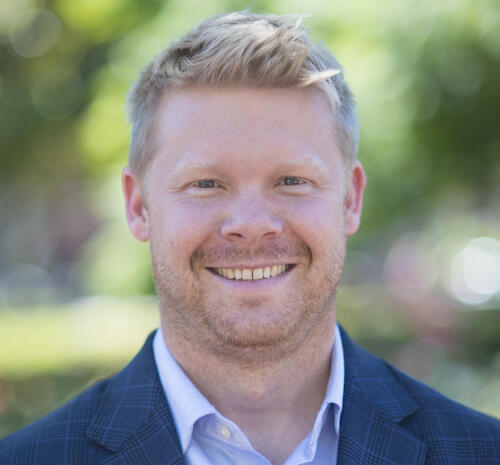
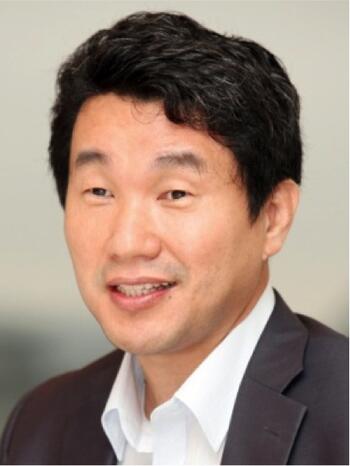
Professor Tetsuji Okazaki will present his research which examines the difference between the regime transition phase and consolidation phase, dividing government elites into the pre-Meiji-Restoration-born group and the post-Meiji-Restoration-born group. Using the newly constructed government elites’ data after the Meiji Restoration in Japan, his research shows that reformers’ strategies to recruit government elites and establish a new intra-elite hierarchy changed from the regime transition phase to its consolidation phase. Initially, in order to contend against the incumbent elites, reformers recruited talented activists from the non-elite strata and assigned them to higher-level positions based on their abilities. On achieving a transfer of power, however, reformers’ primary concern shifted to alleviating the dissatisfaction of the masses and the former elites. Therefore, while the barrier preventing access to the elite group keep lowering, which opened the way for non-elites to gain elite status, former elites are reintegrated into the elite group and the intra-elite hierarchy again comes to reflect the social stratum of the former regime.

Image
okazaki
Tetsuji Okazaki is Professor of Economics at the University of Tokyo. He has been the President of International Economic History Association (IEHA) since 2015. His recent publications include “The expanding empire and spatial distribution of economic activities: The case of Japan’s colonization of Korea during the pre-war period” (with Kentaro Nakajima) forthcoming in Economic History Review, 2017, “Measuring the extent and implications of corporate political connections in prewar Japan” (with Michiru Sawada) forthcoming in Explorations in Economic History, 2017, and “Acquisitions, productivity, and profitability: Evidence from the Japanese cotton spinning industry” (with Serguey, Braguinsky, Atsushi Ohyama,and Chad Syverson) American Economic Review, 105(7): 2086-2119, 2015

Tetsuji Okazaki Professor of Economics, University of Tokyo
Seminars
-

Abstract: Recently, Twitter, Netflix, Spotify, Airbnb, Reddit, Etsy, SoundCloud, and The New York Times were knocked out by a botnet driven by the Mirai malware. Mirai is a contemporary case of a more general phenomenon: the illegitimate appropriation of online resources for prestige, economic, and/or political gain. Historically participants in the anti-abuse regime have used reputation indicators to characterize subsets of this illegitimate activity as abuse: any traffic---spam, malware communications, DDOS traffic---that is not explicitly consensual, is abusive. Participants in this regime use decentralized, transnational monitoring to aggregate and vet credible reputation indicators, then redistribute these indicators to participants enforcing anti-abuse norms. This work explains how these reputation indicators have functioned over the course of their evolution within this regime, from products of supposedly “vigilante blacklists” into credible mechanisms based on graduated sanction as a remediative signaling mechanism rather than a punitive sanction. Returning to Mirai, this work concludes by evaluating the potential for this regime to tackle contemporary IoT security challenges. In particular, can the anti-abuse regime discipline a market projected to grow from $900M in 2015 to $3.7B in 2020, or will it need help from conventional authorities?

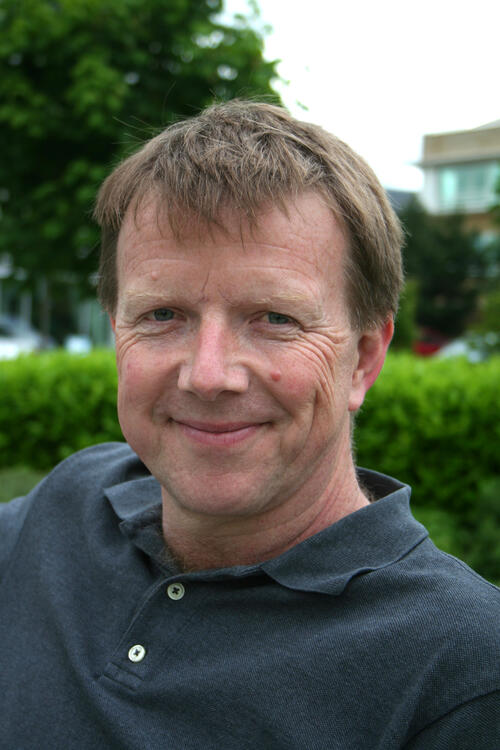
About the Speaker: Jesse is the 2016-2017 Cybersecurity Fellow at the Center for International Security and Cooperation and holds a PhD in Technology, Management, and Policy from MIT.  Jesse focuses on understanding the institutions and political economy of Internet operations vis a vis conventional modes of domestic and inter-state governance mechanisms. This work includes studies on infrastructure resource management and policy, infrastructure security, credible knowledge assessment, and operational epistemic communities’ role informing public policy. Jesse’s dissertation evaluates the common resource management institutions that sustain the integrity and security of the Internet’s numbers and routing system. The dissertation documents how the roles of these institutions, comprising diverse transnational operator communities, managing the complex of physical and information resources supporting the integrity of global Internet connectivity. Concluding analyses narrow the focus from operational authority to the character of political authority in these communities, rooted in the family of consensus processes used to adapt resource policy and institutions apace with Internet growth and development.  Jesse is currently working on a number of papers from his dissertation: reputation and security in the numbers and routing system, contrasting consensus as a decision-making process with conventional mechanisms for credible knowledge assessment, and the challenges in comity between substantive-purposive authority in operational institutions with governments’ conventional, formal-legalistic modes of authority. Ongoing work is developing a theory of epistemic constructivism and case work on developing joint capabilities between operational security regimes and law enforcement/national security actors.

Encina Hall, 2nd floor

Cybersecurity Postdoctoral Fellow CISAC
Seminars
-

One prominent feature of South Korea, as well as other countries in East Asia, is citizens’ strong preference to work for large conglomerates or the government, as opposed to startups or small and medium enterprises (SMEs). Relative to the United States, choosing entrepreneurship or working for a young firm are less desired in Korea, especially among highly skilled individuals. This talk will examine how beliefs about corruption and trust in institutions affect an individual’s occupational preferences. A main challenge of examining personal beliefs and their impact on occupational preference is their relation to a host of other individual characteristics such as willingness to accept risk, optimism, patience, education level and family background. Center Fellow Yong Suk Lee will discuss his research on this area, including his focus on the events surrounding the impeachment of South Korea's previous president, Park Geun Hye, and his surveys of South Koreans before the impeachment rulings by the constitutional court and after impeachment. He will talk about (1) whether the impeachment process changed beliefs in the rule of law and societal trust; and (2) whether and how any change in beliefs and trust affect occupational preference. 

 
Yong Suk Lee <i>Deputy Director of Korea Program, APARC; Center Fellow, FSI, Stanford University</i>
Seminars
-

Abstract: Both the academic and policy making worlds have been dominated by three explanations for development, understood broadly as democratization and rising levels of per capita income. The first argument is modernization theory which assumes that if polities are provided with adequate resources, especially investment, they will develop. The second argument is institutional capacity approaches which focus on the ability of the state to maintain order. The third argument is rational choice institutionalism which sees deveopment as a rare event resulting from the self interested calculations of elites.  Happenstance and path-dependence play major roles for rational choice instititoinalism. All three of these approaches suffer from major gaps. All three, however, are consistent with the view that external state-building efforts will only be successful if the objectives of external and internal elites are complmentary. This suggests that for most polities the best that external actors can accomplish is Good Enough Governance: security, some service provision, some economic growth.

About the Speaker: Stephen Krasner is the Graham H. Stuart Professor of International Relations, the Senior Associate Dean for the Social Sciences, School of Humanities & Sciences, and the deputy director of FSI. A former director of CDDRL, Krasner is also an FSI senior fellow, and a fellow of the Hoover Institution.

From February 2005 to April 2007 he served as the Director of Policy Planning at the US State Department. While at the State Department, Krasner was a driving force behind foreign assistance reform designed to more effectively target American foreign aid. He was also involved in activities related to the promotion of good governance and democratic institutions around the world.

At CDDRL, Krasner was the coordinator of the Program on Sovereignty. His work has dealt primarily with sovereignty, American foreign policy, and the political determinants of international economic relations. Before coming to Stanford in 1981 he taught at Harvard University and UCLA. At Stanford, he was chair of the political science department from 1984 to 1991, and he served as the editor of International Organization from 1986 to 1992.

He has been a fellow at the Center for Advanced Studies in the Behavioral Sciences (1987-88) and at the Wissenschaftskolleg zu Berlin (2000-2001). In 2002 he served as director for governance and development at the National Security Council. He is a fellow of the American Academy of Arts and Sciences and a member of the Council on Foreign Relations.

Encina Hall, 2nd floor

CDDRL
Stanford University
Encina Hall
Stanford, CA 94305-6055

(650) 723-0676 (650) 724-2996
0
Senior Fellow at the Freeman Spogli Institute for International Studies, Emeritus
Graham H. Stuart Professor of International Relations
Senior Fellow at the Hoover Institution, Emeritus
krasner.jpg MA, PhD

Stephen Krasner is the Graham H. Stuart Professor of International Relations. A former director of CDDRL, Krasner is also an FSI senior fellow, and a fellow of the Hoover Institution.

From February 2005 to April 2007 he served as the Director of Policy Planning at the US State Department. While at the State Department, Krasner was a driving force behind foreign assistance reform designed to more effectively target American foreign aid. He was also involved in activities related to the promotion of good governance and democratic institutions around the world.

At CDDRL, Krasner was the coordinator of the Program on Sovereignty. His work has dealt primarily with sovereignty, American foreign policy, and the political determinants of international economic relations. Before coming to Stanford in 1981 he taught at Harvard University and UCLA. At Stanford, he was chair of the political science department from 1984 to 1991, and he served as the editor of International Organization from 1986 to 1992.

He has been a fellow at the Center for Advanced Studies in the Behavioral Sciences (1987-88) and at the Wissenschaftskolleg zu Berlin (2000-2001). In 2002 he served as director for governance and development at the National Security Council. He is a fellow of the American Academy of Arts and Sciences and a member of the Council on Foreign Relations.

His major publications include Defending the National Interest: Raw Materials Investment and American Foreign Policy (1978), Structural Conflict: The Third World Against Global Liberalism (1985), Sovereignty: Organized Hypocrisy (1999), and How to Make Love to a Despot (2020). Publications he has edited include International Regimes (1983), Exploration and Contestation in the Study of World Politics (co-editor, 1999),  Problematic Sovereignty: Contested Rules and Political Possibilities (2001), and Power, the State, and Sovereignty: Essays on International Relations (2009). He received a BA in history from Cornell University, an MA in international affairs from Columbia University and a PhD in political science from Harvard.

CV
Stephen D. Krasner Professor of International Relations Freeman Spogli Institute for International Studies, Stanford University
Seminars
-

South Korea's persistent economic growth combined with a democratic political system has transformed the country into a developed nation. While research has often highlighted the role of industrial policies, technological growth and international trade as imperative to Korea’s developmental success, this talk will instead focus on the role that human capital has played. Professor Ju-Ho Lee will discuss how the accumulation of human capital has aided Korea’s transformation and examine the policies, strategies and challenges that the country faces into the future.

Image
ju ho lee
Before returning to the KDI School of Public Policy and Management in 2013, Professor Lee served as Minister of Education, Science and Technology (2010-13) where he had previously served as Vice Minister (2009). He has been noted for his endeavor to reform education, and for active lawmaking as a member of the National Assembly (2004-08). Utilizing his nine years of experience as a policy maker, he actively resumed his academic research on human capital and innovation policies at KDI. Professor Lee's  recent research has covered a wide range of issues including the measurement of 21st century skills, changes in pedagogies, opening-up strategies in education reforms, and innovation ecosystems. Currently he is also working for the international community as a Commissioner of the International Commission on Financing the Global Educational Opportunities.

Professor Lee received his BA and MA from Seoul National University, and PhD from Cornell University, all in economics.

This lunch time keynote address is part of the ninth annual Koret Workshop, "Korea's Migrants: From Homogeneity to Diversity," and open to the general public.

This event is made possible through the generous support of the Koret Foundation.

Ju-Ho Lee <i>Professor, KDI School of Public Policy and Management; former Minister of Education, Science and Technology, South Korea </i>
Seminars
-

Abstract:

Within the last fifteen years, nine multilateral development banks (MDBs) have established internal accountability offices (IAOs).  These IAOs, the most well-known of which is the World Bank Inspection Panel, allow communities within borrowing states to bring complaints against MDBs if loan programs cause them harm and violate MDB policies.  The IAOs have been touted as effective fire-alarm mechanisms and remedies to the democratic deficit problem; they have also been criticized as broadly ineffective and toothless.  What explains the variation in IAO impact and efficacy?  I argue that borrowing states significantly constrain the impact of MDB IAOs and that borrowing state influence varies depending on regime type.  Democratic borrowing states will be more willing to absorb the potential costs associated with MDB IAOs—including program changes and possible program termination—than will autocratic states.  The argument is supported with quantitative evidence from a new dataset of all complaints filed through 2015.

Speaker Bio:

Image
erica gould
Erica Gould is the Director of the International Relations Honors Program at Stanford University. She teaches courses on honors thesis writing, international political economy and international organizations.  She has taught previously at the University of Virginia and Johns Hopkins University.  Dr. Gould’s research has centered mainly around the question of how international organizations are controlled.  She is currently working on a project concerning international organizational decision-making rules and also one on the accountability mechanisms associated with international organizations.  Her publications include Money Talks: The International Monetary Fund, Conditionality and Supplementary Financiers (Stanford University Press, 2006), as well as articles in academic journals and several edited volumes. In addition to her research and teaching, Dr. Gould serves on the Board of Accountability Counsel, an international NGO based in San Francisco.  She received her PhD in Political Science from Stanford University and her BA from Cornell University.

Erica Gould Director of the International Honors Program at Stanford University
Seminars
-

Speaker Bio:

Image
zeynep tufekci1
Zeynep Tufekci, a contributing opinion writer for The New York Times, writes about the social impacts of technology. She is an assistant professor in the School of Information and Library Science at the University of North Carolina, a faculty associate at the Berkman Center for Internet and Society at Harvard, and a former fellow at the Center for Internet Technology Policy at Princeton. Her research revolves around politics, civics, movements, privacy and surveillance, as well as data and algorithms. Originally from Turkey, Ms. Tufekci was a computer programmer by profession and academic training before turning her focus to the impact of technology on society and social change. She switched to social science, and started calling herself a “technosociologist.” She has been published widely on the interaction of new technologies with society, politics and culture. Her forthcoming book from Yale University Press is tentatively titled “Beautiful Tear Gas: The Ecstatic, Fragile Politics of Networked Protest in the 21st Century.”

Zeynep Tufekci Writer for The New York Times
Seminars
-

Abstract: 

How do autocrats manipulate the beliefs of their citizens during political crises? We argue that they cultivate a reputation for neutrality so that, during moments of crisis, their pro-regime arguments have some measure of credibility. To test the argument, we employ a corpus of 24 state-affiliated newspapers from Africa and Asia. Using a differences-in-differences estimation strategy, we find that propaganda in autocracies is generally indistinguishable from state-affiliated newspapers in democracies, save for the 15 days prior to an election, when positive coverage of the autocrat and the ruling party triples. This increase, we show, is driven not by more effusive articles, but an increase in the share of articles about the regime. Consequently, the aggregate volume of pro-regime coverage increases, but per article positive coverage does not. We find no evidence that autocrats employ propaganda to issue threats of repression during election seasons, and that their propaganda apparatuses generally avoid defaming the opposition. State-affiliated newspapers in democracies -- much like their autocratic counterparts outside of election seasons -- exhibit generally neutral coverage.

Speaker Bio:

Image
carter brett
Dr. Brett Carter is an Assistant Professor at the School of International Relations at the University of Southern California and co-PI of the Lab on Non-Democratic Politics. He holds a Ph.D. from Harvard University, where he was a Graduate Fellow at the Harvard Academy for International and Area Studies. He was previously a fellow at Stanford University's Center on Democracy, Development, and the Rule of Law, as well as the Hoover Institution. His research focuses on autocratic politics in the Information Age. He is currently working on three book projects: one on autocratic survival in Post-Cold War Africa, one on autocratic propaganda, and one that exploits the Foreign Agents Registration Act to explore the role of autocratic money in American politics.
 
0
brett_carter_2025.jpg

Brett Carter is an Associate Professor in the Department of Political Science and International Relations at the University of Southern California, a Hoover Fellow at Stanford University's Hoover Institution, and a Faculty Affiliate at Stanford's Center on Democracy, Development and the Rule of Law. He received a Ph.D. from Harvard University, where he was a fellow at the Harvard Academy for International and Area Studies.

Carter studies politics in the world's autocracies. His first book, Propaganda in Autocracies: Institutions, Information, and the Politics of Belief (Cambridge University Press), draws on the largest archive of state propaganda ever assembled — encompassing over eight million newspaper articles in six languages from nearly 60 countries around the world — to show how political institutions shape the propaganda strategies of repressive governments. It received the William Riker Prize for the Best Book in Political Economy, the International Journal of Press/Politics Hazel Gaudet-Erskine Best Book Award, Honorable Mention for the Gregory Luebbert Award for the Best Book in Comparative Politics, and Honorable Mention for the APSA Democracy & Autocracy Section's Best Book Award.

His second book, in progress, shows how politics in Africa’s autocracies changed after the fall of the Berlin Wall and how a new era of geopolitical competition — marked by the rise of China and the resurgence of Russia — is changing them again.

Carter’s other work has appeared in the Journal of Politics, British Journal of Political Science, Perspectives on Politics, Journal of Conflict Resolution, Security Studies, China Quarterly, Journal of Democracy, and Foreign Affairs, among others. His work has been featured by The New York Times, The Economist, The National Interest, and NPR’s Radiolab.

Hoover Fellow
CDDRL Affiliated Scholar
CDDRL Visiting Scholar, 2020-2021
Date Label
Assistant Professor at the School of International Relations at the University of Southern California
Seminars
-

Abstract:

Duncan Green, Oxfam Strategic Adviser and LSE Professor of Practice in International Development, introduces the arguments of his new book, How Change Happens (OUP, October 2016). How Change Happens explores how political and social change takes place, and the role of individuals and organizations in influencing that change. He discusses the challenges that 'systems thinking' creates for traditional aid practices, and how a 'power and systems approach' requires activists, whether in campaigns, companies or governments, to fundamentally rethink the way they understand the world and try to influence it.


Speaker Bio:

Image
duncan green
Dr. Duncan Green is Senior Strategic Adviser at Oxfam GB, Professor in Practice in International Development at the London School of Economics, honorary Professor of International Development at Cardiff University and a Visiting Fellow at the Institute for Development Studies. He is author of How Change Happens (OUP, October 2016) and From Poverty to Power: How Active Citizens and Effective States can Change the World (Oxfam International, 2008, second edition 2012). His daily development blog can be found on http://www.oxfamblogs.org/fp2p/.

He was previously Oxfam’s Head of Research, a Visiting Fellow at Notre Dame University, a Senior Policy Adviser on Trade and Development at the Department for International Development (DFID), a Policy Analyst on trade and globalization at CAFOD, the Catholic aid agency for England and Wales and Head of Research and Engagement at the Just Pensions project on socially responsible investment.


Dr. Duncan Green Senior Strategic Adviser at Oxfam GB
Seminars
-

Abstract: Under what conditions could the United States control escalation in a conventional conflict with a nuclear-armed adversary? The possibility that a dispute between the U.S. and a nuclear-armed opponent remains a contingency policy-makers and military planners should consider. There is growing work on the pathways to nuclear escalation during a conventional conflict, but less on how these armed disputes could end. This paper will explore some of the conditions that favor successful escalation management and the conditions that could make escalation control extremely difficult. The paper also assesses possible U.S. responses to nuclear use by an adversary.

About the Speaker: Jasen J. Castillo is an Associate Professor at Texas A&M University’s George H.W. Bush School of Government and Public Service. He came to the Bush School after serving on the staff of the Policy Planning Office in the U.S. Department of Defense from 2005 to 2007. Before then, he worked at the RAND Corporation and the Institute for Defense Analysis. He holds a Ph.D. in political science from the University of Chicago. His publications include: Endurance and War: The National Sources of Military Cohesion (Palo Alto: Stanford University Press, 2014); Nuclear Strategies to Deter Conventional Attacks,” in, New Perspectives on Coercion, (Oxford: Oxford University Press, forthcoming); Flexible Response Revisited: Assessing Pakistan’s Potential Nuclear Strategies, PM-2383 (Santa Monica, CA: The Rand Corporation, 2007); Striking First: Preemptive and Preventive Attack in U.S. National Security Policy (Santa Monica, CA: The Rand Corporation, 2004); “Nuclear Terrorism: Why Deterrence Still Matters,” Current History, Vol. 2, No. 668 (2003), Economic Growth and Military Expenditures, MR-112-A, (Santa Monica, CA: The Rand Corporation, 2002). His research focuses on U.S. national security policy, especially military effectiveness and nuclear deterrence.

Encina Hall, 2nd floor

Jasen Castillo Associate Professor George H.W. Bush School of Government, Texas A&M University
Seminars
Subscribe to Seminars