-

Decades of rapid growth transformed developing Asia into a largely middle-income region, but the pace of expansion has fallen off since the 2008 global financial crisis. This has serious implications for American businesses and the global economy as a whole.

The Asian Development Bank (ADB) explores this challenge in its Asian Development Outlook 2017, a comprehensive economic forecast providing country and regional analysis and growth projections for 45 economies, including the People’s Republic of China, India and Indonesia. ADB's Chief Economist Yasuyuki Sawada will outline the report’s findings and policy options for innovation, education and infrastructure to spur growth in middle-income economies amid uncertainties ranging from protectionist threats to changing monetary policy.


Image
yasuyuki sawada new
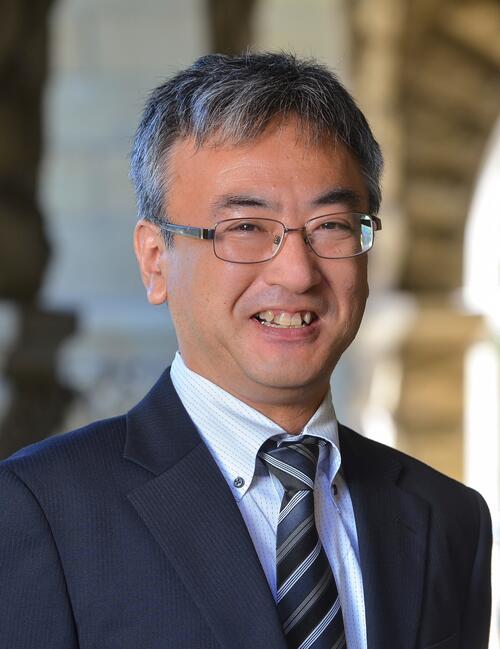
Yasuyuki Sawada is the chief spokesperson for ADB on economic and development trends, and leads the Economic Research and Regional Cooperation Department (ERCD), which publishes ADB's flagship knowledge products.

Mr. Sawada previously served as a Professor in the Faculty of Economics at the University of Tokyo, Japan. Earlier, he was an Associate Professor at the University of Tokyo; an Adjunct Professor of Economics at the Korea University; a Research Associate at the Australia-Japan Research Centre, Crawford School of Public Policy, Australian National University; and a Visiting Researcher at the Asian Development Bank Institute. He previously performed research work in a variety of institutions, such as the Japan International Cooperation Agency (JICA) Research Institute; the World Bank; Economic Research Institute of ASEAN and East Asia (ERIA); Bangladesh Institute of Development Studies (BIDS); Pakistan Institute of Development Economics (PIDE); International Rice Research Institute (IRRI) in the Philippines; International Water Management Institute (IWMI) in Sri Lanka; Research Institute of Economy, Trade, and Industry (RIETI) in Japan; and Japan Society of Promotion of Science (JSPS), where he led a number of large-scale development policy evaluation projects in Asia and other developing countries.

Mr. Sawada's research fields are macro- and micro-development economics, microeconometrics, economics of disasters, and field surveys and experiments. He has published more than 60 peer-reviewed research articles on diversified topics pertaining to Asia and other developing countries ranging from macro development issues, such as long-term economic growth and structural change, sovereign debt sustainability, foreign aid, trade, ageing and social security, and natural and man-made disasters to micro issues of poverty, education, infrastructure, microenterprises, microfinance, health, and disabilities.

A Japanese national, Mr. Sawada holds a Doctorate degree in Economics and a Master's degree in International Development Policy from Stanford University, USA; a Master's degree in International Relations from the University of Tokyo, Japan; a Master's degree in Economics from Osaka University, Japan; and a Bachelor's degree in Economics from Keio University, Japan.

Yasuyuki Sawada Chief Economist, Asian Development Bank
Seminars
-

In discussions of how Japan can harness Silicon Valley, and how Japan can accelerate its efforts to foster greater innovation and entrepreneurship, the endpoint is often “Japan’s education system needs to change.” However, the people discussing innovation, entrepreneurship, and harnessing Silicon Valley are rarely positioned to be able to take the next step and actively facilitate change. The Stanford Program on International and Cross-Cultural Education (SPICE) has begun offering an interactive online learning program called Stanford e-Japan to high schools in Japan and plans to expand into the college level.  Students not only learn content provided by Stanford scholars, but are also exposed to critical thinking, creative but structured intellectual inquiry, and formulating informed opinions about topics of great relevance to everyday life – all in English. SPICE and the Stanford Silicon Valley – New Japan Project are delighted to collaborate on building new relationships and content to directly begin influencing educational change in Japan. In this SV-NJ Public Forum series, SPICE director Gary Mukai and SV-NJ project leader Kenji Kushida will provide an overview of educational skills needed for the Japanese young people of today and tomorrow, and introduce the Stanford e-Japan program.


Image

Dr. Gary Mukai is the director of the Stanford Program on International and Cross-Cultural Education (SPICE) at Stanford University. Prior to joining SPICE in 1988, he was a teacher in Gunma Prefecture, Japan, and in California public schools. Gary’s academic interests include curriculum and instruction, educational equity, and teacher professional development. He is a graduate of U.C. Berkeley and Stanford University. His curricular writings for U.S. schools include extensive work on Japan and the Japanese-American experience. In 2003, under his leadership, SPICE established the Reischauer Scholars Program, a distance-learning course on Japan and U.S.–Japan relations for high school students in the United States, and in 2015, SPICE launched Stanford e-Japan, a distance-learning course on the United States and U.S.–Japan relations for high school students in Japan. In 2007, he was the recipient of the Foreign Minister’s Commendation from the Japanese government for the promotion of mutual understanding between Japan and the United States, especially in the field of education. In 2015, he was selected as the recipient of the Stanford Alumni Award by the Asian American Activities Center Advisory Board. He has been a long-time interviewer of the Japan Exchange and Teaching (JET) Program and member of the JET Alumni Association of Northern California board. 

Kenji E. Kushida is a Japan Program Research Scholar at the Walter H. Shorenstein Asia-Pacific Research Center and an affiliated researcher at the Berkeley Roundtable on the International Economy. Kushida’s research interests are in the fields of comparative politics, political economy, and information technology. He has four streams of academic research and publication: political economy issues surrounding information technology such as Cloud Computing; institutional and governance structures of Japan’s Fukushima nuclear disaster; political strategies of foreign multinational corporations in Japan; and Japan’s political economic transformation since the 1990s. Kushida has written two general audience books in Japanese, entitled Biculturalism and the Japanese: Beyond English Linguistic Capabilities (Chuko Shinsho, 2006) and International Schools, an Introduction (Fusosha, 2008). Kushida holds a PhD in political science from the University of California, Berkeley. His received his MA in East Asian studies and BAs in economics and East Asian studies, all from Stanford University.
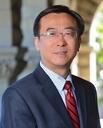
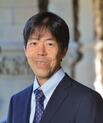
Agenda

4:15pm: Doors open
4:30pm-5:30pm: Talk and Discussion
5:30pm-6:00pm: Networking

RSVP Required

 
For more information about the Silicon Valley-New Japan Project please visit: http://www.stanford-svnj.org/


Gary Mukai, Director of the Stanford Program on International and Cross-Cultural Education (SPICE)
Kenji Kushida, Research Scholar, Shorenstein APARC Japan Program
Seminars
-

Abstract: Effective climate risk management requires robust quantification of the probability of different kinds of hazards, such as heat waves, droughts, floods, and severe storms. As a result, there has been increasing interest in the extent to which historical global warming has influenced the occurrence and severity of individual extreme climate events. However, although trends in the extremes of the seasonal- and daily-scale distributions of climate records have been analyzed for many years, quantifying the contribution of observed global warming to individual events that are unprecedented in the observed record presents a particular scientific challenge. I will describe a framework for leveraging observations and large climate model ensembles to quantify the influence of observed global warming on the probability of unprecedented extreme events. This approach is grounded on three tenets: (1) Focus on understanding the physical causes of the individual event; (2) Use formal uncertainty quantification to test the probability of those physical conditions occurring in the current climate; and (3) Use formal hypothesis testing to compare the probability of those physical conditions occurring in the current climate and a climate without human influence. My group has applied our analysis to a number of different climate variables from a number of individual events, including temperature, precipitation, soil moisture, and atmospheric circulation patterns. Together, this work has shown that global warming can influence the risk of extreme events that are unprecedented in historical experience, particularly by altering the probability of the physical conditions that are responsible for the event. In addition, given the widespread public interest in “real time” attribution, the prospects for operational attribution analysis will also be discussed.

About the Speaker: Noah Diffenbaugh is a Professor and Kimmelman Family Senior Fellow at Stanford University. He studies the climate system, including impacts on agriculture, water resources, and human health. He is currently Editor-in-Chief of Geophysical Research Letters. He has served as an IPCC Lead Author, and has provided scientific expertise to the White House, the Governor of California, and U.S. Congressional offices. Recognitions include the Holton Award from the American Geophysical Union and a CAREER award from the National Science Foundation. 

Encina Hall, 2nd floor

Noah S. Diffenbaugh Professor, School of Earth, Energy and Environmental Sciences Stanford University
Seminars
-

The format of this presentation is each of the three speakers will have approximately 15 minutes to present their research.  This will be followed by a short period of 5-10 minutes for any questions or comments from the audience.


In this session of the Corporate Affiliates Research Presentations, the following will be presented:


Hirotaka Ishii, Ministry of Economy, Trade & Industry, Japan

Japan's Electricity Crisis? - What Japan Should Learn from the California Electricity Crisis

Image
rsz download1
The Japanese electricity retail market has been restructured since 2000. Since the full market liberalization has started from April 2016, households now have the ability to choose an electricity retailer. However, in the state of California, the electricity crisis - the massive blackout - happened just after the restructuring of its electricity retail market. In his research, Ishii investigates the reason why the California electricity crisis happened, whether it is possible that such a crisis will happen in the Japanese electricity market and what Japan should learn from the California electricity market.


Hui Liu, PetroChina

Shared Services (Center) Model and Best Practices

Image
rsz 1download2
As an effective operating strategy, Shared Services (Center) has been implemented to achieve cost reduction, process optimization, productivity enhancement, value creation and continuous improvement. With increasing economy globalization, many organizations have set up Shared Services Centers (SSC) to support functions such as HR, finance and IT, etc. In his research, Liu will share trends of the shared services evolution and introduce popular models of shared services, including Discrete Shared Services, Multi-function Shared Services (MFSS), Global Business Services (GBS) and Integrated Business Services (IBS). Liu will also share winning strategies that can be applied to deploy an effective Shared Services model based on global best practices.


Rui Minowa, Development Bank of Japan

Measures to Retain Talent in Large or Medium-Sized Companies

Image
rsz 1download3
The competition for acquiring talent among companies is intensifying in Japan. It is expected that it will become increasingly intense in the future as the working population decreases and the work behavior of young people changes. It is important for companies not only to acquire good talent, but to retain talent as well.

Silicon Valley is one of the fastest-moving, most competitive economies in the world.  Minowa studied some cases of successful Silicon Valley companies – comparing differences in labor customs and environment between Japan and the U.S.  As a result, Minowa shares suggestions on how to retain talent for large or medium-sized companies.


Zhuoyan Wang, PetroChina

Transformation Opportunities of Oil Companies

Image
rsz 1download4
Petroleum oil plays a significant role in our fuel mix today – currently accounting for 34% of global energy supplies. Oil prices suffered a significant drop in 2014 and brought huge strikes to the main oil exporters as well as to world economy. Where is the future of oil industry, and how will those oil companies overcome various challenges? In his research, Wang carries out analysis from oil development outlook to technology innovation in the energy field to the effect from market and policies. In this presentation, Wang discusses the transformation opportunities of traditional oil & gas companies.


Ministry of Economy, Trade & Industry, Japan
PetroChina
Development Bank of Japan
PetroChina
Seminars
-

The format of this presentation is each of the three speakers will have approximately 15 minutes to present their research.  This will be followed by a short period of 5-10 minutes for any questions or comments from the audience.


In this session of the Corporate Affiliates Research Presentations, the following will be presented:


Daisuke Nakaya, Japan Air Self Defense Force, "Japan's Future Direction of Its Defense Program and the Strengthening of Japan-U.S. Alliance In Order to Deter Conflict" 

Image
rsz download5
Since the conclusion of the Japan-U.S. security treaty in 1960, Japan and the U.S. have built a robust alliance based on common value and interests and Japan has maintained its peace and security, centered on the Security Arrangement with the United States. On the other hand, security challenges and destabilizing factors in the Asia-Pacific region are becoming more serious. There has been a tendency towards an increase in and prolongation of so-called “gray-zone” situations, that is, neither pure peacetime nor contingencies, over territory, sovereignty, and maritime economic interests. In his research, Nakaya focuses on Japan’s ability to effectively deter conflict in this situation and shares insights on the future of Japan’s Defense Program and its effort to strength the Japan-U.S. alliance.


Shaofeng Zhang, PetroChina, "Risk Analysis on Project Finance for the Cross-border Infrastructure"

Image
rsz download6
Large infrastructures have huge influence on economic increase, social development and cultural development. With the increase of global integration, more and more cross-border large infrastructures have been developed, are under construction or planning to be constructed to enhance the regional corporations.

Project finance is the most frequently used way to finance large infrastructures, especially cross-border infrastructures, and risk is connected with every part. Risk analysis helps all parties involved to clarify the principles of risk allocation – allowing a reasonable amount of control on the whole. Therefore, these large cross-border infrastructures can be financed, constructed and operated smoothly to achieve their economic, social and cultural goals. In his research, Zhang shares how to analyze risks linked to the projects on the whole, the relationship between those risks, and how those risks can be best allocated to relevant parties and appropriately managed.


Xuan Zhang, Beijing Shanghe Shiji Investment Company,  "Future Education in China"

Image
rsz download7
Improvement science is a disciplined approach to educational innovation that supports teachers, leaders, and researchers in collaborating to solve specific problems of practice. It brings discipline and methods to different logics of innovation by integrating the following – problem analysis, user of research, development of solutions, measurement of processes and outcomes, and rapid refinement through plan-do-study-act cycles. For teachers, school leaders and system leaders, improvement science moves educational innovation out of the realm of “fad” and into the realm of research-based, evidence-driven continuous improvement with the goal of increasing the effectiveness and educational practice. Improvement science is explicitly designed to accelerate learning-by-doing and is a more user-centered and problem-centered approach to the future of education. Zhang will share a case study of how improvement science influences the future education innovation. In his presentation, Zhang focuses on networked improvement communities (NICs) which has been demonstrated to be the most benefitcial approach in improvement science.


Japan Air Self Defense Force
PetroChina
Beijing Shanghe Shiji Investment Company
Seminars
-

The format of this presentation is each of the three speakers will have approximately 15 minutes to present their research.  This will be followed by a short period of 5-10 minutes for any questions or comments from the audience.


In this session of the Corporate Affiliates Research Presentations, the following will be presented:

Kanjiro Onishi, Ministry of Finance, Japan, "Challenges on Policy Finance in a Developing Country and Effective Technical Assistance: Case Study of Myanmar"

Image
Myanmar has enjoyed a steady economic growth since the government implemented the economic reforms and opened its market up to the international communities. Many domestic and international companies consider that there are huge business opportunities in this frontier market. On the other hand, there are also various business risks. Onishi joined the team of Policy Research Institute, Ministry of Finance Japan, and the team has provided the technical assistance on effective credit analysis for Myanma Economic Bank (MEB). The project contributes to improve the financial sector and it will reduce some business risks that the companies inevitably face. In his research, he analyzes the results of the questionnaire surveys conducted with the project-participants and evaluates how effectively the project has enhanced the knowledge and expertise on credit analysis among MEB bankers.


A. Muthukrishnan, Reliance Life Sciences,"New Age Marketing in Healthcare"

Image
The healthcare industry is in the midst of a massive shift.  Pharmaceutical companies are running hard to keep pace with changes brought about by digital technology.  Mobile communications, the cloud, advanced analytics, and the Internet of Things are among the innovations that are starting to transform the healthcare industry in ways already seen in the media, retail and banking industries.  Pharmaceutical executives are well aware of the disruptive potential and are experimenting with a wide range of digital initiatives.  However, many are finding it hard to determine what initiatives to scale up and how, as they are still unclear what digital success will look like five years from now.  Pharmaceutical companies can play a central role in the digital revolution of healthcare, but capturing this opportunity requires identifying the right initiatives.  In his research, Muthukrishnan is trying to find out where digital technology will drive the most value in the pharmaceutical industry to build a strategy for digital success.


Yohei Saito, Future Architect, "Transforming Business with Artificial Intelligence"

Image
In recent years, Artificial Intelligence (AI) technology has rapidly evolved.  Deep Learning, based on neural networks, has created great results in the fields of speech recognition, image recognition, and natural language processing, and some experimental results show performance equal to or superior to human ability.  Additionally, the Internet of Things (IoT) technology makes it possible to gather and analyze data in real time. Harnessing these types of technology effectively optimizes and maximizes business productivity.

In his research, Saito devised methodology and implementation guidelines for utilizing these state-of-the-art technologies in the business field.  These methodology and guidelines will help Japanese companies to transform their business more productively and competitively. 

Ministry of Finance, Japan
Reliance Life Sciences
0
Corporate Affiliate Visiting Fellow, 2016-17
yohei_saito.jpg MS

Yohei Saito is a corporate affiliate visiting fellow at the Walter H. Shorenstein Asia-Pacific Research Center (Shorenstein APARC) for 2016-17.  Saito is the chief technology officer of Future Architect Inc., an IT consulting firm in Japan and leads the company's Technology Innovation group.  He has 15 years experience in software engineering and technological strategy.  Saito graduated from the Tokyo Institute of Technology with an M.S. in Computer Science.

Date Label
Future Architect, Inc.
Seminars
-

The format of this presentation is each of the three speakers will have approximately 15 minutes to present their research.  This will be followed by a short period of 5-10 minutes for any questions or comments from the audience.


In this session of the Corporate Affiliates Research Presentations, the following will be presented:


Hiroki Morishige, Shizuoka Prefectural Government, "Regional Revitalization:  Overcoming Population Decline and Revitalizing Local Economy"

Image
Population decline has been a major issue for Japan.  In the near future, this problem will cause a labor shortage and weaken local economies.  However, these adversities will also become an opportunity to create innovation, such as Artificial Intelligence (AI), the Internet of Things (IoT), etc.  Silicon Valley is the center of these technologies and has the potential to stimulate world economy.  Morishige intends to propose approaches to realize regional revitalization in his hometown of Shizuoka.  He does so by applying the innovative strategies into Japan’s shrinking population.


Hidenori Nishita, Ministry of Economy, Trade & Industry, Japan, "Corporate Organization to Innovation"

Image
One of the most serious challenges of the Japanese economy is stagnant innovation of corporations though they have technological strengths and onsite readiness. The problems are a result of their rigid organizations, planning and decision-making systems. Though Japanese government has reformed corporate governance systems and is trying to promote the new “industrial revolutions”, it is of concern that practices of Japanese corporations have not changed.  In his research, Nishita shares a list of problems of Japanese corporate governance, development, decision-making system and so on, and then propose the solutions, comparing U.S. corporations.


Akihiko Sado, The Asahi Shimbun, "Media Technology and the Tokyo Olympics:  New Apps to Transform the Viewing Experience"

Image
The Olympic Games have developed into something not only of sports but also of technology and innovation. Every four years with the onset of new technology, people have continued to enjoy the Olympics more and more. On the other hand, with the growth of the internet and readily available information, there has been a decrease in the reading of information put out by the media.

In the Olympic Games Tokyo 2020, what technologies will be utilized and how will the media be able to provide information to people? Can media increase the reader’s engagement with new cutting-edge technologies such as AI?  How will the media incorporate them? In his research presentation, Sado tries to answer these questions by discussing the technology the media should utilize for increasing reader’s engagement in the future. Sado shares one option that the media should drive for Tokyo 2020 - a smartphone app he built that has a facial recognition system of computer vision (part of AI) that links athletes and information gathered by the media.

Shizuoka Prefectural Government
Ministry of Economy, Trade & Industry, Japan
The Asahi Shimbun
Seminars
-

The format of this presentation is each of the four speakers will have approximately 15 minutes to present their research.  This will be followed by a short period of 5-10 minutes for any questions or comments from the audience. 


In this session of the Corporate Affiliates Research Presentations, the following will be presented:


Hareendra Bhaskaran, Reliance Life Sciences, "Big Data Analytics in Pharmaceutical Marketing"

Image
Big Data has changed the way we manage, analyze and leverage data in any industry. One of the most promising areas where Big Data can be applied to make a change is healthcare. In his research, Bhaskaran investigates the possibility of using big data in marketing of pharmaceutical companies. After analyzing how healthcare analytics have the potential to reduce cost of treatment, predict outbreaks of epidemics, avoid preventable diseases and improve quality of life in general, he explains how adoption of Big Data and analytic capabilities can meet the need of firms in the pharmaceutical and life sciences industries.


Takayuki Hayakawa, Japan Patent Office, "Patent System and Genetic Testing"

Image
Genetic testing technology has been developed in recent years along with the progress of biotechnology. The number of DNA patents has been increasing, and it is said that more than 20% of human genes have already been patented. Many academic researchers are opposed to DNA patents and concerned that some companies monopolize the human genes. Under such circumstances, the Supreme Court of the United States judged that the DNA patent is invalid because of patent ineligibility (Mayo Collaborative Services v. Prometheus Laboratories, Inc.). This case gave the impact to the patent practitioners and the biotechnology industry. In his research, Hayakawa investigated this case, the situation of the DNA patent prior to this case, and the influence this case has had on the patent.


Aki Takahashi, Nissoken, "How Design Thinking is Connected to Culture and How Design Thinking Can Become More Widespread in Japan"

Image
Global businesses are rapidly changing and establishing a new dynamic in developing new innovations.  As a result, Silicon Valley companies have been successful using the design thinking process from Stanford University.  Japanese universities and companies have started to focus on this design thinking method in an effort to understand how to utilize it to create successful innovations and results.  However, there are cultural differences between Japan and Silicon Valley where design thinking needs to be further evaluated.
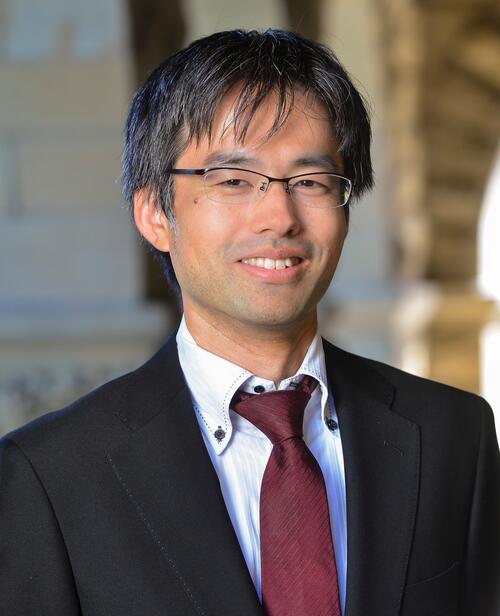
Takahashi’s research focuses on culture and location in adjusting to becoming more innovative.  How can design thinking be effective in Japan? How do we overcome the cultural gap in design thinking? How do we change culture in business?  In her research, Takahashi addresses these questions and makes suggestions on how design thinking can be more widespread and influential for the success of future businesses in Japan.


Kensaku Yamada, Mitsubishi Electric, "New Technology about the Internet of Things"

Image
The Internet of Things (IoT) is the network of physical devices such as smartphone, home electronics, medical instruments, industrial robots and sensors. IoT can improve our life or our work efficiently by collecting and analyzing the data from physical devices. Although the annual growth rate of PC and server shipments, which has been representative of IT business until now, is expected to be negative, devices connected to the network by IoT are expected to have an annual growth rate of 20% or more in the future. Most IT vendors are interested in IoT for expanding their business. In his research, Yamada focuses on the industrial IoT that is introduced by manufacturers. He investigates how manufacturers use IoT and what effect they get by using IoT.


Reliance Life Sciences
Japan Patent Office
Nissoken
Mitsubishi Electric
Seminars
-

Abstract:

Colombia’s government set out to reduce crime and violence and increase state legitimacy by raising state presence on the streets of Bogotá, either doubling police patrol time or delivering cleanup and lighting services. We evaluate the effects of those interventions over an 8-month window. Interventions at this scale, in a dense network of streets, require us to account for spillovers into control segments. The policy implications also hinge on these spillovers. We show how to design place-based experiments to test for spatial spillovers over varying distances, and estimate direct and spillover effects using randomization inference. Using administrative data alongside a citywide survey, we find that increasing state presence reduces insecurity on targeted streets, and that there may be increasing returns to state presence and to targeting the least secure places. But data suggests that targeted state presence simply pushes insecurity around the corner.


Speaker Bio:

Image
chris blattman
Chris Blattman is the Ramalee E. Pearson Professor of Global Conflict Studies at the University of Chicago’s Harris School of Public Policy. He is an economist and political scientist who studies poverty and violence in developing countries, and has worked mainly in Colombia, Liberia, Uganda, and Ethiopia. Professor Blattman was previously faculty at Columbia and Yale Universities, and holds a PhD in Economics from the University of California at Berkeley and a Master’s in Public Administration and International Development (MPA/ID) from the Harvard Kennedy School.

Chris Blattman Professor of Global Conflict Studies at the University of Chicago’s Harris School of Public Policy
Seminars
-

Abstract: Microsoft President Brad Smith recently analogized Microsoft to a “Digital Switzerland.” This moniker captures the role that U.S. technology companies have increasingly taken on with respect to cybersecurity and privacy: they are acting like states and running their own foreign policies, and they are setting themselves as neutrals with respect to existing national authorities, including the United States. U.S. tech companies are not the first super-empowered private companies, but they have numerous features that set them apart from prior private powers like the Dutch East India Company or more recent examples like ExxonMobil. This article first provides an account of how the relationship between U.S. tech companies and governments has evolved over time. By breaking down the “Digital Switzerland” idea, the article then explores the extent to which and how the companies differ from the powerful private interests of earlier eras, and it concludes by analyzing the implications of the companies’ role for governance and for individuals going forward.

About the Speaker: Kristen Eichensehr is an Assistant Professor of Law at UCLA School of Law. She writes and teaches about foreign relations, separation of powers, cybersecurity, and national security law. Before joining the UCLA faculty, Eichensehr clerked for Chief Judge Merrick B. Garland of the U.S. Court of Appeals for the D.C. Circuit and for Justices Sandra Day O’Connor and Sonia Sotomayor of the Supreme Court of the United States. Eichensehr also served as Special Assistant to the Legal Adviser of the U.S. Department of State and practiced at Covington & Burling LLP. Eichensehr received her J.D. from Yale Law School, where she served as executive editor of the Yale Law Journal. Eichensehr is a term member of the Council on Foreign Relations, a former visiting fellow at the Hoover Institution, and an affiliate scholar at the Center for Internet and Society at Stanford Law School. She is a frequent contributor to and member of the editorial board of the national security blog, Just Security.

Encina Hall, 2nd floor

Kristen Eichensehr Assistant Professor UCLA School of Law
Seminars
Subscribe to Seminars