End of the U.S.-led Postwar Order? Allies' Reactions to Trump Diplomacy
Expected dramatic shifts of foreign policy by leading democracies, including the U.S. and U.K., would shake a future of liberal international order, which has underpinned the stability even after the end of the Cold War. Since Mr. Donald Trump was elected as the 45th President of the U.S., abovementioned discourse is heard everywhere in Europe and Asia today.
It is not clear, if American leadership and military presence would in fact retreat, how American allies behave and whether they can work together to sustain the order. Among others, Japan has been the exceptionally strong believer of such postwar American leadership. It is doubtful that all American allies and friends share same views, having their own historical context with the U.S. and own ideas on order and principles. Hence, naturally they shall differ in losing the confidence on the durability of American leadership.
A new order will be shaped by many factors, but American allies’ perspectives should not be overlooked. Hegemon’s own reluctance for ruling is surely significant. So is other great power’s revisionism, making use of such strategic opportunities. However, American allies has the potential to shape the fate of the order: if they succeed in acting collectively, it shall underpin the global governance for a while, and ensue the order transformation process in rather slow and peaceful pace.

If they fail, it shall not only accelerate the U.S. retrenchment, but invite an emergence of divisive and competitive order. Sahashi shares the findings from the international study project which he leads, and argues the difficulty for US allies to unite themselves and the potential order transformation in the long term.
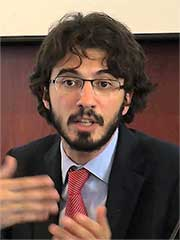
Ryo Sahashi is Associate Professor of International Politics and Director, Faculty of Law, Kanagawa University, Yokohama, and is leading the newly-launched international joint study “Worldviews on the United States.” From 2014-2015, he served as Visiting Associate Professor, Shorenstein APARC, Stanford University.
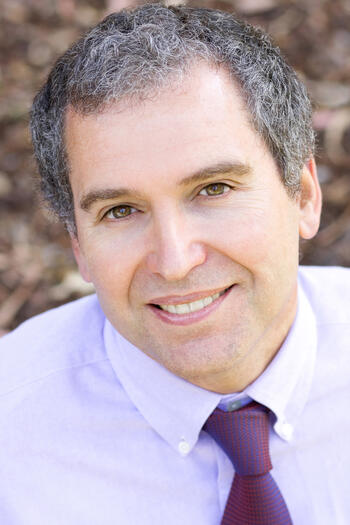
 David Timberman is a political analyst and development practitioner with 30 years of experience analyzing and addressing political, governance and conflict-related challenges, principally in Southeast and South Asia. As a Visiting Scholar at Stanford/APARC he is working on a book on the contemporary Philippine political economy. During 2015-2016 he was a Visiting Professor of Political Science at De La Salle University in Manila. He has lived and worked in the Philippines, Indonesia and Singapore, including experiencing first-hand the democratic transitions in the Philippines (1986-1988) and Indonesia (1998-2001). He has written extensively on political and governance issues in the Philippines and has edited or co-edited multi-author volumes on the Philippines, Cambodia, and economic policy reform in Southeast Asia.