Authors
News Type
Blogs
Date
Paragraphs

The following article is a guest post written by Thea Louise Dai, an alumna of the Spring 2022 China Scholars Program. In April 2022, Thea met Wendy Wen, an alumna of the Spring 2022 Stanford e-China Program. Currently, Thea Louise is a junior at Castilleja School in Palo Alto, California, and Wendy Wen is a junior at Beijing National Day School in Beijing, China.

In April 2022, I met Wendy Wen through a collaboration between the China Scholars Program (CSP) and Stanford e-China. Five months later, we are working together to prepare the first synchronous Zoom discussion at Project 17—a 501(c)(3) nonprofit organization we founded dedicated to initiating global dialogue through synchronous discussions about the 17 Sustainable Development Goals (SDGs) of the United Nations.

The CSP and Stanford e-China collaboration was no doubt my most stimulating academic experience to date. The two programs held four joint discussions on various climate issues over the course of several weeks. With the rare opportunity to bridge geographical and cultural divides, I finally had a chance to apply everything I had learned about China’s history, policies, and current events throughout the program in conversation with actual Chinese students, from whom I learned new perspectives. Although we only had to participate in one of the synchronous discussions, I found myself looking forward to each meeting and rearranging my schedule to attend all four.

The CSP and Stanford e-China collaboration was no doubt my most stimulating academic experience to date.

Wendy recalls that she had a similarly eye-opening experience during the meetings. She noted, “I have always believed that the world’s largest challenges can be solved through global collaboration. After every discussion with the CSP, I left feeling inspired to know that such collaboration is possible, even for high school students.”

After meeting each other through a breakout room conversation, we immediately connected on the need for a global discussion platform targeted towards youth perspectives. Essentially, we hoped to capture the value of our experience with SPICE, and we wanted to make it even more accessible and on a larger scale. We also wanted to clear a pathway for participants to take the next steps to create tangible change on the SDGs after our discussions.

As a result, we conceptualized Project 17 in part to partner with the chapter system of the United Nation Association of the USA (UNA-USA) so that high school and college students have the unique opportunity to connect with UNA-USA officials and members across the United States. Our vision is for all participants to be able to share their perspectives on the SDGs to inform the UNA-USA chapter system. We’re also working with Stanford e-China Instructor Carey Moncaster and CSP Instructor Tanya Lee of SPICE to publish the SDG-related research and reflections of participants on larger platforms.

Project 17 hosts four annual synchronous Zoom discussions, each focused on a particular group of SDGs: Planet, People, Prosperity, and Peace & Partnership. Our first discussion about the planet will take place in November 2022 and run for two hours. Interested students can complete the registration form on the Project 17 website to apply for an opportunity to hear from SDG advocates, learn from NGO leaders, and participate in breakout room discussions with youth leaders around the world. High school and college students based in any country are eligible to participate.

Project 17 discussion structure Project 17 discussion structure; photo courtesy Thea Louise Dai

In the span of four months, Project 17’s outreach efforts have reached 51 cities, 47 schools, and five different countries. Participants will build connections with students from different backgrounds and develop a global mindset by engaging with new perspectives. In addition, participants can contribute to asynchronous discussion boards and the Project 17 blog, receive bimonthly newsletters about the SDGs, and receive certified service hours eligible for the President’s Volunteer Service Award.

By incorporating these opportunities into our organization, we hope to create an experience similar to the invaluable experiences that Wendy and I had through the CSP and Stanford e-China. Inspired by SPICE’s impact, we are incredibly excited to start an initiative similarly promoting international and cross-cultural collaboration. Please note that Project 17 is not a Stanford SPICE program.

For more information, visit Project 17’s website (projectseventeen.org) or contact Project 17 at contact@projectseventeen.org.

Read More

Nathan in Shanghai
Blogs

Stanford e-China: No Ordinary Program

The following reflection is a guest post written by Nathan Chan, an alumnus and honoree of the 2021 Stanford e-China Program, which is accepting student applications until September 1, 2022.
Stanford e-China: No Ordinary Program
screenshot of an instructor and a student
Blogs

Stanford Alumni Cultivate Future Social Entrepreneurs in China

SPICE seeks to expand its offerings to students and teachers in China.
Stanford Alumni Cultivate Future Social Entrepreneurs in China
arches at Stanford University
Blogs

High School Students in China and the United States Collaborate

Students in SPICE’s China Scholars and Stanford e-China Programs meet in virtual classrooms.
High School Students in China and the United States Collaborate
Hero Image
Project 17 co-founders and executive directors hold up the number “17” during a Zoom meeting
Project 17 co-founders and executive directors hold up the number “17” during a Zoom meeting; photo courtesy Thea Louise Dai
All News button
1
Subtitle

Project 17 is a 501(c)(3) nonprofit organization connecting students around the world to address the 17 Sustainable Development Goals of the UN.

Authors
News Type
News
Date
Paragraphs

Mikhail Gorbachev, the former president of the Soviet Union, passed away on Tuesday, August 30, 2022. The last leader of the Soviet Union, Gorbachev ushered in what many in the West and Russia hoped would be a new era of democracy and development following the dismantling of the Iron Curtain and opening of Russia to Western markets and development.

Gorbachev's death comes in the midst of Vladimir Putin’s war against democratic Ukraine and a strong return to imperialist ideologies within the Kremlin. To help contextualize the impact of Gorbachev’s legacy, scholars from across the Freeman Spogli Institute for International Studies offer their reflections of his life and leadership.


A New Kind of Soviet Leader


Writing in the Bulletin of the Atomic Scientists, former Deputy Secretary General of NATO Rose Gottemoeller shared some of her personal memories of working with Gorbachev and his government.

"As Gorbachev’s presidency unfolded, it became clear that he was not going to be like the dour and geriatric Soviet Politburo members Leonid Brezhnev, Yury Andropov, and Konstantin Chernenko, who had followed each other in quick succession to the Kremlin leadership in the early 1980s. Only 54 when he took office, Gorbachev was easily the most dynamic figure seen in Moscow for nearly 30 years, with the confidence to speak openly on the public stage with foreign leaders such as Ronald Reagan and Margaret Thatcher."

She continues, "My only personal encounter with Gorbachev came many years later, when I worked in Moscow as director of the Carnegie Moscow Center. A Russian friend who was an associate of Gorbachev asked me if I would like to attend a lunch to celebrate his birthday. 'Of course!' I said. It was an honor for me.

I was pretty much a fly on the wall during the proceedings, since I could keep up with the fast conversation but did not want to display my less-than-perfect Russian to the former president. Nevertheless, he received me kindly. One exchange has always stuck with me. One of his former staffers from his time in the Kremlin asked him, 'Mikhail Sergeevich, when have the security services—the KGB, FSB, GRU—been more of a threat? Now, or during the Soviet era?'

Gorbachev thought about it for a moment and then said, 'During the Soviet era, at least the Communist Party Central Committee kept them under control. Now, they have no one to answer to but themselves. They are more of a threat now.' He was right."

Read Gottemoeller's full essay in the Bulletin of Atomic Scientists.
 

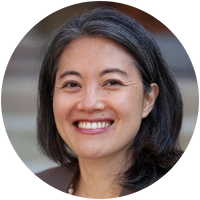
Woman smiling

Rose Gottemoeller

Steven C. Házy Lecturer at CISAC
Full Profile

Changing and Humanizing the USSR


Steven Pifer, a former U.S. Ambassador to Ukraine, shared on Twitter some of the milestone accomplishments in nuclear arms control that came about during Gorbachev's administration. Having worked extensively in the U.S. Foreign Service and State Department for over 25 years in Ukraine, Warsaw, Moscow, and London, Pifer saw firsthand the impacts of Gorbachev's "glasnost’” policy — or the "opening up" of Russian society, government, and media — on the people of Russia and Eastern Europe.

"He gave Central Europeans freedom to make their own choices," Pifer wrote on Twitter. And while acknowledging that the Soviet collapse was not free of violence, Pifer also believes that it was "far more peaceful than it could have been," because of Gorbachev's leadership through such a monumental inflection point in geopolitical history.

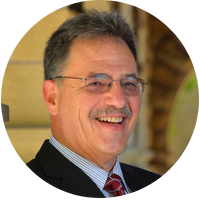
Man smiling

Steven Pifer

Affiliate at CISAC and the Europe Center
Full Profile

Freedom and Honesty for Russia and Eastern Europe


Similarly, eminent political scientist Francis Fukuyama says that a hallmark of Gorbachev's legacy will be his desire for peace and his willingness to set aside the norms of the Soviet Era in order to allow people greater freedom.

"He wasn't willing to use force to hold the old Soviet Union together," Fukuyama told Radio Free Europe in an interview. "That was really critical in allowing the countries of Eastern Europe to become free of Soviet influence and for Soviet republics like Urkaine, Moldova, and Belarus to become independent nations. That is a contribution to freedom that is really unparallelled by any other leader at that time."

While Gorbachev is not a popular figure in Russia today, Fukuyama believes his time in leadership still made an important difference to the long-term development of the country and its former territories.

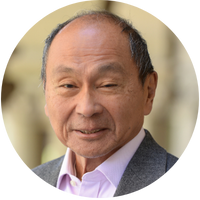
frank_fukuyama

Francis Fukuyama

Olivier Nomellini Senior Fellow at FSI
Full Profile

'History Will Be Kind to Him'


Today, Russia's trajectory looks very different from the path Gorbachev tried to set the country on in the 1990s. Speaking to Leila Fadel on NPR's Morning Edition, FSI Director Michael McFaul highlighted the difference between Gorbachev's ambitions and Putin's regime.

"It's definitely a reversal. It is a return to confrontation. And again, it did not have to be that way," he said. "Russia was a democracy in the 1990s, and Gorbachev helped to introduce those political reforms. That has been completely reversed by Vladimir Putin."

McFaul agrees that Gorbachev is a complex figure, both in Russia and in the West. While the collapse of the Soviet Union was largely bloodless, Gorbachev sent special forces to the Baltic republics in 1991, a decision which resulted in military and civilian casualites.

In light of the brutality of Russia's invasion of Ukraine, Gorbachev's early confidence in Vladimir Putin feels like a similar miscalculation, as Professor McFaul discussed with Andrea Mitchell on MSNBC. Even still, because of his proactive work to move arms control forward and for choosing not to intervene with force against the collapse of the Soviet Union and break away of Eastern Europe, McFaul considers the former president one of the most important figures of the 21st century. 

"On a personal level, Gorbachev and I didn't always agree. We argued," says McFaul. "But he was a very engaging intellectual, and I always learned from every conversation I had with him. I think history will be kind to him."

Michael McFaul, FSI Director

Michael McFaul

FSI Director
Full Profile

Read More

FSI Director Michael McFaul introduces President Volodymyr Zelenskyy at a live video address on May 27, 2022.
News

FSI Director Michael McFaul Honored by the Government of Ukraine with State Award

FSI Director Michael McFaul Honored by the Government of Ukraine with State Award
Russia Tank
Commentary

Russia, Ukraine, and the decision to negotiate

Ending the fighting may well require talks, but the decision to negotiate should lie with Kyiv.
Russia, Ukraine, and the decision to negotiate
Shinzo Abe speaking from a lectern
Commentary

Reflections on the Assassination of Former Prime Minister of Japan Shinzo Abe

Abe was one of the most transformative political leaders in modern Japanese history, and his passing will change Japanese politics in a number of ways, most immediately shaking up internal politics within the ruling Liberal Democratic Party. To honor Abe’s legacy, we all need to reassert our resolve to protect our democracy in Japan, the United States, and all over the world.
Reflections on the Assassination of Former Prime Minister of Japan Shinzo Abe
Hero Image
President Ronald Reagan shakes hands with Mikhail Gorbachev.
President Ronald Reagan shakes hands with Mikhail Gorbachev at the signing ceremony to ratify the Intermediate Range Nuclear Forces Treaty. (June 1, 1988) | Wikimedia Commons
All News button
1
Subtitle

Rose Gottemoeller, Steven Pifer, Francis Fukuyama, and Michael McFaul discuss the complex life and legacy of the last leader of the Soviet Union.

Date Label
Authors
Melissa Morgan
News Type
News
Date
Paragraphs

On August 24, 2022, as part of the national commemoration of Independence Day, President of Ukraine Volodymyr Zelenskyy presented official recognitions to servicemen, Ukrainian families, and supporters of Ukraine. Among those recognized was former U.S. Ambassador to Russia and Director of the Freeman Spogli Institute for International Studies Michael McFaul, who was awarded the Order of Merit, Third Degree.

The awards were given for “significant personal merits in strengthening interstate cooperation, support of state sovereignty and territorial integrity of Ukraine, as well as a significant contribution to the popularization of the Ukrainian state in the world.”

Other merit award recipients recognized include journalists Christiane Amanpour, Anderson Cooper, and Jake Tapper; actors and directors Sean Penn and Ben Stiller; members of the bands Imagine Dragons and U2; and director of the Metropolitan Opera in New York City, Peter Gelba. A full list of the recipients is available on the official website of the President of Ukraine.

For McFaul, the recognition is a tremendous honor, both personally and professionally. A long-time scholar of both Russia and Ukraine, he is unequivocal about the importance of Ukraine in the current state of geopolitics.

“President Zelenskyy, Ukraine’s warriors, and all Ukrainians are leading the fight for democracy, freedom, and sovereignty against tyranny, repression, and imperialism,” he says. “They are heroes. Not just for Ukraine, not just for Europe, but for the entire world.”

As the director of FSI, Professor McFaul has overseen a purposeful expansion of Ukraine-focused programming and fellowships offered by the Freeman Spogli Institute.

In 2005, McFaul was a leading proponent to bring Ukrainian professionals and mid-career civic leaders to Stanford to participate in what was then known as the Summer Fellows program, now the Draper Hills Summer Fellows, which offers training and education for professionals from emerging democracies.

“We made a big bet way back in 2005 on Ukraine’s cause,” he acknowledges. “Then and now, we view Ukraine as a frontline country in the global struggle for democracy,”

That institutional commitment to support Ukraine and other emerging democracies has continued to expand. In 2016, the Center for Democracy, Development and the Rule of Law launched the Ukrainian Emerging Leaders Program (UELP), which sponsors cohorts of young Ukrainian civic leaders for a yearly fellowship of academic courses, faculty mentorship and community engagement. In the six years since its inception, many alumni of the program have gone on to work in prominent roles in the Ukrainian government.

Serhiy Leshchenko, an alumni of the 2013 Draper Hills Summer Fellows program, sits with President Zelenskyy in a bunker in Kyiv during a video address by the president.
Serhiy Leshchenko (seen in the background on the left), an alumni of the 2013 Draper Hills Summer Fellows program, sits with President Zelenskyy in a government bunker in Kyiv during a video address by the president. | Government of Ukraine

“When you see pictures today of President Volodymyr Zelenskyy in his bunker in Kyiv, Serhiy Leshchenko is right next to him. He’s one of our graduates,” Francis Fukuyama, an academic advisor for the Draper Hills Summer Fellows and UELP, recently told the Stanford Daily.

Engagement with and support of Ukraine’s civic sector culminated in a visit to Stanford by President Volodymyr Zelenskyy in September 2021. The first Ukrainian president to visit California, Zelenskyy spoke to an eager crowd at a packed outdoor event in the Bechtel Courtyard about the potential he saw for Ukraine’s future, and how partnerships with institutions like Stanford can help support that future.

In May 2022, FSI was honored to host President Zelenskyy for a second address and Q&A, this time via a live video feed from Kyiv to Stanford students watching in the CEMEX auditorium.

Since the Russian invasion on February 24, 2022, the FSI community and its faculty have continued to offer ongoing analysis and commentary about the conflict, participating in student-led events, and meeting with the highest levels of government officials in the U.S. and beyond.

Alongside co-coordinator Andriy Yermak, chief of staff to President Zelenskyy, Professor McFaul has been instrumental in organizing the International Working Group on Russian Sanctions, which is a nonpartisan, independent network of experts who are actively researching how governments and private companies can sanction supporters of Putin’s war and oppressive regime. Recommendations from the group have been adopted by the Ukrainian government and heard as testimony before the United States Senate.

In his speech to the award recipients, President Zelenskyy told the audience he felt assured that such commitment exists amongst Ukrainians and their allies.

“We will preserve Ukraine's independence forever,” he said. “We will preserve it, because we have such unity. We will preserve it, because we all have an understanding of what and whom we are fighting for.”

Looking to the future, Zelenskyy continued, “The day will surely come when we will congratulate each other on our most important goal, on this result — the victory gained by our historic struggle.”

Read More

Some of the original Ukrainian alumni from the Draper Hills Summer Fellowship gather in Kyiv in 2013.
News

A History of Unity: A Look at FSI’s Special Relationship with Ukraine

Since 2005, the Freeman Spogli Institute for International Studies has cultivated rich academic ties and friendships with Ukrainian scholars and civic leaders as part of our mission to support democracy and development domestically and abroad.
A History of Unity: A Look at FSI’s Special Relationship with Ukraine
President Zelenskky addresses Stanford students and community members via a live video address in the CEMEX auditorium.
News

President Volodymyr Zelenskyy Calls on Students to Lead as Future Ambassadors in a Special Video Address at Stanford

Ukraine’s President Volodymyr Zelenskyy spoke to the Stanford community in a special video address about his country’s war against Russia for independence, freedom, and global democracy, which he said requires the continued support of all the people of the free world.
President Volodymyr Zelenskyy Calls on Students to Lead as Future Ambassadors in a Special Video Address at Stanford
Students from the FSI community gather for a teach-in about the Ukraine conflict at the McFaul residence in Palo Alto, CA.
Blogs

Students Find Solidarity and Community Amidst the Conflict in Ukraine

Four students from the FSI community share their thoughts on the conflict in Ukraine, its implications for the world, and the comfort and solidarity they have felt in communing with one another at Stanford.
Students Find Solidarity and Community Amidst the Conflict in Ukraine
Hero Image
FSI Director Michael McFaul introduces President Volodymyr Zelenskyy at a live video address on May 27, 2022.
Michael McFaul, the director of the Freeman Spogli Institute and former U.S. Ambassador to Russia, was honored with the Order of Merit by President Volodymyr Zelenskyy of Ukraine. | Andrew Brodhead, Stanford University
All News button
1
Authors
News Type
News
Date
Paragraphs

The Freeman Spogli Institute for International Studies (FSI) at Stanford University is pleased to announce that Jennifer Pan has been appointed to the position of FSI Senior Fellow, effective September 1. The appointment is concurrent with her promotion to professor at Stanford’s Department of Communication.

At FSI, Pan will work primarily within the Center on China’s Economy and Institutions (SCCEI) and will also be affiliated with the Cyber Policy Center. Her research focuses on political communication and authoritarian politics. She uses experimental and computational methods with large-scale datasets on political activity in China and other authoritarian regimes to answer questions about how autocrats perpetuate their rule; how political censorship, propaganda, and information manipulation work in the digital age; and how peoples’ preferences and behaviors are shaped as a result.

"Jennifer is both a top expert in political communication and authoritarian politics and an outstanding teacher," said FSI Director Michael McFaul. "I’m eager to see how her groundbreaking approach will influence research across the institute and inspire our students in the classroom."


Jennifer is at the forefront of research in her field. We are thrilled to have her officially join our team and I can’t wait to see where her research takes her next."
Scott Rozelle
Co-director of SCCEI

Scott Rozelle, co-director of SCCEI, added: "Jennifer is at the forefront of research in her field, conducting groundbreaking empirical research that uses the unique lens of communication to build understanding of China’s economy and its impact on the world. In the past year alone, Jennifer gave several lectures to our SCCEI community, all of which drew large audiences and sparked lively discussion. We are thrilled to have her officially join our team and I can’t wait to see where her research takes her next."

Pan’s book, “Welfare for Autocrats: How Social Assistance in China Cares for its Rulers,” shows how China’s pursuit of political order transformed the country’s main social assistance program, Dibao, for repressive purposes. Her work has appeared in peer-reviewed publications such as the American Political Science Review, American Journal of Political Science, Comparative Political Studies, Journal of Politics, and Science.

“Jennifer Pan is one of the most exciting, creative and innovative scholars in the field of social media and network analysis,” said Nathaniel Persily, co-director of the Cyber Policy Center. “She has written foundational works relating to the internet in China and has very important research underway concerning the effect of social media on politics in the United States.”

Pan graduated summa cum laude from Princeton University in 2004 and obtained a Ph.D. from Harvard University in 2015. Prior to Stanford, Pan was a consultant at McKinsey & Company. She was also a fellow at Stanford’s Center for Advanced Study in the Behavioral Sciences from 2019 to 2020.

Read More

Peter Blair Henry
News

Peter Blair Henry Joins the Hoover Institution and Freeman Spogli Institute for International Studies

A former senior fellow at the Center on Democracy, Development and the Rule of Law, Henry is reprising his roles at FSI and the Hoover Institution to continue his groundbreaking research on economic reforms and the global economy.
Peter Blair Henry Joins the Hoover Institution and Freeman Spogli Institute for International Studies
Larry Diamond, Kathryn Stoner, Erik Jensen and Francis Fukuyama at the opening session of the 2022 Draper Hills Fellows Program
News

Stanford summer fellowship crafts next generation of global leaders

The Draper Hills Summer Fellows Program reconvened in person for the first time, bringing budding leaders together with the world’s most influential democracy scholars.
Stanford summer fellowship crafts next generation of global leaders
Scott Rozelle interacts with children in a classroom in Ningxia, China.
News

Why "Big Data China" Is Needed Now More Than Ever: A Conversation

In this video short, Scott Rozelle, SCCEI Co-Director sits down with Scott Kennedy, CSIS Trustee Chair in Chinese Business, to discuss Big Data China, a new project aimed at bridging the gap between cutting-edge academic research on China and the Washington policy community.
Why "Big Data China" Is Needed Now More Than Ever: A Conversation
Hero Image
Jennifer Pan joins the Freeman Spogli Institute for International Studies as a Senior Fellow working with the Center on China's Economy and Institutions
As a senior fellow, Jennifer Pan will continue her research into political communication and authoritarian politics as both a researcher and professor at the Freeman Spogli Institute for International Studies and the Department of Communication.
All News button
1
Subtitle

Pan’s research focuses on political and authoritarian politics, including how preferences and behaviors are shaped by political censorship, propaganda, and information manipulation.

Date Label
Authors
Jonas Edman
Gary Mukai
News Type
Blogs
Date
Paragraphs

From July 25 through 28, 2022, 21 educators from across the United States and China gathered online for the 2022 East Asia Summer Institute for Middle School Teachers, a teacher professional development seminar offered by SPICE in partnership with the National Consortium for Teaching about Asia. NCTA is made possible by the Freeman Foundation. Over four days of rich content lectures, discussion, and experiential learning, institute participants deepened their background knowledge on Asia and the Asian American experience and began to rethink and revamp their curriculum plans for the 2022–23 school year.

This year’s participants were from many U.S. states, including Alabama, California, Hawaii, Kansas, Maine, Massachusetts, Minnesota, New Mexico, Pennsylvania, and Washington. For the first time, three teachers from China—from Jiangsu and Guangzhou provinces—also took part in the institute. The teachers represented a wide range of teaching subjects, from history, social studies, language arts, and literature, but all sought to strengthen their teaching through a clearer, more nuanced understanding of key episodes in the history of East Asia and the Asian American experience.

The geographic diversity represented by the teachers from every region of the United States added a uniqueness to this year’s institute discussions, and the Chinese teachers who participated contributed invaluable insights, having been educated in China and now teaching there.
Jonas Edman

The institute’s guest speakers also came from diverse backgrounds, being university professors, curriculum specialists, and school educators with expertise on a specific aspect of Asia or the Asian American experience and/or pedagogy. Interwoven between the captivating content lectures were classroom-focused lesson demonstrations and pedagogy-focused discussions facilitated by SPICE curriculum designers. “We make sure we balance subject-matter content with pedagogical discussions in all of our teacher professional development seminars,” noted Jonas Edman, who managed the middle school institute. “We want to help middle school teachers integrate the knowledge gained from the scholars directly into the classroom.” To that end, summer institute participants each received complimentary literature and SPICE curriculum units to help them bring Asia and the Asian American experience alive for their students. The institute’s key topics and speakers were:

July 25: The Silk Road
Clayton Dube, Director, USC U.S.-China Institute, University of Southern California, “Silk Road—Goods, Ideas, and People on the Move”
Rylan Sekiguchi, SPICE, “Along the Silk Road” curriculum demonstration

July 26: Religions and Philosophies of East Asia
John Kieschnick, the Robert H. N. Ho Family Foundation Professor of Buddhist Studies, Stanford University, “Buddhism: Ancestor Worship, Karma, and Vegetarianism”
Jonas Edman, SPICE, “Religions and Philosophies of China” curriculum demonstration

July 27: Tokugawa Japan
Uldis Kruze, Professor, College of Arts and Sciences, University of San Francisco, “Edo Japan 1600–1868”
Karen Tiegel, The Nueva School, “Japanese Art in the Edo Period” curriculum demonstration

July 28: Asian Voices and Asian American Experiences
Takami Nieda, English Department, Seattle Central College, “The Color of the Sky is the Shape of the Heart in the Classroom”
Gary Mukai, SPICE, “Early Japanese American History”
Jonas Edman, SPICE, “Angel Island,” “Chinese American Voices,” “What Does It Mean to Be an American?” curriculum demonstrations


Edman commented, “Being in the Bay Area—and particularly at Stanford University—we have access to such incredible experts on subjects that are highlighted in most state curriculum middle school social studies standards.” Edman continued, “Our job is to connect those experts with teachers in a way that supports teacher needs. That was our goal for this summer institute. The geographic diversity represented by the teachers from every region of the United States added a uniqueness to this year’s institute discussions, and the Chinese teachers who participated contributed invaluable insights, having been educated in China and now teaching there.”


In addition to our middle school institute, SPICE also offers other teacher professional development opportunities like the East Asia Summer Institute for High School Teachers and East Asia Seminars for Teachers in Hawaii. To be notified of future application periods, join our email list or follow us on Facebook, Twitter, and Instagram.

Read More

screenshot of seminar participants and an instructor
Blogs

Promoting Intercultural Understanding in Schools: The 2021 Virtual SPICE Summer Institutes

Teachers from across North America convene online for the 2021 SPICE summer institutes.
Promoting Intercultural Understanding in Schools: The 2021 Virtual SPICE Summer Institutes
Hero Image
SPICE/NCTA East Asia Summer Institute participants
All News button
1
Subtitle

Teachers from all regions of the United States and from China participated.

Paragraphs

Image
Cover of the book 'The China Questions 2'
The belief that China presents a challenge, if not an outright threat, to U.S. national security is increasingly prevalent in elite and public discourse. The main points of contention lie in the degree to which China threatens U.S. national security, how exactly China may challenge U.S. national security, and uncertainty about how the answers to these questions may change over time (which is fundamentally a debate about the drivers of Chinese strategy).

In this chapter, included in the volume The China Questions 2: Critical Insights into US-China Relations​ Harvard University Press, 2022), Oriana Sklayar Mastro focuses on the direct and indirect ways the People's Republic of China poses a threat to U.S. national security today.

Two caveats are in order. First, this focused discussion on challenges and threats may distort the degree to which China threatens the United States. On aggregate, the discussion presents a malign influence from the Perspective of U.S. national security. But it could be much worse. China has resolved many of its territorial disputes peacefully. Beijing has relied mainly on economic and political tools to blunt U.S. influence beyond its immediate region. China is an active member of the vast majority of international institutions. Even though faced with a conventionally superior U.S. military, China has yet to change its minimal no-first-use nuclear doctrine.

Second, while Mastro presents information on trends and trajectories, her focus is on today's challenges. These are likely to expand in scope and increase in intensity over the next five to ten years.

All Publications button
1
Publication Type
Book Chapters
Publication Date
Subtitle

A chapter in The China Questions 2: Critical Insights into US-China Relations, edited by Maria Adele Carrai, Jennifer Rudolph, and Michael Szonyi.

Authors
Oriana Skylar Mastro
Book Publisher
Harvard University Press
News Type
News
Date
Paragraphs

Earlier this year the Stanford Center on China's Economy and Institutions (SCCEI) joined the Center for Strategic and International Studies (CSIS) to launch Big Data China, a new project aimed at bridging the gap between cutting-edge academic research on China and the Washington policy community. Since the launch of the collaboration, SCCEI and CSIS have hosted a number of featured events, organized briefing sessions for academics to speak directly with policy makers,  launched a new project website, and much more.

We just don’t understand China — if we understood China better, we could make better policy decisions.
Scott Rozelle

Image
Big Data China logo
The Big Data China website features regular multimedia analysis with high-quality data that explores important trends in China’s economy and society. In the newest video release, Scott Rozelle, SCCEI Co-Director, and Scott Kennedy, CSIS Trustee Chair in Chinese Business and Economics, sit down to discuss why the Big Data China collaboration is needed now, more than ever. As Scott Rozelle puts it, "we just don’t understand China — if we understood China better, we could make better policy decisions." This collaboration aims to reduce the current gap between academia and Washington by identifying and highlighting the policy implications of cutting-edge scholarly work on China and presenting it directly to the policy community. 


Watch the video and visit the website for more from Big Data China!

Read More

American and Chinese flags
News

Politico: Biden Bets Big on Asia

Jude Blanchette from CSIS recommends Scott Rozelle's new book "Invisible China" saying, "If you’re thinking seriously about China’s future trajectory, it’s imperative you read this book to understand the possible impacts of China’s chronic underinvestment in education.”
Politico: Biden Bets Big on Asia
All News button
1
Subtitle

In this video short, Scott Rozelle, SCCEI Co-Director sits down with Scott Kennedy, CSIS Trustee Chair in Chinese Business, to discuss Big Data China, a new project aimed at bridging the gap between cutting-edge academic research on China and the Washington policy community.

Authors
News Type
News
Date
Paragraphs

After the end of World War II, more than 45,000 young Japanese women married American GIs and came to the United States to embark upon new lives among strangers. The mother of Kathryn Tolbert, a former long-time journalist with The Washington Post, was one of them.

Kathryn noted, “I knew there was a story in my mother’s journey from war-time Japan to an upstate New York poultry farm. In order to tell it, I teamed up with journalists Lucy Craft and Karen Kasmauski, whose mothers were also Japanese war brides, to make a short documentary film through a mother-daughter lens. Fall Seven Times, Get Up Eight: The Japanese War Brides was released in August 2015 and premiered on BBC World Television. To show the experiences of many more women like our mothers, I spent a year traveling the country to record interviews, funded by a Time Out grant from Vassar College, my alma mater.”

I knew there was a story in my mother’s journey from war-time Japan to an upstate New York poultry farm.
—Kathryn Tolbert, Co-Director, Fall Seven Times, Get Up Eight

The Japanese War Brides Oral History Archive is the result of her interviews. The Oral History Archive documents an important chapter of U.S. immigration history that is largely unknown and usually left out of the broader Japanese American experience. In these oral histories, Japanese immigrant women reflect on their lives in postwar Japan, their journeys across the Pacific, and their experiences living in the United States.

SPICE developed five lessons for the Japanese War Brides Oral History Archive that suggest ways for teachers to engage their students with the broad themes that emerge from the individual experiences of Japanese war brides. The lessons are: (1) Setting the Context; (2) Japanese Immigration to the United States; (3) The Transmission of Culture; (4) Notions of Identity; and (5) Conflict and Its Analysis. SPICE also developed a teacher’s guide for the film, Fall Seven Times, Get Up Eight: The Japanese War Brides, that helps teachers set the context for the film and provides guided viewing activities and debriefing activities. The lessons and teacher’s guide can be found at the webpage below.

Read More

headshots of eight high school students
Blogs

What Does It Mean to Be an American?: Reflections from Students (Part 7)

Reflections of eight students on the website “What Does It Mean to Be an American?”
What Does It Mean to Be an American?: Reflections from Students (Part 7)
Hero Image
Hiroko Furukawa Tolbert and Kathryn Tolbert
Hiroko Furukawa Tolbert and Kathryn Tolbert; photo courtesy Kathryn Tolbert
All News button
1
Subtitle

SPICE has developed free lesson plans on an important chapter of U.S. immigration history that is largely unknown.

Authors
News Type
Commentary
Date
Paragraphs

When the Department of Homeland Security’s Advisory Council announces it plan next week for overhauling how the agency combats the spread of disinformation online, its focus will be on “how to achieve greater transparency across our disinformation related work” and how to “increase trust with the public,” according to council meeting minutes released Monday.

Read more at Cyberscoop.com

Hero Image
Dr. Hebert Lin
Dr. Herbert Lin
All News button
1
Subtitle

Herb Lin, a disinformation scholar at Stanford, said DHS will need to tread carefully moving forward. He worries “about any government involvement in this business” and whether “any mechanism that you set up can be made tamper proof.”

Authors
News Type
Blogs
Date
Paragraphs

Stanford e-China has been an incredible academic experience from day one.

My journey with the program started with the interview, which was an enjoyable and memorable experience. I was greeted by a warm smile the moment I entered the Zoom room, and Ms. Carey Moncaster showed genuine interest in learning about me as a person. Rather than focusing on my experiences or achievements, she wanted to know more about my personality, interests, and dreams. Ms. Moncaster and the director of SPICE, Dr. Gary Mukai, have remained passionate advisors and generous mentors to many students even after the course, including me. Over the last year and a half, they were always there when I needed advice on how to proceed with a project or wisdom on dealing with a difficult situation.

The sense of community permeated the course itself, which was designed to be highly interactive. The expert speakers gave insightful lectures, followed by long sessions of Q&A. I can still remember my excitement at being able to ask Mr. Roy Ng, our fintech speaker, three questions after his seminar, where he explained how blockchain could help us reach the unbanked. In fact, my current obsession almost perfectly mirrors that topic—exploring how Central Bank Digital Currencies can help facilitate financial inclusion to mitigate inequality. That session made me realize that social entrepreneurship and tech-based solutions will be key players in upholding justice.

The Q&A was also a chance for my cohort to learn from each other. We bonded over our productive, collaborative, and enthusiastic discussions, and many of us stayed in touch after the course. Over the last year and a half, I have grown to be close friends with my fellow honoree, Jason Li. After meeting in person when he visited Shanghai, we decided to co-found a platform to connect students across the globe. Inspired by the diverse community of brilliant students we saw at Stanford e-China, we developed SPOT. The acronym stands for Student Projects Organized Together, and we hope to bring together an international network of passionate youth. We believe that together, we undertake global initiatives that make tangible impacts. Our website is www.spotaproject.com.

It is not every day that a course leaves such a significant impact, continuing to play a role in my life long after its conclusion.

Last but not least, e-China has helped me with my work in social justice. Design Thinking has not only aided in my endeavors with SPOT but also in my other initiatives, including the Law Association for Crimes Across History (LACAH) mock trial, where we put perpetrators of atrocities on the stand (lacah.net). Dora Gan from my e-China cohort is actually a member of our Youth Council! Design Thinkings methodical approach helped us scale up rapidly, and we were recently honored by the EARCOS Global Citizen Grant.

Throughout high school, I have learned a lot from a wide range of outstanding programs. I have also met many other fabulous peers through them. However, it is not every day that a course leaves such a significant impact, continuing to play a role in my life long after its conclusion. Stanford e-China is truly an exceptional experience. I am very thankful to have been a part of the first cohort.

Read More

arches at Stanford University
Blogs

High School Students in China and the United States Collaborate

Students in SPICE’s China Scholars and Stanford e-China Programs meet in virtual classrooms.
High School Students in China and the United States Collaborate
Hero Image
Nathan in Shanghai
Nathan in Shanghai; photo courtesy Nathan Chan
All News button
1
Subtitle

The following reflection is a guest post written by Nathan Chan, an alumnus and honoree of the 2021 Stanford e-China Program, which is accepting student applications until September 1, 2022.

Subscribe to United States