Paragraphs

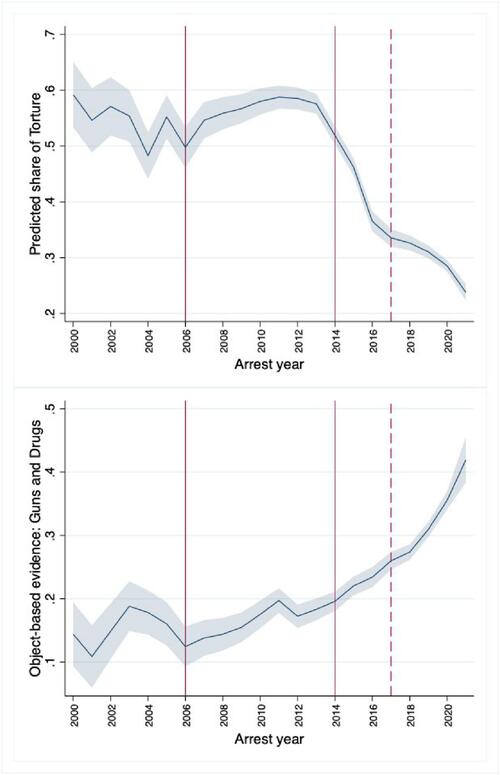
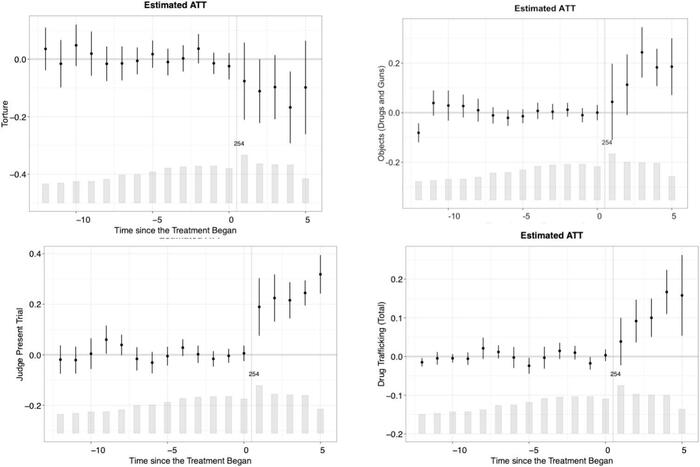
This paper examines how due process reforms enable evidence manipulation. During the past two decades, most Latin American countries have radically reformed their criminal justice systems, with the aim of strengthening rights protections and curbing abuses. Focusing on Mexico, we uncover a paradox of these institutional reforms: confronted with social pressures to punish crimes, police officers and prosecutors with limited investigation capacities fabricate criminal cases that pretend to conform with stricter judicial standards. Using difference-in-differences designs with a representative prison survey and ethnographic fieldwork among criminal prosecutors, we document a decline in torture and a parallel rise in convictions grounded in fabricated evidence, most commonly planted drugs and weapons. This shift toward what we call “fabricated justice” has fueled an increase in drug trafficking convictions. This recent increase in planted evidence suggests that when rule of law reforms are implemented without corresponding investments in state capacity, they can generate new and unexpected forms of abuse.

All Publications button
1
Publication Type
Journal Articles
Publication Date
Journal Publisher
World Development
Authors
Beatriz Magaloni
Number
March 2026, 107222
-
Venezuela Panel Event

The U.S. military operation known as Operation Absolute Resolve, which resulted in the capture and removal of Nicolás Maduro from Venezuela, represents a watershed moment in hemispheric politics. The operation, characterized by precision targeting, limited duration, and the absence of a formal occupation, has nonetheless created a profound political rupture inside Venezuela and raised far-reaching questions about sovereignty, legitimacy, governance, and democratic reconstruction.

This event convenes scholars and practitioners to examine what comes after such a military intervention, providing an analysis of post-extraction scenarios, drawing on comparative experience, Venezuelan political dynamics, and theories of post-authoritarian and post-conflict transitions.

The discussion does not seek to justify or condemn the intervention itself. Rather, it aims to assess the range of plausible futures now confronting Venezuela and the conditions under which the current rupture could lead to authoritarian rebalancing, prolonged disorder, or democratic recovery.

SPEAKERS:

  • María Ignacia Curiel
  • Héctor Fuentes
  • Dorothy Kronick
  • Harold Trinkunas
  • Diego A. Zambrano
     

MODERATOR: Alberto Díaz-Cayeros 

About the Speakers

Maria Curiel

Maria Ignacia Curiel

Research Scholar, CDDRL; Research Affiliate, Poverty, Violence, and Governance Lab
Link to bio

María Ignacia Curiel is a Research Scholar at the Center on Democracy, Development and the Rule of Law and Research Affiliate of the Poverty, Violence and Governance Lab at Stanford University. Curiel is an empirical political scientist using experimental, observational, and qualitative data to study questions of violence and democratic participation, peacebuilding, and representation.

Her research primarily explores political solutions to violent conflict and the electoral participation of parties with violent origins. This work includes an in-depth empirical study of Comunes, the Colombian political party formed by the former FARC guerrilla, as well as a broader analysis of rebel party behaviors across different contexts. More recently, her research has focused on democratic mobilization and the political representation of groups affected by violence in Colombia, Mexico, and Venezuela.

Hector Fuentes

Héctor Fuentes

Visiting Scholar, Center on Democracy, Development and the Rule of Law at the Freeman Spogli Institute for International Studies
Link to bio

Hector Fuentes is a Visiting Scholar at Stanford’s Center on Democracy, Development and the Rule of Law at Stanford University. His research focuses on Venezuelan elections, exploring the dynamics that led to this semi-competitive election, analyzing the strategic successes of the opposition, and identifying windows of opportunity for fostering a transition to democracy in Venezuela.

Dorothy_Kronick

Dorothy Kronick

Associate Professor of Public Policy, Goldman School of Public Policy at Berkeley
Link to bio

Dorothy Kronick is an Associate Professor of Public Policy at the Goldman School of Public Policy at Berkeley. She studies contemporary Latin American politics, focusing on Venezuelan politics and the politics of crime and policing. Her work has been published in the American Political Science Review, the Journal of Politics, Science, and Science Advances, among other outlets. Her commentary on Venezuelan politics has appeared in the New York Times and the Washington Post.

Harold Trinkunas

Harold Trinkunas

Deputy Director and a Senior Research Scholar at the Center for International Security and Cooperation at the Freeman Spogli Institute for International Studies
Link to bio

Harold Trinkunas is a Senior Research Scholar and the Deputy Director at the Center for International Security and Cooperation at the Freeman Spogli Institute for International Studies at Stanford University. His work has examined civil-military relations, ungoverned spaces, terrorist financing, emerging power dynamics, and global governance.

Diego Zambrano

Diego A. Zambrano

Associate Professor of Law, Stanford Law School & CDDRL Affiliated Faculty
Link to bio

Diego A. Zambrano is a Professor of Law and Associate Dean for Global Programs at Stanford Law School, specializing in the areas of civil litigation and comparative law. He is also the faculty director of the Neukom Center for the Rule of Law and Faculty Affiliate at the Center on Democracy, Development and Rule of Law at Stanford University. 

Alberto Díaz-Cayeros

Alberto Díaz-Cayeros

Senior Fellow, Freeman Spogli Institute (FSI), Affiliated faculty at the Center on Democracy, Development and the Rule of Law (CDDRL), Co-director, Democracy Action Lab (DAL)
Link to bio

Alberto Diaz-Cayeros joined the FSI faculty in 2013 after serving for five years as the director of the Center for US-Mexico studies at the University of California, San Diego. He earned his Ph.D at Duke University in 1997. He was an assistant professor of political science at Stanford from 2001-2008, before which he served as an assistant professor of political science at the University of California, Los Angeles. Diaz-Cayeros has also served as a researcher at Centro de Investigacion Para el Desarrollo, A.C. in Mexico from 1997-1999. His work has focused on federalism, poverty and violence in Latin America, and Mexico in particular. He has published widely in Spanish and English. His book Federalism, Fiscal Authority and Centralization in Latin America was published by Cambridge University Press in 2007 (reprinted 2016). His latest book (with Federico Estevez and Beatriz Magaloni) is: The Political Logic of Poverty Relief Electoral Strategies and Social Policy in Mexico. His work has primarily focused on federalism, poverty and economic reform in Latin America, and Mexico in particular, with more recent work addressing crime and violence, youth-at-risk, and police professionalization. He currently serves as the co-director of the Democracy Action Lab at the Center on Democracy, Development and the Rule of Law (CDRRL) at the Freeman Spogli Institute (FSI).

Alberto Díaz-Cayeros

William J. Perry Conference Room, Encina Hall 2nd Floor 

Virtual to Public. If prompted for a password, use: 123456
Only those with an active Stanford ID with access to the William J. Perry Conference Room in Encina Hall may attend in person.

Encina Hall, Suite 052
616 Jane Stanford Way
Stanford, CA 94305-6055

0
Research Scholar
Research Manager, Democracy Action Lab
Poverty, Violence, and Governance Lab Research Affiliate, 2024-25
CDDRL Postdoctoral Fellow, 2023-24
maria_curiel_2024.jpg

María Ignacia Curiel is a Research Scholar at the Center on Democracy, Development and the Rule of Law and Research Affiliate of the Poverty, Violence and Governance Lab at Stanford University. Curiel is an empirical political scientist using experimental, observational, and qualitative data to study questions of violence and democratic participation, peacebuilding, and representation.

Her research primarily explores political solutions to violent conflict and the electoral participation of parties with violent origins. This work includes an in-depth empirical study of Comunes, the Colombian political party formed by the former FARC guerrilla, as well as a broader analysis of rebel party behaviors across different contexts. More recently, her research has focused on democratic mobilization and the political representation of groups affected by violence in Colombia, Mexico, and Venezuela.

Curiel's work has been supported by the Folke Bernadotte Academy, the Institute for Humane Studies, and the APSA Centennial Center and is published in the Journal of Politics. She holds a Ph.D. in Political Science and dual B.A. degrees in Economics and Political Science from New York University.

Date Label
María Ignacia Curiel Research Scholar Research Manager Panelist Democracy Action Lab (DAL) and CDDRL, Freeman Spogli Institute for International Studies (FSI)
0
hector_fuentes.jpg

Héctor Fuentes is a Visiting Scholar at Stanford’s Center on Democracy, Development and the Rule of Law (2024-25). His research focuses on the critical juncture of the 2024 Venezuelan elections, exploring the dynamics that led to this semi-competitive election, analyzing the strategic successes of the opposition, and identifying windows of opportunity for fostering a transition to democracy in Venezuela. As the Director of EstadoLab, he has co-authored influential pieces on state fragility and democracy in Venezuela, as well as on state fragility across South America.

Héctor holds a Master of Global Affairs from Tsinghua University, where he was a Schwarzman Scholar, and a Master of Public Policy from the University of Oxford, supported by a Chevening Scholarship. His legal training was completed at the Central University of Venezuela, where he graduated as valedictorian. Throughout his career, Héctor has built extensive expertise in institutional capacity building, rule of law strengthening, and natural resource governance.

In addition to his research and academic work, Héctor has been actively involved in democracy promotion efforts in Venezuela. He co-founded EstadoLab, leading national campaigns that reached millions of young people and supported their participation in pro-democracy initiatives. He has also worked on various international projects aimed at rebuilding state capacity and promoting justice reform.

CDDRL Visiting Scholar, 2024-26
Fisher Family Summer Fellow, 2024
Date Label
Héctor Fuentes Visiting Scholar Panelist Freeman Spogli Institute for International Studies (FSI)
Dorothy Kronick Associate Professor of Public Policy Panelist Goldman School of Public Policy, U.C. Berkeley
Harold Trinkunas Senior Research Scholar & Deputy Director Panelist Center for International Security and Cooperation (CISAC) at the Freeman Spogli Institute for International Studies (FSI)

Room N346, Neukom Building
555 Nathan Abbott Way
Stanford, CA 94305

650.721.7681
0
Professor of Law, Stanford Law School
diego-zambrano-3-1024x684_square.jpg

Diego A. Zambrano’s primary research and teaching interests lie in the areas of civil procedure, transnational litigation, and judicial federalism. His work explores the civil litigation landscape: the institutions, norms, and incentives that influence litigant and judicial behavior. Professor Zambrano also has an interest in comparative constitutional law and legal developments related to Venezuela. He currently leads an innovative Stanford Policy Lab tracking “Global Judicial Reforms” and has served as an advisor to pro-democracy political parties in Venezuela. In 2021, Professor Zambrano received the Barbara Allen Babcock Award for Excellence in Teaching.

Professor Zambrano’s scholarship has appeared or is forthcoming at the Columbia Law Review, University of Chicago Law Review, Michigan Law Review, Northwestern University Law Review, Stanford Law Review, and Virginia Law Review, among other journals, and has been honored by the American Association of Law Schools (AALS) and the National Civil Justice Institute. Professor Zambrano will be a co-author of the leading casebook Civil Procedure: A Modern Approach (8th ed. 2024) (with Marcus, Pfander, and Redish). In addition, Professor Zambrano serves as the current chair of the Federal Courts Section of the AALS. He also writes about legal issues for broader public audiences, with his contributions appearing in the Wall Street Journal, BBC News, and Lawfare.

After graduating with honors from Harvard Law School in 2013, Professor Zambrano spent three years as an associate at Cleary Gottlieb in New York, focusing on transnational litigation and arbitration. Before joining Stanford Law School in 2018, Professor Zambrano was a Bigelow Teaching Fellow at the University of Chicago Law School.

CDDRL Affiliated Faculty
Date Label
Diego A. Zambrano Associate Professor of Law, CDDRL Affiliated Faculty Panelist Stanford Law School
Panel Discussions
Date Label
0
manuel_ortiz.jpeg

Manuel Ortiz Escámez has a long-standing career at the intersection of documentary photography, journalism, and social sciences, with a focus on human rights, democracy, and migration. He holds a B.A. in Sociology and an M.A. in Visual Arts with a specialization in documentary film from the National Autonomous University of Mexico (UNAM).

He is the founder and director of Peninsula 360 Press, a community media outlet based in San Mateo County, California. He previously served as Director of International News at Notimex (the Mexican State News Agency) and led the Multimedia Laboratory for Social Research at UNAM. He is the author of Visual Sociology: Photography and Documentary Video as Instruments for the Construction and Dissemination of Knowledge in the Social Sciences (UNAM, 2017). Ortiz also serves on the advisory board of POYLatam, the most recognized documentary photography and multimedia competition in Ibero-America.

He was the Director of Photography for the documentary "Cantadoras, Memory of Life and Death in Colombia" (2017), which received awards at international festivals in England, Nigeria, Chile, and Colombia. In 2021, he received the Prosser Award from the International Visual Sociology Association. His journalism has also been recognized with several awards, the most recent being the Media Innovation Award (2024), granted by Black Media and American Community Media.

His work has taken him to document migratory, democratic, and human rights processes in Brazil, Bolivia, Colombia, Cuba, Ecuador, El Salvador, France, Guatemala, Honduras, Japan, Lebanon, Mexico, Peru, Poland, Spain, the United States, and Ukraine.

Audio Visual Consultant, Democracy Action Lab
Date Label
Authors
News Type
Blogs
Date
Paragraphs

My archival research at Stanford University has focused on the legal and civil rights advocacy of key Mexican American leaders and institutions, including civil rights scholar Ernesto Galarza; voting rights attorney and co-author of the California Voting Rights Act Joaquin Avila; and the organizational records of the Mexican American Legal Defense and Educational Fund (MALDEF) and California Rural Legal Assistance, Inc. (CRLA). These legal organizations have played a critical role to advance the civil and voting rights of Latino communities, utilizing litigation as a strategic tool to secure equal protection under the law and promote equitable political representation through legislation. The collections offer extensive documentation of decades-long legal struggles and grassroots advocacy, illuminating both national and transnational dimensions of Latino American civil rights movements.

My research has also included conducting oral history interviews with prominent legal and civil rights leaders, such as General Counsel Thomas A. Saenz, current MALDEF President; José Padilla, former CRLA Executive Director; Ambassador Vilma Martinez, former General Counsel of MALDEF; and the only oral history ever conducted with the late Joaquin Avila, voting rights attorney and former General Counsel of MALDEF. These interviews, which are archived and publicly available through the Stanford Department of Special Collections and the Stanford Historical Society, offer invaluable firsthand accounts of the legal strategies, institutional histories, and personal commitments that have shaped Latino civil rights advocacy over the past several decades.

During the past 15 years of conducting research at Stanford, I have been consistently inspired by the dedication of lawyers and advocacy organizations working to improve the lives of marginalized communities. One formative moment occurred when I first encountered archival photographs from the 1950s of former braceros, legally contracted guestworkers. The Bracero Program was a binational labor agreement between the United States and Mexico that brought over two million braceros to the United States from 1942 to 1964. These images offered powerful visual narratives of migration, labor, and hope—stories reminiscent of iconic photographs of immigrants arriving at Ellis Island. However, these photographs pointed to a different but equally significant point of entry: The U.S.–Mexico border. This research solidified my commitment to public scholarship and the importance of making archival materials accessible to broader audiences.

Through my research in the Stanford Department of Special Collections and ongoing collaboration with the Stanford Program on International and Cross-Cultural Education (SPICE), as well as through teaching and public engagement, I have developed initiatives aimed at bridging the gap between academic research and public history. I founded the Bracero Legacy Project to share these important histories with wider audiences and have continued this work by designing ethnic studies curricula for school districts and organizing educational events that highlight the contributions and experiences of Latino communities in the United States.

This commitment to public history culminated most recently on June 10, 2025, when I co-organized, alongside Monterey County Supervisor Luis Alejo, a public commemoration marking the 50th anniversary of the banning of the short-handled hoe—a tool that had long symbolized exploitation in agricultural labor. Used for over a century by farmworkers of multiple ethnic backgrounds, the short-handled hoe required workers to remain stooped over for long periods at a time, leading to chronic injuries and long-term disability. Labor leader César Chávez himself suffered from debilitating back pain as a result of such work. The tool was officially banned on April 7, 1975, following the tireless advocacy of local farmworkers Sebastian Carmona and Hector De La Rosa, who, with legal representation from CRLA attorneys Marty Glick and Mo Jourdane, successfully brought the case before the California Supreme Court. The Mercury News opinion piece, [May 30, 2025], “Farmworker victory ending use of ‘El Cortito’ 50 years ago,” noted that the victory provided an “empowering lesson.”

The anniversary event brought together over 200 people and distinguished guests including Glick, Jourdane, and other CRLA alumni, as well as iconic figures such as labor and civil rights leader Dolores Huerta and playwright Luis Valdez, who spoke about the “long civil and labor rights movements.” I also invited the legendary music group Los Tigres del Norte, who hold a special cultural resonance in the Latino community. Their music shaped my immigrant upbringing, reflecting the complexities of navigating bicultural identity, bilingualism, and persistent anti-immigrant sentiment. Their songs—such as “La Jaula de Oro,” “Somos Más Americanos,” “Campesino,” and their tribute to César Chávez—articulate the lived experiences of immigrant communities and assert a counternarrative of dignity, resilience, and resistance in the face of marginalization.

Image
men in suits standing in a room


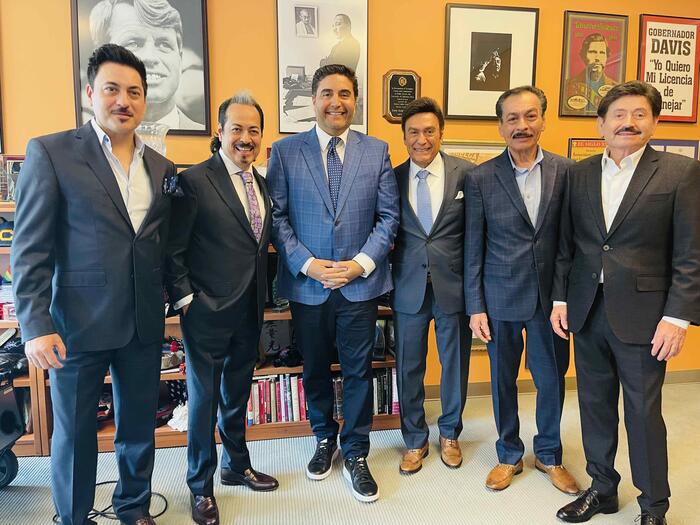
Jorge Hernández, co-founder of Los Tigres del Norte, has often spoken about the group’s first U.S. performance at Soledad Prison in 1968—the same year Johnny Cash played at Folsom State Prison. Since then, they have received multiple Grammy Awards, sold out Madison Square Garden, and, this past summer, were honored with a namesake street in Brooklyn. During the Monterey County event, Supervisor Alejo and the Board of Supervisors presented Los Tigres del Norte with a lifetime achievement award recognizing not only their musical legacy but also their decades-long advocacy on behalf of immigrant and Latino communities. Photo above: Dr. Ornelas (third from the left) pictured with Los Tigres del Norte band members (left to right) Luis Hernández, Hernan Hernández, Jorge Hernández, Eduardo Hernández, and Óscar Lara | photo credit: Pep Jimenez.

As part of our continued collaboration, I have invited Los Tigres del Norte to visit the Department of Special Collections at Stanford to study Ernesto Galarza’s personal papers and bracero correspondence. In particular, we will examine Galarza’s documentation of the 1963 “Tragedy at Chualar,” in which 32 braceros were killed in a devastating collision between a makeshift bus and a train. Galarza served as the principal investigator of the accident, and the archival record he left offers profound insights into the structural neglect and human cost of exploitative labor systems. Our hope is to draw from these materials to inspire a new song that honors the 32 bracero lives lost and continue to educate the public about this overlooked chapter in U.S. history.

This kind of scholarly interdisciplinary and community-based collaboration underscores the vital role of archives and public scholarship in shaping collective memory and advancing civil rights education. As I continue my work with SPICE and within the Stanford Department of Special Collections, I remain committed to collaborating with scholars across disciplines and transnationally to deepen public understanding of Latino American history and to ensure that these stories are not only preserved but heard.

To stay informed of SPICE news, join our email list and follow us on FacebookX, and Instagram.

Read More

person in blue suit with sunglasses receiving a certificate from a person in khaki jacket
Blogs

Historian Dr. Ignacio Ornelas Rodriguez Speaks at the Unveiling of the Bracero Legacy Mural in Chualar, California

The Bracero Program was a series of laws that allowed the United States to recruit temporary guest workers from Mexico.
Historian Dr. Ignacio Ornelas Rodriguez Speaks at the Unveiling of the Bracero Legacy Mural in Chualar, California
screenshot of Zoom meeting
Blogs

Local High School Students Connect with CISAC Security Experts—the Honorable Rose Gottemoeller, Professor Norman Naimark, Dr. Harold Trinkunas, and Visiting Research Scholar Xunchao Zhang—and former Secretary of Defense Leon Panetta

Students from San Jose and Salinas Valley—taught by Dr. Ignacio Ornelas Rodriguez—met on May 22, 2025 for the fourth annual International Security Symposium.
Local High School Students Connect with CISAC Security Experts—the Honorable Rose Gottemoeller, Professor Norman Naimark, Dr. Harold Trinkunas, and Visiting Research Scholar Xunchao Zhang—and former Secretary of Defense Leon Panetta
Hero Image
people and suits and dresses standing in a room
June 10, 2025: Los Tigres del Norte pictured with the Monterey County Board of Supervisors receiving a lifetime recognition from the Board for their decades of contributions advocating for immigrants. Honorary guests include playwright Luis Valdez (front row center in all black), civil rights leader Dolores Huerta (front row in blue suit), co-organizer Dr. Ornelas (back row with blue tie), and Monterey County Supervisor Luis Alejo (front row with white hat).
Photo Credit: Pep Jimenez
All News button
1
Subtitle

SPICE Curriculum Consultant Dr. Ignacio Ornelas Rodriguez shares his research into the legal and civil rights advocacy of key Mexican American leaders and institutions.

Date Label
-
DAL Mexico Launch

Join us in celebrating the launch of the Democracy Action Lab (DAL) at Stanford University.


The Center for International Studies at El Colegio de México and the Center on Democracy, Development and the Rule of Law (CDDRL) at Stanford University are pleased to host keynote lectures by:

  • Dr. Adam Przeworski, Professor Emeritus of Political Science, New York University
  • Dr. Beatriz Magaloni, Graham H. Stewart Professor of International Relations, Stanford University


The session will explore urgent questions at the heart of today’s global democratic challenges:

  • What have we learned — through political science and lived experience — about how democracies emerge, erode, and can be renewed?
  • What knowledge, strategies, and collective action are needed now to halt democratic backsliding and spark a new wave of democratization worldwide?


Open to the public. Especially geared toward those dedicated to strengthening democracy.


DAL Mexico Launch in Spanish

Únete a nosotros para celebrar el lanzamiento del Laboratorio de Acción en Democracia (LAD) de la Universidad de Stanford.


El Centro de Estudios Internacionales de El Colegio de México y el Center on Democracy, Development and the Rule of Law (CDDRL) de la Universidad de Stanford tienen el gusto de invitarlos a las conferencia magistrales a cargo de:

  • Dr. Adam Przeworski, Profesor Emérito de Ciencia Política, Universidad de Nueva York
  • Dra. Beatriz Magaloni, Profesora Graham H. Stewart de Relaciones Internacionales, Universidad de Stanford


El evento abordará preguntas urgentes sobre los desafíos democráticos globales actuales:

  • ¿Qué hemos aprendido —a través de la ciencia política y de la experiencia vivida— sobre cómo surgen, se erosionan y pueden renovarse las democracias?
  • ¿Qué conocimientos, estrategias y acciones colectivas se necesitan hoy para detener el retroceso democrático e impulsar una nueva ola de democratización en el mundo?


Evento abierto al público. Especialmente dirigido a quienes se dedican a fortalecer la democracia.

speakers / Ponentes

Adam Przeworski

Dr. Adam Przeworski

Carroll and Milton Professor Emeritus of Politics at New York University
Profesor Emérito Carroll and Milton de Ciencia Política en la Universidad de Nueva York
website / sito web

Adam Przeworski is the Carroll and Milton Professor Emeritus of Politics and (by courtesy) Economics at New York University. Previously, he taught at the University of Chicago, where he was the Martin A. Ryerson Distinguished Service Professor, and held visiting appointments in India, Chile, France, Germany, Spain, and Switzerland. He is a member of the US National Academy of Arts and Sciences. Among his numerous awards, in 2010, he received the Johan Skytte Prize for "raising the scientific standards regarding the analysis of the relations between democracy, capitalism, and economic development."  He has studied political regimes, democracy, autocracy, and their intermediate forms, as well as the conditions under which regimes survive and change, and their consequences for economic development and income equality. His focus is on the role of elections as a mechanism of managing societal conflicts. His current projects concern the phenomenon of "democratic backsliding" and the historical evolution of constitutional rules for electing chief executives.

Adam Przeworski es Profesor Emérito Carroll and Milton de Ciencia Política y (por cortesía) de Economía en la Universidad de Nueva York. Anteriormente, fue profesor en la Universidad de Chicago, donde ocupó la cátedra distinguida Martin A. Ryerson Distinguished Service Professor, y tuvo nombramientos visitantes en India, Chile, Francia, Alemania, España y Suiza. Es miembro de la Academia Nacional de Artes y Ciencias de Estados Unidos. Entre sus numerosos premios, en 2010 recibió el Premio Johan Skytte por "elevar los estándares científicos en el análisis de las relaciones entre democracia, capitalismo y desarrollo económico." Ha estudiado los regímenes políticos, la democracia, la autocracia y sus formas intermedias, las condiciones bajo las cuales los regímenes sobreviven y cambian, así como sus consecuencias para el desarrollo económico y la igualdad de ingresos. Su enfoque se centra en el papel de las elecciones como mecanismo para gestionar los conflictos sociales. Sus proyectos actuales se refieren al fenómeno del "retroceso democrático" y la evolución histórica de las normas constitucionales para la elección de jefes de ejecutivo.

Beatriz Magaloni

Dr. Beatriz Magaloni

Graham H. Stuart Professor of International Relations and Senior Fellow at the Freeman Spogli Institute for International Studies, Stanford University
Profesora Graham H. Stuart de Relaciones Internacionales y Senior Fellow en el Freeman Spogli Institute for International Studies, Universidad de Stanford
website / sito web

Beatriz Magaloni is the Graham H. Stuart Professor of International Relations at the Department of Political Science and a Senior Fellow at the Freeman Spogli Institute, where she holds affiliations with the Center on Democracy, Development and the Rule of Law (CDDRL) and the Center for International Security and Cooperation (CISAC). She leads the Poverty, Violence, and Governance Lab (PovGov) and co-directs the Democracy Action Lab. In 2023, she was awarded the Stockholm Prize in Criminology for her research on police violence and how it can be reduced, and in 2024, she received the Boris Mints Institute (BMI) Prize for her work on authoritarianism and its return as a global challenge. Her research focuses on the study of authoritarian regimes; violence, public security, and human rights; “non-state” forms of governance; distributive politics and the provision of public goods in Latin America.

Beatriz Magaloni es Profesora Graham Stuart de Relaciones Internacionales en el Departamento de Ciencia Política y Senior Fellow en el Freeman Spogli Institute, donde mantiene afiliaciones con el Centro sobre la Democracia, el Desarrollo y el Estado de Derecho (CDDRL) y el Centro para la Seguridad Internacional y la Cooperación (CISAC). Dirige el Laboratorio de Pobreza, Violencia y Gobernanza (PovGov) y co-dirige el Laboratorio de Acción en Democracia. En 2023 fue galardonada con el Premio de Estocolmo en Criminología por su investigación sobre la violencia policial y cómo puede reducirse, y en 2024 recibió el Premio del Instituto Boris Mints (BMI) por su trabajo sobre el autoritarismo y su retorno como desafío global. Su investigación se centra en el estudio de los regímenes autoritarios; la violencia, la seguridad pública y los derechos humanos; las formas de gobernanza "no estatales"; la política distributiva y la provisión de bienes públicos en América Latina.

Sala Alfonso Reyes del Colegio de México (Ver mapa)
Carretera Picacho Ajusco 20, Col. Ampliación Fuentes del Pedregal, C.P. 14110
Tlalpan, Ciudad de México
Tel.: +52 55 54493000

Adam Przeworski

Dept. of Political Science
Encina Hall, Room 436
Stanford University,
Stanford, CA

(650) 724-5949
0
Senior Fellow at the Freeman Spogli Institute for International Studies
Graham H. Stuart Professor of International Relations
Professor of Political Science
beatriz_magaloni_2024.jpg MA, PhD

Beatriz Magaloni Magaloni is the Graham Stuart Professor of International Relations at the Department of Political Science. Magaloni is also a Senior Fellow at the Freeman Spogli Institute, where she holds affiliations with the Center on Democracy, Development and the Rule of Law (CDDRL) and the Center for International Security and Cooperation (CISAC). She is also a Stanford’s King Center for Global Development faculty affiliate. Magaloni has taught at Stanford University for over two decades.

She leads the Poverty, Violence, and Governance Lab (Povgov). Founded by Magaloni in 2010, Povgov is one of Stanford University’s leading impact-driven knowledge production laboratories in the social sciences. Under her leadership, Povgov has innovated and advanced a host of cutting-edge research agendas to reduce violence and poverty and promote peace, security, and human rights.

Magaloni’s work has contributed to the study of authoritarian politics, poverty alleviation, indigenous governance, and, more recently, violence, crime, security institutions, and human rights. Her first book, Voting for Autocracy: Hegemonic Party Survival and its Demise in Mexico (Cambridge University Press, 2006) is widely recognized as a seminal study in the field of comparative politics. It received the 2007 Leon Epstein Award for the Best Book published in the previous two years in the area of political parties and organizations, as well as the Best Book Award from the American Political Science Association’s Comparative Democratization Section. Her second book The Politics of Poverty Relief: Strategies of Vote Buying and Social Policies in Mexico (with Alberto Diaz-Cayeros and Federico Estevez) (Cambridge University Press, 2016) explores how politics shapes poverty alleviation.

Magaloni’s work was published in leading journals, including the American Political Science Review, American Journal of Political Science, Criminology & Public Policy, World Development, Comparative Political Studies, Annual Review of Political Science, Cambridge Journal of Evidence-Based Policing, Latin American Research Review, and others.

Magaloni received wide international acclaim for identifying innovative solutions for salient societal problems through impact-driven research. In 2023, she was named winner of the world-renowned Stockholm Prize in Criminology, considered an equivalent of the Nobel Prize in the field of criminology. The award recognized her extensive research on crime, policing, and human rights in Mexico and Brazil. Magaloni’s research production in this area was also recognized by the American Political Science Association, which named her recipient of the 2021 Heinz I. Eulau Award for the best article published in the American Political Science Review, the leading journal in the discipline.

She received her Ph.D. in political science from Duke University and holds a law degree from the Instituto Tecnológico Autónomo de México.

Director, Poverty, Violence, and Governance Lab
Co-director, Democracy Action Lab
CV
Date Label
Beatriz Magaloni
Lectures
Date Label
Paragraphs

As the global order becomes increasingly multipolar, Russia is not only reacting to Western sanctions but also advancing a distinct vision of global governance. This study investigates the ideological, political, and economic narratives Russia uses to shape an 'alternative world order' in the Global South and examines how these narratives contribute to its strategic ambitions amidst rising geopolitical tensions. Through systematic analysis of diplomatic statements, media content, and bilateral relationships across three regional case studies — Africa, India, and Latin America — this research reveals that Russia's Global South engagement, while ideologically coherent on the surface, suffers from significant structural contradictions that undermine its strategic effectiveness.

All Publications button
1
Publication Type
Conference Memos
Publication Date
Authors
-
DAL Launch Event

Two decades after the close of the Third Wave of democratization, scholars and practitioners alike continue to grapple with the question of why some democracies erode while others endure. To advance this critical inquiry, Stanford University’s Center on Democracy, Development and the Rule of Law (CDDRL) is launching the Democracy Action Lab (DAL), a new initiative devoted to rigorous, comparative, and conceptually grounded research on the conditions of democratic backsliding and resilience. DAL will provide an academic home for refining definitions, testing theories, and generating knowledge that informs both scholarly debates and practical responses to the challenges facing democracy worldwide.

The launch will feature a roundtable, “Global Challenges & Responses to Democratic Erosion” with leading voices in the field — Kathryn Stoner, Beatriz Magaloni, Anna Grzymala-Busse, and Didi Kuo — moderated by María Ignacia Curiel. Panelists will reflect on conceptual clarity and contestation around “backsliding,” its relationship to fragile statehood, populism, and authoritarian resilience, and the mechanisms through which institutions weaken or recover. Drawing on comparative cases across Latin America, Europe, and beyond, the discussion will also chart new directions for research: refining metrics, mapping mechanisms of erosion, and theorizing pathways of democratic renewal. The event marks DAL’s commitment to placing cutting-edge academic work at the center of global conversations about democracy’s future.

Following the panel, attendees are invited to a celebratory reception.

SPEAKERS:

  • Anna Grzymala-Busse
  • Didi Kuo
  • Beatriz Magaloni
  • Kathryn Stoner
     

MODERATOR: María Ignacia Curiel

About the Speakers

Anna Grzymala-Busse

Anna Grzymala-Busse

Senior Fellow, Freeman Spogli Institute for International Studies, Michelle and Kevin Douglas Professor of International Studies, Professor of Political Science; Senior Fellow, Hoover Institution; Director of The Europe Center
Link to bio

Anna Grzymała-Busse is a professor in the Department of Political Science, the Michelle and Kevin Douglas Professor of International Studies, senior fellow at the Freeman Spogli Institute for International Studies and the director of The Europe Center. Her research interests include political parties, state development and transformation, informal political institutions, religion and politics, and post-communist politics. Anna's most recent book, Sacred Foundations: The Religious and Medieval Roots of the European State argues that the medieval church was a fundamental force in European state formation.

Didi Kuo

Didi Kuo

Center Fellow, Freeman Spogli Institute for International Studies
Link to bio

Didi Kuo is a Center Fellow at the Freeman Spogli Institute for International Studies (FSI) at Stanford University. She is a scholar of comparative politics with a focus on democratization, corruption and clientelism, political parties and institutions, and political reform. She is the author of The Great Retreat: How Political Parties Should Behave and Why They Don’t (Oxford University Press, forthcoming) and Clientelism, Capitalism, and Democracy: the rise of programmatic politics in the United States and Britain (Cambridge University Press, 2018).

She has been at Stanford since 2013 as the manager of the Program on American Democracy in Comparative Perspective and is co-director of the Fisher Family Honors Program at CDDRL. She was an Eric and Wendy Schmidt Fellow at New America and is a non-resident fellow with the Carnegie Endowment for International Peace. She received a PhD in political science from Harvard University, an MSc in Economic and Social History from Oxford University, where she studied as a Marshall Scholar, and a BA from Emory University.

Beatriz Magaloni

Beatriz Magaloni

Graham H. Stuart Professor of International Relations, School of Humanities and Sciences; Senior Fellow, Freeman Spogli Institute for International Studies; Director, Poverty, Violence, and Governance Lab
Link to bio

Beatriz Magaloni is the Graham Stuart Professor of International Relations at the Department of Political Science. Magaloni is also a Senior Fellow at the Freeman Spogli Institute, where she holds affiliations with the Center on Democracy, Development and the Rule of Law (CDDRL) and the Center for International Security and Cooperation (CISAC). She is also a faculty affiliate at Stanford’s King Center for Global Development. Magaloni has taught at Stanford University for over two decades.

She leads the Poverty, Violence, and Governance Lab (PovGov). Founded by Magaloni in 2010, PovGov is one of Stanford University’s leading impact-driven knowledge production laboratories in the social sciences. Under her leadership, PovGov has innovated and advanced a host of cutting-edge research agendas aimed at reducing violence and poverty and promoting peace, security, and human rights.

Kathryn Stoner

Kathryn Stoner

Mosbacher Director, Center on Democracy, Development, and the Rule of Law; Senior Fellow; Freeman Spogli Institute for International Studies
Link to bio

Kathryn Stoner is the Mosbacher Director of the Center on Democracy, Development, and the Rule of Law (CDDRL), and a Senior Fellow at CDDRL and the Center on International Security and Cooperation at FSI. From 2017 to 2021, she served as FSI's Deputy Director. She is Professor of Political Science (by courtesy) at Stanford and she teaches in the Department of Political Science, and in the Program on International Relations, as well as in the Ford Dorsey Master's in International Policy Program. She is also a Senior Fellow (by courtesy) at the Hoover Institution.

Maria Curiel

Maria Ignacia Curiel

Research Scholar, CDDRL; Research Affiliate, Poverty, Violence, and Governance Lab
Link to bio

María Ignacia Curiel is a Research Scholar at the Center on Democracy, Development and the Rule of Law and Research Affiliate of the Poverty, Violence and Governance Lab at Stanford University. Curiel is an empirical political scientist using experimental, observational, and qualitative data to study questions of violence and democratic participation, peacebuilding, and representation.

Her research primarily explores political solutions to violent conflict and the electoral participation of parties with violent origins. This work includes an in-depth empirical study of Comunes, the Colombian political party formed by the former FARC guerrilla, as well as a broader analysis of rebel party behaviors across different contexts. More recently, her research has focused on democratic mobilization and the political representation of groups affected by violence in Colombia, Mexico, and Venezuela.

María Ignacia Curiel

Panel: William J. Perry Conference Room, Encina Hall 2nd Floor 
Reception: Poverty, Violence, and Governance Lab, Encina Hall Garden Level S051

Virtual to Public. If prompted for a password, use: 123456
Only those with an active Stanford ID with access to the William J. Perry Conference Room in Encina Hall may attend in person. Registration is required.

Encina Hall
616 Jane Stanford Way
Stanford, CA  94305


(650) 723-4270
0
Senior Fellow at the Freeman Spogli Institute for International Studies
Michelle and Kevin Douglas Professor of International Studies
Professor of Political Science
Senior Fellow, Hoover Institution
anna_gb_4_2022.jpg

Anna Grzymała-Busse is a professor in the Department of Political Science, the Michelle and Kevin Douglas Professor of International Studies, senior fellow at the Freeman Spogli Institute for International Studies and the director of The Europe Center. Her research interests include political parties, state development and transformation, informal political institutions, religion and politics, and post-communist politics.

In her first book, Redeeming the Communist Past, she examined the paradox of the communist successor parties in East Central Europe: incompetent as authoritarian rulers of the communist party-state, several then succeeded as democratic competitors after the collapse of these communist regimes in 1989.

Rebuilding Leviathan, her second book project, investigated the role of political parties and party competition in the reconstruction of the post-communist state. Unless checked by a robust competition, democratic governing parties simultaneously rebuilt the state and ensured their own survival by building in enormous discretion into new state institutions.

Anna's third book, Nations Under God, examines why some churches have been able to wield enormous policy influence. Others have failed to do so, even in very religious countries. Where religious and national identities have historically fused, churches gained great moral authority, and subsequently covert and direct access to state institutions. It was this institutional access, rather than either partisan coalitions or electoral mobilization, that allowed some churches to become so powerful.

Anna's most recent book, Sacred Foundations: The Religious and Medieval Roots of the European State argues that the medieval church was a fundamental force in European state formation.

Other areas of interest include informal institutions, the impact of European Union membership on politics in newer member countries, and the role of temporality and causal mechanisms in social science explanations.

Director of The Europe Center
Anna Grzymala-Busse Michelle and Kevin Douglas Professor of International Studies and Senior Fellow Panelist Freeman Spogli Institute for International Studies

Encina Hall, C150
616 Jane Stanford Way
Stanford, CA 94305

0
Center Fellow, Freeman Spogli Institute for International Studies
didi_kuo_2023.jpg

Didi Kuo is a Center Fellow at the Freeman Spogli Institute for International Studies (FSI) at Stanford University. She is a scholar of comparative politics with a focus on democratization, corruption and clientelism, political parties and institutions, and political reform. She is the author of The Great Retreat: How Political Parties Should Behave and Why They Don’t (Oxford University Press) and Clientelism, Capitalism, and Democracy: the rise of programmatic politics in the United States and Britain (Cambridge University Press, 2018).

She has been at Stanford since 2013 as the manager of the Program on American Democracy in Comparative Perspective and is co-director of the Fisher Family Honors Program at CDDRL. She was an Eric and Wendy Schmidt Fellow at New America and is a non-resident fellow with the Carnegie Endowment for International Peace. She received a PhD in political science from Harvard University, an MSc in Economic and Social History from Oxford University, where she studied as a Marshall Scholar, and a BA from Emory University.

Date Label
Didi Kuo Center Fellow Panelist CDDRL, Freeman Spogli Institute for International Studies

Dept. of Political Science
Encina Hall, Room 436
Stanford University,
Stanford, CA

(650) 724-5949
0
Senior Fellow at the Freeman Spogli Institute for International Studies
Graham H. Stuart Professor of International Relations
Professor of Political Science
beatriz_magaloni_2024.jpg MA, PhD

Beatriz Magaloni Magaloni is the Graham Stuart Professor of International Relations at the Department of Political Science. Magaloni is also a Senior Fellow at the Freeman Spogli Institute, where she holds affiliations with the Center on Democracy, Development and the Rule of Law (CDDRL) and the Center for International Security and Cooperation (CISAC). She is also a Stanford’s King Center for Global Development faculty affiliate. Magaloni has taught at Stanford University for over two decades.

She leads the Poverty, Violence, and Governance Lab (Povgov). Founded by Magaloni in 2010, Povgov is one of Stanford University’s leading impact-driven knowledge production laboratories in the social sciences. Under her leadership, Povgov has innovated and advanced a host of cutting-edge research agendas to reduce violence and poverty and promote peace, security, and human rights.

Magaloni’s work has contributed to the study of authoritarian politics, poverty alleviation, indigenous governance, and, more recently, violence, crime, security institutions, and human rights. Her first book, Voting for Autocracy: Hegemonic Party Survival and its Demise in Mexico (Cambridge University Press, 2006) is widely recognized as a seminal study in the field of comparative politics. It received the 2007 Leon Epstein Award for the Best Book published in the previous two years in the area of political parties and organizations, as well as the Best Book Award from the American Political Science Association’s Comparative Democratization Section. Her second book The Politics of Poverty Relief: Strategies of Vote Buying and Social Policies in Mexico (with Alberto Diaz-Cayeros and Federico Estevez) (Cambridge University Press, 2016) explores how politics shapes poverty alleviation.

Magaloni’s work was published in leading journals, including the American Political Science Review, American Journal of Political Science, Criminology & Public Policy, World Development, Comparative Political Studies, Annual Review of Political Science, Cambridge Journal of Evidence-Based Policing, Latin American Research Review, and others.

Magaloni received wide international acclaim for identifying innovative solutions for salient societal problems through impact-driven research. In 2023, she was named winner of the world-renowned Stockholm Prize in Criminology, considered an equivalent of the Nobel Prize in the field of criminology. The award recognized her extensive research on crime, policing, and human rights in Mexico and Brazil. Magaloni’s research production in this area was also recognized by the American Political Science Association, which named her recipient of the 2021 Heinz I. Eulau Award for the best article published in the American Political Science Review, the leading journal in the discipline.

She received her Ph.D. in political science from Duke University and holds a law degree from the Instituto Tecnológico Autónomo de México.

Director, Poverty, Violence, and Governance Lab
Co-director, Democracy Action Lab
CV
Date Label
Beatriz Magaloni Graham H. Stuart Professor of International Relations and Senior Fellow Panelist Freeman Spogli Institute for International Studies

FSI
Stanford University
Encina Hall C140
Stanford, CA 94305-6055

(650) 736-1820 (650) 724-2996
0
Satre Family Senior Fellow, Freeman Spogli Institute for International Studies
kathryn_stoner_1_2022_v2.jpg MA, PhD

Kathryn Stoner is the Mosbacher Director of the Center on Democracy, Development, and the Rule of Law (CDDRL), and a Senior Fellow at CDDRL and the Center on International Security and Cooperation at FSI. From 2017 to 2021, she served as FSI's Deputy Director. She is Professor of Political Science (by courtesy) at Stanford and she teaches in the Department of Political Science, and in the Program on International Relations, as well as in the Ford Dorsey Master's in International Policy Program. She is also a Senior Fellow (by courtesy) at the Hoover Institution.

Prior to coming to Stanford in 2004, she was on the faculty at Princeton University for nine years, jointly appointed to the Department of Politics and the Princeton School for International and Public Affairs (formerly the Woodrow Wilson School). At Princeton she received the Ralph O. Glendinning Preceptorship awarded to outstanding junior faculty. She also served as a Visiting Associate Professor of Political Science at Columbia University, and an Assistant Professor of Political Science at McGill University. She has held fellowships at Harvard University as well as the Woodrow Wilson Center in Washington, DC. 

In addition to many articles and book chapters on contemporary Russia, she is the author or co-editor of six books: "Transitions to Democracy: A Comparative Perspective," written and edited with Michael A. McFaul (Johns Hopkins 2013);  "Autocracy and Democracy in the Post-Communist World," co-edited with Valerie Bunce and Michael A. McFaul (Cambridge, 2010);  "Resisting the State: Reform and Retrenchment in Post-Soviet Russia" (Cambridge, 2006); "After the Collapse of Communism: Comparative Lessons of Transitions" (Cambridge, 2004), coedited with Michael McFaul; and "Local Heroes: The Political Economy of Russian Regional" Governance (Princeton, 1997); and "Russia Resurrected: Its Power and Purpose in a New Global Order" (Oxford University Press, 2021).

She received a BA (1988) and MA (1989) in Political Science from the University of Toronto, and a PhD in Government from Harvard University (1995). In 2016 she was awarded an honorary doctorate from Iliad State University, Tbilisi, Republic of Georgia.

Download full-resolution headshot; photo credit: Rod Searcey.

Mosbacher Director, Center on Democracy, Development and the Rule of Law
Professor of Political Science (by courtesy), Stanford University
Senior Fellow (by courtesy), Hoover Institution
CV
Date Label
Kathryn Stoner Mosbacher Director of the Center on Democracy, Development, and the Rule of Law (CDDRL) Panelist Freeman Spogli Institute for International Studies
Panel Discussions
Date Label
Authors
News Type
News
Date
Paragraphs

Motivation


Retaliation (or the threat thereof) is a central component of human behavior. It plays a key role in sustaining cooperation — such as in international organizations or free trade agreements — because those known to retaliate come to acquire a reputation of being hard to exploit. But how does the use and function of retaliation vary across cultures, and how does it interact with formal forms of punishment?

In “Cross-cultural differences in retaliation: Evidence from the soccer field,” Alain Schläpfer tackles these questions using data on retaliation from association football. Retaliation is simply defined in terms of fouling: player B retaliates against player A if and only if, after A fouls B, B then fouls A. Among other findings, Schläpfer shows that players from cultures emphasizing revenge are more likely to retaliate on the football field. This form of ‘informal punishment’ by players also interacts with ‘formal punishment’ by referees: retaliation by B is less likely when A is sanctioned with a yellow card. Schläpfer’s paper increases our knowledge of the causes and consequences of retaliation, while showing how informal cultural norms interact with the formal rules of football.  

Data


Schläpfer creates a data set of fouls committed over three football seasons (2016-2019) in nine of the world’s top professional men’s leagues. This includes the European leagues of Premier League (England), Serie A (Italy), Bundesliga (Germany), LaLiga (Spain), and Ligue 1 (France), as well as Série A (Brazil), Liga Profesional (Argentina), Liga MX (Mexico), and Major League Soccer (United States). The dataset comprises 9,531 games, 230,113 fouls committed by 10,928 unique perpetrators from 139 countries against 11,115 unique victims from 137 countries.

Because Schläpfer hypothesizes that being from more revenge-centric cultures explains on-field retaliation, the key independent variable is measured using a dataset from Stelios Michalopoulos and Melanie Meng Xue that identifies revenge motifs in a culture’s folklore. Examples of this include supernatural forces avenging human murders or animals avenging the death of their friends by humans. Schläpfer uses a host of other independent variables, such as country-level survey data about the desire to punish — as opposed to rehabilitate — criminals, which is also theoretically linked to revenge. As stated above, retaliation is measured in terms of fouls committed. Schläpfer shows that there is substantial variation in retaliation rates among players from different countries, from Gabon (8%) to Iceland (31%). Can the folklore in the country of origin explain the behavior of players on the field?


Image
Fig. 1. The share of fouls retaliated in soccer games (top) and the prevalence of revenge motifs in folklore (bottom). Both variables tend to have higher values for players and folklore from the Middle East, Central Africa, Eastern Europe, and parts of South America.


Fig. 1. The share of fouls retaliated in soccer games (top) and the prevalence of revenge motifs in folklore (bottom). Both variables tend to have higher values for players and folklore from the Middle East, Central Africa, Eastern Europe, and parts of South America.


Findings


Retaliation:

Schläpfer finds evidence that players from cultures that value revenge are indeed more likely to retaliate for fouls. However, they are not more likely to commit fouls overall, cautioning us against conflating the concepts of retaliation and violence. Indeed, Schläpfer demonstrates that motifs of violence in a culture's folklore do not predict retaliation. Players are also found to be more retaliatory early on in a game, which is consistent with its use as a signal or aspect of one’s reputation. In other words, retaliation serves to deter future fouls. Victims of fouls also retaliate quickly. Indeed, retaliation rates are stable or slightly increasing during the first 30 minutes of a game, but then fall consistently thereafter.


Image
Table 1. Effect of the prevalence of revenge motifs in victim’s country of nationality on the predicted likelihood of retaliation for the foul.


Evidence is also provided to show that retaliation deters future transgressions: perpetrators are less likely to foul again if victims retaliate for the initial foul. However, this deterrence finding is only observed when the perpetrator is from a revenge culture. In other words, for retaliation to support cooperation (the absence of fouls), players must share a similar cultural background.

Schläpfer’s findings hold even when soccer-related or socioeconomic factors are taken into account. Further, the paper considers, but finds little support for, alternative explanations of why retaliation varies. These include that some teams encourage players to retaliate more or employ more players from revenge cultures. Further, retaliation does not appear to be driven by emotions; otherwise, it would be less likely to occur after halftime when players have had a chance to cool down, but this is not the case.


Image
Table 5. Other cultural measures rarely predict retaliation. Standardized coefficients reported.


Informal and Formal Sanctioning:

Finally, Schläpfer analyzes the interaction between player retaliation and refereeing. Most importantly, retaliation is significantly less likely if a foul is sanctioned with a yellow card. This illustrates the theoretical principle of formal punishment “crowding out” informal punishment, such as religious excommunication, which carries greater weight than social shunning or police fines compared to peer pressure. Both retaliation and referee sanctioning are shown to reduce the frequency of repeated offenses by perpetrators, especially among players from revenge cultures. However, Schläpfer finds that formal sanctioning is roughly three times more effective than retaliation. This suggests that football referees are doing a better job managing conflict between players than players themselves. 

Schläpfer concludes by mentioning a few of the paper’s limitations. First of all, retaliation is measured only by what referees sanction. However, referees may miss crucial incidents for which retaliation is a response, such as Zinedine Zidane’s 2006 World Cup headbutt after a verbal insult (that was not sanctioned). This is important because individuals from revenge cultures are likely to be particularly offended by verbal insults. Second, the paper does not capture retaliation that occurs across games played by the same teams over time, particularly when rivalries and hostilities have intensified. Similarly, it does not account for preemptive retaliation that does not follow a foul. Ultimately, Schläpfer deepens our understanding of retaliation in a domain where many would expect it not to operate or to do so with minimal significance. The article impressively marshals large-scale data from both sports and cultural history to clarify the causes and consequences of retaliation.

*Research-in-Brief prepared by Adam Fefer.

Hero Image
A person in a red and blue football uniform on a field Jona Møller via Unsplash
All News button
1
Subtitle

CDDRL Research-in-Brief [4-minute read]

Date Label
Authors
News Type
News
Date
Paragraphs

When it comes to managing the administrative tasks that are required to run a home and raise a family, women bear the brunt of the responsibility. According to one study of women in the United States, mothers take on 7 out of 10 so-called mental load tasks, which range from planning meals to scheduling activities for children.

All that extra work takes a toll, including on society: Women who carry more mental load are less interested in national politics (men who carry more mental load also report less political interest, but fewer men are in that position).

Read the full story in the Stanford Report.

Hero Image
Women at Lake Tanganyika
Yury Birukov
All News button
1
Subtitle

Political science professors Lisa Blaydes, Beatriz Magaloni, and James Fearon are among researchers at the King Center on Global Development addressing challenges such as gender-based violence and low labor participation, with the aim to inform supportive policy interventions.

Date Label

Encina Hall, E111
616 Jane Stanford Way
Stanford, CA 94305-6055

0
CDDRL Predoctoral Fellow, 2025-26
hanna_folsz_-_hanna_folsz.jpg

Hanna Folsz is a PhD candidate in Political Science at Stanford University. Her research focuses on opposition parties in authoritarian dominant-party regimes, with a particular focus on the challenges and opportunities they face in countering autocratization. More broadly, her work examines the causes and consequences of democratic backsliding, populism, media capture, and political favoritism — primarily in East-Central Europe and, secondarily, in Latin America. She uses a multi-method approach, including modern causal inference and text analysis techniques.

Her research has been supported by the National Science Foundation and the American Political Science Association, among others. She is the co-founder and co-organizer of EEPGW, a monthly online graduate student workshop on East European politics, and a co-founder and regular contributor to The Hungarian Observer, the most widely read online newsletter on Hungarian politics and culture. At Stanford, she is an active member of  CDDRL's Poverty, Violence, and Governance Lab (PovGov).

Date Label
Subscribe to Mexico