Authors
Gary Mukai
News Type
Blogs
Date
Paragraphs

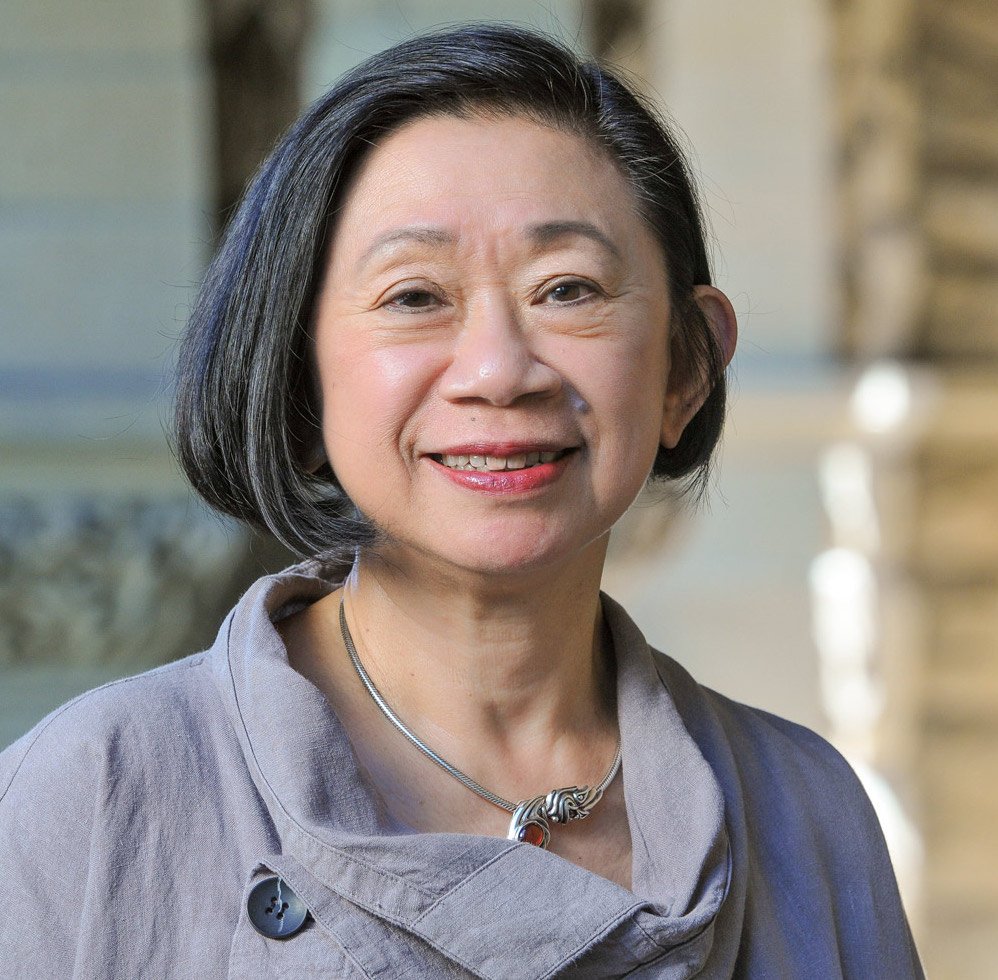
Valerie Wu, a student at the University of Southern California and an alum of SPICE’s Reischauer Scholars Program (RSP), Sejong Korea Scholars Program (SKSP), and China Scholars Program (CSP), recently interviewed Dr. Tanya Lee, instructor of CSP, for US-China Today, a publication of USC U.S.-China Institute.

In the September 26 interview, Lee shares insightful comments on her experiences teaching the CSP, including insights on the importance of studying China for everyone, regardless of their eventual career; and how she identifies topics for the course. In addition, Lee references SPICE’s newest course, Stanford e-China (SeC), which was developed for high school students in China and focuses on “Technologies Changing the World: Design Thinking into Action.” Lee and SeC instructor Carey Moncaster are engineering a collaboration between CSP and SeC students in November, in which they will work on a “green technology” project together, exploring practical solutions to sustainability issues they see in their own communities. The students will also be connecting informally over social media and are very eager to make contact with their counterparts overseas.

Looking back at her experience in the CSP, Wu commented, “The interdisciplinary, global thinking that I cultivated as a student at SPICE has become a fundamental aspect of my academic career. As a Narrative Studies and Law, History & Culture double major with an interest in China, the academic mentorship I received through the CSP highlighted the ways that intellectual study intersects with all these different ways of thinking about a certain topic. The way an issue is framed, specifically the way that we apply our own interpretation to it, reflects not only our understanding of culture, but also our place in it.” For Lee, witnessing students like Wu continue their study of China in college makes her feel more optimistic about future U.S.–China relations, despite the current tension between the two countries.

Wu’s interview of Lee can be accessed here.

tanyalee color

Tanya Lee

Instructor, China Scholars Program
Full Bio

Read More

group of students taking a photo in front of a building
Blogs

China Scholars Program: East Asia Through a STEM Lens

The following reflection is a guest post written by Mallika Pajjuri, an alumna of the China Scholars Program and the Reischauer Scholars Program. She is now a student at MIT.
China Scholars Program: East Asia Through a STEM Lens
The Honorable Tomochika Uyama with six student honorees
News

Japan Day 2018: Recognizing future leaders in the U.S.–Japan relationship

Japan Day 2018: Recognizing future leaders in the U.S.–Japan relationship
Hero Image
Valerie Wu at Stanford University, August 10, 2018
Valerie Wu at Stanford University, August 10, 2018; photo courtesy Rylan Sekiguchi
All News button
1
Subtitle

Lee shares her experience teaching the CSP and discusses an upcoming cross-cultural collaboration between American and Chinese high school students.

News Type
Commentary
Date
Paragraphs

FSI Center Fellow at APARC Oriana Skylar Mastro joins NPR's Weekend Edition host Scott Simon to discuss the rising tensions between China and Taiwan and how the United States should respond.

Listen to the complete interview below. This conversation originally appeared on NPR's website.

Read More

Logo of the Observer Research Foundation's 'Armchair Strategist' podcast with portraits of Oriana Skylar Mastro and Arzan Tarapore
Commentary

Assessing the Conventional Military Balance Between India and China

Oriana Skylar Mastro and Arzan Tarapore join the Observer Research Foundation’s ‘Armchair Strategist’ podcast to discuss how the Indian and Chinese militaries stack up as tensions between the two Asian neighbors continue to heat up.
Assessing the Conventional Military Balance Between India and China
Chinese President Xi Jinping (R) talks with India's Prime Minister Manmohan Singh (L) during a meeting at the Diaoyutai State Guesthouse in 2013.
Commentary

China-India: Talk is Cheap, But Never Free

Nations often hesitate to negotiate with opponents during conflict. But Oriana Skylar Mastro urges that this is precisely what India and China need to do in order to curb the potential for a protracted, costly war with devastating geopolitical implications.
China-India: Talk is Cheap, But Never Free
Portrait of Oriana Skylar Mastro and a 3D cover of her book, 'The Costs of Conversation: Obstacles to Peace Talks in Wartime'
News

FSI Center Fellow Wins Best Book in Security Studies Award

The American Political Science Association recognizes Oriana Skylar Mastro for her work on military strategy and mediation.
FSI Center Fellow Wins Best Book in Security Studies Award
Hero Image
NPR's audio streaming logo next to a portrait of Oriana Skylar Mastro.
All News button
1
Subtitle

"The current threat is that the CCP is running out of patience, and their military is becoming more and more capable. So for the first time in its history, there's the option of taking Taiwan by force," Mastro tells NPR's Weekend Edition host Scott Simon.

-
This is a virtual event. Please click here to register and generate a link to the talk. 
The link will be unique to you; please save it and do not share with others
.
 
 APARC South Asia research Initiative presents: Fall 2020 Colloquium Series on
India-China Strategic Competition
 

Washington DC time:  7:00pm-8:30pm, 9-Nov. 2020
Sydney, Australia time: 11:00am-12:30pm, 10-Nov. 2020 

Expectations of India’s rise have been dented in 2020. Amid lackluster economic performance and creeping socio-political illiberalism, India also suffered a major strategic setback. Chinese forces that crossed the Line of Actual Control in Ladakh remain encamped at several tactically-valuable points, and although talks continue, India has few visible options to force a return to the status quo ante. India now sees China is more clearly adversarial terms – but does it have what it takes to compete effectively? This conversation will conclude the APARC South Asia’s fall 2020 colloquium series on the India-China strategic competition with a wider and deeper look at India’s political and military power. We will discuss India’s ability to deter and balance China, its strategies to build national power and align with new partners, and the prospects for the competition in 2021 and beyond.
 

Ashley Tellis29kb Ashley Tellis29Kb
Ashley J. Tellis holds the Tata Chair for Strategic Affairs and is a senior fellow at the Carnegie Endowment for International Peace. Previously he was commissioned into the Foreign Service and served as senior adviser to the ambassador at the U.S. Embassy in New Delhi. While serving as the senior adviser to the Undersecretary of State for Political Affairs, he was intimately involved in negotiating the civil nuclear agreement with India. He also served on the National Security Council staff as special assistant to President George W. Bush and senior director for strategic planning and Southwest Asia. Prior to his government service, Tellis was senior policy analyst at the RAND Corporation and professor of policy analysis at the RAND Graduate School. He is a counselor at the National Bureau of Asian Research and serves as an adviser to the Chief of Naval Operations. He is the author of India’s Emerging Nuclear Posture (2001), co-author of Interpreting China’s Grand Strategy: Past, Present, and Future (2000), and co-editor of the sixteen latest annual volumes of Strategic Asia. He earned his PhD in political science from the University of Chicago.


Image
Arzan Tarapore
Arzan Tarapore is the South Asia research scholar at the Shorenstein Asia-Pacific Research Center at Stanford University, where he leads the newly-restarted South Asia research initiative. He is also a senior nonresident fellow at the National Bureau of Asian Research. His research focuses on Indian military strategy and contemporary Indo-Pacific security issues. He previously held research positions at the RAND Corporation, the Observer Research Foundation, and the East-West Center in Washington. Prior to his scholarly career, he served as an analyst in the Australian Defence Department, which included operational deployments as well as a diplomatic posting to Washington, DC. Tarapore holds a PhD in war studies from King’s College London.


via ZOOM Webinar
Register:  https://bit.ly/2IPGZjS

Ashley J. Tellis <br><i>Tata Chair for Strategic Affairs and Senior Fellow, Carnegie Endowment for International Peace</i><br><br>
Arzan Tarapore <br><i>South Asia Research Scholar, Shorenstein Asia-Pacific Research Center, Stanford University</i><br><br>
Seminars
Authors
Julien de Troullioud de Lanversin
News Type
Commentary
Date
Paragraphs

This is not the first time that the world has faced the outbreak of a coronavirus which originated in China.

But the consequences have been very different this time around.

Read the rest at The Bulletin of Atomic Scientists

Hero Image
Great Wall of China JLB1988/Pixabay
All News button
1
Subtitle

Seventeen years ago, an outbreak of SARS—a disease caused by the coronavirus SARS-CoV-1—emerged in China. Back then, a fruitful partnership emerged between the United States and China, that contributed to the successful control of the outbreak and nurtured the careers of young Chinese virologists and epidemiologists.

-

This is a virtual event. Please click here to register and generate a link to the talk. 
The link will be unique to you; please save it and do not share with others.


The Stanford China Program convenes an expert panel focused on the Decision of the fifth plenary session of the 19th Central Committee of the Chinese Communist Party, which took place on October 26-29.  The Fifth Plenum Decision outlines not only China’s 14th Five Year Plan (2021-2025), but also Beijing’s economic blueprint through 2035 and the “goal of fully building a modern socialist country."  The CCP leadership recently articulated its “dual circulation” policy – viz., a drastic reduction in China’s dependence on U.S. technologies and increased reliance on domestic consumption while maintaining exports and attracting foreign direct investments.  At this critical juncture when the coronavirus pandemic has shrunk global trade and tensions between the U.S. and China continue to intensify, our panel members will be asked to examine what the Fifth Plenum Decision might signify.  Does it mark a significant shift in Beijing’s strategic economic orientation?  What are the short- and long-term implications of the Decision for China’s economic development strategy, U.S.-China relations, as well as the world’s economic and technology ecosystems?  
 

Speakers

Portrait of James GreenJames Green has worked for over two decades on U.S.-Asia relations. For five years, Green was the Minister Counselor for Trade Affairs at the U.S. Embassy in Beijing (2013-2018).  As the senior official in China from the Office of the United States Trade Representative (USTR), Green was deeply involved in all aspects of trade negotiations, trade enforcement, and in reducing market access barriers for American entities.  In prior government service, Green worked on the Secretary of State’s Policy Planning Staff and at the State Department’s China Desk on bilateral affairs. He also served as the China Director of the White House’s National Security Council.  In the private sector, Green was a senior vice president at the global strategy firm founded by former Secretary of State Madeleine Albright and was the founding government relations manager at the American Chamber of Commerce in Shanghai, Asia’s largest AmCham.  Currently, Green is a Senior Research Fellow at Georgetown University's Initiative for U.S.-China Dialogue on Global Issues and hosts a U.S.-China Dialogue Podcast.   

Image
Portrait of Xiaomeng Lu
Xiaomeng Lu is a senior analyst in Eurasia Group's geo-technology practice. She focuses on the interactions of emerging technologies with geopolitics, market dynamics, and regulatory norms. Lu provides in-depth analysis on key policy issues such as cybersecurity, data protection, artificial intelligence, internet governance, 5G, and trade.

Before joining Eurasia Group, Lu was the China practice lead at the consulting firm Access Partnership. In this capacity, she helped top financial and cloud service providers of the US enter China's market amid the trade war between the two countries. She also played a key role in establishing and expanding the company's first office in Asia, which generated over $1 million in revenue in three years. Previously, Lu worked as a global policy director at the Information Technology Industry Council, where she conducted successful advocacy campaigns that led to the suspension of onerous regulatory regimes, helping global electronics manufacturers save billions in potential losses. Lu has a master's degree in international trade policy from the Middlebury Institute of International Studies at Monterey and a bachelor's degree in economics from Renmin University of China.

Image
Photo of Damien Ma
Damien Ma is Director and co-founder of MacroPolo, the Think Tank of the Paulson Institute. He is also adjunct faculty at the Kellogg School of Management at Northwestern University. Previously, Ma was a Senior Analyst at Eurasia Group, the political risk research and advisory firm. At Eurasia Group, he mainly focused on the China and East Asian markets, covering areas that spanned energy and commodities and industrial policy to elite politics and US-China relations. Prior to joining Eurasia Group, he was a manager of publications at the US-China Business Council in Washington, DC, where he was also an adjunct instructor at Johns Hopkins SAIS. 

In addition, Ma has published widely, including in The AtlanticNew York TimesForeign AffairsThe New RepublicForeign Policy, and Bloomberg, among others. He has also appeared in a range of broadcast media such as the Charlie Rose Show, BBC, NPR, and CNBC. He is the author or editor of the books, In Line Behind a Billion People: How Scarcity Will Define China’s Ascent in the Next DecadeThe Economics of Air Pollution in China (by Ma Jun), and China’s Economic Arrival: Decoding a Disruptive Rise, published by Palgrave Macmillan. Ma was named a “99 under 33” foreign policy leader by the Young Professionals in Foreign Policy. 


This event is part of the 2020 Fall Colloquia series, Shifting Geopolitics and U.S.-Asia Relations​, sponsored by Shorenstein APARC.

Via Zoom. Register at: https://bit.ly/2T8a3VV

James Green <br><i>Senior Research Fellow, Initiative for U.S.-China Dialogue on Global Issues, Georgetown University</i><br><br>
Xiaomeng Lu <br><i>Senior Analyst, Geo-Technology, Eurasia Group</i><br><br>
Damien Ma <br><i>Director and co-founder, MacroPolo, Paulson Institute</i><br><br>
Panel Discussions
Paragraphs

In late January 2020, China’s government initiated its first aggressive measures to combat COVID-19 by forbidding individuals from leaving their homes, radically limiting public transportation, cancelling or postponing large public events, and closing schools across the country. The rollout of these measures coincided with China’s Lunar New Year holiday, during which more than 280 million people had returned from their places of work to their home villages in rural areas. The disease control policies remained in place until late February and early March, when they were gradually loosened to allow for more free movement of people. Among those that were allowed to move again were the hundreds of millions of migrant workers who originally (before the COVID-19 outbreak) had expected to return to China’s urban and industrial centers to continue working in the nation’s factories, construction sites and service sector. 

All Publications button
1
Publication Type
Working Papers
Publication Date
Authors
Huan Wang
Yue Ma
Prashant Loyalka
Matthew Boswell
Scott Rozelle
-

This event is held virtually via Zoom. Please register for the webinar via the below link.

Registration Link: https://bit.ly/2SS6DpY


This event is co-sponsored by the Shorenstein APARC Japan Program and China Program.

Japan's economic challenge to the United States in the 1980s aroused more concern in the United States than people now realize. Japan took some very effective steps to stop it. China's challenge plays out across the economic, military, technological, and global influence spheres. China has not yet taken steps to stop it and the tensions are increasingly serious and show no signs of diminishing. Japan has also found better ways to reduce tensions with China than has the United States. While the circumstances are different between the 1980s and today, Japan’s dealings with the United States in the 1980s might offer some lessons for China today. Dr. Ezra Vogel, Professor Emeritus at Harvard University, will discuss these topics and more during this webinar. The event will conclude with an audience Q&A moderated by Japan Program Director Kiyoteru Tsutsui and China Program Director Jean Oi.

SPEAKER

Image
Portrait of Dr. Ezra Vogel, Professor Emeritus at Harvard University

Professor Ezra F. Vogel is Professor Emeritus at Harvard University. Vogel received his PhD at Harvard in 1958 in Sociology in the Department of Social Relations and was a professor at Harvard from 1967-2000. In 1973, he succeeded John Fairbank to become the second Director of Harvard's East Asian Research Center. At Harvard, he served as director of the US-Japan Program, director of the Fairbank Center, and as the founding director of the Asia Center. From fall 1993 to fall 1995, Vogel was the National Intelligence Officer for East Asia at the National Intelligence Council in Washington. His book Japan As Number One (1979), in Japanese translation, became a best seller in Japan, and his book Deng Xiaoping and the Transformation of China (2011), in Chinese translation, became a best seller in China. He lectures frequently in Asia, in both Chinese and Japanese. He has received numerous honors, including eleven honorary degrees.

Via Zoom Webinar.

Registration Link: https://bit.ly/2SS6DpY

Ezra Vogel, Professor Emeritus <br>Harvard University</br>
Seminars
Authors
Noa Ronkin
News Type
News
Date
Paragraphs

The Walter H. Shorenstein Asia-Pacific Research Center (APARC) is pleased to announce its new China Policy Fellowship, which will bring to Stanford mid-career to senior-level experts with extensive research experience on issues vital to U.S. China policy and influence in the policymaking process. With this new offering, APARC seeks to apply cutting-edge academic analysis to pressing challenges affecting U.S. policy toward China and to strengthen U.S.-China relations.

The fellowship will be awarded annually to one expert. While at Stanford, the China Policy Fellow will undertake original research in his/her area of expertise and will play a lead role in organizing a major conference on a topic central to the U.S.-China policy agenda. Each fellow’s work and annual conference will result in a publication that will help advance a deeper understanding of China and its aims.

The fellowship will be hosted by APARC’s China Program, whose mission is to facilitate multidisciplinary, social science-oriented research on contemporary China, with a dual emphasis on basic and policy-relevant research. The appointment of the inaugural 2021-22 China Policy Fellow will begin in the fall quarter of 2021. The new fellowship is made possible thanks to the generosity of an APARC supporter.

“The need to enhance understanding within the United States about China has never been more critical,” says China Program Director Jean Oi, a senior fellow at the Freeman Spogli Institute for International Studies and the William Haas Professor of Chinese Politics. “In these times when divergent claims and bellicose propositions are regularly made by politicians and policymakers in the United States and in China, the China Policy Fellowship will help us promote dialogue between the two nations and empirically-driven research relevant to U.S. China relations. I am delighted that we are able to offer this new fellowship opportunity.”

The application deadline for the 2021-22 China Policy Fellowship is February 15, 2021.

Read More

A missile display in the Military Museum in Beijing, China.
Commentary

The United States Must Avoid a Nuclear Arms Race with China

Oriana Skylar Mastro explains why U.S. nuclear policy needs to minimize the role of nuclear weapons in the U.S.-China great power competition and pave the way for arms control.
The United States Must Avoid a Nuclear Arms Race with China
Encina Hall
News

APARC Announces 2021-22 Postdoctoral Fellowships for Emerging Scholars in Contemporary Asia, Japan, and Korea Studies

The Center’s commitment to supporting young Asia scholars remains strong during the COVID-19 crisis.
APARC Announces 2021-22 Postdoctoral Fellowships for Emerging Scholars in Contemporary Asia, Japan, and Korea Studies
(Left) Yuen Yuen Ang; (Right) Congratulations Yuen Yuen Ang, Winner of the Theda Skocpol Prize from the American Political Science Association
News

Dr. Yuen Yuen Ang Awarded Theda Skocpol Prize for Emerging Scholars

Former China Program postdoc and Stanford Ph.D alumna Yuen Yuen Ang has received the Theda Skocpol Prize for Emerging Scholars from the American Political Science Association for her scholarship on China’s transformation into a global superpower.
Dr. Yuen Yuen Ang Awarded Theda Skocpol Prize for Emerging Scholars
Hero Image
View of building roof in the Forbidden City complex and the Beijing skyline in the background Image by 可欣 任 from Pixabay
All News button
1
Subtitle

Stanford University’s Shorenstein Asia-Pacific Center invites applications for the inaugural 2021-22 China Policy Fellowship from experts with research experience on issues vital to the U.S. China policy agenda and influence in the policymaking process.

News Type
Commentary
Date
Paragraphs

India-China border tensions along the disputed Line of Actual Control show no signs of letting up and the prospects of peace in the conflict between the nuclear-armed rivals are daunting. How do the Indian and Chinese militaries compare against each other?

FSI Center Fellow at APARC Oriana Skylar Mastro and our South Asia Research Scholar Arzan Tarapore join the Observer Research Foundation’s ‘Armchair Strategist’ podcast to discuss the Indian and Chinese strategic power postures, military modernization and reform by the two Asian neighbors, the ways they can marshal both military and non-military forces, and the possible outcomes of a confrontation along their Himalayan border. Listen here:

Based in Delhi, the Observer Research Foundation (ORF) is a leading South Asian nonprofit policy research institution whose work spans a wide range of topics, including national security, economic development, cyber issues and media, and climate and energy.

Read More

Chinese President Xi Jinping (R) talks with India's Prime Minister Manmohan Singh (L) during a meeting at the Diaoyutai State Guesthouse in 2013.
Commentary

China-India: Talk is Cheap, But Never Free

Nations often hesitate to negotiate with opponents during conflict. But Oriana Skylar Mastro urges that this is precisely what India and China need to do in order to curb the potential for a protracted, costly war with devastating geopolitical implications.
China-India: Talk is Cheap, But Never Free
An Indian army soldier watches a fighter plane from a convoy of trucks in Gagangir, India.
Commentary

India and China are Taking New Risks Along Their Border

Will diplomacy help defuse the current tensions brewing along the India-China border? Arzan Tarapore analyzes why restoring peace between the two countries may prove difficult.
India and China are Taking New Risks Along Their Border
An Indian Army soldier looking through a military monocular over hills in the background
News

U.S. Policymakers Cannot Assume the Fixity of Indian Strategic Preferences, Argues South Asia Research Scholar Arzan Tarapore

In a special report published by the National Bureau of Asian Research, Tarapore analyzes possible scenarios for India’s strategic future that expose risks and tensions in current U.S. policy.
U.S. Policymakers Cannot Assume the Fixity of Indian Strategic Preferences, Argues South Asia Research Scholar Arzan Tarapore
Hero Image
Logo of the Observer Research Foundation's 'Armchair Strategist' podcast with portraits of Oriana Skylar Mastro and Arzan Tarapore
All News button
1
Subtitle

Oriana Skylar Mastro and Arzan Tarapore join the Observer Research Foundation’s ‘Armchair Strategist’ podcast to discuss how the Indian and Chinese militaries stack up as tensions between the two Asian neighbors continue to heat up.

Subscribe to China