-

This is a virtual event. Please click here to register and generate a link to the talk. 
The link will be unique to you; please save it and do not share with others.

Data-intensive technologies such as AI may reshape the modern world. We propose that two features of data interact to shape innovation in data-intensive economies: first, states are key collectors and repositories of data; second, data is a non-rival input in innovation. We document the importance of state-collected data for innovation using comprehensive data on Chinese facial recognition AI firms and government contracts. Firms produce more commercial software and patents, particularly data-intensive ones, after receiving government public security contracts. Moreover, effects are largest when contracts provide more data. We then build a directed technical change model to study the state's role in three applications: autocracies demanding AI for surveillance purposes, data-driven industrial policy, and data regulation due to privacy concerns. When the degree of non-rivalry is as strong as our empirical evidence suggests, the state's collection and processing of data can shape the direction of innovation and growth of data-intensive economies.

Image
Portrait of David Yang
David Yang’s research focuses on political economy, behavioral and experimental economics, economic history, and cultural economics. In particular, David studies the forces of stability and forces of changes in authoritarian regimes, drawing lessons from historical and contemporary China. David received a B.A. in Statistics and B.S. in Business Administration from University of California at Berkeley, and PhD in Economics from Stanford. David is currently a Prize Fellow in Economics, History, and Politics at Harvard and a Postdoctoral Fellow at J-PAL at MIT. He also joined Harvard’s Economics Department as an Assistant Professor as of 2020.

Via Zoom Webinar.
Register at: https://bit.ly/2VlhaMm

David Yang Prize Fellow in Economics, History, and Politics; Department of Economics, Harvard University
Seminars
News Type
News
Date
Paragraphs

Image
innovative china book cover
The book looks into how and why “China’s economy is transitioning to a ‘new normal’ of slower but more balanced and sustainable growth.” It reviews the reallocation of labor from agriculture to industry and notes that it has been a major driving force of China’s economic growth, but the surplus of rural laborers has declined considerably and will continue to decline. China needs “productivity and innovation as new driver of growth” and structural and institutional reform. One of the strategies to achieve reform is to build China’s human capital and make it "the cornerstone of its economy”.

Several REAP publications are cited in chapter 6: Building Human Capital. The chapter talks about education attainment in the labor force, quality disparities across rural and urban residents, school dropout problems, and the importance of early childhood development – all pillars of REAP’s research.


Read Excerpts from the Chapter Here

Hero Image
china urban mopeds
Rural Education Action Program
All News button
1
Subtitle

REAP research is cited in a chapter of a recently published book title, "Innovative China: New Drivers of Growth", written by the World Bank Group and the People’s Republic of China Development Research Center of the State Council.

-

This is a virtual event. Please click here to register and generate a link to the talk. 
The link will be unique to you; please save it and do not share with others.


China’s role in the COVID-19 outbreak has elicited a growing global backlash, including dueling Republican and Democratic campaign ads, alongside praise for China’s success in curbing the coronavirus and sending medical assistance overseas. How will the pandemic reshape China’s domestic and international standing, and what lies ahead for U.S.-China relations? Weiss will discuss the Chinese government’s pandemic response and what it reveals about the CCP’s domestic and international intentions.

Image
Jessica Chen Weiss
Jessica Chen Weiss is an associate professor of Government at Cornell University, China/Asia political science editor at the Washington Post Monkey Cage blog and a nonresident Senior Associate at the Center for Strategic and International Studies.  She is the author of Powerful Patriots: Nationalist Protest in China’s Foreign Relations (Oxford University Press, 2014).  Her research appears in International Organization, China Quarterly, International Studies Quarterly, Journal of Conflict Resolution, Security Studies, Journal of Contemporary China, and Review of International Political Economy, as well as in the New York Times, Foreign Affairs, and Washington Quarterly.  She was previously an assistant professor at Yale University and founded FACES, the Forum for American/Chinese Exchange at Stanford, while an undergraduate at Stanford University.  Born and raised in Seattle, Washington, she received her Ph.D. from the University of California, San Diego in 2008, where her dissertation won the 2009 American Political Science Association Award for best dissertation in international relations, law and politics.  Weiss is a term member of the Council on Foreign Relations.


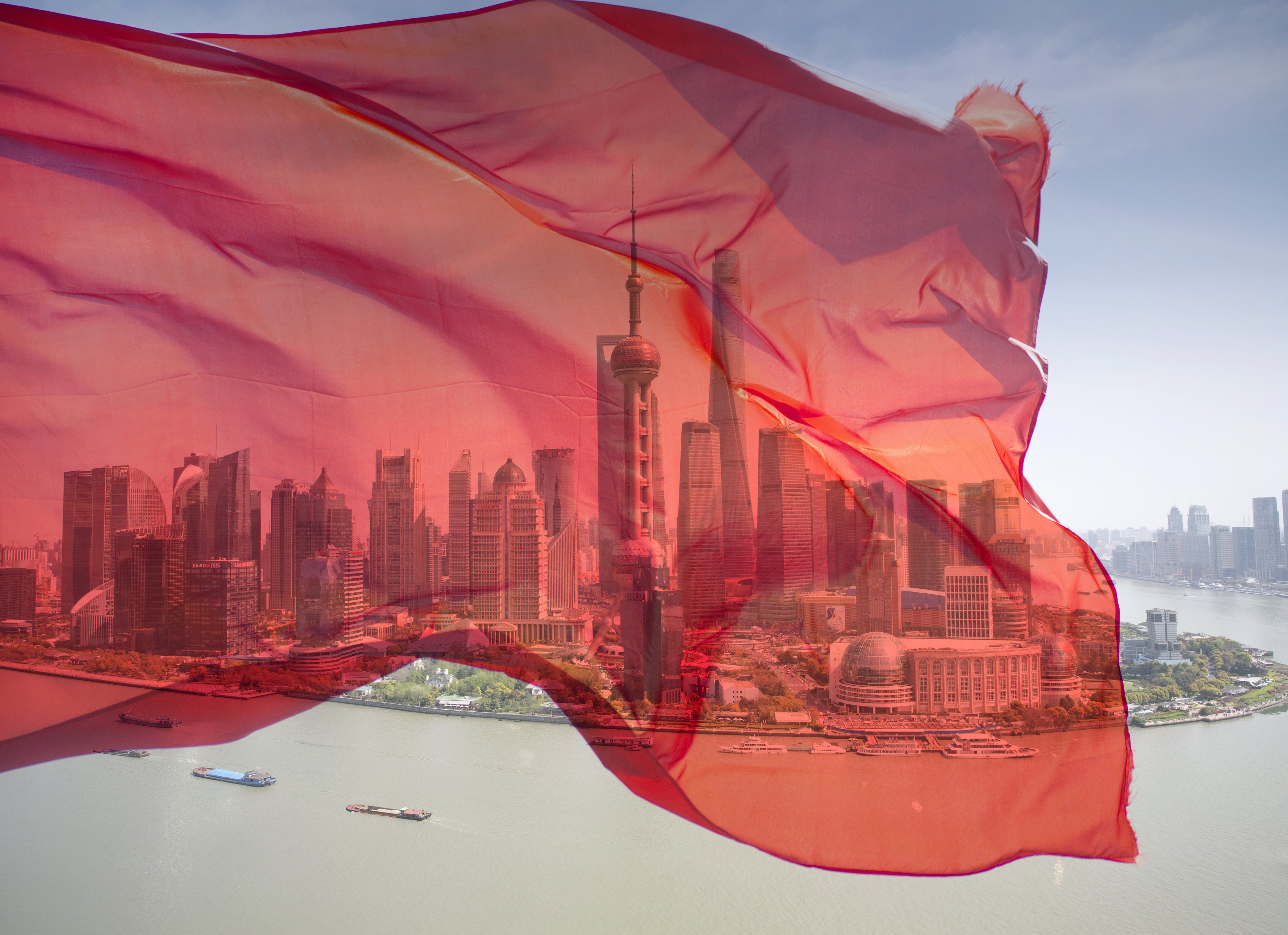
Image of red flag over the Shanghai BundThis event is part of the 2020 Winter/Spring Colloquia series, The PRC at 70: The Past, Present – and Future?, sponsored by APARC's China Program.


Via Zoom Webinar.
Register at: https://bit.ly/3erPfSn 

Jessica Chen Weiss Associate Professor of Government, Cornell University
Seminars
Authors
News Type
Commentary
Date
Paragraphs

Former Russian President Dmitry Medvedev, who signed the New Strategic Arms Reduction Treaty (New START) with Barack Obama on April 8, 2010, called last week for the United States to agree to extend the treaty. On Friday, a Department of State spokesperson told the Russian news agency TASS in response:  “The President has directed us to think more broadly than New START…  We stand ready to engage with both Russia and China on arms control negotiations that meet our criteria.”

Unfortunately, nothing suggests President Trump will achieve anything on nuclear arms control.


Read full article at The Hill.

Hero Image
trumpdonald putinvladimir 020720getty split arms
All News button
1
Authors
Colin H. Kahl
News Type
Commentary
Date
Paragraphs

The novel coronavirus (COVID-19) is a global public health disaster of almost biblical proportions. It is a once-in-a-century occurrence that threatens to destroy countless lives, ruin economies, and stress national and international institutions to their breaking point. And, even after the virus recedes, the geopolitical wreckage it leaves in its wake could be profound.

Many have understandably drawn comparisons to the influenza pandemic of 1918 and 1919. That pandemic, which began in the final months of World War I, may have infected 500 million people and killed 50 million people around the globe. As the grim toll of COVID-19 mounts, it remains to be seen if that comparison will prove apt in terms of the human cost.

But, if we want to understand the even darker direction in which the world may be headed, leaders and policymakers ought to pay more attention to the two decades after the influenza pandemic swept the globe. This period, often referred to as the interwar years, was characterized by rising nationalism and xenophobia, the grinding halt of globalization in favor of beggar-thy-neighbor policies, and the collapse of the world economy in the Great Depression. Revolution, civil war, and political instability rocked important nations. The world’s reigning liberal hegemon — Great Britain — struggled and other democracies buckled while rising authoritarian states sought to aggressively reshape the international order in accordance with their interests and values. Arms races, imperial competition, and territorial aggression ensued, culminating in World War II — the greatest calamity in modern times.

In the United States, the interwar years also saw the emergence of the “America First” movement. Hundreds of thousands rallied to the cause of the America First Committee, pressing U.S. leaders to seek the false security of isolationism as the world burned around them. President Franklin Delano Roosevelt pushed back, arguing that rising global interdependence meant no nation — not even one as powerful and geographically distant as the United States — could wall itself off from growing dangers overseas. His warning proved prescient. The war eventually came to America’s shores in the form of the attack on Pearl Harbor.

Even before COVID-19, shadows of the interwar years were beginning to re-emerge. The virus, however, has brought these dynamics into sharper relief. And the pandemic seems likely to greatly amplify them as economic and political upheaval follows, great-power rivalry deepens, institutions meant to encourage international cooperation fail, and American leadership falters. In this respect, as Richard Haas notes, the COVID-19 pandemic and the aftershocks it will produce seem poised to “accelerate history,” returning the world to a much more dangerous time.

However, history is not destiny. While COVID-19 worsens or sets in motion events that may increasingly resemble this harrowing past, we are not fated to repeat it. Humans have agency. Our leaders have real choices. The United States remains the world’s most powerful democracy. It has a proud legacy of transformational leaps in human progress, including advances that have eradicated infectious diseases. It is still capable of taking urgent steps to ensure the health, prosperity, and security of millions of Americans while also leading the world to navigate this crisis and build something better in its aftermath. America can fight for a better future. Doing so effectively, however, requires understanding the full scope of the challenges it is likely to face.

Read the rest at War on the Rocks

Hero Image
covid 19 radoslav zilinsky
Radoslav Zilinsky - Getty Images
All News button
1
Subtitle

The novel coronavirus (COVID-19) is a global public health disaster of almost biblical proportions. It is a once-in-a-century occurrence that threatens to destroy countless lives, ruin economies, and stress national and international institutions to their breaking point. And, even after the virus recedes, the geopolitical wreckage it leaves in its wake could be profound.

-

This is a virtual event. Please click here to register and generate a link to the talk. 
The link will be unique to you; please save it and do not share with others.

Much recent commentary on US relations with China claims that the policy of “Engagement” was a foolish and failed attempt to transform the People’s Republic into an American style democracy that instead created an authoritarian rival. This narrative mocks the policies of eight US administrations to justify calls for “Decoupling” and “Containment 2.0.” Fingar’s talk will challenge this narrative by examining the origins, logic, and achievements of Engagement and explain why Decoupling is neither wise nor attainable.

Image
Dr. Thomas Fingar
Thomas Fingar is a Shorenstein APARC Fellow in the Freeman Spogli Institute for International Studies at Stanford University. He was the inaugural Oksenberg-Rohlen Distinguished Fellow from 2010 through 2015 and the Payne Distinguished Lecturer at Stanford in 2009. From 2005 through 2008, he served as the first deputy director of national intelligence for analysis and, concurrently, as chairman of the National Intelligence Council. Fingar served previously as assistant secretary of the State Department’s Bureau of Intelligence and Research (2000-01 and 2004-05), principal deputy assistant secretary (2001-03), deputy assistant secretary for analysis (1994-2000), director of the Office of Analysis for East Asia and the Pacific (1989-94), and chief of the China Division (1986-89). Between 1975 and 1986 he held a number of positions at Stanford University, including senior research associate in the Center for International Security and Arms Control.

Fingar is a graduate of Cornell University (A.B. in Government and History, 1968), and Stanford University (M.A., 1969 and Ph.D., 1977 both in political science). His most recent books are The New Great Game: China and South and Central Asia in the Era of Reform, editor (Stanford, 2016), Uneasy Partnerships: China and Japan, the Koreas, and Russia in the Era of Reform (Stanford, 2017), and Fateful Decisions: Choices that will Shape China’s Future, co-edited with Jean Oi (Stanford, 2020).

Via Zoom Webinar. Register at: https://bit.ly/3ecduEe

Thomas Fingar Shorenstein APARC Fellow, Stanford University
Seminars
News Type
Blogs
Date
Paragraphs

BY SCOTT ROZELLE, HEATHER RAHIMI, HUAN WANG AND EVE DILL

COVID-19 lockdowns have major impacts on migrant workers and supply chains that depend on them. Scott Rozelle and his team find that the lockdowns in China were successful in protecting rural areas from COVID infections, but that the cost was severe: Poor rural households cut down on education, nutrition, and health expenditures and lost around $100 billion in migrant worker wages.—Johan Swinnen, series co-editor and IFPRI Director General.

Read the full blog post here to learn about REAP's village-level survey of the impact of COVID-19 control measures on rural China. 

Hero Image
reap 2013 woman in rural home
Jonathan Willis
All News button
1
Shorenstein APARC Stanford University Encina Hall E301 Stanford, CA 94305-6055
0
Visiting Student Researcher at APARC, 2019-20
jun_wang.jpg

Jun Wang joined the Walter H. Shorenstein Asia-Pacific Research Center as visiting student researcher for the spring and summer quarters of 2020 from Peking University, where she serves as a Ph. D. candidate at School of Government. At APARC, she worked with Professor Gi-Wook Shin and Professor Jean Oi conducting research on Chinese nationalism in the Internet era.

Shorenstein APARC Stanford University Encina Hall E301 Stanford, CA 94305-6055
0
Visiting Scholar at APARC
Ph.D.

Heng Hu joined the Walter H.Shorenstein Asia-Pacific Research Center during January 2020 to January 2021 from Renmin University of China’s Institute of Qing History where he serves as Associate Professor and Vice Director of the institute.

His research focuses on the administrative jurisdictions and local organizations in Chinese history, with particular interest in the digital humanities related to the historical databases. During his visit in APARC, his research project intends to examine the spatial logic of local governance in China from 1644 to 1911, based on some new Database.

Heng Hu is a deputy editor-in-chief of Qing History Journal. He has published a book titled Imperial Power Stops at County Seats? The Administrative Districts and Social Governance Below the County Authority in the Qing Dynasty (2015), which won awards as The Top Ten Books of the Year in History and Biography (China Reading Weekly, 2015), The Puyin Humanities Award (5 award-winners, 2018), and the Youth Achievement Award of the 8th Humanities and Social Sciences Award of the Ministry of Education of China (2020).

Authors
Herbert Lin
News Type
Commentary
Date
Paragraphs

On Feb. 12, White House National Security Adviser Robert O’Brien announced that the U.S. government has “evidence that Huawei has the capability secretly to access sensitive and personal information in systems it maintains and sells around the world.” This represents the latest attempt by the Trump administration to support an argument that allied governments—and the businesses they oversee—should purge certain telecommunications networks of Huawei equipment. The position reflects the preferred approach in the United States, which is to issue outright bans against select companies (including Huawei) that meet an as-yet-unknown threshold of risk to national security.


Read the rest at Lawfare Blog


Hero Image
lin herbert
All News button
1
Subscribe to China