FSI’s Incoming Center Fellow Oriana Skylar Mastro Discusses Chinese Ambitions, Deteriorating U.S.-China Relations
U.S.-China relations have been deteriorating at an alarming speed, and as distrust grows on both sides, it is unclear how to stop the downward spiral. What does China want and how can we best assess Chinese intentions?
This is a key question on the research agenda of East Asian security expert Oriana Skylar Mastro, FSI’s newest Center Fellow. Mastro, an assistant professor of security studies at Georgetown University’s Edmund A. Walsh School of Foreign Service, will begin her appointment at FSI on August 1 and be based at the Shorenstein Asia-Pacific Research Center (APARC), where she will continue her research on Chinese military and security policy, Asia-Pacific security issues, war termination, and coercive diplomacy. She will also work with the Center for International Security and Cooperation (CISAC), and teach students in both the CISAC Honors program and the Ford Dorsey Master’s in International Policy program.
Here, Mastro discusses Chinese ambitions and the rapidly increasing tensions in U.S.-China relations; talks about her military career and new research projects; shares how she first became interested in East Asian security issues as a Stanford undergraduate student; and even reveals some things we don’t know about her.
[To receive stories like this directly in your inbox sign up for APARC’s newsletters]
You have argued in your writings that although China does not want to usurp the United States’ position as the leader of the global order, its strategic goal in the Indo-Pacific region is nearly as consequential. Why is it so? What do you foresee for Chinese aims and the U.S.-China rivalry as we near the U.S. presidential election?
Mastro: My claim is that China doesn't want to replace the United States but rather displace the United States. It’s an important distinction because it’s become popular to assume that China wants to have everything that we, the United States, have and that its view of power is the same as ours. But if you look throughout history, every time a country rises, it exercises its power differently. The United States, for example, didn't build colonies because Great Britain had had colonies. It is equally unlikely to assume that China is going to build a global military and engage in foreign military interventions.
Therefore, I argue that China doesn't want to dominate the world. This doesn’t mean that its ambitions are limited, but rather that it thinks that the U.S. in-depth global involvement is an ineffective and costly way of doing business. Outside of Asia, China relies mainly on political and economic influence to ensure that no one goes against its interests. It is only in Asia where China’s military goals are problematic for the United States and where it wants to dominate and see the U.S. military less active. Again, this isn't due to lack of ambition: from China’s viewpoint, whoever dominates Asia, the world’s most dynamic and economically important region, is a superpower, just like whoever dominated Europe during the Cold War would have been a superpower. In short, I think we make assumptions about what China wants and how it will get there based on our own experiences, and those tend to be incorrect.
As for what’s ahead for the U.S.-China relationship and the coming presidential election, I think it’s a misconception to interpret the frictions between the two countries as stemming from the Trump administration. There are aspects of Chinese behavior that both the Republican and Democratic parties find problematic and I believe we will see a tougher policy towards China, regardless of who wins the election. A Democratic president might be less willing to risk confrontation with the Chinese the way the Trump administration is, but either way, I see increased tensions between the two sides as the norm for the next several years.
In your recent testimony on China’s maritime ambitions before the House Committee on Foreign Affairs, you distinguish between China's aims in its near seas and far seas. How do these intentions differ and why is it important to make the distinction between them?
Mastro: In the near seas — the South China Sea (SCS) and the East China Sea (ECS) — China is concerned with sovereignty, which is absolute control of these waters, and with regional hegemony. In the far seas — the Indian Ocean and beyond — China aims to operate, but it doesn’t aspire to exclude others from doing so. In these waters, China's ambitions are driven primarily by the desire to protect its strategic lines of communication and its economic and political interests.
It’s important to make this distinction for strategy reasons, which goes right to my previous point. There’s a growing sense now that “whatever China does is bad and the United States needs to counter everything China does,” but that's not quite true. While China's objectives in the SCS and ECS are detrimental to U.S. interests, some aspects of its objectives in the Indian Ocean and beyond are legitimate and do not necessarily threaten U.S. interests, although they are not without risks.
U.S. policy needs to consider these differences in the degree of threat because prioritization is crucial for strategy. If we are to prioritize our strategies, then we should prioritize countering China’s ambitions in its near seas and try to shape its objectives in the far seas, perhaps through more cooperative policies. Perceiving everything that China does as bad isn’t the right approach to competing with it.
In addition to your academic career, you have an extensive military portfolio: for over ten years, you have served in the United States Air Force Reserve. You have just been awarded the Meritorious Service Medal. Tell us more about this award, how your academic and military careers influence each other, and what it’s like to balance the two.
Mastro: I'm a special type of reservist called Individual Mobilization Augmentee (IMA), which means that I have a custom duty schedule and work with my active-duty supervisors to help meet mission requirements of whatever the priority is at the time. The award I just received, the Meritorious Service Medal, which is a recognition of commendable noncombatant service, is for my last role as a senior China analyst at the Pentagon. My main duties in that role were to prepare intel products and brief the senior leadership of Headquarters Air Force at the Pentagon.
I think that the mix of my two careers makes me a better military officer and a better scholar. My experiences in the military inspire a lot of my research projects, oftentimes regarding questions that I don't have good answers for. As an officer, I need the power of argumentation on my side if I am to make a difference. After I engage in the good academic practice of spending a year or more researching something in-depth, I can then go back and provide inputs into the Department of Defense. There is a synergy between the two careers in terms of topics.
Moreover, my experiences in the military have taught me leadership and teamwork skills that we don’t necessarily learn from being professors. There’s a vast difference in leadership and teamwork dynamics between the military and academia. When I’m on active duty, I'm there as Major Mastro to provide my expertise but also be a strong part of a team with a chain of command.
Of course, managing both civilian and military careers demands considerable planning and balancing. I schedule my deployments around my teaching schedule, but sometimes there are urgent assignments given current world events. For example, last semester, I was on duty one day a week while teaching full time. So that requires planning and flexibility on the part of my family, as well as support from the people who employ me.
How did you first become interested in China and East Asian security issues, and what made you pursue a military career?
Mastro: This is a fun topic to talk about at Stanford because it's all thanks to my experiences as an undergraduate student on The Farm. As a freshman, I began learning Chinese, and in the following years, being humanities- and arts-focused, I mainly studied ancient China and Chinese literature. When I returned to campus after a year of intensive study in China, I was looking for a research opportunity and heard about the CISAC Honors Program in International Security Studies. So it was only in my senior year that I took my first course in political science and was exposed to international security studies. I discovered a passion for this topic like nothing else I had studied before. I wanted to learn more and got my first job, at the Carnegie Endowment, researching security issues, and then decided to continue with graduate studies.
During my Ph.D. at Princeton, I met a General in the Air Force who told me I should join the military. At that point, I'd never met anyone in the military. I thought, “I’m not very tough; what could I possibly contribute?” But I took up on his suggestion to do an internship with the U.S. Indo-Pacific Command and realized that my Chinese language skills and knowledge about China could be useful. I wanted to serve and planned to do my duty for four years and be done, yet here we are, nearly 11 years later. It’s been a blessing to make a whole career out of this and it’s truly all thanks to many memorable experiences at Stanford and the CISAC Honors Program. I’m thrilled to be back and looking forward to teaching and mentoring students in the Honors program and the Ford Dorsey Master’s in International Policy program.
What are some of your current research projects and what do you plan to work on at APARC and Stanford at large?
Mastro: My main project is researching a book about what China wants – a framework for understanding how to assess Chinese intentions. This is a policy-relevant book that engages with international relations theory and literature, where understanding state intentions plays a key role. The framework I’m developing assesses information to answer what China’s intentions are in several areas and regarding several cases. There will be chapters on China’s regional ambitions, global ambitions, approach to international institutions, and intentions towards the economic and technological order. As part of this project, you may see me currently publishing works on the South China Sea or the Indian Ocean.
Another project, in its beginning stages, focuses on the China-Russia relationship. Here the overarching framework is an attempt to understand state cooperation. This relates to alliances, though the notion of alliances is rather outdated. China doesn't have any alliances, but that doesn't mean it isn’t aligned or working with other countries. The question is what types of cooperation between China and Russia are problematic for the United States and what types are not. Again, we need to prioritize: is it so bad if China and Russia back each other in the UN, or is it worse that they exercise together? I don't know yet, but I think that international relations theory can shed some light on these questions.
Tell us something we don’t know about you.
Mastro: It may seem that I constantly work because I have a military career in addition to being very involved in the policy and academic worlds, but many people don't realize that I'm a big fan of leisure. I spend plenty of time with my children and have multiple hobbies that I engage in daily: I read novels, do yoga and CrossFit, play the piano, and manage to sleep! I was a very serious pianist and still take Skype lessons with my old teacher back in Chicago. Now with the move to California, I’ll finally be able to enjoy the grand piano my parents bought me for my 16th birthday, which I never had room for. I'm a firm believer in work-life balance. It's just that my work, too, is a passion and a hobby of mine.
Read More


Mastro, whose appointment as a Center Fellow at Shorenstein APARC begins on August 1, considers the worsening relations between the world’s two largest economies, analyzes Chinese maritime ambitions, and talks about her military career and new research projects.


 Dr. Roland Hsu


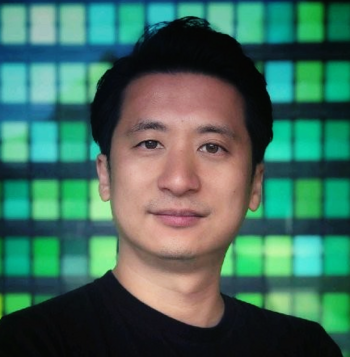
 Alvin Shiqi Wang (王世琪) has served as CEO and President of 21Vianet Group, Inc. since February 2018. Currently, Mr. Wang serves as Vice President of TUS Digital Group, a subsidiary of TUS Holdings, and serves on the board of directors of Beijing CIC Technology Co., Ltd. and Guangzhou Tuwei Technology Co., Ltd. . Mr. Wang has nearly 20 years of experience in the telecommunications industry, working at various renowned international companies, including 11 years with Ericsson, focusing primarily on strategy development and execution, corporate management, and equity investments. Mr. Wang received a bachelor's degree from Tsinghua University and an MBA from Peking University-Vlerick MBA Programme (BiMBA).
 Xiang Wang (王翔) is President and Acting CFO of Xiaomi Corporation, responsible for platform functions and for assisting the CEO with Group operations. Mr. Wang joined Xiaomi Corporation in July 2015 served as its Senior Vice President and President for International Business, responsible for global expansion, IP strategy, and strategic partner relationship management. Mr. Wang has more than 20 years of experience in the semiconductor and communications fields, with great vision and comprehensive understanding of next-generation wireless communications. He has played an integral role in shaping Xiaomi’s international business operations including with respect to its intellectual property compliance, management and strategy throughout the world. In 2016, Mr. Wang put together an international team of sales and marketing teams to expand into more markets outside of China. Within just 3 years, he led his teams into over 90 markets. As of Q3 2019, Xiaomi’s international revenue accounted for 48.7% of its total revenue. Today, Xiaomi is ranked among top 5 smartphone brands in over 40 markets. Mr. Wang previously served as the Senior Vice President of Qualcomm and President of Qualcomm Greater China, leading the company’s business and operations in Greater China. Prior to that role, he was Vice President of Qualcomm CDMA Technology, responsible for Qualcomm chipset business and customer service in China. Under his leadership, Qualcomm rapidly extended and strengthened its partnerships with increasing numbers of Chinese manufacturing customers. Before joining Qualcomm, Mr. Wang held key positions in sales and marketing at internationally leading companies, including Motorola and Lucent/Agere. Mr. Wang earned his BSEE from Beijing Polytechnic University.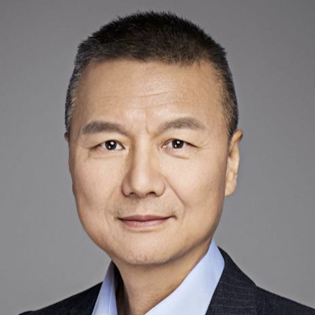
 Zhiqiang (ZZ) Zhang (张志强) is President of ABB in China since October 2018. He has extensive management experience and a deep understanding of the Chinese market, developed during his career at several large global companies over the past three decades. He joined ABB from Sandvik where he was Asia- Pacific Regional Holding Officer and President of Sandvik China, and Member of Sandvik Group Executive Committee. Prior to that, he held leadership positions at several other companies, including Nokia Siemens Networks, where he was President of the Greater China Region, and Siemens VDO Automotive, China, where he was President and CEO. Mr. Zhang is Non-Executive Board member of Georg Fischer AG (Switzerland) and Daetwyler Holding AG (Switzerland). He holds a bachelor’s degree in electronic engineering from Beijing Jiaotong University, China, and a master’s degree in business administration from the Smith School of Business at Queen’s University in Canada.
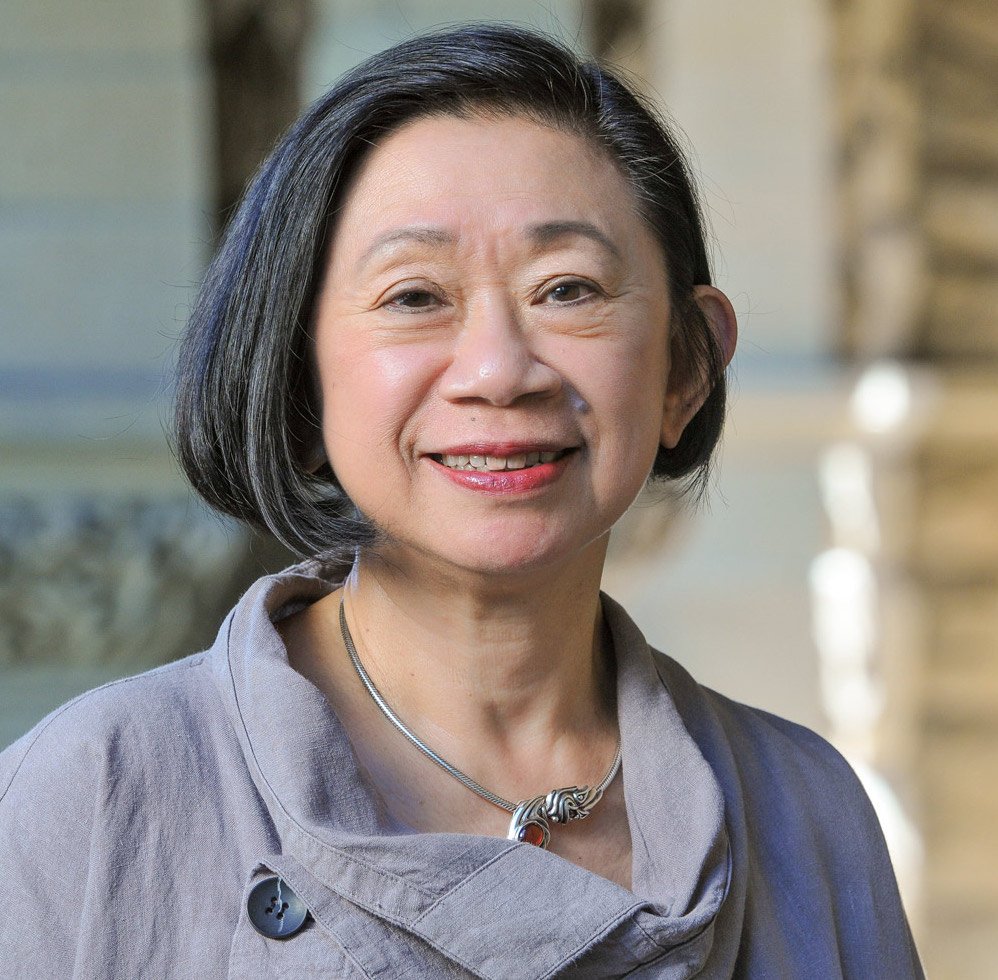 Jean C. Oi is the William Haas Professor of Chinese Politics in the Department of Political Science and a senior fellow in the Freeman Spogli Institute for International Studies at Stanford University. She directs the China Program at the Walter H. Shorenstein Asia-Pacific Research Center and is the Lee Shau Kee Director of the Stanford Center at Peking University. Professor Oi has published extensively on China’s reforms. Recent books include Zouping Revisited: Adaptive Governance in a Chinese County, coedited with Steven Goldstein (Stanford University Press, 2018), and Challenges in the Process of China’s Urbanization, coedited with Karen Eggleston and Yiming Wang (2017). Current research is on fiscal reform and local government debt, continuing SOE reforms, and the Belt and Road Initiative.
 Christopher Thomas was most recently a partner with McKinsey & Company. He served as co-Managing Partner for the Firm’s Global Digital Strategy service line as well as its Global IoT service line; and as the leader of its Asia Semiconductor Practice. Prior to McKinsey, Mr. Thomas spent ten years at Intel. He was the General Manager of Intel China, with joint ownership for the region’s $5 billion-plus P&L. In this role, he grew revenues by more than 50% and oversaw China’s successful elevation from a sales unit to an independent regional P&L business reporting directly into headquarters. Mr. Thomas began his career as a private equity investor at The Blackstone Group in New York City. He is currently a Visiting Professor at Tsinghua University, China’s leading educational institution. He received an MBA from Stanford Business School, where he was an Arjay Miller scholar; a Master of Arts in Political Science from Stanford University; and a Bachelor of Science in Economics, summa cum laude, from the Wharton School.