-

Please note the event time has been changed to 10:30AM (PT) to 12:00PM (PT).


This is a virtual event. Please click here to register for the talk. 


This event is presented in partnership with Global:SF and the State of California Governor’s Office of Business and Economic Development.
 

U.S.-China economic relations have grown increasingly fraught and competitive.  Even amidst intensifying tensions, however, our two major economies remain intertwined.  While keeping alert to national security concerns, the economic strength of the United States will depend on brokering a productive competition with China, the world’s fastest growing economy.  Precipitous decoupling of trade, investment, and human talent flows between the two nations will inflict unnecessary harm to U.S. economic interests -- and those of California.  

Chinese trade and investments into California have grown exponentially over the last decade.  But they have come under increasing pressure following geopolitical and economic tensions between the two nations, particularly in the science and technology sectors.  This session will explore the role of Chinese economic activity in California in the context of the greater US-Chinese relationship. 


Portrait of Ambassador Craig AllenCraig Allen began his tenure in Washington, DC, as the sixth President of the United States-China Business Council, a private, nonpartisan, nonprofit organization representing over 200 American companies doing business with China. Ambassador Allen began his government career in 1985 at the Department of Commerce’s International Trade Administration (ITA) where, from 1986 to 1988, he worked as an international economist in ITA’s China Office. In 1988, Allen transferred to the American Institute in Taiwan, where he served as Director of the American Trade Center in Taipei. He returned to the Department of Commerce for a three-year posting at the US Embassy in Beijing as Commercial Attaché in 1992. In 1995, Allen was assigned to the US Embassy in Tokyo where he was promoted to Deputy Senior Commercial Officer in 1998. Allen became a member of the Senior Foreign Service in 1999. Starting from 2000, he served a two-year tour at the National Center for APEC in Seattle where he worked on the APEC Summits in Brunei, China, and Mexico. In 2002, Allen first served as the Senior Commercial Officer in Beijing where he was later promoted to the Minister Counselor rank of the Senior Foreign Service. After a four-year tour in South Africa, Ambassador Allen became Deputy Assistant Secretary for Asia at the US Department of Commerce’s International Trade Administration. He later became Deputy Assistant Secretary for China. Ambassador Allen was sworn in as the United States ambassador to Brunei Darussalam on December 19, 2014 where he served until he transitioned to take up his position as President of the US-China Business Council.
 

Image
Portrait of David Cheng
David Cheng is the chair and managing partner of Nixon Peabody’s China and Asia-Pacific practice. He is qualified in both the United States and Hong Kong. He focuses on cross-border transactions, litigations and investigations, advising on issues ranging from acquisitions, capital financing (initial public offering), intellectual property protection and disputes to fraud, FCPA and SEC investigations. He has a client portfolio from all over the world, including the United States, Middle East, Europe, Japan, Singapore, Taiwan, mainland China and Hong Kong.
 

james greenJames Green has worked for over two decades on U.S.-Asia relations. For five years, Green was the Minister Counselor for Trade Affairs at the U.S. Embassy in Beijing (2013-2018).  As the senior official in China from the Office of the United States Trade Representative (USTR), Green was deeply involved in all aspects of trade negotiations, trade enforcement, and in reducing market access barriers for American entities.  In prior government service, Green worked on the Secretary of State’s Policy Planning Staff and at the State Department’s China Desk on bilateral affairs. He also served as the China Director of the White House’s National Security Council.  In the private sector, Green was a senior vice president at the global strategy firm founded by former Secretary of State Madeleine Albright and was the founding government relations manager at the American Chamber of Commerce in Shanghai, Asia’s largest AmCham.  Currently, Green is a Senior Research Fellow at Georgetown University's Initiative for U.S.-China Dialogue on Global Issues and hosts a U.S.-China Dialogue Podcast.  He was most recently named as APARC's inaugural China Policy Fellow
 

Image
Portrait of Anja Manuel
Anja Manuel is Co-Founder and Principal, along with former Secretary of State Condoleezza Rice, former National Security Advisor Stephen Hadley and former Secretary of Defense Robert Gates, in Rice, Hadley, Gates & Manuel LLC, a strategic consulting firm that helps US companies navigate international markets. She currently serves on two corporate boards: Overseas Shipping Group, Inc., a NYSE listed energy transportation company, and Ripple Labs Inc., a leading blockchain payments company. Manuel also serves on several advisory boards, including Former Governor Brown’s California Export Council. From 2005-2007, she served as an official at the U.S. Department of State, responsible for South Asia Policy. She is a frequent commentator on foreign policy and technology policy, for TV and radio (NBC/MSNBC, Fox Business, BBC, Bloomberg, Charlie Rose, NPR, etc.) and writes for publications ranging from the New York Times, to the Financial Times, Fortune, The Atlantic, and Newsweek, among others. She is the author of the critically acclaimed This Brave New World: India, China and the United States, published by Simon and Schuster in 2016. A graduate of Harvard Law School and Stanford University, Manuel now also lectures and is a Research Affiliate at Stanford University. She is the Director of the Aspen Strategy Group and Aspen Security Forum -- the premier bipartisan forum on foreign policy in the U.S. -- and is a member of the Council on Foreign Relations.


This Session is part of a larger conference series titled “The New Economy Conference – California’s Place in the New Global Economy”.   The New Economy Conference will broadcast public programs from April 21-May 25 on a weekly basis, designed to inform and identify the impact of COVID-19 on the economic competitiveness and resilience of the State of California.  Topics addressed will include Challenges and Opportunities Post-COVID in California (4/21); the International Dimension (4/28), Investing in the New Economy and Keeping Businesses in California (5/5); Sustainability and Urbanism (5/12); Navigating Chinese Investment, Trade and Technology (5/19); and Where do We Go from Here? (6/09).


Via Zoom Webinar. Register at: https://www.globalsf.biz/session-5-nec 

Amb. Craig Allen <br><i>President of US-China Business Council</i><br><br>
David K. Cheng <br><i>Chair and Managing Partner of China & Asia Pacific Practice, Nixon Peabody LLP</i><br><br>
James Green <br><i>Senior Research Fellow, Initiative for U.S.-China Dialogue on Global Issues, Georgetown University</i><br><br>
Anja Manuel <br><i>Co-Founder and Principal, Rice, Hadley, Gates & Manuel LLC</i><br><br>
Seminars
-

Tuesday, May 25, 2021 | 11:00am-12:15 pm Pacific Time

Institutional Genes: Confucianism vs. Christianity

This talk was based on a chapter of my ongoing book project titled “Institutional Genes: A Comparative Analysis of Origins of China’s Institutions.” Confucianism / Imperial-Exam-System is one of three what I called institutional genes of China's institutions. As a comparison, Christianity is an institutional gene for other institutions, including constitutional democracy (in the West) on the one hand and totalitarianism (in the Soviet Union), which is implanted into China on the other hand.  In this talk, I’ll explain how Confucianism/  Imperial-Exam-System is created and evolved, and why it is an institutional gene that affects today’s institutions in China.   

Watch the Recorded Event:


Image
Headshot of Dr. Chenggang Xu.
About the Speaker

Chenggang Xu is Visiting Professor at Finance Department, Imperial College London. He is one of the first recipients (joint with Yingyi Qian) of China Economics Prize for contributions in understanding government and enterprise incentive mechanisms for the transition economy of China. 

Dr Xu received his PhD in Economics from Harvard in 1991. He is currently a board member of the Ronald Coase Institute (RCI) and a research fellow of the CEPR. He has previously taught at the London School of Economics (1991-2009) as a Reader, at the University of Hong Kong (2009-2016) as Chung Hon-Dak Professor in Economic Development and as Quoin Professor in Economic Development (2008-2016), and as Special-Term Visiting Professor at Tshinghua University (2002-). He has also taught and worked at Harvard (1992-2002), the IMF (1997-1999) and the Chinese Academy of Social Sciences (1982-1992). He was the President of the Asian Law and Economics Association (2010-2012) and World-Class University Professor at Seoul National University (2009-2013). He won the Sun Yefang Economics Prize in 2013. In 2016, he was the joint winner of the China Economics Prize.


Seminar Series Moderators:

Image
Headshot of Dr. Scott Rozelle

Scott Rozelle holds the Helen Farnsworth Endowed Professorship at Stanford University and is Senior Fellow in the Food Security and Environment Program and the Shorenstein Asia-Pacific Research Center, Freeman Spogli Institute (FSI) for International Studies. For the past 30 years, he has worked on the economics of poverty reduction. Currently, his work on poverty has its full focus on human capital, including issues of rural health, nutrition and education. For the past 20 year, Rozelle has been the chair of the International Advisory Board of the Center for Chinese Agricultural Policy, Chinese Academy of Sciences (CAS). In recent years Rozelle spends most of his time co-directing the Rural Education Action Project (REAP). In recognition of this work, Dr. Rozelle has received numerous honors and awards. Among them, he became a Yangtse Scholar (Changjiang Xuezhe) in Renmin University of China in 2008. In 2008 he also was awarded the Friendship Award by Premiere Wen Jiabao, the highest honor that can be bestowed on a foreigner. 

Image
hongbin li headshot
Hongbin Li is the James Liang Director of the China Program at the Stanford King Center on Global Development, and a Senior Fellow of Stanford Institute for Economic Policy Research (SIEPR). Hongbin obtained his Ph.D. in economics from Stanford University in 2001 and joined the economics department of the Chinese University of Hong Kong (CUHK), where he became full professor in 2007. He was also one of the two founding directors of the Institute of Economics and Finance at the CUHK. He taught at Tsinghua University in Beijing 2007-2016 and was C.V. Starr Chair Professor of Economics in the School of Economics and Management. He founded the Chinese College Student Survey (CCSS) in 2009 and the China Employer-Employee Survey (CEES) in 2014.

Hongbin’s research has been focused on the transition and development of the Chinese economy, and the evidence-based research results have been both widely covered by media outlets and well read by policy makers around the world. He is currently the co-editor of the Journal of Comparative Economics.


Zoom Meeting

Seminars
-

Tuesday, May 11, 2021 | 11:00am-12:15 pm Pacific Time

The Political Economy of Policy Experimentations in China

Policy learning, often involving experimentations, is an essential component of government's decision making. In this project, we aim to describe and understand China's policy experimentations, which are speculated by many to have played a vital role in fostering China's reform and growth. We collect comprehensive data on policy experimentations conducted in China over the past 4 decades by 139 ministries and commissions. In sum, our results suggest that policy experimentations take place under various political and bureaucratic constraints, which could limit the scope and bias the direction of policy learning.

Watch the Recorded Event:


Image
Headshot of Dr. David Yang
About the Speaker

David Yang is an Assistant Professor of Economics at Harvard University, as well as a Faculty Research Fellow at the National Bureau of Economic Research (NBER) and Global Scholar at the Canadian Institute for Advanced Research (CIFAR). His research focuses on political economy, behavioral and experimental economics, economic history, and cultural economics. In particular, David studies the forces of stability and forces of changes in authoritarian regimes, drawing lessons from historical and contemporary China.


Seminar Series Moderators:

Image
Headshot of Dr. Scott Rozelle

Scott Rozelle holds the Helen Farnsworth Endowed Professorship at Stanford University and is Senior Fellow in the Food Security and Environment Program and the Shorenstein Asia-Pacific Research Center, Freeman Spogli Institute (FSI) for International Studies. For the past 30 years, he has worked on the economics of poverty reduction. Currently, his work on poverty has its full focus on human capital, including issues of rural health, nutrition and education. For the past 20 year, Rozelle has been the chair of the International Advisory Board of the Center for Chinese Agricultural Policy, Chinese Academy of Sciences (CAS). In recent years Rozelle spends most of his time co-directing the Rural Education Action Project (REAP). In recognition of this work, Dr. Rozelle has received numerous honors and awards. Among them, he became a Yangtse Scholar (Changjiang Xuezhe) in Renmin University of China in 2008. In 2008 he also was awarded the Friendship Award by Premiere Wen Jiabao, the highest honor that can be bestowed on a foreigner. 

Image
hongbin li headshot
Hongbin Li is the James Liang Director of the China Program at the Stanford King Center on Global Development, and a Senior Fellow of Stanford Institute for Economic Policy Research (SIEPR). Hongbin obtained his Ph.D. in economics from Stanford University in 2001 and joined the economics department of the Chinese University of Hong Kong (CUHK), where he became full professor in 2007. He was also one of the two founding directors of the Institute of Economics and Finance at the CUHK. He taught at Tsinghua University in Beijing 2007-2016 and was C.V. Starr Chair Professor of Economics in the School of Economics and Management. He founded the Chinese College Student Survey (CCSS) in 2009 and the China Employer-Employee Survey (CEES) in 2014.

Hongbin’s research has been focused on the transition and development of the Chinese economy, and the evidence-based research results have been both widely covered by media outlets and well read by policy makers around the world. He is currently the co-editor of the Journal of Comparative Economics.

Zoom Meeting

Seminars
-

China Chats with Stanford Faculty


USA vs China:  A New Cold War? Great Power Relations and Competition in the 21st Century

Thirty years ago, the Cold War ended. Today, great power competition is back – or so it seems – with many describing our present era as a “New Cold War” between the United States and China (and Russia). But is this label an illuminating or distorting analogy? More importantly, what should the U.S. do to meet the challengers of great power competition in the 21st century? 

In analyzing contemporary relations, we must trace the historical origins of the U.S.-China relationship, then assess the similarities and differences between the Cold War and U.S.-China relations today along dimensions such as power, ideology, and multilateralism, in order to effectively devise unilateral, bilateral, and multilateral policy prescriptions for U.S. policymakers.

This Stanford alumni event featured Stanford professor Michael McFaul, director at the Freeman Spogli Institute for International Studies. He was joined by professor Hongbin Li, co-director of Stanford Center on China's Economy, who moderated a discussion about the major themes of the research. 

Watch the event recording:


About the Speakers:

Image
Headshot of Michael McFaul - 3x4
Michael McFaul is Director at the Freeman Spogli Institute for International Studies, the Ken Olivier and Angela Nomellini Professor of International Studies in the Department of Political Science, and the Peter and Helen Bing Senior Fellow at the Hoover Institution. He joined the Stanford faculty in 1995.

Dr. McFaul also is as an International Affairs Analyst for NBC News and a columnist for The Washington Post. He served for five years in the Obama administration, first as Special Assistant to the President and Senior Director for Russian and Eurasian Affairs at the National Security Council at the White House (2009-2012), and then as U.S. Ambassador to the Russian Federation (2012-2014).

He has authored several books, most recently the New York Times bestseller From Cold War to Hot Peace: An American Ambassador in Putin’s Russia. Earlier books include Advancing Democracy Abroad: Why We Should, How We Can; Transitions To Democracy: A Comparative Perspective (eds. with Kathryn Stoner); Power and Purpose: American Policy toward Russia after the Cold War (with James Goldgeier); and Russia’s Unfinished Revolution: Political Change from Gorbachev to Putin.

His current research interests include American foreign policy, great power relations, and the relationship between democracy and development. Dr. McFaul was born and raised in Montana. He received his B.A. in International Relations and Slavic Languages and his M.A. in Soviet and East European Studies from Stanford University in 1986. As a Rhodes Scholar, he completed his D. Phil. in International Relations at Oxford University in 1991.


Image
hongbin li headshot
Hongbin Li is the Co-Director of the Stanford Center on China's Economy and Institutions (SCCEI) and a Senior Fellow of Stanford Institute for Economic Policy Research (SIEPR). Hongbin obtained his Ph.D. in economics from Stanford University in 2001 and joined the economics department of the Chinese University of Hong Kong (CUHK), where he became full professor in 2007. He was also one of the two founding directors of the Institute of Economics and Finance at the CUHK. He taught at Tsinghua University in Beijing 2007-2016 and was C.V. Starr Chair Professor of Economics in the School of Economics and Management. He also founded and served as the Executive Associate Director of the China Social and Economic Data Center at Tsinghua University. He founded the Chinese College Student Survey (CCSS) in 2009 and the China Employer-Employee Survey (CEES) in 2014.

Hongbin’s research has been focused on the transition and development of the Chinese economy, and the evidence-based research results have been both widely covered by media outlets and well read by policy makers around the world . He is currently the co-editor of the Journal of Comparative Economics.


Seminars
News Type
News
Date
Hero Image
A group of school boys in school uniforms pose in a rural village in China. Rural Education Action Program
All News button
1
Subtitle

Scott Rozelle joins ChinaTalk to discuss his recent book "Invisible China: How the Urban-Rural Divide Threatens China’s Rise", co-authored with Natalie Hell. The podcast discusses how China’s 900 million-strong low-income population will decide China’s future development path.

-

Tuesday, April 27, 2021 | 4:30 - 5:45 pm Pacific Time

China's Belt and Road Initiative (BRI): A Look at the Evidence with Professor Albert Park, Hong Kong University of Science and Technology 

China’s Belt and Road Initiative (BRI) has attracted polarized debate over China’s motives with relatively little evidence. We analyze project-level data on China’s outbound foreign direct investments (FDI) and construction projects to examine several key questions related to the Initiative. First, we study the impact of the BRI on the amount of outbound FDI to BRI countries and examine whether the importance of economic, governance, and other factors in explaining China’s outbound FDI flows to different countries changed under the BRI. We find that after the BRI began, the importance of economic fundamentals declined while the importance of governance factors increased. Second, we quantify the role of state-owned enterprises in the Initiative and compare the nature and determinants of SOE investments to those made by private firms. Finally, to examine the impact of the Initiative on China’s soft power, we study changes in sentiment by using AI algorithms to conduct textual analysis of millions of media articles around the world.

Watch the Recorded Event: 


Image
Headshot of Dr. Albert Park.
About the Speaker

Albert Park is a development and labor economist who is an expert on China’s economic development. He is Head and Chair Professor of Economics, Chair Professor of Social Science, Professor of Public Policy, and Director of the Center for Economic Policy at HKUST. His research and commentary has appeared in the Economist, New York Times, Washington Post, Wall Street Journal, China Daily, BBC, CNN, NBC, Bloomberg, Freakonomics, and NPR. In recent years he has published articles in leading economics journals on firm performance, poverty and inequality, migration and employment, health and education, and the economics of aging in China. Prof. Park has played a leadership role in numerous survey research projects in China including the China Employer-Employee Survey (CEES), the China Urban Labor Survey (CULS), the Gansu Survey of Children and Families (GSCF), and the China Health and Retirement Longitudinal Study (CHARLS). He previously held faculty appointments at the University of Michigan and Oxford University, and has consulted frequently for the World Bank.


Seminar Series Moderators:

Image
Headshot of Dr. Scott Rozelle

Scott Rozelle holds the Helen Farnsworth Endowed Professorship at Stanford University and is Senior Fellow in the Food Security and Environment Program and the Shorenstein Asia-Pacific Research Center, Freeman Spogli Institute (FSI) for International Studies. For the past 30 years, he has worked on the economics of poverty reduction. Currently, his work on poverty has its full focus on human capital, including issues of rural health, nutrition and education. For the past 20 year, Rozelle has been the chair of the International Advisory Board of the Center for Chinese Agricultural Policy, Chinese Academy of Sciences (CAS). In recent years Rozelle spends most of his time co-directing the Rural Education Action Project (REAP). In recognition of this work, Dr. Rozelle has received numerous honors and awards. Among them, he became a Yangtse Scholar (Changjiang Xuezhe) in Renmin University of China in 2008. In 2008 he also was awarded the Friendship Award by Premiere Wen Jiabao, the highest honor that can be bestowed on a foreigner. 

Image
hongbin li headshot
Hongbin Li is the James Liang Director of the China Program at the Stanford King Center on Global Development, and a Senior Fellow of Stanford Institute for Economic Policy Research (SIEPR). Hongbin obtained his Ph.D. in economics from Stanford University in 2001 and joined the economics department of the Chinese University of Hong Kong (CUHK), where he became full professor in 2007. He was also one of the two founding directors of the Institute of Economics and Finance at the CUHK. He taught at Tsinghua University in Beijing 2007-2016 and was C.V. Starr Chair Professor of Economics in the School of Economics and Management. He founded the Chinese College Student Survey (CCSS) in 2009 and the China Employer-Employee Survey (CEES) in 2014.

Hongbin’s research has been focused on the transition and development of the Chinese economy, and the evidence-based research results have been both widely covered by media outlets and well read by policy makers around the world. He is currently the co-editor of the Journal of Comparative Economics.

Zoom Meeting

Seminars
Paragraphs
Graph lines and bar charts overlaid on a shipping port in China.

Below is an excerpt from the SIEPR policy brief published online.

"As the United States and China enter a new and contentious phase of their relationship, Stanford scholars are setting and expanding research agendas to analyze China’s economic development and its impact on the world. The newly launched Stanford Center on China’s Economy and Institutions (SCCEI, pronounced “sky”) was formed by the Stanford Institute for Economic Policy Research (SIEPR) and the Freeman Spogli Institute for International Studies (FSI) to support their work.

The goal of SCCEI and its affiliated faculty is to provide a dispassionate, fact-based architecture that can help policymakers, business leaders and the general public navigate the fraught relationship between the U.S. and China.

This policy brief outlines the scholarship already underway by some of SCCEI’s affiliates. It includes a range of research on the world’s most populous country: education and wage disparities; workforce transformation; emissions trading; China’s one-child policy; and the effect that racism against Chinese students in America has upon their views about authoritarian rule. As the center matures, research agendas will expand and focus on trade, global supply chains, technology, intellectual property rights, worker productivity, and a range of developing issues affecting the connection between Washington, D.C., and Beijing and the rest of the world."


Read the Full Policy Brief

All Publications button
1
Publication Type
Policy Briefs
Publication Date
Subtitle
Stanford scholars are setting and expanding research agendas to analyze China’s economic development and its impact on the world. The newly launched Stanford Center on China’s Economy and Institutions — co-directed by SIEPR senior fellows Hongbin Li and Scott Rozelle — is supporting their work. In this SIEPR Policy Brief, Li and Rozelle outline the research underway by the new center's affiliates.
Authors
Hongbin Li
Scott Rozelle
Authors
Oriana Skylar Mastro
News Type
Commentary
Date
Paragraphs

This op-ed by Oriana Skylar Mastro was originally published in Foreign Affairs.

A new administration in Washington faces a familiar problem: North Korea is once again testing missiles, including ballistic missiles, in contravention of a UN Security Council resolution. Rather than retread dead-end paths, the administration of U.S. President Joe Biden has pledged to think anew on North Korea, and it has already distinguished itself from its predecessor by signaling that it will consult with U.S. allies and partners to formulate a strong response to Pyongyang that does not rule out diplomacy.

Such a reorientation is welcome. But if the new administration really wants to move the needle on North Korea, it will need to rethink the assumptions it has inherited about China’s role there. So far, the Biden team has cleaved to the long-held view that the United States and China share a common interest in the nuclear disarmament of North Korea and that U.S. policy there must make use of Beijing’s tremendous influence over the government in Pyongyang. During his visit to Seoul last week, Secretary of State Antony Blinken asserted that “Beijing has an interest, a clear self-interest, in helping to pursue the denuclearization of [North Korea] because it is a source of instability.” Blinken further paid tribute to China’s “critical role" and “unique relationship" with North Korea.

[Subscribe to our newsletters to get updates on all of our scholars' work.]

But Beijing has demonstrated for almost three decades where its self-interest really lies, and that is in maintaining the status quo. China certainly doesn’t want to see North Korea weakened and the United States strengthened on the Korean Peninsula. But neither does it want the balance to tip so strongly toward North Korea that the United States feels compelled to bulk up its military posture. China is toeing a careful line to keep the prospect of peaceful denuclearization alive without provoking Pyongyang or aggravating tensions with the United States.

If Beijing were to do nothing to assist in denuclearization, the United States could lose confidence in diplomacy and decide instead to increase its military presence on the peninsula or even to take military action. But if Beijing does too much to help the United States, North Korea could collapse, and the whole peninsula could fall within the U.S. orbit. China’s North Korea policy is therefore an elaborate balancing act. Through it, Beijing seeks to maintain influence over the regime of Kim Jong Un without emboldening it; participate in multilateral efforts to pressure North Korea, such as the UN sanctions program, without exposing Pyongyang to pressure that could precipitate regime collapse; and offer the United States just enough hope for a diplomatic solution to forestall military intervention while simultaneously ensuring that any resolution contributes to China’s relative power, not that of the United States.

China’s Balance

For better or worse, the past year has been one of great change in Chinese strategy and policy, especially toward its neighbors. China flew an unprecedented number of sorties into Taiwanese airspace, placed trade sanctions on Australia after the latter supported inquiries into the origins of COVID-19, and came to blows with India over a border dispute that had not seen armed conflict in decades. But in the case of North Korea, China has stuck to its balancing act.

Beijing and Pyongyang have been on tepid terms the past few years. On paper, the Sino-North Korean Mutual Aid and Cooperation Friendship Treaty makes the two countries allies. But in practice, the Chinese government has distanced itself from the alliance, stating that if North Korea provoked a conflict, Beijing had no obligation to defend it. A Chinese Foreign Ministry spokesperson remarked in 2006 that China was not an ally of North Korea, and Chinese Foreign Minister Wang Yi has characterized the relationship as “normal state-to-state relations.”

A flurry of diplomatic activity in 2018 and 2019 gave many the impression that the two countries meant to repair and normalize their relationship. Xi Jinping and Kim Jong Un met for the first time in March 2018, marking Kim’s first meeting with any world leader. Four more meetings between the two followed, in May and June 2018 and January and June 2019, and Chinese official media noted that the relationship “radiated a new vitality.” But despite numerous exchanges of platitudes since—just last week, Xi sent a message to Kim affirming that the countries’ traditional friendship is a “valuable asset” and seeming to suggest an intention to strengthen relations—Xi has maintained his distance from Kim and his regime.

The 70th anniversary of China’s entrance in the Korean War passed without a summit or fanfare about the nations’ closeness. Social-distancing requirements undoubtedly had something to do with the lack of a high-level meeting but could not explain the absence of the customary propaganda about how the two countries are like “teeth to lips.” Moreover, Xi continues to avoid referring to North Korea as an ally. After his state visit to Pyongyang in June 2019, Xi described the relationship as one of  “friendly cooperative relations,” and on a January 2021 phone call with Kim, he characterized the bilateral relationship as one of “friendly socialist neighbors linked by mountains and rivers”—in the language of the Chinese government, hardly an expression of closeness and solidarity.

Then there is China’s approach to managing international efforts aimed at reining in North Korea. Here too, China has continued the same dance, trying to come off as a team player while restraining the international community from acting too harshly against the Kim regime. China voted in favor of all three of the UN Security Council resolutions on North Korea in 2017. In 2019, Beijing even garnered praise from then-President Donald Trump, who said that China was “a big help” in dealing with North Korea. On March 25, 2021, Pyongyang conducted two ballistic missile tests in violation of the UN Security Council resolutions, and Beijing’s Ministry of Foreign Affairs did not condemn them but predictably “call[ed] on all parties concerned to work together to maintain the situation of detente, and promote political settlement of the Peninsular issue through dialogue and consultation.”

Beijing has always been skeptical of using sanctions to coerce North Korean compliance on the nuclear issue, expressing concern that too much pressure could push Kim to lash out and undermine international efforts. When the United Nations imposed sanctions in 2017, China at first appeared poised to strictly enforce them. But then Beijing quickly reverted to business as usual, teaming up with Moscow to try to ease sanctions. China also allegedly violated the regulations by supplying North Korea with 22,730 tons of refined oil and helping Pyongyang export about $370 million worth of coal. Three months ago, the United States publicly accused China of circumventing the sanctions to aid North Korea, and China denied having done so.

Beijing’s North Korea policy is primarily motivated by a desire to counter U.S. power in the Asia-Pacific region and increase Chinese influence on the Korean Peninsula. The nuclear issue gives Beijing a pretext to call for the United States to reduce its military presence and activity on the peninsula on the grounds that North Korea would halt weapons development if it felt less threatened.

Beijing decidedly does not want a war on the peninsula. Such a conflict could destabilize the region and end with a unified Korea under U.S. influence. Trump’s “fire and fury” approach and his willingness to meet directly with Kim threatened China’s ability to triangulate between Washington and Pyongyang in order to ensure its own maneuverability. The real possibility that the United States would forcibly displace the North Korean regime convinced Beijing to both strengthen its ties with Kim and put real pressure on his government. But the last Trump-Xi summit, in February 2019, was a failure; the Trump administration seemingly abandoned its focus on denuclearizing the Korean Peninsula, and Beijing returned to business as usual.

Biden’s Choice

To set a new course on North Korea, the Biden administration needs to throw Beijing off balance once more. The status quo—in which Beijing enhances its influence over the future of the peninsula and wins international image points while simultaneously undercutting the United States’ North Korea policy—is no longer acceptable. The United States needs to strike its own balance: one in which Washington makes progress on reducing the threat from North Korea while also gaining ground in its competition with Beijing.

Multilateral diplomacy that takes a more incremental approach to denuclearization, such as a freeze on North Korea’s current program, will not accomplish this end. Beijing would welcome such a move, as many in China thought that Trump’s demand for complete denuclearization was counterproductive and that Washington’s alienation of its allies risked spurring South Korea or Japan to develop nuclear capabilities. China sees a multilateral approach as one that affords it more influence on the relevant players and can help ensure a positive outcome for Beijing.

The White House should instead consider pursuing multilateral diplomacy that excludes Beijing or that at the very least does not give China pride of place. Such an approach would be consistent with the predilections of many of Biden’s advisers, who seek a pragmatic tack that does not rely on Beijing’s goodwill. China would likely react by scrambling to redefine its role in managing peninsular affairs in order to make sure that it is not cut out of any deal. China might tighten its relations with North Korea and Russia in order to influence policy through them as proxies. The United States could then join forces with European allies in response, whether to counter Beijing’s overreaching claims in the South China Sea or to buttress democracies against Chinese political interference.

Greater closeness between China and North Korea could prove useful to the United States. North Korea has in effect placed the harshest imaginable sanctions on itself, shutting its borders completely in January 2020 to prevent the spread of the novel coronavirus. The country’s trade with China is down 81 percent as a result. China’s economic leverage over North Korea has thus dissipated—and with it, the effectiveness of sanctions as a coercive tool. China may now work to create new leverage against North Korea, perhaps through positive inducements, which could supply another tool for the Biden administration to use later on. And if Beijing cannot forge closer ties with Pyongyang, it might even seek to ingratiate itself with Seoul—also a favorable development for Washington, as such relations may allow the United States to pursue deeper military cooperation with South Korea’s regional allies without fear of provoking a strong Chinese response.

Some Biden advisers, including Kurt Campbell, have called for a bolder approach. One possibility is for Washington to shift its focus from denuclearization to arms control. Under this scenario, the United States would accept North Korea as a de facto nuclear state and take measures to enhance deterrence against it, such as stepping up the U.S. military presence and tightening military cooperation with allies in the region. China would have a harder time than before delegitimizing the U.S. military presence in the region and just might be compelled to do what is necessary to induce North Korea’s denuclearization, even at the cost of destabilizing the regime.

Biden’s new approach to North Korea must force China to tip its carefully constructed balance toward either complete cooperation or obvious obstruction. Depending on which way China goes, the United States can then decide whether to include Beijing or cut it out of its North Korea policy efforts. But one thing is clear: conducting business as usual with Beijing hurts U.S. objectives in both denuclearization and competition with China.

Read More

[Left] Graphic of missile, Taiwan flag, and China flag; [Right] Oriana Skylar Mastro
News

No Credible Military Defense of Taiwan: Oriana Skylar Mastro on the Munk Debates Podcast

The United States can no longer rely solely on its own military capability or influence to deter Chinese aggression against Taiwan, argues Oriana Skylar Mastro on a new episode of the Munk Debates podcast. Credible pushback can now only be achieved through international coalitions.
No Credible Military Defense of Taiwan: Oriana Skylar Mastro on the Munk Debates Podcast
A naval ship in the South China Sea in the background fo two officers.
Commentary

What Are China’s Leaders Saying About the South China Sea?

The rhetoric weaves between cooperative and competitive, leaving the question of what – and who – to believe.
What Are China’s Leaders Saying About the South China Sea?
Photograph of Xi Jinping and Vladmir Putin walking in front of two lines of armed Chinese soldiers
News

Military Competition with China: Harder to Win Than During the Cold War?

On February 10th, the APARC China Program hosted Professor Oriana Mastro to discuss military relations between the US and China, and why deterrence might be even more difficult than during the Cold War.
Military Competition with China: Harder to Win Than During the Cold War?
Hero Image
Small flags of North Korea and China for sale near the China-North Korea border Kevin Frayer / Stringer
All News button
1
Subtitle

Biden must force Beijing to cooperate fully with Washington or pivot to obvious obstruction writes FSI Center Fellow Oriana Skylar Mastro in her latest op-ed for Foreign Affairs.

Date Label
-

This is a virtual event. Please click here to register and generate a link to the talk. 
The link will be unique to you; please save it and do not share with others.


Corrupt countries are usually poor, yet China is an exception. President Xi Jinping acknowledges that corruption in the country has reached crisis proportions. If this is true, why has China nevertheless sustained 40 years of economic growth and deep transformation?

In this talk, Professor Yuen Yuen Ang will analyze how different types of corruption exert different effects on the economy.  Reminiscent of America’s Gilded Age during the 19th century, reform-era China has steadily evolved toward a particular type of corruption: access money (elite exchanges of power and wealth).  Starting in the 2000s, the central government effectively curbed directly growth-damaging types of corruption such as embezzlement and bureaucratic extortion. But access money fueled commerce by rewarding politicians for aggressively promoting growth and connected capitalists for taking on increasingly risky ventures. Such corruption has also produced systemic risks, distortions, and inequality, however—problems that define China's Gilded Age under Xi Jinping’s leadership. As a result, China today is a high-growth but risky and imbalanced economy. 

Despite popular perceptions that China and the United States are two polar opposites, therefore, contemporary China and 19th century America share some striking commonalities.


Image
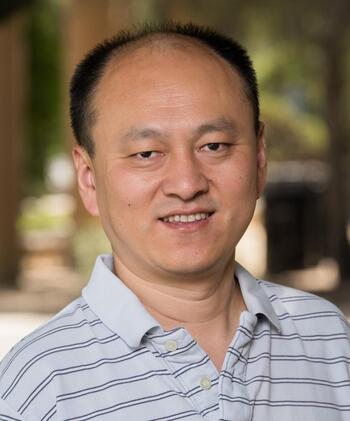
Portrait of Yuen Yuen Ang
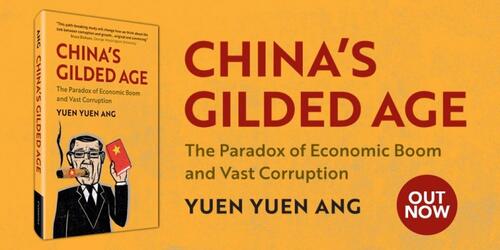
Yuen Yuen Ang is a PhD graduate of Stanford University, where she studied comparative political economy with a focus on China. She is the inaugural recipient of the Theda Skocpol Prize, awarded by the American Political Science Association for “impactful empirical, theoretical and/or methodological contributions to the study of comparative politics.” She was also named an Andrew Carnegie Fellow for “high-caliber scholarship that applies fresh perspectives to the most pressing issues of our times.” Her first, award-winning book, How China Escaped the Poverty Trap (2016), is acclaimed as “game changing” and “field shifting.” It received the Peter Katzenstein Prize in Political Economy, the Viviana Zelizer Prize in Economic Sociology, and was named “Best of Books 2017″ by Foreign Affairs. The sequel to this book, China’s Gilded Age: the Paradox of Economic Boom & Vast Corruption, is released in 2020. It was featured in The DiplomatThe Economist, and The Wire China. She is an associate professor in political science at the University of Michigan and previously a faculty member at Columbia University SIPA.

Image
Cover of "China's Gilded Age" by Yuen Yuen Ang


Image
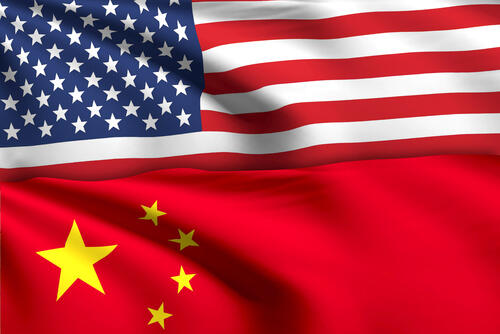
American and Chinese flags
This event is part of the 2021 Winter/Spring Colloquia series, Biden’s America, Xi’s China: What’s Now & What’s Next?, sponsored by APARC's China Program.


Via Zoom Webinar. Register at: https://bit.ly/3cEtX5f

Yuen Yuen Ang Associate Professor of Political Science, University of Michigan
Seminars
Authors
News Type
News
Date
Paragraphs

Can China’s aggression towards Taiwan be stopped? Oriana Skylar Mastro joins the Munk Debate podcast to argue affirmatively that Chinese military capability has advanced too far for the United States to credibly deter the PRC through military means alone. Michael Beckley, an associate professor of political science at Tufts University and visiting scholar at the American Enterprise Institute, offers the rebuttal. The full debate is available below.

[Subscribe to our newsletters to stay up to date on our scholars’ latest work.]

Many of China’s military development goals were set with a target date of 2020, which means the PRC is currently in a strong place with its offensive and defensive capabilities. By Mastro’s measure, China now has the most advanced ballistic missile program in the world, including the United States. For Taiwan, this means the reality of an aggressive neighbor who possesses offensive weapons that are very difficult to defend against.

China also has geographic benefits when it comes to offensive maneuvering. If a hot conflict began, neither Taiwan nor the United States has a comparable network of sole-sovereign military bases in the area such as China’s. Not only does this mean China can utilize its air defense capabilities — again, now one of the strongest in the world, by Mastro’s account — but it can also support a robust blockade against Taiwan across the strait and devastate the island both militarily and economically.

As Mastro points out, “Taiwan’s economy completely depends on China, so if China decided to use economic coercion, which is defined as a type of aggression, the United States has absolutely no way of protecting Taiwan from any economic harm coming from the PRC.”

Because of this potential for combined military and economic aggression, Mastro pushed for urgency on deterrence in Taiwan. “The United States and international community do not have forever. The Chinese are not happy with maintaining the status quo, and they will soon believe they have the military capability to [take Taiwan].”

Rather than continuing to act alone, Mastro hopes the United States will lead out in organizing an international coalition that includes other regional partners such as Australia, Japan, and India as actively contributing participants. With the United States no longer seen as a monolith in Beijing, only broad, coordinated cooperation will provide effective deterrence and security for Taiwan.

On another podcast, Conversation Six, Mastro joins Abraham Denmark to discuss China's Taiwan strategy and what the United States can do to deter China from invading Taiwan. The threat of non-military intervention by the United States and its allies is the way forward, she says. "The US needs to do more in non-military realms," she argues.

Read More

Oriana Skylar Mastro testifies to the U.S.-China Economic and Security Review Commission on Taiwan deterrence.
News

Oriana Skylar Mastro Testifies on Deterring PRC Aggression Toward Taiwan to Congressional Review Commission

China may now be able to prevail in cross-strait contingencies even if the United States intervenes in Taiwan’s defense, Chinese security expert Oriana Skylar Mastro tells the U.S.-China Economic and Security Review Commission. Changes must be made to U.S. military capabilities, not U.S. policy, she argues.
Oriana Skylar Mastro Testifies on Deterring PRC Aggression Toward Taiwan to Congressional Review Commission
Photograph of Xi Jinping and Vladmir Putin walking in front of two lines of armed Chinese soldiers
News

Military Competition with China: Harder to Win Than During the Cold War?

On February 10th, the APARC China Program hosted Professor Oriana Mastro to discuss military relations between the US and China, and why deterrence might be even more difficult than during the Cold War.
Military Competition with China: Harder to Win Than During the Cold War?
Hero Image
[Left] Graphic of missile, Taiwan flag, and China flag; [Right] Oriana Skylar Mastro Munk Debates
All News button
1
Subtitle

The United States can no longer rely solely on its own military capability or influence to deter Chinese aggression against Taiwan, argues Oriana Skylar Mastro on a new episode of the Munk Debates podcast. Credible pushback can now only be achieved through international coalitions.

Subscribe to China