News Type
News
Date
Paragraphs

Applications are open for the China Scholars Program, an intensive, college-level online course on contemporary China for U.S. high school students. The China Scholars Program (CSP) is offered by the Stanford Program on International and Cross-Cultural Education (SPICE), Stanford University, and is open to rising 10th, 11th, and 12th graders. Due to the pandemic, for 2021 only, students who are taking a “gap year”—who have graduated from high school but are not yet enrolling in college—are also eligible to apply.


Stanford University China Scholars Program for high school students
Fall 2021 session (late August through December)
Application period: April 28 to June 15, 2021


The CSP’s goal is to offer high-achieving high school students across the United States a comprehensive distance-learning course on contemporary China, with an emphasis on how the United States and China have influenced and understood each other in recent history. Current issues are placed in broader historical and cultural contexts, and both American and Chinese viewpoints are represented.

Accepted applicants will explore China from different disciplinary perspectives, spanning politics, economics, social issues, culture, and the arts. In real-time conversations with leading scholars, experts, and diplomats from Stanford University and other institutions, participants will be exposed to the cutting edge of U.S.–China relations and scholarship. Students who complete the online course will be equipped with a rare degree of expertise about China and international relations that may have a significant impact on their choice of study and future career.

“The CSP has opened up my eyes to China and its role in the world,” says Angela Li, a recent alum of the program. “While we were examining multiple facets of China from experts in the field, we were also encouraged to make connections and think critically. The class structure forced me to take the basic facts and examine them to create my own conclusions in ways I had never experienced in the classroom before.”

The Fall 2021 cohort of China Scholars will comprise high school students from across the United States. The diversity of student backgrounds and experiences will create an especially rich exchange of ideas and perspectives among the young scholars—a crucial and invaluable component of the learning experience.

“My classmates were truly brilliant students who brought various perspectives I would not have seen anywhere else,” reflects Li. “I thoroughly enjoyed the CSP and hope other students can too learn about the wonders of China.”

More information on the China Scholars Program is available at http://chinascholars.org. Interested high school students can apply now at https://spicestanford.smapply.io/prog/china_scholars_program/. The deadline to apply is June 15, 2021.

To be notified when the next China Scholars Program application period opens, join our email list or follow us on Facebook, Twitter, and Instagram.


The China Scholars Program is one of several online courses for high school students offered by SPICE, Stanford University, including the Reischauer Scholars Program (on Japan), the Sejong Korea Scholars Program, the Stanford e-Japan Program (on U.S. society, offered to high school students in Japan), and the Stanford e-China Program (on technologies changing the world, offered to high school students in China).

Read More

Valerie Wu at Stanford University, August 10, 2018
Blogs

China Scholars Program Instructor Dr. Tanya Lee Interviewed by US-China Today

Lee shares her experience teaching the CSP and discusses an upcoming cross-cultural collaboration between American and Chinese high school students.
China Scholars Program Instructor Dr. Tanya Lee Interviewed by US-China Today
group of students taking a photo in front of a building
Blogs

China Scholars Program: East Asia Through a STEM Lens

The following reflection is a guest post written by Mallika Pajjuri, an alumna of the China Scholars Program and the Reischauer Scholars Program. She is now a student at MIT.
China Scholars Program: East Asia Through a STEM Lens
Hero Image
Stanford University Hoover Tower
Stanford University Hoover Tower; photo courtesy Ian Mackey on Unsplash
All News button
1
Authors
Callista Wells
News Type
News
Date
Paragraphs

On April 21, 2021, the APARC China Program hosted Professor Erin Baggott Carter, Assistant Professor in the Department of Political Science and International Relations, University of Southern California, and Visiting Scholar at the Stanford Center on Democracy, Development and the Rule of Law. Her program, "When Beijing Goes to Washington: Autocratic Lobbying Influence in Democracies," explored how lobbying from China and China-based companies can affect policy in the United States. Professor Jean Oi, William Haas Professor of Chinese Politics and director of the APARC China Program, moderated the event.

Professor Baggot Carter based her talk on a dataset drawn from the public records of the US Foreign Agents Registration Act, which includes over 10,000 lobbying activities undertaken by the Chinese government between 2005 and 2019. According to Baggot Carter, the evidence suggests that Chinese government lobbying makes legislators at least twice as likely to sponsor legislation that is favorable to Chinese interests. Moreover, US media outlets that participated in Chinese-government sponsored trips subsequently covered China as less threatening. Coverage pivoted away from US-China military rivalry and the CCP’s persecution of religious minorities and toward US-China economic cooperation. These results suggest that autocratic lobbying poses an important challenge to democratic integrity. Watch now: 

Read More

National Emblem of the People's Republic of China on the Great Hall of the People
News

What’s ‘Communist’ about the Communist Party of China?

Is the Chinese Communist Party really communist at all? Expert Jude Blanchette, Freeman Chair in China Studies at the Center for Strategic and International Studies, weighs in.
What’s ‘Communist’ about the Communist Party of China?
American and Chinese flags
News

U.S.-China Relations in the Biden Era

Dr. Thomas Wright examines the recent history of US-China relations and what that might mean for the new administration.
U.S.-China Relations in the Biden Era
Hero Image
United States Capitol Building from an angle Photo by Harold Mendoza on Unsplash
All News button
1
Subtitle

Professor Erin Baggot Carter tells us how autocratic lobbying affects political outcomes and media coverage in democracies.

-

* Please note all CISAC events are scheduled using the Pacific Time Zone.


This event is co-sponsored by the Project on Russian Power and Purpose in the 21st Century and the Center for International Security and Cooperation.


Seminar Recording:  https://youtu.be/gDD68gqClt8


About the Event: Media and public discussions tend to understand Russian politics as a direct reflection of Vladimir Putin’s seeming omnipotence or Russia’s unique history and culture. Yet Russia is similar to other autocracies—and recognizing this illuminates the inherent limits to Putin’s power. Weak Strongman challenges the conventional wisdom about Putin’s Russia, highlighting the difficult trade-offs that confront the Kremlin on issues ranging from election fraud and repression to propaganda and foreign policy.

Drawing on three decades of his own on-the-ground experience and research as well as insights from a new generation of social scientists that have received little attention outside academia, Timothy Frye reveals how much we overlook about today’s Russia when we focus solely on Putin or Russian exceptionalism. Frye brings a new understanding to a host of crucial questions: How popular is Putin? Is Russian propaganda effective? Why are relations with the West so fraught? Can Russian cyber warriors really swing foreign elections? In answering these and other questions, Frye offers a highly accessible reassessment of Russian politics that highlights the challenges of governing Russia and the nature of modern autocracy.

Rich in personal anecdotes and cutting-edge social science, Weak Strongman offers the best evidence available about how Russia actually works.


Book Purchase: https://press.princeton.edu/books/hardcover/9780691212463/weak-strongman

Discount Code: FRYE 30%


About the Speaker: Timothy Frye is the Marshall D. Shulman Professor of Post-Soviet Foreign Policy at Columbia University and Co-Director of the International Center for the Study of Institutions and Development at the Higher School of Economics, Moscow. He is also the Editor of Post-Soviet Affairs.

Professor Frye received a B.A. in Russian language and literature from Middlebury College in 1986, an M.I.A. from Columbia's School of International and Public Affairs in 1992, and a Ph.D. from Columbia in 1997. He served as the Director of the Harriman Institute from 2009-2015 and as Chair of the Political Science Department from 2016-18.

Virtual Seminar

Timothy Frye Professor Columbia University
Seminars
Paragraphs
Cover of 'Essays on the Rise of China and Its Implicaitons'

What are China's intentions in the South China Sea? In The 2020-21 Wilson China Fellowship: Essays on the Rise of China and Its Implications, Oriana Skylar Mastro uses a two-part analytical framework to outline why she believes China is trying to establish de facto control over the South China Sea. This means sovereignty over the disputed islands and the ability to dictate the rules of behavior in the surrounding waters. These intentions are detrimental to U.S. and allied interests. Mastro goes on to provide a list of recommended measures the United States can take to prevent Beijing from incrementally advancing its control over the South China Sea including:

  • The United States should expand and increase the tempo of its military operations in the SCS to show that China has not dissuaded the United States by increasing the risk to U.S. forces.
     
  • In the military realm, the United States should prioritize coalition building to ensure a free and open South China Sea.
     
  • The United States should specify that its U.S. alliance commitments extend to protection of countries’ rights within their EEZs.
     
  • To further increase costs to China, the United States could warn Beijing that it may reconsider its neutral position on the sovereignty of the South China Sea disputed islands to support claimants with less expansive and restrictive EEZ claims unless China moderates its EEZ claims and agrees to international law positions on maritime rights.
     
  • The United States should respond immediately to each aggressive act China takes in these waters, regardless of its target. Moreover, the United States should be sure to respond even when a treaty ally is not involved—this would stress that the United States is serious about protecting international norms, regardless of who the transgressors are and what the violation is.
     
  • When China commits an act of aggression or coercion, the Chinese assets or organizations involved should not determine the U.S. response. Instead, the United States should feel free to respond to paramilitary actors as it would to military actors.
     
  • To reconstitute its deterrent, the United States should seek military access to new partner facilities in the SCS. The United States should also improve the quality of other claimants’ maritime reconnaissance and surveillance capabilities and build their defensive capabilities.
     
  • Lastly, the United States should spearhead and prioritize a diplomatic solution to the South China Sea disputes, with or without China. Countries in the region disagree with China’s interpretation of international law. If the rest of the claimants agree about the islands’ sovereignty and the rights granted by those islands and ask the international community to help enforce the agreement, China will have difficulty pushing its claims and pressuring states unilaterally to concede to its demands. If Beijing refuses to follow these rules, Washington should form a coalition to restrict China’s access to technology and related information. Washington should even threaten to expel Beijing from the relevant international regimes.
Read Oriana's essay, "Chinese Intentions on the South China Sea"
Download pdf
Oriana Skylar Mastro

Oriana Skylar Mastro

Oriana Skylar Mastro is a Center Fellow at the Freeman Spogli Institute for International Studies where she works with APARC and the Center for International Security and Cooperation (CISAC) researching Chinese military and security policy.
Meet Oriana
All Publications button
1
Publication Type
Policy Briefs
Publication Date
Journal Publisher
Wilson China Fellowship
Authors
Oriana Skylar Mastro
-

The six Asian countries examined in the new book Shifting Gears in Innovation Policy — China, India, Japan, Singapore, South Korea, and Taiwan — have achieved high economic growth in many industrial sectors, but the catch-up phase of their growth is over or ending. These countries can no longer rely on importing or imitating new technologies from abroad. Rather, they must develop their own innovations to maintain growth. The traditional industrial policy tools they often used to advance “innovation” by selecting promising industries and diverting resources to them are no longer effective. Indeed, governments in Asia have recently put forward new policies, such as China’s push for mass entrepreneurship and innovation. It is at this juncture that the authors of Shifting Gears reassess Asia’s innovation and focus on national strategies and regional cluster policies that can promote indigenous entrepreneurship and innovation in the larger Asia-Pacific. In this virtual book launch, contributing chapter authors join Yong Suk Lee to discuss their findings.

SPEAKERS

Image
Edison Tse
Edison Tse is an Associate Professor in the Department of Management Science & Engineering at Stanford University. He is also the Director of Asia Center of Management Science and Engineering, which has the charter of conducting research on the growth of emerging economy in Asia, with a special focus in China, Korea and India. In 1973, he received the prestigious Donald Eckman Award from the American Automatic Control Council in recognition of his outstanding contribution in the field of Automatic Control. In 2003, he received the Golden Nugget Award from General Motors R & D and Planning. In 2008, he received the Dean’s Award for Industry Education Innovation from School of Engineering, Stanford University. He had served as an Associate Editor of the IEEE Transactions of Automatic Control, and a co-editor of the Journal of Economic Dynamics and Control, which he co-founded. Since 2003, he dedicated his research effort in dynamic entrepreneurial strategy and transformation of Chinese production economy to innovation economy. He wrote a book in Chinese entitled “源创新”on this theory and published in China in 2012. A second edition of this book, with new chapters incorporating some experiences of practicing the theory in China, was published in 2016 by China CITIC Press with a new title “重新定义创新(Redefine Innovation)”. He is now working on the extension of this theory to developing countries. His main thesis is that innovation is cultural dependent. Successful innovation in a developing country must be synergistic to its culture, its political, social and economic environment. Professor Edison Tse received his BS, MS, and Ph.D. in Electrical Engineering from Massachusetts Institute of Technology. 

Image
Dinsha Mistree
Dinsha Mistree is a Lecturer and Research Fellow in the Rule of Law Program at Stanford Law School. In his research, he examines how formal legal systems sometimes can sometimes stimulate economic development, while at other times these same systems can hold back development. His work considers incentives for innovation and entrepreneurship, meritocracy in public administration and education, and drivers of economic development more broadly. Much of Dr. Mistree’s research focuses on India and other South Asian countries. His work has appeared or is forthcoming at Social Science and MedicineStanford Law Review, and Cambridge University Press. Dr. Mistree holds a PhD and an MA in Politics from Princeton University and an SM in Political Science from MIT.

Image
Michelle Hsieh
Michelle F. Hsieh is an Associate Research Fellow in the Institute of Sociology, Academia Sinica, Taipei, Taiwan. She received her PhD (in Sociology) from McGill University, Montreal, Canada, and was a Shorenstein Postdoctoral Fellow at the Shorenstein Asia-Pacific Research Center at Stanford University. Her research interests include economic sociology, sociology of development, comparative political economy, and East Asian societies. Her ongoing research explores the variations and consequences of industrial upgrading among the East Asian latecomers. She has done empirical analysis of the different configurations of the state-society linkages for innovation through comparative industry studies on Taiwan and South Korea. Her investigations focus on how technology learning and adaptation take place in a decentralized system of SME network production and the institutional arrangements that can facilitate or hinder coordination and collaboration. Other research interests are the origins of the East Asian developmental state and the connection between technological development and Cold War geopolitics in the latter half of the twentieth century. 

Image
WoonJoon Kim
Wonjoon Kim is the Head of the Graduate School of Innovation and Entrepreneurship, a Professor at the School of Business and Technology Management, KAIST. He is also the Director of KAIST Center for Innovation Strategy and Policy. He has been conducting and publishing numerous researches on the strategic management of innovation of firms, industry, and governments centering on emerging innovation paradigms. His current research interest also covers the changing nature of innovation, including AI and industrial and social change, the convergence of technology as well as the changing nature of the process of entrepreneurship. Currently, he is the President of Asia Innovation and Entrepreneurship Association (AIEA), Organizing Committee Chair for the AIEA-NBER Conference and a Vice President of the Korean Society for Innovation Management and Economics. He is also serving as the Editor of the Journal of Technology Innovation, and an Editorial Board Member for several journals on innovation such as Technovation, Innovation Studies. Before he joined KAIST, he has been an Adjunct-Assistant Professor at the Department of Economics, NYU as and a Research Fellow at the Yale School of Management. He holds a Ph.D. in Economics of Innovation including Science and Technology Policy from Seoul National University. 

MODERATOR 

Yong Suk Lee, SK Center Fellow at the Freeman Spogli Institute for International Studies and Deputy Director of the Korea Program at the Walter H. Shorenstein Asia-Pacific Research Center at Stanford University. 

This event is being held virtually via Zoom. Please register for the webinar via the following link: https://bit.ly/3axXNab

Edison Tse <br><i>Associate Professor in the Department of Management Science & Engineering at Stanford University</i><br><br>
Dinsha Mistree <br><i>Research Fellow and Lecturer at the Program in the Rule of Law at Stanford Law School</i><br><br>
Michelle Hsieh <br><i>Associate Research Fellow in the Institute of Sociology, Academia Sinica, Taipei, Taiwan</i><br><br>
Wonjoon Kim <br><i>Head of the Graduate School of Innovation and Entrepreneurship and Professor at the School of Business and Technology Management at KAIST</i><br><br>
Panel Discussions
-

* Please note all CISAC events are scheduled using the Pacific Time Zone.


This event is co-sponsored by the Freeman Spogli Institute for International Studies and the Center for International Security and Cooperation.


Seminar Recording: https://youtu.be/s3MMxYH6bfU


About the Event: Rose Gottemoeller served as the US chief negotiator of the New START treaty. The first woman to lead a major nuclear arms negotiation, she played a critical role in creating US policy on arms control and ensuring that a deeply divided Congress came together to ratify the treaty to safeguard the future of all Americans.  

In her new book, Negotiating the New START Treaty, Gottemoeller gives an insider’s account of the negotiations between the US and Russian delegations in Geneva in 2009 and 2010.  

On May 21, at 1p Pacific, Gottemoeller will discuss her book, her years of high-level experience and her analysis of the complicated relationship between the US and Russia with Michael McFaul, director of the Freeman Spogli Institute for International Studies and the former US Ambassador to Russia.  

Gottemoeller and McFaul were in the trenches together during the negotiations--he in the White House, she in Geneva. In this online event, they will discuss the New START treaty and the key role it played in President Obama's nuclear policies. 

McFaul will interview Gottemoeller and moderate a Q&A with the audience. This event is co-sponsored by the Freeman Spogli Institute for International Studies and the Center for International Security and Cooperation. 


About the Speaker: Rose Gottemoeller is the Frank E. and Arthur W. Payne Distinguished Lecturer at Stanford University's Freeman Spogli Institute for International Studies and its Center for International Security and Cooperation.

Before joining Stanford Gottemoeller was the Deputy Secretary General of NATO from 2016 to 2019, where she helped to drive forward NATO’s adaptation to new security challenges in Europe and in the fight against terrorism.  Prior to NATO, she served for nearly five years as the Under Secretary for Arms Control and International Security at the U.S. Department of State, advising the Secretary of State on arms control, nonproliferation and political-military affairs. While Assistant Secretary of State for Arms Control, Verification and Compliance in 2009 and 2010, she was the chief U.S. negotiator of the New Strategic Arms Reduction Treaty (New START) with the Russian Federation.

Prior to her government service, she was a senior associate with the Carnegie Endowment for International Peace, with joint appointments to the Nonproliferation and Russia programs. She served as the Director of the Carnegie Moscow Center from 2006 to 2008, and is currently a nonresident fellow in Carnegie's Nuclear Policy Program. She is also a research fellow at the Hoover Institution. 

At Stanford, Gottemoeller teaches and mentors students in the Ford Dorsey Master’s in International Policy program and the CISAC Honors program; contribute to policy research and outreach activities; and convene workshops, seminars and other events relating to her areas of expertise, including nuclear security, Russian relations, the NATO alliance, EU cooperation and non-proliferation.

Virtual Seminar

Center for International Security and Cooperation
Encina Hall
616 Jane Stanford Way
Stanford University
Stanford, CA 94305-6165

0
William J. Perry Lecturer, Freeman Spogli Institute
Research Fellow at the Hoover Institution
dsg_gottemoeller.jpg

Rose Gottemoeller is the William J. Perry Lecturer at Stanford University's Freeman Spogli Institute for International Studies and Research Fellow at the Hoover Institute.

Before joining Stanford Gottemoeller was the Deputy Secretary General of NATO from 2016 to 2019, where she helped to drive forward NATO’s adaptation to new security challenges in Europe and in the fight against terrorism.  Prior to NATO, she served for nearly five years as the Under Secretary for Arms Control and International Security at the U.S. Department of State, advising the Secretary of State on arms control, nonproliferation and political-military affairs. While Assistant Secretary of State for Arms Control, Verification and Compliance in 2009 and 2010, she was the chief U.S. negotiator of the New Strategic Arms Reduction Treaty (New START) with the Russian Federation.

Prior to her government service, she was a senior associate with the Carnegie Endowment for International Peace, with joint appointments to the Nonproliferation and Russia programs. She served as the Director of the Carnegie Moscow Center from 2006 to 2008, and is currently a nonresident fellow in Carnegie's Nuclear Policy Program.  

At Stanford, Gottemoeller teaches and mentors students in the Ford Dorsey Master’s in International Policy program and the CISAC Honors program; contributes to policy research and outreach activities; and convenes workshops, seminars and other events relating to her areas of expertise, including nuclear security, Russian relations, the NATO alliance, EU cooperation and non-proliferation. 

Date Label
Seminars
-

To watch the recording of the event, click here.

This event is made possible by generous support from the Korea Foundation and other friends of the Korea Program.

This event is part of Shorenstein APARC's spring webinar series "The United States in the Biden Era: Views from Asia."

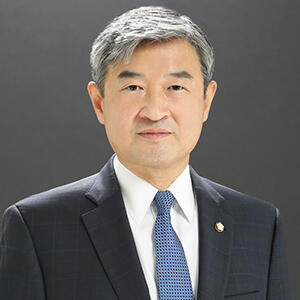
Many Koreans were relieved by Biden's victory but were left wondering where his policy toward China and North Korea would be heading. Under Biden, Koreans expect better alliance management but are concerned that North Korean nuclear issues may not get much attention. They also watch his China policy closely, as the US-China conflict puts South Korea in a difficult position of having to choose one or the other. In light of the upcoming Biden-Moon summit, two leading experts of national security and trade in South Korea, Congressman Taeyong Cho and Professor Dukgeun Ahn of Seoul National University, will discuss these issues in a moderated conversation with APARC and Korea Program director Gi-Wook Shin.

Speakers:

Image
Taeyong Cho, Congressman and former National Security Adviser of South Korea.

Taeyong Cho is a Member of the National Assembly of the Republic of Korea. He serves in the Committee on Foreign Affairs and Unification as well as the Committee on Intelligence. He is a member of the conservative People Power Party, the largest opposition party. Before being elected to the National Assembly in 2020, he served in government for 37 years, mostly in the Foreign Ministry. He served as Deputy Director of the Presidential Office of National Security and as Vice Foreign Minister. He also served as Korean Ambassador to Australia and to Ireland. After retirement in 2017, Ambassador Cho taught at Yonsei University as visiting professor and spent a year in Tokyo as visiting fellow at Keio University. He wrote regular columns in major newspapers and spoke at forums in Korea and abroad. He received B.A. in political science from Seoul National University and studied at Oxford University, Foreign Service Program. 

Image
Dukgeun Ahn, Professor of International Trade Law and Policy at Seoul National University. Speaker of May 11, 2021.

Dukgeun Ahn is Dean of International Affairs and Professor of International Trade Law and Policy at Seoul National University. Professor Ahn has taught at various universities including Columbia University, Singapore National University, University of Barcelona in Spain, World Trade Institute in Switzerland as well as regularly at the World Trade Organization (WTO) for government officials. He served, among others, as Commissioner of the Korea Trade Commission, Member of National Economic Advisory Council and Chair for CPTPP Strategy Forum. Professor Ahn was President of the Korean Association of Trade and Industry Studies in 2020 and the Korean Society of Trade Remedies in 2019-2020. He holds a Ph.D. in economics and J.D. (Member of New York Bar) from the University of Michigan.

Via Zoom: Register at https://bit.ly/3xe3J1K

-

* Please note all CISAC events are scheduled using the Pacific Time Zone.


Seminar Recording: https://youtu.be/zXMKvurtEw0


About the Event: Dan Baer, Senior Fellow at the Carnegie Endowment for International Peace, will join Rose Gottemoeller in a fireside chat to speak about the OSCE’s important role as an inclusive platform for security dialogue between the West and Russia and as a valuable instrument for practical cooperation on the ground to address common security challenges on the basis of shared commitments. The OSCE seeks to promote security in the larger context of relations among the states of North America, Europe and Eurasia, including Russia and all the states of the former Soviet Union and those European states that are not members of NATO or the EU.In an era of increasing challenges to multilateralism, this unique element of the Euroatlantic/Eurasian security architecture should be better recognized and utilized. While the OSCE emerged from the Cold War, today's challenges invite a reinvigoration its role as a diplomatic and operational platform. The US has long seen the OSCE as an important vehicle within the European security scene, and with the new administration’s commitment to multilateralism, it will be interesting to observe what role the US will take within the Organization on topics ranging from conventional arms control and confidence- and security-building measures to the security challenges of climate change and human rights. At the same time, while what were once Russian hopes that the OSCE would become a kind of alternative to NATO have dissipated, it is an open question whether Russia will choose to leverage the OSCE as one of the few remaining forums where Russia's engagement and cooperation with European and North American partners can deliver positive impacts on shared challenges.


About the Speaker: Dan Baer is a Senior Fellow at the Carnegie Endowment for International Peace. He served in Governor John Hickenlooper’s cabinet as executive director of the Colorado Department of Higher Education from 2018-2019. He was U.S. ambassador to the Organization for Security and Cooperation in Europe (OSCE) from 2013 to 2017.  Previously, he was a Deputy Assistant Secretary of State for Democracy, Human Rights, and Labor from 2009-2013.

Before his government service, Baer was an assistant professor at Georgetown’s McDonough School of Business, a Faculty Fellow at Harvard’s Safra Center for Ethics, and a project leader at The Boston Consulting Group. He has appeared on CNN, Fox, MSNBC, BBC, PBS Frontline, Al Jazeera, Sky, and The Colbert Report and his writing has appeared in The Washington Post, The Wall Street Journal, USA Today, Foreign Affairs, Politico, The Christian Science Monitor, Foreign Policy, The Chronicle of Higher Education, Westword, The Denver Post, and other publications. He holds a doctorate in International Relations from Oxford and a degree in Social Studies and African American Studies from Harvard. He lives in Denver and is married to Brian Walsh, an economist at The World Bank.

Virtual Seminar

Dan Baer Senior Fellow Carnegie Endowment for International Peace
Seminars
Authors
Kiyoteru Tsutsui
News Type
Commentary
Date
Paragraphs

This op-ed by Kiyoteru Tsutsui originally appeared in Nikkei Asia.


In one of the few unscripted moments in the meticulously planned U.S.-Japan summit meeting last Friday, President Joe Biden referred to Prime Minister Yoshihide Suga as "vice president" before quickly correcting himself.

In a different era, this could have turned into a diplomatic incident, with right-leaning Japanese pundits calling it evidence of the U.S.'s patronizing approach to Japan. Fortunately for Biden, the current geopolitical environment is not conducive to such provocation, and no major media picked up on the slip.

[Subscribe to APARC's newsletters to receive updates on our scholars.]

Much has been made of Suga being the first foreign leader to meet Biden in person. According to the U.S. State Department Office of the Historian, this is only the second time ever that a Japanese prime minister became the first foreign leader to meet a new president in the White House.

The other time was in 1989, when Prime Minister Noboru Takeshita visited President George H.W. Bush. Back then, Japan was a major threat to U.S. economic hegemony. Today, China is that threat, and not just in the economic domain. China is the first bona fide competitor to the U.S. since the Soviet Union, and its threat extends to every nook and cranny of the globe.

To counter China's ascension, the U.S. needs its allies, and Japan is the most important partner for that purpose. This is the context in which Suga visited the White House despite all the COVID-related restrictions.

Not surprisingly, the statements were carefully crafted to send strong signals to China. Building on the two-plus-two dialogue in March, the joint statement touched on the importance of peace and stability in the Asia-Pacific, from the East and South China seas to even Hong Kong, Xinjiang and Taiwan.

Japan certainly wanted a reference to the Senkaku Islands, which Beijing claims and calls the Diaoyu, and the applicability there of Article V of the U.S.-Japan Treaty of Mutual Cooperation and Security. The Biden administration had made that commitment earlier, calming concerns among Japanese leaders that the new administration may be softer on China than the Trump administration.

Biden has, in fact, been quite tough on China and has given almost a perfect answer to what Japanese foreign policymakers wanted. In return, the U.S. wanted Japan to be squarely on Washington's side. The wording of the joint statement — negotiated until the last minute — saw Japan agree to include a reference to Taiwan for the first time in 52 years, but with Japan's preferred wording, encouraging "the peaceful resolution of the cross-Strait issues."

Predictably, China reacted quickly and strongly, accusing the two countries of interfering in its domestic affairs and warning Japan about siding with the U.S. We have yet to see what retaliatory actions China might take, but the reference to Taiwan signals the beginning of a new trilateral relationship between China, Japan and the U.S.

The summit covered other important issues, all with China in the background. One key issue is economic security. In particular, supply chain decoupling will become a battle cry for the U.S. and its allies as they seek to reduce dependence on materials from China. Semiconductors are especially critical, as they power all the major growth areas in the new economy. Taiwan's dominance in the semiconductor industry is the main reason why Taiwan is so important to both sides.

To remain in the driver's seat in the new economy, the joint statement announced a new U.S.-Japan Competitiveness and Resilience (CoRe) Partnership. The most concrete proposal was an initial commitment of $4.5 billion from the two governments toward fifth generation (5G) and 6G networks, reflecting concerns about China's dominance in the key digital infrastructure of the future.

Human rights is another thorny issue, with the joint statement specifying concerns over Xinjiang and Hong Kong. With some companies joining the boycott campaign on cotton from Xinjiang, and China countering by criticizing racial division in the U.S., the clash between China and the U.S. will intensify in this area as well. Japan has stepped out of its comfort zone and criticized China on human rights, following the American approach more explicitly than before. In this regard, it is notable that Suga also referred to rising violence against Asians in the U.S.

One area in which China might be more of a partner than a competitor is climate change, with all three countries committing to zero emissions by mid-21st century. Almost concurrently with the Biden-Suga meeting, American and Chinese climate envoys — John Kerry and Xie Zhenhua — met in China and issued a joint statement affirming their commitment to work together on global climate challenges.

All these initiatives and commitments are potentially meaningful and consequential developments that can reshape the Indo-Pacific, although more concrete ideas are needed before we can evaluate their impact. The biggest take-away ought to be the confirmation that the U.S.-Japan alliance is gearing up for a new era of competition with China.

Japan more than reaffirmed its commitment to the alliance with the U.S., risking its economic relations with China. The U.S. will be sure to ask for more concrete actions from Japan on the basis of the joint statement, and Japan can no longer evade questions about what it would do in a confrontation with China. Japan has to navigate a tough terrain of standing with the U.S. in the competition with China while preventing the escalation of tensions between Beijing and Washington, and at the same time protecting its own national interests.

A new phase of the trilateral relationship has just begun, and like it or not, other Asian nations might face the same decision that Japan faced, and sooner rather than later.

Read More

Protesters hold signs and chant slogans during a Black Lives Matters Peaceful March on June 14, 2020 in Tokyo, Japan.
Commentary

What Japan and the U.S. Can Learn from Each Other

Japan Program Director Kiyoteru Tsutsui explores the cost of racial division versus the cost of homogeneity by comparing the experiences of Japan and the United States.
What Japan and the U.S. Can Learn from Each Other
President Biden walks past a row of Chinese and American flags.
News

APARC Experts on the Outlook for U.S.-Asia Policy Under the Biden Administration

Ahead of President-elect Biden’s inauguration and on the heels of the attack on the U.S. Capitol by a pro-Trump mob that has left America shaken, an APARC-wide expert panel provides a region-by-region analysis of what’s next for U.S. policy towards Asia and recommendations for the new administration.
APARC Experts on the Outlook for U.S.-Asia Policy Under the Biden Administration
President-elect Joe Biden and Chinese President Xi Jinping
News

Biden Administration Will Rely On U.S. Allies for Support as Tensions with China Continue to Rise

On the World Class Podcast, international security expert Oriana Skylar Mastro says conflict between China and Taiwan is plausible within the next 15 years, and the U.S. will likely be involved.
Biden Administration Will Rely On U.S. Allies for Support as Tensions with China Continue to Rise
Hero Image
President Biden and President Suga walk through the Rose Garden colonnade at the White House Getty Images
All News button
1
Subtitle

The time is near when other Asian nations will have to pick a side in the great power competition between the United States and China, says Japan Program Director Kiyoteru Tsutsui.

Authors
News Type
Q&As
Date
Paragraphs

Hong Kong is a geographically, culturally, and historically unique city. Shan Huang, a Stanford doctoral candidate in anthropology, is fascinated by how the history and culture of “Asia’s World City” continue to affect its social and political development.

predoctoral fellow at APARC during the 2020-21 academic year, Shan researches urban studies and contemporary social movements with a focus on Hong Kong and mainland China. His dissertation examines how the Hong Kong government’s developmental schemes are confronted by grassroots actions aimed at democratizing urban planning and promoting alternative urban futures.

APARC introduced the predoctoral fellowship in January 2021 as part of our expanded funding and training offerings in response to the harsh impacts of the COVID-19 pandemic on students' academic careers and their access to future jobs and valuable work experience, and in recognition of the critical need to make the field of Asian Studies more diverse and inclusive.

We chatted with Shan to learn more about how his study of anthropology informs his research interests, how's he has spent his time away from Stanford during the pandemic closures, and how he's planning for the future in unpredictable times.

[Subscribe to APARC's newsletters to hear about other opportunities at APARC.]


Tell us about your dissertation and research interests. What initially drew you to these topics?

My current research broadly concerns the contested field of urban politics in which established regimes of “development” meet various sociopolitical demands and cultural aspirations that call these regimes into question. My dissertation, Land, Democracy, and the Urban Future: An Ethnography of Political Culture in Late Colonial Hong Kong, examines how Hong Kong government’s developmental schemes are confronted by grassroots actions that aim at democratizing land-use planning and promoting alternative urban futures. A full-length ethnography of Hong Kong's political culture, it also seeks to reflect on urbanism of our times.

With characteristic images filled with skyscrapers and dense residential buildings, Hong Kong is typically portrayed as an urban miracle. In contrast, my main fieldwork was conducted in the massive countryside of the metropolis. There, I followed the path of a network of advocate groups, local residents, and activists who are invested in reviving agriculture, studying local history, and strengthening community ties through experimental social projects. In revitalizing the villages that many of them used not to be familiar with, they are also exploring how to make new environmental, social, and political visions tangible and participatory for ordinary citizens. It is these methodologies of envisioning that interest me the most.

I was initially drawn to this research on a field trip to Hong Kong’s countryside during the Inter-Asia Cultural Studies Summer School at Lingnan University in 2016. Thanks to the wonderful tours led by local activists and researchers, I came to be fascinated by the anti-displacement campaigns there and the question of how the urban-rural connections shape what we know as “Hong Kong.”

What’s something unexpected that you’ve learned through the course of your research?

The most unexpected experience during the course of my research in Hong Kong was certainly my witness of the 2019-2020 protest movements triggered by the Extradition Law Amendment Bill. As an anthropologist trying to understand Hong Kong’s political culture, I learned from this game-changing event about the limit of my field. As I wrote elsewhere, it means the government’s exhaustion of strategies of control, which, read in the longer trajectory of the city’s social and political transformation, suggests the furthest extent to which the post-Handover arrangement can win consensus among citizens. I also think that the failed politics of land-use planning, which is another field of civil participation, may also serve as a concrete example that explains how this grand limit has eventually arrived, though in a less eventful manner.

When you’re not working on your dissertation, what kinds of things have you done to stay grounded during this year of quarantine?

In the first few months of quarantine, I couldn’t do much on my dissertation, so I started learning more cooking skills by watching videos by vloggers who specialize in Chinese cuisines. After I relocated to China in the past summer, I had the chance to cook for my extended family a few times with all I had learned and they seemed to really like it!

How have the unusual circumstances of this past year and your time as a remote predoctoral fellow at APARC affected your research goals?

I was fortunate to complete the main part of my fieldwork before the COVID-19 pandemic, so I’m very lucky in that. The main challenge regarding my predoctoral fellowship is that I couldn’t join as many APARC/FSI talks as I wish due to the awkward time difference!

Where are you hoping your interests take you after you receive your degree from Stanford?

One practical thing I’ve learned during the pandemic is the need to be prepared for sudden changes in plans. This is particularly true and challenging for the community of floating, “international” scholars to which I belong. My hope is to still find an academic home where I can teach and polish my work, but I am also trying to be more poised for other possibilities. In the end, perhaps learning how to relax about some planning and expectations is not a bad thing either.

Read More

Spring blooms in the courtyard near History Corner, Stanford University.
News

APARC Names 2021-22 Shorenstein Postdoctoral Fellows

Political scientist Dr. Diana Stanescu and sociologist Mary-Collier Wilks will join APARC as Shorenstein postdoctoral fellows on contemporary Asia for the 2021-22 academic year.
APARC Names 2021-22 Shorenstein Postdoctoral Fellows
[Left] Postdoc Spotlight, Jeffrey Weng, Shorenstein Postdoctoral Fellow in Contemporary Asia, [Right] Jeffrey Weng
Q&As

Postdoc Spotlight: Jeffrey Weng on Language and Society

Shorenstein Postdoctoral Fellow in Contemporary Asia Jeffrey Weng shares insights from his research into how language and society shape one another, particularly how the historical use of Mandarin affects contemporary Chinese society and linguistics.
Postdoc Spotlight: Jeffrey Weng on Language and Society
Stanford campus, main quad with cloudy sky
News

APARC Offers Fellowship and Funding Opportunities to Support, Diversify Stanford Student Participation in Contemporary Asia Research

The Center has launched a suite of offerings including a predoctoral fellowship, a diversity grant, and research assistant internships to support Stanford students interested in the area of contemporary Asia.
APARC Offers Fellowship and Funding Opportunities to Support, Diversify Stanford Student Participation in Contemporary Asia Research
Hero Image
[Left] Hong Kong skyline; [Right] Encina Hall, Stanford Florian Wehde, Unsplash
All News button
1
Subtitle

Meet Shan Huang, a Stanford doctoral candidate in anthropology and a 2020-21 APARC predoctoral fellow, whose dissertation provides an ethnographic account of Hong Kong’s political culture in the post-Handover era.

Subscribe to China