Test Event Location
-
Testing the manual entry of venue locations
Paul Brest Hall
555 Salvateria Way
Stanford University
Debbie & Andrea
Lectures

Testing the manual entry of venue locations
Paul Brest Hall
555 Salvateria Way
Stanford University
Kate Starbird is a Visiting Assistant Professor at the Cyber Policy Center and Associate Professor at the Department of Human Centered Design & Engineering (HCDE) at the University of Washington (UW). Starbird’s research is situated within human-computer interaction (HCI) and the emerging field of crisis informatics—the study of the how information-communication technologies (ICTs) are used during crisis events. One aspect of her research focuses on how online rumors spread during natural disasters and man-made crisis events. More recently, she has begun to focus on disinformation and other forms of strategic information operations online. She is a co-founder and executive council member of the UW Center for an Informed Public. Starbird earned her PhD from the University of Colorado at Boulder in Technology, Media and Society and holds a BS in Computer Science from Stanford University.
Seminar Recording: https://youtu.be/qpUNQ9BgpPg
About this Event: There is growing alarm over how drugs empower terrorists, insurgents, militias, and gangs. But by looking back not just years and decades but centuries, Peter Andreas reveals that the drugs-conflict nexus is actually an old story, and that powerful states have been its biggest beneficiaries. In his new book, Killer High, Andreas shows how six psychoactive drugs-ranging from old to relatively new, mild to potent, licit to illicit, natural to synthetic-have proven to be particularly important war ingredients. This sweeping history tells the story of war from antiquity to the modern age through the lens of alcohol, tobacco, caffeine, opium, amphetamines, and cocaine. Beer and wine drenched ancient and medieval battlefields, and the distilling revolution lubricated the conquest and ethnic cleansing of the New World. Tobacco became globalized through soldiering, with soldiers hooked on smoking and governments hooked on taxing it. Caffeine and opium fueled imperial expansion and warfare. The commercialization of amphetamines in the twentieth century energized soldiers to fight harder, longer, and faster, while cocaine stimulated an increasingly militarized drug war that produced casualty numbers surpassing most civil wars. As Andreas demonstrates, armed conflict has become progressively more drugged with the introduction, mass production, and global spread of mind-altering substances. As a result, we cannot understand the history of war without including drugs, and we similarly cannot understand the history of drugs without including war. From ancient brews and battles to meth and modern warfare, drugs and war have grown up together and become addicted to each other.
Speaker's Biography:
Peter Andreas is the John Hay Professor of International Studies at Brown University, where he holds a joint appointment between the Department of Political Science and the Watson Institute for International and Public Affairs. Andreas has published ten books, including Smuggler Nation: How Illicit Trade Made America. He has also written for publications such as Foreign Affairs, Foreign Policy, The Guardian, Harper's, The Nation, The New Republic, Slate, The New York Times, and The Washington Post.
Livestream: This event will not be live-streamed or recorded.
Abstract: Despite a lull after the fall of the Soviet Union, grassroots activism in Russia is on the rise. The protests for free elections that swept across Russia in the summer of 2019 may have captured international headlines, but many other Russian grassroots groups have been actively organizing over the last decade. What types of civic movements exist in today’s Russia? What are the risks that civic activists face? How do they interact with the state or state-protected interest groups? Finally, what role could grassroots groups play in democratizing Russia? Russian activist Evgeniya Chirikova will shed light on these questions through her personal experience as an environmental activist and as a coordinator of Activatica.org, an online news platform covering grassroots activism across Russia.
Speaker's Biography:
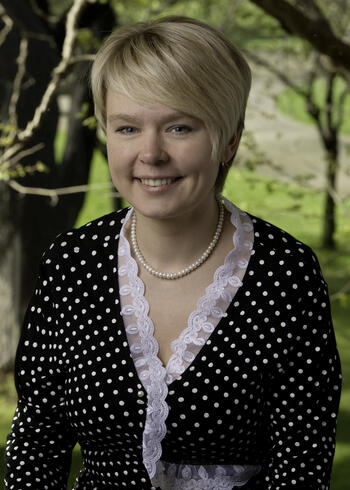
Evgeniya Chirikova is a Russian environmental activist, primarily known for opposing the building of a motorway through the Khimki forest near Moscow. She also played a prominent role in the 2011-2012 Russian protests following disputed parliamentary elections in Russia. In March 2011, she received the Woman of Courage Award, handed over by US Vice President Joe Biden. In 2012, she was a winner of the Goldman Environmental Prize. In November 2012, Foren Policy named Chirikova one of its 2012 Top 100 Global Thinkers. In 2015 Chirikova organized the portal activatica.org, and she is currently organizing media support for grassroots groups.Image
Seminar Recording: https://youtu.be/nTFLMMdK9Zc
Abstract: What is Putin up to? In this lecture, Taylor argues that Russian foreign policy is best understood as a product of both Russian power and purpose. Purpose is understood as the worldview and mentality of Team Putin, which Taylor has defined as “The Code of Putinism” (as elaborated in his 2018 book of that name). Power and purpose combined produce a foreign policy strategy driven by Russia’s consistent attempts to “punch above its weight.” The disjuncture between this Russian mentality and foreign policy strategy and traditional US approaches to world politics explain the current low point in US-Russian relations.
Speaker's Biography:
 Brian Taylor
Jacquelyn Schneider is a Hoover Fellow at the Hoover Institution. Her research focuses on the intersection of technology, national security, and political psychology with a special interest in cybersecurity, unmanned technologies, and Northeast Asia.
Her work has appeared in Security Studies, Journal of Conflict Resolution, Strategic Studies Quarterly, and Journal of Strategic Studies and is featured in Cross Domain Deterrence: Strategy in an Era of Complexity (Oxford University Press, 2019). Her current manuscript project is The Rise of Unmanned Technologies with Julia Macdonald (upcoming, Oxford University Press). In addition to her scholarly publications, she is a frequent contributor to policy outlets, including Foreign Affairs, CFR, Cipher Brief, Lawfare, War on the Rocks, Washington Post, Bulletin of the Atomic Scientists, National Interest, H-Diplo, and the Center for a New American Security.
In 2018, Schneider was included in CyberScoop’s Leet List of influential cyber experts. She is also the recipient of a Minerva grant on autonomy (with co-PIs Michael Horowitz, Julia Macdonald, and Allen Dafoe) and a University of Denver grant to study public responses to the use of drones (with Macdonald). She was awarded best graduate paper for the International Security and Arms Control section of the International Studies Association, the Foreign Policy Analysis section of the International Studies Association, and the Southwest Social Science Association.
She is an active member of the defense policy community with previous positions at the Center for a New American Security and the RAND Corporation. Before beginning her academic career, she spent six years as an Air Force officer in South Korea and Japan and is currently a reservist assigned to US Cyber Command. She has a BA from Columbia University, MA from Arizona State University, and PhD from George Washington University.
Consumption is a major driver of national economies, and scholars often study important differences across consumption patterns across countries, which influence many aspects of their societies and economies. Yet, the underlying business of logistics operations, and how they support countries’ respective retail industries, has as much, if not more impact than simply examining consumer behavior. In this public forum, Ryuichi Kakui, with deep expertise in eCommerce logistics, will explain how logistics are used in retail industries, comparing across the world’s three largest economies: the US, China, and Japan. He will introduce the concept of strategic logistics thinking and the “4C” framework and informs leading strategic logistics thinking. A conversation with Kenji Kushida, who examines how technologies and specific industry dynamics shape varying models of political economies around the world, will then link the area of logistics and retail to important systemic differences and underlying similarities across the world’s leading economies, which are pursuing contrasting models of social, economic, and political organization.
Image
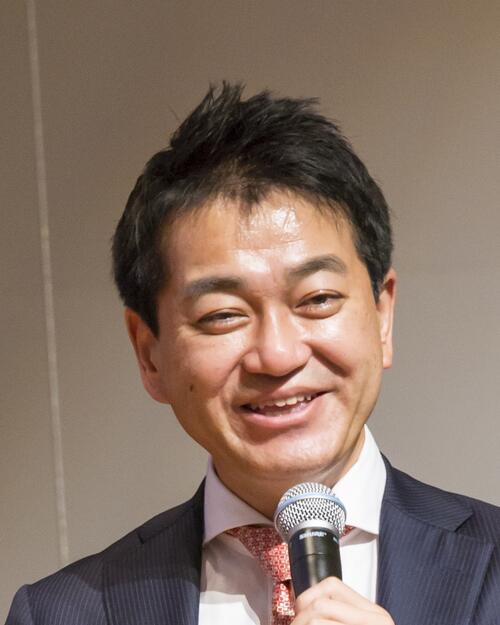
Ryoichi Kakui is the founder of E-Logit, the leading eCommerce logistics company in Japan. He has published 29 books related to logistics, Amazon, and “omnichannel” distribution, which have been published in Japan, the US, China, Taiwan, South Korea, and Vietnam. He is a frequent commentator on television, radio, newspapers, magazines, and other media. Educated in Sophia University in Japan with an MBA from Golden Gate University, he founded UKETORU in 2015, a app addressing the issue of re-delivery, which escalated to a social issue in Japan.
Image

Kenji Kushida is a research scholar at the Japan Program at the Walter H. Shorenstein Asia-Pacific Research Center at Stanford University. One of this research themes examines how IT technologies shape political economies around the world, and how varying national political economic models shape the development trajectories of technologies. He leads the Silicon Valley – New Japan Project, a sustained platform for research and collaboration between Silicon Valley and the new and emerging aspects as Japan transforms itself.
Please note there is significant construction taking place on campus, which is greatly affecting parking availability and traffic patterns at the university. Please plan accordingly. Open parking at Stanford University available starting 4:00pm unless otherwise marked. Nearest parking garage is Structure 7, below the Graduate School of Business Knight School of Management.
This posting, my eighth annual edition, comes again from our mid-sized corn, soybean, and cattle farm in Linn County, Iowa. My wife and I may not be typical owners, but our farming operation is a fair representation of what is happening in rural America. The overwhelming reaction for 2019 is, “Wow, what a difference a year makes.” In 2018, growing conditions were practically perfect; in 2019, almost nothing has gone right.
Not since the early 1980s can I recall seeing so many glum faces around the farmer coffee table at the local diner. And it is more than just the lousy coffee that prompts the scowls. Our spring was the wettest in recorded history. There was severe flooding from both the Mississippi and Missouri Rivers, and from most of the streams in between. Plantings of corn and soybeans were delayed, and substantial acres did not get planted at all—more than 400,000 acres in Iowa alone. About 75% of the corn is typically planted by May 15th in our region. This year, less than 25% was in the ground, and the wet cold soil left crops that were planted looking yellow and puny.
“Prevented acres” (those fields that farmers were prevented from planting) became a hot topic of conversation, as everyone re-read their crop-insurance contracts to see what was needed to qualify, and who actually determined what was prevented. Discussions on whether it was wiser financially to plant late, with expectations of a small crop that could well suffer frost damage, or whether to claim prevention, led to some very interesting new principles of cost accounting! Calculations and comparisons were complex, but farmers who chose the prevent option received about $400 per acre. Those who planted very late, and rolled the dice with respect to their regular crop-insurance, still eagerly await harvest outcomes.
If April 15-June 15 was unbelievably wet, June 15-August 15 was unbelievably dry during the critical period for corn pollination and grain filling. Rainfall was 4 inches less than normal, and inch-wide cracks opened in the soil. Corn on sandy knolls began to burn and many stalks failed to “shoot” ears. Many of the ears that were produced were small and poorly filled with kernels. Pastures also dried up, and we began feeding supplemental hay to our cow herd in July. During the week of August 18th, we finally received two inches of rain—too late to make much difference to the corn crop, but offering some hope for reasonable soybean yields. One of my more sacrilegious friends suggested that the mid-August rain was god’s way of suckering famers into farming for another year.
To make matters worse, eastern Iowa now has a new invasive pathogen—tar spot in corn. Tar spot is a fungus that literally blew in from Mexico. Spores rode winds from a hurricane into Indiana and Illinois in 2016, and now they have migrated to Iowa. Our corn varieties have little resistance to it, and while breeders will probably breed in resistance within a couple of years, farmers are now short-run losers. Yesterday’s debate over coffee was whether, with both low crop prices and low expected yields, it paid to spray aerially for tar spot and other fungi. (The application costs about $25 per acre for both the fungicide and for flying it on.) For our farm, we decided to take our chances on damages and not to spray. Who knows if that was the right decision.
Perhaps the only thing that farmers agree on is that NO ONE has a good grasp on the size of the U.S. corn crop—not farmers or traders, and certainly not the Department of Agriculture (USDA). For whatever reasons, local producers believe that the USDA is fudging the expected numbers upward on both expected yields and planted acre, with consequent negative effects on corn markets. A sad sign of the times occurred during a recent mid-western tour of crop conditions. The tour included members of USDA’s statistical team. But after threats to their personal safety were deemed credible, the USDA recalled its members from the tour. No one whom I know ever thought that the comment “farmers were up in arms” would need to be taken literally.
More generally, the growing frustration and anger with Washington has replaced talk about the best new tractors and pickups—no one is buying. Farmers were furious over the Environmental Protection Agency’s (EPA) decision to provide waivers on ethanol requirements for 31 refineries, and a failure to move more generally to an E15 standard. And after a decades-long attempt to build an Asian soybean market, farmers feel seriously victimized by the President’s trade policy (though interestingly, it is often the USDA and the EPA rather than the President who are blamed). Farmers will certainly cash the checks from the new $14 billion Market Facilitation Plan, but they are extremely worried about the loss of long-term market shares. Farmers who grow either soybeans or corn in our county this year will receive (potentially) $66 per acre. Only the first half ($33) of the payment is now guaranteed; the remaining half of the payment is conditional on what the USDA says are “market conditions and trade opportunities.” Farmers are still scratching their heads about the operational meaning of those concepts.
In some years, strong livestock profits help offset poor crop yields and prices. But 2019 has not been one of those years. Whereas 2018 saw quite high profits from pigs, 2019 saw a decline in lean pork prices from $.92 per pound in May to $.62 in August. Pork exports were disrupted by trade arrangements with Mexico. And in China, despite needs arising from African swine fever, the 66% tariff caused a 4% decline in pork shipment from the U.S. during the first half of 2019. Cattle fared little better. Prices for slaughter steers started at about $1.40 per pound in March. But by August, prices had slipped to about $1.05 per pound. To add insult to injury, a fire caused temporary closure of a very large packing plant in Kansas, which slaughters about 6,000 head per day (5% of total U.S. capacity). This accident, in turn, caused an overnight drop of $0.10 per pound. The $0.45 per pound drop in price between March and August of “what might have been” tallies up to the equivalent of about $500 per animal—the difference between very handsome profits and devastating losses.
Taken together, readers now understand why my report this year has taken the form of a lament. In a recent Farm Futures survey of 1,150 farmers, 53% said that 2019 was the worst year they had ever experienced. And readers will also understand why the Secretary of Agriculture, Sonny Perdue, was roundly booed for his attempt at humor during a recent farm tour: “What do you call two Iowa farmers locked in a basement—a ‘whine’ cellar.”
*********************
The State Fair is a big deal for Iowans. (So big, in fact, that by law public schools cannot start until the Fair is over.) In 2019, more than 1 million visitors participated in state-fair activities, which is remarkable in a state with a total population of only 3.2 million, and with only three cities of greater than 100,000 in population. Of course, this year’s attendance, in preparation for the Iowa political caucuses, was inflated by an invasion of politicians and media personnel! During fair week, 24 Democratic presidential candidates showed up—22 on a single weekend. They not only cluttered the fair concourses, but they also tied up the airway, internet, and transport systems.
It was quite a spectacle. There were the obligatory candidate pictures—viewing the sculpted butter cow, eating corn dogs, turning steaks on a grill, and for the geographically venturesome, a shot in front of a corn ethanol plant. Some even tried the dill-pickle ice cream. And poor “Captain,” Iowa’s largest boar (1,254 pounds), was exhausted by week’s end by all of the celebrity photo ops!
With all of the visiting candidates, Soap Box Corner was unusually crowded. Joe Biden and Elizabeth Warren essentially tied in the informal straw poll at the fair, with Pete Buttigieg and Bernie Sanders finishing third and fourth. For the most part, candidates said what farmers wanted to hear. Speakers generally spoke in favor of ethanol (some even liked E15); were against the current trade policy; and were mostly silent on climate change. Wearing my professorial hat, I am not sure that many of them would pass Ag101—even using Stanford’s liberal grading standards.
Few candidates spoke with much nuance about agriculture. Many seemed to be thinking about an agriculture that perhaps existed in Iowa during the 1960s—one in which younger farmers had farming systems producing a broad array of crop and livestock products. But that is hardly the current reality. What I found most surprising was the implicit view that Iowa’s 87,000 famers were a set of small homogeneous farm units. In fact, there are huge economic and political differences among three groups.
One set contains a sizable number of retired farms which typically own moderate amounts of land that they now rent to others. For this group, health insurance, declining land rents and social security are uppermost in their minds. A second group is a younger, more venturesome group of farmers, who may own 160 acres, but who are aggressively trying to buy or rent an additional 1,000-2,000 acres. They also carry large loans for land and for huge machinery inventories. For them, trade policy, interest rates, crop insurance, and health insurance are central matters of concern. There is also a third set, comprised of multiple family generations, often organized as family corporations, who are intermediate in their ownership patterns, debt obligations, and political concerns. None of the three groups is very happy, but it is the second set that has local bankers worried, since delinquent farm loans have now risen to a 20-year high.
But farmers often sound like baseball players. “Just wait until next year.”
***************************
Perhaps next year—god willing and the creek don’t rise—my report will be more upbeat. At least we will know the outcome of the Iowa Caucuses. Maybe we will also know if the August 29 Bloomberg Report,“ U.S. Farmers May be Angrier, but Their Trump Love is Growing”, continues into 2020. But as 2016 showed, what farmers tell pollsters about their political preferences always deserves a fair amount of skepticism. On our farm, we will at least know the actual size of the 2019 corn crop, and whether our switch from Angus to Simmental bulls increased the rates-of-gain of our steers.
In the meantime, it is back to Stanford—without a pitchfork—to duel with some of the brightest of the “Z” generation, and to work on a global food-security assessment for 2050.
During the academic year, Walter Falcon is the Helen C. Farnsworth Professor of International Agricultural Policy, Emeritus, at Stanford; and senior fellow, emeritus, at the the Freeman Spogli Institute for International Studies and the Stanford Woods Institute for the Environment. He is the former deputy director of the Center on Food Security and the Environment. He spends summer with his wife, Laura, on their farm near Marion, Iowa. (wpfalcon@stanford.edu)

Abstract: We have learned a great deal about Iraq since the fateful decision to invade the country in 2003. Given academic research on Iraqi society and politics over the past 16 years and hard won lessons from U.S. intervention in Iraq, what what are the lessons learned for contemporary U.S. policymakers? And, crucially, what role should Iraq play in current U.S. foreign policy and its regional strategy toward the Middle East?
Seminar Recording: https://youtu.be/4OBQOshr-gs
Speakers:
Colin H. Kahl Co-director of the Center for International Security and Cooperation, the inaugural Steven C. Házy Senior Fellow at the Freeman Spogli Institute for International Studies, and a Professor, by courtesy, in the Department of Political Science at Stanford University.
Brett McGurk Frank E. and Arthur W. Payne Distinguished Lecturer at the Freeman Spogli Institute and Center for Security and Cooperation at Stanford University.
With moderator: Lisa Blaydes
Professor of Political Science at Stanford University and a Senior Fellow at the Freeman Spogli Institute for International Studies
Speaker's Biography:

From October 2014 to January 2017, he was Deputy Assistant to the President and National Security Advisor to the Vice President. In that position, he served as a senior advisor to President Obama and Vice President Biden on all matters related to U.S. foreign policy and national security affairs, and represented the Office of the Vice President as a standing member of the National Security Council Deputies’ Committee. From February 2009 to December 2011, Dr. Kahl was the Deputy Assistant Secretary of Defense for the Middle East at the Pentagon. In this capacity, he served as the senior policy advisor to the Secretary of Defense for Egypt, Iran, Iraq, Israel and the Palestinian territories, Saudi Arabia, Syria, Yemen, and six other countries in the Levant and Persian Gulf region. In June 2011, he was awarded the Secretary of Defense Medal for Outstanding Public Service by Secretary Robert Gates.
From 2007 to 2017 (when not serving in the U.S. government), Dr. Kahl was an assistant and associate professor in the Security Studies Program at Georgetown University's Edmund A. Walsh School of Foreign Service. From 2007 to 2009 and 2012 to 2014, he was also a Senior Fellow at the Center for a New American Security (CNAS), a nonpartisan Washington, DC-based think tank. From 2000 to 2007, he was an assistant professor of political science at the University of Minnesota. In 2005-2006, Dr. Kahl took leave from the University of Minnesota to serve as a Council on Foreign Relations International Affairs Fellow in the Office of the Secretary of Defense, where he worked on issues related to counterinsurgency, counterterrorism, and responses to failed states. In 1997-1998, he was a National Security Fellow at the John M. Olin Institute for Strategic Studies at Harvard University.
Current research projects include a book analyzing American grand strategy in the Middle East in the post-9/11 era. A second research project focuses on the implications of emerging technologies on strategic stability.
He has published numerous articles on international security and U.S. foreign and defense policy in Foreign Affairs, Foreign Policy, International Security, the Los Angeles Times, Middle East Policy, the National Interest, the New Republic, the New York Times, Politico, the Washington Post, and the Washington Quarterly, as well as several reports for CNAS.
His previous research analyzed the causes and consequences of violent civil and ethnic conflict in developing countries, focusing particular attention on the demographic and natural resource dimensions of these conflicts. His book on the subject, States, Scarcity, and Civil Strife in the Developing World, was published by Princeton University Press in 2006, and related articles and chapters have appeared in International Security, the Journal of International Affairs, and various edited volumes.
Dr. Kahl received his B.A. in political science from the University of Michigan (1993) and his Ph.D. in political science from Columbia University (2000).
Brett McGurk is the Frank E. and Arthur W. Payne Distinguished Lecturer at the Freeman Spogli Institute and Center for Security and Cooperation at Stanford University.Image

McGurk’s research interests center on national security strategy, diplomacy, and decision-making in wartime. He is particularly interested in the lessons learned over the presidencies of George W. Bush, Barack Obama, and Donald Trump regarding the importance of process in informing presidential decisions and the alignment of ends and means in national security doctrine and strategy. At Stanford, he will be working on a book project incorporating these themes and teaching a graduate level seminar on presidential decision-making beginning in the fall of 2019. He is also a frequent commentator on national security events in leading publications and as an NBC News Senior Foreign Affairs Analyst.
Before coming to Stanford, McGurk served as Special Presidential Envoy for the Global Coalition to Defeat ISIS at the U.S. Department of State, helping to build and then lead the coalition of seventy-five countries and four international organizations in the global campaign against the ISIS terrorist network. McGurk was also responsible for coordinating all aspects of U.S. policy in the campaign against ISIS in Iraq, Syria, and globally.
McGurk previously served in senior positions in the George W. Bush and Barack Obama administrations, including as Special Assistant to President Bush and Senior Director for Iraq and Afghanistan, and then as Deputy Assistant Secretary of State for Iraq and Iran and Special Presidential Envoy for the U.S. campaign against the Islamic State under Obama.
McGurk has led some of the most sensitive diplomatic missions in the Middle East over the last decade. His most recent assignment established one of the largest coalitions in history to prosecute the counter-ISIS campaign. He was a frequent visitor to the battlefields in both Iraq and Syria to help integrate military and civilian components of the war plan. He also led talks with Russia over the Syria conflict under both the Trump and Obama administrations, initiated back-channel diplomacy to reopen ties between Iraq and Saudi Arabia, and facilitated the formation of the last two Iraqi governments following contested elections in 2014 and 2018.
In 2015 and 2016, McGurk led fourteen months of secret negotiations with Iran to secure the release of Washington Post reporter Jason Rezain, U.S. Marine Amir Hekmati, and Pastor Saad Abadini, as well as three other American citizens.
During his time at the State Department, McGurk received multiple awards, including the Distinguished Honor Award and the Distinguished Service Award, the highest department awards for exceptional service in Washington and overseas assignments.
McGurk is also a nonresident senior fellow in the Middle East Program at the Carnegie Endowment for International Peace.
McGurk received his JD from Columbia University and his BA from the University of Connecticut Honors Program. He served as a law clerk to Chief Justice William H. Rehnquist on the U.S. Supreme Court, Judge Denis Jacobs on the U.S. Court of Appeals for the 2d Circuit, and Judge Gerard E. Lynch on the U.S. District Court for the Southern District of New York.
Abstract:
Scholars and policymakers maintain that economic growth requires strong legal institutions that can ensure competitive markets. Developing countries are therefore encouraged to create efficient judiciaries that protect property rights, enforce contracts, settle disputes, and provide antitrust and bankruptcy regulation. Although this market-enhancing model for development is widely accepted, several of the fastest growing economies have not pursued such legal reforms, instead allowing certain actors to dominate their legal institutions and markets. To understand why theory and reality diverge, we examine legal changes in India, a country that experienced slow growth in its early decades yet is currently one of the fastest growing economies in the world. We find that India’s growth miracle is at least partly attributable to weak legal institutions and uncompetitive markets. As the Indian economy matures, however, we suspect market-enhancing legal reforms will be required to sustain growth. More generally, market-enhancing legal reforms need to be designed and pursued carefully, taking into account the structure and size of the economy.
Speaker(s) Bio:
CDDRL
Stanford University
Encina Hall, C144
616 Jane Stanford Way
Stanford, CA 94305-6055
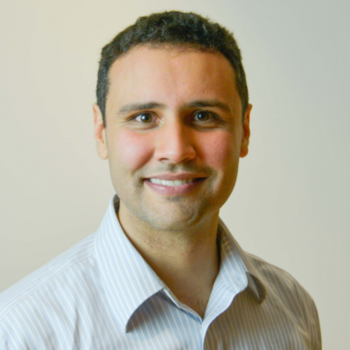
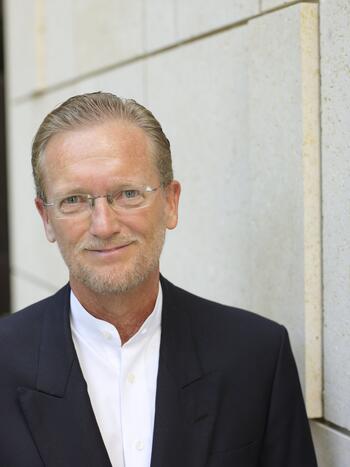
Erik Jensen holds joint appointments at Stanford Law School and Stanford’s Center on Democracy, Development and the Rule of Law. He is Lecturer in Law, Director of the Rule of Law Program at Stanford Law School, an Affiliated Core Faculty at Stanford’s Center on Democracy, Development and the Rule of Law, and Senior Advisor for Governance and Law at The Asia Foundation. Jensen began his international career as a Fulbright Scholar. He has taught and practiced in the field of law and development for 35 years and has carried out fieldwork in approximately 40 developing countries. He lived in Asia for 14 years. He has led or advised research teams on governance and the rule of law at the World Bank, the Asian Development Bank and the African Development Bank. Among his numerous publications, Jensen co-edited with Thomas Heller Beyond Common Knowledge: Empirical Approaches to the Rule of Law (Stanford University Press: 2003).
At Stanford, he teaches courses related to state building, development, global poverty and the rule of law. Jensen’s scholarship and fieldwork focuses on bridging theory and practice, and examines connections between law, economy, politics and society. Much of his teaching focuses on experiential learning. In recent years, he has committed considerable effort as faculty director to three student driven projects: the Afghanistan Legal Education Project (ALEP) which started and has developed a law degree-granting programs at the American University of Afghanistan (AUAF), an institution where he also sits on the Board of Trustees; the Iraq Legal Education Initiative at the American University of Iraq in Sulaimani (AUIS); and the Rwanda Law and Development Project at the University of Rwanda. He has also directed projects in Bhutan, Cambodia and Timor Leste. With Paul Brest, he is co-leading the Rule of Non-Law Project, a research project launched in 2015 and funded by the Global Development and Poverty Fund at the Stanford King Center on Global Development. The project examines the use of various work-arounds to the formal legal system by economic actors in developing countries. Eight law faculty members as well as scholars at the Freeman Spogli Institute are participating in the Rule of Non-Law Project.