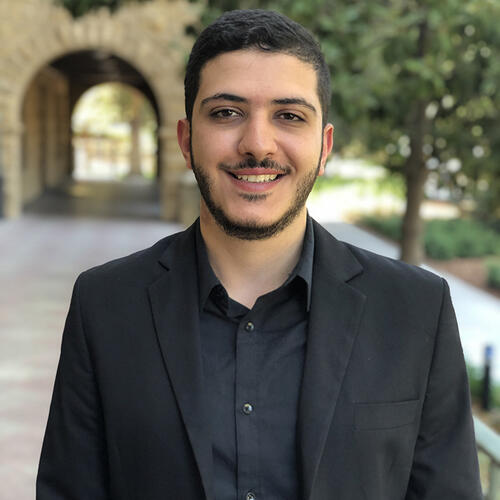
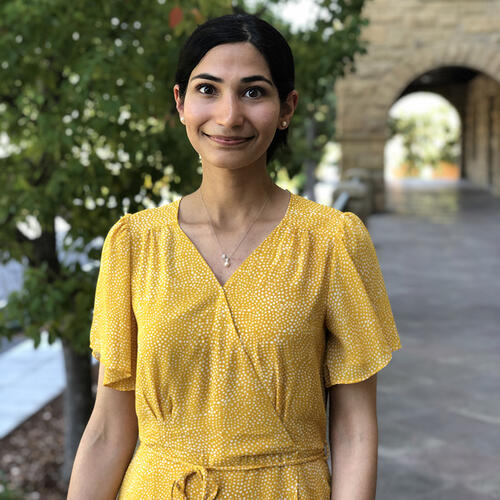
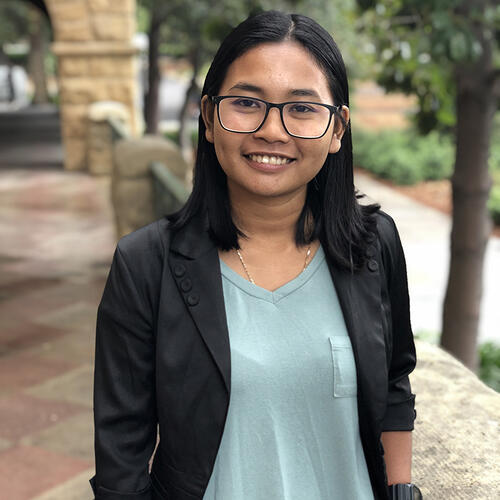
-

Abstract:

Community-driven development programs that decentralized administrative, fiscal, and political functions have become a popular policy tool to deliver public services.  We study a large reform in the city of Delhi that decentralized the management of discretionary school budgets to elected bodies of parents.  Using household surveys, non-participant observation in schools, semi-structured interviews, and administrative data we ask if decentralization has brought expenditures closer in line to the preferences of parents?  We find that expenditures are heavily skewed to the preferences of more traditionally powerful actors, namely men and members of the government bureaucracy.


Speaker Bio:

Image
emmerich davies
Emmerich Davies specializes in education policy and politics, the political economy of development, and the politics of service provision, with a regional focus on South Asia.  His work has been published in Comparative Political Studies.  His book manuscript examines the growth of non-state service provision in low-income democracies, and the consequences for democratic politics. Davies earned his B.A. in Economics and Political Science with honors from Stanford University in 2007, worked for two years for the Abdul Latif Jameel Poverty Action Lab in Kolkata, India, and Ph.D. in Political Science from the University of Pennsylvania.  He is on leave for the 2019-2020 as the W. Glenn Campbell & Rita Ricardo-Campbell National Fellow and the Susan Louise Dyer Peace Fellow at the Hoover Institution.

Emmerich Davies Assistant Professor of International Education at the Harvard Graduate School of Education
Seminars
0
Research Scholar
Graham Webster

Graham Webster is a research scholar in the Program on Geopolitics, Technology, and Governance and editor-in-chief of the DigiChina Project at the Center for International Security and Cooperation at Stanford University. He researches, writes, and teaches on technology policy in China and US-China relations.

Before bringing DigiChina to Stanford in 2019, he was its cofounder and coordinating editor at New America, where he was a China digital economy fellow. From 2012 to 2017, Webster worked for Yale Law School as a senior fellow and lecturer responsible for the Paul Tsai China Center’s Track II dialogues between the United States and China and co-taught seminars on contemporary China and Chinese law and policy. While there, he was an affiliated fellow with the Yale Information Society Project, a visiting scholar at China Foreign Affairs University, and a Transatlantic Digital Debates fellow with New America and the Global Public Policy Institute in Berlin. He was previously an adjunct instructor teaching East Asian politics at New York University and a Beijing-based journalist writing on the Internet in China for CNET News. 

In recent years, Webster's writing has been published in MIT Technology Review, Foreign Affairs, Slate, The Wire China, The Information, Tech Policy Press, and Foreign Policy. He has been quoted by The Wall Street Journal, The New York Times, The Washington Post, and Bloomberg and spoken to NPR and BBC World Service. Webster has testified before the US-China Economic and Security Review Commission and speaks regularly at universities and conferences in North America, East Asia, and Europe. His chapter, "What Is at Stake in the US–China Technological Relationship?" appears in The China Questions II (Harvard University Press, 2022).

Webster holds a bachelor's in journalism and international studies from Northwestern University and a master's in East Asian studies from Harvard University. He took doctoral coursework in political science at the University of Washington and language training at Tsinghua University, Peking University, Stanford University, and Kanda University of International Studies.

Editor-in-Chief, DigiChina
Date Label
Paragraphs

The substantial social and economic burden attributable to smoking is well‐known, with heavy smokers at higher risk of chronic disease and premature mortality than light smokers and nonsmokers. In aging societies with high rates of male smoking such as in East Asia, smoking is a leading preventable risk factor for extending lives (including work‐lives) and healthy aging. However, little is known about whether smoking interventions targeted at heavy smokers relative to light smokers lead to disproportionately larger improvements in life expectancy and prevalence of chronic diseases and how the effects vary across populations.

Using a microsimulation model, the authors examine the health effects of smoking reduction by simulating an elimination of smoking among subgroups of smokers in South Korea, Singapore, and the United States. They find that life expectancy would increase by 0.2 to 1.5 years among light smokers and 2.5 to 3.7 years among heavy smokers. Whereas both interventions led to an increased life expectancy and decreased the prevalence of chronic diseases in all three countries, the life‐extension benefits were greatest for those who would otherwise have been heavy smokers. The authors' findings illustrate how smoking interventions may have significant economic and social benefits, especially for life extension, that vary across countries.

All Publications button
1
Publication Type
Journal Articles
Publication Date
Journal Publisher
Health Economics
Authors
Karen Eggleston
Authors
Gary Mukai
News Type
News
Date
Paragraphs

The Elgin Heinz Outstanding Teacher Award recognizes exceptional teachers who further mutual understanding between Americans and Japanese. EngageAsia administers the Elgin Heinz Outstanding Teacher Award, which is funded by the United States-Japan Foundation. The 2019 Award focused on the humanities and the 2020 Award will focus on Japanese language. It is named in honor of Elgin Heinz for his commitment to educating students about Asia as well as for the inspiration he has provided to the field of pre-collegiate education.


On December 5, 2019, SPICE’s Stanford e-Japan Instructor and Manager Waka Takahashi Brown was presented with the 2019 Elgin Heinz Outstanding Teacher Award for her teaching excellence with Stanford e-Japan, an online course that introduces U.S. society and culture and U.S.–Japan relations to high school students in Japan. Stanford e-Japan is currently supported by the Yanai Tadashi Foundation. Initial funding for Stanford e-Japan was provided by the U.S.-Japan Foundation.

“Waka walks in the footsteps of Elgin Heinz as a key leader in educating the next generation about the U.S.–Japan relationship,” stated David Janes, Chair of the Board, EngageAsia. Heinz was born in China in 1913 and taught in the San Francisco Unified School District for 40 years. Challenging Americans’ lack of knowledge about Asia was central to Elgin’s life’s work. Janes has overseen the Elgin Heinz Outstanding Teacher Award since its inception in 2001. Daniel Tani, Director of Foundation Grants at the U.S.-Japan Foundation, and Janes formally presented the award to Brown.

In addition to teaching Stanford e-Japan for the last five years, Brown previously served as instructor for SPICE’s Reischauer Scholars Program (RSP). The RSP is an online course that introduces Japanese society and culture and U.S.–Japan relations to high school students in the United States. Current RSP Instructor and Manager Naomi Funahashi is a 2017 Elgin Heinz Outstanding Teacher Award recipient.

Waka Brown, Professor Daniel Okimoto, and Miles Brown (husband of Waka) Waka Brown, Professor Daniel Okimoto, and Miles Brown (husband of Waka)
Congratulatory comments were made by the Honorable Tomochika Uyama, Consul General of Japan in San Francisco, who underscored the importance of Brown’s efforts and the significance of Stanford e-Japan and the RSP to enhancing U.S.–Japan relations from the grassroots level. Consul General Uyama and Stanford Professor Emeritus Daniel Okimoto, who was also present at the ceremony, serve as advisors to Stanford e-Japan and the RSP. Okimoto is Brown’s former professor and longtime mentor.

Prior to joining SPICE, Brown taught Japanese language at Silver Creek High School in San Jose and served as a Coordinator for International Relations (CIR) on the Japan Exchange and Teaching (JET) Program. Brown obtained both her undergraduate and graduate degrees from Stanford University.

In her acceptance speech, Waka noted: “As a Japanese American growing up in Kansas in the 1970s and 80s, and then as a Japanese American woman working in Japan, I’ve felt the need and immediacy for fostering cross-cultural understanding for my entire life. I feel extremely fortunate that I am able to work toward this goal through my professional work. My students and their knowledge and passion humble me. I am constantly in awe of them and their accomplishments. It is a true honor to receive the Elgin Heinz Award, and I am grateful for the opportunity to use these funds to foster connections between the future leaders in U.S.–Japan relations.”

Through Stanford e-Japan, Brown has engaged Japanese high school students from throughout Japan in an intensive study of U.S. society and culture. Since its first session in 2015, over 200 Japanese students have successfully completed the course. Some of her students have matriculated to universities in the United States.

In a very meaningful moment of the ceremony, Ryoga Umezawa, one of Brown’s former Stanford e-Japan students and now a university student at the Minerva Schools at KGI in San Francisco, expressed his gratitude to Brown, noting that the online format of Stanford e-Japan eased his transition to the online format of his university studies and also noted that the knowledge he gained from Stanford e-Japan has been invaluable to his transition to life in the United States.

The ceremony ended with a duet by Norman Masuda, an inaugural recipient of the Elgin Heinz Outstanding Teacher Award in 2002 (Japanese language category), and Irene Nakasone, instructor of kutu (Okinawan koto). Nakasone played the kutu and Masuda, the sanshin (Okinawan shamisen). They performed “Akanma Bushi” (red horse folk song), which was symbolic to the occasion as it is a congratulatory classical piece from the Yaeyama Islands, Okinawa Prefecture.

Irene Nakasone and Norman Masuda play a duet at the 2019 Elgin Heinz Outstanding Teacher Award ceremony. Irene Nakasone and Norman Masuda play a duet at the 2019 Elgin Heinz Outstanding Teacher Award ceremony.


For more information on the Stanford e-Japan Program, visit stanfordejapan.org. The Spring 2020 application period is open now until January 8, 2020. To be notified when the next Stanford e-Japan application period opens, join our email list or follow us on Facebook, Twitter, and Instagram.


Related articles:


Hero Image
2019 Elgin Heinz Outstanding Teacher Award ceremony
David Janes, Consul General Tomochika Uyama, Waka Takahashi Brown, and Daniel Tani
Yuriko Romer
All News button
1
-

Abstract:

As the 2020 presidential campaign begins to take shape, there is widespread distrust of the fairness and accuracy of American elections. Four factors increasing the mistrust. Voter suppression has escalated as a Republican tool aimed to depress turnout of likely Democratic voters, fueling suspicion. Pockets of incompetence in election administration, often in large cities controlled by Democrats, have created an opening to claims of unfairness. Old-fashioned and new-fangled dirty tricks, including foreign and domestic misinformation campaigns via social media, threaten electoral integrity. Inflammatory rhetoric about “stolen” elections supercharges distrust among hardcore partisans.
 
Taking into account how each of these threats has manifested in recent years—most notably in the 2016 and 2018 elections—this presentation concludes with concrete steps that need to be taken to restore trust in American elections before the democratic process is completely undermined.


Speaker Bio:

Image
richard hasen
Professor Richard L. Hasen is Chancellor’s Professor of Law and Political Science at the University of California, Irvine. Hasen is a nationally recognized expert in election law and campaign finance regulation, writing as well in the areas of legislation and statutory interpretation, remedies, and torts. He is co-author of leading casebooks in election law and remedies.

From 2001-2010, he served (with Dan Lowenstein) as founding co-editor of the quarterly peer-reviewed publication, Election Law Journal. He is the author of over 100 articles on election law issues, published in numerous journals including the Harvard Law ReviewStanford Law Review and Supreme Court Review. He was elected to The American Law Institute in 2009 and serves as Reporter (with Professor Douglas Laycock) on the ALI’s law reform project: Restatement (Third) of Torts: Remedies. He also is an adviser on the Restatement (Third) of Torts: Concluding Provisions.

Professor Hasen was named one of the 100 most influential lawyers in America by The National Law Journal in 2013, and one of the Top 100 Lawyers in California in 2005 and 2016 by the Los Angeles and San Francisco Daily Journal.

His op-eds and commentaries have appeared in many publications, including The New York Times, The Washington Post, Politico, and Slate. Hasen also writes the often-quoted Election Law Blog, which the ABA Journal named to its “Blawg 100 Hall of Fame” in 2015. The Green Bag recognized his 2018 book, The Justice of Contradictions: Antonin Scalia and the Politics of Disruption, for exemplary legal writing, and his 2016 book, Plutocrats United, received a Scribes Book Award Honorable Mention. His newest book, Election Meltdown: Dirty Tricks, Distrust, and the Threat to American Democracy will be published by Yale University Press in 2020.

Richard Hasen Professor of Law and Political Science at the University of California, Irvine
Seminars
-

Abstract:

Legal compliance has gotten a bad rap in international relations research. Compliance – the state of being on the “legal” side of a legal/illegal binary – has been largely set aside as a variable of interest in empirical studies of international law in favor of more substantive measures of behavioral change. Nevertheless, efforts to frame political science inquiry in terms of law’s effects have not succeeded in sidestepping compliance. To the contrary, none of the core functions of law (guiding behavior, assessing it, attributing responsibility, or assigning remedies) is possible without an applied concept of legal compliance as an orienting point on the horizon. This paper reclaims compliance as an essential concept for the empirical study of international law—albeit in a transformed state that emphasizes its potential for contextual variability and its essentially legal-political character.


Speaker Bio:

Image
putnam
Tonya Putnam (Ph.D., Stanford, 2005; J.D., Harvard 2002) is an Associate Professor of Political Science at Columbia University. Her work exploresthe intersectionsof international relations and international law in relation tointernational and transnational regulationand jurisdiction, human rights, international humanitarian law, migration, international dispute resolution, institutional design, and judicial politics.Professor Putnamis the author ofCourts Without Borders:Law, Politics, and U.S. Extraterritoriality(Cambridge University Press 2016). Herresearch has appeared inInternational Organization, International Security,Human Rights Review, Journal of Physical Securityand in edited volumes.She was a Post-DoctoralFellow at the Niehaus Center for Globalization and Governance at Princeton University and a Pre-and Post-Doctoral Fellow at CISAC.She is currently completing a second book on why and how social scientists should factor basic properties of law, such as its semantic indeterminacy, into theories and empirical models of its impact on behavior.Professor Putnam is also a member (inactive) of the California State Bar.

Resurrecting Compliance in Assessing Law's Impact on Behavior
Download pdf
Tonya Putnam Associate Professor of Political Science at Columbia University
Seminars
Authors
News Type
News
Date
Paragraphs

Immigrants, once settled in a particular state, will not move to another state in search of public health benefits, Stanford researchers find.

Hero Image
Jens Hainmueller publication image Research shows no magnet effect when states lower the costs of health care for low-income immigrants. | iStock/FatCamera
All News button
1
-
Abstract:

When authoritarian-era elites return to positions of power under democracy, what are the implications for the quality of democracy? We investigate this question using an original dataset that tracks former authoritarian elites’ capture of high-level posts under democracy across Latin America from 1900 to 2015. We find that when authoritarian-era elites capture a wide range of posts across disparate government branches – spanning the executive, legislature, judiciary, military, and local elected office – such “elite dispersion” undercuts the quality of democracy. It also harms specific dimensions of democracy such as accountability, openness of competition, breadth of inclusion, and egalitarianism. These results are robust to prominent alternative explanations of the quality of democracy, and in particular, explanations that underscore the importance of formal organizations and institutions such as autonomous militaries, dominant political parties, and holdover autocratic constitutions. Elite dispersion matters for the quality of democracy even after controlling for these more visible channels of former authoritarian elite influence.


Speaker Bio:

Image
albertus casbs
Michael Albertus is an associate professor of political science at the University of Chicago. His research interests include political regimes, inequality and redistribution, clientelism, and civil conflict. He has published two books, Autocracy and Redistribution: The Politics of Land Reform (2015, Cambridge University Press) and Authoritarianism and the Elite Origins of Democracy (2018, Cambridge University Press), and a host of articles in outlets such as the American Journal of Political Science, World Politics, Journal of Conflict Resolution, and Comparative Political Studies. He also writes regularly for public audiences in outlets like the New York Times, Washington Post, Foreign Policy, and Foreign Affairs.

0
CDDRL Visiting Scholar, Winter-Spring 2026
CDDRL Postdoctoral Fellow, 2011-2012
albertus_2024_-_mike_albertus.jpeg PhD

Michael Albertus is a Professor of Political Science at the University of Chicago and the author of five books. His newest book, Land Power: Who Has It, Who Doesn't, and How That Determines the Fate of Societies, was published by Basic Books in January 2025. It tells the story of how land came to be power within human societies, how it shapes power, and how its allocation determines the major social ills that societies grapple with.

Albertus studied math, electrical engineering, and political science at the University of Michigan and earned degrees in all three in 2005. He then did a PhD in political science at Stanford University, completing in 2011. After a postdoctoral fellowship at Stanford's Center on Democracy, Development and the Rule of Law, Albertus joined the University of Chicago faculty in 2012 and has since been on sabbatical twice back at Stanford, including as a Fellow at the Center for Advanced Study in the Behavior Sciences. In addition to his books, Albertus is also the author of over 30 peer-reviewed journal articles, including at flagship journals like the American Journal of Political Science, Journal of Politics, and World Politics. He has taught courses to undergraduate, Masters, and PhD students on topics including inequality and redistribution, democracy and dictatorship, comparative politics, and political and economic development and policy in Latin America and the Iberian Peninsula.

The defining features of Albertus' work are his engagement with big questions and puzzles and the ability to join big data and cutting-edge research methods with original, deep on-the-ground fieldwork everywhere from government offices to archives and farm fields. He has conducted fieldwork throughout the Americas, southern Europe, South Africa, and elsewhere. His books and articles have won numerous awards and shifted conventional understandings of democracy, authoritarianism, and the consequences of how humans occupy and relate to the land.

Date Label
Associate Professor of Political Science at the University of Chicago
Seminars
-


Abstract:


What explains sustained mobilization — social movement resilience — in the face of severe autocratic repression? This question is especially relevant given the recent uptick in protest movements across the world. We examine this question through the case of Sudan’s popular uprising, which lasted from December 2018 until the country began a formal transition to democracy in July 2019. Drawing on in-depth field research during and after the uprising, we look at the role of organizational legitimacy, elite unity, and the evolution of repression evasion tactics. We find that the movement’s organizational form and mobilization tactics coevolved with the actions of the security apparatus. 


Speaker Bio:


Image
mai hassan
Mai Hassan is an Assistant Professor of Political Science at the University of Michigan and a current visiting fellow at CASBS. Her work has been published in various outlets, including the American Journal of Political Science, the Journal of Democracy, and the Journal of Politics. She received her PhD in Government from Harvard University in 2014.


Mai Hassan Assistant Professor of Political Science at the University of Michigan
Seminars
Subscribe to The Americas