-

The REDI task force invites you to a second keynote featuring Dr. Nita Mosby Tyler. This presentation takes participants on a journey of “deconstructing” the real meaning of equity, inclusivity and diversity. Participants will learn fascinating facts and insights that help us shift from learning and exploring to doing. The keynote is designed to inspire, intrigue and energize us during a complex time in history. We will explore everything from definitions, history, imposter syndrome, and begin to name and break down the fences which can stand in the way of developing equitable systems. 


Speaker's Biography:

Dr. Dwinita “Nita” Mosby Tyler is the Chief Catalyst and Founder of The Equity Project, LLC – an organization designed to support organizations and communities in building diversity, equity and inclusion strategies and The HR Shop, LLC - a human resources firm designed to support non-profits and small businesses. She is the former Senior Vice President and Chief Inclusion Officer for Children’s Hospital Colorado – the first African American woman to hold that position in the organizations 100+ year history. She is also the former Executive Director of the Office of Human Resources for the City and County of Denver – the first African American woman to hold that position in the 63+ year history of the agency. Dr. Mosby Tyler, a consultant accredited by the Georgetown University National Center for Cultural Competence and recipient of the Cornell University Diversity & Inclusion certification, is nationally recognized for her equity work with non-profit, community, government and corporate organizations.

Dr. Mosby Tyler holds a doctorate in the field of Organizational Leadership, a Master of Arts degree in Management and a Bachelor of Science degree in Education.

Note: This is event is accessible current Stanford students, staff, and faculty.

Online via Zoom

REGISTER

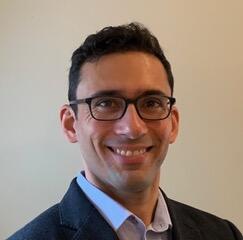
Dr. Dwinita Mosby Tyler Chief Catalyst and Founder The Equity Project, LLC
News Feed Image
nitaphoto2.jpeg
-

Image
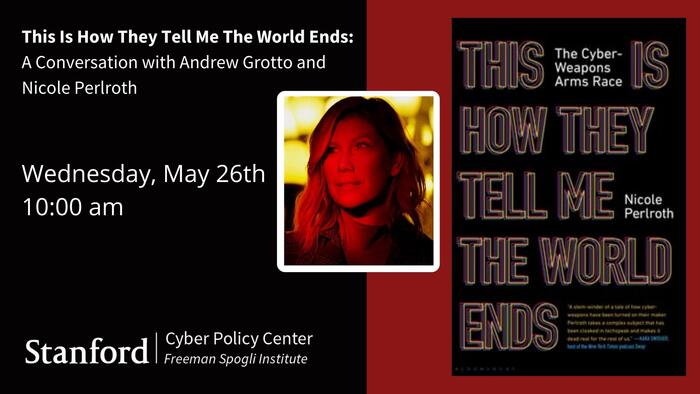
this is how they tell me the world ends event at cyber policy center

On Wednesday, May 26 at 10 am pacific time, please join Andrew Grotto, Director of Stanford’s Program on Geopolitics, Technology and Governance, for a conversation with Nicole Perlroth, New York Times Cybersecurity Reporter, about the underground market for cyber-attack capabilities.

In her book This Is How They Tell Me the World Ends: The Cyberweapons Arms Race,” Perlroth argues that the United States government became the world's dominant hoarder of one of the most coveted tools in a spy's arsenal, the zero-day vulnerability. After briefly cornering the market, in her account, the United States then lost control of its hoard and the market.

Perlroth and Grotto, a former Senior Director for Cybersecurity Policy at the White House in both the Obama and Trump Administrations, will talk about the development and evolution of this market, and what it portends about the future of conflict in cyberspace and beyond.

This event is co-sponsored by the Freeman Spogli Institute for International Studies and the Cyber Policy Center.

Praise for “This Is How They Tell Me the World Ends”: “Perlroth's terrifying revelation of how vulnerable American institutions and individuals are to clandestine cyberattacks by malicious hackers is possibly the most important book of the year . . . Perlroth's precise, lucid, and compelling presentation of mind-blowing disclosures about the underground arms race a must-read exposé.” —Booklist, starred review

CISAC
Stanford University
Encina Hall, C428

Stanford, CA 94305-6165

(650) 723-9866
0
Andrew Grotto

Andrew J. Grotto is a research scholar at the Center for International Security and Cooperation at Stanford University.

Grotto’s research interests center on the national security and international economic dimensions of America’s global leadership in information technology innovation, and its growing reliance on this innovation for its economic and social life. He is particularly interested in the allocation of responsibility between the government and the private sector for defending against cyber threats, especially as it pertains to critical infrastructure; cyber-enabled information operations as both a threat to, and a tool of statecraft for, liberal democracies; opportunities and constraints facing offensive cyber operations as a tool of statecraft, especially those relating to norms of sovereignty in a digitally connected world; and governance of global trade in information technologies.

Before coming to Stanford, Grotto was the Senior Director for Cybersecurity Policy at the White House in both the Obama and Trump Administrations. His portfolio spanned a range of cyber policy issues, including defense of the financial services, energy, communications, transportation, health care, electoral infrastructure, and other vital critical infrastructure sectors; cybersecurity risk management policies for federal networks; consumer cybersecurity; and cyber incident response policy and incident management. He also coordinated development and execution of technology policy topics with a nexus to cyber policy, such as encryption, surveillance, privacy, and the national security dimensions of artificial intelligence and machine learning. 

At the White House, he played a key role in shaping President Obama’s Cybersecurity National Action Plan and driving its implementation. He was also the principal architect of President Trump’s cybersecurity executive order, “Strengthening the Cybersecurity of Federal Networks and Critical Infrastructure.”

Grotto joined the White House after serving as Senior Advisor for Technology Policy to Commerce Secretary Penny Pritzker, advising Pritzker on all aspects of technology policy, including Internet of Things, net neutrality, privacy, national security reviews of foreign investment in the U.S. technology sector, and international developments affecting the competitiveness of the U.S. technology sector.

Grotto worked on Capitol Hill prior to the Executive Branch, as a member of the professional staff of the Senate Select Committee on Intelligence. He served as then-Chairman Dianne Feinstein’s lead staff overseeing cyber-related activities of the intelligence community and all aspects of NSA’s mission. He led the negotiation and drafting of the information sharing title of the Cybersecurity Act of 2012, which later served as the foundation for the Cybersecurity Information Sharing Act that President Obama signed in 2015. He also served as committee designee first for Senator Sheldon Whitehouse and later for Senator Kent Conrad, advising the senators on oversight of the intelligence community, including of covert action programs, and was a contributing author of the “Committee Study of the Central Intelligence Agency’s Detention and Interrogation Program.”

Before his time on Capitol Hill, Grotto was a Senior National Security Analyst at the Center for American Progress, where his research and writing focused on U.S. policy towards nuclear weapons - how to prevent their spread, and their role in U.S. national security strategy.

Grotto received his JD from the University of California at Berkeley, his MPA from Harvard University, and his BA from the University of Kentucky.

Research Scholar, Center for International Security and Cooperation
Director, Program on Geopolitics, Technology, and Governance
Date Label
Nicole Perlroth
-

Image
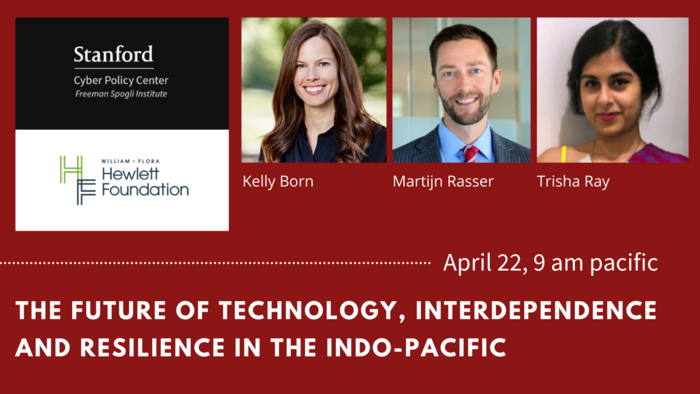
advertistement for future of tech in indo-pacific event

The Indo-Pacific will be the locus of global conflict and growth in the realm of critical and emerging technologies in the new decade. The region is home to the largest, most rapidly growing internet user bases in the world, accounting for just over half of the world’s internet users. At the same time, the US–China trade war during the Trump administration and the digital dependencies underscored by the pandemic have led some Indo-Pacific countries to rethink their own technological dependence on global supply and value chains, in favor of greater regional connectivity and resilience. There is now a sharp focus on the need for a coherent grand strategy for a “Digital Indo-Pacific”. What are the building blocks for a secure, prosperous and resilient Digital Indo-Pacific? How can the Quad, ASEAN, and other regional stakeholders cooperate to tackle broader issues relating to cybersecurity, emerging technology norms, diversifying and securing supply chains, hybrid operations and other emerging threats?

On April 22nd at 9 am PST, join Kelly Born, Director of the Cyber Initiative at the Hewlett Foundation and former Director of the Stanford Cyber Policy Center, in conversation with Trisha Ray of India’s Observer Research Foundation’s Technology and Media Initiative, and Martijn Rasser, Senior Fellow in the Technology and National Security Program at the Center for a New American Security (CNAS).

Kelly Born
Martijn Rasser
Trisha Ray
-

* Please note all CISAC events are scheduled using the Pacific Time Zone.


Seminar Recording: https://youtu.be/sFsmjTf9xUg


About the Event: Contemporary global politics are marked by a renewed debate over the significance and limits of state sovereignty. In the eyes of many, the COVID-19 pandemic has reasserted the importance of territorial sovereignty as well as of national identity and citizenship. Populations have become more acutely conscious of their rights and responsibilities as members of a particular political community, and their ultimate reliance upon their governments to protect them from the virus. Well before the outbreak of this pandemic, however, many scholars, policy-analysts, and state officials had already been highlighting the ‘return’ of sovereignty, often in juxtaposition to either the transnational economic forces of globalization or liberal international norms. Powerful economic and political trends (including protectionism and populism) were casting doubt on the reach and impact of liberal ideals such as free movement and economic interdependence. In part, these trends reflected a structural shift in international order in which the relative position of the United States was declining, and the standing of non-Western powers with attachment to what is loosely referred to as “Westphalian” sovereignty was increasing. Although some IR scholars have argued that today’s great powers (Russia, China and the US) are espousing and practicing a new form of “extra-legal sovereignty” (Paris 2020), the former two states - in order to garner wider support for their respective world views - regularly appeal to an understanding of sovereignty that underscores long-standing principles of territorial integrity and political independence.

This book project takes a step back, to more critically analyse the period preceding our current debate. Before we can address the question of whether and how Westphalian sovereignty has returned to shape contemporary global order, we should examine more deeply why sovereignty was alleged to have been transformed in the first place. In other words, what was the nature and reach of the post-Westphalian order that was proclaimed by so many in the first decades of the post-Cold War period?  While analysts and commentators have pointed to several manifestations of this changed understanding of sovereignty, I focus on the liberal idea of ‘sovereignty as responsibility’, which, inter alia, seemingly underpinned the articulation in 2005 of the principle of the ‘responsibility to protect’. According to this liberal understanding, sovereignty can no longer be conceived as unrivalled control over a delimited territory and the population residing within it – ‘sovereignty as authority’ – but rather as a status and set of rights which are conditional upon certain behaviours and capacities of states. Sovereignty is thus not solely the right of the state to be “undisturbed from without” but the responsibility to perform certain roles and tasks within its frontiers.

The central aim of this study is to examine the rise, contestation, and potential fate of what some have called this “revolutionary” understanding of sovereignty.  I ask three more specific questions. The first is conceptual and draws upon the history of ideas relating to sovereignty. Was the post-Cold War articulation of ‘sovereignty as responsibility’ really so novel? Or was it juxtaposing itself to a very particular historical period, during which non-intervention was championed by newly decolonized states? The second set of issues is empirical. How has sovereignty been understood in the post-Cold War period, particularly through practices of intervention and state recognition? Have the key actors in international society spoken and acted in ways consistent with the liberal understanding of ‘sovereignty as responsibility’? And the final set of questions is normative. Is it desirable to understand sovereignty in this way? What are the benefits and limitations of viewing sovereignty as deeply connected with responsibility?

While the book project is organized around these three central themes, my presentation will focus in, for purposes of illustration, on the ‘responsibility to protect’ (RtoP). This chapter assesses the degree to which ‘sovereignty as responsibility’ has been widely accepted and practiced by states in their interpretation and implementation of this principle and, in so doing, seeks to both account for and analyse the nature and impact of the contestation that surrounds RtoP.  The chapter’s findings suggest that a conditional understanding of sovereignty was not necessarily shared or practiced across international society, even during the height of liberal internationalist ‘moment’ of the post-Cold War period - thereby posing a challenge not just to the proponents of ‘sovereignty as responsibility’, but also to some of its fiercest critics, who overstate its negative effects on international politics.

I begin by arguing that while the 2005 Summit Outcome Document (SOD) was a significant intergovernmental agreement that provided greater precision about the source, scope, and bearer of the responsibility to protect, its particular formulation indicates that the logic of ‘sovereignty as responsibility’ was not fully embraced.  Instead, the text reflected a horizontal logic, associated with respect for sovereign equality and positive international law, rather than a vertical logic that places the international community in a position of authority over states. While the notions of sovereignty and responsibility did come together, they did so in a way that did not override or replace sovereignty in situations of humanitarian emergency, but rather aimed to reinforce sovereignty and support states in protecting their populations.

In a second step, the chapter analyses the types of contestation that have accompanied RtoP’s development, which relate both to procedural matters (such as the appropriate intergovernmental body that should ‘own’ RtoP’s development) and to substantive elements of the principle – including, most notably, the relationship between national and international responsibility. I suggest that RtoP is particularly susceptible to contestation, given its complex structure and inherently indeterminate nature. I also argue that, far from establishing an independent international authority that specifies and enforces state responsibility, the most that RtoP creates within its so-called third pillar is a responsibility to consider a real or imminent crisis involving atrocity crimes - what in legal literature is sometimes called a ‘duty of conduct’.

In the final section of the chapter, I contend that the contestation surrounding RtoP can be better understood by giving greater attention to the normative underpinnings of contemporary critiques of the principle, most notably those which stress the importance of sovereignty equality. Given that RtoP has continued to be associated – rightly or wrongly – with the use of military force, it has frequently generated sharp debate among states about the meaning of sovereignty, and efforts to assert the continuing power of the principle of non-intervention. The result of this contestation, and the reshaping of RtoP by non-Western states such as China, has been a dampening of the original cosmopolitan roots of the principle and an increased focus on maintaining strong and capable states. In short, while RtoP has created a linkage in international discourse and practice between sovereignty and responsibility, it has not given effect to the liberal understanding of sovereignty as responsibility.


About the Speaker: Jennifer M. Welsh is the Canada 150 Research Chair in Global Governance and Security at McGill University. She was previously Professor and Chair in International Relations at the European University Institute and Professor in International Relations at the University of Oxford, where she co-founded the Oxford Institute for Ethics, Law and Armed Conflict. From 2013-2016, she served as the Special Adviser to the UN Secretary General, Ban Ki-moon, on the Responsibility to Protect.

Professor Welsh is the author, co-author, and editor of several books and articles on humanitarian intervention, the evolution of the notion of the ‘responsibility to protect’ in international society, the UN Security Council, norm conflict and contestation, and Canadian foreign policy.

Virtual Seminar

Jennifer Welsh Research Chair in Global Governance and Security McGill University
Seminars
-

* Please note all CISAC events are scheduled using the Pacific Time Zone.


Register in advance for this webinar: https://stanford.zoom.us/webinar/register/5616166186207/WN_Zdzl0PrwR7CXSPoASOs5Xg


About the Event: Conventional wisdom on proxy warfare exclusively focuses on explaining governments’ provision of military, logistical, and financial support to rebel groups involved in conflict abroad. In reality, foreign militant groups play a much larger role in these partnerships than recognized: foreign militants often provide government partners with intelligence, logistical support, access to their military infrastructure, and send elite units to train and supplement their state partner’s troops. Because armed non-state actors are smaller and face greater difficulties accessing resources, the fact that they provide any type of support – let alone deploying their forces to conduct joint combat operations with state armed forces abroad – is puzzling. In this presentation, I provide insights into the strategic benefits that foreign militants receive from supporting states, identify factors that influence the types of support foreign militants provide to government partners once the decision to provide support has been made, and highlight how foreign militants can constrain and influence their government partners’ future behavior. To do so, I conduct an in-depth examination of the overtime trends in the various types of support that Shia paramilitary groups from Lebanon, Iraq, Afghanistan, and Pakistan provided to the Syrian regime and Russian forces throughout the course of the decade-long Syrian conflict.


About the Speaker: Melissa Carlson is currently a Postdoctoral Fellow in the Center for International Security and Cooperation’s Middle East Initiative. She received her PhD in Political Science from UC Berkeley. Her research examines cooperation between states and non-state actors in conflict, and her book manuscript explains variations in the types of support that governments and foreign militants provide to each other. Previously, Melissa has worked with the International Organization of Migration’s Missions in Jordan and Iraq to examine relations between refugees, host governments, and aid organizations.

Virtual Seminar

0
rsd19_072_0235a.jpg

Dr. Melissa Carlson is currently working with the Defense Security Cooperation Agency's Assessment, Monitoring, and Evaluation unit, where she promotes rigorous standards of measuring the effectiveness of the U.S.'s security cooperation and assistance programming. During her tenure at CISAC, she was a postdoctoral research and teaching fellow. She received her PhD in Political Science from the University of California, Berkeley, specializing in international relations, comparative politics, and methodology. Dr. Carlson's primary research examines the factors that influence the variation and intensity of partnerships between governments and foreign militant groups with a focus on the recent conflicts in Iraq and Syria. Her book-style dissertation project finds that, when foreign militant groups and state armed forces share similar organizational characteristics, they are more likely to deploy forces to conduct joint combat operations and provide each other with advanced weapons systems. In other research, Dr. Carlson examines the factors that influence informal and secret security cooperation between states and how misinformation and rumors influence refugees' relationships with host governments, service providers, and smugglers. Her research has been published in the American Political Science Review, the Review of International Organizations, and International Studies Quarterly, among other outlets. Outside of academia, Dr. Carlson has worked as a consultant for the International Organization for Migration's Iraq and Jordan Missions.

Affiliate
CISAC Postdoctoral Fellow Stanford University
Seminars
-

* Please note all CISAC events are scheduled using the Pacific Time Zone.


Seminar Recording:  https://youtu.be/t4xteN7N99U


About the Event: In The State from Below, we seek to understand democracy through ground-up knowledge of the state. We use a new technology and civic infrastructure, Portals, to initiate conversations about policing in communities where these forms of state action are concentrated.  Portals are virtual chambers where people in disparate communities can converse as if in the same room.  Based on over 850 recorded and transcribed conversations across fourteen neighborhoods in five cities – the most extensive collection of first-hand accounts of the police to date – we analyze patterns in political discourse.  We reveal four currents that challenge liberal-democratic framings of political life:  that an arrangement of distorted responsiveness characterizes the relationship between policed communities and the state; that the political desire of policed communities is not for greater engagement and responsiveness but for political recognition – to be known by the state; and that in contrast to prevailing wisdom about uninformed electorates, these citizens have too much knowledge of and too little power vis-à-vis state representatives.  Finally, we observe among policed communities an “ethics of aversion” in their political responses, a belief that power is best achieved by receding from state institutions in the short term and forging their own collective, community autonomy in the long term. At a broader level, we observe that it is not exclusion from democratic institutions that characterizes political inequality in our time, but inclusion in what we call racial authoritarianism, and the experience of misrecognition that results.


About the Speaker: Vesla Mae Weaver is the Bloomberg Distinguished Associate Professor of Political Science and Sociology at Johns Hopkins University and a 2016-17 Andrew Carnegie Fellow. 

She has contributed to scholarly debates around the persistence of racial inequality, colorism in the United States, the causes and consequences of the dramatic rise in prisons and police power for race-class subjugated communities. She is co-author with Amy Lerman of Arresting Citizenship: The Democratic Consequences of American Crime Control, the first large-scale empirical study of what the tectonic shifts in incarceration and policing meant for political and civic life in communities where it was concentrated. Weaver is also the co-author of Creating a New Racial Order: How Immigration, Multiracialism, Genomics, and the Young Can Remake Race in America (with J. Hochschild and T. Burch). She is at work on a new book, The State From Below, based on the largest archive of policing narratives using an innovative civic infrastructure called Portals (https://www.portalspolicingproject.com).

Virtual Seminar

Vesla Weaver Bloomberg Distinguished Associate Professor of Political Science and Sociology Johns Hopkins University
Seminars
Authors
News Type
Commentary
Date
Paragraphs

The German government and many Germans breathed a sigh of relief when Joe Biden defeated Donald Trump in November.  Mr. Trump damaged U.S. relations with its trans-Atlantic allies, and he often targeted Germany and Chancellor Angela Merkel for particular ire.  Berlin has welcomed President Biden’s readiness to rebuild U.S.-German and U.S.-European ties.

All to the good, but rebuilding the U.S.-German relationship could well prove more difficult than it first appears.  Trump’s four years have left nagging questions in the German capital about the future of U.S. politics and Trumpism, and several issues will entail difficult exchanges between Washington and Berlin.

The Trump presidency meant a difficult time for Europe and the trans-Atlantic relationship.  He regarded the European Union as an economic adversary and questioned NATO’s value.  He held Germany in particularly low regard, criticizing its trade surpluses—telling his first NATO summit that “the Germans are very, very bad”—and decrying its defense spending levels, even suggesting that Berlin owes “vast sums of money” to the Alliance and America.  Trump had no personal chemistry with Merkel, reportedly referring to her as “stupid.”  In 2020, she publicly referred to “the limits of populism and denial of basic truths” without naming names.

In May 2020, Merkel declined, in the midst of the global COVID19 pandemic, to attend an in-person G7 summit at Camp David.  Shortly thereafter, Trump ordered the withdrawal of some 10,000 U.S. troops from Germany—a decision for which the Pentagon could offer no compelling strategic rationale (the Biden administration has suspended and ordered a review of the decision).

Berlin thus was delighted with Biden’s election, but Trump left much ground to make up.

What is the New “Normal” in America?

One senior German official privately observed that Trump had done real damage to German perceptions of the United States.  While welcoming Biden’s desire to rebuild relations with Germany and Europe and seeing his election as marking a return to “normalcy” in Washington, he wondered whether that “normalcy” was acceptable to the large segment of the American electorate that had voted for Trump.  Moreover, could Trump—or Trumpism—return to power?

In a separate discussion, another senior German official agreed that Trump had done significant damage to trans-Atlantic relations, noting that he had provided a boost to ideas such as strategic autonomy for Europe.  He pointed to the Conservative Political Action Conference held in late February as reminding Germans that Trump and Trumpism were not over.  What would the Republican Party look like in the future?

A third German official reiterated that Trump had caused many in Europe to contemplate how they might have to cope without strong U.S. leadership.  Germans had lost confidence in parts of the American political class.  It would be important that Biden define the level of U.S. leadership that his administration intended—and would be able—to provide.

Opinion surveys show that German citizens share these questions about America.  In a late 2020 poll commissioned by the European Council on Foreign Relations, 53 percent agreed or strongly agreed that “after voting for Trump in 2016, Americans cannot be trusted.”  The poll had 71 percent of Germans agreeing that the U.S. political system was somewhat or completely broken, though 48 percent believed that America could overcome its internal difficulties and contribute to solving global problems.  However, when asked whether they trusted in Europe or the United States, 53 percent opted for Europe compared to 4 percent for America.

Difficult Issues Loom

Early moves by Biden, such as rejoining the Paris Climate Agreement and World Health Organization, both of which Trump had quit, and reaffirming the U.S. commitment to NATO’s Article 5 (an attack on one shall be considered an attack on all) won plaudits in Berlin.  The Germans likewise welcomed Biden’s agreement to extend the New Strategic Arms Reduction Treaty with Russia, as well as his administration’s readiness to return to the Joint Comprehensive Plan of Action on Iran’s nuclear program and reengage with the UN Human Rights Commission.  However, other issues that promise to figure prominently on the U.S.-German agenda could prove contentious between Washington and Berlin.

The Nord Stream 2 gas pipeline running under the Baltic Sea from Russia to Germany tops the list.  The Biden administration, under pressure from Congress, has made clear its opposition to the pipeline, which is now about 95 percent finished.  Secretary of State Blinken issued a statement on March 18 reiterating the administration’s intent to comply with Congressional legislation calling for sanctions and warning that “any entity involved in the Nord Stream 2 pipeline risks U.S. sanctions and should immediately abandon work on the pipeline.”  On March 23, Blinken voiced U.S. opposition to the pipeline directly to German Foreign Minister Maas.

The German government, however, appears committed to finishing the pipeline, which has the support of the bulk of Merkel’s Christian Democratic Union (and the allied Christian Socialist Union) and the Social Democratic Party, the parties that together make up the current governing coalition.  The German business community also supports the pipeline.  The CDU/CSU-SPD coalition, moreover, has an incentive to complete the pipeline prior to the German national election in September.  Polls indicate that, whatever coalition emerges following that election, the Greens Party will be part of it.  The Greens strongly oppose Nord Stream 2, both on ecological grounds and because of their concern about the human rights situation in Russia.  If the pipeline remains unfinished in September, this will be a major issue for the negotiation on forming a new governing coalition.

German officials note that stopping the pipeline now would be potentially costly; the German government could find itself on the hook for part or all of the nearly 10 billion Euros (about 12 billion dollars) already invested in the pipeline.  They note that U.S. sanctions on German or European companies would provoke a backlash in Germany.  Even those opposed to Nord Stream 2 caution against sanctions on German or European companies, which would go down badly with the pro-America CDU and could unite the European Union against the extra-territorial application of U.S. sanctions.  German politicians dismiss American charges that buying gas from Russia feeds the aggressive Moscow machine and point out the United States now imports billions of dollars’ worth of oil from Russia.

Creative thinking by U.S. and German officials might find a way by which Washington could acquiesce in the pipeline’s completion without applying U.S. sanctions against German companies.  That most likely will entail developing some benefits for Ukraine, which stands to lose the most if Nord Stream 2 is completed.  German officials acknowledge that the Biden administration needs something to show if it does not go forward with sanctions, but the mood in Washington appears to be hardening, and time to find a settlement is running short.

China poses a second issue that could prove difficult for U.S.-German relations.  As the Biden administration puts in place a policy to compete more effectively with Beijing, it will look to its European allies for support.  Berlin, however, pushed the European Union to complete an investment deal with Beijing without waiting to consult with the incoming Biden administration and does not share U.S. concern about the security considerations of allowing Huawei, the Chinese IT giant, to take part in providing the German 5G network.

German business interests on this issue matter—a lot, as China has become Germany’s largest trading partner.  While some in Berlin have become more wary of Beijing’s policy objectives and the means used to advance those goals, the German government does not want to have to choose sides between Washington and Beijing.  It may well have been China that Merkel had in mind when she told the (virtual) Munich Security Conference on February 19 that, while Europe and the United States should develop joint approaches, “that doesn’t mean that our interests will always converge.” 

That appears to have the backing of the German public.  Asked what Germany should do if there were a disagreement between Washington and Beijing, the European Council on Foreign Relations-commissioned poll showed 16 percent favoring support for the United States, while 8 percent favored support for China and 66 percent opted for neutrality.  (Worryingly for Washington’s effort to maintain a trans-Atlantic front against Russia, the poll showed identical numbers when substituting Russia for China.)

A third issue is German defense spending and the NATO-agreed goal that allies devote 2 percent of gross domestic product to defense by 2024.  Germany is now spending much more on its military than in 2014 but likely will fall short of the 2 percent target.  The Biden administration almost certainly will be more diplomatic than Trump on this issue.  Still, it will look to NATO allies in Europe to bear a larger share of the burden of deterring and defending against Russia as the United States shifts its military focus to the Asia-Pacific region. 

And a German Election

One complicating factor is that Germany will soon move into the campaign season for the national election in September.  As one German think-tank analyst put it, the issues that would help solidify U.S.-German relations—suspending construction of Nord Stream 2, adopting a tougher policy toward China, dramatically bolstering defense spending, and moving forward to procure a nuclear-capable fighter to replace the aging Tornado and sustain Germany’s nuclear-sharing role in NATO—are not positions that will attract votes.  Quite the opposite, too close an embrace of Washington’s views on these questions could drive ballots to other parties.

The September election, moreover, will mean an end to Merkel’s long run as chancellor.  Most expect her replacement to come from the CDU or CSU, though prognostications are less certain after the lackluster showing by the CDU in March 14 state elections in Baden-Wuerttemberg and Rhineland-Pflaz.  Regardless, a new chancellor will need time to get up to speed, and that could affect how quickly he or she might engage and decide on issues of interest to Washington.

This does not mean that the U.S.-German relationship is headed for trouble.  The good news is that both Washington and Berlin clearly want to restore the comity that was lost during the Trump administration.  However, building that relationship back, and not letting things get derailed by difficult issues that could divide the two allies, will require flexible diplomacy and that each take some account of the other’s interests and domestic pressures.

* * * * *

CISAC affiliate Steven Pifer is spending the first part of 2021 on a fellowship with the Robert Bosch Academy in Berlin.

Hero Image
Flags of the United States and Germany Getty Images
All News button
1
Subtitle

The German government and many Germans breathed a sigh of relief when Joe Biden defeated Donald Trump in November. Mr. Trump damaged U.S. relations with its trans-Atlantic allies, and he often targeted Germany and Chancellor Angela Merkel for particular ire. Berlin has welcomed President Biden’s readiness to rebuild U.S.-German and U.S.-European ties.

-

About this Event: There is no shortage of scholarship on the rise of strategic experts—campaign strategists, consultants, and the like—in Western politics. Some accounts treat the rise of the strategist as an effect of the functional demands of party competition, linked with technological change and the accumulation of political data; others see the rise of the strategist as a symptom of a larger process of party decline. In this seminar I'll present a different argument: the rise of the strategist was linked with a turn, especially on the left, toward prioritizing markets over constituents. This argument is built on an "inside-out" (or refraction) analysis that traces the rise and fall of dominant party experts, attending to the link between their social location and their conceptions of the economic world, democratic politics and experts' public roles.  I will conclude by outlining a new project that builds on this work, tentatively titled Strategy and Democracy.


Image
Stephanie Mudge
About the Speaker: Stephanie Mudge is Associate Professor of Sociology at the University of California, Davis and co-editor of a new book series, Cambridge Studies in Historical Sociology. Her recent book, Leftism Reinvented (2018, Harvard University Press), is a cross-national study of how Western parties of the mainstream left shifted from socialism, to Keynesianism, to neoliberalism over the course of the 20th Century. She has published on a range of topics including neoliberalism, the sociology of parties and European technocratic expertise in venues including the Socio-Economic Review, the American Journal of Sociology and the Annual Review of Sociology. She is presently developing projects on the trajectory of "independence" in the case of the European Central Bank and the rise of strategists in American politics.

Online, via Zoom: REGISTER

Stephanie Mudge Associate Professor of Sociology at the University of California, Davis
Seminars
-

About this Event: In this book project, we walk in the footsteps of the pioneers of the nonviolent approach to provide a reinterpretation of the histories of the great movements of the twentieth century from a game theoretic perspective, bringing to bear a host of new quantitative analyses to understand the challenges they faced, when they were successful at overcoming them and why. We develop a simple conceptual framework for understanding the strategies available to both the leaders and the followers of political movements, the media and outside audiences, as well as the regimes that they seek to influence, and how these decisions interact. We use this framework to highlight the presence of three key tensions that exist in many political movements.

These tensions include: those between the allure of violence and the seeming pedestrianism of nonviolence, between the need for numbers and the need for focus, and between organizations that depend on grassroots mobilization versus hierarchies and leadership. 

In light of the framework and new quantitative evidence, we then retrace and re-examine the decisions of the participants of the Indian Independence Movement in each of their three great nonviolent drives for change---the Non-Cooperation Movement of the 1920s, the Civil Disobedience Movement of the 1930s and the Quit India Movement of the 1940s---and how they succeeded or failed in addressing these tensions. At each step, we also discuss both grand strategy and the effectiveness of local tactics. We next compare the Indian experience with the movements that came after, including the Civil Rights Movement in the United States, the Arab Spring and recent protests around the world. Finally, we draw on what we have learned to suggest ideas for better implement nonviolent protests today.


About the Speaker:

Image
Saumitra Jha
Along with being a Senior Fellow at FSI, Saumitra Jha is an associate professor of political economy at Stanford’s Graduate School of Business, and, by courtesy, of economics and of political science, and convenes the Stanford Conflict and Polarization Lab. He is also a senior fellow at the Stanford Institute for Economic Policy Research. In 2020–21, he is a fellow at the Center for Advanced Study in the Behavioral Sciences.

Jha’s research has been published in leading journals in economics and political science, including Econometrica, the Quarterly Journal of Economics, the American Political Science Review and the Journal of Development Economics, and he serves on a number of editorial boards. His research on ethnic tolerance has been recognized with the Michael Wallerstein Award for best published article in Political Economy from the American Political Science Association in 2014 and his co-authored research on heroes with the Oliver Williamson Award for best paper by the Society for Institutional and Organizational Economics in 2020. Jha was honored to receive the Teacher of the Year Award, voted by the students of the Stanford MSx Program in 2020.


Online, via Zoom: REGISTER

Graduate School of Business 655 Knight Way Stanford, CA 94305
(650) 721 1298
0
Associate Professor of Political Economy, GSB
Associate Professor, by courtesy, of Economics and of Political Science
saumitra_jha.jpg

Along with being a Senior Fellow at the Freeman Spogli Institute for International Studies, Saumitra Jha is an associate professor of political economy at the Stanford Graduate School of Business, and convenes the Stanford Conflict and Polarization Lab. 

Jha’s research has been published in leading journals in economics and political science, including Econometrica, the Quarterly Journal of Economics, the American Political Science Review and the Journal of Development Economics, and he serves on a number of editorial boards. His research on ethnic tolerance has been recognized with the Michael Wallerstein Award for best published article in Political Economy from the American Political Science Association in 2014 and his co-authored research on heroes with the Oliver Williamson Award for best paper by the Society for Institutional and Organizational Economics in 2020. Jha was honored to receive the Teacher of the Year Award, voted by the students of the Stanford MSx Program in 2020.

Saum holds a BA from Williams College, master’s degrees in economics and mathematics from the University of Cambridge, and a PhD in economics from Stanford University. Prior to rejoining Stanford as a faculty member, he was an Academy Scholar at Harvard University. He has been a fellow of the Niehaus Center for Globalization and Governance and the Center for the Study of Democratic Politics at Princeton University, and at the Center for Advanced Study in the Behavioral Sciences at Stanford. Jha has consulted on economic and political risk issues for the United Nations/WTO, the World Bank, government agencies, and for private firms.


Senior Fellow at the Freeman Spogli Institute for International Studies
Dan C. Chung Faculty Scholar at the Freeman Spogli Institute for International Studies
Senior Fellow at the Stanford Institute for Economic Policy Research
Date Label
Senior Fellow, Center for Democracy, Development and the Rule of Law, FSI
Seminars
Authors
Callista Wells
News Type
News
Date
Paragraphs

The China Program at Shorenstein APARC had the privilege of hosting Jude Blanchette, the Freeman Chair in China Studies at the Center for Strategic and International Studies (CSIS). The program, entitled "What’s ‘Communist’ about the Communist Party of China?," explored the goals and ideology of the Chinese Communist Party (CCP), as well as what they might mean for the future of China in the global community. Professor Jean Oi, William Haas Professor of Chinese Politics and director of the APARC China Program, moderated the event.

After the death of Mao Zedong in 1976, the goals of the CCP became less clear. As the country began to adopt market reforms in the 1980s and 1990s, CCP theorists were forced into contortions providing ideological justifications for policies that appeared overtly capitalist. Deng Xiaoping’s concept of “Socialism with Chinese characteristics” came to be seen as a theoretical fig leaf rather than a description of an egalitarian economic system, and by the 2000s, a consensus emerged that the CCP had completely abandoned any pretense of pursuing the Marxist vision it purported to hold. With the rise of Xi Jinping, however, the Party talks with renewed vigor about Marxism-Leninism and the goal of achieving actual, existing socialism. Has the CCP re-discovered communism?  In his talk, Blanchette discussed the abandoned and existing legacies of Mao Zedong, Marxism-Leninism, and the CCP’s vision of socialism. Watch now: 

Read More

Min Ye speaking
News

Domestic or International? The Belt and Road Initiative Is More Internally Focused Than We Think, Says Expert Min Ye

Domestic or International? The Belt and Road Initiative Is More Internally Focused Than We Think, Says Expert Min Ye
Banner of Hau L. Lee
News

The Pandemic, U.S.-China Tensions and Redesigning the Global Supply Chain

The Pandemic, U.S.-China Tensions and Redesigning the Global Supply Chain
American and Chinese flags
News

U.S.-China Relations in the Biden Era

Dr. Thomas Wright examines the recent history of US-China relations and what that might mean for the new administration.
U.S.-China Relations in the Biden Era
Hero Image
National Emblem of the People's Republic of China on the Great Hall of the People
All News button
1
Subtitle

Is the Chinese Communist Party really communist at all? Expert Jude Blanchette, Freeman Chair in China Studies at the Center for Strategic and International Studies, weighs in.

Subscribe to The Americas