-

About the Event:

Even in today’s more informal world, dress codes still determine what we wear, when we wear it—and what our clothing means. People lose their jobs for wearing braided hair, long fingernails, large earrings, beards and tattoos or refusing to wear a suit and tie or make-up and high heels. In some cities, wearing sagging pants is a crime. And even when there are no written rules, implicit dress codes still influence opportunities and social mobility. Silicon Valley CEOs wear t-shirts and flip flops, setting the tone for an entire industry: women wearing fashionable dresses or high heels face ridicule in the tech world and some venture capitalists refuse to invest in any company run by someone wearing a suit.

Dress codes are as old as clothing itself. For centuries, clothing has been a wearable status symbol; fashion, a weapon in struggles for social change; and dress codes, a way to maintain political control. Merchants who dressed like princes and butchers’ wives wearing gem-encrusted crowns were public enemies in medieval societies structured by social hierarchy and defined by spectacle. In Tudor England, silk, velvet and fur were reserved for the nobility and ballooning pants called “trunk hose” could be considered a menace to good order. The Renaissance era Florentine patriarch Cosimo de Medici captured the power of fashion and dress codes when he remarked, “One can make a gentleman from two yards of red cloth.” Dress codes evolved along with the social and political ideals of the day, but they always reflected struggles for power and status. In the 1700s, South Carolina’s “Negro Act” made it illegal for Black people to dress “above their condition.” In the 1920s, the bobbed hair and form-fitting dresses worn by free-spirited flappers were banned in workplaces throughout the United States and in the 1940s the baggy zoot suits favored by Black and Latino men caused riots in cities from coast to coast.


About the Speaker:

Image
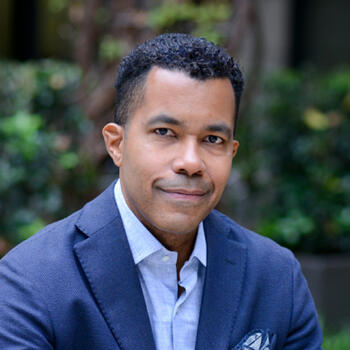
Richard Ford
Richard Thompson Ford is Professor of Law at Stanford Law School. He writes about law, social and cultural issues and race relations and has written for The New York TimesThe Washington PostThe San Francisco Chronicle, CNN and Slate.   He is the author of the New York Times notable books The Race Card and Rights Gone Wrong: How Law Corrupts the Struggle for Equality.  He has appeared on The Colbert ReportThe Rachel Maddow Show, andThe Dylan Rattigan Show.  He is a member of the American Law Institute and serves on the board of the Authors Guild Foundation. 

Online, via Zoom:  REGISTER

Richard Thompson Ford Professor of Law at Stanford Law School
Seminars
-

* Please note all CISAC events are scheduled using the Pacific Time Zone.


Seminar Recording:  https://youtu.be/-hERfg-DCYw


About the Event: 

This presentation explores two topics at the nexus of technology and international security: interstate influence operations and technological revolutions.

After Russian interference in the 2016 U.S. election, influence operations have become a central focus among American policymakers, foreign policy pundits, and publics alike. Yet, Goldstein argues that they remain under-explored and under-theorized in international security studies, with disagreement over how to define the phenomenon implicit in the existing literature. Goldstein will introduce a conceptual framework for foreign influence operations and argue that security studies scholars should pay greater attention to the subject for two reasons. First, they are policy-relevant and likely to remain so; they are cost effective, propagandists are prone to inflate their impact, and they are difficult to deter. Second, studying influence operations can contribute to the academic discipline of security studies by helping to expand restrictive notions of state power and challenge dominant models of foreign policy decision-making.

How do emerging technologies affect the rise and fall of great powers? Scholars have long observed that rounds of technological revolution disrupt the economic balance of power, bringing about a power transition in the international system. However, there has been limited investigation of how this process occurs. The standard explanation emphasizes a country’s ability to dominate innovation in leading sectors, seizing monopoly profits in new, fast-growing industries centered around major technological breakthroughs. Investigating historical cases of industrial revolutions followed by economic power transitions, Ding will present an alternative mechanism based on the diffusion of general-purpose technologies. The findings have direct implications for how recent breakthroughs in artificial intelligence could affect the U.S.-China power balance.


About the Speakers: 

Jeffrey Ding is a Ph.D. candidate in the Department of Politics and International Relations at the University of Oxford. Jeffrey’s current research is centered on how technological change affects the rise and fall of great powers. Through investigating historical cases of industrial revolutions, Jeffrey traces causal mechanisms that connect significant technical breakthroughs and economic power transitions — with an eye toward the implications of advances in AI for a possible U.S.-China power transition. Jeffrey’s previous research covered related topics, including China's development of AI, identifying strategic goods and technologies, and technical standards as a vehicle of AI governance.


Josh A. Goldstein is a PhD Candidate and Clarendon Scholar in the Department of Politics and International Relations at the University of Oxford. For the 2020-2021 year, he is a pre-doctoral fellow with the Stanford Internet Observatory and part of the inaugural class of non-resident Hans J. Morgenthau Fellows at the Notre Dame International Security Center. Josh’s 3-paper doctoral dissertation takes a multi-method approach to studying the challenges that democracies face from influence operations. His broader research interests lie in international security, political psychology, and foreign policy-decision making.


Virtual Seminar

0
Postdoctoral Fellow, Stanford Internet Observatory (2021-2022)
Predoctoral Fellow, Stanford Internet Observatory (2020-2021)
Josh-Goldstein.jpeg

Josh A. Goldstein is a past postdoctoral scholar at the Stanford Internet Observatory. He received his PhD in International Relations from the University of Oxford, where he studied as a Clarendon Scholar. At the Stanford Internet Observatory, Dr. Goldstein investigated covert influence operations on social media platforms, studied the effects of foreign interference on democratic societies, and explored how emerging technologies will impact the future of propaganda campaigns. He has given briefings to the Department of Defense, the State Department, and senior technology journalists based on this work, and published in outlets including Brookings, Lawfare, and Foreign Policy.

Prior to joining SIO, Dr. Goldstein received an MPhil in International Relations at Oxford with distinction and a BA in Government from Harvard College, summa cum laude. He also assisted with research and writing related to international security at the Belfer Center, Brookings Institution, House Foreign Affairs Committee, and Department of Defense.

0
ding.png

Jeff is an Assistant Professor of Political Science at George Washington University. Previously, he was a postdoctoral fellow at Stanford's Center for International Security and Cooperation, sponsored by Stanford's Institute for Human-Centered Artificial Intelligence. His research agenda centers on technological change and international politics. His book project investigates how past technological revolutions influenced the rise and fall of great powers, with implications for U.S.-China competition in emerging technologies like AI. Other research papers tackle how states should identify strategic technologies, assessments of national scientific and technological capabilities, and interstate cooperation on nuclear safety and security technologies. Jeff's work has been published in Foreign Affairs, Security Studies, The Washington Post, and other outlets. Jeff received his PhD in 2021 from the University of Oxford, where he studied as a Rhodes Scholar. He has also worked as a researcher for Georgetown's Center for Security and Emerging Technology and the Centre for the Governance of AI at the University of Oxford.

Affilate
Seminars
-

About the Event: 

Political violence is rising in the United States, alarming citizens and leaders alike. How many Americans endorse partisan violence and other forms of extreme hostility? What are its deep social, political, historical, and psychological roots? What can be done about it? And what does it mean for democracy? 

In this talk, Drs. Mason and Kalmoe make sense of our contentious politics with a groundbreaking study of radicalism among ordinary American partisans. Their individual-level studies utilize more than a dozen new nationally representative surveys and experiments to trace recent trends since 2017, reactions to elections and violent events, broader conditions that spur support for violence, links from violence attitudes to aggressive behavior, and the role of leaders in enflaming or pacifying their followers.

The results reshape the study of modern American political behavior by showing that ordinary partisanship is far more volatile than scholars have recognized in the past century of study.  


About the Speaker(s)

Image
Nathan Kalmoe
Dr. Nathan P. Kalmoe is an associate professor of political communication at Louisiana State University in the Manship School of Mass Communication and Department of Political Science. He is the author of With Ballots & Bullets: Partisanship & Violence in the American Civil War and co-author of Neither Liberal nor Conservative: Ideological Innocence in the American Public. He has also written essays for The Washington Post and Politico, and his work has been featured in The New York Times, The Atlantic, and Vox, among other popular outlets.


Image
Lillilana Mason
Lilliana Mason is associate professor of Government and Politics at the University of Maryland, College Park, and author of Uncivil Agreement: How Politics Became Our Identity (University of Chicago Press). Her research on partisan identity, partisan bias, social sorting, and American social polarization has been published in journals such as American Political Science Review, American Journal of Political Science, Public Opinion Quarterly, and Political Behavior, and featured in media outlets including the New York Times, the Washington Post, CNN, and National Public Radio.


Online, via Zoom:  REGISTER

Dr. Nathan P. Kalmoe Associate Professor of Political Communication, Louisiana State University
Lilliana Mason Associate professor of Government and Politics at the University of Maryland, College Park
Seminars
Authors
Callista Wells
News Type
News
Date
Paragraphs

On February 24, 2021, the China Program at Shorenstein APARC hosted Dr. Thomas Wright, director of the Center on the United States and Europe and a senior fellow in the Project on International Order and Strategy at the Brookings Institution. Professor Jean Oi, William Haas Professor of Chinese Politics and director of the APARC China Program, moderated the event.

The program, entitled "U.S.-China Relations in the Biden Era," explored the future of US-China relations based on experience from past administrations. Under former President Trump, U.S. relations with China evolved into outright rivalry. In his talk, Dr. Wright discussed whether this rivalry will continue and evolve during a Biden administration by analyzing the roots of strategic competition between the two countries and various strands of thinking within the Biden team. According to Wright, the most likely outcome is that the competition between the two countries will evolve into a clash of governance systems and the emergence of two interdependent blocs where ideological differences become a significant driver of geopolitics. Cooperation is possible but it will be significantly shaped by conditions of rivalry. Watch now:

Read More

Min Ye speaking
News

Domestic or International? The Belt and Road Initiative Is More Internally Focused Than We Think, Says Expert Min Ye

Domestic or International? The Belt and Road Initiative Is More Internally Focused Than We Think, Says Expert Min Ye
Banner of Hau L. Lee
News

The Pandemic, U.S.-China Tensions and Redesigning the Global Supply Chain

The Pandemic, U.S.-China Tensions and Redesigning the Global Supply Chain
Photograph of Xi Jinping and Vladmir Putin walking in front of two lines of armed Chinese soldiers
News

Military Competition with China: Harder to Win Than During the Cold War?

On February 10th, the APARC China Program hosted Professor Oriana Mastro to discuss military relations between the US and China, and why deterrence might be even more difficult than during the Cold War.
Military Competition with China: Harder to Win Than During the Cold War?
Hero Image
American and Chinese flags
All News button
1
Subtitle

Dr. Thomas Wright examines the recent history of US-China relations and what that might mean for the new administration.

-

About the Speaker:

Image
Stephen Krasner
Stephen Krasner is the Graham H. Stuart Professor of International Relations. A former director of CDDRL, Krasner is also an FSI senior fellow, and a fellow of the Hoover Institution.

From February 2005 to April 2007 he served as the Director of Policy Planning at the US State Department. While at the State Department, Krasner was a driving force behind foreign assistance reform designed to more effectively target American foreign aid. He was also involved in activities related to the promotion of good governance and democratic institutions around the world.

At CDDRL, Krasner was the coordinator of the Program on Sovereignty. His work has dealt primarily with sovereignty, American foreign policy, and the political determinants of international economic relations. Before coming to Stanford in 1981 he taught at Harvard University and UCLA. At Stanford, he was chair of the political science department from 1984 to 1991, and he served as the editor of International Organization from 1986 to 1992.

He has been a fellow at the Center for Advanced Studies in the Behavioral Sciences (1987-88) and at the Wissenschaftskolleg zu Berlin (2000-2001). In 2002 he served as director for governance and development at the National Security Council. He is a fellow of the American Academy of Arts and Sciences and a member of the Council on Foreign Relations.

Online, via Zoom:  REGISTER

CDDRL
Stanford University
Encina Hall
Stanford, CA 94305-6055

(650) 723-0676 (650) 724-2996
0
Senior Fellow at the Freeman Spogli Institute for International Studies, Emeritus
Graham H. Stuart Professor of International Relations
Senior Fellow at the Hoover Institution, Emeritus
krasner.jpg MA, PhD

Stephen Krasner is the Graham H. Stuart Professor of International Relations. A former director of CDDRL, Krasner is also an FSI senior fellow, and a fellow of the Hoover Institution.

From February 2005 to April 2007 he served as the Director of Policy Planning at the US State Department. While at the State Department, Krasner was a driving force behind foreign assistance reform designed to more effectively target American foreign aid. He was also involved in activities related to the promotion of good governance and democratic institutions around the world.

At CDDRL, Krasner was the coordinator of the Program on Sovereignty. His work has dealt primarily with sovereignty, American foreign policy, and the political determinants of international economic relations. Before coming to Stanford in 1981 he taught at Harvard University and UCLA. At Stanford, he was chair of the political science department from 1984 to 1991, and he served as the editor of International Organization from 1986 to 1992.

He has been a fellow at the Center for Advanced Studies in the Behavioral Sciences (1987-88) and at the Wissenschaftskolleg zu Berlin (2000-2001). In 2002 he served as director for governance and development at the National Security Council. He is a fellow of the American Academy of Arts and Sciences and a member of the Council on Foreign Relations.

His major publications include Defending the National Interest: Raw Materials Investment and American Foreign Policy (1978), Structural Conflict: The Third World Against Global Liberalism (1985), Sovereignty: Organized Hypocrisy (1999), and How to Make Love to a Despot (2020). Publications he has edited include International Regimes (1983), Exploration and Contestation in the Study of World Politics (co-editor, 1999),  Problematic Sovereignty: Contested Rules and Political Possibilities (2001), and Power, the State, and Sovereignty: Essays on International Relations (2009). He received a BA in history from Cornell University, an MA in international affairs from Columbia University and a PhD in political science from Harvard.

CV
The Graham H. Stuart Professor of International Relations. A former director of CDDRL, Krasner is also an FSI senior fellow, and a fellow of the Hoover Institution
Seminars
-

About the Event:  Decentralization and community-driven development programs have become increasingly common policies to attempt to improve the distribution of public goods across low- and middle-income countries. We study a series of reforms in the city of Delhi that decentralized the administration of discretionary school-level budgets to elected bodies of parents. We find that parents have preferences for representatives that are substantially more educated than them and discriminate against Muslims. Parents act on these preferences when given the opportunity to elect SMC members. They elect parents that are wealthier and more educated and are also of higher status. The paper provides empirical evidence to the question of under what conditions decentralization leads to elite capture. When bureaucrats have a stronger say in the selection of representatives, budgets are captured to reflect the preferences of state representatives, rather than constituents.


Image
Emmerich Davies
About the Speaker:  Emmerich Davies is an Assistant Professor of Education at the Harvard Graduate School of Education, a Faculty Associate at the Weatherhead Center for International Affairs and Center for International Development, and a co-convener of the Brown-Harvard-M.I.T. Joint Seminar on South Asian Politics. He studies the political economy of education with a regional focus on South Asia. His work has been published in Comparative Political Studies and Governance. He received his Ph.D. and M.A. in political science from the University of Pennsylvania, and his B.A. in political science and economics from Stanford University.

Online, via Zoom:  REGISTER

Emmerich Davies Assistant Professor of Education at the Harvard Graduate School of Education
Seminars
-

* Please note all CISAC events are scheduled using the Pacific Time Zone.


Seminar Recording:  https://youtu.be/Mwjn39S48rE


About the Event: NATO Secretary General Stoltenberg will speak about how the transatlantic alliance is adapting to change in this turbulent period.  President Biden has clearly signaled that he is resolved to reach out to the NATO allies, working to repair the trans-Atlantic bond. To strengthen the bond between America and Europe and prepare the alliance for the future, the Secretary General has launched the NATO 2030 initiative.  This includes proposals on how NATO can better harness technology and innovation, tackle the security implications of climate change, and help make our societies more resilient. While NATO must continue to deter and defend against Russia, it is also keeping channels open to Moscow. The rise of China presents both challenges and opportunities that NATO has started to address. And missions in Afghanistan and Iraq are on the cusp of change, with decisions underway about what role NATO will play in the future. All in all, an exciting time to hear from NATO’s Secretary General.

This event is co-sponsored with The Europe Center.


About the Speaker: 

Jens Stoltenberg became NATO Secretary General in October 2014, following a distinguished international and domestic career. As a former Prime Minister of Norway and UN Special Envoy, Mr. Stoltenberg has been a strong supporter of greater global and transatlantic cooperation. Mr. Stoltenberg’s mandate as NATO Secretary General has been extended until the end of September 2022.

Under Mr. Stoltenberg’s leadership, NATO has responded to a more challenging security environment by implementing the biggest reinforcement of its collective defence since the Cold War, increasing the readiness of its forces and deploying combat troops in the eastern part of the Alliance. He believes in credible deterrence and defence while maintaining dialogue with Russia. He has also advocated for increased defence spending and better burden sharing within the Alliance, and a greater focus on innovation. NATO has also stepped up its efforts in the fight against terrorism. He strongly supports a partnership approach, with cooperation between NATO and the European Union reaching unprecedented levels.

Before coming to NATO, he was the UN Special Envoy on Climate Change from 2013 to 2014. He has also chaired UN High-level Panels on climate financing and the coherence between development, humanitarian assistance and environmental policies.

As Prime Minister of Norway, Mr. Stoltenberg increased the defence spending and transformed the Norwegian armed forces with new high-end capabilities and investments. He also signed an agreement with Russia on establishing maritime borders in the Barents and Polar Sea, ending a 30-years dispute.

Mr. Stoltenberg was also Prime Minister during the deadly terrorist attacks, which killed 77 people in Oslo and Utøya on 22 July 2011, urging in response, “more democracy, more openness, and more humanity, but never naïvete”.

Mr Stoltenberg holds a postgraduate degree in Economics from the University of Oslo. After graduating in 1987, he held a research post at the National Statistical Institute of Norway, before embarking on a career in Norwegian politics.

  • 2005-2013: Prime Minister of Norway
  • 2002-2014: Leader of the Norwegian Labor Party
  • 2000-2001: Prime Minister of Norway
  • 1996-1997: Minister of Finance
  • 1993-1996: Minister of Industry and Energy
  • 1991-2014: Member of Parliament
  • 1990-1991: State Secretary at the Ministry of the Environment
  • 1985-1989: Leader of the Norwegian Labour Youth

Jens Stoltenberg was born in Oslo on 16 March 1959. He is married to Ingrid Schulerud. They have two grown-up children.

Virtual Seminar

Jens Stoltenberg Secretary General NATO
Seminars
-

About the Event:   The number of Americans arrested, brought to court, and incarcerated has skyrocketed in recent decades. Criminal defendants come from all races and economic walks of life, but they experience punishment in vastly different ways. How and why is the court process unequal? This talk draws on findings from my book Privilege and Punishment: How Race and Class Matter in Criminal Court (Princeton University Press, November 2020). Drawing on fieldwork and interviews in the Boston court system, I show that lawyers and judges often silence, coerce, and punish disadvantaged defendants when they try to learn their legal rights and advocate for themselves. These dynamics reveal how unwritten institutional norms devalue the exercise of legal rights among the disadvantaged, and that ensuring effective legal representation is no guarantee of justice. Drawing on other research and activism on the courts as a tool of racialized social control, I conclude with reflections on the democratic potential and possibilities of criminal court abolition.  


Image
Matthew Clair
About the Speaker:  Dr. Matthew Clair is Assistant Professor in the Department of Sociology and (by courtesy) the Law School. His research examines the law, culture, and inequality. Dr. Clair's research has been published in Criminology, Law & Social Inquiry, Social Science & Medicine, and Social Forces and has been supported by the National Science Foundation and the American Society of Criminology. He has received awards from the American Sociological Association, the American Society of Criminology, the Law & Society Association, and the Society for the Study of Social Problems. His first book Privilege and Punishment: How Race and Class Matter in Criminal Court was published by Princeton University Press in November 2020.


Online, via Zoom:  REGISTER

Matthew Clair Assistant Professor in the Department of Sociology and (by courtesy) at Stanford Law School
Seminars
Authors
Gary Mukai
News Type
Blogs
Date
Paragraphs

Stanford e-Kawasaki is an online course for high school students in Kawasaki City, Japan, that is sponsored by Kawasaki City. Launched in fall 2019, it is offered by the Stanford Program on International and Cross-Cultural Education (SPICE) in collaboration with Kawasaki City. SPICE is grateful to Kawasaki Mayor Norihiko Fukuda whose vision made this course possible. 


The two key themes of Stanford e-Kawasaki are entrepreneurship and diversity, and Stanford e-Kawasaki Instructor Maiko Tamagawa Bacha invites guest speakers with these themes in mind. Most guest speakers address one of the themes. However, when Victoria Tsai—a Taiwanese American entrepreneur who is the founder and CEO of Tatcha—agreed to speak, Bacha noted that she could not imagine anyone more qualified to share her insights on both themes. Tatcha was founded by Tsai to share the geisha’s wisdom with modern women everywhere, and to further the belief that true beauty begins with the heart and the mind. Launched in 2009, Tatcha is now one of the biggest skincare retailers in the United States.

While listening to Tsai’s guest lecture on February 5, 2021, Bacha and I were especially struck by her resilience, approachability and gift for empowering youth, openness to diverse perspectives, and respect for traditional culture. We both quickly realized what a great role model she is for all of the Stanford e-Kawasaki students but for the girls, in particular.

Resilience
While sharing her experiences as a young professional on Wall Street, Tsai mentioned that she was 21 and was next to the World Trade Center buildings when they were hit by a terrorist attack on September 11, 2001. She recalled, “We saw lots of people jumping and dying and then my husband got very sick and it made me question my purpose in life. And at that time, I didn’t know anything about ikigai [a Japanese concept that means “a reason for being”] but I knew that if I was going to spend the hours that I am awake working and not with my family and not playing, that I wanted my work to mean something.” After experiencing various jobs and going to business school, which “looked good on paper,” she decided to seek work with a greater purpose.

This led her to establish Tatcha. Tsai mentioned to the students that she hadn’t taken a salary at Tatcha for nine years. This prompted a student to ask about her motivation, to which Tsai replied, “When I think of my life’s purpose, I don’t expect it to be easy, but I do hope that it’s worthwhile. This work is my life’s purpose, so even when it gets hard, I just think, ‘that’s part of life.’” During the pandemic, I imagine that Tsai’s resilience really resonated among the students.

Approachability and Gift for Empowering Youth
I knew from articles about Tsai that she is a Harvard Business School graduate and an extremely successful CEO. Yet, by accepting the invitation to speak to the high school students in Kawasaki—some of whom are aspiring entrepreneurs—she demonstrated her desire to pass on her wisdom to the next generation. Prior to Tsai’s guest lecture, Bacha had sent her a list of questions that the students had written based on their reading about Tsai’s background. In her opening comments, Tsai noted, “You are much more advanced than I was. I could not compete with you.”

This comment seemed to quickly put students at ease. One of the students commented, “I think it’s wonderful that you found purpose in life and help people… A lot of young people like me and my friends feel lost in life, don’t have a dream or long-term vision of our lives, so I want to know how can we find our own purpose in life or dream.” This comment prompted Tsai to describe an activity that was devised by Harvard Business School’s Dr. Tim Butler, who has noted that as youth, they actually already have a hunch about what they want to be when they grow up, but just don’t know the specific names of the jobs. Tsai continued, “then, the problem is when you get older, you start hearing your friends, parents, and teachers saying, ‘oh, you should do that.’ And then in your head you can’t tell anymore if you really want to do something, or if you simply think you should do it because everybody else thinks you should do it.” The activity that Butler recommends is in two parts: (1) read articles that interest you, and identify patterns (specifically, areas of interest) in them; and (2) while keeping these interests in mind, write about what you envision yourself doing in ten years as you are the happiest that you have ever been—that is, completely focused and engaged. Tsai encouraged the students to try this, and some already have.

Openness to Diverse Perspectives
When a student asked Tsai about overcoming gender- and culture-related differences, she reflected upon three experiences: one on the trading floor on Wall Street and two in Kyoto with a taxi driver and geisha. Concerning her Wall Street experience, Tsai recollected, “When I first worked on Wall Street and I walked onto the trading floor, I was so scared. One, there were no women, and I couldn’t even understand what they were saying because they were speaking financial language… I remember being so intimidated. Then one year later, I could understand everything.” She came to the conclusion that “These people are not smarter than me. They’re just older, and the harder I work, the faster I can close the gap in knowledge. I have a great education, I have a decent mind, I have a very strong work ethic, I’ll just keep asking questions. So I figured it out.”

Concerning her experience with a taxi driver in Kyoto, Tsai noted that he is the one who taught her that there’s a difference between a job and a purpose. Through his actions, the driver taught her that his job is to be a driver but that his purpose is to make people happy. When he met Tsai for the first time, she was not feeling well and thus didn’t seem happy. After dropping off Tsai at her hotel, he went home to make CDs of images of Kyoto and delivered them to the hotel, thinking that the images would make her happy. They did and he felt only then that his job had been completed. Tsai reflected, “… and that just stuck with me and I did not know what omotenashi [hospitality that goes above and beyond the expectations of the person receiving the service] was back then, but then I felt it in my heart.”

Lastly, concerning her experience with geisha, who inspired Tatcha’s skincare products, Tsai noted “People in America don’t understand what a geisha is. The importance of a geisha is they were trained in a lot of the classical Japanese arts, such as dance, music, flower arrangement, and the tea ceremony. These are classical traditions that have very important meanings. I think that if you forget where you come from, then you don’t know where you are going. And so I try to hold on to tradition, because it matters. I just thought that’s a beautiful thing… I learned so much from geisha about entrepreneurship and about women’s empowerment through Japanese traditions.”

Respect for Traditional Culture
Her emphasis on Japanese traditions prompted a student to comment, “I was surprised that you made an innovation from old Japanese culture. However, there is a trend to discard old customs. So, how can we get a balance between new trends and old customs?” Tsai shared that what is so interesting about ancient civilizations like China and Japan is that “there is a lot of wisdom in this and something to learn from the past. What we try to do [at Tatcha] is to innovate within tradition, so I never tried to change the core of the tradition, because if it lasted 1000 years, there’s a very good reason for its continuity.”

What Does It Mean to Be a Global Citizen?
One very interesting part of Tsai’s presentation was to learn about Tatcha’s work with Room to Read, which seeks to transform the lives of millions of children in low-income communities in Southeast Asia and Africa by focusing on literacy and gender equality in education. A percentage of each Tatcha purchase is donated to Room To Read. Despite the enormity of some of the challenges that these youth face, Tsai noted that “they have a dream and they show up every day and they study hard and they work hard because they want that dream to come true. Nothing that I will ever face in my life will compare to what these little girls are going through, but then I think if I do my job and I don’t give up, then I can make sure thousands, hundreds of thousands, millions of those girls can have a different life, and then my life meant something.” This really resonated in Bacha, who is very familiar with Room to Read as her husband works for the organization.

Reflecting upon the session, Tsai noted “I learned about the concept of sekaijin [global citizen] when studying the writings of D.T. Suzuki, and I fell in love with the idea. As people who live between cultures, we have the opportunity to share the best of both worlds to advance society and uplift individuals. It was an honor to share my story of cross-cultural entrepreneurship with the students, who were inquisitive, earnest, and wise beyond their years. I believe that Stanford’s e-Kawasaki program is helping to nurture tomorrow’s sekaijin.” When I consider the question, “What does it mean to be a global citizen?,” Tsai immediately comes to mind, and believe that Tsai’s talk really encouraged the students to aspire to become sekaijin as well.


The SPICE staff would like to express its appreciation to Tsuyoshi Inoue of Kawasaki City and Hisashi Katsurayama from the Kawasaki Board of Education for their unwavering support of Stanford e-Kawasaki.

Read More

Archways and pillars in Stanford University's Main Quad
Blogs

Stanford e-Kawasaki: Arches and Pillars of Support During an Unstable Time

Stanford e-Kawasaki: Arches and Pillars of Support During an Unstable Time
SPICE Director Dr. Gary Mukai with Mayor Norihiko Fukuda
Blogs

Stanford e-Kawasaki: The Vision of Mayor Norihiko Fukuda

Stanford e-Kawasaki: The Vision of Mayor Norihiko Fukuda
120219 3010
News

Announcing the Honorees of SPICE’s 2019–20 Regional Programs in Japan

Announcing the Honorees of SPICE’s 2019–20 Regional Programs in Japan
Hero Image
Victoria Tsai in Kyoto
Victoria Tsai in Kyoto; photo courtesy Victoria Tsai
All News button
1
Subtitle

The entrepreneur and businesswoman spoke to students about how certain key experiences in her life influenced her path.

-

Co-sponsored with the Harvard Kennedy School

This event is part of the Asia Health Policy Program (AHPP) 2020-21 Colloquium series "Health, medicine, and longevity: Exploring public and private roles"

Introduced by Lawrence H. Summers (President Emeritus, Harvard University), Richard Zeckhauser, Jack Donahue and Karen Eggleston discuss their recently published book, The Dragon, the Eagle, and the Private Sector: Public-Private Collaboration in China and the United States with Professor Yijia Jing of Fudan University, China's leading expert on public-private relationships will also participate. The governments of China and the United States - despite profound differences in history, culture, economic structure, and political ideology - both engage the private sector in the pursuit of public value. This book employs the term collaborative governance to describe relationships where neither the public nor private party is fully in control, arguing that such shared discretion is needed to deliver value to citizens. This concept is exemplified across a wide range of policy arenas, such as constructing high speed rail, hosting the Olympics, building human capital, and managing the healthcare system. This book will help decision-makers apply the principles of collaborative governance to effectively serve the public, and will enable China and the United States to learn from each other's experiences. It will empower public decision-makers to more wisely engage the private sector. The book's overarching conclusion is that transparency is the key to the legitimate growth of collaborative governance.

"It has become increasingly clear over the last few years that in tackling a country’s problems, what matters most is the quality of government rather than the quantity. This book provides a key to understanding how to achieve that quality-public-private collaboration, done right. Delving deep into two very different societies, the US and China, the authors provide lessons that illuminate and should inform scholars and policymakers alike." -- Fareed Zakaria

"This important book addresses how the two most important countries, the U.S. and China, address what may be their most important question: How can their public and private sectors cooperate most effectively with each other to create value. This is the rare book that is both analytic and a pleasure to read. It makes a lasting impression. It deserves a very wide readership among all those concerned about the future of the global economy." -- Lawrence H Summers, President Emeritus, Harvard University

"Eggleston, Donahue, and Zeckhauser offer an authoritative and intriguing account of why and how collaborative governance, a key modern instrument that engages public and private actors for comparative advantages in coping with complex public affairs, has been widely and deeply practiced in two vastly different countries, China and the US. An essential reading with profound academic inspirations and rich empirical inquiries." -- Yijia Jing, Fudan University.

Speakers

Image
Lawrence H. Summer 4X4
Lawrence H. Summers is President Emeritus of Harvard University. During the past two decades he has served in a series of senior policy positions, including Vice President of development economics and chief economist of the World Bank, Undersecretary of the Treasury for International Affairs, Director of the National Economic Council for the Obama Administration from 2009 to 2011, and Secretary of the Treasury of the United States, from 1999 to 2001. 


Image
richard_zeckhauser_4x4
Richard J. Zeckhauser is the Frank Ramsey Professor of Political Economy at the Harvard Kennedy School.  


Image
John Donahue 4X4
John D. Donahue is Faculty Chair for the Master’s in Public Policy program at the Harvard Kennedy School.


Image
Karen Eggleston 4X4
Karen Eggleston is Senior Fellow at the Freeman Spogli Institute for International Studies and Director of the Asia Health Policy Program in the Shorenstein Asia-Pacific Research Center at Stanford University.


Image
Yijia Jing 4X4
Yijia Jing is a Chang Jiang Scholar, Seaker Chan Chair Professor in Public Management, Dean of the Institute for Global Public Policy, and Professor of the School of International Relations and Public Affairs, Fudan University. He conducts research on privatization, governance, and collaborative service delivery. He is the founding editor-in-chief of the journal Global Public Policy and Governance.

Lawrence H. Summers President Emeritus of Harvard University
Richard J. Zeckhauser Frank P. Ramsey Professor of Political Economy, Harvard Kennedy School
John D. Donahue Raymond Vernon Senior Lecturer in Public Policy, Harvard Kennedy School

Shorenstein APARC
Stanford University
Encina Hall E301
Stanford, CA 94305-6055

(650) 723-9072 (650) 723-6530
0
Senior Fellow at the Freeman Spogli Institute for International Studies
Center Fellow at the Center for Health Policy and the Center for Primary Care and Outcomes Research
Faculty Research Fellow of the National Bureau of Economic Research
Faculty Affiliate at the Stanford Center on China's Economy and Institutions
karen-0320_cropprd.jpg PhD

Karen Eggleston is a Senior Fellow at the Freeman Spogli Institute for International Studies (FSI) at Stanford University and Director of the Stanford Asia Health Policy Program at the Shorenstein Asia-Pacific Research Center at FSI. She is also a Fellow with the Center for Innovation in Global Health at Stanford University School of Medicine, and a Faculty Research Fellow of the National Bureau of Economic Research (NBER). Her research focuses on government and market roles in the health sector and Asia health policy, especially in China, India, Japan, and Korea; healthcare productivity; and the economics of the demographic transition.

Eggleston earned her PhD in public policy from Harvard University and has MA degrees in economics and Asian studies from the University of Hawaii and a BA in Asian studies summa cum laude (valedictorian) from Dartmouth College. Eggleston studied in China for two years and was a Fulbright scholar in Korea. She served on the Strategic Technical Advisory Committee for the Asia Pacific Observatory on Health Systems and Policies and has been a consultant to the World Bank, the Asian Development Bank, and the WHO regarding health system reforms in the PRC.

Director of the Asia Health Policy Program, Shorenstein Asia-Pacific Research Center
Stanford Health Policy Associate
Faculty Fellow at the Stanford Center at Peking University, June and August of 2016
CV
Date Label
Senior Fellow, the Freeman Spogli Institute for International Studies (FSI), Stanford University
Yijia Jing Dean of the Institute for Global Public Policy, and Professor of the School of International Relations and Public Affairs, Fudan University
Seminars
Subscribe to The Americas