Authors
Beth Duff-Brown
News Type
News
Date
Paragraphs

The cold and flu season is upon us — and with that comes the potential overuse of antibiotics. All too often, physicians prescribe antibiotics for viral infections, which typically is ineffectual and can even be dangerous for elderly Medicare patients.

An estimated 2 million Americans are infected with drug-resistant organisms each year, resulting in 23,000 deaths and more than $20 billion in excess costs, according to the Centers for Disease Control and Prevention.

Excessive antibiotic use in cold and flu season is not only costly, but it also contributes to antibiotic resistance, writes Stanford Health Policy's Marcella Alsan and her co-authors in a study published in the December edition of Medical Care. The study’s objective was to develop an index of excessive antibiotic use in cold and flu season and determine its correlation with other indicators of clinically appropriate or inappropriate prescribing.

Alsan and senior author, Dartmouth economist Jonathan Skinner, concluded that flu-related antibiotic use was correlated with prescribing high-risk medications to the elderly.

Read More


Hero Image
addiction 71573 1280
All News button
1
-

Abstract:

Compulsory voting reinforces the distinctive and valuable role that elections play in contemporary democracy. Some scholars have suggested that mandatory voting laws can improve government responsiveness to members of poor and marginalized groups who are less likely to vote. Critics of compulsory voting object that citizens can participate in a wide variety of ways; voting is not important enough to justify forcing people to do it. These critics neglect the importance of voting’s particular role in contemporary democratic practice, though. The case for compulsory voting rests on an implicit, but widely shared, understanding of elections as special moments of mass participation that manifest the equal political authority of all citizens. The most prominent objections to mandatory voting fail to appreciate this distinctive role for voting and the way it is embedded within a broader democratic framework.


Speaker Bio:

Image
echapman

Emilee is an assistant professor of Political Science at Stanford. Her current research project examines the distinctive value of voting in contemporary democratic practice, and its significance for electoral reform and the ethics of participation.


Emilee Chapman Assistant Professor of Political Science at Stanford
Seminars
Authors
News Type
News
Date
Paragraphs

When Former New York City Mayor Michael Bloomberg took a stand on sugary drinks, banning large sizes to encourage moderation, his efforts were met with some applause—but also with jeers of derision, one New York Post headline dubbing him the “Soda Jerk.”

But with one third of the nation’s adult population considered obese, and alarming evidence about the health dangers and economic toll of obesity, research on ways to slim America’s collective waistband is sorely needed.  

Stepping back from the frenzy, faculty and students at Stanford Law School are digging into the issue to try to tease out the data and offer an unbiased empirical view. 

Last spring, Jordan Flanders, JD ’15, worked with Michelle Mello (BA ’93) and David Studdert, two members of Stanford Law’s health law faculty, on a research paper that analyzed legal, economic, and political issues raised by sugary drink laws in different countries, explaining five major categories of regulations (taxes, government procurement regulations, school-based regulations, advertising restrictions, and labeling rules) and parsing out the biggest challenges to implementing each. The result, “Searching for Public Health Law’s Sweet Spot: The Regulation of Sugar-Sweetened Beverages,” was published in July in PLoS Medicine, a highly regarded international medical journal, and went a long way to inform the debate. 

Stanford has taken the need for lawyers working in the critical area of health law seriously. Mello and Studdert, both professors of law with joint appointments with the medical school, were hired in the last two years. They joined Hank Greely, Deane F. and Kate Edelman Johnson Professor of Law, and Daniel Kessler, professor of law—increasing to four the number of faculty who are fully focused on health law. They are joined by half a dozen law faculty whose scholarship often touches on diverse subjects such as psychology, drug regulation, and environmental issues at this intersection of law.

Read More

Hero Image
b0000473 f2r Max Aguilera-Hellweg
All News button
1
-

Abstract:

From El Salvador to Pakistan, high levels of internal violence characterize a growing number of poorly consolidated electoral democracies. Gangs, violent criminals, insurgents, and low-intensity conflict seem to entrench in many of these countries for decades. But some countries have managed to reduce extreme levels of violence. How did they succeed? And why were other, similarly situated countries unable to achieve similar success? Based on current and historical case studies, this upcoming book identifies continuities that suggest why these countries are so violent, and commonalities in the paths countries have taken to reduce violence. The findings are policy-focused and unexpected, even undesired. But they offer ideas to policy-makers based on the reality of what has worked, rather than the hopes of what might be achieved.


Speaker Bio:

Image
kleinfeld rachel
Dr. Rachel Kleinfeld is a Senior Associate at the Carnegie Endowment for International Peace, where she focuses on the rule of law, security, and governance. She previously served for nearly ten years as the founding CEO of the Truman National Security Project, a movement to promote U.S. security policies that advance stability, security, and human dignity worldwide, for which Time Magazine named her one of the top 40 under 40 political leaders in the United States. From 2011-2014 she was chosen by Hillary Clinton to serve on the U.S. State Department’s Foreign Affairs Policy Board, which advises the Secretary of State quarterly. Rachel has consulted on governance, security, and the rule of law for the U.S. and other governments, and international, nonprofit, and private organizations. She appears regularly in national and international media, and is the author of multiple books and articles, including Advancing the Rule of Law Abroad: Next Generation Reform, which was named one of the best foreign policy books of 2012 by Foreign Affairs magazine. She received her M. Phil and D. Phil from St. Antony’s College, Oxford, which she attended as a Rhodes Scholar, and her B.A. from Yale University. Rachel was born in a log cabin on a dirt road in her beloved Fairbanks, Alaska.

Rachel Kleinfeld Senior Associate at the Carnegie Endowment for International Peace
Seminars
-

A wealth of research has been conducted on optimal procedures for government procurement of services and the best use of public resources. However, education policy is almost never discussed in these terms, even though many governments in developed countries spend more on education services than any other good or service, with the exception of healthcare. In order to establish an optimal procurement system for education services, features such as performance incentives should be considered. While we move towards developing the optimal education procurement system, simple reforms should allow governments to avoid waste and improve equity. 


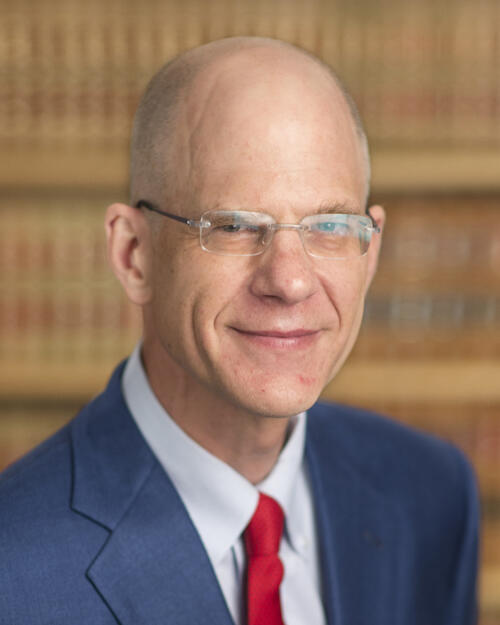
Derek Neal is a Professor in the Department of Economics and on the Committee on Education at the University of Chicago.

Derek Neal in front of bookshelves

He researches the design of incentive systems for educators, exploring design flaws in performance pay and accountability systems, and highlighting the advantages of providing incentives through contests among schools. He is currently involved in research projects on increasing student learning in China and Uganda. He is a past President of the Midwest Economics Association and a Fellow of the Society of Labor Economists. He is a former editor of the Journal of Political Economy, the Journal of Labor Economics, and the Journal of Human Resources. 

Professor of Economics
Download pdf

Philippines Conference Room

Encina Hall 
616 Serra St.
Stanford, CA 94305-6055

Derek Neal Professor of Economics University of Chicago
Seminars
-

Image
heritage bureaucracies

This conference aims to further our understanding of the institutional cultures, funding schemes and power structures underlying transnational institutions, with a particular focus on heritage bureaucracies. We bring together scholars working at the intersection of archaeology, anthropology, sociology and law to offer a broader understanding of the intricacies of multilateral institutions and global civic society in shaping contemporary heritage governance. Speakers will provide ethnographic perspectives on the study of international organizations, such as the UN and EU, in an effort to show the entanglement of political and technical decision-making.

A 2-day international conference organized by Claudia Liuzza and Gertjan Plets.

Speakers:

Brigitta Hauser-Shäublin (Institute of Ethnology, Göttingen University)
Ellen Hertz (Institute of Ethnology, University of Neuchâtel)
Miyako Inoue (Department of Anthropology, Stanford University)
Claudia Liuzza (Department of Anthropology, Stanford University)
Brigit Müller (Ecole des Hautes Etudes en Sciences Sociales, Paris)
Elisabeth Niklason (Department of Archeaology, Stockholm University)
Gertjan Plets (Stanford Archaeology Center, Stanford University)
Cris Shore (Department of Anthropology, The University of Auckland)
Ana Vrdoljak (Department of Law, University of Technology, Sydney)

Co-sponsored by Stanford Archaeology Center, Cantor Arts Center, Department of Anthropology, Center for Russian, East European & Eurasian Studies, Stanford Humanities Center, The Europe Center, France-Stanford Center for Interdisciplinary Studies, The Mediterranean Studies Forum.

Contact: heritagebur@gmail.com

Stanford Archaeology Center (BLDG 500)
488 Escondido Mall
Stanford University

Workshops
Authors
News Type
News
Date
Paragraphs

Lynn Eden has announced her retirement after 25 years as a senior research scholar at Stanford’s Center for International Security and Cooperation.

She has also been associate director for research since 2002, except for 2008-2009 when she was acting co-director—with co-director Sig Hecker on the science side.

“All the people who have been associated with CISAC for the last 25 years have benefited from her wise counsel,” said CISAC colleague Sig Hecker, research professor of Management Science and Engineering.

“She really has been the heart and soul of this place.”

Colleagues and former fellows said it would be hard to imagine CISAC without Eden.

“Most of us, even long-timers, have never known CISAC without her,” said CISAC co-director Amy Zegart.

“Lynn has been pivotal to both fostering and embodying the intellectual culture we know and love at CISAC: discussion that is rigorous and kind; candid and constructive; penetrating and interdisciplinary.”

Many said Eden’s most enduring legacy at CISAC would be her mentorship of young scholars during their formative years as CISAC fellows.

“She’s a wonderful mentor and a central figure in creating the intellectual community here at CISAC,” said David Holloway, Raymond A. Spruance Professor of International History.

Michael McFaul, director of the Freeman Spogli Institute for International Studies, said Eden had a tremendous impact on his development as a young academic.

"As a visiting fellow at CISAC very early in my academic career, I benefited tremendously from Lynn Eden's mentorship, intellect, and friendship," McFaul said.

"I am simply amazed at how many people enjoyed the same kind of mentorship with Lynn as I did as a young scholar. I thought I was special! It turned out that I was just one of dozens, if not hundreds, of Lynn's pupils."

Mariano-Florentino Cuéllar, former FSI and CISAC director and current California Supreme Court Associate Justice, said he had also benefited from Lynn's guidance over the years.

"Many dozens of scholars are who they are -- and have achieved as much has they have -- because of Lynn," said Cuellar.

"I am among them. I benefited from Lynn's contributions when I was a graduate student, a junior faculty member, a tenured professor, honors program director, CISAC co-director, and FSI's Director."

FSI/CISAC senior fellow Martha Crenshaw said no matter where she traveled in the world to speak at conferences on international security, she invariably encountered former fellows who recalled the positive influence Eden had on their experiences at CISAC.

“She’ll always be pretty much the first person they mention,” Crenshaw said.

“Her role as a mentor has been so important to the many people who come through this place.”

Crenshaw’s observation was echoed by Rod Ewing, Stanford professor in the School of Earth Sciences and the inaugural Stanton Professor in Nuclear Security Studies at CISAC.

“Before I arrived at Stanford, I already had heard of Lynn from past fellows,” Ewing said.

“All were deeply in debt to Lynn for her efforts to shape their thinking and their projects.  I have never seen any single person have such an impact on so many fellows.”

[[{"fid":"221270","view_mode":"crop_870xauto","fields":{"format":"crop_870xauto","field_file_image_description[und][0][value]":"","field_file_image_alt_text[und][0][value]":"","field_file_image_title_text[und][0][value]":"Lynn Eden talks about nuclear war and fire effects to students at Castilleja School in Palo Alto","field_credit[und][0][value]":"","field_caption[und][0][value]":"","field_related_image_aspect[und][0][value]":"","thumbnails":"crop_870xauto"},"type":"media","attributes":{"title":"Lynn Eden talks about nuclear war and fire effects to students at Castilleja School in Palo Alto","width":"870","style":"width: 450px; height: 299px; float: left; margin-right: 15px;","class":"media-element file-crop-870xauto"}}]]You only need to do a quick survey of the dissertations and books produced by CISAC fellows to understand the scope of Eden’s impact, according to Scott Sagan, Caroline S.G. Munro professor of political science.

“Lynn has been a mentor par excellence for dozens of CISAC fellows over the years,” Sagan said.

“Indeed, if there was an “Social Science Acknowledgement Citation Index” (like the well-known Social Science Citation Index), my guess is that Lynn Eden's count would be the highest in all of international security studies.”

And her mentorship wasn’t limited to the social sciences.

“Lynn has mentored a stunning breadth of scholars, including political scientists, sociologists, anthropologists, physicists, computer scientists, and biologists,” said former CISAC fellow Rebecca Slayton, who is now on the faculty at Cornell University.

Other former fellows said they deeply valued Eden’s thoughtful feedback on their academic work.

“Lynn read my work with great care, and offered commentary that was on point, useful, and kind,” said Kimberly Marten, professor of political science at Barnard College and a faculty member at Columbia University.

“She was also a real friend, who cared about me not only as a budding scholar but as a person. She remains a role-model for me of what mentorship is all about.”

Colleagues said they also admired Eden’s contributions to the field of nuclear scholarship.

Image
“Her own work, notably her award-winning book Whole World on Fire: Organizations, Knowledge and Nuclear Weapons Devastation, has made an original and important contribution to the study of nuclear weapons and nuclear policy through the lens of organizational theory,” Holloway said.

History professor Norman Naimark said he valued Eden’s “uncompromising intellectual honesty.”

“She wants to know; she wants to understand; she does not put up with artifice or entangled arguments; she tries as best she can to barrel in on the “truth,” whatever that might be,” Naimark said.

James E. Goodby first met Eden when they both served on the faculty at Carnegie Mellon University, before he moved to Stanford as an Annenberg distinguished visiting fellow at the Hoover Institution.

“She came as close to pure, unbiased intellect as anyone I have ever worked with,” Goodby said.“

CISAC co-director David Relman said Lynn had helped shape and guide the intellectual discourse at CISAC.

“I’ve deeply valued Lynn for the rigor of her thinking, her love of teaching and mentoring of trainees and students, and the smile she brings to everyone’s face during any conversation,” said David Relman, CISAC co-director.

Elizabeth Gardner, FSI associate director for partnerships and special projects, worked alongside Eden at CISAC for more than a decade.

She said Eden helped make CISAC a place people wanted to come back to.

“CISAC is legendary for its “boomerangs” – people who return to the Center after their initial stint because they liked it so much the first time around,” Gardner said.

“The reason many of those people return is Lynn. It's her warmth, willingness to help with the hardest problems and her laser-like intellect that kept people coming back.”

Eden said she would continue her academic writing after retiring from CISAC, on “how organizational processes have enabled U.S. policymakers and nuclear war planners to make real plans that if enacted would result in the very thing no one possibly wants—the end of the world.”

Eden will also attend a variety of CISAC seminars when she can, and particularly the social science seminar series David Holloway and she founded 20 years ago.

Eden’s retirement party is scheduled to be held in CISAC’s Central Conference Room from 12noon–1:30pm on Thursday, December 3.

Hero Image
14217557985 6349e77a26 o
Lynn Eden talks with alumni attendees of the International Studies Association conference at an event in San Francisco.
All News button
1
Authors
News Type
News
Date
Paragraphs

Former U.S. Secretary of Defense William J. Perry said he was concerned that the Islamic State in Iraq and Syria (ISIS) could buy, steal or build a nuclear weapon capable of killing a hundred thousand or more people in a single strike.

And, he said, stopping the flow of oil money to ISIS should be the main, short-term objective of the United States and its allies in the fight against the terrorist organization.

“They have demonstrated their objective is just killing as many Americans as they can, or Europeans as the case may be…and there is no better way of doing that than with nuclear weapons,” Perry said.

Image
Perry made his comments in front of a crowd gathered at Stanford University to celebrate the launch of his new memoir “My Journey at the Nuclear Brink.”

“If they can buy or steal a nuclear bomb, or if they could buy or steal fissile material, they could probably make a bomb – a crude improvised bomb,” he said.

Even a crude nuclear weapon could have an explosive power equivalent to around fifteen thousand tons of TNT – similar to the bomb that destroyed the Japanese city of Hiroshima near the end of World War II.

Perry said there was evidence that Al Qaeda had actively tried to get nuclear weapons, and he said it was likely that ISIS was also pursuing its own nuclear strategy.

“The big difference between ISIS and Al Qaeda in that respect is that ISIS has access to huge amounts of resources through the oil that they now control,” Perry said.

“I believe that our primary objective in dealing with ISIS should be to stop that flow of money, stop the trading they’re doing in oil which is giving them the resources.”

U.S. warplanes reportedly destroyed 116 trucks in Eastern Syria on Monday that American officials said were being used to smuggle crude oil.

U.S. fighter jets dropped leaflets before the attack, warning the drivers to abandon their vehicles, according to a report in The New York Times.

The Russian Air Force also claimed its planes had struck around 500 oil tankers that were carrying oil from Syria to Iraq for processing.

Perry said that combating ISIS over the long run was a “hugely difficult problem” for Western powers.

“To really stop ISIS completely it would be a long and brutal and ugly fighting on the ground, which I don’t believe we’re going to want to do again,” he said.

“What we can do however, a more limited objective is stopping the resources they’re getting, stopping their access to this oil money. And that limits quite a bit what they can do…That can be done I think in more of a targeted and effective way, and without having to put armies on the ground to do it.”

Hero Image
isis flag reuters rtr4fed5
Smoke rises behind the Islamic State flag after a battle with Iraqi security forces and Shiite militia in the city of Saadiya in November, 2014.
Reuters
All News button
1
Subscribe to The Americas