-

Co-sponsored by the Southeast Asia Program and

the Center on Democracy, Development and the Rule of Law

Indonesia features Southeast Asia’s most vibrant and dynamic democracy, but debilitating institutional dysfunctions persist.  Age-old patronage-style practices remain commonplace, despite voter demands for governance reform.  In effect, two mutually incompatible systems operate simultaneously: the rule of law on the one hand—“Ruler’s Law” on the other.  The disarray provides space for mafias and Islamist fringe groups to wield clout.  The contradiction tends to deter investment that Indonesia sorely needs in order to escape a “middle-income trap.”  What are the prospects for change in the April 2019 national elections?  Join the Indonesia political analyst Kevin O’Rourke for a presentation and discussion of poll data, political trends, and potential post-2019 scenarios in the world’s fourth most populous country. 

Image
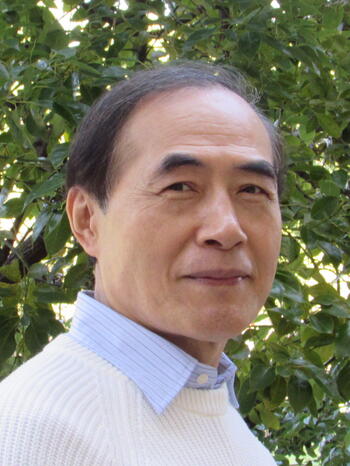
kevin orourke cropped
Kevin O’Rourke’s Reformasi Weekly analyzes politics and policy-making for organizations operating in Indonesia. Subscribers include embassies, NGOs, universities, and companies. His firm, Reformasi Information Services, provides political risk consul­ting and customized research. His latest publication, 2019 Election Primer: Players, Playing Field and Scenarios (Nov. 2018), reviews in detail the rules, issues, and possible results of the country’s nationwide elections in April 2019. Earlier writings include Who’s Who in Yudhoyono’s Indonesia (2010) and Reformasi: The Struggle for Power in Post-Soeharto Indonesia (2002). Kevin started his career in Indonesia in 1994 as an equity research analyst. He is a graduate of Harvard University with an honors degree in government.

Philippines Conference Room Encina Hall, 3rd Floor 616 Serra Mall, Stanford, CA 94305
Kevin O’Rourke Writer and producer, Reformasi Weekly Review of Indonesian politics and policymaking
Seminars
(650) 723-6530
0
Research Scholar, Japan Program
rsd18_095_0078a.jpg

Yuhei is a Research Scholar (post-doc) at the Japan Program of the Asia-Pacific Research Center (APARC) at Stanford University for the academic year of 2018-2019. His broad research interest centers around understanding how firms and people interact over a social and geographic space, and how such interactions shape the socio-economic space in turn. Currently, he is working on projects that elucidate how Japanese firms form firm-to-firm trade linkages and what it implies for Japanese economies. Yuhei obtained his Ph.D in Economics from MIT in 2018. From 2019, Yuhei will join the Department of Economics at Boston University as an assistant professor.

Authors
Larry Diamond
News Type
News
Date
Paragraphs

The following report was originally published by the Hoover Institution.

Scholars from the Hoover Institution, the Freeman Spogli Institute for International Studies, and other organizations today issued a report that examines China’s efforts to influence US institutions and calls for protecting American values, norms, and laws from such interference, while also warning against “demonizing” any group of people.

According to the 192-page document, which was unveiled today (Nov. 29) at a Hoover DC press event, China is attempting on a wide scale to manipulate state and local governments, universities, think tanks, media, corporations, and the Chinese American community. (Click here to read the report, titled “Chinese Influence & American Interests: Promoting Constructive Vigilance.”)

The document was produced by researchers convened by the Hoover Institution and the Asia Society’s Center on US-China Relations, along with support from The Annenberg Foundation Trust at Sunnylands. The working group included leading China scholars who researched the issue for more than a year and a half. Project cochairs are Larry Diamond, senior fellow at the Freeman Spogli Institute for International Studies and the Hoover Institution, and Orville Schell, the Arthur Ross Director at Asia Society Center on US-China Relations.

The objective of the Chinese entities is to promote sympathetic views of China, especially its government, policies, society and culture, the report concludes. The work is described as a “summons to greater awareness of the challenges our country faces and greater vigilance in defending our institutions,” and explicitly not intended to cause unfairness or recklessness towards any group of Americans.

On this point, Diamond and Schell wrote in the afterword, “At the same time that we fortify ourselves against harmful outside interference, we must also be mindful to do no harm. In particular, we must guard against having this report used unfairly to cast aspersions on Chinese, whether Chinese American immigrants who have become (or are becoming) United States citizens, Chinese students, Chinese businesspeople, or other kinds of Chinese visitors, whose contributions to America’s progress over the past century have been enormous.”

The report’s findings include the following:

  • The Chinese Communist party-state leverages a broad range of party, state, and non-state actors to advance its influence-seeking objectives, and in recent years it has significantly accelerated both its investment and the intensity of these efforts.
  • In American federal and state politics, China seeks to identify and cultivate rising politicians. Chinese entities employ prominent lobbying and public relations firms and cooperate with influential civil society groups.
  • On American university campuses, Confucius Institutes provide the Chinese government access to US student bodies, and Chinese Students and Scholars Associations sometimes report on their compatriots on American campuses and put pressure on American universities that host events deemed politically offensive to China.
  • At think tanks, researchers, scholars, and other staffers report regular attempts by Chinese diplomats and other intermediaries to influence their activities within the United States. China has also begun to establish its own network of US think tanks.
  • In business, China is using its companies to advance strategic objectives abroad, gaining political influence and access to critical infrastructure and technology. China has made foreign companies’ continued access to its domestic market conditional on their compliance with Beijing’s stance on Taiwan and Tibet.
  • In the technology sector, China is engaged in a multifaceted effort to misappropriate technologies it deems critical to its economic and military success. Beyond economic espionage, theft, and the forced technology transfers that are required of many joint venture partnerships, China also captures much valuable new technology through its investments in US high-tech companies and by exploiting the openness of the American economy.
  • In the American media, China has all but eliminated independent Chinese-language media outlets that once served Chinese American communities. It has co-opted existing Chinese-language outlets and established its own new media outlets.

Policy principles

Looking to the future, the scholars offer a set of policy principles for guiding American relationships with Chinese entities. These include:

  • promoting greater transparency of financial and other relationships that with Chinese entities which may be subject to improper influence;
  • promoting the integrity of American institutions; and
  • seeking greater reciprocity for American institutions to operate in China to an extent commensurate with Chinese institutions’ ability to operate in the United States.

For example, the report urges that the US media should undertake careful, fact-based investigative reporting of Chinese influence activities, and it should enhance its knowledge base for undertaking responsible reporting.  Also, Congress should perform its constitutional role by continuing to investigate, report on, and recommend appropriate action concerning Chinese influence activities in the United States.

However, the report should not be viewed as an invitation to a McCarthy era-like reaction against Chinese in America, the researchers noted.

“We reiterate: it is absolutely crucial that whatever measures are taken to counteract harmful forms of Chinese influence seeking not end up demonizing any group of Americans, or even visitors to America, in ways that are unfair or reckless,” wrote Diamond and Schell.


MEDIA CONTACTS:

Clifton B. Parker, Hoover Institution: 650-498-5204, cbparker@stanford.edu


Hero Image
gettyimages 184287950 Getty Images
All News button
1
Paragraphs

Reconciling higher freshwater demands with finite freshwater resources remains one of the great policy dilemmas. Given that crop irrigation constitutes 70% of global water extractions, which contributes up to 40% of globally available calories (1), governments often support increases in irrigation efficiency (IE), promoting advanced technologies to improve the “crop per drop.” This provides private benefits to irrigators and is justified, in part, on the premise that increases in IE “save” water for reallocation to other sectors, including cities and the environment. Yet substantial scientific evidence (2) has long shown that increased IE rarely delivers the presumed public-good benefits of increased water availability. Decision-makers typically have not known or understood the importance of basin-scale water accounting or of the behavioral responses of irrigators to subsidies to increase IE. We show that to mitigate global water scarcity, increases in IE must be accompanied by robust water accounting and measurements, a cap on extractions, an assessment of uncertainties, the valuation of trade-offs, and a better understanding of the incentives and behavior of irrigators.

 
All Publications button
1
Publication Type
Journal Articles
Publication Date
Journal Publisher
Science
Authors
Quentin Grafton
Paragraphs
Handbook of International Food and Agricultural Policies is a three-volume set that aims to provide an accessible reference for those interested in the aims and implementation of food and farm policies throughout the world. The treatment is authoritative, comprehensive and forward looking. The three volumes combine scholarship and pragmatism, relating academic writing to real-world issues faced by policy-makers. A companion volume looking at the future resource and climate challenges for global agriculture will be published in the future.

Volume I covers Farm and Rural Development policies of developed and developing countries. The volume contains 20 country chapters together with a concluding comprehensive synthesis of lessons to be drawn from the experiences of the individual countries.

Volume II examines the experience of countries with food policies, including those dealing with food safety and quality and the responsibility for food security in developing countries. The chapters address issues such as obesity, nutritional supplements, organic foods, food assistance programs, biotech food acceptance, and the place of private standards.

Volume III describes and explains the international trade dimension of farm and food policies — both at the bilateral and regional level — and also the multilateral rules that influence and constrain individual governments. The volume also looks at the steps that countries are together taking to meet the needs of developing and low-income countries.

The volumes are of value to students and researchers interested in economic development, agricultural markets and food systems. Policy-makers and professionals involved in monitoring and regulating agricultural and food markets would also find the volumes useful in their practical work. This three-volume set is also a suitable source for the general public interested in how their food system is influenced by government policies.

Readership: Students and researchers who are interested in economic development, agricultural markets and food systems; and policy-makers and professionals involved in monitoring and regulating agricultural and food markets.


All Publications button
1
Publication Type
Books
Publication Date
Journal Publisher
World Scientific Publishing
Authors
Number
3 volumes
Authors
Siegfried S. Hecker
News Type
Commentary
Date
Paragraphs

My reply to the frequently asked question if Kim Jong Un will ever give up North Korea’s nuclear weapons is, “I don’t know, and most likely he doesn’t know either. But it is time to find out.” However, insisting that Kim Jong Un give a full declaration of his nuclear program up front will not work. It will breed more suspicion instead of building the trust necessary for the North to denuclearize, a process that will extend beyond the 2020 US presidential election.

However, the time it will take to get to the endpoint should not obscure the progress that has already been made. Since this spring, Kim Jong Un has taken significant steps to reduce the nuclear threat North Korea poses. He has declared an end to nuclear testing and closed the nuclear test tunnels by setting off explosive charges inside the test tunnel complex. He also declared an end to testing intermediate- and long-range missiles including intercontinental ballistic missiles (ICBMs). I consider these as two of the most important steps toward reducing the threat North Korea poses and as significant steps on the path to denuclearization.

Whereas the North still poses a nuclear threat to Japan and South Korea as well as US military forces and citizens in the region, the threat to the United States has been markedly reduced. In my opinion, North Korea needs more nuclear and ICBM tests to be able to reach the United States with a nuclear-tipped missile. Freezing the sophistication of the program is a necessary precursor to rolling it back in a step-by-step process.

At the September 2018 inter-Korean summit in Pyongyang, Kim also told President Moon that he would commit to dismantling the Yongbyon nuclear complex if the US takes commensurate measures—unspecified, at least in public. The Yongbyon complex is the heart of North Korea’s nuclear program. Shutting it down and dismantling it would be a very big deal because it would stop plutonium and tritium production (for hydrogen bombs) and significantly disrupt highly enriched uranium production.

Yet, Kim’s actions have been widely dismissed as insignificant or insincere by both the left and the right of the American political spectrum. In many of these quarters, the sincerity of Kim’s denuclearization promise is judged by whether or not he is willing to provide a full and complete declaration and to agree on adequate verification measures. But Kim’s willingness to provide a full declaration at this early stage tells us little about his willingness to denuclearize. Moreover, I maintain that insisting on this approach is a dead end, certainly as long as Washington continues to apply “maximum pressure” instead of moving to implement the steps on normalizing relations that President Trump agreed to in the June Singapore statement.

A full declaration is a dead end because it is tantamount to surrender, and Kim has not surrendered, nor will he. A complete account of North Korea’s nuclear weapons, materials, and facilities would, in Kim’s view, likely be far too risky in that it would essentially provide a targeting list for US military planners and seal the inevitable end of the nuclear program and possibly his regime.

Furthermore, a declaration must be accompanied by a robust verification protocol. That, in turn, must allow inspections and a full accounting of all past activities such as production and procurement records as well as export activities. And, once all these activities are complete, an inspection protocol must provide assurances that activities that could support a weapons program are not being reconstituted. This would be a contentious and drawn-out affair.

It is inconceivable that the North would declare all of its nuclear weapons, their location, and allow inspections of the weapons or of their disassembly up front. But in addition to the weapons themselves, a nuclear weapon program consists of three interlocking elements: 1) the nuclear bomb fuel, which depending on the type of bomb includes plutonium, highly enriched uranium (HEU), and forms of heavy hydrogen—deuterium and tritium; 2) weaponization—that is, designing, building and testing weapons, and; 3) delivery systems, which in the case of North Korea appear to be missiles, although airplane or ship delivery cannot be ruled out. Each of these elements involves dozens of sites, hundreds of buildings, and several thousand people.

Let me give an example of what is involved just for verification of plutonium inventories and means of production. Plutonium is produced in reactors by the fission of uranium fuel. We estimate that most of the North’s plutonium has been produced in its 5 MWe (electric) gas-graphite reactor at the Yongbyon complex. A complete declaration must provide for the entire operations history (along with its design and operational characteristics) going back to its initial operation in 1986 to correctly estimate how much plutonium was produced.

In addition, North Korea has operated the Soviet-supplied IRT-2000 research reactor at the Yongbyon site since 1967. Although little plutonium has likely been produced there, this would have to be verified by providing the complete operating history along with performance characteristics since its initial operation. North Korea has also constructed an experimental light water reactor (ELWR) that is likely not yet operational. Its status would have to be checked to see if it was configured to favor weapon-grade plutonium production. Finally, North Korea began to build but never completed 50 MWe and 200 MWe gas-graphite reactors, whose construction operations were stopped by the Agreed Framework in 1994. Their status would have to be verified.

The 5 MWe reactor fuel consists of natural uranium metal alloy fuel elements. Tracking the entire history of fuel fabrication would be an important verification step for plutonium production. It starts with uranium ore mining, milling and conversion to uranium oxide. This is followed by a few additional steps to produce the uranium metal that is formed into fuel elements for the reactor to produce plutonium. Some of these same steps would also be used, but then complemented by turning the uranium into a compound that serves as the precursor gas (uranium hexafluoride) for centrifuge enrichment to produce low enriched uranium for light water reactors or highly enriched uranium for bombs.

A complete and accurate accounting of fuel produced would also likely show a discrepancy that indicates that more fuel was produced at Yongbyon than was consumed. The difference could be accounted for by the fuel that North Korea produced for the gas-graphite reactor it built in Syria, a project that was terminated by Israel’s air raid on the Al Kibar site in September 2007. North Korea is unlikely to acknowledge the illicit construction of the Syrian reactor as part of its own plutonium declaration.

Once produced in the reactor, plutonium has to be extracted from the used or spent fuel after a sufficient period of time that allows the spent fuel to cool thermally and radioactively. The extraction or separations process is accomplished in a reprocessing facility using mechanical and chemical methods. The North’s reprocessing facility became operational in the early 1990s. All of its operations records would have to be examined and verified. In addition, it is likely that some small amount of plutonium that may have been produced in the IRT-2000 reactor was separated in the hot cell facilities in that complex. Its records would have to be examined and verified.

After plutonium is separated, it must be purified, alloyed, cast and machined into final bomb components. Each of these steps generates residue and waste streams that must be monitored and assessed for their plutonium content. Based on my visits to Yongbyon and discussions with the North’s technical staff, I believe that the steps beginning with delivery of yellowcake to Yongbyon (from the uranium mining and milling sites), plus all steps for fuel fabrication, reactor production of plutonium, spent fuel cooling, reprocessing, plutonium purification and alloying into metal ingots are conducted at Yongbyon.

During my visits to Yongbyon, I was told that the plutonium ingots are then taken off site (of an undeclared location) in which the plutonium is cast into bomb components—which would then be followed by machining and assembling into pits, the plutonium cores of the weapons. In 2010, I was also told that all plutonium residues and wastes from reprocessing and plutonium metal preparation were still stored at Yongbyon (under questionable safety conditions). Very little had been done to prepare the spent fuel waste for final disposition. This is likely still the case and, hence, most of the reprocessing facility must remain operational after the rest of Yongbyon is shut down in order to prepare the hazardous waste for safe, long-term disposition. This will also complicate the plutonium inventory verification.

A complete declaration must also include how much plutonium was used during underground testing. In addition to the six known tests at Punggye-ri, North Korea also claims to have conducted “subcritical” experiments (stopping just short of a nuclear detonation), which I consider to be unlikely. If it did, however, North Korea would have to declare the amount of plutonium used and its current state, particularly since such experiments could leave plutonium in a usable form unlike the case for nuclear detonations. To verify the nuclear test history of plutonium, as well as for highly enriched uranium, it would be necessary to provide information or allow drill-back inspections into the test tunnels at Punggye-ri to ascertain the type and amount of nuclear material used in the test.

To complicate matters even further, if one or more of the North’s test devices failed to produce a nuclear explosion, then plutonium (or HEU) could still be resident in the tunnels. Both the United States and Russia experienced such test failures. This is also possibly the case for North Korea because there is still some uncertainty as to whether or not a nuclear test was conducted in May 2010 when a faint seismic signal was observed from the test area. For the most part, the jury is still out on that event, but the North would now have to allow inspections and verification.

It should be apparent that the declaration plus commensurate verification of the amount of plutonium North Korea possesses, which I believe is only between 20 and 40 kilograms, will be an enormous job. I cannot see it being accomplished in the current adversarial environment and certainly not within the timeframe that has been specified by the US government.

A similar sequence of declarations, inspections, and verification measures would have to be developed for the other bomb fuels, namely HEU and the hydrogen isotopes, deuterium and tritium. Verification of HEU inventories and means of production will be particularly contentious because very little is known about the centrifuge facility at the Yongbyon site. As far as we know, my Stanford colleagues and I are the only foreigners to have seen that facility, and then only in a hurried walk-through in 2010. In addition, there exists at least one other covert centrifuge site.

The situation is even more problematic for the second element of the North’s nuclear program, that of weaponization, which includes bomb design, production, and testing because we know nothing about these activities or where they are performed. Although we have some information regarding the nuclear test site at which six nuclear tests were conducted, we do not know if there are other tunnel complexes that have been prepared for testing.

The third element includes all of the North’s missiles and its production, storage and launch sites and complexes. These will also represent a major challenge for complete and correct declarations, inspections and verification.

Once all of the elements have been declared and the dismantling begins, then the focus will have to change to verifying the dismantlement and assessing the potential reversibility of these actions—a challenge that is not only difficult, but one that must be ongoing.

Verification was one of the sticking points during the 2007-2008 diplomatic initiative pursued late in the George W. Bush administration. In 2008, the North turned over copies of 18,000 pages of operating records of the reactor and reprocessing facilities in Yongbyon. The veracity of that disclosure has never been established because diplomatic efforts fell apart when the United States insisted on more declarations up front and North Korea accused Washington of having moved the goal posts. That declaration constituted only a small part of what I outlined above as being necessary for a full accounting of plutonium, not to mention the other components of North Korea’s nuclear program. That was 10 years ago, and much has happened since to make future declarations and verification much more problematic.

At this time, the level of trust between Pyongyang and Washington required for North Korea to agree to a full, verifiable declaration up front does not exist. Hence, my colleagues Robert Carlin and Elliot Serbin and I have suggested a different approach. Negotiations should begin with an agreed end state: North Korea without nuclear weapons or a nuclear weapon program. Civilian nuclear and space programs would remain open for negotiation and possible cooperation. But all facilities and activities that have direct nuclear weapons applicability must eventually be eliminated.

Rather than insisting on a full declaration up front, the two sides should first agree to have the North take significant steps that reduce the nuclear threat it poses in return for commensurate movements toward normalization—the details of which would have to be worked out during negotiations. A good next step for the North would be the destruction of the 5 MWe plutonium production reactor, which would be part of the package that Kim proposed to Moon at the Pyongyang Summit. If these actions are matched by US steps toward normalization as pledged in the Singapore statement, they will serve to build the trust required for the North to initiate a phased declaration process that initially covers operations in Yongbyon and eventually includes the entire nuclear program discussed above.

Unfortunately, the strategic opening created by the Singapore and North-South summits has not been followed by such tactical steps to get the negotiation process off the ground. The North and the South are ready to create a commonly acceptable path forward, but we have the worst of environments in Washington. The Trump team claims progress is being made but insists on maintaining maximum pressure. The North’s Foreign Ministry has pointed outthat the “improvement of relations and sanctions are incompatible.” Also, most US North Korea watchers are either wedded to old think that you can’t negotiate with Pyongyang or they are determined to prove President Trump’s claims on North Korea wrong.

With nuclear tensions on the Korean Peninsula dramatically reduced, it is time to find out if Kim’s drive to improve the economy will eventually lead to denuclearization. He may determine that his nuclear arsenal poses a significant hindrance to economic development that outweighs the putative benefits it confers. Washington and Seoul should work together to encourage rather than inhibit this potential shift.


Hero Image
hecker2
All News button
1
-

This study focused on an important but often overlooked aspect of safety in medicine: physician safety. In China, patients may violently protest against doctors via disruptive behaviors when facing unsatisfying results, jeopardizing physicians’ security, affecting their diagnostic reasoning, and ultimately harming patient safety. We investigated the relationship between disruptive behaviors, government intervention, and protest results. Statistical analyses reveal that the ‘paying for peace’ mechanism can create distorted incentives for patients and encourage more riots. Efforts should be made to improve service quality and channel medical disputes into the legal framework.

Image
lingrui liu yale cropped
Lingrui Liu is an Associate Research Scientist at the Yale School of Public Health, Department of Health Policy and Management. Prior to joining the YSPH faculty in fall of 2018, she obtained an ScD from Harvard University (2018). Her research interests include health care organizations, quality improvement, patient safety, organizational design and culture, and implementation of evidence-based practices.

Lingrui Liu Associate Research Scientist, the Yale School of Public Health
Seminars
Paragraphs

The emergence of a global digital ecosystem has been a boon for global communication and the democratization of the means of distributing information. The internet, and the social media platforms and web applications running on it, have been used to mobilize pro-democracy protests and give members of marginalized communities a chance to share their voices with the world. However, more recently, we have also seen this technology used to spread propaganda and misinformation, interfere in election campaigns, expose individuals to harassment and abuse, and stir up confusion, animosity and sometimes violence in societies. Even seemingly innocuous digital technologies, such as ranking algorithms on entertainment websites, can have the effect of stifling diversity by failing to reliably promote content from underrepresented groups. At times, it can seem as if technologies that were intended to help people learn and communicate have been irreparably corrupted. It is easy to say that governments should step in to control this space and prevent further harms, but part of what helped the internet grow and thrive was its lack of heavy regulation, which encouraged openness and innovation. However, the absence of oversight has allowed dysfunction to spread, as malign actors manipulate digital technology for their own ends without fear of the consequences. It has also allowed unprecedented power to be concentrated in the hands of private technology companies, and these giants to act as de facto regulators with little meaningful accountability. So, who should be in charge of reversing the troubling developments in our global digital spaces? And what, if anything, can be done to let society keep reaping the benefits of these technologies, while protecting it against the risks?

All Publications button
1
Publication Type
Journal Articles
Publication Date
Authors
Eileen Donahoe
Authors
Beth Duff-Brown
News Type
Q&As
Date
Paragraphs

Suhani Jalota was only 20 years old when she established a foundation to help impoverished women in the slums of her native city, Mumbai. She was 23 when Forbes named her one of Asia’s 30-Under-30 Social Entrepreneurs as her foundation was taking off.

Now, at the ripe old age of 24, she is embarking on her pursuit of a PhD in health policy on the econ track at Stanford Medicine’s Department of Health Research and Policy.

As a social entrepreneur, she is hoping to create self-sustaining health organizations managed entirely by the people in the low-income communities they serve.

Last year, Jalota, who is also in the first cohort of Knight-Hennessy Scholars, received the Queen’s Young Leader award from Queen Elizabeth II and attended the royal wedding of Prince Harry and American actress Meghan Markle, who is now Duchess of Sussex.

The Myna Mahila Foundation— which provides affordable sanitary products and promotes employment and empowerment among women in Mumbai’s slums — was the only non-UK charity chosen to receive donations in lieu of gifts for the royal couple.

Stanford Health Policy caught up with Jalota to ask her a few questions about what inspires her and how she became so passionate about sanitary health and empowering women in India.

Who inspired you to become social-entrepreneur at such a young age?

I come from a government family and, growing up, our conversations at home were always about the development of India and the status of women. My father is an Indian civil servant who has worked on water sanitation for the city; my mom works with underprivileged girl children, and my brother creates water filters for the same slum community. My grandparents were in the police. It’s just what we do. It’s our family calling. 

As for entrepreneurship, it was Duke University, the Baldwin Scholars Program and the Melissa and Doug Entrepreneurship Fellowship that actually made me believe that all the dreams I had to change the pitiful state of things on the ground in Mumbai could actually be achievable. There I learned to translate the problems I saw to actionable items that the institution was willing to back and support endlessly.

Then in 2011, I met Dr. Jockin Arputham, who spent 40 years working in the slums of Mumbai as the founder of Slum Dwellers International. He became my inspiration, my idol and my mentor. He singlehandedly improved the lives of millions of women.

Dr. Arputham passed away in October. I am here to complete this mission.

Image
myna phoooo

What inspired you to establish the Myna Mahila Foundation? 

When I started spending more time with women in the slum communities they told me horrific stories about living on the railway tracks, children dying in front of them, and not being able to walk the public toilets without being sexually harassed. Some were taking pills to constipate themselves just so they did not have to go to the public toilet. Others would tell me how they had been married off at 12 and were still living with drunk husbands who beat them every day. 

Women were ignoring their own health and it really struck me as how this would lead to such wasted potential for the women, and for India.

The slum community leaders and I began brainstorming — we became very chatty. That’s where the name comes from. Myna from the chatty South Asian bird and Mahila, which means women in Hindi. And we found that their menstrual cycles were physically and mentally exhausting. We found that sanitation and hygiene were clear signals of dignity for women, so we jumped on that.

You see, 320 million women in India do not have access to sanitary pads. And menstruation in India is a taboo health topic; there is a stigma to shopping for sanitary pads. Most women use rags on their periods and these often become dirty, leading to urinary and vaginal infections.

When you are trapped under an aluminum roof where your horizon is the lining of the slum settlement, and you only see limitations ahead of you, it is difficult to see another way of life. After more than six years of working on sanitation and health research with these women, I realized the problems lay deeply entrenched in a woman’s lack of agency, or ability to make decisions. You are brought up to think that what the generations ahead of you have been doing is the only way of life. Hiding your periods, not cooking food or sleeping with the family during your periods, not going to the temple or playing sports — you believe this is the only way to live.

So we came up with a scheme to sell sanitary pads door-to-door to women who would normally not leave their homes or go to a pharmacy to buy them from male clerks. And we get to know these women; they are opening up and exploring things outside the confines of their husbands’ world. I learned that if women were confident to talk about their periods and menstrual hygiene, it could break the silence surrounding domestic violence or sanitation.

Tell us about the women who work for you and the women you serve. 

We employ women from the slum communities we serve, including the accountants, production and sales managers, and the education trainers. We work mostly with Muslim women as that is a representation of the demographics of the communities we are in.

We currently meet about 10,000 women at their doorsteps every month in the 12 slums across Mumbai. It’s not about giving out free pads — a woman gets her period 450 times in her lifetime, so what we’re trying to do is make sure that she understands that it’s a normal health cycle that should not stop her from getting her education and jobs. We have more than 500 girls in our sponsor a girl program, with 100 more girls joining every month. We hold individual counseling and mentorship for these girls along with menstrual hygiene workshops at health camps. We employ 20 women and have partnerships with self-help groups across the city who work with us part-time.

Image
You strongly believe that self-sustaining health organizations should be managed by women in those communities. Why is this so important?

In the words of my mentor Dr. Arputham, it’s not our purpose to tell the women in the slums what to do; you must think about it from their perspective of what they need and help them create their own change. This has been my mission ever since.

We have millions of NGOs in India so you realize that if things are not really improving at a national level, then there’s something that we’re not doing right. We need the civic mindset to marry the efficiency of the business world. This makes people less dependent and more autonomous to be in control of their own situations. And that comes with a sense of pride.

Why focus on health and sanitation?

We are still struggling with the basics in India: basic health, which includes food, housing, potable water and improved sanitation. Numerous research studies have demonstrated that improvements in sanitation have led to dramatic improvements in health, such as life expectancy outcome measures. Unless we have basic health standards achieved, we will remain behind. To add to the problem, health-care is often deprioritized in India. While it accounts for nearly 18 percent of the GDP here in the United States, for example, it only accounts for 1 percent in India. Can you imagine that? With more than 1 billion people. The role of the public sector in India is to get people on the same level playing field with the basics: education, health care so you’re well enough to go to school or work, find food, shelter and water.

India is a true democracy — so if people start to recognize the importance of health and demand better health care, they can get it. 

What are your goals for the PhD?

To learn more research techniques to use for conducting experiments on the ground for a variety of topics, including women’s demand for health care, effects of positions of power in seeking health care, and the connection between environment and health. On the supply side, I am becoming increasingly interested in understanding pay-for-performance incentive structures in health institutions and for front-line health workers.

I will also be spending my December breaks and summers in India working at the foundation. After my second year, I hope to continue data collection for my dissertation topic: the effect of environmental changes on health outcomes, such as child stunting levels in the slums. As part of my undergrad thesis, I collected anthropometric data on 880 children to look at the effect of slum redevelopment (when the government forcibly relocates people from slums to government subsidized housing) on child stunting. I learned that when a child has one additional year in the buildings — instead of out in the slums with no toilets and clean water and proper ventilation — they were less likely to be stunted. The effect was even more pronounced (and significant) for children moving from slums without toilets than for children moving from slums with toilets.

Another area of research for me moving forward is how this plays out if a pregnant mother gives birth in the slums or the building. Is that affecting the child’s birth weight? Is water quality, sanitation, population density — have other health outcomes actually improved?

You could have gone anywhere for your PhD. Why Stanford?

The Knight Hennessy Scholars Program — that was a very compelling pull. Further, I think that being at Stanford gives you this additional advantage of having access to really positive technology like Virtual Reality — giving people exposure to a different world. We want people to demand better health care, so if they can experience what it feels like to walk into a hospital and a clean waiting room with a bench and a trash can, it can change their concept of what they deserve. I’m really excited to learn more about how new technologies can be applied in the slums to prompt people to stand up and demand better for themselves.

I took two women who work at Myna Mahila with me to the royal wedding. These are women who come from the slums — and what impressed them most was the cleanliness. They couldn’t believe how people could keep everything so clean. If more women see this through VR, they will start to think that this world should become theirs too. We have access to thousands of women and if we can teach menstrual hygiene education through this technology — well, as an entrepreneur, I get very excited about this. This is just one of the many technologies I want to learn more about and see if they can be applied in the slums.

Image
myna mahila markle

What did you make of Meghan Markle’s visit to the foundation in January 2017?

When she came to visit she told us she would support us in any way that she could. She kept her word. For us being chosen as one of seven charities for the royal wedding, I thought to myself, oh my God, she really thinks that we’re on to something that could actually change the world for many women. I feel like I have a huge responsibility to live up to their expectations. Now we have to keep our word to them and help women meet their true potential.


Hero Image
suhani jalota profile Studio 31
All News button
1
0
Eloise Duvillier

Eloise Duvillier is the Program Manager of the Program on Democracy and the Internet at the Cyber Policy Center. She previously was a HR Program Manager and acting HR Business Partner at Bytedance Inc, a rapidly-growing Chinese technology startup. At Bytedance, she supported the globalization of the company by driving US acquisition integrations in Los Angeles and building new R&D teams in Seattle and Silicon Valley. Prior to Bytedance, she led talent acquisition for Baidu USA LLC’s artificial intelligence division. She began her career in the nonprofit industry where she worked in foster care, HIV education and emergency response during humanitarian crises, as well as helping war-torn communities rebuild. She graduated from University of California, Berkeley with a bachelor’s degree in Development Studies, focusing on political economics in unindustrialized societies.

Program Manager, Program on Democracy and the Internet
Subscribe to Asia-Pacific