-

Improvements in medical treatment have clearly contributed to significant increases in medical spending, yet there is relatively little quantitative evidence on whether the rise in expenditure is “worth it” in the sense of producing health outcomes of commensurate value. This seminar will focus on empirical research assessing the net value of health care for patients with chronic disease, using the case of type 2 diabetes mellitus. Based on analysis of detailed longitudinal, patient-level data, the collaborating researchers from Hong Kong, Japan, Taiwan, the Netherlands, and the US describe patterns in resource use and quality outcomes as measured by clinical markers and predicted risk of complications and death. In most of the studied cases, increases in spending were accompanied with improvements in outcomes of commensurate or greater value, given a range of values for a quality-adjusted life year. The authors conclude with a discussion of what the results imply about productivity of medical care, quality adjustment of price indices for healthcare, and policies for healthy aging in Asia (based on a forthcoming book).

Philippines Conference Room Encina Hall, 3rd Floor 616 Serra Mall, Stanford, CA 94305
Jianchao Quan Hong Kong University
616 Serra StreetEncina Hall E301Stanford, CA94305-6055
0
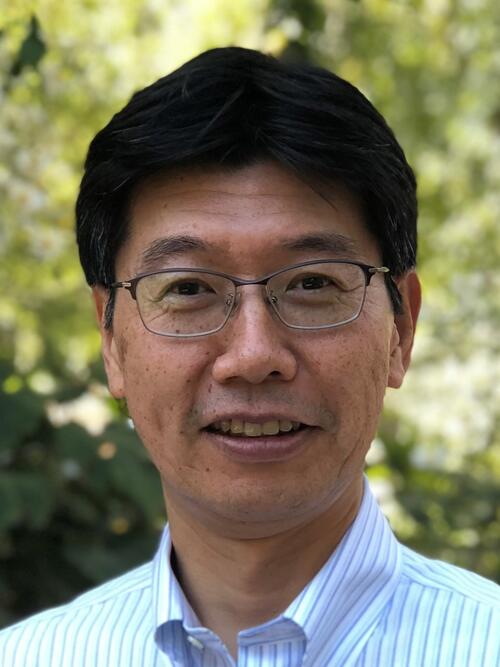
toshiaki_iizuka.jpg Ph.D.

Toshiaki Iizuka is Professor at Graduate School of Public Policy and Graduate School of Economics, the University of Tokyo. Before joining the University of Tokyo in 2010, he taught at Vanderbilt University (2001-2005), Aoyama Gakuin University (2005-2009), and Keio University (2009-2010). He served as Dean of Graduate School of Public Policy, the University of Tokyo, between 2016 and 2018. He is a recipient of Abe Fellowship (2018-2019). 

His research interests are in the field of health economics and health policy. He has written a number of articles on incentive and information in the health care markets. His research articles have appeared in leading professional journals, including American Economic Review, RAND Journal of Economics, Journal of Health Economics, and Health Affairs, among others. Dr. Iizuka holds a PhD in Economics from the University of California, Los Angeles, an MIA from Columbia University, and an ME and BE from the University of Tokyo.
Visiting Scholar, Asia Health Policy Program at APARC
University of Tokyo

Shorenstein APARC
Stanford University
Encina Hall E301
Stanford, CA 94305-6055

(650) 723-9072 (650) 723-6530
0
Senior Fellow at the Freeman Spogli Institute for International Studies
Center Fellow at the Center for Health Policy and the Center for Primary Care and Outcomes Research
Faculty Research Fellow of the National Bureau of Economic Research
Faculty Affiliate at the Stanford Center on China's Economy and Institutions
karen-0320_cropprd.jpg PhD

Karen Eggleston is a Senior Fellow at the Freeman Spogli Institute for International Studies (FSI) at Stanford University and Director of the Stanford Asia Health Policy Program at the Shorenstein Asia-Pacific Research Center at FSI. She is also a Fellow with the Center for Innovation in Global Health at Stanford University School of Medicine, and a Faculty Research Fellow of the National Bureau of Economic Research (NBER). Her research focuses on government and market roles in the health sector and Asia health policy, especially in China, India, Japan, and Korea; healthcare productivity; and the economics of the demographic transition.

Eggleston earned her PhD in public policy from Harvard University and has MA degrees in economics and Asian studies from the University of Hawaii and a BA in Asian studies summa cum laude (valedictorian) from Dartmouth College. Eggleston studied in China for two years and was a Fulbright scholar in Korea. She served on the Strategic Technical Advisory Committee for the Asia Pacific Observatory on Health Systems and Policies and has been a consultant to the World Bank, the Asian Development Bank, and the WHO regarding health system reforms in the PRC.

Director of the Asia Health Policy Program, Shorenstein Asia-Pacific Research Center
Stanford Health Policy Associate
Faculty Fellow at the Stanford Center at Peking University, June and August of 2016
CV
Date Label
Stanford University and NBER
Seminars
Authors
News Type
News
Date
Paragraphs

It was a different Friday’s evening - as I traveled 20km in busy traffic from Beijing’s CBD area (Chaoyang) to its Silicon Valley (Zhongguancun). This time I did not come for any business dinner rather I came for the start of Stanford Ignite program, a mini-MBA for entrepreneurs, at Peking University (PKU).

As I walked from PKU's entrance to Stanford Center where the program was held, the city noise gradually diminished and stunning views began to appear - a peaceful lake alongside with many trees and a pagoda. Somehow, they reinforced each other to create a "Zen" atmosphere. 

SCPKU sits deep inside the campus.  It was an architectural masterpiece mixing with Chinese and Western styles.  Simply by staying there,  I could easily feel inspired. It was full of state-of-the-art facilities, especially its immersive tele-conferencing technologies.

Having a group of 40 entrepreneurial people in the same room guaranteed that there would be a great amount of energy. However, what intrigued me from the first day was the enormous interests and energy coming from the other side of the world - Stanford GSB faculty. Though we saw each other only through two big screens, it did not stop the continual interactions between both sides, thanks to the state-of-the-art facility. There was constant exchange of opinions, and the lectures were very engaging.

Great lecturers made learning effortless. From one lecture to another, block by block, I found myself easily forming a business-centered framework. Many credits to the GSB faculty - they told stories and jokes; played music and waved hands; smiled and laughed. It turned out that those memorable moments effectively glued the hard pieces of knowledge together into something solid. It was indeed a very enjoyable and satisfying learning experience.

In addition to the lectures, a large part of the program was the team venture project where five people worked on a venture idea together and pitched it to real investors at the end of the program. I learned a tremendous amount from this experience. Having five strangers from diffrent backgrounds coming together to suddenly work on a new project with tight deadlines was a huge challenge. These challenges also meant great opportunities to learn. The program set up weekly milestones for each team to reach.  Those milestones were essentially project breakdowns that we could adopt to our own ventures. Weekly team check-ins and assigned mentors provided us feedback on areas we could improve and work on.  As a team, we have achieved so much from the beginning to the end.  Despite all the other excellent teams, we, in the end, won first place backed up by GSR venture!

Before I joined the Ignite Program, I was a full-time, solo entrepreneur. I brought my venture idea to the Ignite in hope of finding potential business partners, polishing my venture idea, and pitching it to potential VCs. With the exception of finding a business partner, I have achieved all of my targets. I would definitely recommend Ignite to other who are similarly interested around me.

Ignite Program has taught me a great deal (about business, teamwork etc.). Nevertheless, I think the core of Ignite is its people. When I close my eyes, what I remember are energetic lecturers, friendly classmates, always-smiling facilitators, inspiring speakers, and lovely team members. I can share all I learned to others around me, but they can’t get the rich experience that I have unless they join the program by themselves.  Welcome to the Ignite family.

About the author:  Zilong Wang is founder and CEO of Liblux Technology, a company that develops "interactive video" based social application for generation Z.  He obtained PhD (Optoelectronics) and BEng (Electronics Engineering) from University of Southampton, UK.

Image
img 9225


Image
entire class

Hero Image
wechatimg18
All News button
1
-

Abstract: China's economic growth over the last thirty years has positioned it to project political and economic power across the world.  In 2013, Chinese President Xi Jinping officially launched the “One Belt, One Road” Initiative, later re-branded as the Belt and Road Initiative (BRI), with the goal of economically connecting China to the countries of the Greater Middle East through a new infrastructural network of roads and maritime ports. The Chinese government has reportedly already spent $250 billion on these projects and will spend up to $1 trillion more in the next decade, much of it in Muslim-majority countries.  This project seeks to answer a number of questions about the economic, political and cultural implications of the BRI.  What does the potential rise of a global trading bloc dominated by the authoritarian regimes of China and the Greater Middle East mean for the liberal economic order?  How will the BRI impact the advancement of human rights in the Greater Middle East?  What types of political tensions might arise between China and BRI target countries because of Chinese state economic investments?  And how is a “rising China” viewed by the citizenries of countries in the Greater Middle East?  


Bio: Lisa Blaydes is a Professor of Political Science at Stanford University.  She is the author of Elections and Distributive Politics in Mubarak’s Egypt (Cambridge University Press, 2011).  Professor Blaydes received the 2009 Gabriel Almond Award for best dissertation in the field of comparative politics from the American Political Science Association for this project.  Her articles have appeared in the American Political Science Review, International Studies Quarterly, International Organization, Journal of Theoretical Politics, Middle East Journal, and World Politics. During the 2008-2009 and 2009-2010 academic years, Professor Blaydes was an Academy Scholar at the Harvard Academy for International and Area Studies.  She holds degrees in Political Science (PhD) from the University of California, Los Angeles and International Relations (BA, MA) from Johns Hopkins University.


Lisa Blaydes Professor of Political Science Stanford University
Seminars
News Type
News
Date
Paragraphs

On November 22, Dr. Delphine Red Shirt lectured on “The History of Native Americans” at the Stanford Center at Peking University.

The lecture started with George Sword and described the “colonizing process” from a free life to one of constant negotiation with the federal government and the pressures on the Native Americans to give up their way of life, but most importantly their land.  She also talked about his wife who still despite pressure to "colonize", in the photograph maintained her long hair (in two long neat braids) and traditional attitude in the way she dressed.  This is important because women are the "culture keepers" who often teach language to children and maintain the traditional ways.

Image
swords

The photographs included “Chief” Red Shirt, her ancestor whom her grandfather is descended from.  A leader for Chief Red Cloud, he was often recognized as a "chief" by the federal government but in reality he was a military/police officer who served at the right hand of one of our greatest chiefs.   Her maternal grandfather, Standing Buffalo, whom Kevin Costner in his film, "Dances with Wolves" depicted our culture with great reverence.  In the museum Costner established in Deadwood, South Dakota (in the heart of our homelands, the Black Hills), Costner displayed Standing Buffalo in the entry way.  Standing Buffalo is the "Kaka (children's word for grandfather)" in her first book, Bead on an Anthill:  A Lakota Childhood" which was also translated and available in Mandarin.  Her second book, Turtle Lung Woman's Granddaughter is about Standing Buffalo's daughter, her mother; the second book is also translated into Mandarin.

Image
chief n movie poster

The photographs ended with the Wounded Knee massacre (often called a "battle" in American History) showing the killing site, the loading of the bodies, and the mass grave that was dug for the over 146 men, women, and children killed by the 7th Cavalry.  In history, our people, the Lakota had defeated this same cavalry at what is called "The Battle of the Little Big Horn" or "Custer's Last Stand".

The talk ended with the early 1970 "Occupation of Wounded Knee" by the American Indian Movement (AIM).  The two events reflect:  one a "killing of a dream" as Black Elk, one of our spiritual leaders who witnessed the aftermath called the massacre.  And the occupation of young Native Americans in February of 1973 when they symbolically took a stand against oppression.  A map showing the Occupation of Alcatraz Island in San Francisco during the 1960's.  The beginning of an era that coincided with the American Civil Rights era.  The last events reflected the fact that we are still here.

One question by the non-Chinese student from Minnesota had to do with renaming parks in Minneapolis to reflect the Native Americans who still live in the city.  Another had to do with voting rights for Native Americans in the U.S.  The answers to both questions affirmed the "renaming" as Stanford this fall (2018) decided, with insistence from Native American students, that Juniper Serra be renamed on campus (road could not be as it is a county road) but the Serra Mall will be renamed to Jane Stanford Mall.  With regard to voting rights, in her home state of South Dakota the voters are very young.  The majority of the population on the Indian Reservation in Pine Ridge, South Dakota is close to the age of 18.  These young voters have elected the youngest (2nd youngest) tribal president at Pine Ridge (age 31).  They have also elected two state representatives in South Dakota.  Nationally we have two women representatives going to the House of Representatives this year (Democrats).

[[{"fid":"234636","view_mode":"crop_870xauto","fields":{"format":"crop_870xauto","field_file_image_description[und][0][value]":"","field_file_image_alt_text[und][0][value]":false,"field_file_image_title_text[und][0][value]":false,"field_credit[und][0][value]":"","field_caption[und][0][value]":"","thumbnails":"crop_870xauto"},"link_text":null,"type":"media","field_deltas":{"22":{"format":"crop_870xauto","field_file_image_description[und][0][value]":"","field_file_image_alt_text[und][0][value]":false,"field_file_image_title_text[und][0][value]":false,"field_credit[und][0][value]":"","field_caption[und][0][value]":"","thumbnails":"crop_870xauto"}},"attributes":{"class":"media-element file-crop-870xauto","data-delta":"22"}}]]

Hero Image
picture11
All News button
1
Paragraphs

Abstract: A large literature has established that the International Monetary Fund (IMF) is heavily politicized. We argue that this politicization has important consequences for international reserve accumulation and financial crises. The IMF generates moral hazard asymmetrically, reducing the expected costs of risky lending and policies for states that are politically influential vis-à-vis the institution. Using a panel data set covering 1980 to 2010, we show that proxies for political influence over the IMF are associated with outcomes indicative of moral hazard: lower international reserves and more frequent financial crises. We support our causal claims by applying the synthetic control method to Taiwan, which was expelled from the IMF in 1980. Consistent with our predictions, Taiwan's expulsion led to a sharp increase in precautionary international reserves and exceptionally conservative financial policies.

All Publications button
1
Publication Type
Journal Articles
Publication Date
Journal Publisher
International Organization
Authors
Phillip Lipscy
Authors
Noa Ronkin
News Type
News
Date
Paragraphs

People who are acquainted with the work of Shorenstein APARC’s Asia Health Policy Program (AHPP) may be aware of the Innovation for Healthy Aging collaborative research project led by APARC Deputy Director and AHPP Director Karen Eggleston. This project, which identifies and analyzes productive public-private partnerships advancing healthy aging solutions in East Asia and other regions, encompasses an upcoming volume, co-authored by Eggleston with Harvard University professors Richard Zeckhauser and John Donohue, about public and private roles in governance of multiple sectors in China and the United States, including health care and elderly care. This volume, however, is not the first collaboration between Eggleston and Zeckhauser.

Zeckhauser, the Frank P. Ramsey Professor of Political Economy at Harvard University’s Kennedy School, is known for his many policy investigations that explore ways to promote the health of human beings, to help markets work more effectively, and to foster informed and appropriate choices by individuals and government agencies. In 2006, Eggleston and Zeckhauser co-wrote a paper about antibiotic resistance as a global threat, an issue that has since received much attention as it has become a critical public health and public policy challenge. Zeckhauser was a pioneer in framing antibiotic resistance as a global threat.

On October 20, 2018, Eggleston was among some 150 colleagues, students, and friends who participated in a special symposium at the Kennedy School to celebrate Zeckhauser’s 50th anniversary of teaching and research, and to anticipate what the next 50 years might bring in the multiple fields he has influenced throughout his long career.

Eggleston joined the first of two panels in that symposium, where she spoke about Zeckhauser’s impact on health policy and about what academics and policymakers should be tackling next on the path to addressing the global threat of antibiotic resistance.

The panel was moderated by Harvard Professor Edward Glaeser. In addition to Eggleston, it included Jeffrey Liebman, Daniel Schrag, and Cass Sunstein.

A video recording of the panel is made available by the Kennedy School. Listen to Eggleston’s remarks (beginning at the 8:42 and 36:20 time marks):


Hero Image
Karen Eggleston speaking on a panel celebrating Harvard Professor Richard Zeckhauser. Harvard Kennedy School
All News button
1
Authors
News Type
News
Date
Paragraphs

As Stanford’s fall quarter draws to a close, the first cohort of students who are participating in Freeman Spogli Institute’s (FSI) inaugural overseas program in Beijing embarked on their final field excursion. The 8 students and 4 Stanford faculty traveled first to Jinan city (济南) (capital of Shandong province), then to Zouping county (邹平), both located in China’s eastern region of Shandong (山东).

Image
pic1 1

Stanford China Studies in Beijing students and faculty being greeted by their hosts in Jinan, Shandong

Three Stanford Master’s in International Policy students and 5 undergraduate students are participating in this pilot program in Beijing at the Stanford Center at Peking University (SCPKU). The pilot program is being offered by FSl in cooperation with Peking University. Details regarding student activities, reflections and earlier travels can be found here.

This third and final trip was significant not only for the wide-ranging sites that the students saw, but also because Zouping County has a storied connection to the wider community of China scholars in the U.S. and to Stanford. Zouping county was the first rural site in China where foreign scholars were given official access to conduct field research in the 1980’s after Deng Xiaoping’s Opening and Reform in 1978. The late Professor Michel Oksenberg (1938-2001), senior fellow at Shorenstein APARC and FSl, who also served as a key member of the U.S. National Security Council under President Jimmy Carter, spearheaded this effort, which brought over eighty U.S. academics to the area between 1984 and 1991 (For more details re. that history, please see here).

The students’ field trip included visits with those at the top of the official pyramid to the village grassroots, including meetings with the Mayor and Vice Mayor of Jinan (pop: 6.8 million) and City Planning officials there; plus local city officials in Zouping County. Students and faculty viewed urban plans for the Jinan International Medical and Science Center and toured the corporate conglomerate, Shandong Weiqiao Pioneer Group (山东魏橋创业集团有限公司) that owns the largest textile factory in the world; and Xiwang Group, Ltd. (西王集团有限公司) whose main lines of business are corn oil production and structural steel. In some ways, the site visits reminded one of China’s economic rise as the manufacturing hub of the world; and its beckoning future as a science and technology giant.

Image
pic2 1

China Studies in Beijing students and faculty viewing plans for the Jinan International Medical and Science Center

Image
pic3 1

(From left to right): Students -- Drew Hasson (MIP second year student); Lucas Hornsby (sophomore); Isaac Kipust (junior); Jenn Hu (sophomore); and Cathy Dao (sophomore) – and Stanford faculty meeting with Mayor and Vice Mayor of Jinan city

Image
pic4 1

(From front, left to back, right): Profs. Jean Oi, Andrew Walder, Scott Rozelle, Tom Fingar stop by at the company store inside Xiwang Group

A highlight of the trip also included the village of Wangjing, Linchi Township, also in Zouping County. Surrounded by village children, mixing with residents and exchanging high-fives with “the kids [and] the grandmothers, ” Stanford students got a chance to enter ordinary homes and see what village life is like in one (albeit affluent and well-developed) township of Linchi.

Image
pic5 1

Professor Scott Rozelle, joined by Isaac Kipust, Lucas Hornsy and Prof. Tom Fingar, engage with village residents of Wangjing

Image
pic6 1

Drew Hasson exchanging high-fives with the residents of Wangjing village

Image
pic7 1

Students and faculty crowded into a village's home

Image

Isaac Kipust playing with the villager's son

Image
pic13

Three boys from Wangjing village with Isaac Kipust and Prof. Scott Rozelle

By the village square, Professor Scott Rozelle even took the opportunity to challenge two village boys to strive for not only a college degree, but a graduate degree; and not just an M.A. but a Ph.D. – and not just at any university, but at Stanford University! One day, perhaps – who knows? – Stanford may find itself conferring a doctoral degree to a student who calls Wangjing village his home.

Image
pic7 1

What’s an M.A.? Not higher than a Ph.D.! Prof. Scott Rozelle in conversation with two village boys in the town square at Wangjing

Image

And the laughing continues . . .

Image
pic11 1

Scott Rozelle in conversation with the boys as Profs. Jean Oi and Andrew Walder look on

Image
picture1

All the students, faculty and residents of Wangjing village, Zouping county, gather for the final photo

Students have gone on three field trips during the course of this overseas program – an excursion to the Great Wall at Jinshanling and to Chengde, a “mountain resort” of the Qing Dynasty court; China’s Northeast region, including to the cities of Dalian, Dandong and Jinzhou (see report here); and, now, Shandong province to China’s east. In addition to these field trips, students have also had unparalleled access to speakers from China’s National Development and Reform Commission, which operates directly under China’s State Council; prominent venture capitalistsand start-up entrepreneurs; and executives from large Chinese multinationals. Students have also enjoyed visits to China’s Foreign Ministry for discussions with experts on U.S.-China relations; as well as to the U.S. Embassy, engaging in discussions with its staff on U.S.-China trade tensions and geopolitical relations.  Students have not only accessed the halls of power in China, however, but have also visited peri-urban migrant communities and schools for children of migrant workers.

The China Studies in Beijing Program lasts the length of an academic quarterat Stanford – i.e., a mere eleven weeks – and yet it provided diverse opportunities for students to explore multiple facets of this complex and kaleidoscopic nation – from officialdom to ordinary villages; Beijing’s high-tech entrepreneurs to migrant children; international relations experts to corporate executives at China’s MNCs. Even while taking intensive courses taught by leading Stanford scholars on China’s economy, society, international relations and politics, students also enjoyed weekly brown-bag seminars led by guest speakers who spoke on the current state of U.S.-China relations; China-North Korea trade; U.S.-China military competition; China’s growing middle class; and the country’s severe urban-rural divide.

Pending final university approval, the application page for China Studies in Beijing’s Fall 2019 program will open soon. Please stay tuned for more information here or email Patrick Laboon, FSI’s Academic Program Manager, at plaboon@stanford.edu for updates. We anticipate the due date for candidate statement of interest and application to be set for the end of January.

Hero Image
image1
All News button
1
Paragraphs

Our Report draws attention to a complex but understudied issue: How will climate warming alter losses of major food crops to insect pests? Because empirical evidence on plant-insect-climate interactions is scarce and geographically localized, we developed a physiologically based model that incorporates strong and well-established effects of temperature on metabolic rates and on population growth rates. We acknowledged that other factors are involved, but the ones we analyzed are general, robust, and global (13).

Parmesan and colleagues argue that our model is overly simplistic and that any general model is premature. They are concerned that our model does not incorporate admittedly idiosyncratic and geographically localized aspects of plant-insect interactions. Some local effects, such as evidence that warmer winters will harm some insects but not others, were in fact evaluated in our sensitivity analyses and shown to be minor (see the Report's Supplementary Materials). Other phenomena, such as plant defenses that benefit some insects and threaten others, are relevant but are neither global nor directional. Furthermore, because Parmesan et al. present no evidence that such idiosyncratic and localized interactions will outweigh the cardinal and universally strong impacts of temperature on populations and on metabolic rates (13), their conclusion is subjective.

We agree with Parmesan and colleagues that the question of future crop losses is important and needs further study, that targeted experimental data are needed (as we wrote in our Report), and that our estimates are likely to be conservative (as we concluded, but for reasons different from theirs). However, we strongly disagree with their recommendation to give research priority to gathering localized experimental data. That strategy will only induce a substantial time lag before future crop losses can be addressed.

We draw a lesson from models projecting future climates. Those models lack the “complexity and idiosyncratic nature” of many climate processes, but by building from a few robust principles, they successfully capture the essence of climate patterns and trends (4). Similarly, we hold that the most expeditious and effective way to anticipate crop losses is to develop well-evidenced ecological models and use them to help guide targeted experimental approaches, which can subsequently guide revised ecological models. Experiments and models should be complementary, not sequential.

 
All Publications button
1
Publication Type
Journal Articles
Publication Date
Journal Publisher
Science
Authors
Rosamond L. Naylor
Authors
News Type
Q&As
Date
Paragraphs

Last month, He Jiankui, a Chinese researcher, announced the birth of the world’s first gene-edited babies, whose DNA had been edited to reduce the risk of HIV infection. While the claim has not yet been verified, Chinese authorities have launched an investigation and ordered this researcher’s work to stop. In the discussion that follows, Stanford Law Professor Hank Greely, an expert in the ethical, legal, and social implications of new biomedical technologies, and a Stanford Health Policy Fellow, discusses the legal and ethical questions surrounding the new world of gene-editing.

First, can you explain what the Chinese researcher, He Jiankui, did?

I’ll try but, first, we don’t know whether He Jiankui** did anything except make YouTube videos and give a talk. There has been no independent verification that these babies exist, let alone that he edited their genes. It would be a very bold fraud, but bold frauds have been carried out before in bioscience, including, notably, Hwang Woo-Suk’s false claim in 2004-05 that he had successfully cloned human embryos.

Assuming He Jiankui did what he said he did, he used a fantastic new DNA editing tool called CRISPR (“Clustered Regularly Interspaced Short Palindromic Repeats”) in human embryos very shortly after the eggs were fertilized. His goal was to change a gene called CCR5. This gene makes a protein that sits on the outside of some our white blood cells, crucial to the immune system, called T cells. There is good evidence that T cells that lack CCR5 cannot be (or cannot easily be) infected with HIV; about 1% of Northern Europeans (and a smaller percentage of people elsewhere) have a particular change in their CCR5 gene that deleted 32 base pairs (“letters”) in the DNA sequence and they do not seem to get HIV infections. So, his stated goal was to provide these embryos (and the babies, teenagers, and adults they turn into) with immunity from HIV infection. The data he released, however, shows that one of the twins only had half of her cells modified. If half of her T cells have CCR5, she could still be HIV infected. The other twin had all of her cells changed but not in the way He Jiankui intended, and not in the way found in people. We have no idea whether she will be immune, wholly or partially, from HIV infection.

Is it legal in the U.S.—or anywhere? If not, why?

It is not legal in the U.S. The FDA takes the position, which I think courts would most likely uphold, that genetically altered human embryos are either drugs or biological products (or both) and so under its jurisdiction. It is illegal—a federal crime—to distribute a new drug without FDA approval. The FDA has not approved genome editing for embryos for clinical use. For research uses only, you can get FDA permission more easily. You need to submit an application to the FDA for what’s called an Investigation New Drug (IND) exemption. You need to show the FDA that there is good reason, based on non-human research, that this will not be too risky for the research participants and that there is a reasonable chance it will be effective. His work would not satisfy either side of this and so would not get an IND.

But that’s not relevant right now because since December 2015 Congress has regularly added an amendment to the FDA’s funding bill, prohibiting it from even considering any application, of any kind, for human germline editing. So, if you did this in the US now, you’d be doing it without FDA approval, which would make your use an illegal distribution of a new drug.

In many other countries, particularly in Europe, any germline human genome editing is illegal by specific statute (which it is not in the U.S.). In most countries there is no law on this—many poor countries have other things to worry about—so it is legal (at least, not specifically illegal) in most countries.

What are the dangers? What are the potential benefits?

One danger to the children is that CRISPR might have caused damage to other parts of their DNA. These so-called off-target effects are fairly common when CRISPR is used. In addition to changes in other parts of the genome, we know that He Jiankui did not accurately make the changes he aimed for in the CCR5 gene; it’s possible that the He Jiankui-modified gene would not only be ineffective at preventing HIV but affirmatively harmful.

A second danger is that life without a working CCR5 gene may have its own problems. The Northern Europeans without it include adults and appear healthy but they haven’t been closely followed to see if they are at higher risk for other problems. There is some early evidence, for example, that they might be more susceptible to West Nile Virus and influenza.

The potential benefit to the babies is HIV immunity but it is of very little weight. One twin cannot be immune because half of her cells have CCR5. The other may not be immune. And both are “saved” from the possibility, probably small, that they would become infected after being exposed to HIV (probably several decades in the future). HIV is already a manageable disease (though certainly not fun); we have no idea how easily preventable or treatable it may be in 20 years.

The potential benefit to science/medicine is showing that CRISPR’d babies can be born but if that is worth establishing, it could and should be done in a different setting, with an embryo with a very serious disease for which no good alternative exists.

When might it become legal? 

It could become legal any time Congress lets the appropriations rider lapse (next fall) and FDA decided there was enough safety information to allow it to proceed. I expect that neither of those will happen anytime soon.

When/if it does, would it be governed or overseen by an international organization? How might it be regulated? 

Highly unlikely. In the U.S. it will be overseen by FDA and local IRBs. Not perfect but not terrible.

What are the ethical challenges we’ll face when it does become legal?

For me, really not much. The safety issues for the kids are key. Apart from that, based on our current knowledge of human genetics, there are very few situations where gene editing in embryos will be better than embryo selection. We don’t know enough to make super babies and are unlikely to anytime soon. For some people doing any genetic editing that could pass down to future generations is itself a major ethical issue, a “line in the sand” we should not pass. As I have written elsewhere, I don’t think that’s right. See https://leapsmag.com/much-ado-about-nothing-much-crispr-for-human-embryo-editing/

What legal issues do you anticipate?

If this is tried before it is legal, I would expect federal criminal charges against the clinics/scientists. That might raise the question of whether a gene-modified human embryo really is a drug or biological device for purposes of FDA law. If this is tried after it is legal and it goes wrong, big malpractice suits. If it gets used under appropriate regulation, not much.

___

Hank Greely is the Deane F. and Kate Edelman Johnson Professor of Law at Stanford Law School, Director of the Center for Law and the Biosciences, Professor (by courtesy) of Genetics, Stanford School of Medicine, Chair of the Steering Committee of the Center for Biomedical Ethics. And Director of the Stanford Program in Neuroscience and Society.

** He Jiankui was a postdoctoral scholar at Stanford in the laboratory of Prof. Stephen Quake from January 2011 to January 2012. His work in the Quake lab focused on computational analysis and was in no way related to gene-editing.

Hero Image
gettyimages dna Getty Images
All News button
1
Subscribe to Asia-Pacific