-

The event is jointly sponsored by the Japan Program at the Shorenstein Asia-Pacific Research Center and the Japan Foundation Center for Global Partnership.

In this talk, David Leheny (Waseda University) discusses his new book Empire of Hope (Cornell University Press, 2018), which challenges current trends in debates about emotion and politics, arguing that we should instead look at the role of narrative in shaping emotional representation. In the book, Leheny draws from debates about status in international relations theory and from debates about affect and narrative in literary and historical studies to analyze cases from Japan’s Bubble and post-Bubble eras. This talk will focus especially on a 2001 crisis in US-Japan relations over a collision between a US Navy nuclear submarine and a fisheries training boat that resulted in the deaths of nine Japanese, including four high-school students. By presenting grief as both a national emotion and as one that could be narrated through the lens of timeless cultural difference, the US and Japanese governments crafted a crisis resolution that ostensibly rested on “mutual understanding” but that also hid the messier realities of power and of loss in the collision’s aftermath.

Image
lehenyphoto
David Leheny is Professor in the Graduate School of Asia-Pacific Studies at Waseda University. He previously was an assistant and associate professor of political science at the University of Wisconsin-Madison (1998-2007) and the Henry Wendt III ’55 Professor of East Asian Studies at Princeton University (2007-2017). He is the author of, in addition to Empire of Hope, The Rules of Play: National Identity and the Shaping of Japanese Leisure (Cornell University Press, 2003) and Think Global, Fear Local: Sex, Violence, and Anxiety in Contemporary Japan (Cornell University Press, 2006).

Philippines Conference Room Encina Hall, 3rd Floor 616 Serra Mall, Stanford, CA 94305
David Leheny Professor in the Graduate School of Asia-Pacific Studies Waseda University
Seminars
0
andrew_kim.jpg

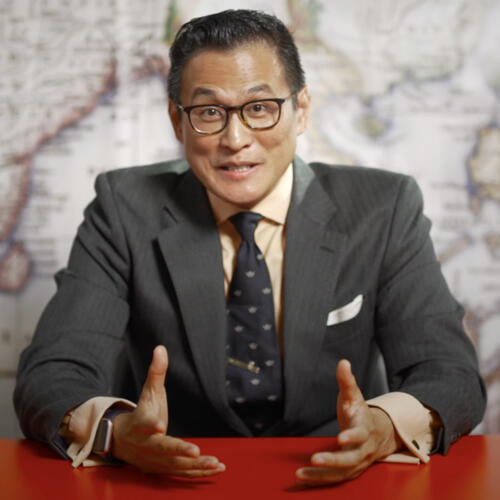
Sung Hyun "Andrew" Kim was a visiting scholar at the Walter H. Shorenstein Asia-Pacific Research Center (APARC) through December 2019. Previously he was William J. Perry visiting scholar at APARC. Kim, who retired from the Central Intelligence Agency in 2018 as a senior intelligence officer after 28 years of service, was assistant director of the CIA's Korea Mission Center, where he helped secure the foundation for the Trump-Kim summit of June 2018.  At Stanford, he will contribute to studies of current North Korea diplomacy in comparison to previous negotiations with the DPRK, a research scope that he refers to as "U.S.-DPRK summit of the century and the tide of history."  Kim will also participate in policy engagement regarding North Korea issues through Shorenstein APARC and its Korea Program.

Kim established the CIA's Korea Mission Center in April 2017 in response to a presidential initiative to address North Korea's longstanding threat to global security. As part of his role as head of the Mission Center, he managed and guided CIA Korean analysts in providing strategic and tactical analytic products for a range of policymakers. He accompanied CIA Director and then Secretary of State Mike Pompeo to Pyongyang in meeting with the North Korean leader Kim Jong Un several times. Formerly he served as the Agency's associate deputy director for operations and technology, leading all efforts to update operational technology and incorporate a state-of-the-art doctrine into CIA training curricula.

Earlier in his career, Kim served as the CIA's chief of station in three major East Asian cities, while also managing the intelligence relationship with politically and militarily complicated foreign countries and advancing U.S. interests. In recognition of his many contributions, Kim was honored by the Agency with the Director's Award (2018), Presidential Rank Award (2012), and the Donovan Award (1990). He speaks fluent Korean, Japanese, and Mandarin Chinese.

Visiting Scholar at APARC
-

Abstract: Materials used in key components of nuclear power reactors, such as the fuel cladding and the pressure vessel, provide shields for the release of highly radioactive isotopes generated in the nuclear fuel to the environment, thus their reliability is an important issue in the safety evaluation.  The accident that occurred at the Fukushima Daiichi in 2011 demonstrated that materials that are considered reliable during normal operating conditions will fail in an extreme accident condition. Subsequently, there has been an international effort on developing materials for Accident Tolerant Fuels (ATF). In addition, the development of new generation of nuclear reactors also calls for new materials that may withstand higher temperatures, higher radiation doses and with better performance under severe corrosive conditions.  This talk will outline the challenges and status for such developments using recent data from the authors’ own research group as examples.  Also, since China is building the most nuclear reactors now and “a nuclear accident anywhere of the world will be an accident of everywhere of the world”, the importance and challenges of collaborating with the Chinese in this area will be discussed. 

Bio: Dr. Lumin Wang is a professor of nuclear engineering, and materials science & engineering at the University of Michigan-Ann Arbor (UM). He came to the US from China in 1982, and received his MS and PhD degrees in Material Science from the University of Wisconsin-Madison in 1984 and 1988, respectively. He worked as a post-doctoral fellow at Argonne National Laboratory and a research scientist at the University of New Mexico before joining the faculty of UM in 1997.  His research has focused on the study of radiation effects of materials using ion beams and transmission electron microscopy. He served as the director of Electron Microbeam Analysis Laboratory, a campus-wide material characterization center at UM between 2005 and 2010. Dr. Wang has published more than 400 papers in research journals and delivered more than 100 invited talks internationally. He has been a member of the International Committee of the American Nuclear Society and an adjunct chair professor of Xiamen University of China since 2011. He has taken more than 100 UM students to China to observe the construction of nuclear reactors during the last 8 summers.


Professor
Lumin Wang Professor, College of Engineering University of Michigan
Authors
News Type
Blogs
Date
Paragraphs

Widespread cultivation of oil palm trees has been both an economic boon and an environmental disaster for tropical developing-world countries. New research points to a more sustainable path forward through engagement with small-scale producers.

Nearly ubiquitous in products ranging from cookies to cosmetics, palm oil represents a bedeviling double-edged sword. Widespread cultivation of oil palm trees has been both an economic boon and an environmental disaster for tropical developing-world countries, contributing to large-scale habitat loss, among other impacts. New Stanford-led research points the way to a middle ground of sustainable development through engagement with an often overlooked segment of the supply chain (read related overview and research brief).

"The oil palm sector is working to achieve zero-deforestation supply chains in response to consumer-driven and regulatory pressures, but they won’t be successful until we find effective ways to include small-scale producers in sustainability strategies,” said Elsa Ordway, lead author of a Jan. 10 Nature Communications paper that examines the role of proliferating informal oil palm mills in African deforestation. Ordway, a postdoctoral fellow at The Harvard University Center for the Environment, did the research while a graduate student in Stanford’s School of Earth, Energy & Environmental Sciences.

Image
33707742795 db455551f6 o

An oil palm plantation in Cameroon (Image credit: Elsa Ordway)

Using remote sensing tools, Ordway and her colleagues mapped deforestation due to oil palm expansion in Southwest Cameroon, a top producing region in Africa’s third largest palm oil producing country (read about related Stanford research). Contrary to a widely publicized narrative of deforestation driven by industrial-scale expansion, the researchers found most oil palm expansion and associated deforestation occurred outside large, company-owned concessions, and that expansion and forest clearing by small-scale, non-industrial producers was more likely near low-yielding informal mills, scattered throughout the region. This is strong evidence that oil palm production gains in Cameroon are coming from extensification instead of intensification.

Possible solutions for reversing the extensification trend include improving crop and processing yields by using more high-yielding seed types, replanting old plantations, and upgrading and mechanizing milling technologies, among other approaches. To prevent intensification efforts from inciting further deforestation, they will need to be accompanied by complementary natural resource policies that include sustainability incentives for smallholders.

In Indonesia, where a large percentage of the world’s oil palm-related forest clearing has occurred, a similar focus on independent, smallholder producers could yield major benefits for both poverty alleviation and environmental conservation, according to a Jan. 4 Ambio study led by Rosamond Naylor, the William Wrigley Professor in the School of Earth, Energy & Environmental Sciences and a senior fellow at the Stanford Woods Institute for the Environment and the Freeman Spogli Institute for International Studies(Naylor coauthored the Cameroon study led by Ordway).

Using field surveys and government data, Naylor and her colleagues analyzed the role of small producers in economic development and environmental damage through land clearing. Their research focused on how changes in legal instruments and government policies during the past two decades, including the abandonment of revenue-sharing agreements between district and central governments and conflicting land title authority among local, regional and central authorities, have fueled rapid oil palm growth and forest clearing in Indonesia.

They found that Indonesia’s shift toward decentralized governance since the end of the Suharto dictatorship in 1998 has simultaneously encouraged economic development through the expansion of smallholder oil palm producers (by far the fastest growing subsector of the industry since decentralization began), reduced rural poverty, and driven ecologically destructive practices such as oil palm encroachment into more than 80 percent of the country’s Tesso Nilo National Park.

 A worker in East Kalimantan, Indonesia, loads palm fruit for transport to a factory that will process it into palm oil (Image credit: Joann de Zegher) A worker in East Kalimantan, Indonesia, loads palm fruit for transport to a factory that will process it into palm oil (Image credit: Joann de Zegher)

 A worker in East Kalimantan, Indonesia, loads palm fruit for transport to a factory that will process it into palm oil (Image credit: Joann de Zegher)

Among other potential solutions, Naylor and her coauthors suggest Indonesia’s Village Law of 2014, which devolves authority over economic development to the local level, be re-drafted to enforce existing environmental laws explicitly. Widespread use of external facilitators could help local leaders design sustainable development strategies and allocate village funds more efficiently, according to the research. Also, economic incentives for sustainable development, such as an India program in which residents are paid to leave forests standing, could make a significant impact.

There is reason for hope in recent moves by Indonesia’s government, including support for initiatives that involve large oil palm companies working with smallholders to reduce fires and increase productivity; and the mapping of a national fire prevention plan that relies on financial incentives.

“In all of these efforts, smallholder producers operating within a decentralized form of governance provide both the greatest challenges and the largest opportunities for enhancing rural development while minimizing environmental degradation,” the researchers write.

Coauthors of “Decentralization and the environment: Assessing smallholder oil palm development in Indonesia” include Matthew Higgins, a research assistant at Stanford’s Center on Food Security and the Environment; Ryan Edwards of Dartmouth College, and Walter Falcon, the Helen C. Farnsworth Professor of International Agricultural Policy, Emeritus, at Stanford.

Coauthors of “Oil palm expansion at the expense of forests in Southwest Cameroon associated with proliferation of informal mills” include Raymond Nkongho, a former fellow at Stanford’s Center for Food Security and the Environment; and Eric Lambin, the George and Setsuko Ishiyama Provostial Professor in the School of Earth, Energy & Environmental Sciences and a senior fellow at the Stanford Woods Institute for the Environment.


Hero Image
33707742795 db455551f6 o
iStockphoto/slpu9945
All News button
1
Paragraphs

More than a century after citizen armies became an international norm, nearly two dozen states actively recruit foreigners into their militaries. Why do these states skirt the strong citizen-soldier norm and continue to welcome foreigners? To explain this practice, we first identify two puzzles associated with foreign recruitment. The first is practical: foreign recruits pose loyalty, logistical, and organizational challenges that domestic soldiers do not. The second is normative: noncitizen soldiers lie in a normative gray zone, permitted under the letter of international law but in tension with the spirit of international norms against mercenary armies. Next, we survey foreign military recruitment programs around the world and sort them into three broad types of programs, each with its own primary motivation: importing expertise, importing labor, and bolstering international bonds. We explain these categories and explore three exemplary cases in depth: Australia, Bahrain, and Israel. Our findings suggest that foreign recruitment can affect a state’s military operations by allowing militaries to rapidly develop advanced capabilities, by reducing the political risk associated with the use of force, and by expanding a state’s influence among former colonial and diaspora populations.

All Publications button
1
Publication Date
Journal Publisher
Security Studies

Launched in 2016, this series of public lectures features academics, government practitioners, and business experts who explore contemporary issues focused on the countries of South Asia—their potential and problems, their economies, their place in the region and in the global arena, the agendas of their administrations, and their relations with the United States.

-

The event is jointly sponsored by the Japan Program at the Shorenstein Asia-Pacific Research Center and the Japan Foundation Center for Global Partnership.

Image
urata shujiro1
Japan and the US were involved in fierce trade frictions beginning with textiles in the 1950s to semi-conductors in the 1990s. Bilateral trade problems between Japan and the US have resurged recently after Donald Trump became US President. Analysis of Japan-US trade frictions can provide useful implications for ongoing trade war between the US and China.

Shujiro Urata is a Professor at the Graduate School of Asia-Pacific Studies, Waseda Univeristy.  His focus of research is in international and development economics.  He received his PhD in Economics from Standford University in 1978.

Philippines Conference Room Encina Hall, 3rd Floor 616 Serra Mall, Stanford, CA 94305
Shujiro Urata Professor Waseda University
Seminars
This event is open to Stanford undergraduate students only. 
 
The Center on Democracy, Development, and the Rule of Law (CDDRL) is currently accepting applications from eligible juniors due February 15, 2019 who are interested in writing their senior thesis on a subject touching upon democracy, economic development, and rule of law (DDRL) from any university department. CDDRL faculty and current honors students will be present to discuss the program and answer any questions.
 
For more information on the Fisher Family CDDRL Honors Program, please click here.
 
Image
honors info session 2019 1


Ground Floor Conference Rm E008 Encina Hall616 Serra MallStanford, CA 94305-6055


CDDRL
Encina Hall, C152
616 Jane Stanford Way
Stanford, CA 94305-6055

(650) 725-2705 (650) 724-2996
0
Senior Fellow at the Freeman Spogli Institute for International Studies
Professor, by courtesy, of Political Science
Stedman_Steve.jpg PhD

Stephen Stedman is a Senior Fellow at the Freeman Spogli Institute for International Studies (FSI) and the Center on Democracy, Development and the Rule of Law (CDDRL), an affiliated faculty member at CISAC, and professor of political science (by courtesy) at Stanford University. He is director of CDDRL's Fisher Family Honors Program in Democracy, Development and Rule of Law, and will be faculty director of the Program on International Relations in the School of Humanities and Sciences effective Fall 2025.

In 2011-12 Professor Stedman served as the Director for the Global Commission on Elections, Democracy, and Security, a body of eminent persons tasked with developing recommendations on promoting and protecting the integrity of elections and international electoral assistance. The Commission is a joint project of the Kofi Annan Foundation and International IDEA, an intergovernmental organization that works on international democracy and electoral assistance.

In 2003-04 Professor Stedman was Research Director of the United Nations High-level Panel on Threats, Challenges and Change and was a principal drafter of the Panel’s report, A More Secure World: Our Shared Responsibility.

In 2005 he served as Assistant Secretary-General and Special Advisor to the Secretary- General of the United Nations, with responsibility for working with governments to adopt the Panel’s recommendations for strengthening collective security and for implementing changes within the United Nations Secretariat, including the creation of a Peacebuilding Support Office, a Counter Terrorism Task Force, and a Policy Committee to act as a cabinet to the Secretary-General.

His most recent book, with Bruce Jones and Carlos Pascual, is Power and Responsibility: Creating International Order in an Era of Transnational Threats (Washington DC: Brookings Institution, 2009).

Director, Fisher Family Honors Program in Democracy, Development and Rule of Law
Director, Program in International Relations
Affiliated faculty at the Center for International Security and Cooperation
Date Label

Encina Hall, C150
616 Jane Stanford Way
Stanford, CA 94305

0
Center Fellow, Freeman Spogli Institute for International Studies
didi_kuo_2023.jpg

Didi Kuo is a Center Fellow at the Freeman Spogli Institute for International Studies (FSI) at Stanford University. She is a scholar of comparative politics with a focus on democratization, corruption and clientelism, political parties and institutions, and political reform. She is the author of The Great Retreat: How Political Parties Should Behave and Why They Don’t (Oxford University Press) and Clientelism, Capitalism, and Democracy: the rise of programmatic politics in the United States and Britain (Cambridge University Press, 2018).

She has been at Stanford since 2013 as the manager of the Program on American Democracy in Comparative Perspective and is co-director of the Fisher Family Honors Program at CDDRL. She was an Eric and Wendy Schmidt Fellow at New America and is a non-resident fellow with the Carnegie Endowment for International Peace. She received a PhD in political science from Harvard University, an MSc in Economic and Social History from Oxford University, where she studied as a Marshall Scholar, and a BA from Emory University.

Date Label
Paragraphs

Indonesia’s oil palm expansion during the last two decades has resulted in widespread environmental and health damages through land clearing by fire and peat conversion, but it has also contributed to rural poverty alleviation. In this paper, we examine the role that decentralization has played in the process of Indonesia’s oil palm development, particularly among independent smallholder producers. We use primary survey information, along with government documents and statistics, to analyze the institutional dynamics underpinning the sector’s impacts on economic development and the environment. Our analysis focuses on revenue-sharing agreements between district and central governments, district splitting, land title authority, and accountability at individual levels of government. We then assess the role of Indonesia’s Village Law of 2014 in promoting rural development and land clearing by fire. We conclude that both environmental conditionality and positive financial incentives are needed within the Village Law to enhance rural development while minimizing environmental damages.

All Publications button
1
Publication Type
Journal Articles
Publication Date
Journal Publisher
Ambio
Authors
Rosamond L. Naylor
News Type
News
Date
Paragraphs

Former head of the CIA’s Korea Mission Center Andrew Kim will bring rich perspectives and experiences on North Korea. Kim joins the Walter H. Shorenstein Asia-Pacific Research Center at the Freeman Spogli Institute for International Studies.

January 7, 2019
FOR IMMEDIATE RELEASE

STANFORD, CA — Stanford University’s Walter H. Shorenstein Asia-Pacific Research Center (Shorenstein APARC) announced today the appointment of Sung Hyun “Andrew” Kim as a William J. Perry visiting scholar through the winter quarter of 2019.

Image
Portrait of Andrew Kim
Kim, who recently retired as a senior intelligence officer from the Central Intelligence Agency after 28 years of service, is the outgoing assistant director of the CIA’s Korea Mission Center, where he helped secure the foundation for the Trump-Kim summit of June 2018. At Stanford, he will contribute to studies of current North Korea diplomacy in comparison to previous negotiations with the DPRK, a research scope that he refers to as “U.S.-DPRK summit of the century and the tide of history.” Kim will also participate in policy engagement regarding North Korea issues through Shorenstein APARC and its Korea Program, which are part of the Freeman Spogli Institute for International Studies (FSI).

“I am delighted to welcome Andrew to Stanford,” said Gi-Wook Shin, director of Shorenstein APARC and of the Korea Program. “I have known him for many years, and his extraordinary expertise and rich experiences in Korean affairs are an invaluable addition to FSI’s and APARC’s community of scholars and practitioners. I look forward to Andrew’s contributions to our explorations of ways to promote sustainable reengagement of North Korea, which reflect our mission of producing policy-relevant research and strengthening dialogue and cooperation between counterparts in the Asia-Pacific and the United States.”

Kim established the CIA’s Korea Mission Center in April 2017 in response to a presidential initiative to address North Korea’s longstanding threat to global security. As part of his role as head of the Mission Center, he managed and guided CIA Korea analysts in providing strategic and tactical analytic products for a range of policymakers. He accompanied CIA Director and then Secretary of State Mike Pompeo to Pyongyang in meeting with the North Korean leader Kim Jong Un several times. Formerly he served as the Agency’s associate deputy director for operations and technology, leading all efforts to update operational technology and incorporate a state-of-the-art doctrine into CIA training curricula.

Earlier in his career, Kim served as the CIA’s chief of station in three major East Asian cities, while also managing the intelligence relationship with politically and militarily complicated foreign countries and advancing U.S. interests. In recognition of his many contributions, Kim was honored by the Agency with the Director’s Award (2018), Presidential Rank Award (2012), and the Donovan Award (1990). He speaks fluent Korean, Japanese, and Mandarin Chinese.

###

About the Walter H. Shorenstein Asia-Pacific Research Center
The Walter H. Shorenstein Asia-Pacific Research Center (Shorenstein APARC) addresses critical issues affecting the countries of Asia, their regional and global affairs, and U.S.-Asia relations. As Stanford University’s hub for the interdisciplinary study of contemporary Asia, APARC produces policy-relevant research, provides education and training to students, scholars, and practitioners, and strengthens dialogue and cooperation between counterparts in the Asia-Pacific and the United States. Founded in 1983, APARC today is home to a scholar community of distinguished academics and practitioners in government, business, and civil society, who specialize in trends that cut across the entire Asia-Pacific region.

Media contact:
Noa Ronkin, Associate Director for Communications and External Relations
Walter H. Shorenstein Asia-Pacific Research Center
noa.ronkin@stanford.edu


Hero Image
Portrait of Andrew Kim
All News button
1
Subscribe to Asia-Pacific